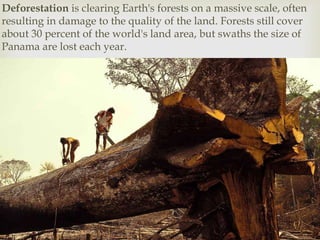
Deforestation is clearing Earth's forests on a massive scale, often 
resulting in damage to the quality of the land. Forests still cover 
about 30 percent of the world's land area, but swaths the size of 
Panama are lost each year. 

 
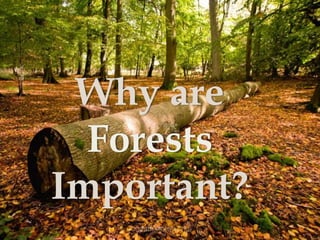
Why are 
Forests 
Important?
 
 Forest cover 31% of the land area on our planet. 
 They produce vital oxygen and provide homes for 
people and wildlife. 
 1.6 billion people rely on benefits forest offer, 
including food. fresh water, clothing, traditional 
medicine and shelter. 
 Many of the world’s most threatened and 
endangered animals live in these forests.
 
Where and Why 
Deforestation Is 
Increasing?
Population 
 
 Population is a great cause 
of deforestation. 
 Increase in population 
means more houses, food, 
industries etc. These things 
need land. 
 There is so limited land 
that’s why people have to 
cut trees.
Logging 
 
 Many commercial logging 
companies fell down trees in a 
process known as selective 
logging, where many trees are 
cut down to find the valuable 
ones. 
 Woods are used as fossil fuels 
for camping, bonfire etc. 
 Every house have something 
built with wood and wood use 
has crossed its limit.
Agriculture 
 
 Food is people need. 
 Forest have to be cleared to get fertile soil for growing crops. 
 People are getting food but losing forests.
Mining and Building of Dams 
 
 In mining forest are cleared 
to get precious metals such 
as gold, diamond etc. 
For dams forest are cleared to 
build the dams and in South 
America and India dams are 
being built.
Impacts Of 
Deforestation
Loss of Species 
 
Seventy percent of the 
world’s plants and animals 
live in forests and are 
losing their habitats to 
deforestation. Loss of 
habitat can lead to species 
extinction.
Carbon Emissions 
 
Healthy forests help absorb greenhouse gasses and 
carbon emissions that are caused by human civilization 
and contribute to global climate change. Without trees, 
more carbon and greenhouse gasses enter the 
atmosphere.
Water Cycle 
 
Trees play an important part in the water 
cycle, grounding the water in their roots and 
releasing it into the atmosphere. Without the 
plants, the climate may become dryer.
Soil Erosion 
 
Without tree roots to anchor the soil and 
with increased exposure to sun, the soil 
can dry out, leading to problems like 
increased flooding and inability to farm.
Life Quality 
 
Life Quality: Soil erosion can also lead to silt 
entering the lakes, streams, and other water sources. 
This can decrease local water quality, contributing 
to poor health in the local population.
Importance of 
Forests
Climate Stability 
 
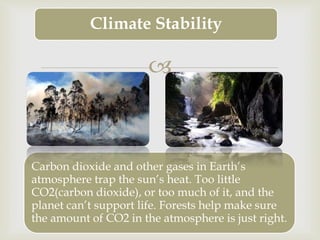
Carbon dioxide and other gases in Earth’s 
atmosphere trap the sun’s heat. Too little 
CO2(carbon dioxide), or too much of it, and the 
planet can’t support life. Forests help make sure 
the amount of CO2 in the atmosphere is just right.
Air We Breathe 
 
forests are “the lungs of the Earth,” 
absorbing carbon dioxide from the 
atmosphere and releasing oxygen that 
human beings need to survive.
Water We Drink 
 
Forests are nature’s water factories. They 
capture, store, purify and then gradually 
release clean water to towns and cities 
located downstream. When forests are 
lost, these factories stop humming. 
Erosion and sediment increases, and 
water flows become more unreliable — 
leading to greater floods, periods of low 
water flow and threats to drinking 
supplies.
Jobs And Prosperity 
 
Forests are economic engines 
— with an incredible amount 
of horsepower. For example, 
almost one in four people 
depends on forests for their 
livelihoods in some way. 
Every year, people trade more 
than US$ 300 billion worth of 
forest products like timber, 
bamboo, fruits and 
mushrooms.
Say NO to 
Deforestation
Cooperation 
 
If cooperation have 
the ability to destroy 
the worlds rainforests 
we also have the 
power to save them. 
If we unite together 
and work together 
we can save the 
forests. We should 
plant trees.
Government 
 
Governments have the 
recourses to allow anti-deforestation 
organizations 
to get their message across. It 
would motivate the citizens. 
Government should keep a 
rule that trees should be cut 
in a control manner and if 
someone cuts one tree so he 
should plant 3 trees.
Individuals 
 
We should recycles things such as paper, glass, 
plastic bottles and cans. 
Paper: Instead of throwing paper or burning it we 
can use it in our projects or recycle it. 
Glass: Glass can be melted and used again and again. 
Plastic bottles: Bottles can be refilled and can be used 
in projects. 
Cans: Cans can be used in projects and can be 
recycled.
Presented By: 
Ayesha Fatima 
Shehzad Aslam 
VII-C 
Beaconhouse School System 
Jubilee Campus 
Karachi , Pakistan

Deforestation

  • 2.
    Deforestation is clearingEarth's forests on a massive scale, often resulting in damage to the quality of the land. Forests still cover about 30 percent of the world's land area, but swaths the size of Panama are lost each year. 
  • 3.
     Why are Forests Important?
  • 4.
      Forestcover 31% of the land area on our planet.  They produce vital oxygen and provide homes for people and wildlife.  1.6 billion people rely on benefits forest offer, including food. fresh water, clothing, traditional medicine and shelter.  Many of the world’s most threatened and endangered animals live in these forests.
  • 5.
     Where andWhy Deforestation Is Increasing?
  • 6.
    Population  Population is a great cause of deforestation.  Increase in population means more houses, food, industries etc. These things need land.  There is so limited land that’s why people have to cut trees.
  • 7.
    Logging  Many commercial logging companies fell down trees in a process known as selective logging, where many trees are cut down to find the valuable ones.  Woods are used as fossil fuels for camping, bonfire etc.  Every house have something built with wood and wood use has crossed its limit.
  • 8.
    Agriculture  Food is people need.  Forest have to be cleared to get fertile soil for growing crops.  People are getting food but losing forests.
  • 9.
    Mining and Buildingof Dams   In mining forest are cleared to get precious metals such as gold, diamond etc. For dams forest are cleared to build the dams and in South America and India dams are being built.
  • 10.
  • 11.
    Loss of Species  Seventy percent of the world’s plants and animals live in forests and are losing their habitats to deforestation. Loss of habitat can lead to species extinction.
  • 12.
    Carbon Emissions  Healthy forests help absorb greenhouse gasses and carbon emissions that are caused by human civilization and contribute to global climate change. Without trees, more carbon and greenhouse gasses enter the atmosphere.
  • 13.
    Water Cycle  Trees play an important part in the water cycle, grounding the water in their roots and releasing it into the atmosphere. Without the plants, the climate may become dryer.
  • 14.
    Soil Erosion  Without tree roots to anchor the soil and with increased exposure to sun, the soil can dry out, leading to problems like increased flooding and inability to farm.
  • 15.
    Life Quality  Life Quality: Soil erosion can also lead to silt entering the lakes, streams, and other water sources. This can decrease local water quality, contributing to poor health in the local population.
  • 16.
  • 17.
    Climate Stability  Carbon dioxide and other gases in Earth’s atmosphere trap the sun’s heat. Too little CO2(carbon dioxide), or too much of it, and the planet can’t support life. Forests help make sure the amount of CO2 in the atmosphere is just right.
  • 18.
    Air We Breathe  forests are “the lungs of the Earth,” absorbing carbon dioxide from the atmosphere and releasing oxygen that human beings need to survive.
  • 19.
    Water We Drink  Forests are nature’s water factories. They capture, store, purify and then gradually release clean water to towns and cities located downstream. When forests are lost, these factories stop humming. Erosion and sediment increases, and water flows become more unreliable — leading to greater floods, periods of low water flow and threats to drinking supplies.
  • 20.
    Jobs And Prosperity  Forests are economic engines — with an incredible amount of horsepower. For example, almost one in four people depends on forests for their livelihoods in some way. Every year, people trade more than US$ 300 billion worth of forest products like timber, bamboo, fruits and mushrooms.
  • 21.
    Say NO to Deforestation
  • 22.
    Cooperation  Ifcooperation have the ability to destroy the worlds rainforests we also have the power to save them. If we unite together and work together we can save the forests. We should plant trees.
  • 23.
    Government  Governmentshave the recourses to allow anti-deforestation organizations to get their message across. It would motivate the citizens. Government should keep a rule that trees should be cut in a control manner and if someone cuts one tree so he should plant 3 trees.
  • 24.
    Individuals  Weshould recycles things such as paper, glass, plastic bottles and cans. Paper: Instead of throwing paper or burning it we can use it in our projects or recycle it. Glass: Glass can be melted and used again and again. Plastic bottles: Bottles can be refilled and can be used in projects. Cans: Cans can be used in projects and can be recycled.
  • 26.
    Presented By: AyeshaFatima Shehzad Aslam VII-C Beaconhouse School System Jubilee Campus Karachi , Pakistan