DEFINITIONS in Technical Writing
Questions that govern the act of 
definition: 
-More explicit questions: What is X? and How do 
we classify or categorize X? 
-Less explicit questions: What actions or decisions 
are now possible because of how X is classified? 
How might this act of (re)classification shift power 
(resources, etc.)?
Definitions (even scientific and technical 
ones!) aren’t simply objective, rational 
descriptions of what is. They always 
serve some set of interests.
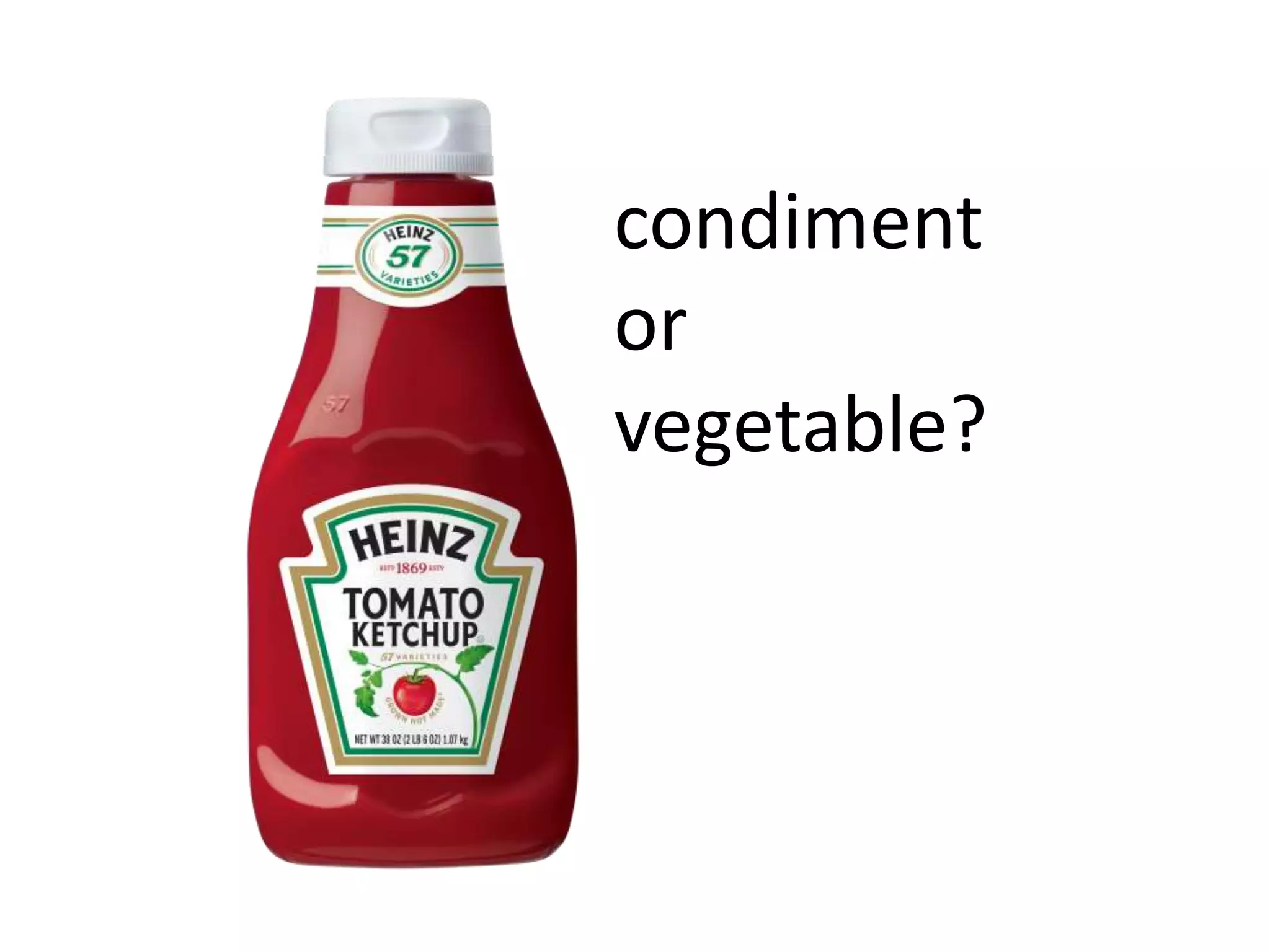
condiment 
or 
vegetable?
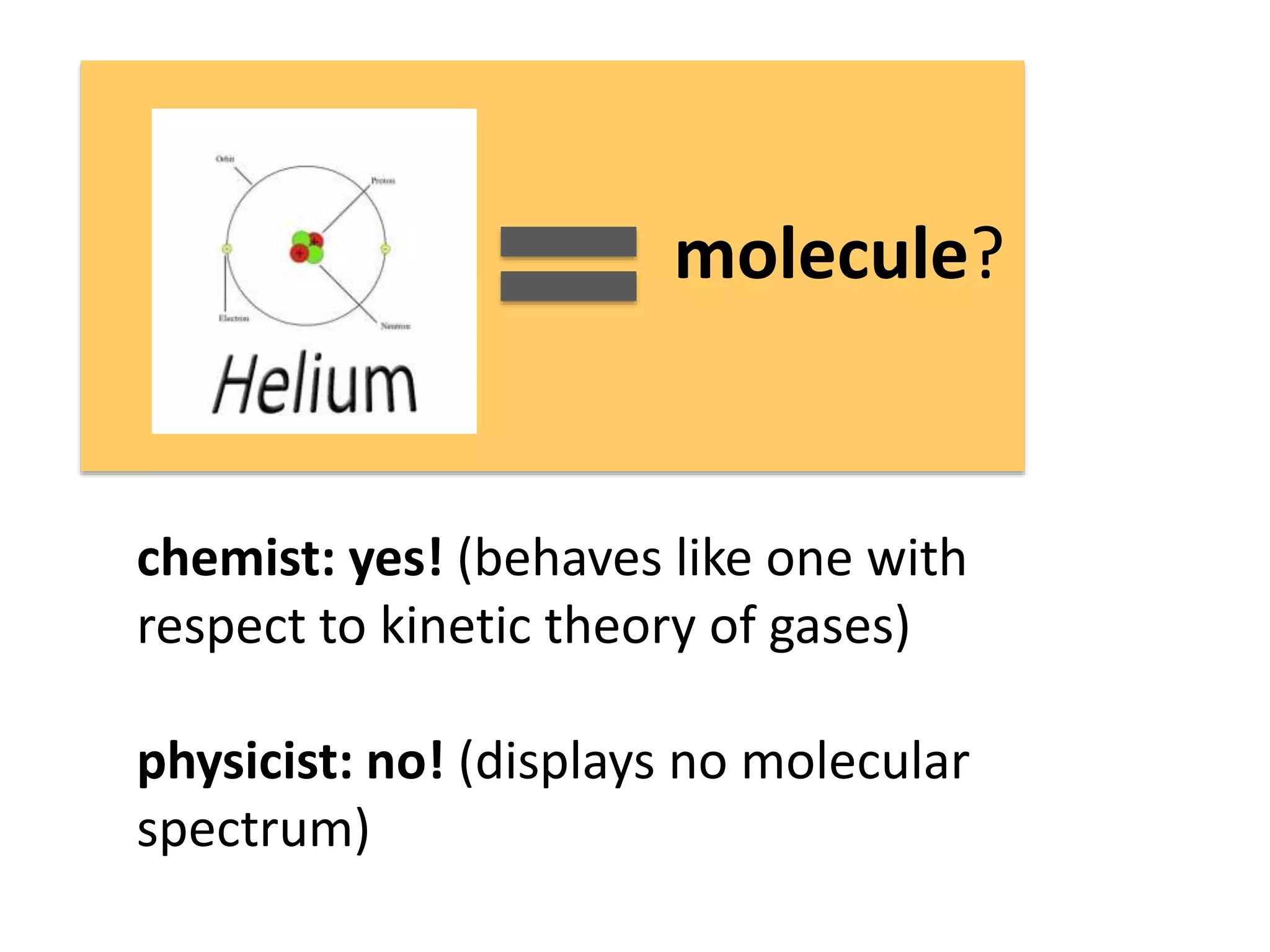
molecule? 
chemist: yes! (behaves like one with 
respect to kinetic theory of gases) 
physicist: no! (displays no molecular 
spectrum)
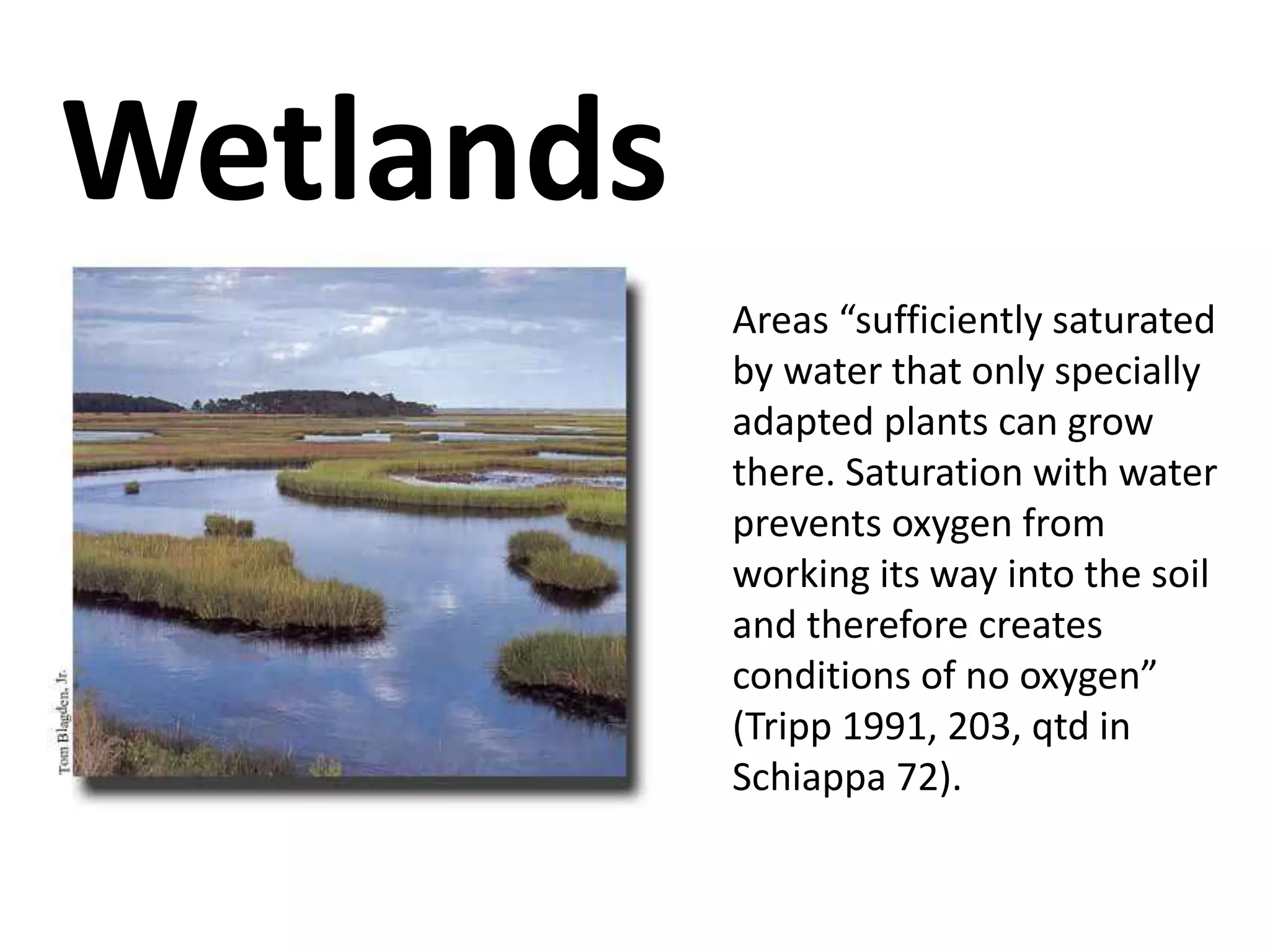
Wetlands 
Areas “sufficiently saturated 
by water that only specially 
adapted plants can grow 
there. Saturation with water 
prevents oxygen from 
working its way into the soil 
and therefore creates 
conditions of no oxygen” 
(Tripp 1991, 203, qtd in 
Schiappa 72).
1980s federal agencies with 
jurisdiction over wetlands and their 
classification of wetlands: 
• U.S. Fish and Wildlife Service (habitat) 
• Environmental Protection Agency (water presence) 
• Army Corps of Engineers (water presence) 
• Agriculture Department’s Soil Conservation Service 
(soils)
e.g. U.S. Forest Service Definition of 
“wetlands” 
“[W]etlands are lands where saturation with water 
is the dominant factor determining the nature of soil development 
and the types of plant and animal communities living in the soil and 
on its surface. The single feature that most wetlands share is soil or 
substrate that is at least periodically saturated with or covered by 
water. The water creates severe physiological problems for all 
plants and animals except those that are adapted for life in water or 
in saturated soil” 
(Cowardin et al. 1979, 3, qtd in Schiappa 74).
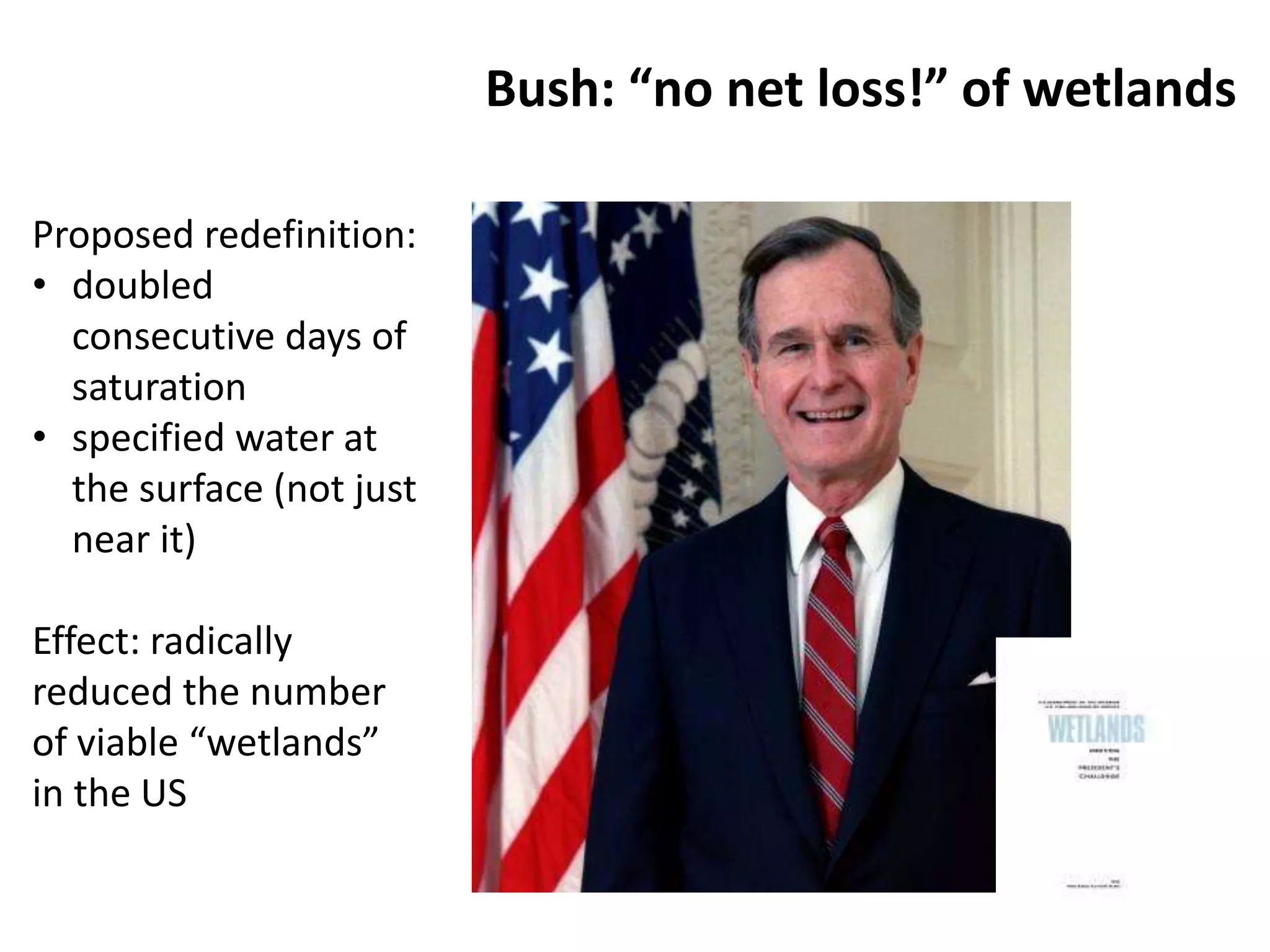
Bush: “no net loss!” of wetlands 
Proposed redefinition: 
• doubled 
consecutive days of 
saturation 
• specified water at 
the surface (not just 
near it) 
Effect: radically 
reduced the number 
of viable “wetlands” 
in the US
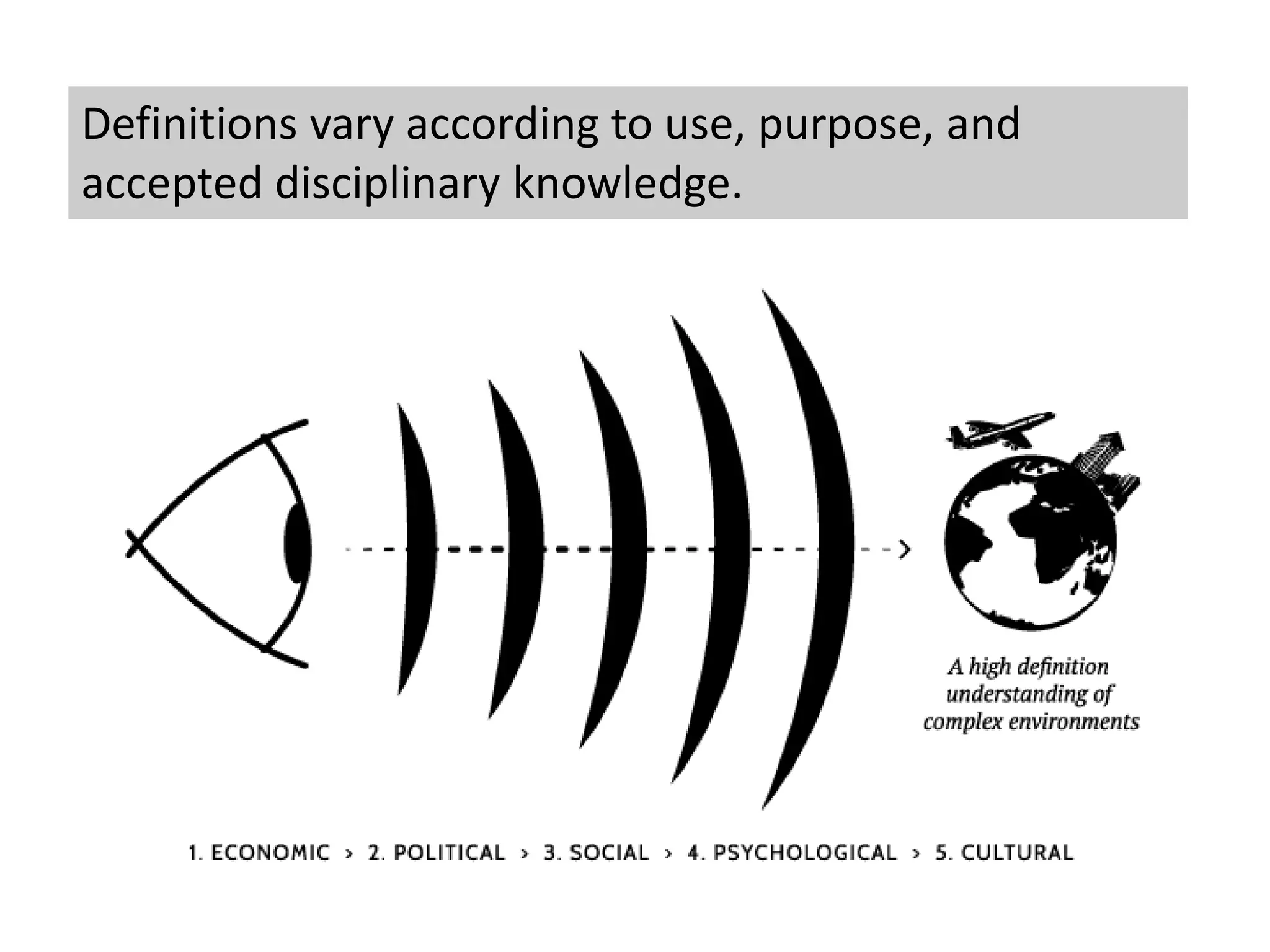
Definitions vary according to use, purpose, and 
accepted disciplinary knowledge.
Definitions are rhetorical: they differ 
according to… 
• the communicator’s purpose 
• the needs of the audience 
• the rhetorical situation (e.g. the type of 
communication in which the definition 
appears)
Definitions do things: 
• They explain, or help audience gain 
new/different understandings of a term, 
concept, or thing (explanatory 
definitions). 
• They help audiences engage in a 
specific activity (operational definitions) 
- knitting 
• They enable audiences to undertake 
future action (deliberative definitions)
To begin planning your definition: 
• Identify the audience. 
• Identify the needs of your audience 
(what problem will having a definition 
help them solve?). 
• Identify how much your audience 
already knows about the issue (or 
related issues).
To extend your definition, use one or more of the 
following rhetorical moves (according to how you 
defined audience needs and prior knowledge): 
• Classify or categorize the term. 
• Compare/contrast. 
• Analyze and explain causes and effects. 
• Explain what it’s not. 
• Use examples and analogies. 
• Provide historical background. 
• Use visuals

Definitions in Technical Writing

  • 1.
  • 2.
    Questions that governthe act of definition: -More explicit questions: What is X? and How do we classify or categorize X? -Less explicit questions: What actions or decisions are now possible because of how X is classified? How might this act of (re)classification shift power (resources, etc.)?
  • 3.
    Definitions (even scientificand technical ones!) aren’t simply objective, rational descriptions of what is. They always serve some set of interests.
  • 4.
  • 5.
    molecule? chemist: yes!(behaves like one with respect to kinetic theory of gases) physicist: no! (displays no molecular spectrum)
  • 6.
    Wetlands Areas “sufficientlysaturated by water that only specially adapted plants can grow there. Saturation with water prevents oxygen from working its way into the soil and therefore creates conditions of no oxygen” (Tripp 1991, 203, qtd in Schiappa 72).
  • 7.
    1980s federal agencieswith jurisdiction over wetlands and their classification of wetlands: • U.S. Fish and Wildlife Service (habitat) • Environmental Protection Agency (water presence) • Army Corps of Engineers (water presence) • Agriculture Department’s Soil Conservation Service (soils)
  • 8.
    e.g. U.S. ForestService Definition of “wetlands” “[W]etlands are lands where saturation with water is the dominant factor determining the nature of soil development and the types of plant and animal communities living in the soil and on its surface. The single feature that most wetlands share is soil or substrate that is at least periodically saturated with or covered by water. The water creates severe physiological problems for all plants and animals except those that are adapted for life in water or in saturated soil” (Cowardin et al. 1979, 3, qtd in Schiappa 74).
  • 9.
    Bush: “no netloss!” of wetlands Proposed redefinition: • doubled consecutive days of saturation • specified water at the surface (not just near it) Effect: radically reduced the number of viable “wetlands” in the US
  • 10.
    Definitions vary accordingto use, purpose, and accepted disciplinary knowledge.
  • 11.
    Definitions are rhetorical:they differ according to… • the communicator’s purpose • the needs of the audience • the rhetorical situation (e.g. the type of communication in which the definition appears)
  • 12.
    Definitions do things: • They explain, or help audience gain new/different understandings of a term, concept, or thing (explanatory definitions). • They help audiences engage in a specific activity (operational definitions) - knitting • They enable audiences to undertake future action (deliberative definitions)
  • 13.
    To begin planningyour definition: • Identify the audience. • Identify the needs of your audience (what problem will having a definition help them solve?). • Identify how much your audience already knows about the issue (or related issues).
  • 14.
    To extend yourdefinition, use one or more of the following rhetorical moves (according to how you defined audience needs and prior knowledge): • Classify or categorize the term. • Compare/contrast. • Analyze and explain causes and effects. • Explain what it’s not. • Use examples and analogies. • Provide historical background. • Use visuals