Envisioning the future by listening
to the ideas of our students
Julie A. Evans, Ed.D.
Chief Executive Officer
Project Tomorrow
@JulieEvans_PT
jevans@tomorrow.org June 14, 2022
Many thanks to:
About Project Tomorrow
(www.tomorrow.org)
 Nonprofit education organization supporting K-12 education since 1996
 Mission: to support the development of new leadership capacities
within the K-12 ecosystem through the translation of research into
practice
 Core belief: the voices and views of K-12 stakeholders can be a valuable
asset for stimulating change in education if used effectively
 Programs and research: focus on understanding the impact of new
learning models, including digital learning, on student outcomes and
educator effectiveness
About the Speak Up Research Project
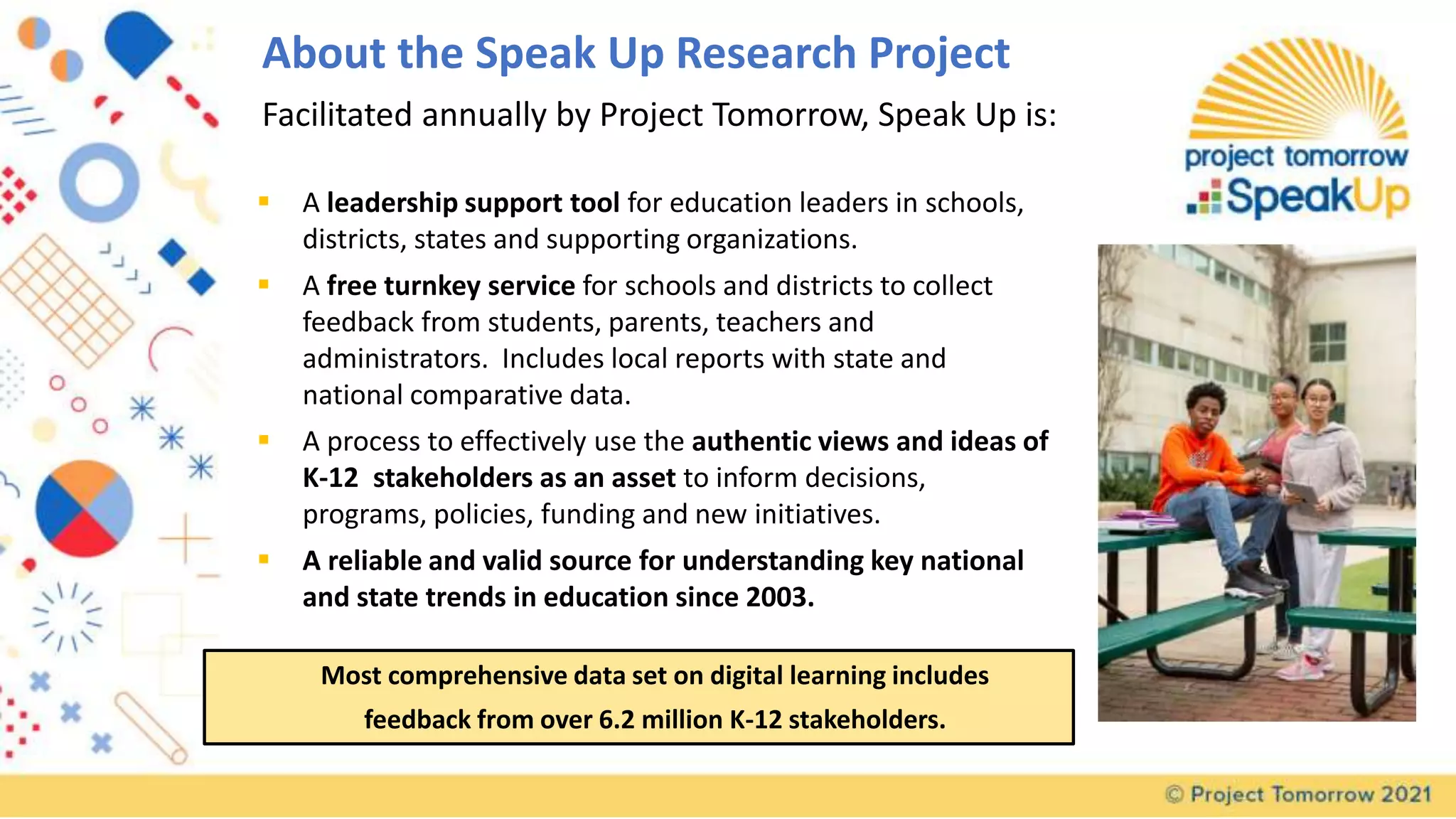
 A leadership support tool for education leaders in schools,
districts, states and supporting organizations.
 A free turnkey service for schools and districts to collect
feedback from students, parents, teachers and
administrators. Includes local reports with state and
national comparative data.
 A process to effectively use the authentic views and ideas of
K-12 stakeholders as an asset to inform decisions,
programs, policies, funding and new initiatives.
 A reliable and valid source for understanding key national
and state trends in education since 2003.
Facilitated annually by Project Tomorrow, Speak Up is:
Most comprehensive data set on digital learning includes
feedback from over 6.2 million K-12 stakeholders.
1. Why listen to the ideas of
our students?
2. How can we use those
ideas to improve learning
experiences for all
students?
For today’s discussion, what is our starting point?
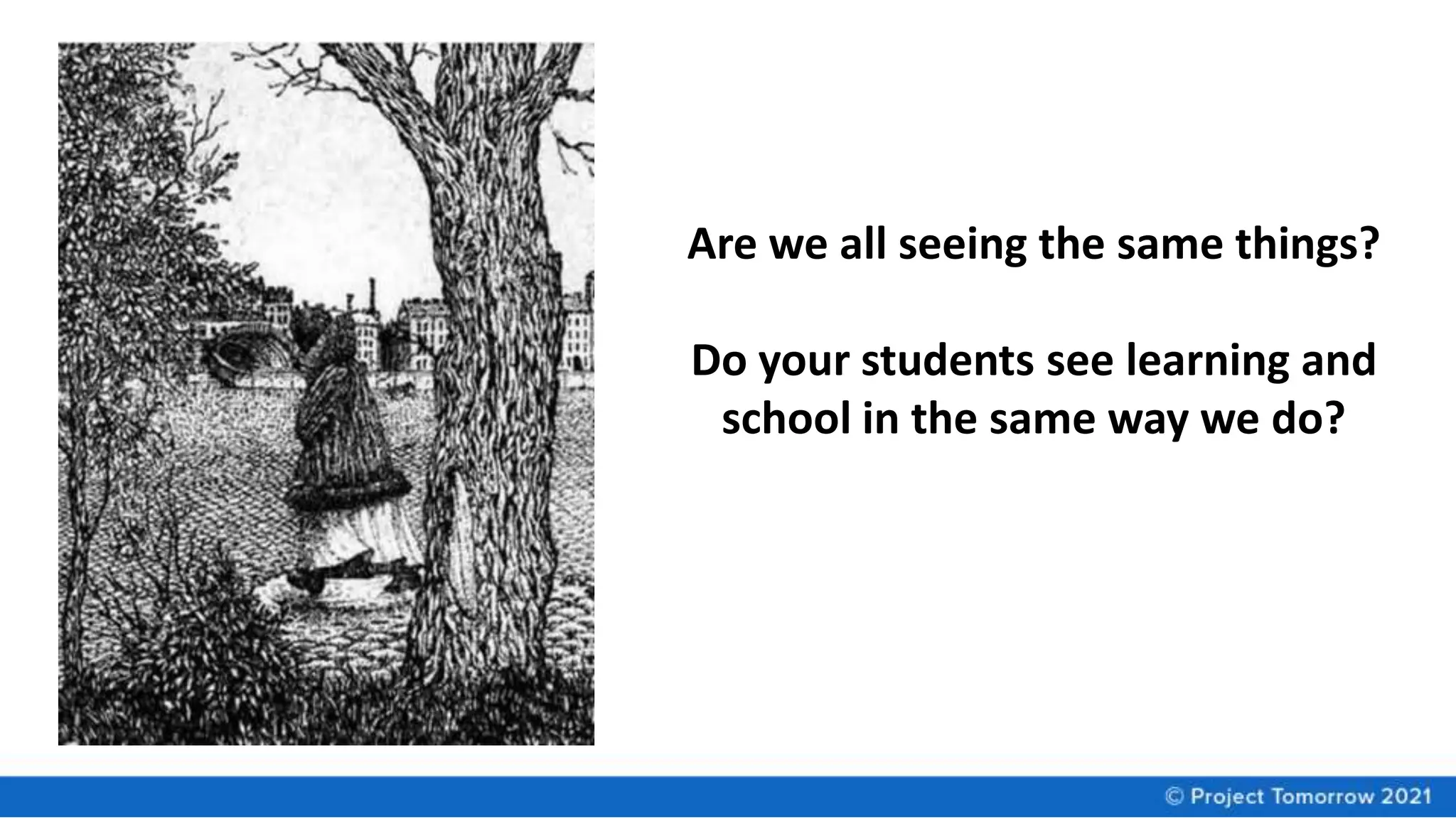
Are we all seeing the same things?
Do your students see learning and
school in the same way we do?
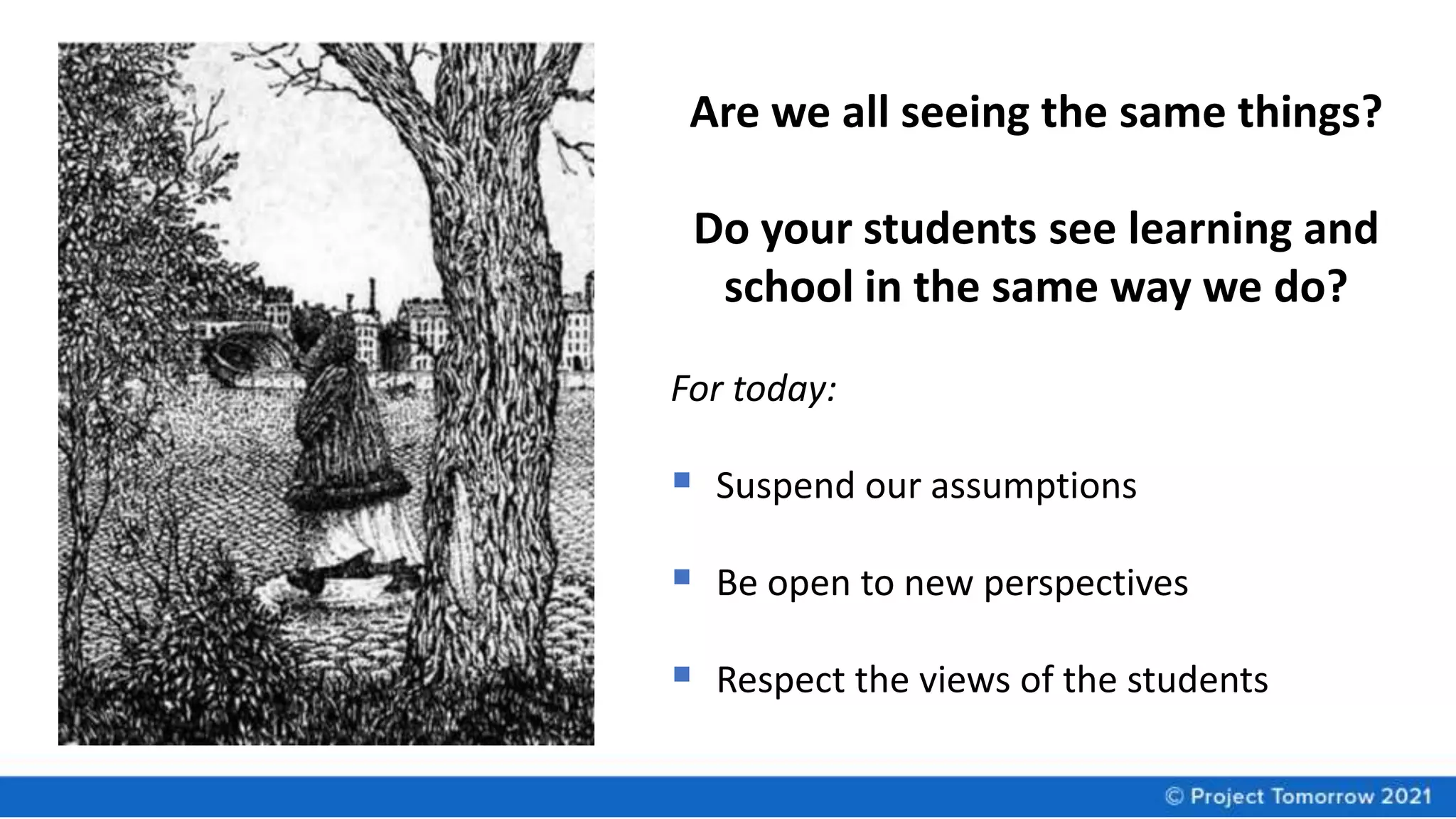
Are we all seeing the same things?
Do your students see learning and
school in the same way we do?
For today:
 Suspend our assumptions
 Be open to new perspectives
 Respect the views of the students
Today’s student panel discussion – via video clips
Speak Up Congressional Briefing
October 2021
Virtual
NSBA Advocacy Summit
January 2022
In person – Washington DC
Discussion themes:
 Defining student engagement in
school and learning
 Students’ preferences for learning
 Designing a better school or
classroom learning experience
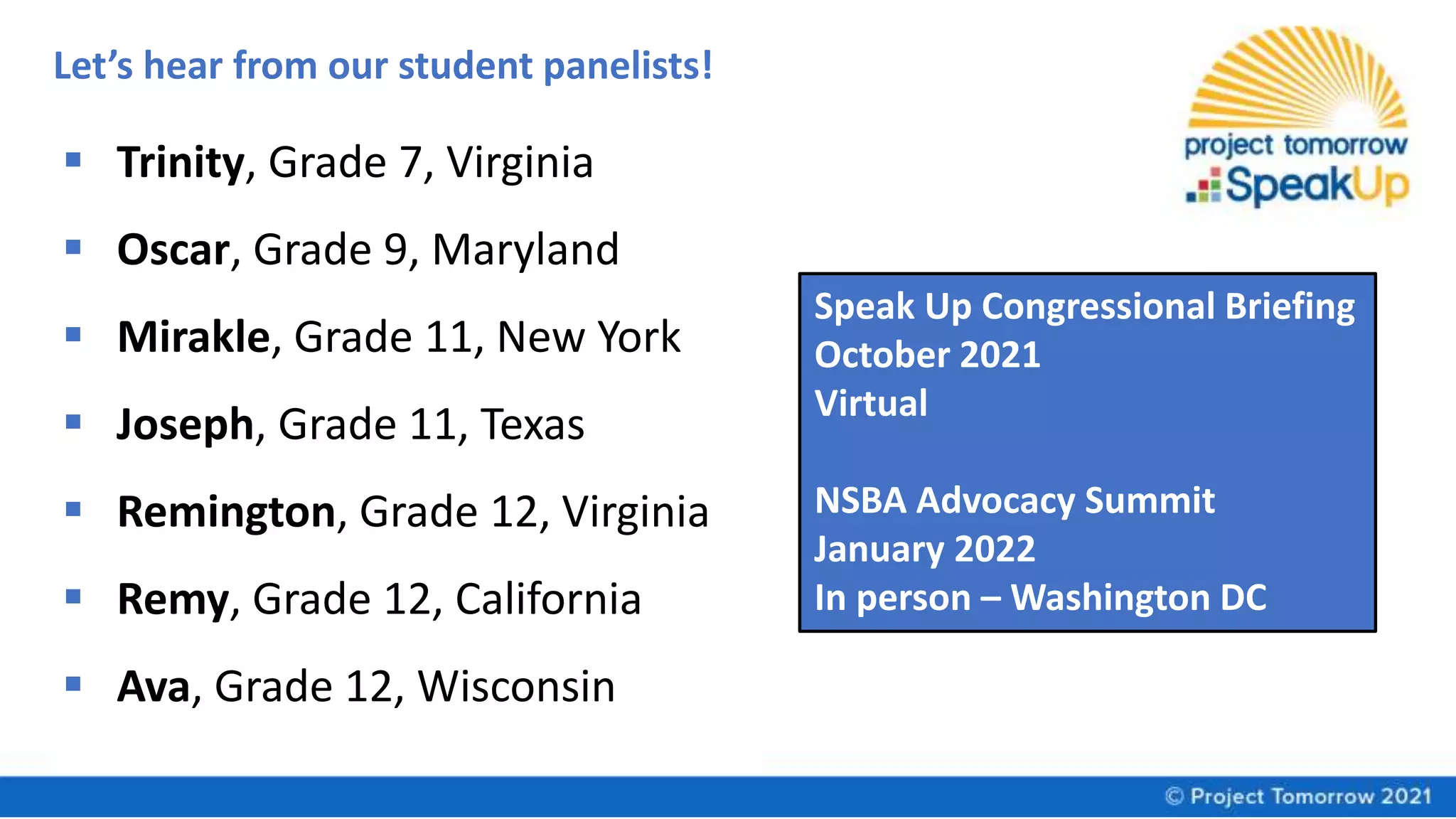
Let’s hear from our student panelists!
 Trinity, Grade 7, Virginia
 Oscar, Grade 9, Maryland
 Mirakle, Grade 11, New York
 Joseph, Grade 11, Texas
 Remington, Grade 12, Virginia
 Remy, Grade 12, California
 Ava, Grade 12, Wisconsin
Speak Up Congressional Briefing
October 2021
Virtual
NSBA Advocacy Summit
January 2022
In person – Washington DC
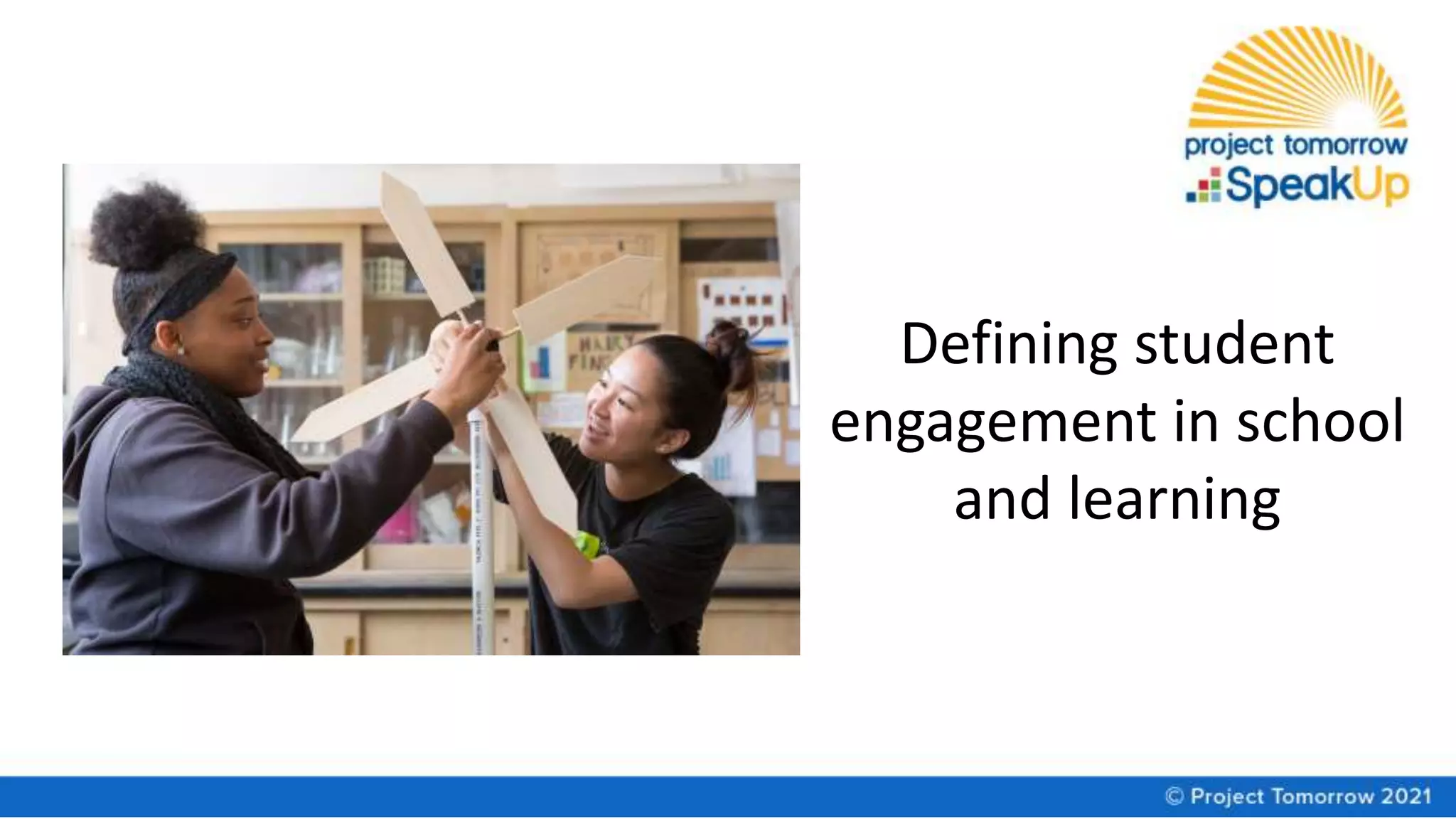
Defining student
engagement in school
and learning
Student engagement in learning: Remington
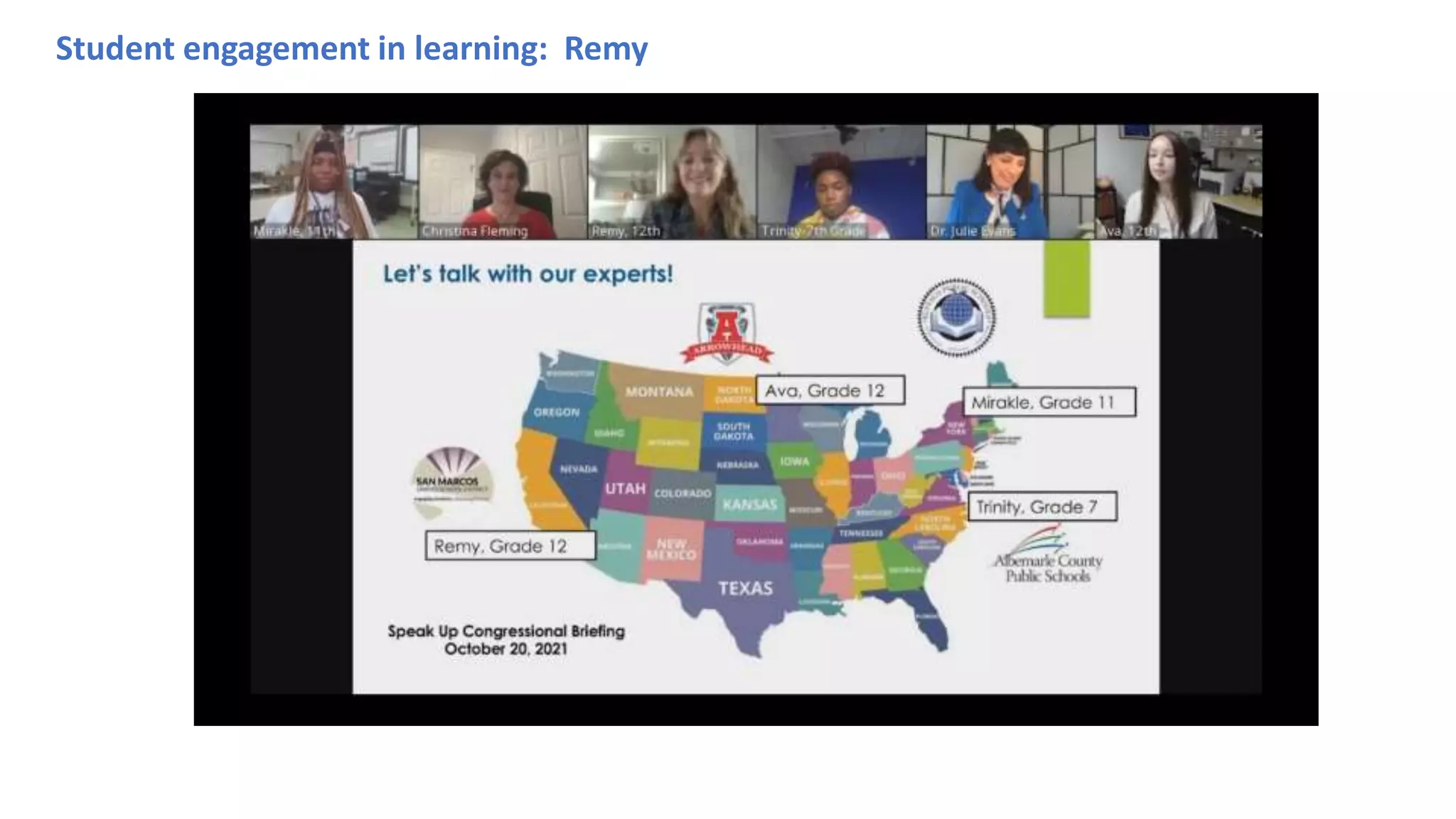
Student engagement in learning: Remy
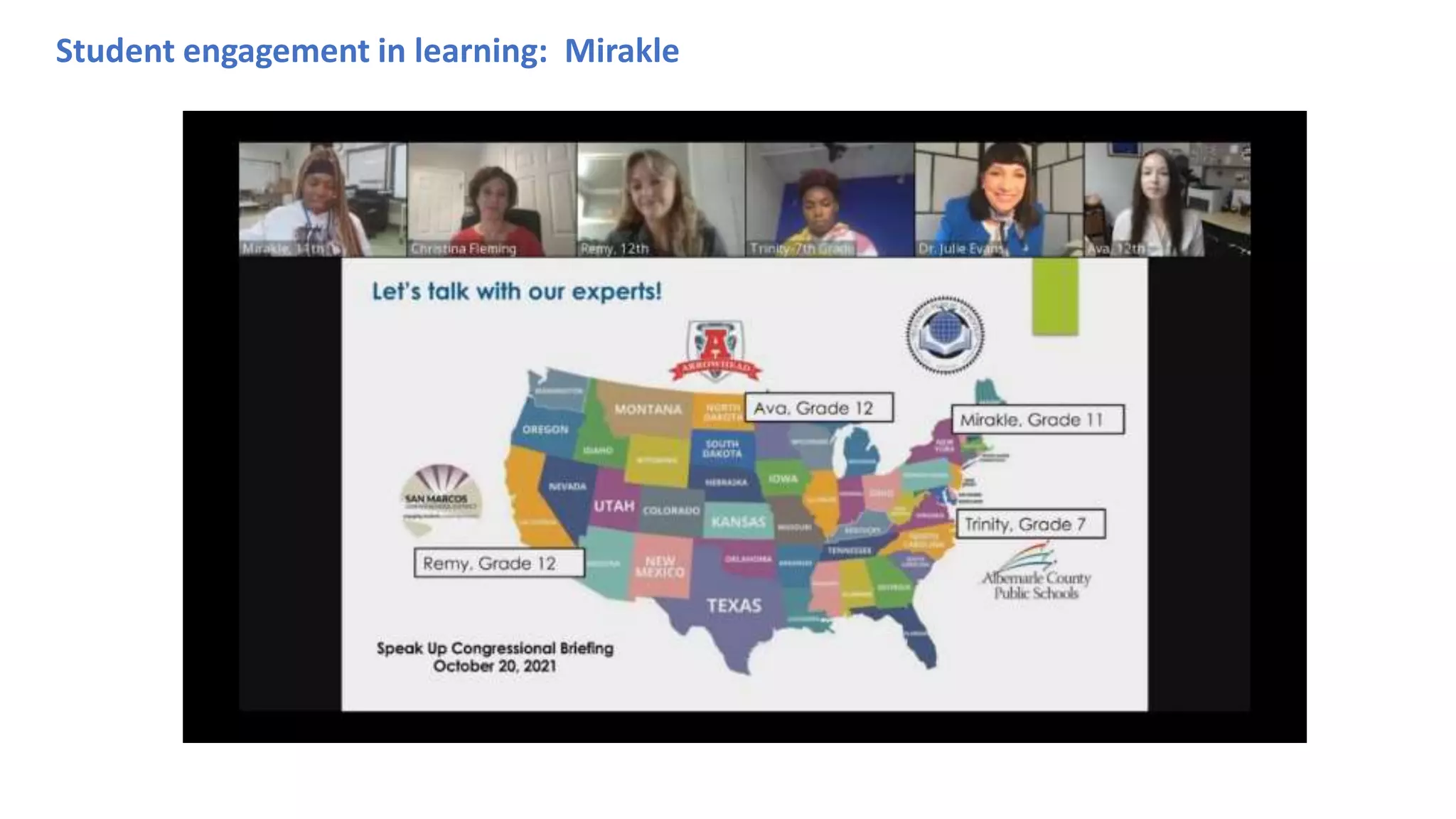
Student engagement in learning: Mirakle
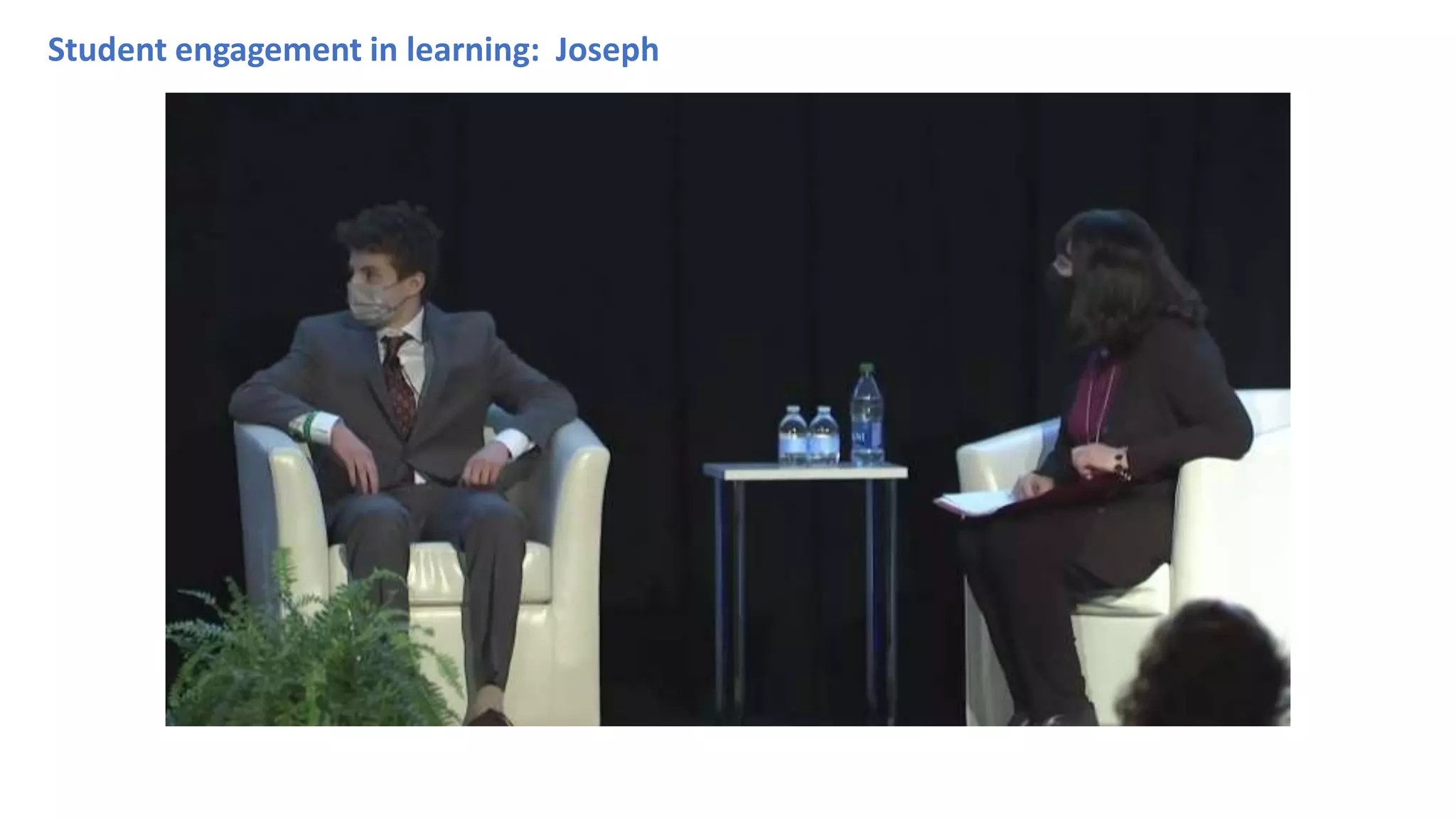
Student engagement in learning: Joseph
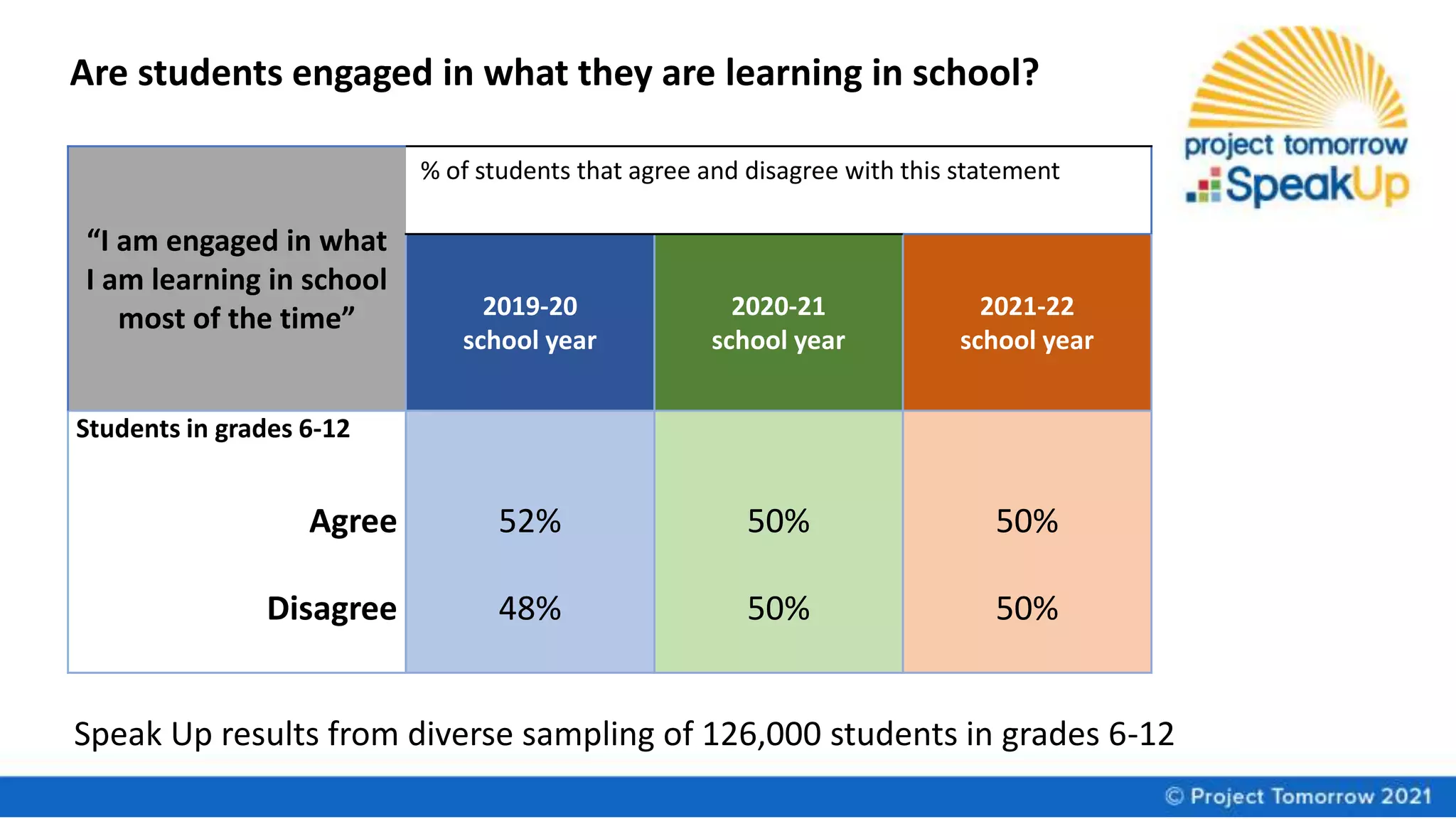
Are students engaged in what they are learning in school?
“I am engaged in what
I am learning in school
most of the time”
% of students that agree and disagree with this statement
2019-20
school year
2020-21
school year
2021-22
school year
Students in grades 6-12
Agree
Disagree
52%
48%
50%
50%
50%
50%
Speak Up results from diverse sampling of 126,000 students in grades 6-12
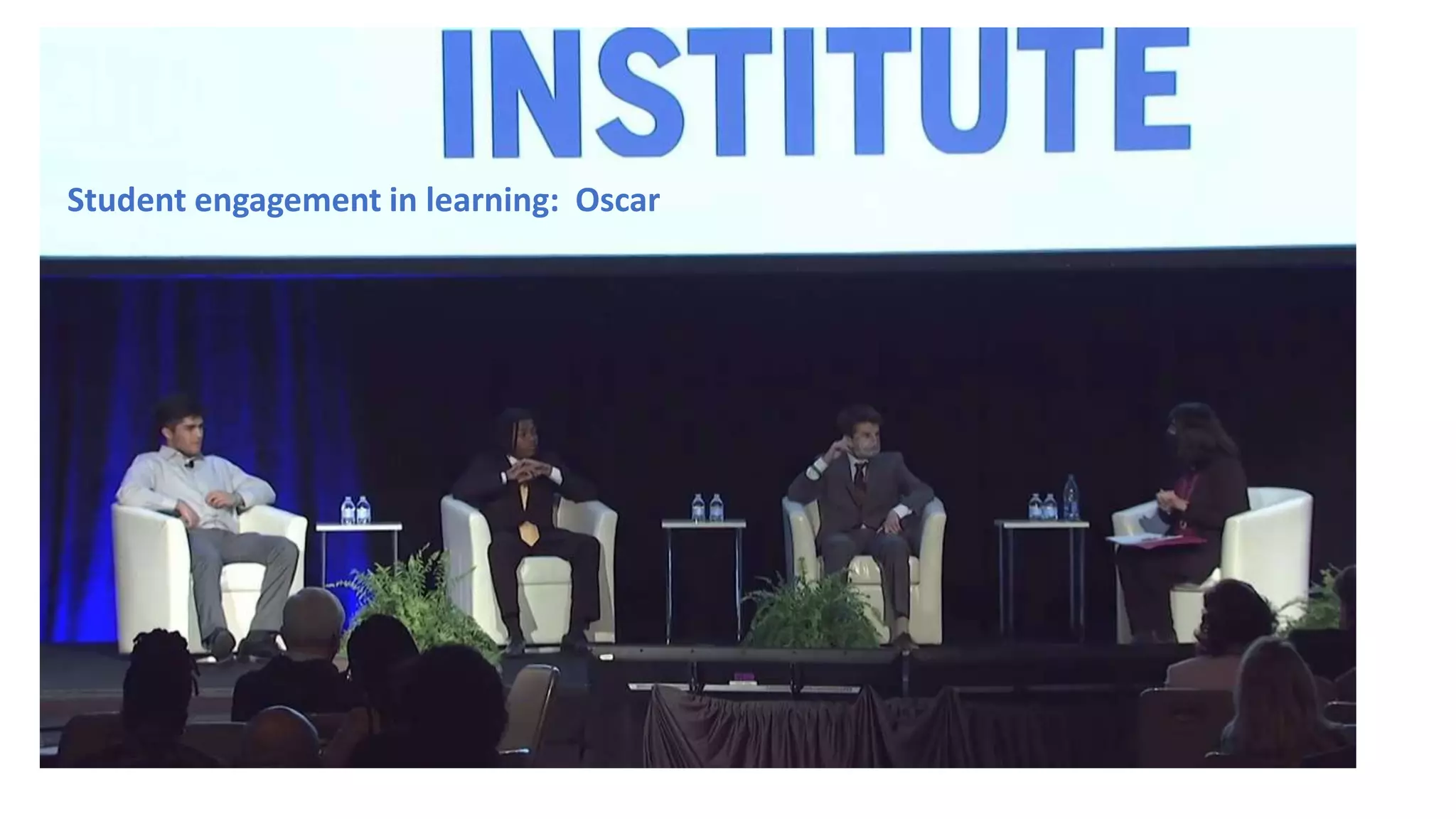
Student engagement in learning: Oscar
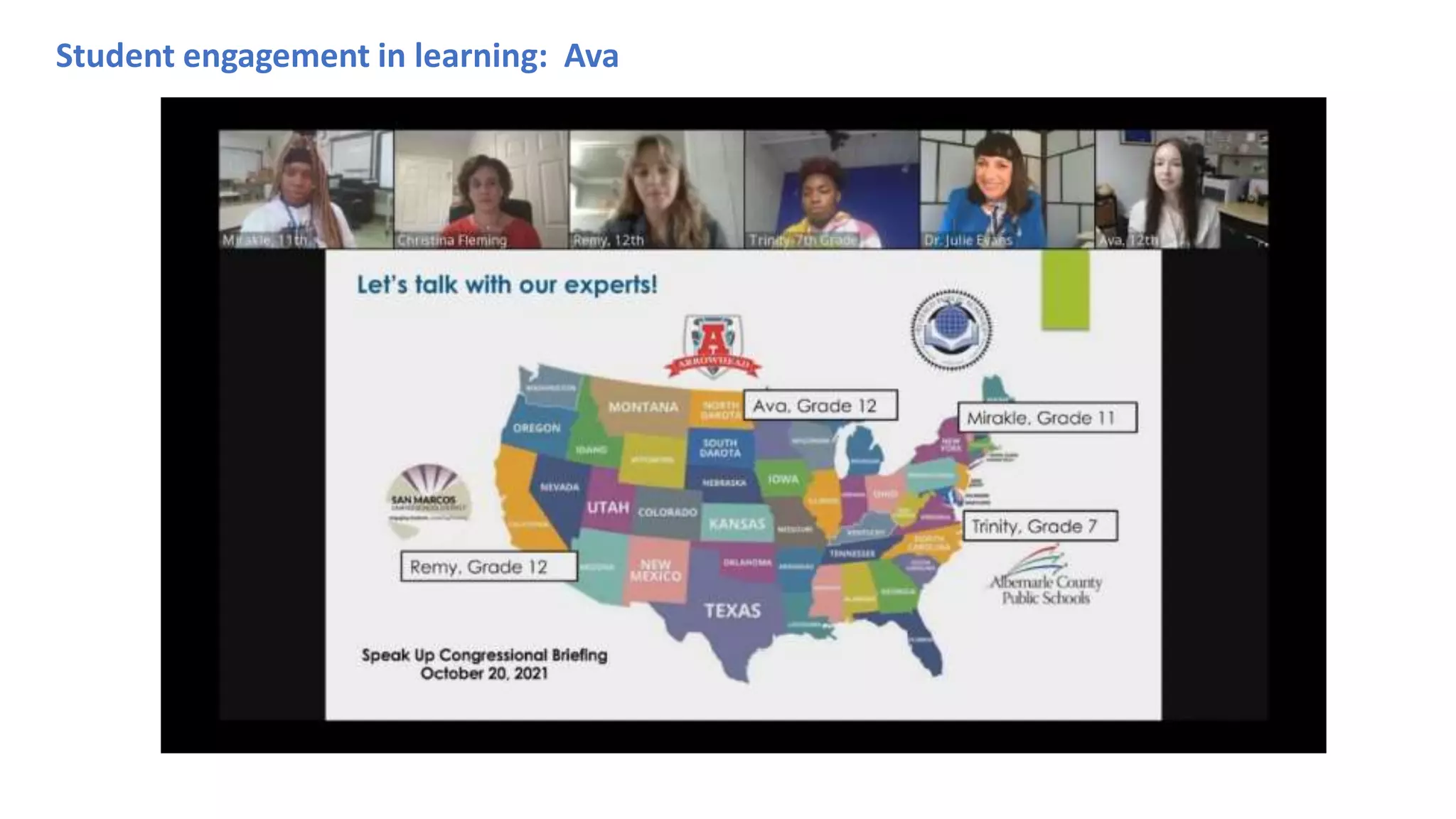
Student engagement in learning: Ava
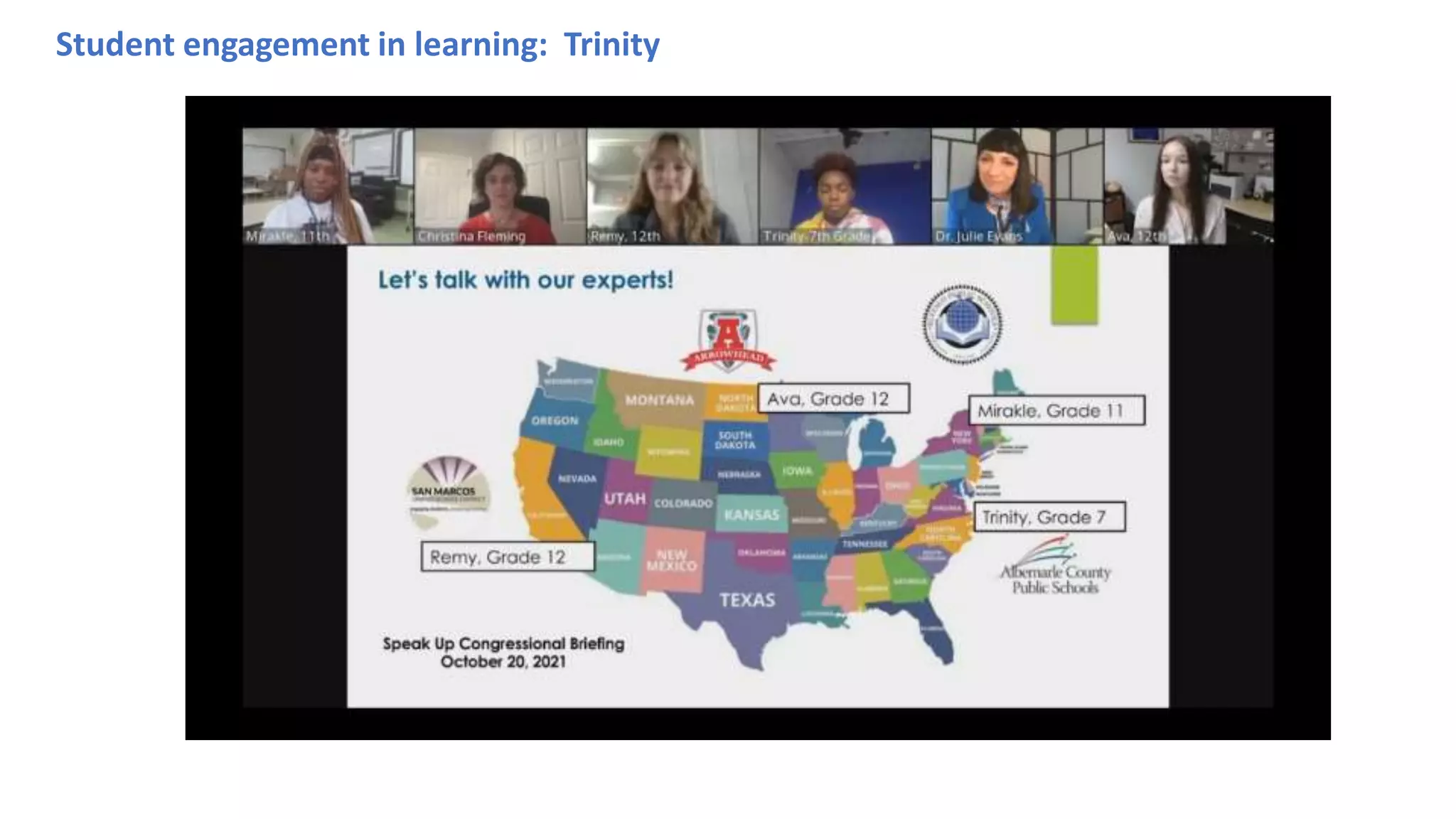
Student engagement in learning: Trinity
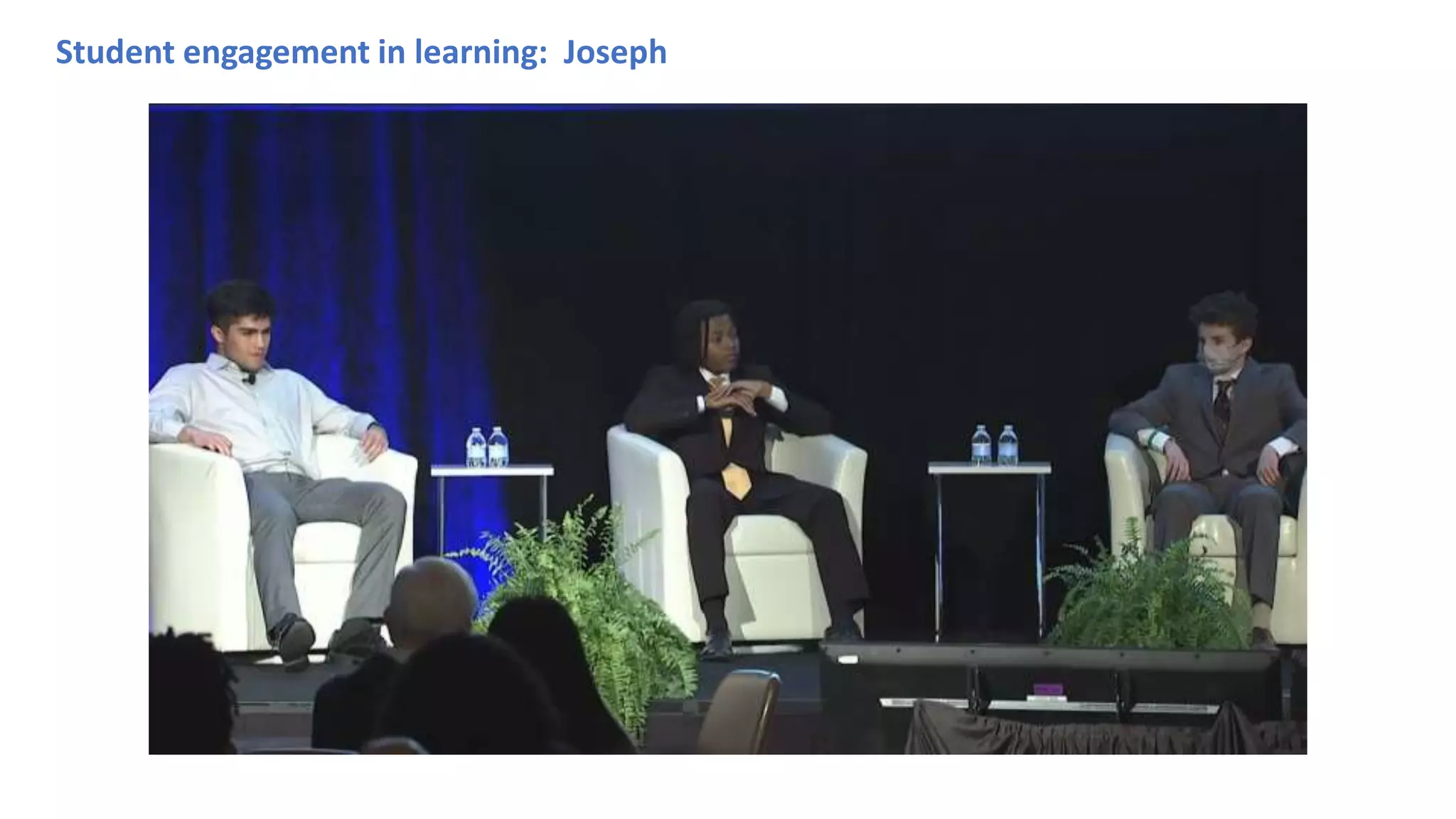
Student engagement in learning: Joseph
Where do we go from here?
1. What did you learn from these
students?
2. How do we effectively translate
stakeholders’ views and
aspirations into powerful new
ideas for education
improvement?
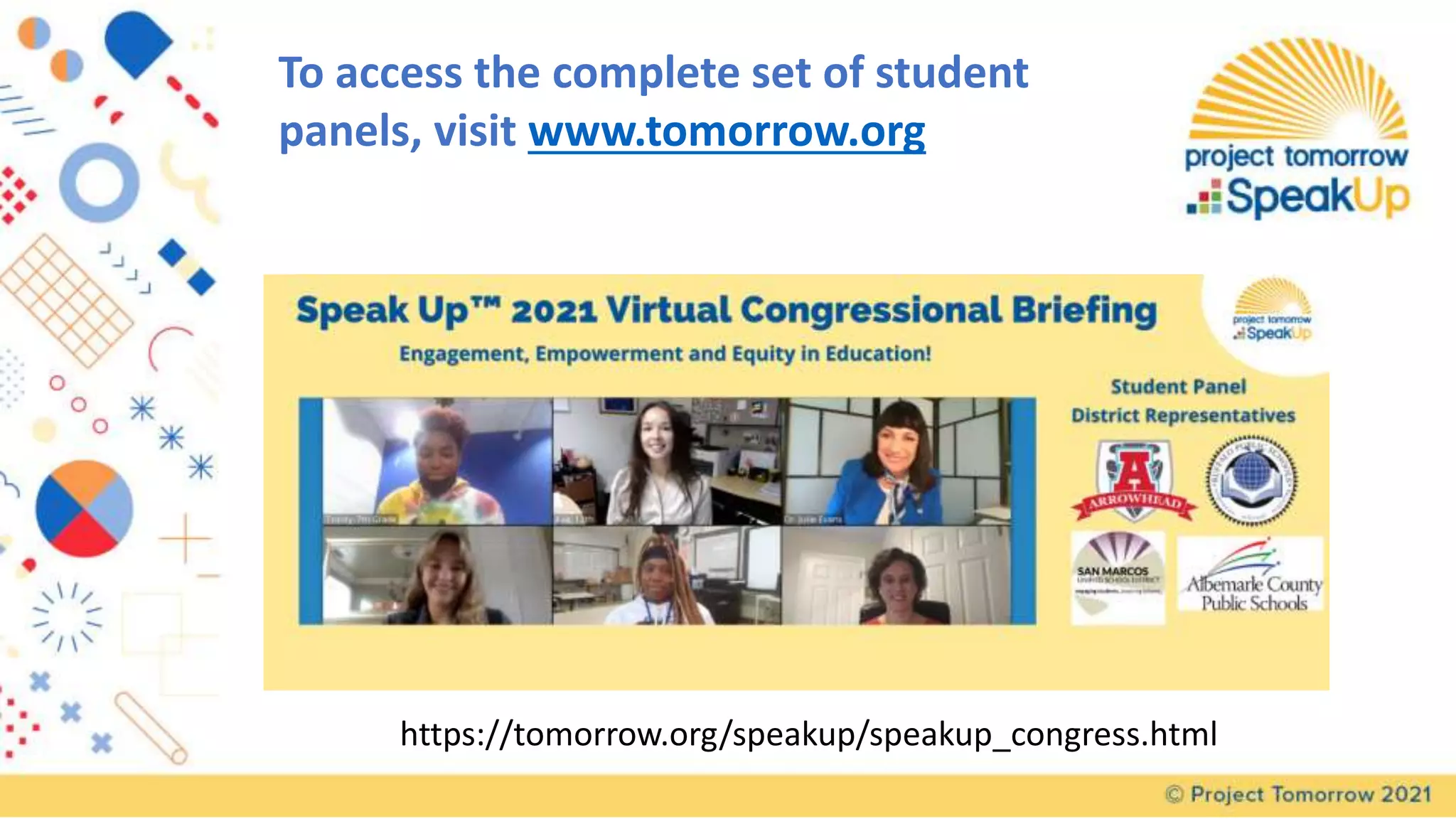
To access the complete set of student
panels, visit www.tomorrow.org
https://tomorrow.org/speakup/speakup_congress.html
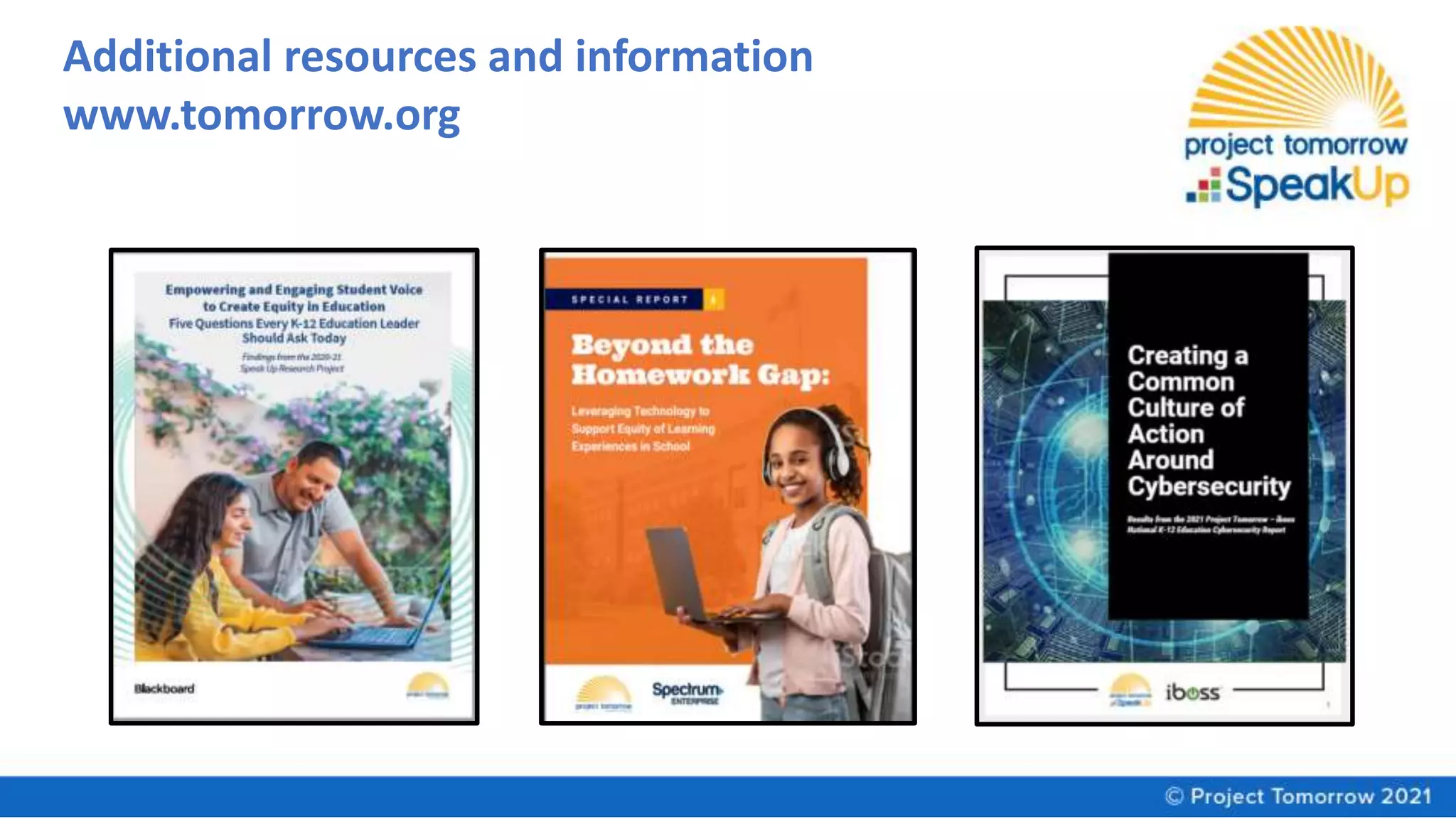
Additional resources and information
www.tomorrow.org
To learn more . . . .
 To get a copy of today’s
presentation deck
 To learn more about
Project Tomorrow and the
Speak Up Research Project
 To connect with us about
potential collaborations
Julie A. Evans, Ed.D.
Chief Executive Officer
Project Tomorrow
jevans@tomorrow.org
@JulieEvans_PT
949-609-4661
Envisioning the future by listening
to the ideas of our students

Defining Student Engagement Learning Impact 2022-Part 1

  • 1.
    Envisioning the futureby listening to the ideas of our students Julie A. Evans, Ed.D. Chief Executive Officer Project Tomorrow @JulieEvans_PT jevans@tomorrow.org June 14, 2022
  • 2.
  • 3.
    About Project Tomorrow (www.tomorrow.org) Nonprofit education organization supporting K-12 education since 1996  Mission: to support the development of new leadership capacities within the K-12 ecosystem through the translation of research into practice  Core belief: the voices and views of K-12 stakeholders can be a valuable asset for stimulating change in education if used effectively  Programs and research: focus on understanding the impact of new learning models, including digital learning, on student outcomes and educator effectiveness
  • 4.
    About the SpeakUp Research Project  A leadership support tool for education leaders in schools, districts, states and supporting organizations.  A free turnkey service for schools and districts to collect feedback from students, parents, teachers and administrators. Includes local reports with state and national comparative data.  A process to effectively use the authentic views and ideas of K-12 stakeholders as an asset to inform decisions, programs, policies, funding and new initiatives.  A reliable and valid source for understanding key national and state trends in education since 2003. Facilitated annually by Project Tomorrow, Speak Up is: Most comprehensive data set on digital learning includes feedback from over 6.2 million K-12 stakeholders.
  • 5.
    1. Why listento the ideas of our students? 2. How can we use those ideas to improve learning experiences for all students? For today’s discussion, what is our starting point?
  • 6.
    Are we allseeing the same things? Do your students see learning and school in the same way we do?
  • 7.
    Are we allseeing the same things? Do your students see learning and school in the same way we do? For today:  Suspend our assumptions  Be open to new perspectives  Respect the views of the students
  • 8.
    Today’s student paneldiscussion – via video clips Speak Up Congressional Briefing October 2021 Virtual NSBA Advocacy Summit January 2022 In person – Washington DC Discussion themes:  Defining student engagement in school and learning  Students’ preferences for learning  Designing a better school or classroom learning experience
  • 9.
    Let’s hear fromour student panelists!  Trinity, Grade 7, Virginia  Oscar, Grade 9, Maryland  Mirakle, Grade 11, New York  Joseph, Grade 11, Texas  Remington, Grade 12, Virginia  Remy, Grade 12, California  Ava, Grade 12, Wisconsin Speak Up Congressional Briefing October 2021 Virtual NSBA Advocacy Summit January 2022 In person – Washington DC
  • 10.
    Defining student engagement inschool and learning
  • 11.
    Student engagement inlearning: Remington
  • 12.
    Student engagement inlearning: Remy
  • 13.
    Student engagement inlearning: Mirakle
  • 14.
    Student engagement inlearning: Joseph
  • 15.
    Are students engagedin what they are learning in school? “I am engaged in what I am learning in school most of the time” % of students that agree and disagree with this statement 2019-20 school year 2020-21 school year 2021-22 school year Students in grades 6-12 Agree Disagree 52% 48% 50% 50% 50% 50% Speak Up results from diverse sampling of 126,000 students in grades 6-12
  • 16.
    Student engagement inlearning: Oscar
  • 17.
    Student engagement inlearning: Ava
  • 18.
    Student engagement inlearning: Trinity
  • 19.
    Student engagement inlearning: Joseph
  • 20.
    Where do wego from here? 1. What did you learn from these students? 2. How do we effectively translate stakeholders’ views and aspirations into powerful new ideas for education improvement?
  • 21.
    To access thecomplete set of student panels, visit www.tomorrow.org https://tomorrow.org/speakup/speakup_congress.html
  • 22.
    Additional resources andinformation www.tomorrow.org
  • 23.
    To learn more. . . .  To get a copy of today’s presentation deck  To learn more about Project Tomorrow and the Speak Up Research Project  To connect with us about potential collaborations
  • 24.
    Julie A. Evans,Ed.D. Chief Executive Officer Project Tomorrow jevans@tomorrow.org @JulieEvans_PT 949-609-4661 Envisioning the future by listening to the ideas of our students