Defining and Measuring Fatigue 
Chia Ying Li
Introduction 
• Fatigue is a universal symptom not only 
associated with most acute and chronic 
illnesses, but also with normal, healthy 
functioning and everyday life. 
• It is one of the most common complaints of 
people seen in primary health care.
Defining Fatigue 
• Distinguish fatigue 
– pathological and psychological fatigue(nurses-physical 
and mental fatigue) 
– central and peripheral models of fatigue 
– normal fatigue as acute and pathological fatigue as 
chronic(Piper, 1989-acute and chronic fatigue) 
– biobehavioral
Defining Fatigue 
Pathological and Psychological fatigue 
• excessive energy consumption 
• depletion of hormones, neurotransmitters 
• fever, infection, anemia, sleep disturbances, 
and pregnancy 
• fatigue caused by weakness from illness or 
treatment (such as in terminal cancer)
Defining Fatigue 
Pathological and Psychological fatigue 
• Stone and colleagues (1997) fatigue as one of 
13 mood states. 
• associated with stress and other intense 
emotional experiences and may accompany 
depression and anxiety 
• a response to internal or external demands 
exceeding available resources.
Defining Fatigue 
Pathological and Psychological fatigue 
• The North American Nursing Diagnosis 
Association definition of fatigue is: “The self-recognized 
state in which an individual 
experiences an overwhelming sustained sense 
of exhaustion and decreased capacity for 
physical and mental work that is not relieved 
by rest”
Defining Fatigue 
Pathological and Psychological fatigue 
• Ream and Richardson (1997) defined fatigue 
as: “A subjective, unpleasant symptom which 
incorporates total body feelings ranging from 
tiredness to exhaustion creating an unrelenting 
overall condition which interferes with 
individuals’ ability to function to their normal 
capacity”
Defining Fatigue 
Central and Peripheral models of fatigue 
• Central-CNS(hypothalamic) 
• Peripheral - impaired neuromuscular 
transmission at the motor-end-plate 、muscle
Defining Fatigue 
Acute and Chronic fatigue 
• (acute) generally occurs in healthy individuals, 
is perceived as normal, has a rapid onset and 
short duration, is usually alleviated by rest, 
diet, exercise, and stress management, and has 
minor or minimal effect on activities of daily 
living and quality of life
Defining Fatigue 
Acute and Chronic fatigue 
• (chronic) perceived as abnormal, unusual, or 
excessive, has an insidious onset, persists over 
time, is not generally relieved by usual 
restorative techniques, and has a major effect 
on the individual’s activities of daily living and 
quality of life.
Defining Fatigue 
Acute and Chronic fatigue 
• (chronic) an unknown function or purpose, as 
primarily affecting ill clinical populations, as 
having multiple, additive, or unknown causes, 
and is often experienced with no relation to 
activity or exertion.
Defining Fatigue 
Biobehavioral 
• The awareness of a decreased capacity for 
physical and/or mental activity due to an 
imbalance in the availability, utilization, and/or 
restoration of resources needed to perform 
activity 
• Fatigue occurs when system is out of balance
Measuring Fatigue 
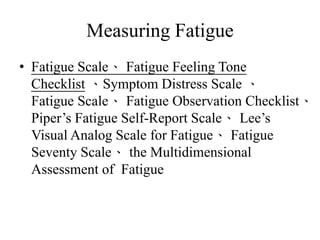
• Fatigue Scale、Fatigue Feeling Tone 
Checklist 、Symptom Distress Scale 、 
Fatigue Scale、Fatigue Observation Checklist、 
Piper’s Fatigue Self-Report Scale、Lee’s 
Visual Analog Scale for Fatigue、Fatigue 
Seventy Scale、the Multidimensional 
Assessment of Fatigue
Measuring Fatigue 
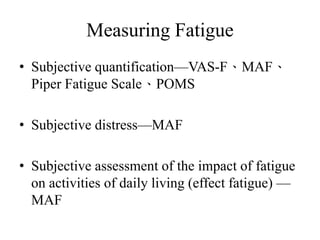
• Subjective quantification—VAS-F、MAF、 
Piper Fatigue Scale、POMS 
• Subjective distress—MAF 
• Subjective assessment of the impact of fatigue 
on activities of daily living (effect fatigue) — 
MAF
Measuring Fatigue 
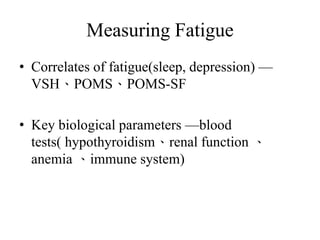
• Correlates of fatigue(sleep, depression) — 
VSH、POMS、POMS-SF 
• Key biological parameters —blood 
tests( hypothyroidism、renal function 、 
anemia 、immune system)

Defining and measuring fatigue

  • 1.
    Defining and MeasuringFatigue Chia Ying Li
  • 2.
    Introduction • Fatigueis a universal symptom not only associated with most acute and chronic illnesses, but also with normal, healthy functioning and everyday life. • It is one of the most common complaints of people seen in primary health care.
  • 3.
    Defining Fatigue •Distinguish fatigue – pathological and psychological fatigue(nurses-physical and mental fatigue) – central and peripheral models of fatigue – normal fatigue as acute and pathological fatigue as chronic(Piper, 1989-acute and chronic fatigue) – biobehavioral
  • 4.
    Defining Fatigue Pathologicaland Psychological fatigue • excessive energy consumption • depletion of hormones, neurotransmitters • fever, infection, anemia, sleep disturbances, and pregnancy • fatigue caused by weakness from illness or treatment (such as in terminal cancer)
  • 5.
    Defining Fatigue Pathologicaland Psychological fatigue • Stone and colleagues (1997) fatigue as one of 13 mood states. • associated with stress and other intense emotional experiences and may accompany depression and anxiety • a response to internal or external demands exceeding available resources.
  • 6.
    Defining Fatigue Pathologicaland Psychological fatigue • The North American Nursing Diagnosis Association definition of fatigue is: “The self-recognized state in which an individual experiences an overwhelming sustained sense of exhaustion and decreased capacity for physical and mental work that is not relieved by rest”
  • 7.
    Defining Fatigue Pathologicaland Psychological fatigue • Ream and Richardson (1997) defined fatigue as: “A subjective, unpleasant symptom which incorporates total body feelings ranging from tiredness to exhaustion creating an unrelenting overall condition which interferes with individuals’ ability to function to their normal capacity”
  • 8.
    Defining Fatigue Centraland Peripheral models of fatigue • Central-CNS(hypothalamic) • Peripheral - impaired neuromuscular transmission at the motor-end-plate 、muscle
  • 9.
    Defining Fatigue Acuteand Chronic fatigue • (acute) generally occurs in healthy individuals, is perceived as normal, has a rapid onset and short duration, is usually alleviated by rest, diet, exercise, and stress management, and has minor or minimal effect on activities of daily living and quality of life
  • 10.
    Defining Fatigue Acuteand Chronic fatigue • (chronic) perceived as abnormal, unusual, or excessive, has an insidious onset, persists over time, is not generally relieved by usual restorative techniques, and has a major effect on the individual’s activities of daily living and quality of life.
  • 11.
    Defining Fatigue Acuteand Chronic fatigue • (chronic) an unknown function or purpose, as primarily affecting ill clinical populations, as having multiple, additive, or unknown causes, and is often experienced with no relation to activity or exertion.
  • 12.
    Defining Fatigue Biobehavioral • The awareness of a decreased capacity for physical and/or mental activity due to an imbalance in the availability, utilization, and/or restoration of resources needed to perform activity • Fatigue occurs when system is out of balance
  • 13.
    Measuring Fatigue •Fatigue Scale、Fatigue Feeling Tone Checklist 、Symptom Distress Scale 、 Fatigue Scale、Fatigue Observation Checklist、 Piper’s Fatigue Self-Report Scale、Lee’s Visual Analog Scale for Fatigue、Fatigue Seventy Scale、the Multidimensional Assessment of Fatigue
  • 14.
    Measuring Fatigue •Subjective quantification—VAS-F、MAF、 Piper Fatigue Scale、POMS • Subjective distress—MAF • Subjective assessment of the impact of fatigue on activities of daily living (effect fatigue) — MAF
  • 15.
    Measuring Fatigue •Correlates of fatigue(sleep, depression) — VSH、POMS、POMS-SF • Key biological parameters —blood tests( hypothyroidism、renal function 、 anemia 、immune system)