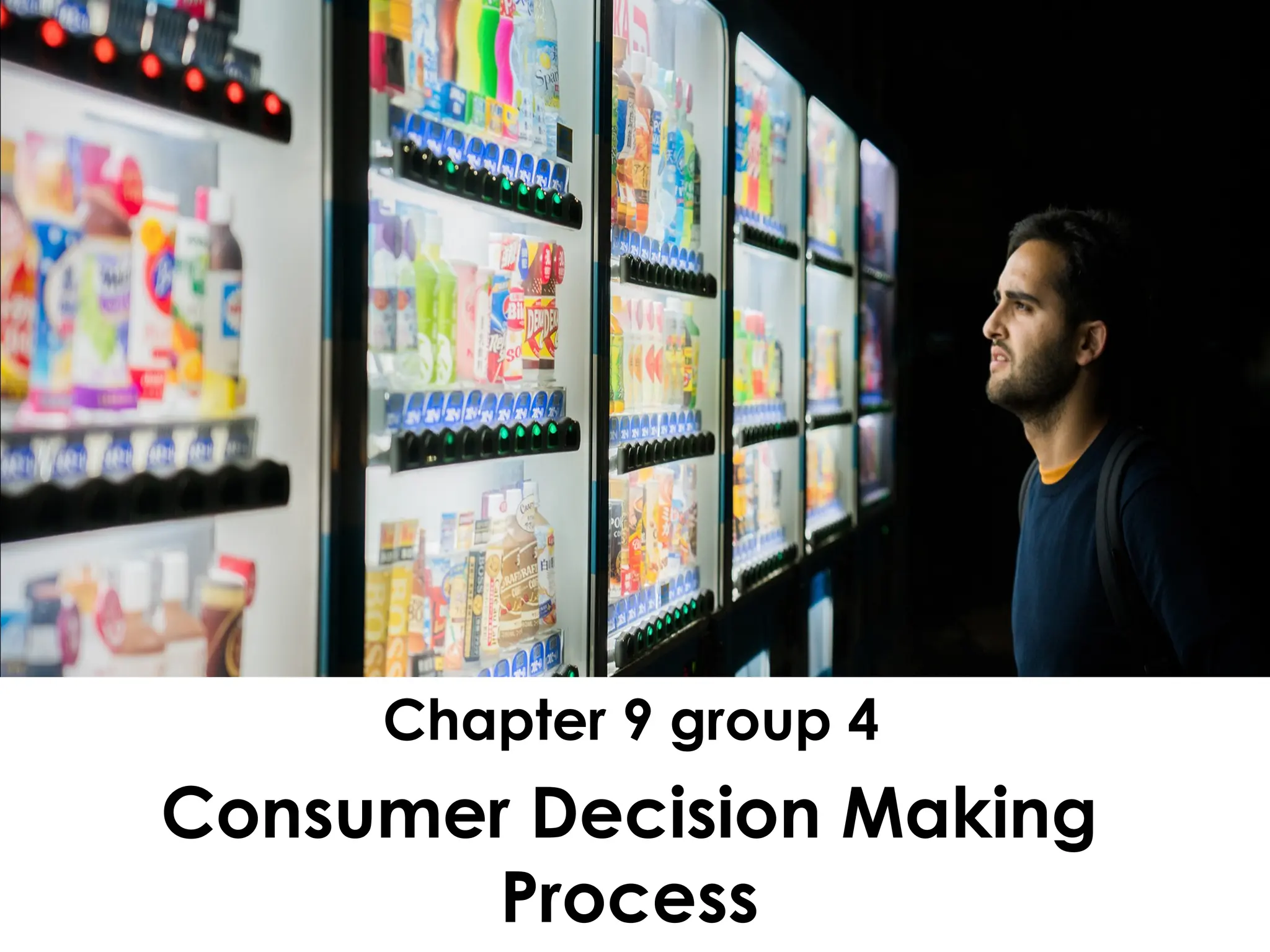
Consumer Decision Making
Process
Chapter 9 group 4
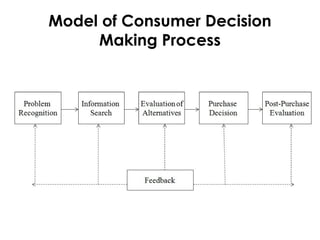
Model of Consumer Decision
Making Process
Problem Recognition
• It is also called need recognition or problem identification
• The realization that there is a difference
between actual and desired states
- The higher the gap, the stronger the need (or
bigger the problem)
• Consumer identifies the problems in two
ways
1.Actual State
- The product they are using failed to perform
satisfactorily
- Dose not fulfill the needs
2.Desired State
- Something consumer feel is missing to fulfill needs
- That gap triggers the desire to purchase the
product
Problem Recognition and Marketing
Strategy
• Identify existing consumer problems and find
solutions for these
• Lower the actual state
• Increase the desired state
• Increase the importance of the gap between
actual and desired states
• Convert problems into ones requiring an
immediate solution
Information Search
• There are 2 ways to search information
1.Past experience
- It is the internal source of information
- Consumers use past experience to make the present choice
- It serve as a long-term memory
2.No Experience
- It is the external source of information
- External sources include: shopping, friends, family, internet,
etc
- Consumer relies on the marketing messages related to
products
Search Regret
• When the information search is not
successful a situation occurs called
ā€œSearch Regretā€
• There can be many reasons for this, like
- Online search was not enough
- Web store did not provide correct information
- Some products like clothes, cosmetics and
electronic gadgets need to be touched before
purchasing
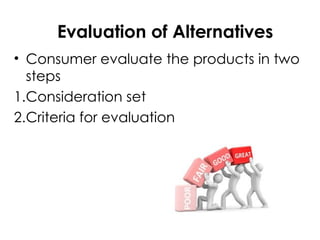
Evaluation of Alternatives
• Consumer evaluate the products in two
steps
1.Consideration set
2.Criteria for evaluation
Consideration set
• Consumer makes a list of brands which they consider
to purchase
• It is also called evoked set
• Since consumers prioritize few brands to consider, thus
they excludes other brands
• It many be for following reasons
• They may feel the other products are inferior
• The products are out of range in terms of resources
• Or the consumer does not about the other products
Criteria for evaluation
• Consumer select one option from the
consideration set on the basis of product
attributes.
e.g. the product attributes of camera are
- Size and weight
- Lens type
- Image stabilization
- Auto focus, etc
• As every consumer is different, the
criteria for evaluation of each
consume is different.
• Consumer give weight age to every
product features of each brand in
consideration set and then calculate
the total points
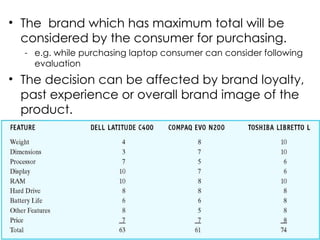
• The brand which has maximum total will be
considered by the consumer for purchasing.
- e.g. while purchasing laptop consumer can consider following
evaluation
• The decision can be affected by brand loyalty,
past experience or overall brand image of the
product.
Purchase Decision
• Consumer makes 3 types of purchase
decisions
1.Trail purchase
2.Repeat purchase
3.Long-term commitment purchase
Trail Purchase
• Consumer purchases the product for the
first time in small quantity
• This helps the consumer to evaluate the
product through direct use
• If the product fulfils consumer needs, he/
she can go for repeat purchase
• Marketers can encourage trail purchase
by giving coupons, gifts or sales
Repeat Purchase
• It is closely related to brand loyalty
• It only happens when consumer gives
approval to trail purchases
• It helps the marketers to gain large
market share and stable position in the
market
Long-term commitment
purchase
• This purchase is the actual form of brand
loyalty
• Consumers only purchases these
products with which they are
comfortable and familiar
- Trail purchase cannot be possible in some durable
goods and the consumer buys them with long-term
commitment
- E.g. washing machines, automobiles, ovens,
refrigerators, etc
Post-Purchase Evaluation
• Consumer evaluate the products by
comparing them with their outcomes
• 3 types of outcomes
1.Neutral
- When your expectations matches the product performance
2.Positive
- When the product performance exceeds the expectation
- Consumer feels satisfaction
3.Negative
- When the product performance is below expectations
- Consumer feels dissatisfaction
Uncertainty
• Consumer expectation is an important
part of post-purchase evaluation
• It reduces the uncertainty associated
with the product
- It is evident that consumer may feel discomfort after
making the final decision of purchasing the
product
- Specially those products that are related to self-
esteem and social acceptance.
• Thus consumer use following strategies to
reduce their feeling of discomfort and
uncertainty
- They may reassure themselves that their purchase
decision is wise
- They seek those advertisements that support their
choices and avoid competitive brands
- They persuade their family and friends to purchase
the same brand
- Or they may turn to other satisfied users for
reassurance.
Customer Satisfaction - Feedback
• When product’s performance meets or
exceeds the consumer expectation, the
consumer will feel satisfied and will repurchase
the product
• If the consumer is happy and satisfied with one
product of the brand, there is a likelihood the
consumer will purchase the other products of
the same brand
- e.g. Nestle
- It has build 150 years of trust among the consumers by
keeping them satisfied and fulfilling their needs
- Finally leading the company to customer retention.
• Giving value is a two-way process.
- Marketing firm gives values to the customers, by
providing benefits that fulfills their needs
- And the customer gives value to the firm in terms of
monetary value, helping them in increasing their
market share and sales.
• Services play an important role in
customer satisfaction
- If the services associated with the product are nor
good even if the product performance was
satisfactory, the consumer will feel dissatisfied.

decision making and consumer psychicology

  • 1.
  • 2.
    Model of ConsumerDecision Making Process
  • 3.
    Problem Recognition • Itis also called need recognition or problem identification • The realization that there is a difference between actual and desired states - The higher the gap, the stronger the need (or bigger the problem)
  • 4.
    • Consumer identifiesthe problems in two ways 1.Actual State - The product they are using failed to perform satisfactorily - Dose not fulfill the needs 2.Desired State - Something consumer feel is missing to fulfill needs - That gap triggers the desire to purchase the product
  • 5.
    Problem Recognition andMarketing Strategy • Identify existing consumer problems and find solutions for these • Lower the actual state • Increase the desired state • Increase the importance of the gap between actual and desired states • Convert problems into ones requiring an immediate solution
  • 6.
    Information Search • Thereare 2 ways to search information 1.Past experience - It is the internal source of information - Consumers use past experience to make the present choice - It serve as a long-term memory 2.No Experience - It is the external source of information - External sources include: shopping, friends, family, internet, etc - Consumer relies on the marketing messages related to products
  • 7.
    Search Regret • Whenthe information search is not successful a situation occurs called ā€œSearch Regretā€ • There can be many reasons for this, like - Online search was not enough - Web store did not provide correct information - Some products like clothes, cosmetics and electronic gadgets need to be touched before purchasing
  • 8.
    Evaluation of Alternatives •Consumer evaluate the products in two steps 1.Consideration set 2.Criteria for evaluation
  • 9.
    Consideration set • Consumermakes a list of brands which they consider to purchase • It is also called evoked set • Since consumers prioritize few brands to consider, thus they excludes other brands • It many be for following reasons • They may feel the other products are inferior • The products are out of range in terms of resources • Or the consumer does not about the other products
  • 10.
    Criteria for evaluation •Consumer select one option from the consideration set on the basis of product attributes. e.g. the product attributes of camera are - Size and weight - Lens type - Image stabilization - Auto focus, etc
  • 11.
    • As everyconsumer is different, the criteria for evaluation of each consume is different. • Consumer give weight age to every product features of each brand in consideration set and then calculate the total points
  • 12.
    • The brandwhich has maximum total will be considered by the consumer for purchasing. - e.g. while purchasing laptop consumer can consider following evaluation • The decision can be affected by brand loyalty, past experience or overall brand image of the product.
  • 13.
    Purchase Decision • Consumermakes 3 types of purchase decisions 1.Trail purchase 2.Repeat purchase 3.Long-term commitment purchase
  • 14.
    Trail Purchase • Consumerpurchases the product for the first time in small quantity • This helps the consumer to evaluate the product through direct use • If the product fulfils consumer needs, he/ she can go for repeat purchase • Marketers can encourage trail purchase by giving coupons, gifts or sales
  • 15.
    Repeat Purchase • Itis closely related to brand loyalty • It only happens when consumer gives approval to trail purchases • It helps the marketers to gain large market share and stable position in the market
  • 16.
    Long-term commitment purchase • Thispurchase is the actual form of brand loyalty • Consumers only purchases these products with which they are comfortable and familiar - Trail purchase cannot be possible in some durable goods and the consumer buys them with long-term commitment - E.g. washing machines, automobiles, ovens, refrigerators, etc
  • 17.
    Post-Purchase Evaluation • Consumerevaluate the products by comparing them with their outcomes • 3 types of outcomes 1.Neutral - When your expectations matches the product performance 2.Positive - When the product performance exceeds the expectation - Consumer feels satisfaction 3.Negative - When the product performance is below expectations - Consumer feels dissatisfaction
  • 18.
    Uncertainty • Consumer expectationis an important part of post-purchase evaluation • It reduces the uncertainty associated with the product - It is evident that consumer may feel discomfort after making the final decision of purchasing the product - Specially those products that are related to self- esteem and social acceptance.
  • 19.
    • Thus consumeruse following strategies to reduce their feeling of discomfort and uncertainty - They may reassure themselves that their purchase decision is wise - They seek those advertisements that support their choices and avoid competitive brands - They persuade their family and friends to purchase the same brand - Or they may turn to other satisfied users for reassurance.
  • 20.
    Customer Satisfaction -Feedback • When product’s performance meets or exceeds the consumer expectation, the consumer will feel satisfied and will repurchase the product • If the consumer is happy and satisfied with one product of the brand, there is a likelihood the consumer will purchase the other products of the same brand - e.g. Nestle - It has build 150 years of trust among the consumers by keeping them satisfied and fulfilling their needs - Finally leading the company to customer retention.
  • 21.
    • Giving valueis a two-way process. - Marketing firm gives values to the customers, by providing benefits that fulfills their needs - And the customer gives value to the firm in terms of monetary value, helping them in increasing their market share and sales. • Services play an important role in customer satisfaction - If the services associated with the product are nor good even if the product performance was satisfactory, the consumer will feel dissatisfied.