Nutrition Intervention
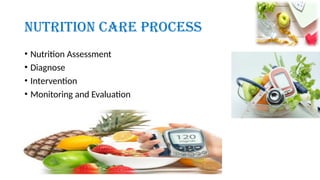
Nutrition Care Process
• Nutrition Assessment
• Diagnose
• Intervention
• Monitoring and Evaluation
Nutrition Intervention
• Purposely planned actions intended to positively change a nutrition
related behavior, Environmental condition, health status of
individuals.
• Nutritional intervention refers to corrective measures that
are undertaken to rectify the occurrence of overall
malnutrition or specific nutrient deficiency or excess
How Should We Intervene?
I. The causes of malnutrition are complex and differ among
individuals, among households, among communities, and
over time•
II. Generally, cost-effective and sustainable solutions must be
tailored to a particular set of circumstances
It consist of two parts
1. Planning
2. Implementation
Nutrition Intervention
 Household
 Community
 National
 International levels
Nutritional Stress
Response to Nutritional Stress
• Intake of nutrients excess than metabolic requirements of body
• Insufficient intake of nutrient than metabolic requirement of
body
• Intake of Nutrients insufficient to meet the metabolic needs.
Responses to Nutritional Stress
• Breast feeding
• Home-based fortification
• Improving household food security (quantity, quality, distribution)
• Improving household hygiene
• Food budgeting
1. Household Level
2. Community Level
• Growth Monitoring & Promotion
• Supplementary feeding
• Nutrition education activities
• Cooperatives
• Nutritional surveillance
• Food aid
• Conflict resolution
• National food & nutrition policies
Responses to Nutritional Stress
3. National Level
3. International Level
• Nutrition investments can help break the cycle of
• poverty and increase a country’s GDP by at leas 2-3% annually.
• Investing $1 in nutrition can result in a $30 return
• in improved health, schooling and economic
• productivity.
• There are proven interventions that could address
• these problems and save millions of lives
Nutritional Stress Reduction
• “WINDOW OF OPPORTUNITY” for high impact in reducing death and
disease and avoiding irreversible harm.
• There are two complementary approaches to reduce under nutrition
1. Direct /nutrition specific interventions
2. Indirect /nutrition sensitive interventions

Nutrition Intervention and its importance

  • 1.
  • 2.
    Nutrition Care Process •Nutrition Assessment • Diagnose • Intervention • Monitoring and Evaluation
  • 3.
    Nutrition Intervention • Purposelyplanned actions intended to positively change a nutrition related behavior, Environmental condition, health status of individuals. • Nutritional intervention refers to corrective measures that are undertaken to rectify the occurrence of overall malnutrition or specific nutrient deficiency or excess
  • 4.
    How Should WeIntervene? I. The causes of malnutrition are complex and differ among individuals, among households, among communities, and over time• II. Generally, cost-effective and sustainable solutions must be tailored to a particular set of circumstances It consist of two parts 1. Planning 2. Implementation Nutrition Intervention
  • 5.
     Household  Community National  International levels Nutritional Stress Response to Nutritional Stress • Intake of nutrients excess than metabolic requirements of body • Insufficient intake of nutrient than metabolic requirement of body • Intake of Nutrients insufficient to meet the metabolic needs.
  • 6.
    Responses to NutritionalStress • Breast feeding • Home-based fortification • Improving household food security (quantity, quality, distribution) • Improving household hygiene • Food budgeting 1. Household Level 2. Community Level • Growth Monitoring & Promotion • Supplementary feeding • Nutrition education activities • Cooperatives
  • 7.
    • Nutritional surveillance •Food aid • Conflict resolution • National food & nutrition policies Responses to Nutritional Stress 3. National Level 3. International Level • Nutrition investments can help break the cycle of • poverty and increase a country’s GDP by at leas 2-3% annually. • Investing $1 in nutrition can result in a $30 return • in improved health, schooling and economic • productivity. • There are proven interventions that could address • these problems and save millions of lives
  • 8.
    Nutritional Stress Reduction •“WINDOW OF OPPORTUNITY” for high impact in reducing death and disease and avoiding irreversible harm. • There are two complementary approaches to reduce under nutrition 1. Direct /nutrition specific interventions 2. Indirect /nutrition sensitive interventions