Deciding between the many varieties of ear plugs

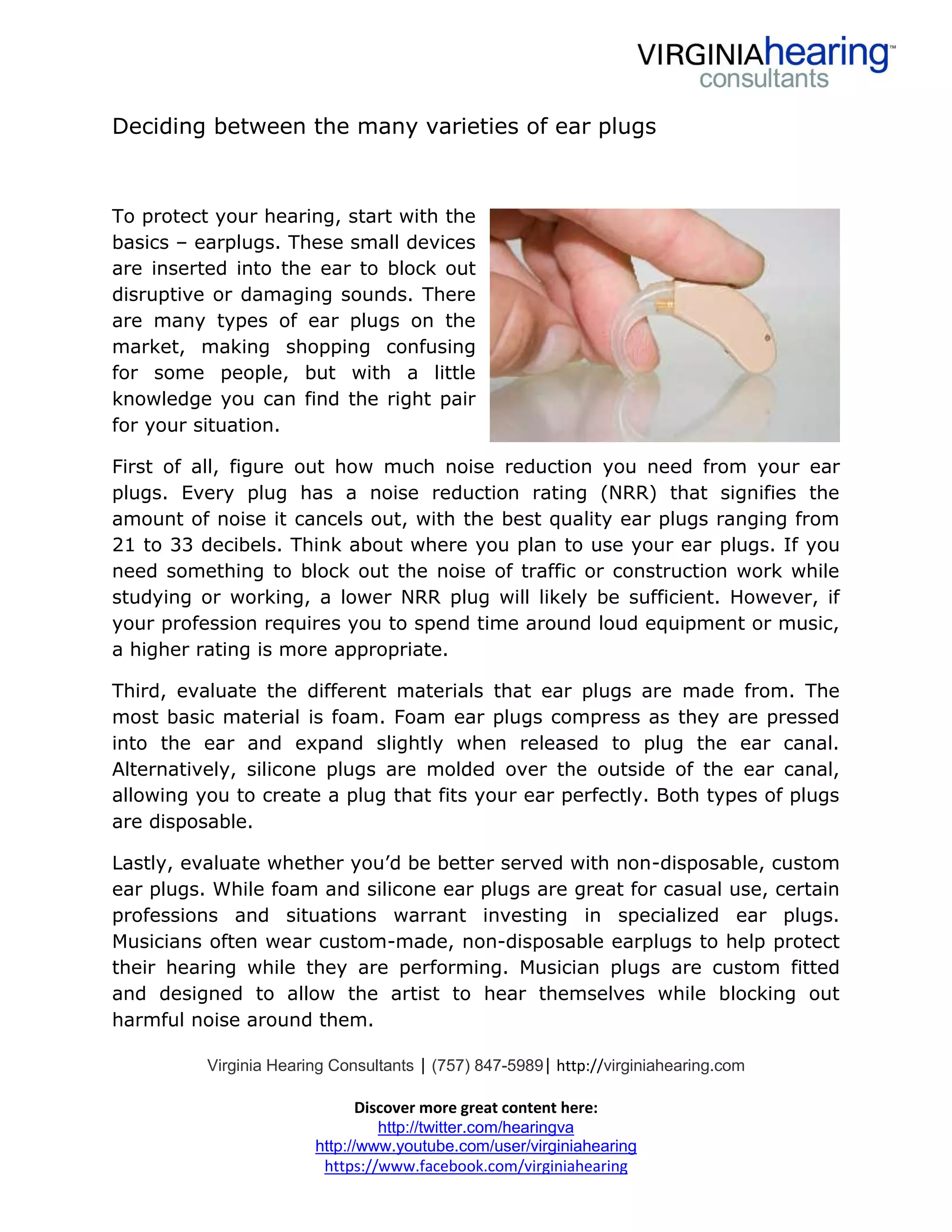
To protect your hearing, start with the
basics – earplugs. These small devices
are inserted into the ear to block out
disruptive or damaging sounds. There
are many types of ear plugs on the
market, making shopping confusing
for some people, but with a little
knowledge you can find the right pair
for your situation.
First of all, figure out how much noise reduction you need from your ear
plugs. Every plug has a noise reduction rating (NRR) that signifies the
amount of noise it cancels out, with the best quality ear plugs ranging from
21 to 33 decibels. Think about where you plan to use your ear plugs. If you
need something to block out the noise of traffic or construction work while
studying or working, a lower NRR plug will likely be sufficient. However, if
your profession requires you to spend time around loud equipment or music,
a higher rating is more appropriate.
Third, evaluate the different materials that ear plugs are made from. The
most basic material is foam. Foam ear plugs compress as they are pressed
into the ear and expand slightly when released to plug the ear canal.
Alternatively, silicone plugs are molded over the outside of the ear canal,
allowing you to create a plug that fits your ear perfectly. Both types of plugs
are disposable.
Lastly, evaluate whether you’d be better served with non-disposable, custom
ear plugs. While foam and silicone ear plugs are great for casual use, certain
professions and situations warrant investing in specialized ear plugs.
Musicians often wear custom-made, non-disposable earplugs to help protect
their hearing while they are performing. Musician plugs are custom fitted
and designed to allow the artist to hear themselves while blocking out
harmful noise around them.
Virginia Hearing Consultants | (757) 847-5989| http://virginiahearing.com

Discover more great content here:
http://twitter.com/hearingva
http://www.youtube.com/user/virginiahearing
https://www.facebook.com/virginiahearing
A totally different use of ear plugs is to block out a partner’s snoring while
sleeping. Ear plugs for sleeping are fairly advanced. They are able to block
out the sounds of snoring while permitting you to hear your alarm clock or
fire alarm.
When comparing ear plugs for sleeping, be sure to test them out with your
head tilted sideways. You’ll want to choose a pair that fits well while lying
down.
Although there are many choices of ear plugs, a little advanced planning will
help you narrow in on the ideal pair.

Virginia Hearing Consultants | (757) 847-5989| http://virginiahearing.com

Discover more great content here:
http://twitter.com/hearingva
http://www.youtube.com/user/virginiahearing
https://www.facebook.com/virginiahearing

Deciding Between the Many Varieties of Ear Plugs

  • 1.
    Deciding between themany varieties of ear plugs To protect your hearing, start with the basics – earplugs. These small devices are inserted into the ear to block out disruptive or damaging sounds. There are many types of ear plugs on the market, making shopping confusing for some people, but with a little knowledge you can find the right pair for your situation. First of all, figure out how much noise reduction you need from your ear plugs. Every plug has a noise reduction rating (NRR) that signifies the amount of noise it cancels out, with the best quality ear plugs ranging from 21 to 33 decibels. Think about where you plan to use your ear plugs. If you need something to block out the noise of traffic or construction work while studying or working, a lower NRR plug will likely be sufficient. However, if your profession requires you to spend time around loud equipment or music, a higher rating is more appropriate. Third, evaluate the different materials that ear plugs are made from. The most basic material is foam. Foam ear plugs compress as they are pressed into the ear and expand slightly when released to plug the ear canal. Alternatively, silicone plugs are molded over the outside of the ear canal, allowing you to create a plug that fits your ear perfectly. Both types of plugs are disposable. Lastly, evaluate whether you’d be better served with non-disposable, custom ear plugs. While foam and silicone ear plugs are great for casual use, certain professions and situations warrant investing in specialized ear plugs. Musicians often wear custom-made, non-disposable earplugs to help protect their hearing while they are performing. Musician plugs are custom fitted and designed to allow the artist to hear themselves while blocking out harmful noise around them. Virginia Hearing Consultants | (757) 847-5989| http://virginiahearing.com Discover more great content here: http://twitter.com/hearingva http://www.youtube.com/user/virginiahearing https://www.facebook.com/virginiahearing
  • 2.
    A totally differentuse of ear plugs is to block out a partner’s snoring while sleeping. Ear plugs for sleeping are fairly advanced. They are able to block out the sounds of snoring while permitting you to hear your alarm clock or fire alarm. When comparing ear plugs for sleeping, be sure to test them out with your head tilted sideways. You’ll want to choose a pair that fits well while lying down. Although there are many choices of ear plugs, a little advanced planning will help you narrow in on the ideal pair. Virginia Hearing Consultants | (757) 847-5989| http://virginiahearing.com Discover more great content here: http://twitter.com/hearingva http://www.youtube.com/user/virginiahearing https://www.facebook.com/virginiahearing