Deaf/Blind Lealani Aflague ED443: Assistive Technology Dr. J. Cyrus November 24, 2008
Objectives What is deaf-blindness? Statistics Impact on life Assistive Technology Organizations
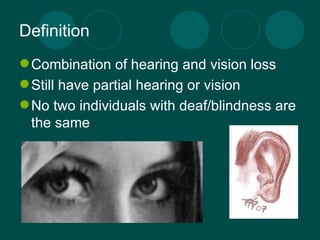
Definition  Combination of hearing and vision loss Still have partial hearing or vision No two individuals with deaf/blindness are the same
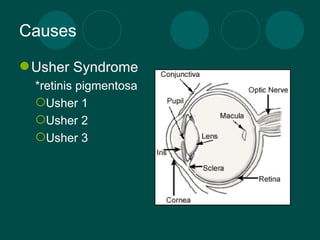
Causes Usher Syndrome *retinis pigmentosa  Usher 1 Usher 2 Usher 3
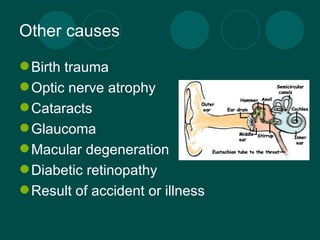
Other causes Birth trauma Optic nerve atrophy  Cataracts Glaucoma Macular degeneration Diabetic retinopathy  Result of accident or illness
National Statistics United States Department of Education Teaching Research Division at West Oregon State University
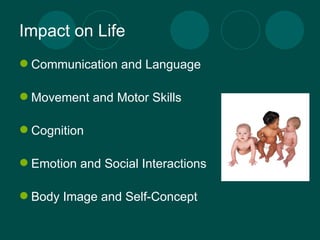
Impact on Life Communication and Language  Movement and Motor Skills Cognition Emotion and Social Interactions Body Image and Self-Concept
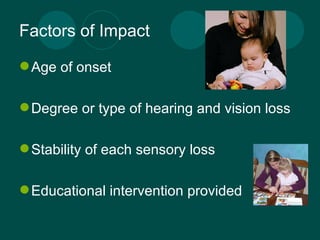
Factors of Impact Age of onset Degree or type of hearing and vision loss Stability of each sensory loss Educational intervention provided
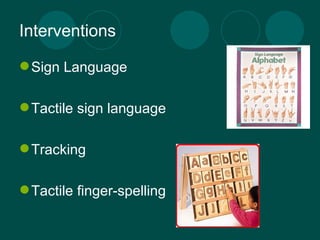
Interventions Sign Language Tactile sign language Tracking Tactile finger-spelling
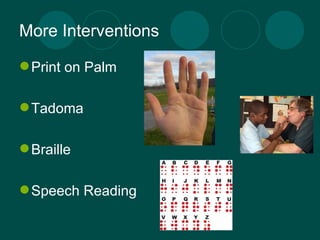
More Interventions Print on Palm Tadoma Braille Speech Reading
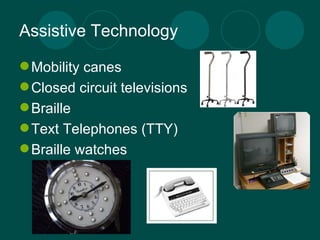
Assistive Technology Mobility canes Closed circuit televisions Braille Text Telephones (TTY) Braille watches
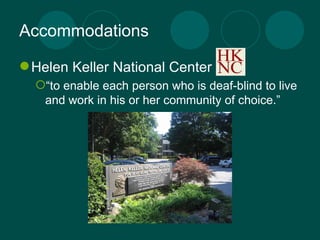
Accommodations Helen Keller National Center  “ to enable each person who is deaf-blind to live and work in his or her community of choice.”
Other Organizations American Association on the Deaf-Blind Florida Outreach Program National Consortium on Deaf-Blindness Deafblind UK National Family Association for Deaf-Blind
Video Time!!! http://www.youtube.com/watch?v=Rj5_t0wDkKQ
Summary Deaf-blindness is a very complex disability that requires much attention and effort from the parents, caretakers, and other professional to better the lives of individuals with the disability. There are several causes of the disability, but none of those causes can be predicted. Early Intervention, as well as other interventions can prove to be extremely helpful in teaching the individual about life skills and other areas of development that may be hindering the person’s ability. There are many assistive devices that could help as well, but the most important factor for helping these people is dedication; and this dedication can be found in people working with various organizations focusing their efforts on the deaf-blind community.
References Robbins, Nan. Educational Beginnings with Deaf-Blind Children. Perkins Publications. Massachusetts, 1960. Yoken, Carol. Living with Deaf-Blindness: nine profiles. The National Academy of Gallaudet College. Washington, D.C, 1979.
More references… California State Department of Education. Learning Steps: A Handbook for Persons Working with Deaf-Blind Children in Residential Settings. Office of State Printing. Sacramento, CA, 1976. National Family Association for Deaf-Blind http://www.nfadb.org/
Yet more references… National Consortium on Deaf-Blindness http://nationaldb.org/aboutDeafBlindness.php American Association of the Deaf-Blind http://www.aadb.org/ Florida Outreach Program http://www.deafblind.ufl.edu/definition.htm

Deaf & Blind

  • 1.
    Deaf/Blind Lealani AflagueED443: Assistive Technology Dr. J. Cyrus November 24, 2008
  • 2.
    Objectives What isdeaf-blindness? Statistics Impact on life Assistive Technology Organizations
  • 3.
    Definition Combinationof hearing and vision loss Still have partial hearing or vision No two individuals with deaf/blindness are the same
  • 4.
    Causes Usher Syndrome*retinis pigmentosa Usher 1 Usher 2 Usher 3
  • 5.
    Other causes Birthtrauma Optic nerve atrophy Cataracts Glaucoma Macular degeneration Diabetic retinopathy Result of accident or illness
  • 6.
    National Statistics UnitedStates Department of Education Teaching Research Division at West Oregon State University
  • 7.
    Impact on LifeCommunication and Language Movement and Motor Skills Cognition Emotion and Social Interactions Body Image and Self-Concept
  • 8.
    Factors of ImpactAge of onset Degree or type of hearing and vision loss Stability of each sensory loss Educational intervention provided
  • 9.
    Interventions Sign LanguageTactile sign language Tracking Tactile finger-spelling
  • 10.
    More Interventions Printon Palm Tadoma Braille Speech Reading
  • 11.
    Assistive Technology Mobilitycanes Closed circuit televisions Braille Text Telephones (TTY) Braille watches
  • 12.
    Accommodations Helen KellerNational Center “ to enable each person who is deaf-blind to live and work in his or her community of choice.”
  • 13.
    Other Organizations AmericanAssociation on the Deaf-Blind Florida Outreach Program National Consortium on Deaf-Blindness Deafblind UK National Family Association for Deaf-Blind
  • 14.
  • 15.
    Summary Deaf-blindness isa very complex disability that requires much attention and effort from the parents, caretakers, and other professional to better the lives of individuals with the disability. There are several causes of the disability, but none of those causes can be predicted. Early Intervention, as well as other interventions can prove to be extremely helpful in teaching the individual about life skills and other areas of development that may be hindering the person’s ability. There are many assistive devices that could help as well, but the most important factor for helping these people is dedication; and this dedication can be found in people working with various organizations focusing their efforts on the deaf-blind community.
  • 16.
    References Robbins, Nan.Educational Beginnings with Deaf-Blind Children. Perkins Publications. Massachusetts, 1960. Yoken, Carol. Living with Deaf-Blindness: nine profiles. The National Academy of Gallaudet College. Washington, D.C, 1979.
  • 17.
    More references… CaliforniaState Department of Education. Learning Steps: A Handbook for Persons Working with Deaf-Blind Children in Residential Settings. Office of State Printing. Sacramento, CA, 1976. National Family Association for Deaf-Blind http://www.nfadb.org/
  • 18.
    Yet more references…National Consortium on Deaf-Blindness http://nationaldb.org/aboutDeafBlindness.php American Association of the Deaf-Blind http://www.aadb.org/ Florida Outreach Program http://www.deafblind.ufl.edu/definition.htm