Prepared by Alan Morrison Version 1.0
Kickstarting “Digital”
Transformation with
Knowledge Graph
Technology
Enterprise Data Transformation &
Knowledge Graph Adoption
Semantic Arts DCAF Event Series
February 28, 2022
A bit about SA and me, the Estes Park Group
and the PKG working group
2
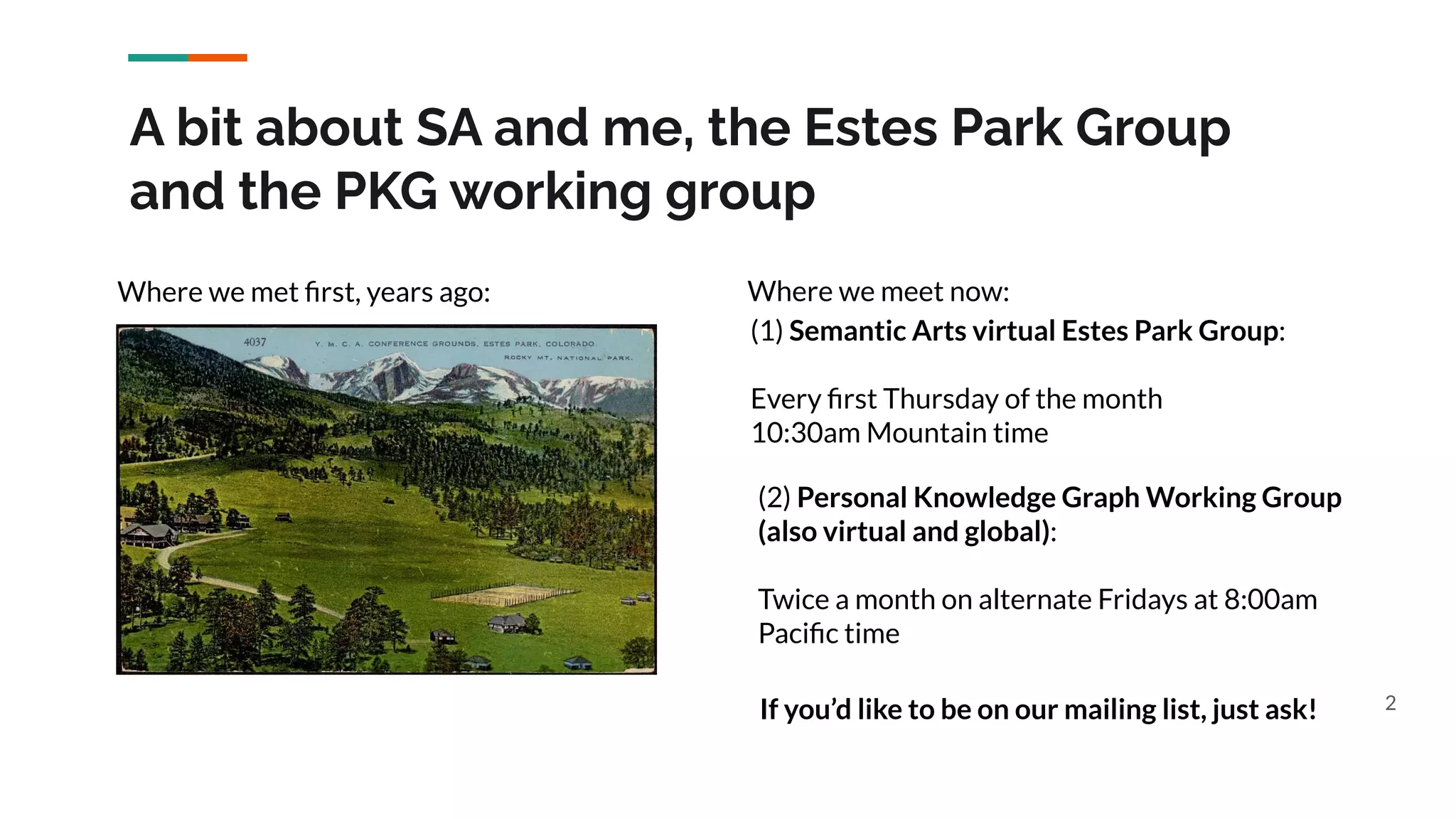
Where we met first, years ago: Where we meet now:
(1) Semantic Arts virtual Estes Park Group:
Every first Thursday of the month
10:30am Mountain time
(2) Personal Knowledge Graph Working Group
(also virtual and global):
Twice a month on alternate Fridays at 8:00am
Pacific time
If you’d like to be on our mailing list, just ask!
Version 1.0
Prepared by Alan Morrison
Outline
3
Transformation Related Trends
Where have we been? Compute, networking and storage
advances–but perennial AI winters
Where are we going? Digital twins first, then interoperability,
interactivity and scaling
What’s getting in the way? Installed base, legacy mindset, inertia and
tech myopia
How do we kickstart real transformation? A sound plan, leadership commitment,
guerrilla teams and tribal alliances
What’s the real opportunity? Interactive, dynamic twinned supply chains
Where have we been?
4
5
“Contrary to popular belief, digital transformation is less about technology and more
about people. You can pretty much buy any technology [emphasis mine], but your
ability to adapt to an even more digital future depends on developing the next
generation of skills, closing the gap between talent supply and demand, and
future-proofing your own and others’ potential.”
–Becky Frankiewicz, President of ManpowerGroup North America &
–Tomas Chamorro-Premuzic, Chief Innovation Officer at ManpowerGroup
“Digital Transformation Is About Talent, Not Technology.” HBR, May 6, 2020
Q: Typical digital transformation buzz
True or false?
A: Partly false. Passively buying tech for
business innovation makes you part of the
problem, not the solution.
● Tech, particularly mainstream business tech, is pervasive and parasitic.
● Just passively buying more business tech will guarantee you’ll fail.
● When it comes to transformative tech, build more and buy less.
● Don’t add to the Tower of Babel; get serious and build what will fix root
problems.
6
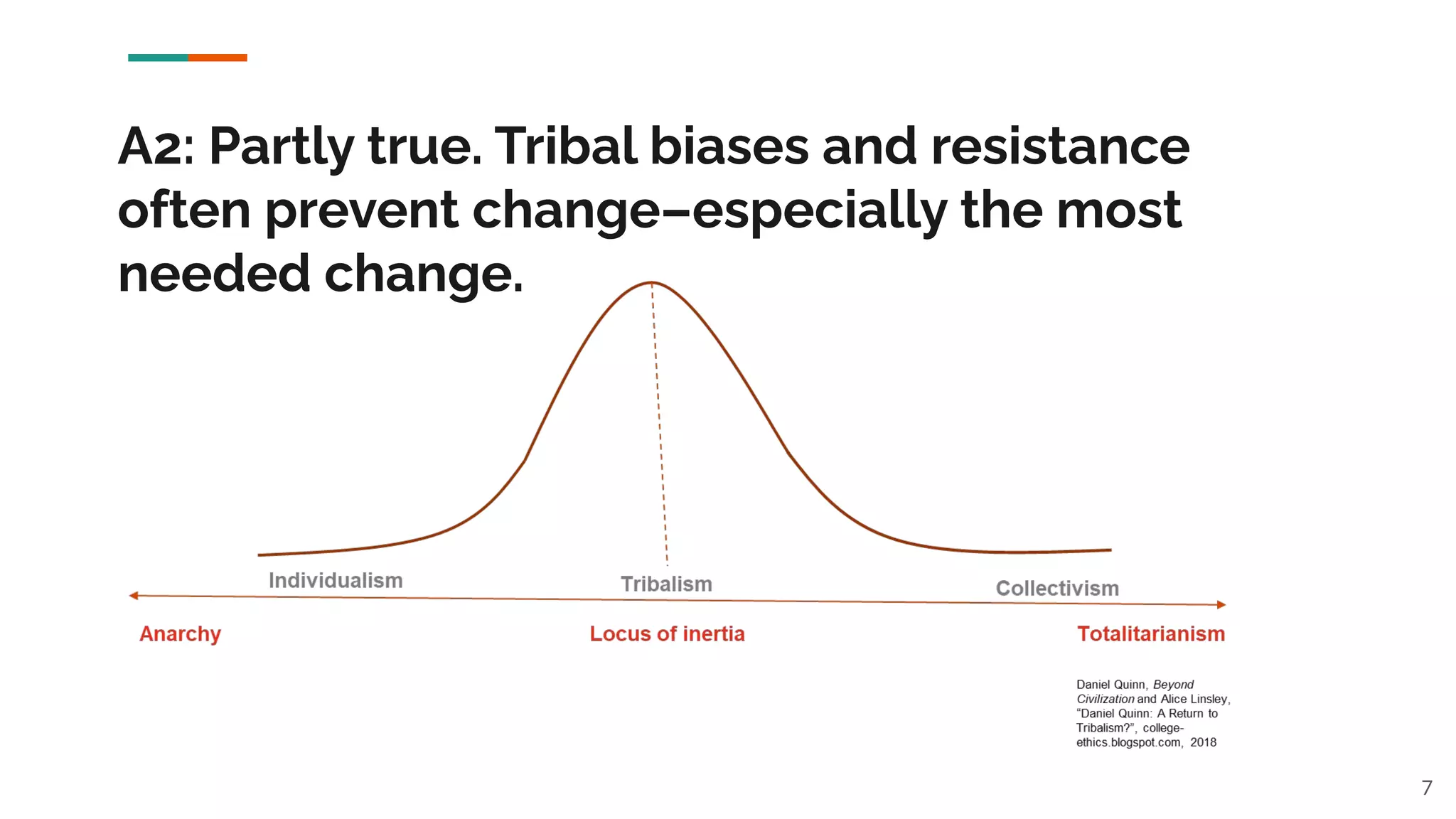
A2: Partly true. Tribal biases and resistance
often prevent change–especially the most
needed change.
7
IT’s Tower of Babel embodies the root problem:
50+ years of application-centric sprawl
8
Solution: Commit to using a knowledge graph
to kickstart for other kinds of innovation
9
Ontotext, 2022
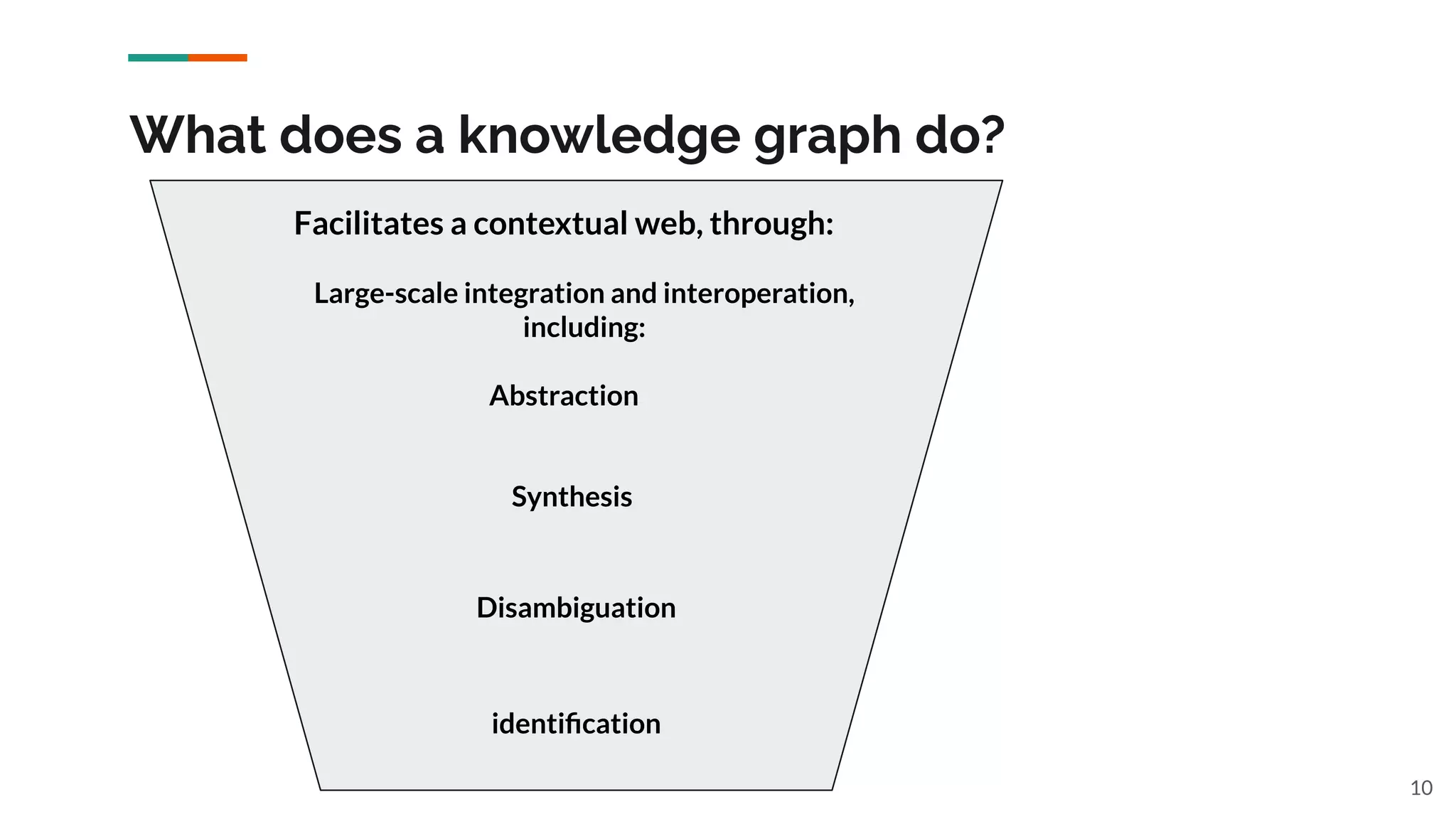
What does a knowledge graph do?
10
Abstraction
Synthesis
Disambiguation
Large-scale integration and interoperation,
including:
Facilitates a contextual web, through:
identification
Where are we now?
11
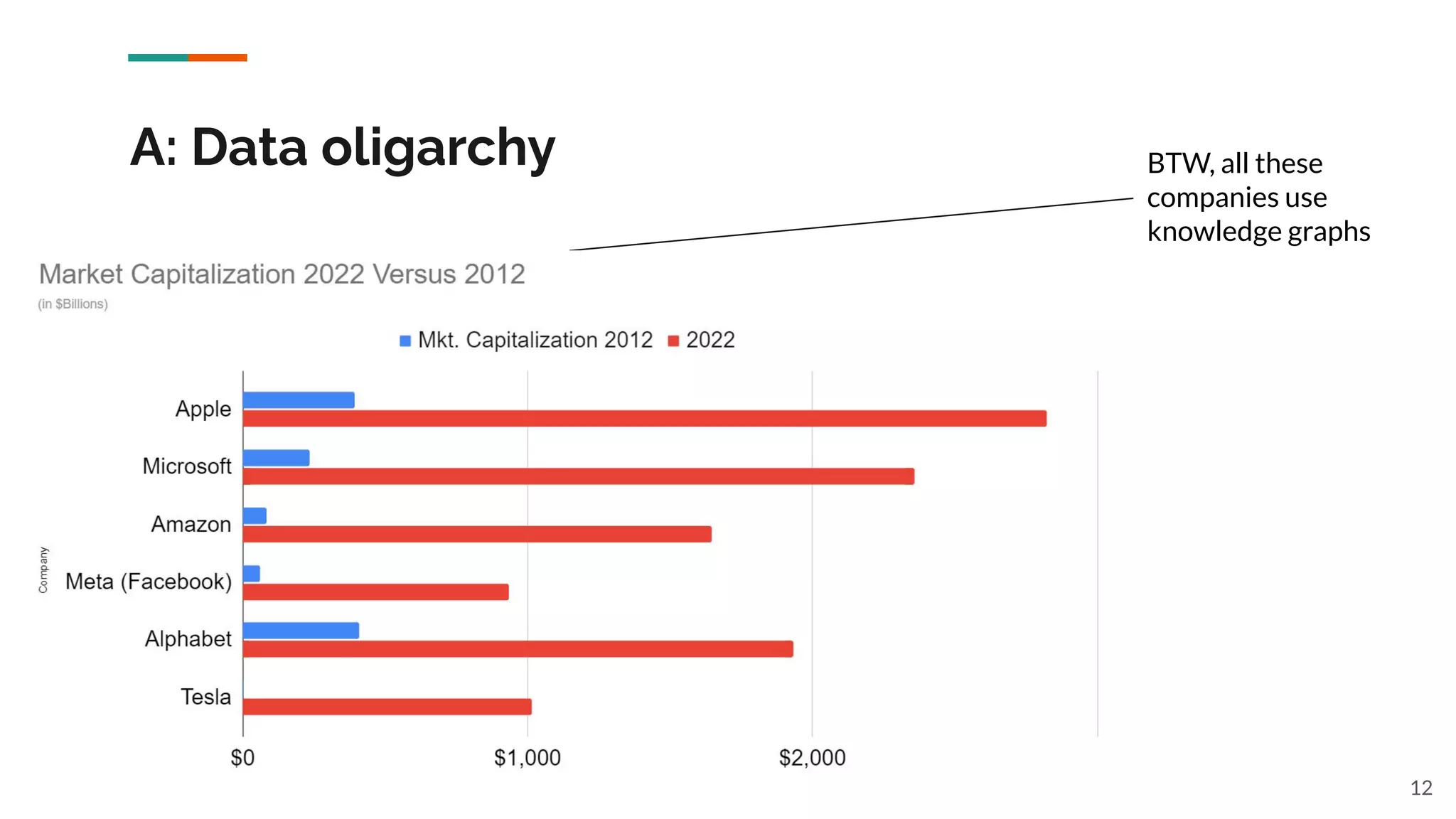
A: Data oligarchy
12
BTW, all these
companies use
knowledge graphs
A few stats on the (data) oligarchs
● Google could be storing 10 exabytes total at this point
● Apple uses Google’s cloud for user data=six exabytes
● Amazon has 1.4M+ servers
● ⅓ of internet users daily will hit a website built on AWS
infrastructure
● Facebook has been storing a new petabyte of data every two
days
● Microsoft has 1M+ servers
● Tesla has 2.5M+ cars on the road–a massive data farming
operation
13
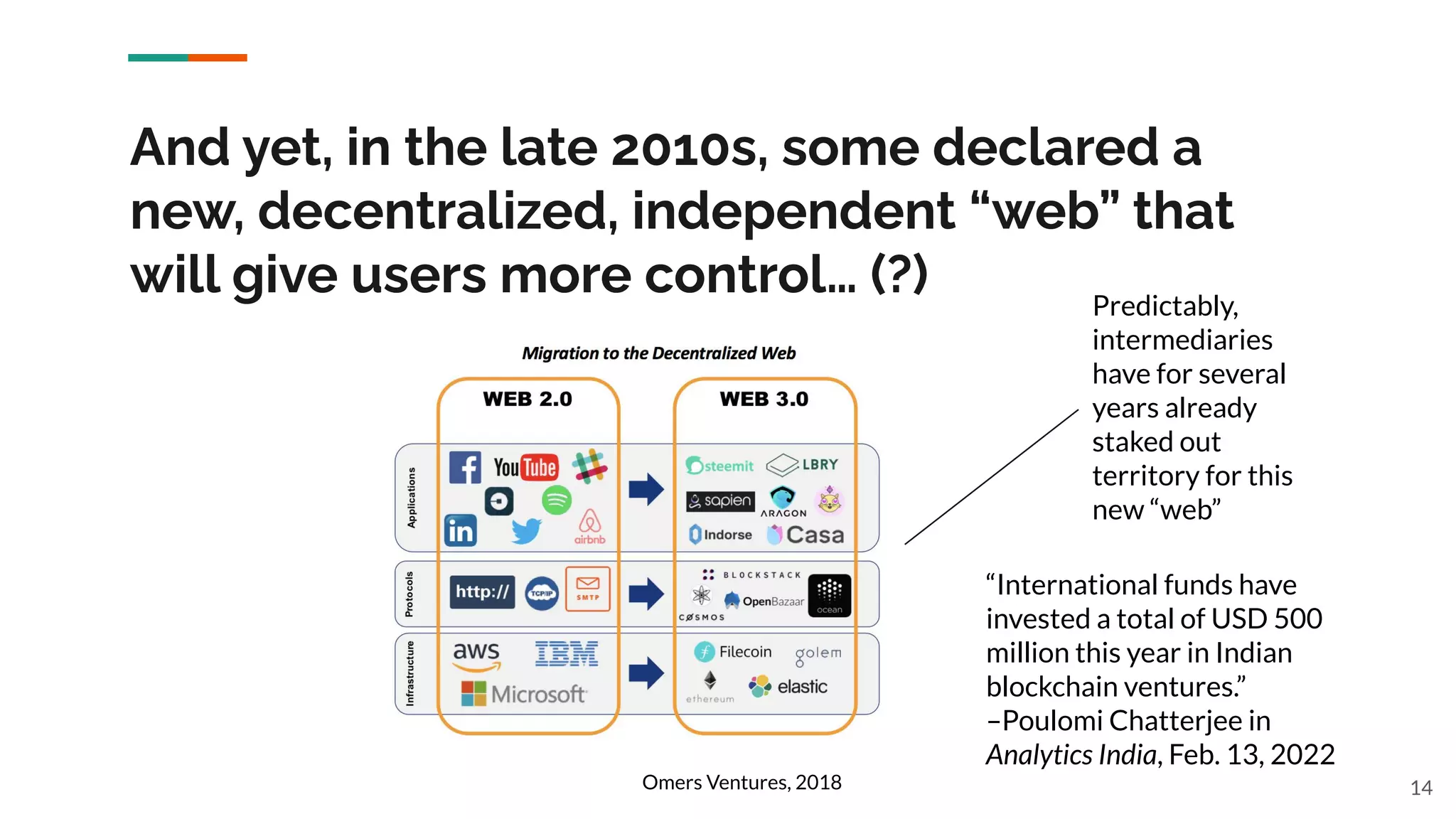
And yet, in the late 2010s, some declared a
new, decentralized, independent “web” that
will give users more control… (?)
14
Predictably,
intermediaries
have for several
years already
staked out
territory for this
new “web”
Omers Ventures, 2018
“International funds have
invested a total of USD 500
million this year in Indian
blockchain ventures.”
–Poulomi Chatterjee in
Analytics India, Feb. 13, 2022
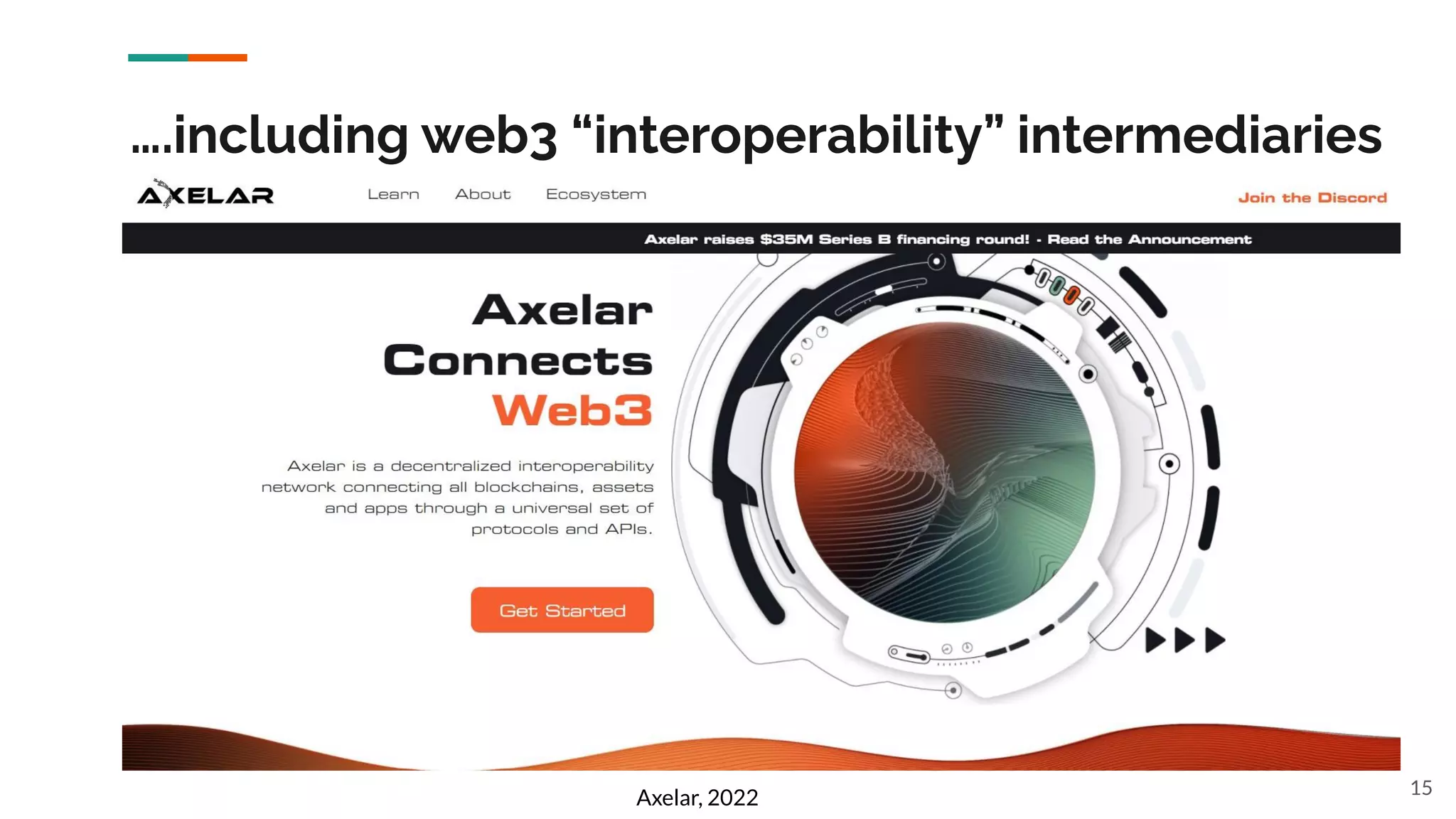
….including web3 “interoperability” intermediaries
15
Axelar, 2022
Where are we going?
16
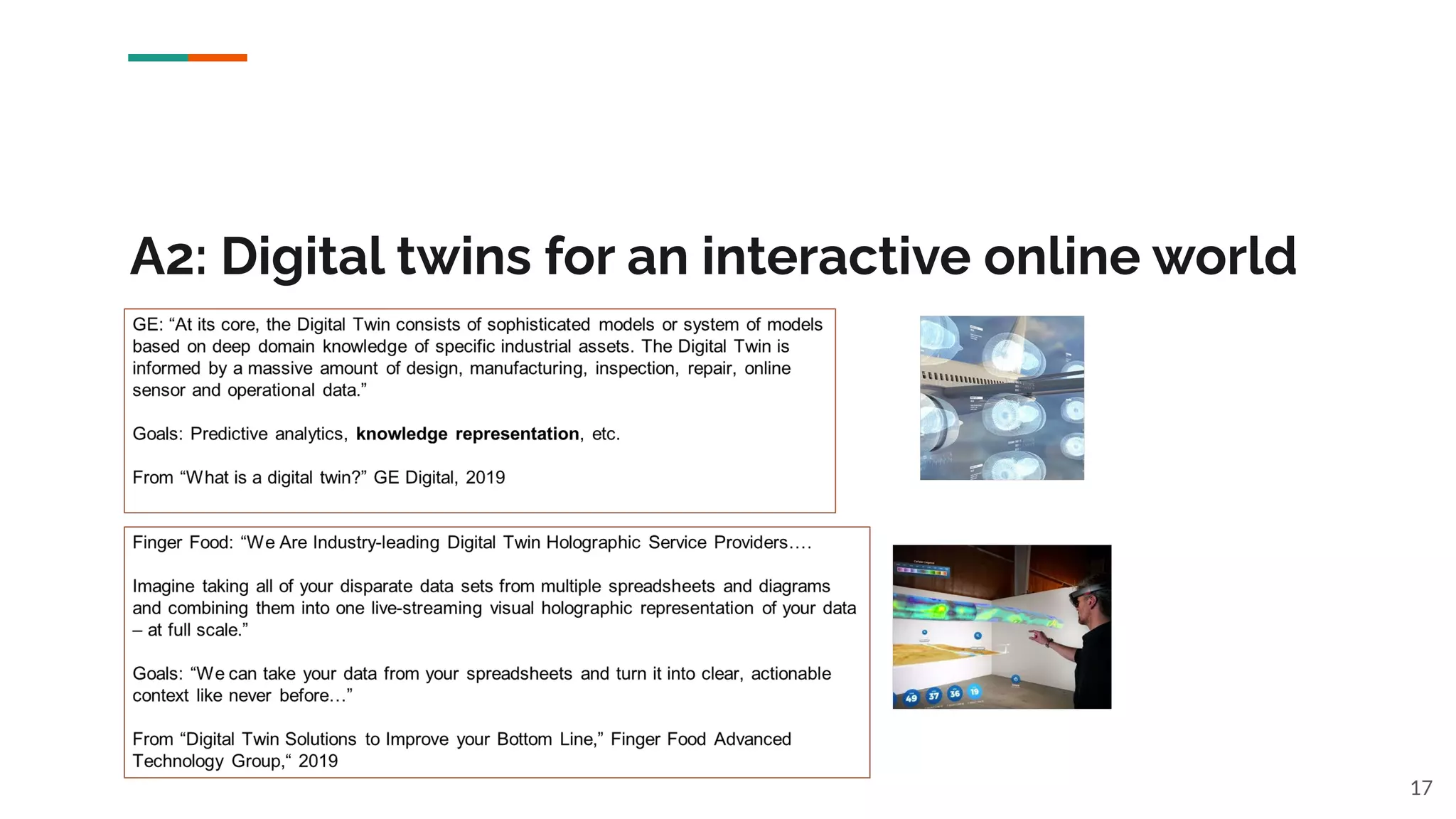
A2: Digital twins for an interactive online world
17
But interactive digital twins need an
interactive, contextualized data foundation
18
What’s getting in the way?
19
A: Pretending we’re solving problems
Surprise–Transformation requires transformative methods:
● Diagnosing the root cause
● Openness to new approaches
● Building a new foundation, step by step
● Focusing on key, but manageable pain points first
● Picking the right teams to lead innovation projects
● Proving the value of the solution you’re building
● Infiltrating the organizational tribes that are at firstresistant
● Then long-term commitment by leadership, with a bit of faith
20
A2: New ways of working
take a long time
21
Consider how long it took to build out the
world’s oil & gas infrastructure.
Now think about where we are with traditional
data management:
● How do we free ourselves from legacy IT?
● How do we build sharable digital twins?
● How do we scale a shared data
infrastructure?
● How do we collaborate at scale?
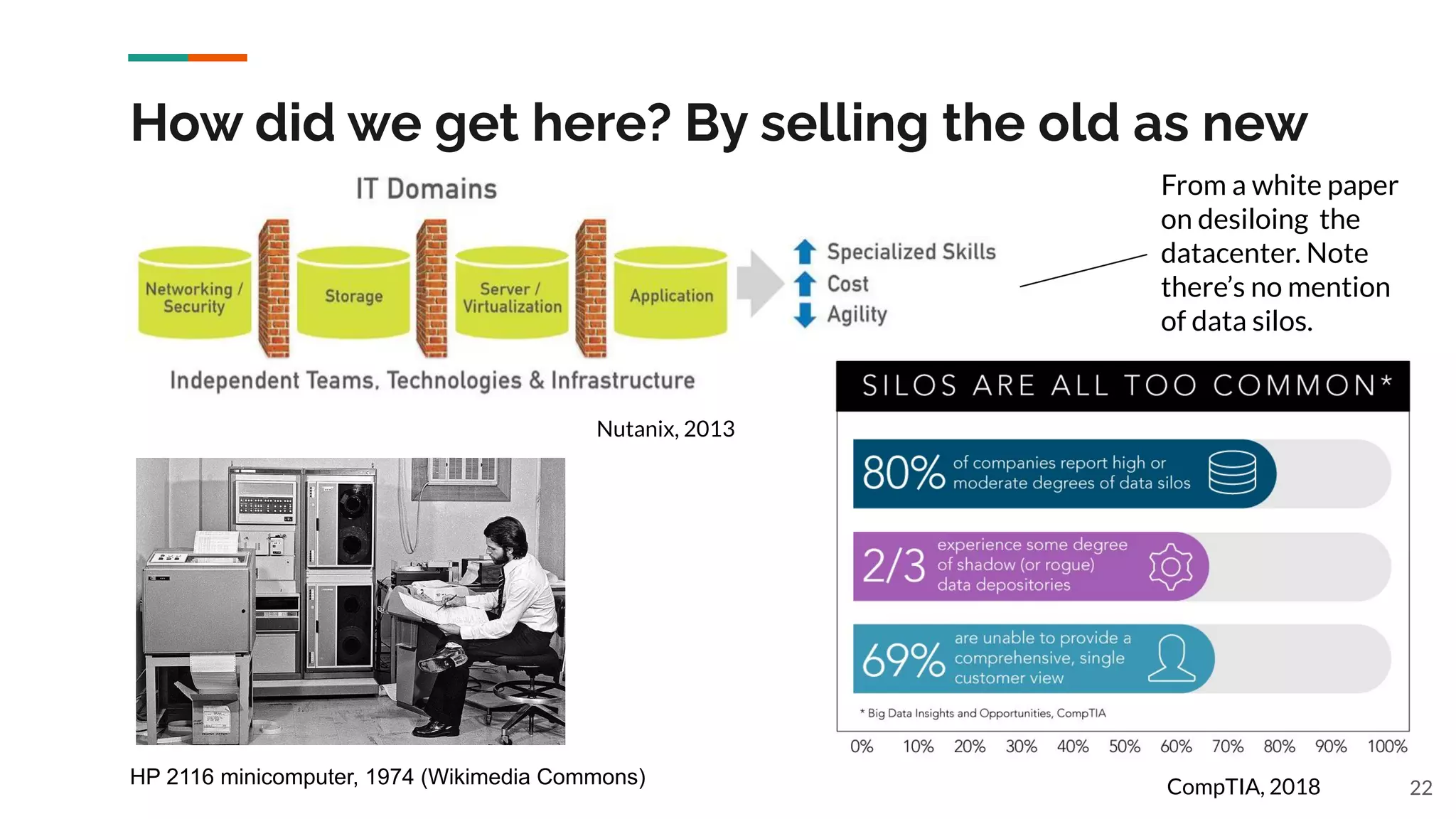
How did we get here? By selling the old as new
22
Nutanix, 2013
CompTIA, 2018
From a white paper
on desiloing the
datacenter. Note
there’s no mention
of data silos.
HP 2116 minicomputer, 1974 (Wikimedia Commons)
The mentality of provincial IT is still prevalent today
● We have the compute, networking and storage today to build an intelligent web
● But we have the siloed mentality of the 1970s:
○ Business units subscribe to their own SaaSes
○ IT departments defend their own turf
○ Only tabular, structured data is catalogued
○ Data, content and knowledge are all managed separately
○ Data is treated as inorganic and static, rather than organically
23
How do we kickstart real
transformation?
24
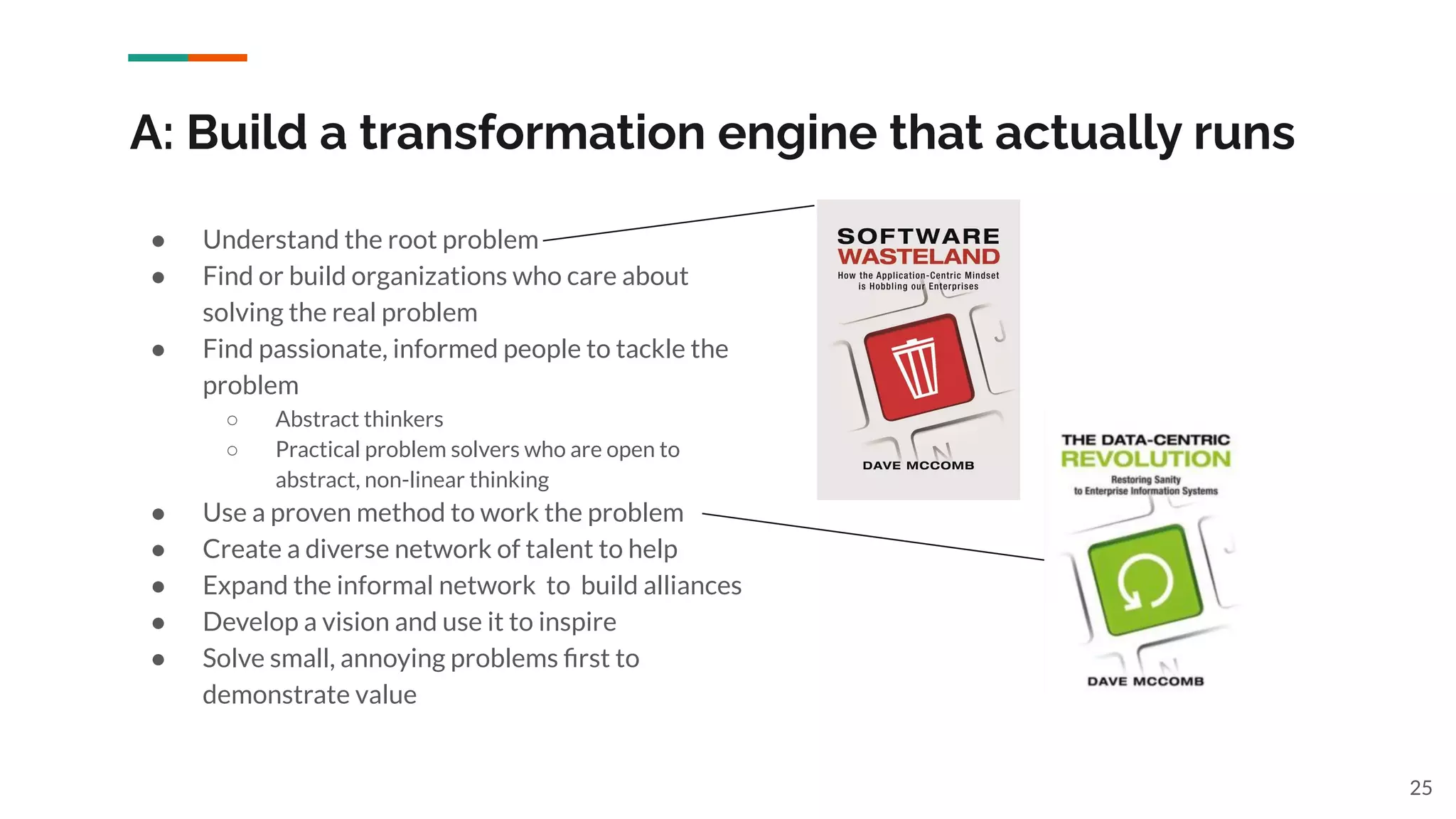
A: Build a transformation engine that actually runs
● Understand the root problem
● Find or build organizations who care about
solving the real problem
● Find passionate, informed people to tackle the
problem
○ Abstract thinkers
○ Practical problem solvers who are open to
abstract, non-linear thinking
● Use a proven method to work the problem
● Create a diverse network of talent to help
● Expand the informal network to build alliances
● Develop a vision and use it to inspire
● Solve small, annoying problems first to
demonstrate value
25
What’s the real opportunity?
26
A1: Connected,
scaled out and
contextualized
business
intelligence
27
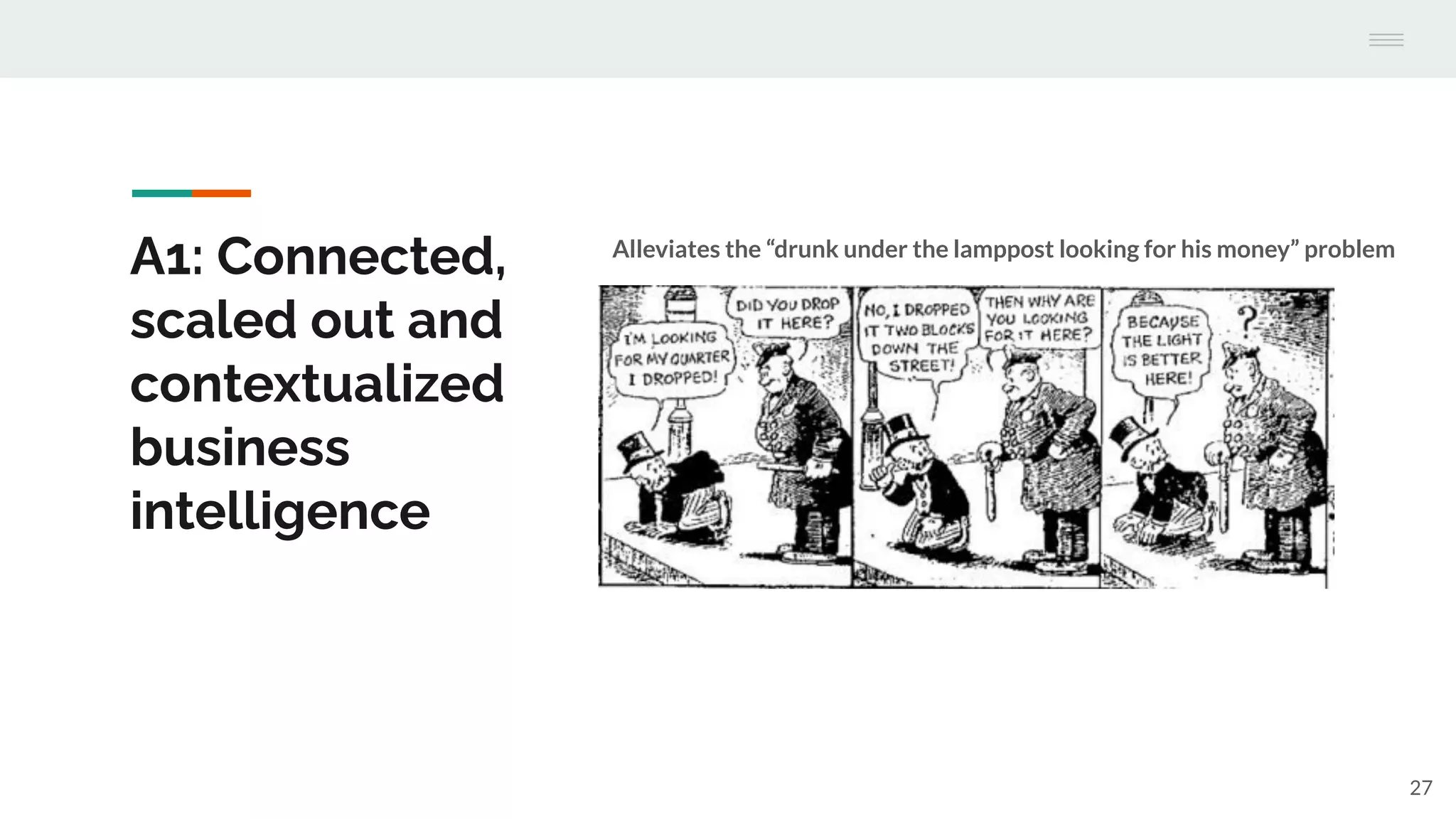
Alleviates the “drunk under the lamppost looking for his money” problem
A2: Scaled out, purpose-specific intelligence
platforms and communities
28
Blue Brain
Nexus–Reverse
engineering the brain
Diffbot–Crawling the whole
web for ecommerce
intelligence
Strise.ai–Bringing together
160,000 sources for
Anti-money laundering and
fraud detection
Montefiore/Einstein–A
Improve hospital outcomes and
efficiencies at the same time
with a KG foundation
A3: A means of end-to-end, scalable
intelligence sharing for supply chains
29
Graphmetrix: Smart document sharing for
large-scale construction projects using SOLID pods
OriginTrail.io: Decentralized
supply chain tracking and tracing
using knowledge graphs +
blockchains
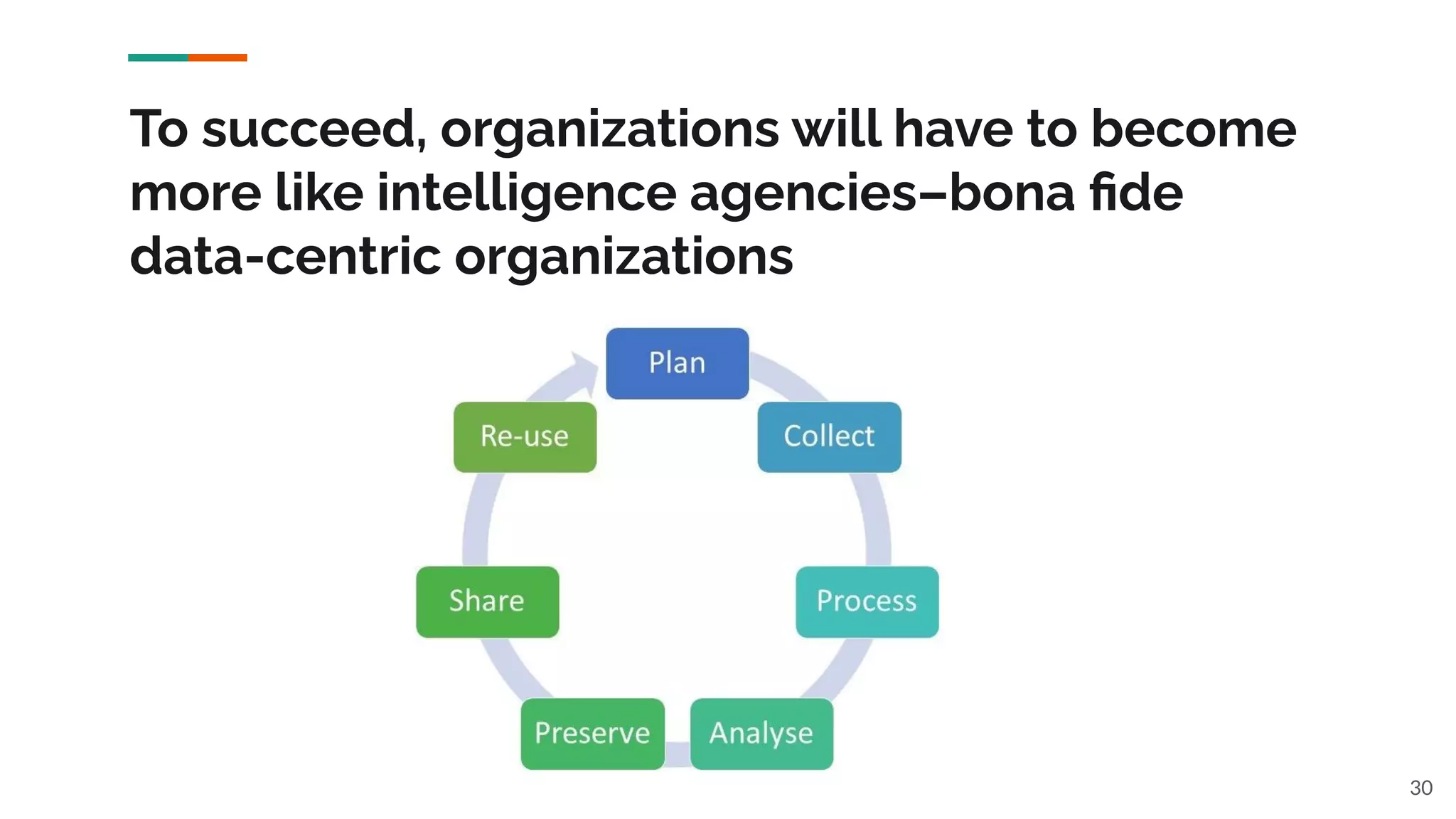
To succeed, organizations will have to become
more like intelligence agencies–bona fide
data-centric organizations
30
Prepared by Alan Morrison Version 1.0
Look forward to chatting with you.
Alan Morrison
Data Science Central
LinkedIn | Twitter | Quora | Slideshare
+1 408 205 5109
a.s.morrison@gmail.com
31

Dcaf transformation & kg adoption 2022 -alan morrison

  • 1.
    Prepared by AlanMorrison Version 1.0 Kickstarting “Digital” Transformation with Knowledge Graph Technology Enterprise Data Transformation & Knowledge Graph Adoption Semantic Arts DCAF Event Series February 28, 2022
  • 2.
    A bit aboutSA and me, the Estes Park Group and the PKG working group 2 Where we met first, years ago: Where we meet now: (1) Semantic Arts virtual Estes Park Group: Every first Thursday of the month 10:30am Mountain time (2) Personal Knowledge Graph Working Group (also virtual and global): Twice a month on alternate Fridays at 8:00am Pacific time If you’d like to be on our mailing list, just ask!
  • 3.
    Version 1.0 Prepared byAlan Morrison Outline 3 Transformation Related Trends Where have we been? Compute, networking and storage advances–but perennial AI winters Where are we going? Digital twins first, then interoperability, interactivity and scaling What’s getting in the way? Installed base, legacy mindset, inertia and tech myopia How do we kickstart real transformation? A sound plan, leadership commitment, guerrilla teams and tribal alliances What’s the real opportunity? Interactive, dynamic twinned supply chains
  • 4.
  • 5.
    5 “Contrary to popularbelief, digital transformation is less about technology and more about people. You can pretty much buy any technology [emphasis mine], but your ability to adapt to an even more digital future depends on developing the next generation of skills, closing the gap between talent supply and demand, and future-proofing your own and others’ potential.” –Becky Frankiewicz, President of ManpowerGroup North America & –Tomas Chamorro-Premuzic, Chief Innovation Officer at ManpowerGroup “Digital Transformation Is About Talent, Not Technology.” HBR, May 6, 2020 Q: Typical digital transformation buzz True or false?
  • 6.
    A: Partly false.Passively buying tech for business innovation makes you part of the problem, not the solution. ● Tech, particularly mainstream business tech, is pervasive and parasitic. ● Just passively buying more business tech will guarantee you’ll fail. ● When it comes to transformative tech, build more and buy less. ● Don’t add to the Tower of Babel; get serious and build what will fix root problems. 6
  • 7.
    A2: Partly true.Tribal biases and resistance often prevent change–especially the most needed change. 7
  • 8.
    IT’s Tower ofBabel embodies the root problem: 50+ years of application-centric sprawl 8
  • 9.
    Solution: Commit tousing a knowledge graph to kickstart for other kinds of innovation 9 Ontotext, 2022
  • 10.
    What does aknowledge graph do? 10 Abstraction Synthesis Disambiguation Large-scale integration and interoperation, including: Facilitates a contextual web, through: identification
  • 11.
    Where are wenow? 11
  • 12.
    A: Data oligarchy 12 BTW,all these companies use knowledge graphs
  • 13.
    A few statson the (data) oligarchs ● Google could be storing 10 exabytes total at this point ● Apple uses Google’s cloud for user data=six exabytes ● Amazon has 1.4M+ servers ● ⅓ of internet users daily will hit a website built on AWS infrastructure ● Facebook has been storing a new petabyte of data every two days ● Microsoft has 1M+ servers ● Tesla has 2.5M+ cars on the road–a massive data farming operation 13
  • 14.
    And yet, inthe late 2010s, some declared a new, decentralized, independent “web” that will give users more control… (?) 14 Predictably, intermediaries have for several years already staked out territory for this new “web” Omers Ventures, 2018 “International funds have invested a total of USD 500 million this year in Indian blockchain ventures.” –Poulomi Chatterjee in Analytics India, Feb. 13, 2022
  • 15.
    ….including web3 “interoperability”intermediaries 15 Axelar, 2022
  • 16.
    Where are wegoing? 16
  • 17.
    A2: Digital twinsfor an interactive online world 17
  • 18.
    But interactive digitaltwins need an interactive, contextualized data foundation 18
  • 19.
  • 20.
    A: Pretending we’resolving problems Surprise–Transformation requires transformative methods: ● Diagnosing the root cause ● Openness to new approaches ● Building a new foundation, step by step ● Focusing on key, but manageable pain points first ● Picking the right teams to lead innovation projects ● Proving the value of the solution you’re building ● Infiltrating the organizational tribes that are at firstresistant ● Then long-term commitment by leadership, with a bit of faith 20
  • 21.
    A2: New waysof working take a long time 21 Consider how long it took to build out the world’s oil & gas infrastructure. Now think about where we are with traditional data management: ● How do we free ourselves from legacy IT? ● How do we build sharable digital twins? ● How do we scale a shared data infrastructure? ● How do we collaborate at scale?
  • 22.
    How did weget here? By selling the old as new 22 Nutanix, 2013 CompTIA, 2018 From a white paper on desiloing the datacenter. Note there’s no mention of data silos. HP 2116 minicomputer, 1974 (Wikimedia Commons)
  • 23.
    The mentality ofprovincial IT is still prevalent today ● We have the compute, networking and storage today to build an intelligent web ● But we have the siloed mentality of the 1970s: ○ Business units subscribe to their own SaaSes ○ IT departments defend their own turf ○ Only tabular, structured data is catalogued ○ Data, content and knowledge are all managed separately ○ Data is treated as inorganic and static, rather than organically 23
  • 24.
    How do wekickstart real transformation? 24
  • 25.
    A: Build atransformation engine that actually runs ● Understand the root problem ● Find or build organizations who care about solving the real problem ● Find passionate, informed people to tackle the problem ○ Abstract thinkers ○ Practical problem solvers who are open to abstract, non-linear thinking ● Use a proven method to work the problem ● Create a diverse network of talent to help ● Expand the informal network to build alliances ● Develop a vision and use it to inspire ● Solve small, annoying problems first to demonstrate value 25
  • 26.
    What’s the realopportunity? 26
  • 27.
    A1: Connected, scaled outand contextualized business intelligence 27 Alleviates the “drunk under the lamppost looking for his money” problem
  • 28.
    A2: Scaled out,purpose-specific intelligence platforms and communities 28 Blue Brain Nexus–Reverse engineering the brain Diffbot–Crawling the whole web for ecommerce intelligence Strise.ai–Bringing together 160,000 sources for Anti-money laundering and fraud detection Montefiore/Einstein–A Improve hospital outcomes and efficiencies at the same time with a KG foundation
  • 29.
    A3: A meansof end-to-end, scalable intelligence sharing for supply chains 29 Graphmetrix: Smart document sharing for large-scale construction projects using SOLID pods OriginTrail.io: Decentralized supply chain tracking and tracing using knowledge graphs + blockchains
  • 30.
    To succeed, organizationswill have to become more like intelligence agencies–bona fide data-centric organizations 30
  • 31.
    Prepared by AlanMorrison Version 1.0 Look forward to chatting with you. Alan Morrison Data Science Central LinkedIn | Twitter | Quora | Slideshare +1 408 205 5109 a.s.morrison@gmail.com 31