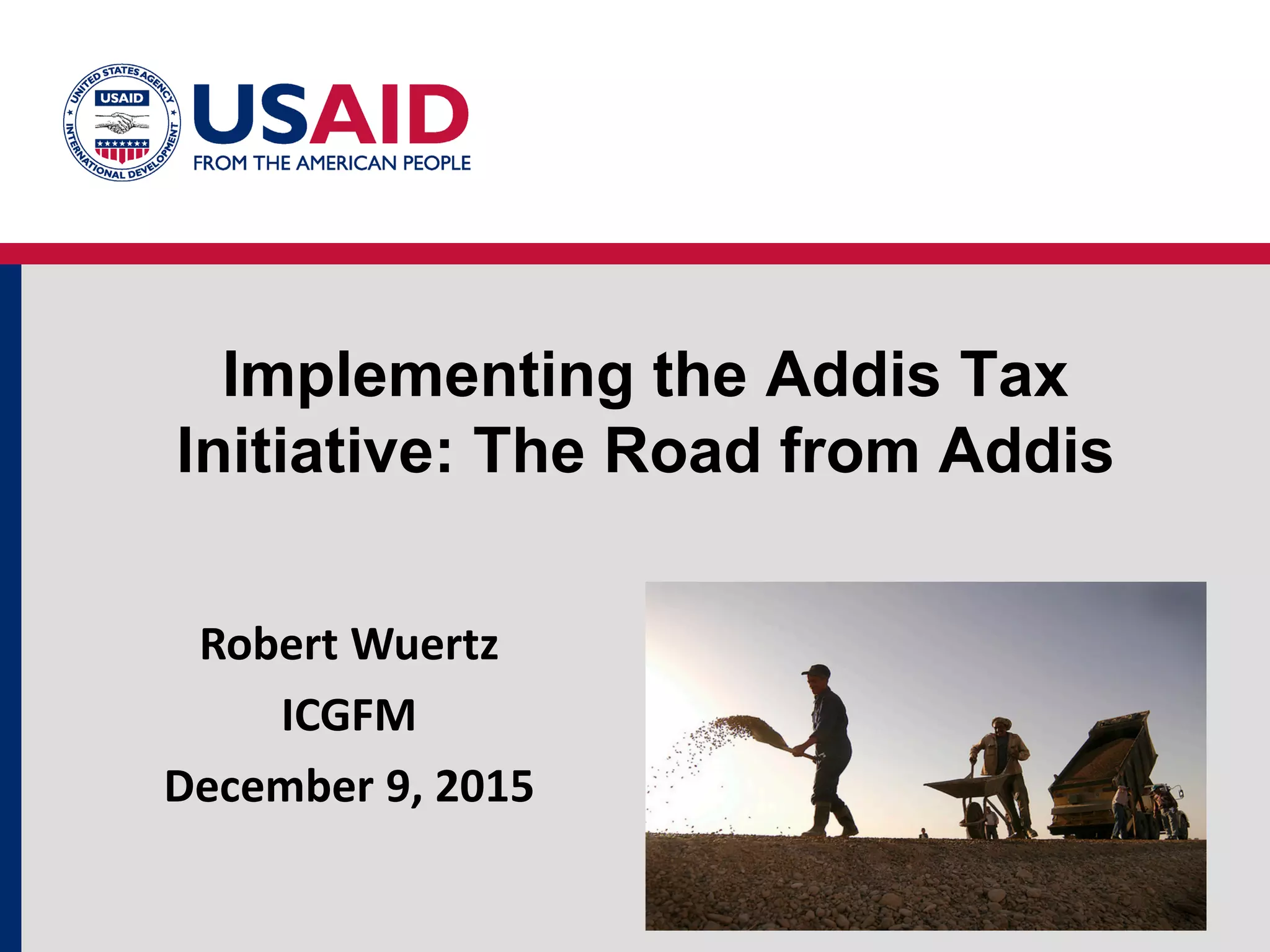
Implementing the Addis Tax
Initiative: The Road from Addis
Robert Wuertz
ICGFM
December 9, 2015
Today’s Topics
• What’s with Addis?
• Movement since July
• Other Pieces of the DRM puzzle
The process in which countries raise their own
funds to provide for their people
What is DRM?
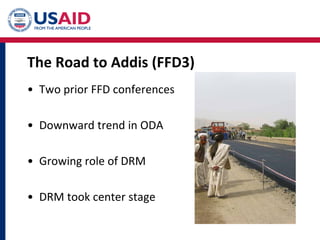
The Road to Addis (FFD3)
• Two prior FFD conferences
• Downward trend in ODA
• Growing role of DRM
• DRM took center stage
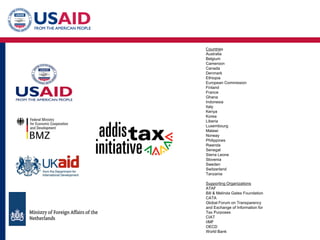
Countries
Australia
Belgium
Cameroon
Canada
Denmark
Ethiopia
European Commission
Finland
France
Ghana
Indonesia
Italy
Kenya
Korea
Liberia
Luxembourg
Malawi
Norway
Philippines
Rwanda
Senegal
Sierra Leone
Slovenia
Sweden
Switzerland
Tanzania
Supporting Organizations
ATAF
Bill & Melinda Gates Foundation
CATA
Global Forum on Transparency
and Exchange of Information for
Tax Purposes
CIAT
IIMF
OECD
World Bank
What is ATI?
• A partnership to improve DRM
• Donors agreed to substantially increase funding
of DRM by 2020
• Developing countries agreed to raise revenues
and use the funds effectively to pursue Strategic
Development Goal (SDGs)
ATI Principles Address:
• The imperative to both raise domestic resources
and channel them toward effective public
services
• The importance of fostering fair, efficient and
transparent tax systems and an equitable
distribution of tax burdens and benefits
• The role of broad-based dialogue in ensuring
country ownership, implementation and
accountability
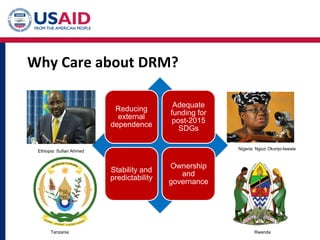
Why Care about DRM?
Reducing
external
dependence
Adequate
funding for
post-2015
SDGs
Stability and
predictability
Ownership
and
governance
Ethiopia: Sufian Ahmed
Nigeria: Ngozi Okonjo-Iweala
Tanzania Rwanda
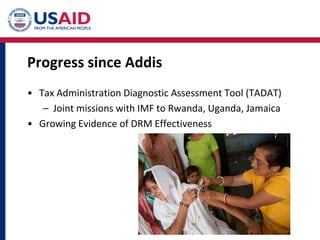
Progress since Addis
• Tax Administration Diagnostic Assessment Tool (TADAT)
– Joint missions with IMF to Rwanda, Uganda, Jamaica
• Growing Evidence of DRM Effectiveness
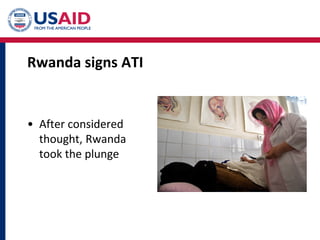
Rwanda signs ATI
• After considered
thought, Rwanda
took the plunge
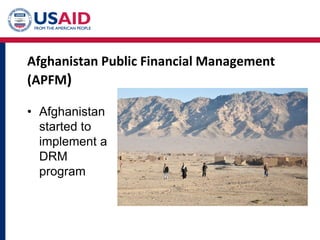
Afghanistan Public Financial Management
(APFM)
• Afghanistan
started to
implement a
DRM
program
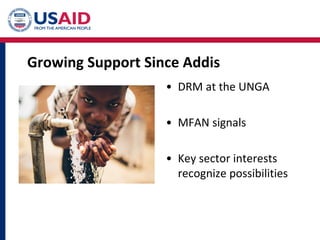
Growing Support Since Addis
• DRM at the UNGA
• MFAN signals
• Key sector interests
recognize possibilities
Other Developments
• Base Erosion and Profit Shifting
Other Developments
• Base Erosion and Profit Shifting (BEPS)
• Tax Incentives for Investment
Other Developments
• Base Erosion and Profit Shifting (BEPS)
• Tax Incentives for Investment
• “Publish What you Pay”
Other Developments
• Base Erosion and Profit Shifting (BEPS)
• Tax Incentives for Investment
• Publish What you Pay”
• Sustainable Finance Initiative
Sustainable Finance Initiative
• SFI started Sept 2014
• Broad definition of DRM
• $63 million over 3 years
• Looking to work across half a dozen countries in Asia and Africa
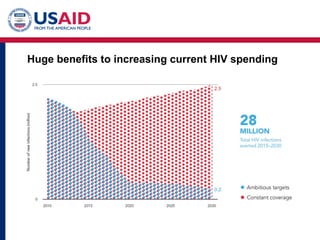
Huge benefits to increasing current HIV spending
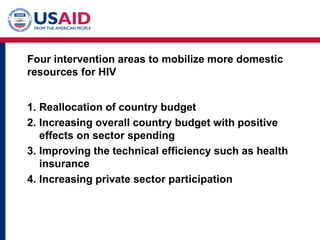
Four intervention areas to mobilize more domestic
resources for HIV
1. Reallocation of country budget
2. Increasing overall country budget with positive
effects on sector spending
3. Improving the technical efficiency such as health
insurance
4. Increasing private sector participation
Other Developments
• Base Erosion and Profit Shifting (BEPS)
• Tax Incentives for Investment
• “Publish What you Pay”
• Sustainable Finance Initiative
• Leveraging the Private Sector
Final Thoughts
• Amid dwindling aid resources, programs must
be cost-effective
• Help countries meet their own needs
• Looking outside the country may prove
disappointing
• “We’re from the private sector and we’re here
to help”
• Willing partners can make this work!
Questions?

Day3 sp2 nov 6 draft icgfm-wuertz_en

  • 1.
    Implementing the AddisTax Initiative: The Road from Addis Robert Wuertz ICGFM December 9, 2015
  • 2.
    Today’s Topics • What’swith Addis? • Movement since July • Other Pieces of the DRM puzzle
  • 3.
    The process inwhich countries raise their own funds to provide for their people What is DRM?
  • 4.
    The Road toAddis (FFD3) • Two prior FFD conferences • Downward trend in ODA • Growing role of DRM • DRM took center stage
  • 7.
  • 8.
    What is ATI? •A partnership to improve DRM • Donors agreed to substantially increase funding of DRM by 2020 • Developing countries agreed to raise revenues and use the funds effectively to pursue Strategic Development Goal (SDGs)
  • 9.
    ATI Principles Address: •The imperative to both raise domestic resources and channel them toward effective public services • The importance of fostering fair, efficient and transparent tax systems and an equitable distribution of tax burdens and benefits • The role of broad-based dialogue in ensuring country ownership, implementation and accountability
  • 10.
    Why Care aboutDRM? Reducing external dependence Adequate funding for post-2015 SDGs Stability and predictability Ownership and governance Ethiopia: Sufian Ahmed Nigeria: Ngozi Okonjo-Iweala Tanzania Rwanda
  • 11.
    Progress since Addis •Tax Administration Diagnostic Assessment Tool (TADAT) – Joint missions with IMF to Rwanda, Uganda, Jamaica • Growing Evidence of DRM Effectiveness
  • 12.
    Rwanda signs ATI •After considered thought, Rwanda took the plunge
  • 13.
    Afghanistan Public FinancialManagement (APFM) • Afghanistan started to implement a DRM program
  • 14.
    Growing Support SinceAddis • DRM at the UNGA • MFAN signals • Key sector interests recognize possibilities
  • 15.
    Other Developments • BaseErosion and Profit Shifting
  • 16.
    Other Developments • BaseErosion and Profit Shifting (BEPS) • Tax Incentives for Investment
  • 18.
    Other Developments • BaseErosion and Profit Shifting (BEPS) • Tax Incentives for Investment • “Publish What you Pay”
  • 19.
    Other Developments • BaseErosion and Profit Shifting (BEPS) • Tax Incentives for Investment • Publish What you Pay” • Sustainable Finance Initiative
  • 20.
    Sustainable Finance Initiative •SFI started Sept 2014 • Broad definition of DRM • $63 million over 3 years • Looking to work across half a dozen countries in Asia and Africa
  • 21.
    Huge benefits toincreasing current HIV spending
  • 22.
    Four intervention areasto mobilize more domestic resources for HIV 1. Reallocation of country budget 2. Increasing overall country budget with positive effects on sector spending 3. Improving the technical efficiency such as health insurance 4. Increasing private sector participation
  • 23.
    Other Developments • BaseErosion and Profit Shifting (BEPS) • Tax Incentives for Investment • “Publish What you Pay” • Sustainable Finance Initiative • Leveraging the Private Sector
  • 24.
    Final Thoughts • Amiddwindling aid resources, programs must be cost-effective • Help countries meet their own needs • Looking outside the country may prove disappointing • “We’re from the private sector and we’re here to help” • Willing partners can make this work!
  • 25.