Safety Culture the journey in
paediatrics – so far......
Scottish Patient Safety Paediatric
                Programme
• Success of SPSP – adopted work streams.
• SPSPP launched – June 2010
• Inpatient paediatric care (all ages).
• Aims:
   – paediatric evidence-base;
   – „best in class‟;
   – linked to measurable outcomes.
• Dynamic quality improvement programme.
• Relevant to paediatric hospital care delivered in
  Scotland.
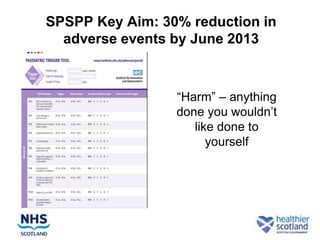
SPSPP Key Aim: 30% reduction in
  adverse events by June 2013


                 “Harm” – anything
                 done you wouldn‟t
                    like done to
                       yourself
Defining the problem
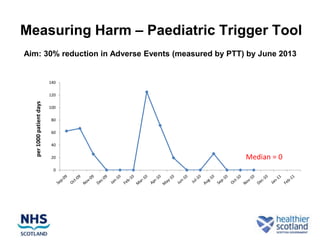
Measuring Harm – Paediatric Trigger Tool
Aim: 30% reduction in Adverse Events (measured by PTT) by June 2013


                          140

                          120
  per 1000 patient days


                          100

                           80

                           60

                           40

                           20                         Median = 0
                            0
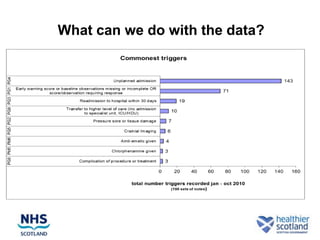
What can we do with the data?
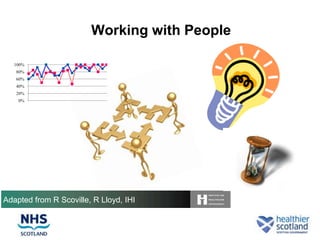
Working with People

   100%
   80%
   60%
   40%
   20%
    0%


Adapted from R Scoville, R Lloyd, IHI
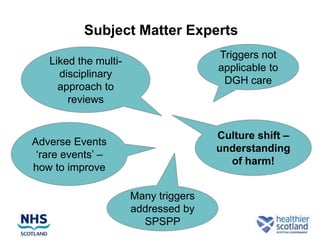
Subject Matter Experts
                                      Triggers not
   Liked the multi-
                                      applicable to
     disciplinary
                                       DGH care
     approach to
       reviews


                                      Culture shift –
Adverse Events
                                      understanding
 „rare events‟ –
                                        of harm!
how to improve

                      Many triggers
                      addressed by
                        SPSPP
What are we trying to accomplish?
The aim.....
Testing / Change Concepts

                 • Methodology

                 • Review to follow
                   admission

                 • Identify what causes
                   harm / common
                   system failures
                    – Long-term conditions
                    – Child Protection
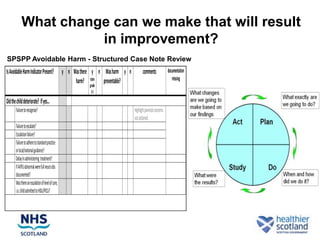
What change can we make that will result
                      in improvement?
SPSPP Avoidable Harm - Structured Case Note Review
Is Avoidable Harm Indicator Present?               y n Was there y n Was harm y n          comments               documentation
                                                                 state
                                                        harm? grade preventable?                                     missing

                                                               E-I
Did the child deteriorate? If yes...
       Failure to recognise?                                                        Highlight parental concerns
                                                                                    not actioned.
       Failure to escalate?
       Escalation failure?
       Failure to adhere to standard practice
       or local/national guidance?
       Delay in administering treatment?
       If AVPU abnormal were full neuro obs
       documented?
       Was there an escalation of level of care,
       i.e. child admitted to HDU/PICU?
How will we know a change is an
         improvement?
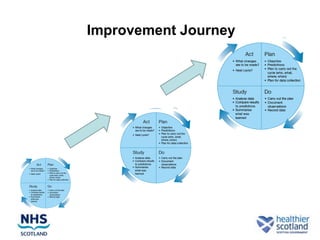
Improvement Journey
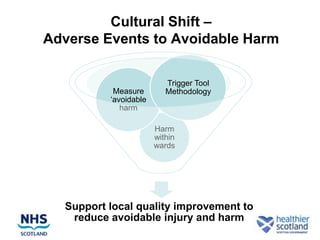
Cultural Shift –
Adverse Events to Avoidable Harm

                          Trigger Tool
           Measure        Methodology
          „avoidable
             harm

                       Harm
                       within
                       wards


  Support local quality improvement to
   reduce avoidable injury and harm

Parallel Session 2.3.2 What's Your Problem? Lessons on How to Solve National and Local Challenges

  • 1.
    Safety Culture thejourney in paediatrics – so far......
  • 3.
    Scottish Patient SafetyPaediatric Programme • Success of SPSP – adopted work streams. • SPSPP launched – June 2010 • Inpatient paediatric care (all ages). • Aims: – paediatric evidence-base; – „best in class‟; – linked to measurable outcomes. • Dynamic quality improvement programme. • Relevant to paediatric hospital care delivered in Scotland.
  • 4.
    SPSPP Key Aim:30% reduction in adverse events by June 2013 “Harm” – anything done you wouldn‟t like done to yourself
  • 5.
  • 6.
    Measuring Harm –Paediatric Trigger Tool Aim: 30% reduction in Adverse Events (measured by PTT) by June 2013 140 120 per 1000 patient days 100 80 60 40 20 Median = 0 0
  • 7.
    What can wedo with the data?
  • 8.
    Working with People 100% 80% 60% 40% 20% 0% Adapted from R Scoville, R Lloyd, IHI
  • 9.
    Subject Matter Experts Triggers not Liked the multi- applicable to disciplinary DGH care approach to reviews Culture shift – Adverse Events understanding „rare events‟ – of harm! how to improve Many triggers addressed by SPSPP
  • 10.
    What are wetrying to accomplish?
  • 11.
  • 12.
    Testing / ChangeConcepts • Methodology • Review to follow admission • Identify what causes harm / common system failures – Long-term conditions – Child Protection
  • 13.
    What change canwe make that will result in improvement? SPSPP Avoidable Harm - Structured Case Note Review Is Avoidable Harm Indicator Present? y n Was there y n Was harm y n comments documentation state harm? grade preventable? missing E-I Did the child deteriorate? If yes... Failure to recognise? Highlight parental concerns not actioned. Failure to escalate? Escalation failure? Failure to adhere to standard practice or local/national guidance? Delay in administering treatment? If AVPU abnormal were full neuro obs documented? Was there an escalation of level of care, i.e. child admitted to HDU/PICU?
  • 14.
    How will weknow a change is an improvement?
  • 15.
  • 16.
    Cultural Shift – AdverseEvents to Avoidable Harm Trigger Tool Measure Methodology „avoidable harm Harm within wards Support local quality improvement to reduce avoidable injury and harm

Editor's Notes

  • #3 The purpose of this presentation is to attempt summarise a two and a half year journey into 30 mins and share with you the lessons we’ve learnt about how to measure harm and the development of a safety culture within the paediatric community in Scotland. What this won’t be is an academic presentation on the theory and practice of achieving a safety culture – but try to explain some of the elements that we’ve found that have influenced the development of SPSPP and where the programme has evolved. James Reason believes that ‘safety cultures evolve gradually in response to local conditions, past events, the character of leadership and the mood of the workforce’.
  • #4 SPSPP launched in June 2010 – the first of it’s kind
  • #6 Story of where we reached – Paediatric Trigger Tool – wasn’t applicable to care delivered in hospitals in Scotland
  • #7 Low rates of harm seenMedian = 0 therefore “no useable data?” by run chart rules So we can all relax and stop worrying about improvement!
  • #8 Has there been any point in the the trigger tool?Identifying common triggers to direct improvementPoor documentation of adherence with PEWS – are we missing sick children? Are we allowing children to deteriorate unrecognised in our care?
  • #11 Redefining the purpose of case note reviews – linking it to the Safe Ambition and supporting the identification of avoidable harm at a local level.
  • #12 Develop a methodology to measure harm in paediatric wards across NHSScotland - to support local quality improvement & reduce avoidable harm
  • #15 Feedback – quicker / more relevant / finding issues
  • #16 Feedback – quicker / more relevant / finding issues