Unlocking Data: The
Magic Behind
Database Management
Systems
Unlocking
Data
Welcome to our journey into the
magic of Database Management
Systems (DBMS). Here, we will
explore how these systems help in
organizing, storing, and
retrieving data efficiently. Get
ready to unlock the secrets of data
management!
What is
DBMS?
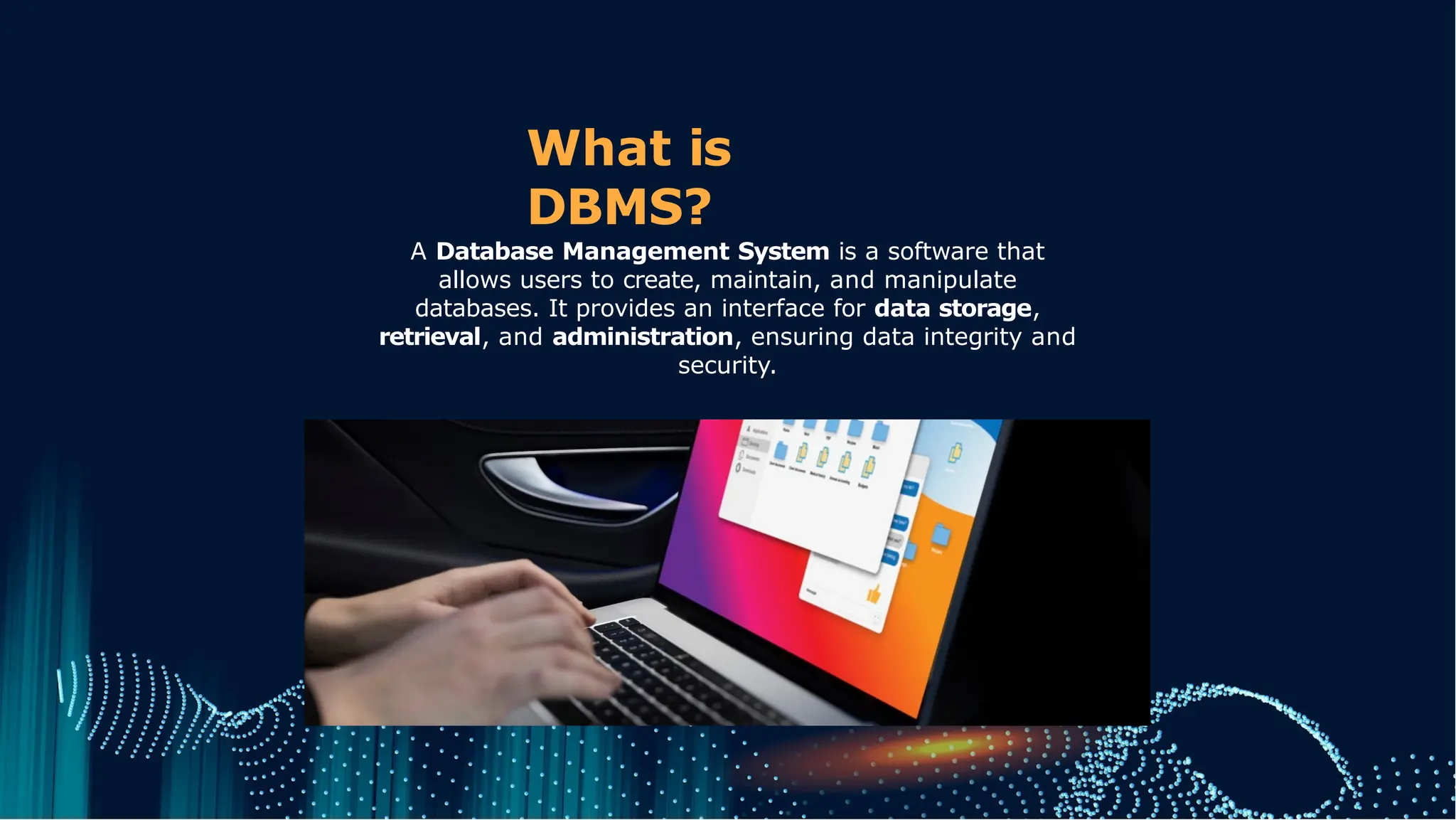
A Database Management System is a software that
allows users to create, maintain, and manipulate
databases. It provides an interface for data storage,
retrieval, and administration, ensuring data integrity and
security.
Types of
DBMS
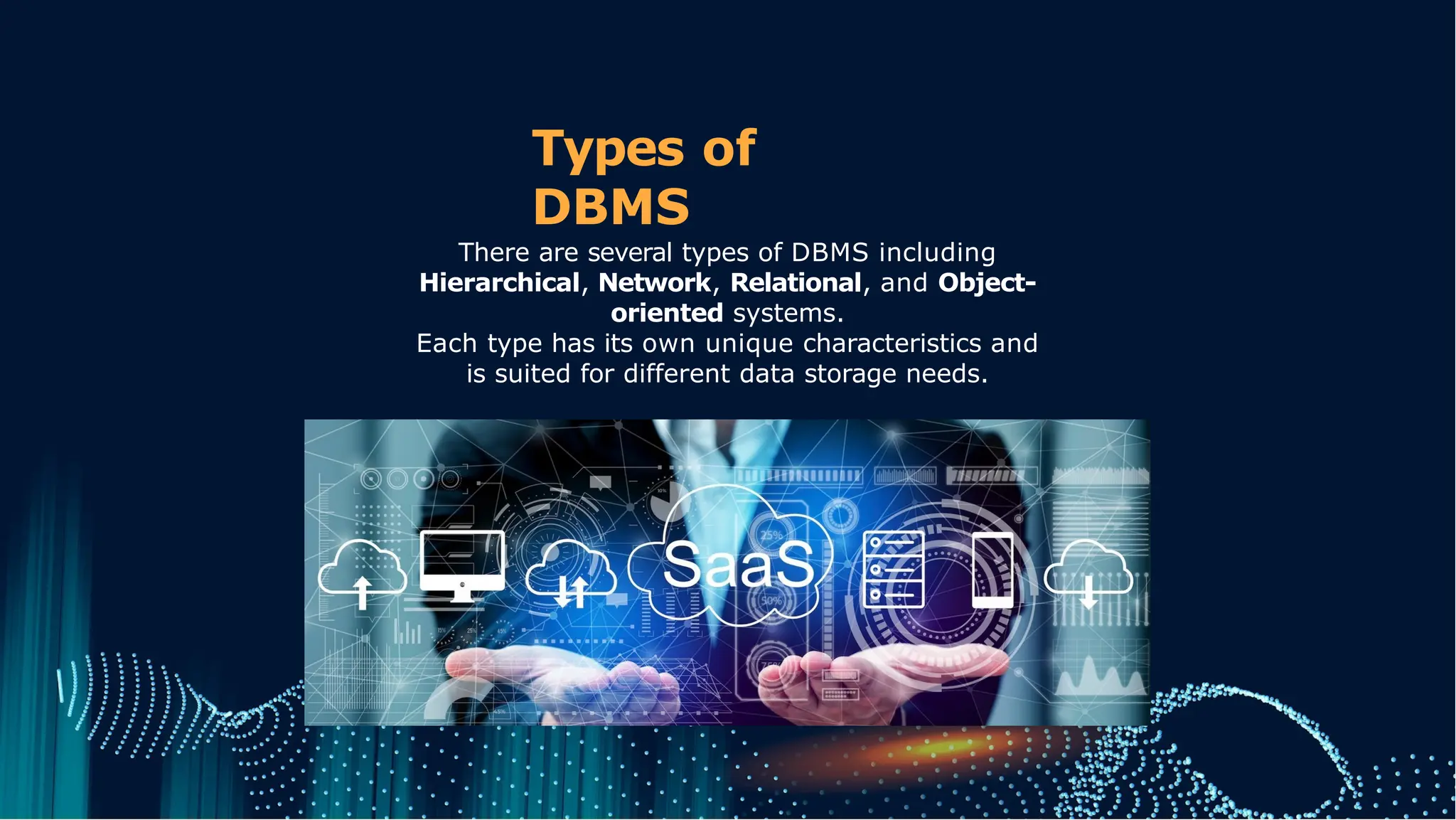
There are several types of DBMS including
Hierarchical, Network, Relational, and Object-
oriented systems.
Each type has its own unique characteristics and
is suited for different data storage needs.
Relational
Databases
The Relational Database model organizes data into tables
which can be linked by relationships. This structure allows
for powerful querying capabilities using SQL (Structured
Query Language), making data retrieval intuitive.
NoSQL databases are designed for
unstructured data and provide flexibility in
data storage. They are ideal for handling
large volumes of data with high velocity,
making them popular in big data
applications.
NoSQL
Databases
Data Integrity
One of the key benefits of DBMS
is data integrity. It ensures that
data is accurate and consistent
over its lifecycle. Techniques like
constraints and transactions help
maintain this integrity.
Database Transactions
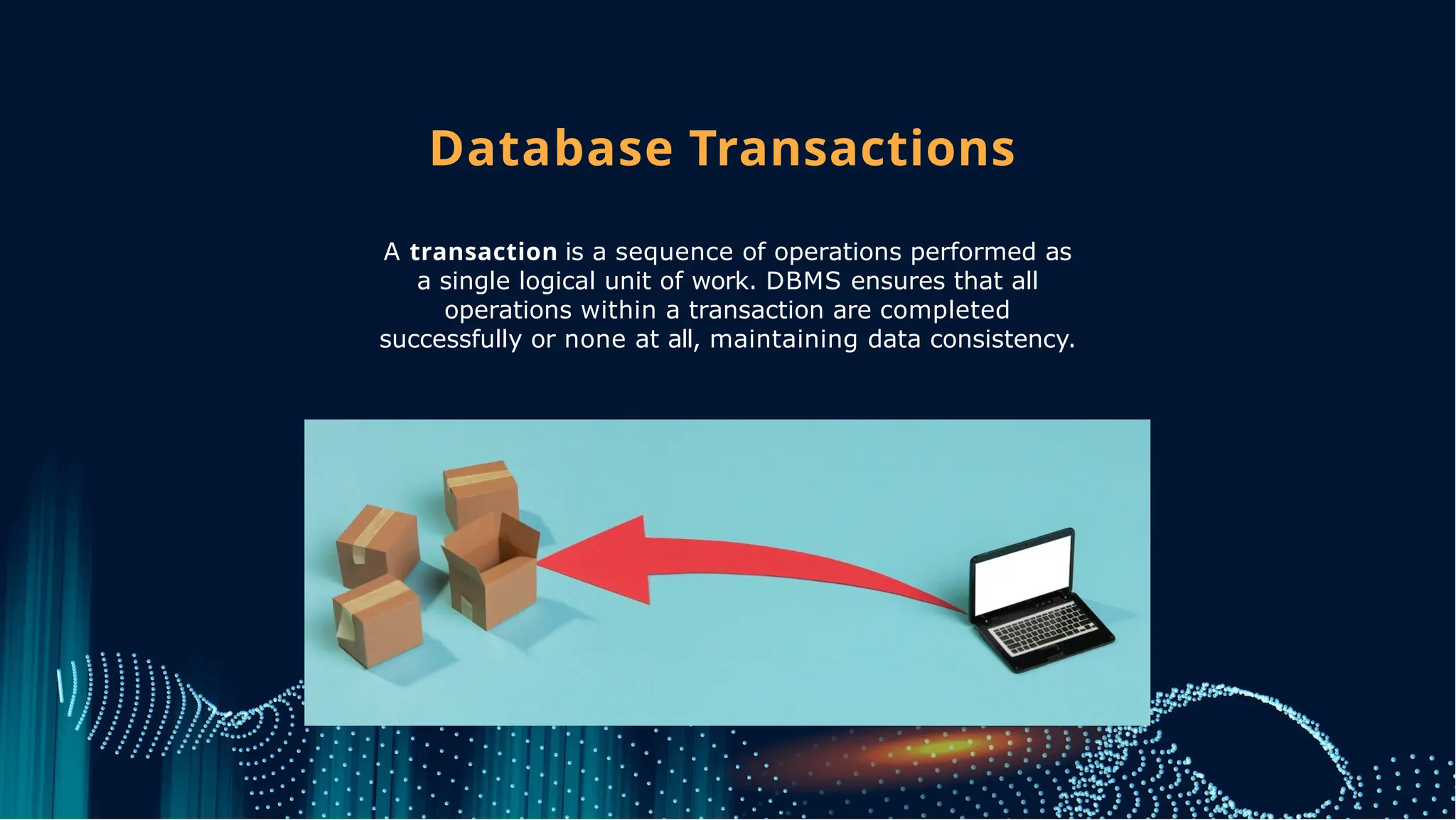
A transaction is a sequence of operations performed as
a single logical unit of work. DBMS ensures that all
operations within a transaction are completed
successfully or none at all, maintaining data consistency.
Backup and
Recovery
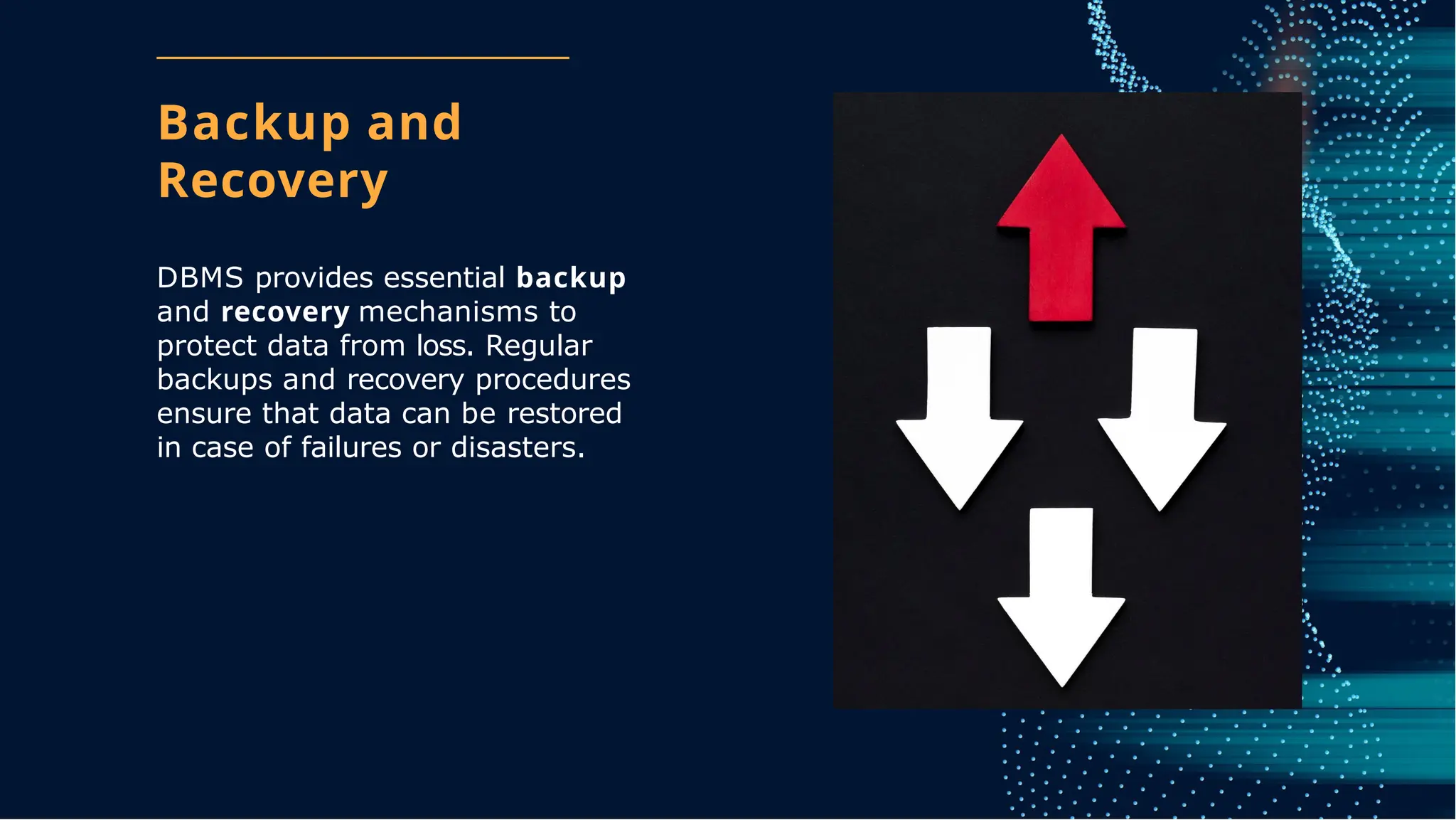
DBMS provides essential backup
and recovery mechanisms to
protect data from loss. Regular
backups and recovery procedures
ensure that data can be restored
in case of failures or disasters.
Data Security
Data security is paramount in DBMS. It employs various
measures like encryption, authentication, and
authorization to safeguard sensitive information from
unauthorized access and breaches.
Scalability
DBMS systems are designed to
be scalable, accommodating
growth in data volume and user
load. This flexibility is crucial for
businesses that need to adapt to
changing demands and expand
their operations.
Future of DBMS
As technology evolves, the future of
DBMS looks promising with
advancements in cloud computing,
AI, and machine learning. These
innovations will enhance data
management capabilities and open
new possibilities for data analytics.
Conclusion In conclusion, Database Management
Systems are the backbone of data
management, providing essential tools for
effficiency, security, and scalability.
Embracing these systems is key to unlocking
the true potential of data.
Thanks!
Do you have any
questions?
addyouremail@freepik.com
+91 620 421 838
yourcompany.com

-data-the-magic-behind-database-management-systems-20241007140208vM8r.pptx

  • 1.
    Unlocking Data: The MagicBehind Database Management Systems
  • 2.
    Unlocking Data Welcome to ourjourney into the magic of Database Management Systems (DBMS). Here, we will explore how these systems help in organizing, storing, and retrieving data efficiently. Get ready to unlock the secrets of data management!
  • 3.
    What is DBMS? A DatabaseManagement System is a software that allows users to create, maintain, and manipulate databases. It provides an interface for data storage, retrieval, and administration, ensuring data integrity and security.
  • 4.
    Types of DBMS There areseveral types of DBMS including Hierarchical, Network, Relational, and Object- oriented systems. Each type has its own unique characteristics and is suited for different data storage needs.
  • 5.
    Relational Databases The Relational Databasemodel organizes data into tables which can be linked by relationships. This structure allows for powerful querying capabilities using SQL (Structured Query Language), making data retrieval intuitive.
  • 6.
    NoSQL databases aredesigned for unstructured data and provide flexibility in data storage. They are ideal for handling large volumes of data with high velocity, making them popular in big data applications. NoSQL Databases
  • 7.
    Data Integrity One ofthe key benefits of DBMS is data integrity. It ensures that data is accurate and consistent over its lifecycle. Techniques like constraints and transactions help maintain this integrity.
  • 8.
    Database Transactions A transactionis a sequence of operations performed as a single logical unit of work. DBMS ensures that all operations within a transaction are completed successfully or none at all, maintaining data consistency.
  • 9.
    Backup and Recovery DBMS providesessential backup and recovery mechanisms to protect data from loss. Regular backups and recovery procedures ensure that data can be restored in case of failures or disasters.
  • 10.
    Data Security Data securityis paramount in DBMS. It employs various measures like encryption, authentication, and authorization to safeguard sensitive information from unauthorized access and breaches.
  • 11.
    Scalability DBMS systems aredesigned to be scalable, accommodating growth in data volume and user load. This flexibility is crucial for businesses that need to adapt to changing demands and expand their operations.
  • 12.
    Future of DBMS Astechnology evolves, the future of DBMS looks promising with advancements in cloud computing, AI, and machine learning. These innovations will enhance data management capabilities and open new possibilities for data analytics.
  • 13.
    Conclusion In conclusion,Database Management Systems are the backbone of data management, providing essential tools for effficiency, security, and scalability. Embracing these systems is key to unlocking the true potential of data.
  • 14.
    Thanks! Do you haveany questions? addyouremail@freepik.com +91 620 421 838 yourcompany.com