INTRODUCTION OF DS
 Data structure affects the design of both structural &
functional aspects of a program.
 Program=algorithm + Data Structure
 You know that a algorithm is a step by step procedure to
solve a particular function.
DATA STRUCTURE
 A data structure is a specialized format for
organizing and storing data.
 Different types of data structures include array file
record table and tree etc.
 Any data structure is designed to organize data for
a specific purpose.
 A data structure help the user to store data in such
a way that it can be used and processed efficiently.
DATA STRUCTURE OPERATIONS
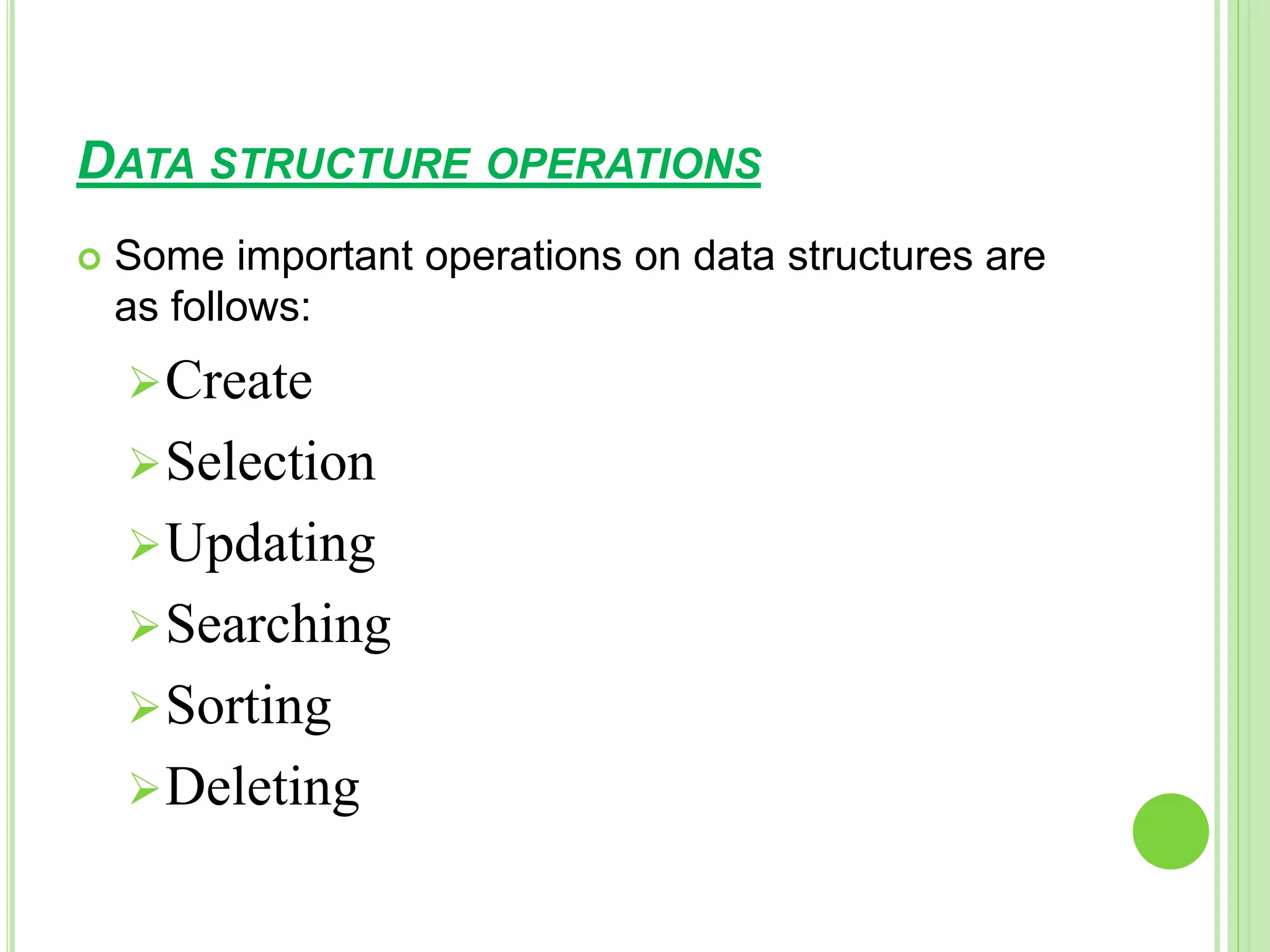
ļ‚¢ Some important operations on data structures are
as follows:
Create
Selection
Updating
Searching
Sorting
Deleting
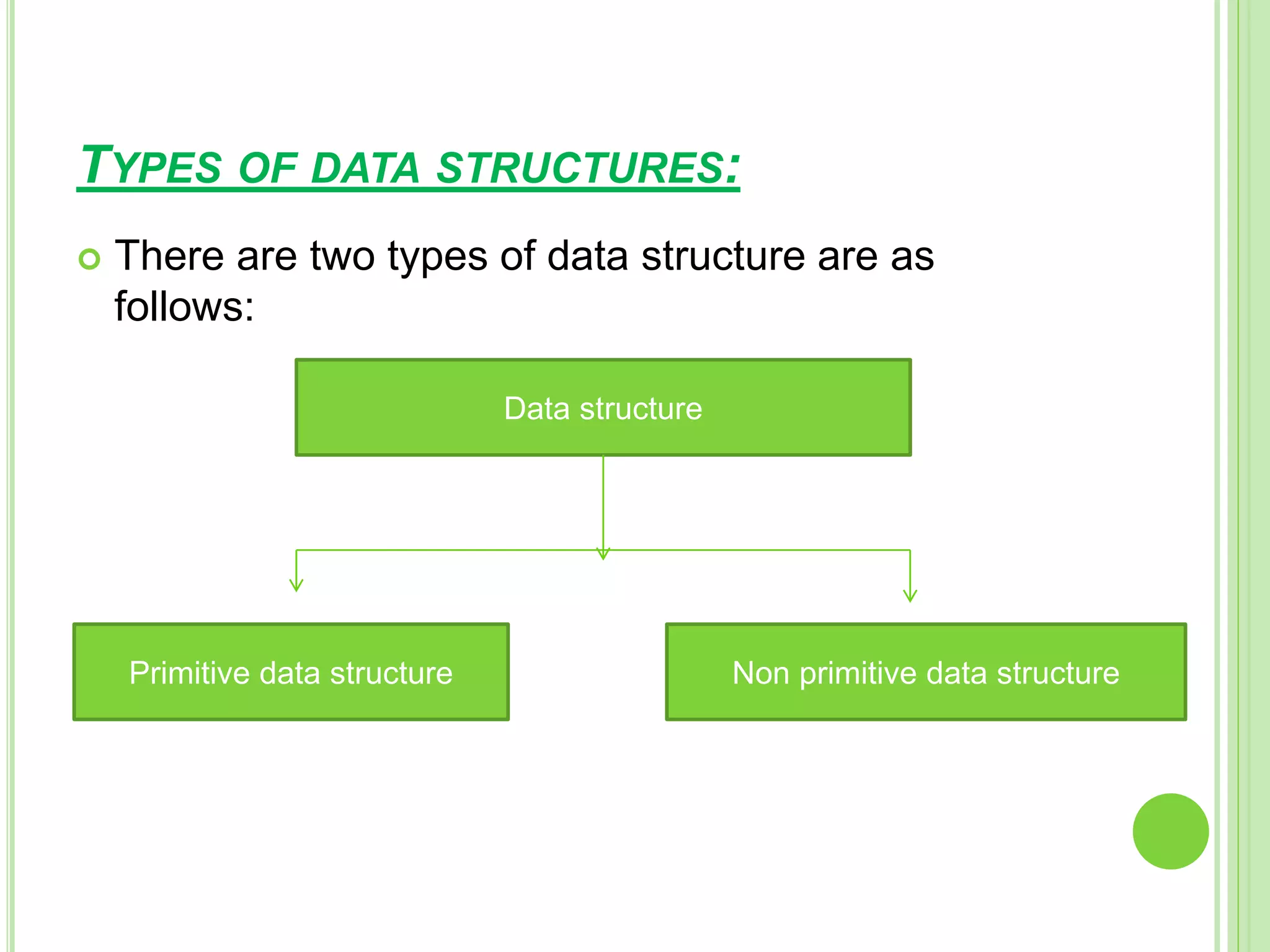
TYPES OF DATA STRUCTURES:
ļ‚¢ There are two types of data structure are as
follows:
Data structure
Primitive data structure Non primitive data structure
PRIMITIVE DATA STRUCTURE:
 There are basic structures and directly operated upon by
the machine instructions.
 In general, there are different representation on different
computers.
 Integer, Floating-point number, Character constants,
string constants, pointers etc, fall in this category
NON PRIMITIVE DATA STRUCTURE:
 There are more sophisticated data structures.
 These are derived from the primitive data structures.
 The non-primitive data structures emphasize on
structuring of a group of homogeneous (same type) or
heterogeneous (different type) data items
DIFFERENT BETWEEN PRIMITIVE AND NON
PRIMITIVE DATA STRUCTURE
 A primitive data structure is generally a basic structure
that is usually built into the language, such as an integer,
a float.
 A non-primitive data structure is built out of primitive
data structures linked together in meaningful ways, such
as a or a linked-list, binary search tree, AVL Tree, graph
etc.
Data structures and algorithm

Data structures and algorithm

  • 2.
    INTRODUCTION OF DS Data structure affects the design of both structural & functional aspects of a program.  Program=algorithm + Data Structure  You know that a algorithm is a step by step procedure to solve a particular function.
  • 3.
    DATA STRUCTURE  Adata structure is a specialized format for organizing and storing data.  Different types of data structures include array file record table and tree etc.  Any data structure is designed to organize data for a specific purpose.  A data structure help the user to store data in such a way that it can be used and processed efficiently.
  • 4.
    DATA STRUCTURE OPERATIONS ļ‚¢Some important operations on data structures are as follows: Create Selection Updating Searching Sorting Deleting
  • 5.
    TYPES OF DATASTRUCTURES: ļ‚¢ There are two types of data structure are as follows: Data structure Primitive data structure Non primitive data structure
  • 6.
    PRIMITIVE DATA STRUCTURE: There are basic structures and directly operated upon by the machine instructions.  In general, there are different representation on different computers.  Integer, Floating-point number, Character constants, string constants, pointers etc, fall in this category
  • 7.
    NON PRIMITIVE DATASTRUCTURE:  There are more sophisticated data structures.  These are derived from the primitive data structures.  The non-primitive data structures emphasize on structuring of a group of homogeneous (same type) or heterogeneous (different type) data items
  • 8.
    DIFFERENT BETWEEN PRIMITIVEAND NON PRIMITIVE DATA STRUCTURE  A primitive data structure is generally a basic structure that is usually built into the language, such as an integer, a float.  A non-primitive data structure is built out of primitive data structures linked together in meaningful ways, such as a or a linked-list, binary search tree, AVL Tree, graph etc.