Lecturer: Mrs Precious Chanaiwa
 It involves:
 selection
 training
 supervision
 Validation
 Evaluation
Of the persons involved in the collection of data
SELECTION
 Involves careful selection of people who will
conduct the interviews or the respondents from
where data is going to be collected
 Type of data to be collected will influence the
type of persons to be recruited e.g. qualitative
data that involves probing questions would
require experienced interviewers
TRAINING
 Involves training personnel that will go out to
collect data
 Training helps to achieve uniformity in data
collection
 Training covers aspects such as the approach,
administering of instruments, probing,
recording
SUPERVISION
 Interviewers need to be supervised to ensure
that they are proceeding on schedule
 There is need to keep control of day-to-day
activities
 Unethical practices might occur e.g. when field
workers complete questionnaires themselves.
VALIDATION
 Quality of data collect is critical
therefore there is need for
supervisor to check accurately for
mistakes that might occur during
data gathering and recording.
EVALUATION
 All data gathered have to be evaluated to
check for consistency.
 How many people completed the
questionnaire, quality of the interviews
 Two errors might occur:
 Intentional errors- falsehood and non-
response
 Unintentional errors- misunderstanding,
fatigue, attention loss
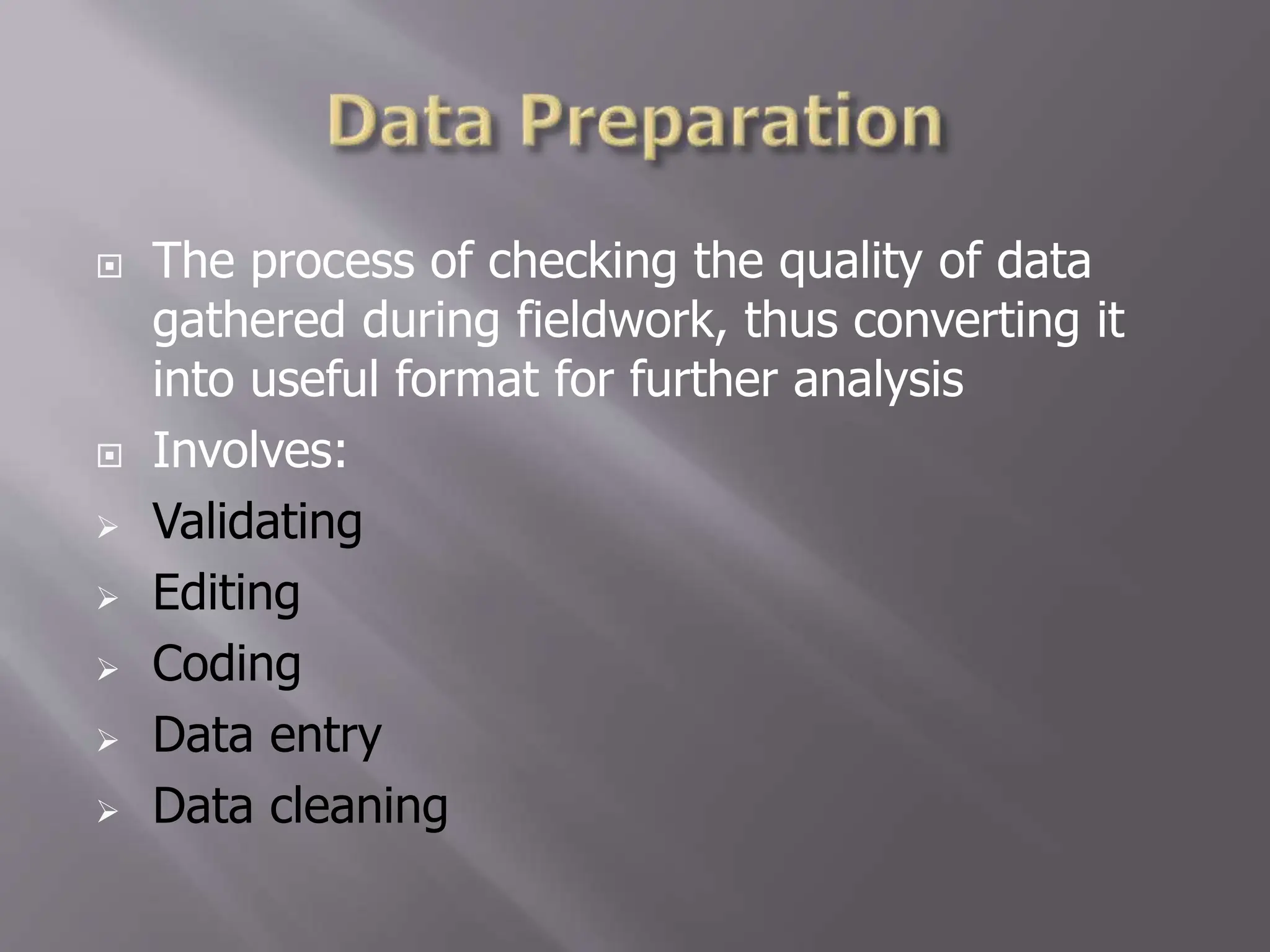
 The process of checking the quality of data
gathered during fieldwork, thus converting it
into useful format for further analysis
 Involves:
 Validating
 Editing
 Coding
 Data entry
 Data cleaning
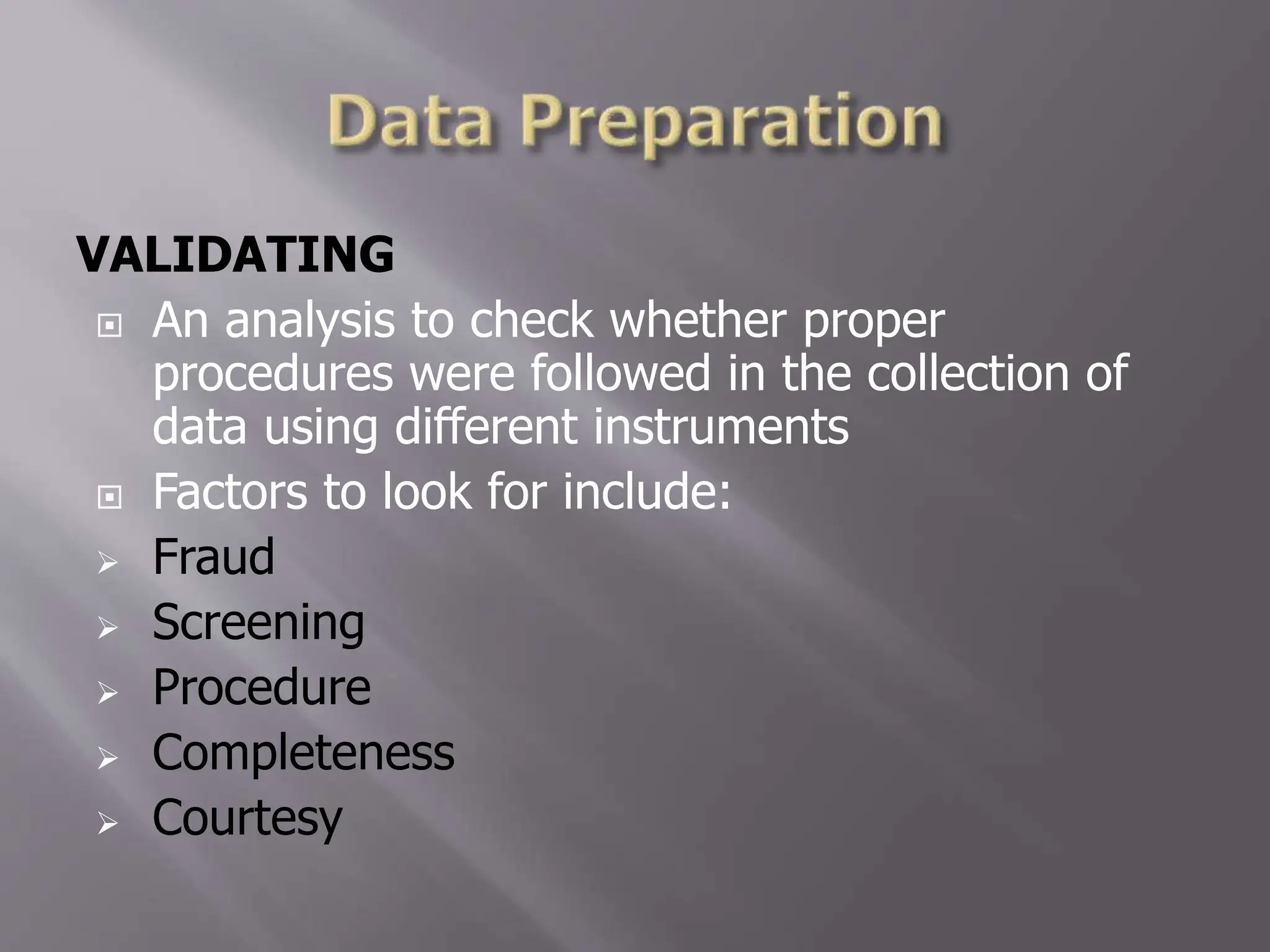
VALIDATING
 An analysis to check whether proper
procedures were followed in the collection of
data using different instruments
 Factors to look for include:
 Fraud
 Screening
 Procedure
 Completeness
 Courtesy
EDITING
 Checking of mistakes emanating either from
interviewer or respondent
 Editing can start when the supervisor visits the
fieldwork when data is being collected and
after completion of questionnaires for
omissions and inaccuracies
 Further editing might be done at the central
office of the research firm
CODING
 Process of assigning a code, symbol, or a
number to each possible answer.
 It is easier for closed ended questions where
pre-coding can be conducted
 Closed ended questions would require coming
up with themes as same questions can be
responded to differently but with the same
meaning
CODING-cont’
Missing data is usually caused by:
 The question did not apply to the respondent
 The respondent refused to answer the question
 The respondent did not know the answer to
the question
 The respondent or interviewer forgot to record
the answer
DATA ENTRY
 Involves the direct input of coded data into
software packages that will allow the
researcher to analyse and transform the raw
data
 Software packages include SPSS for
quantitative data and NVIVO 7 for qualitative
data
DATA CLEANING
It is the process of checking data
before starting data analysis
especially if data was entered
manually in a computer
DATA CLEANING- cont’
Done to detect obvious errors such as:
 Does the number of questionnaires match the
number of respondents
 Calculation of minimum and maximum variables to
check whether they are outside the expected range
 Is there consistency in the number of respondents
who provided answers
 Comparison of recorded answers with the values in
the data matrix for a few selected questionnaires
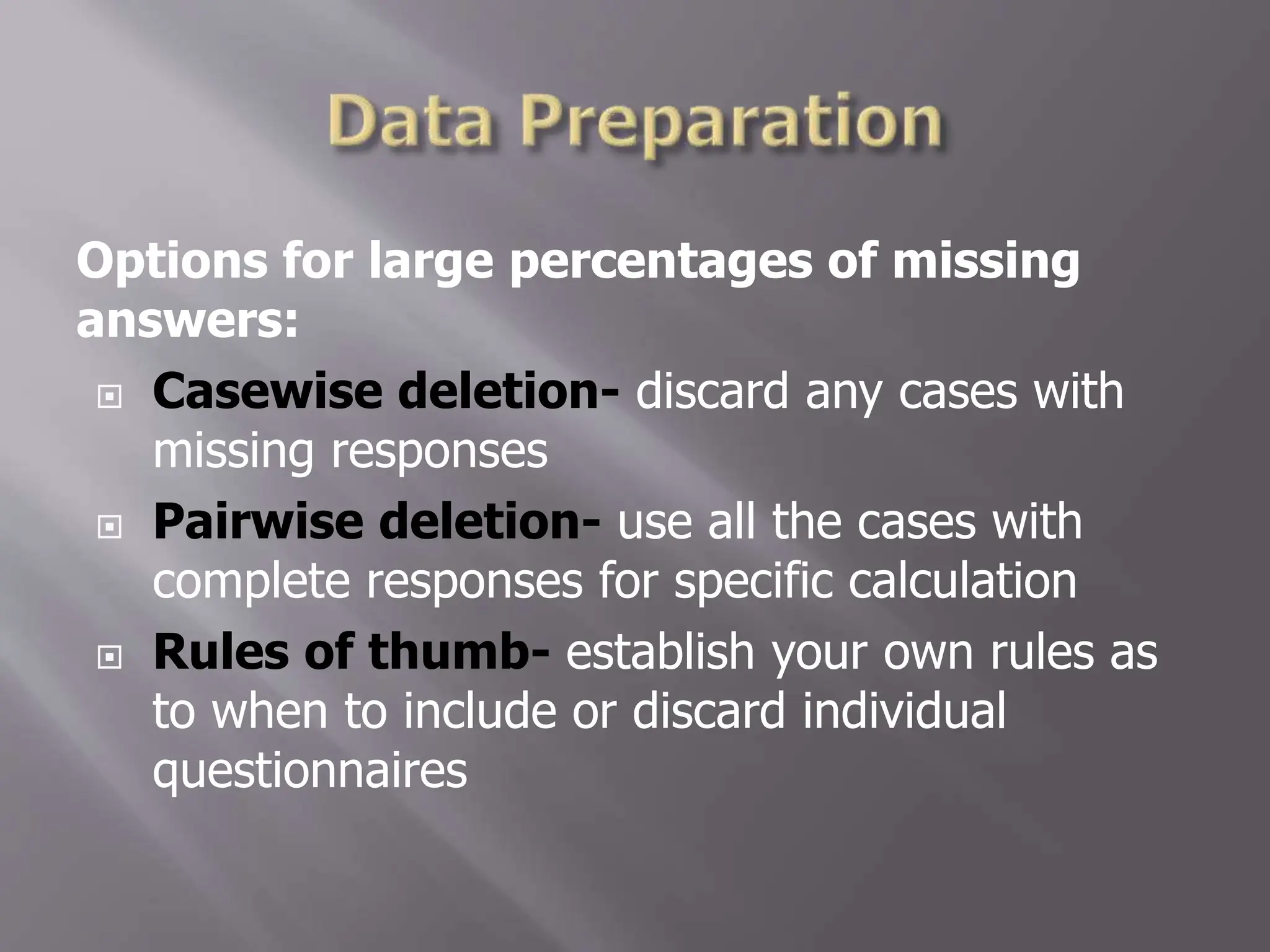
Options for large percentages of missing
answers:
 Casewise deletion- discard any cases with
missing responses
 Pairwise deletion- use all the cases with
complete responses for specific calculation
 Rules of thumb- establish your own rules as
to when to include or discard individual
questionnaires
Data Gathering, Preparation, and Analysis- Mktg.pptx

Data Gathering, Preparation, and Analysis- Mktg.pptx

  • 1.
  • 2.
     It involves: selection  training  supervision  Validation  Evaluation Of the persons involved in the collection of data
  • 3.
    SELECTION  Involves carefulselection of people who will conduct the interviews or the respondents from where data is going to be collected  Type of data to be collected will influence the type of persons to be recruited e.g. qualitative data that involves probing questions would require experienced interviewers
  • 4.
    TRAINING  Involves trainingpersonnel that will go out to collect data  Training helps to achieve uniformity in data collection  Training covers aspects such as the approach, administering of instruments, probing, recording
  • 5.
    SUPERVISION  Interviewers needto be supervised to ensure that they are proceeding on schedule  There is need to keep control of day-to-day activities  Unethical practices might occur e.g. when field workers complete questionnaires themselves.
  • 6.
    VALIDATION  Quality ofdata collect is critical therefore there is need for supervisor to check accurately for mistakes that might occur during data gathering and recording.
  • 7.
    EVALUATION  All datagathered have to be evaluated to check for consistency.  How many people completed the questionnaire, quality of the interviews  Two errors might occur:  Intentional errors- falsehood and non- response  Unintentional errors- misunderstanding, fatigue, attention loss
  • 8.
     The processof checking the quality of data gathered during fieldwork, thus converting it into useful format for further analysis  Involves:  Validating  Editing  Coding  Data entry  Data cleaning
  • 9.
    VALIDATING  An analysisto check whether proper procedures were followed in the collection of data using different instruments  Factors to look for include:  Fraud  Screening  Procedure  Completeness  Courtesy
  • 10.
    EDITING  Checking ofmistakes emanating either from interviewer or respondent  Editing can start when the supervisor visits the fieldwork when data is being collected and after completion of questionnaires for omissions and inaccuracies  Further editing might be done at the central office of the research firm
  • 11.
    CODING  Process ofassigning a code, symbol, or a number to each possible answer.  It is easier for closed ended questions where pre-coding can be conducted  Closed ended questions would require coming up with themes as same questions can be responded to differently but with the same meaning
  • 12.
    CODING-cont’ Missing data isusually caused by:  The question did not apply to the respondent  The respondent refused to answer the question  The respondent did not know the answer to the question  The respondent or interviewer forgot to record the answer
  • 13.
    DATA ENTRY  Involvesthe direct input of coded data into software packages that will allow the researcher to analyse and transform the raw data  Software packages include SPSS for quantitative data and NVIVO 7 for qualitative data
  • 14.
    DATA CLEANING It isthe process of checking data before starting data analysis especially if data was entered manually in a computer
  • 15.
    DATA CLEANING- cont’ Doneto detect obvious errors such as:  Does the number of questionnaires match the number of respondents  Calculation of minimum and maximum variables to check whether they are outside the expected range  Is there consistency in the number of respondents who provided answers  Comparison of recorded answers with the values in the data matrix for a few selected questionnaires
  • 16.
    Options for largepercentages of missing answers:  Casewise deletion- discard any cases with missing responses  Pairwise deletion- use all the cases with complete responses for specific calculation  Rules of thumb- establish your own rules as to when to include or discard individual questionnaires