
Data Ethics & Privacy: What
Every Analyst Should Know
Critical insights for responsible data handling in today's digital
landscape. Learn to protect individual rights while navigating
complex ethical challenges.
by Ozías Rondón
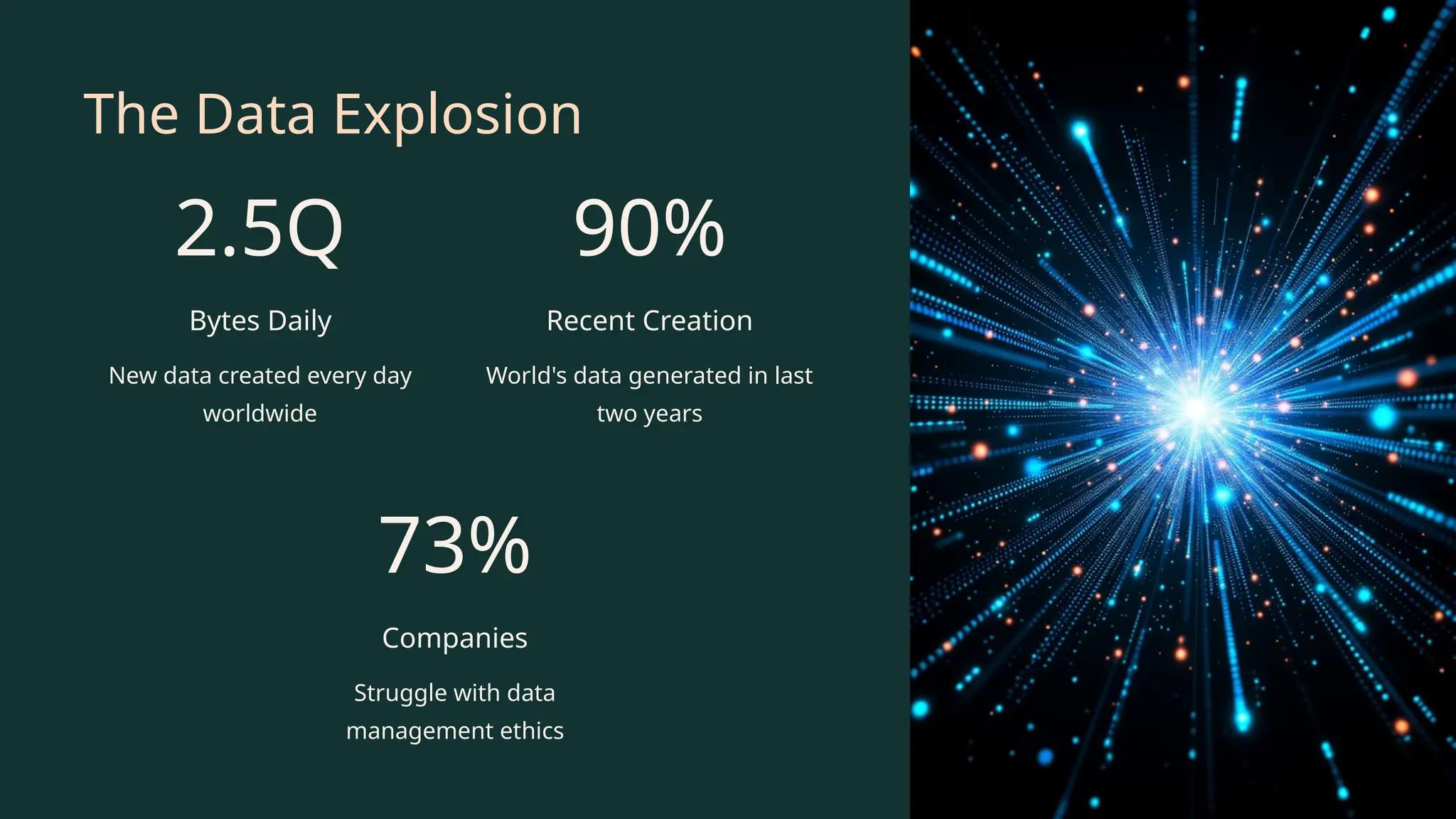
The Data Explosion
2.5Q
Bytes Daily
New data created every day
worldwide
90%
Recent Creation
World's data generated in last
two years
73%
Companies
Struggle with data
management ethics
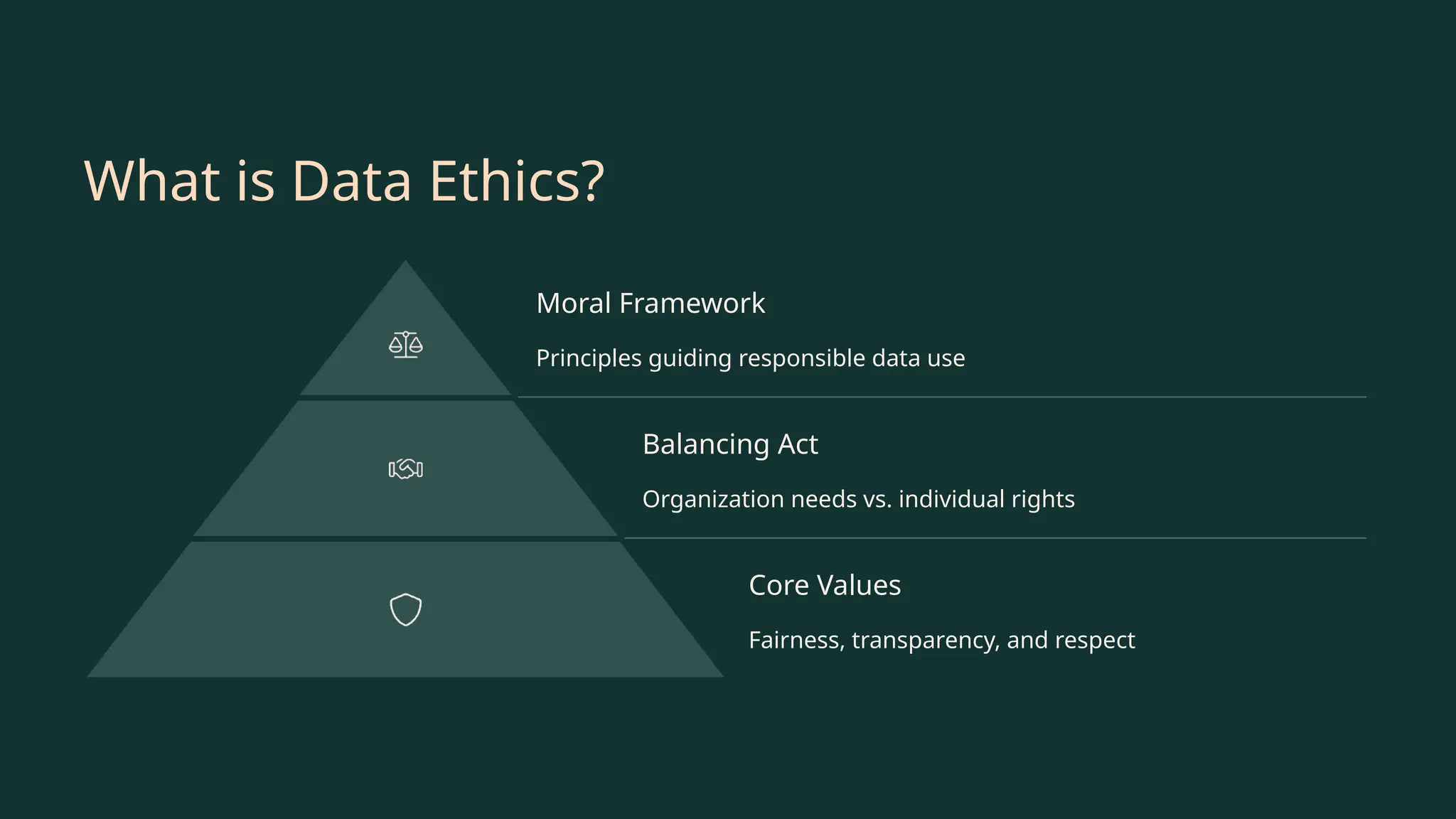
What is Data Ethics?
Moral Framework
Principles guiding responsible data use
Balancing Act
Organization needs vs. individual rights
Core Values
Fairness, transparency, and respect
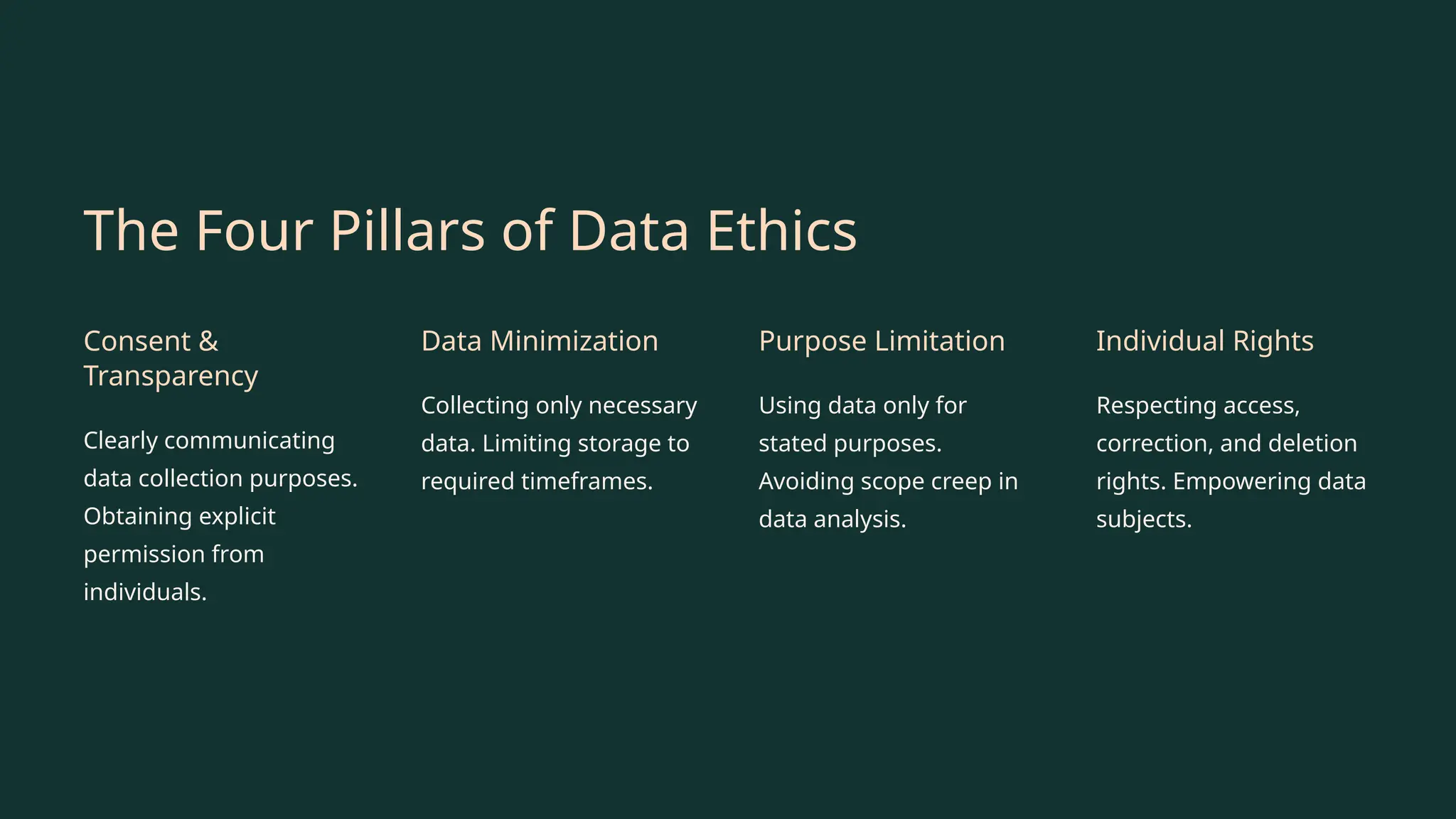
The Four Pillars of Data Ethics
Consent &
Transparency
Clearly communicating
data collection purposes.
Obtaining explicit
permission from
individuals.
Data Minimization
Collecting only necessary
data. Limiting storage to
required timeframes.
Purpose Limitation
Using data only for
stated purposes.
Avoiding scope creep in
data analysis.
Individual Rights
Respecting access,
correction, and deletion
rights. Empowering data
subjects.
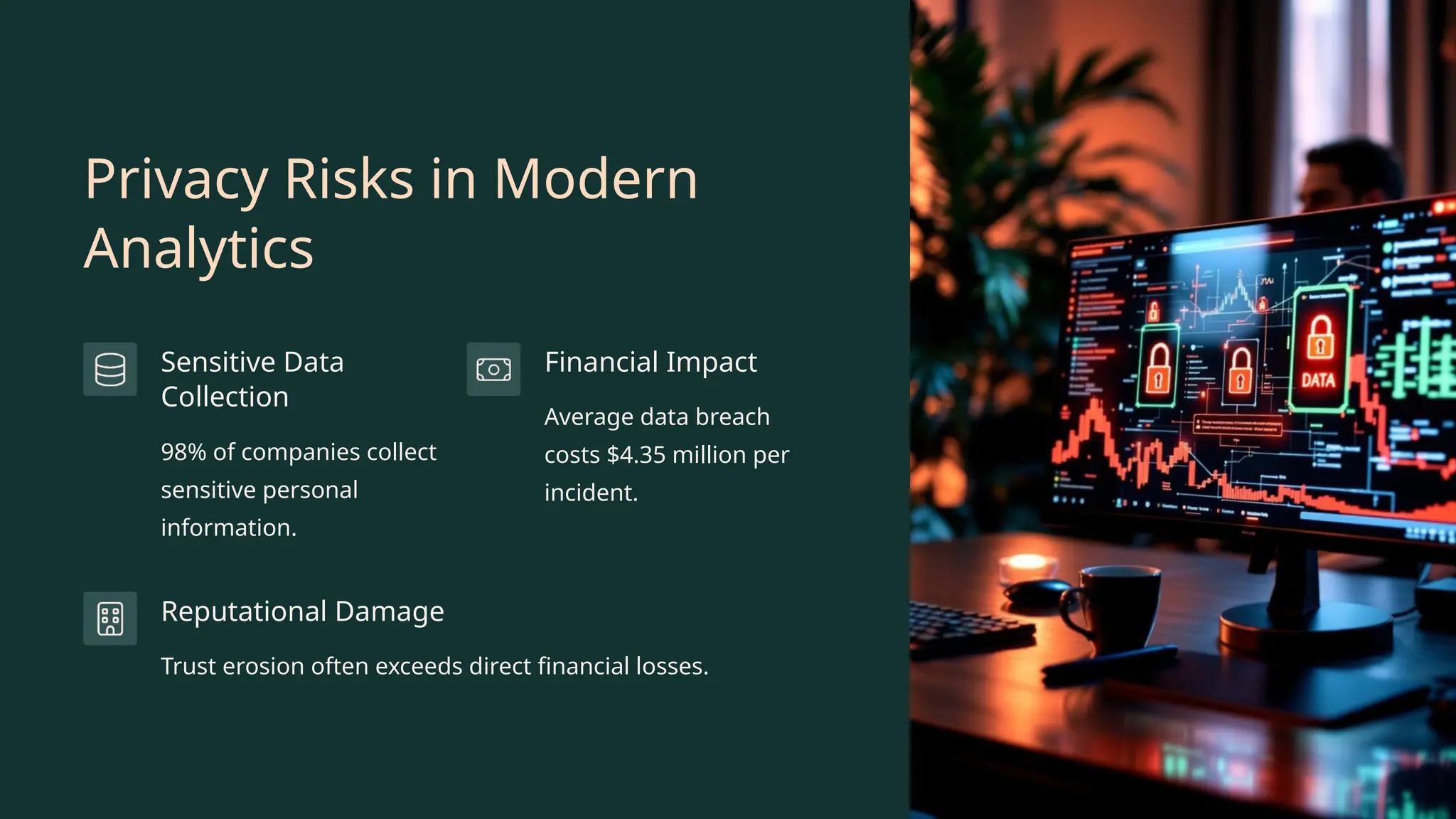
Privacy Risks in Modern
Analytics
Sensitive Data
Collection
98% of companies collect
sensitive personal
information.
Financial Impact
Average data breach
costs $4.35 million per
incident.
Reputational Damage
Trust erosion often exceeds direct financial losses.
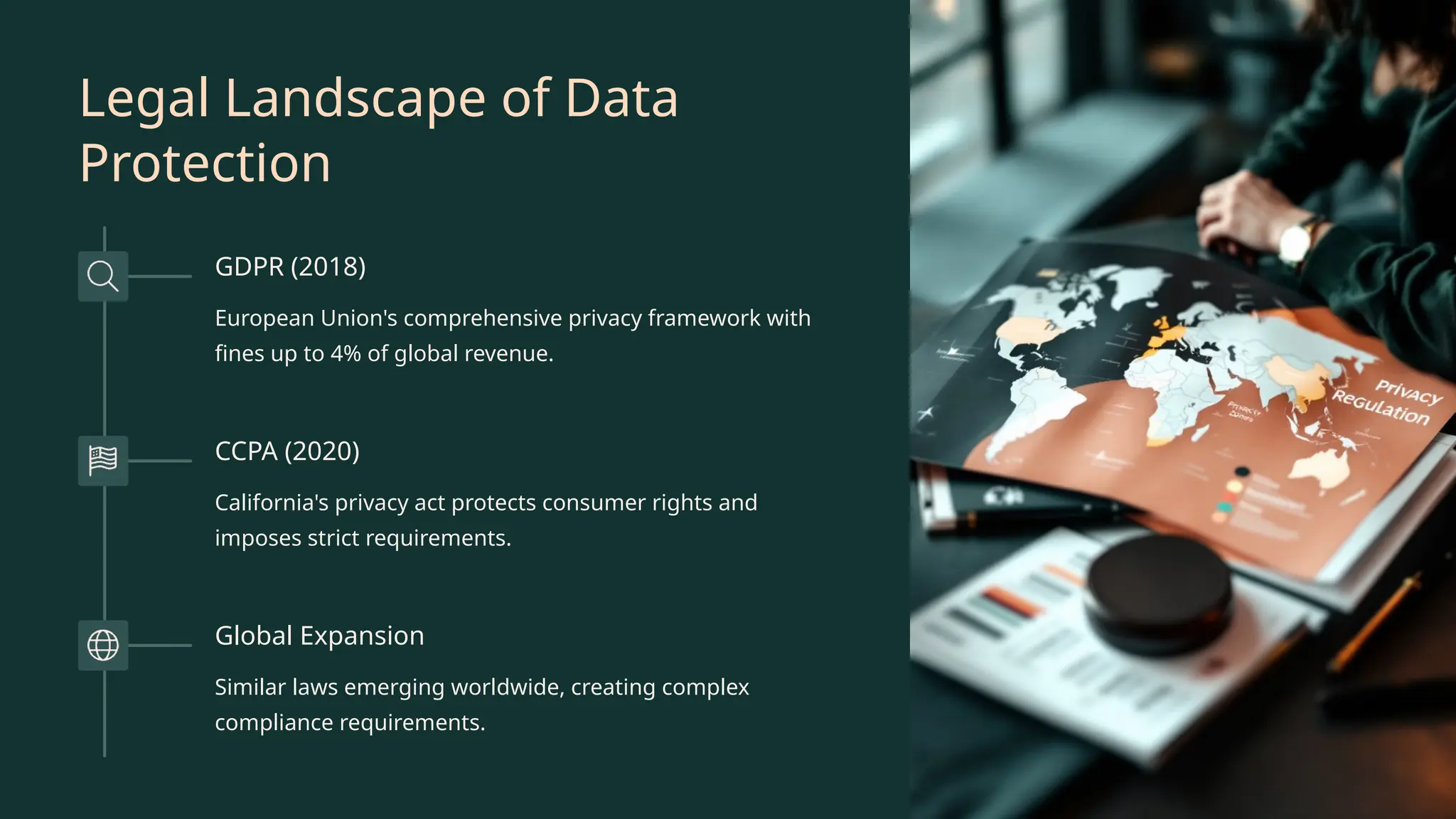
Legal Landscape of Data
Protection
GDPR (2018)
European Union's comprehensive privacy framework with
fines up to 4% of global revenue.
CCPA (2020)
California's privacy act protects consumer rights and
imposes strict requirements.
Global Expansion
Similar laws emerging worldwide, creating complex
compliance requirements.
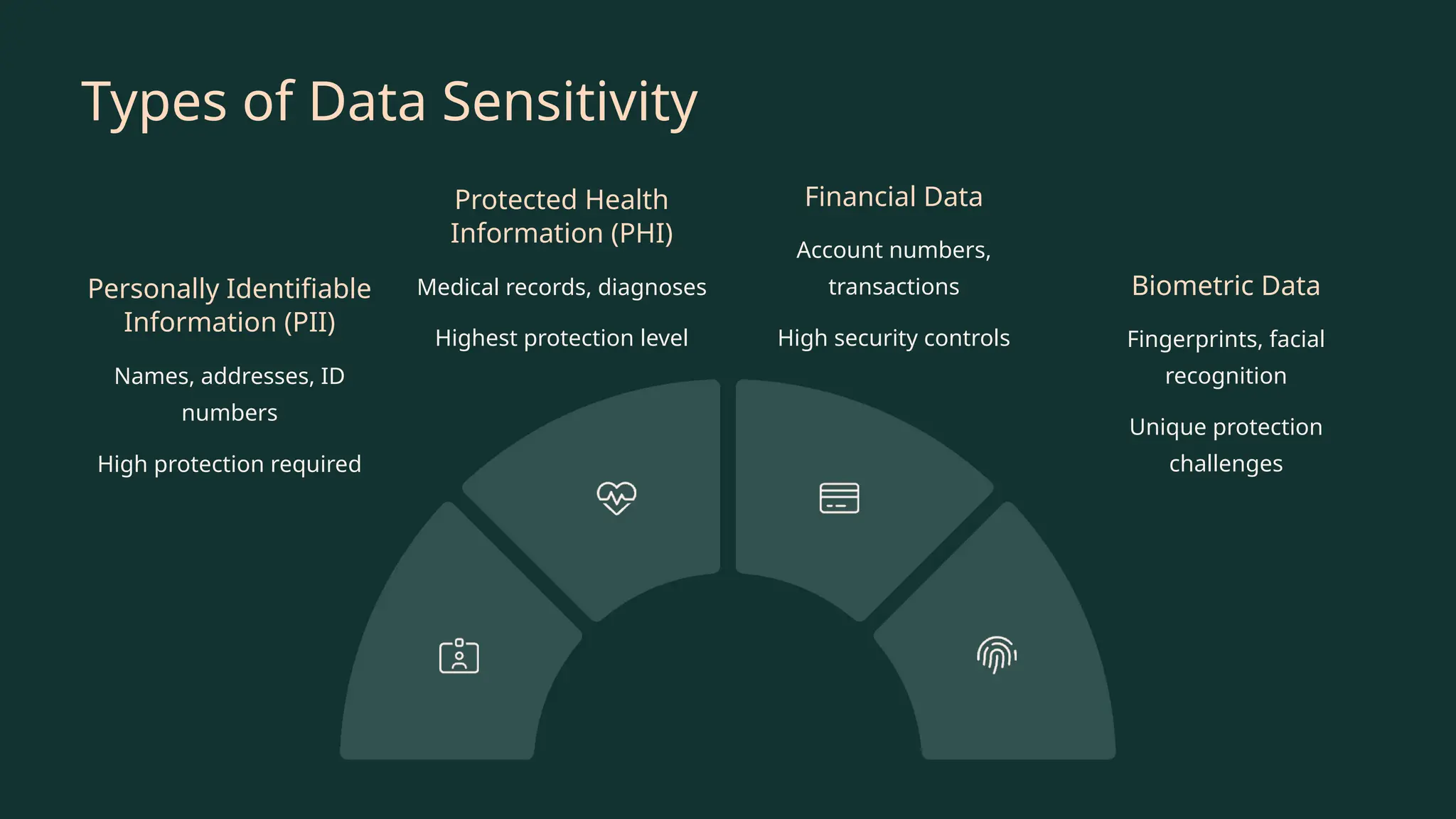
Types of Data Sensitivity
Personally Identifiable
Information (PII)
Names, addresses, ID
numbers
High protection required
Protected Health
Information (PHI)
Medical records, diagnoses
Highest protection level
Financial Data
Account numbers,
transactions
High security controls
Biometric Data
Fingerprints, facial
recognition
Unique protection
challenges
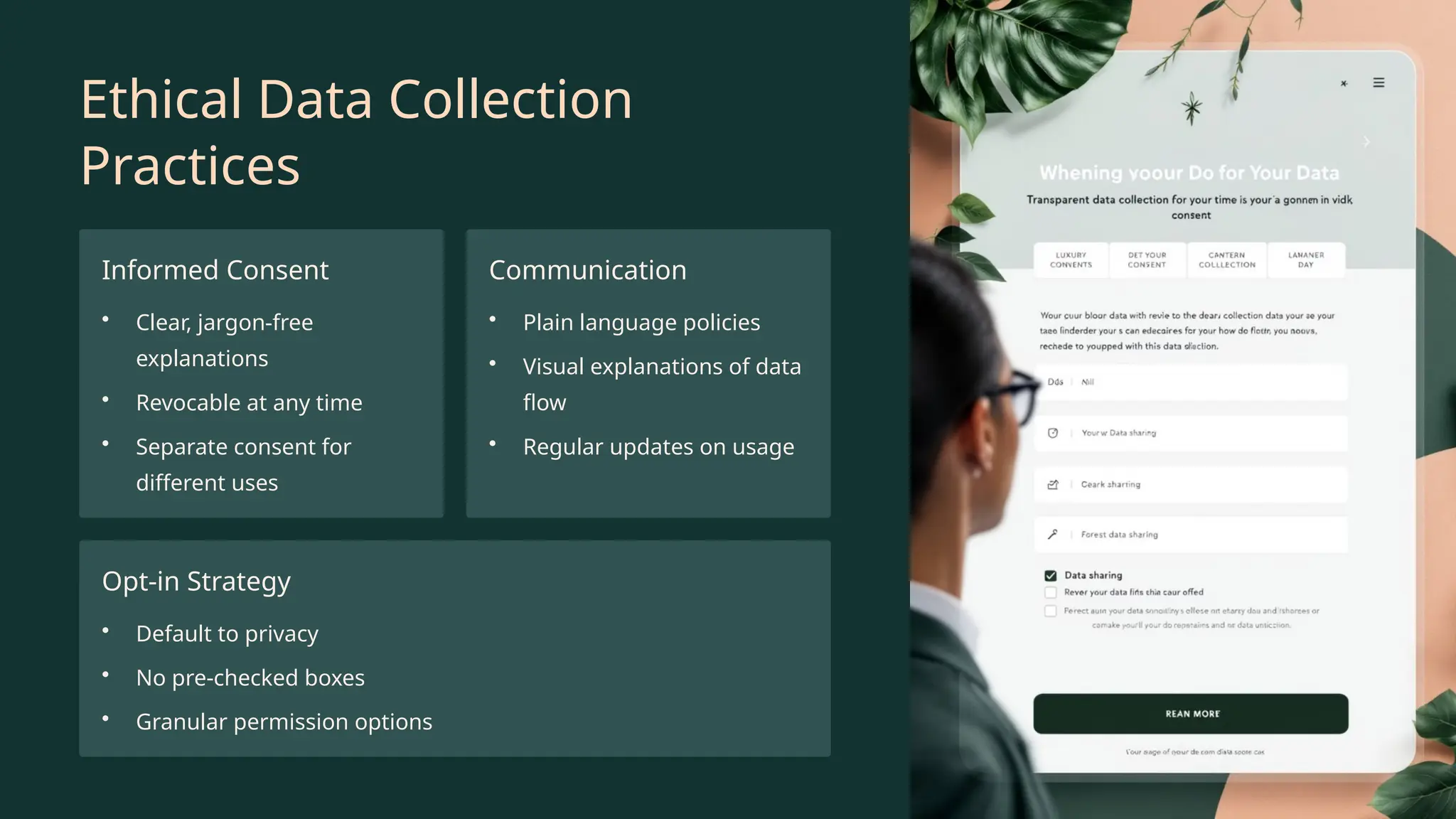
Ethical Data Collection
Practices
Informed Consent
• Clear, jargon-free
explanations
• Revocable at any time
• Separate consent for
different uses
Communication
• Plain language policies
• Visual explanations of data
flow
• Regular updates on usage
Opt-in Strategy
• Default to privacy
• No pre-checked boxes
• Granular permission options
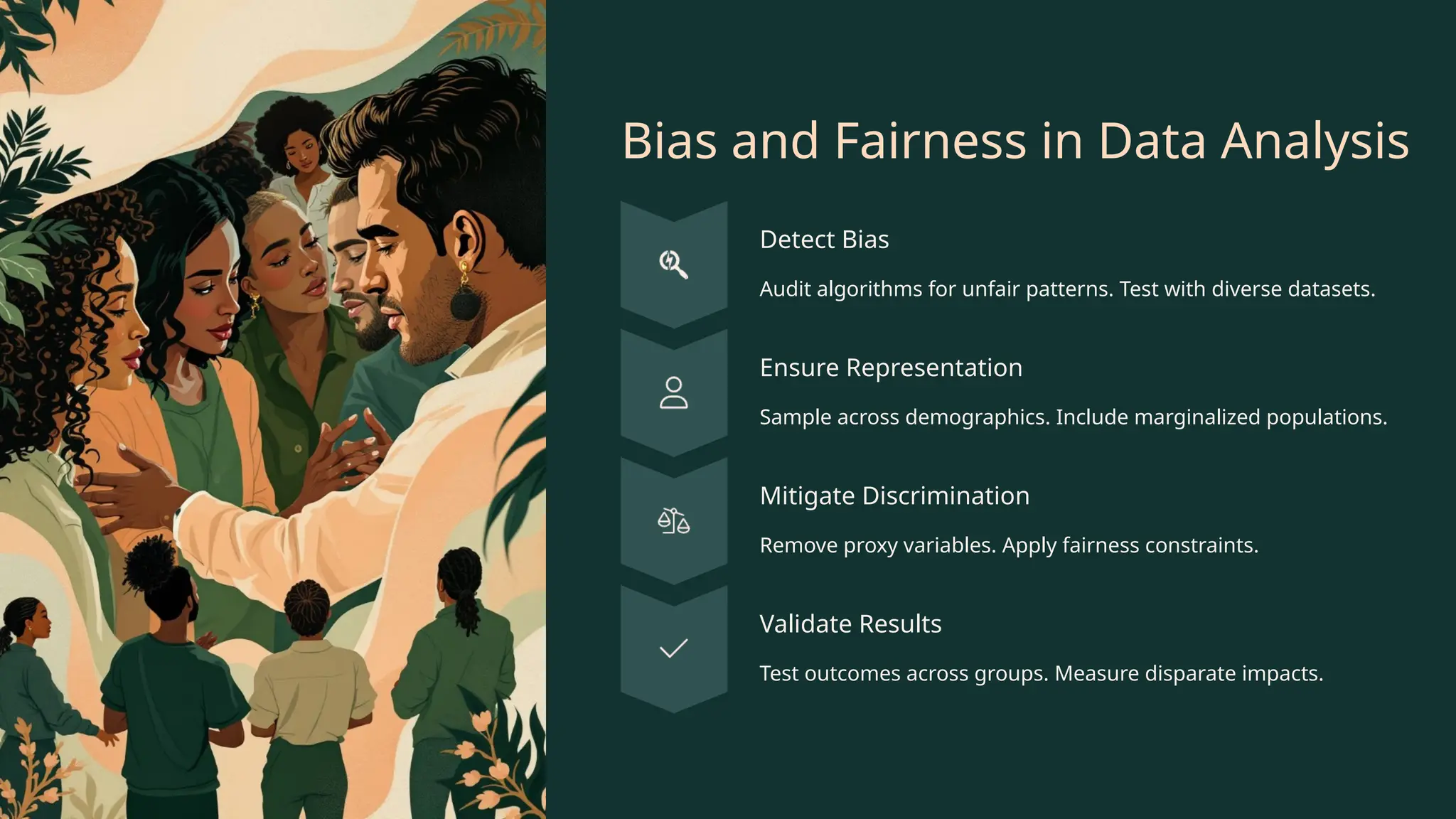
Bias and Fairness in Data Analysis
Detect Bias
Audit algorithms for unfair patterns. Test with diverse datasets.
Ensure Representation
Sample across demographics. Include marginalized populations.
Mitigate Discrimination
Remove proxy variables. Apply fairness constraints.
Validate Results
Test outcomes across groups. Measure disparate impacts.
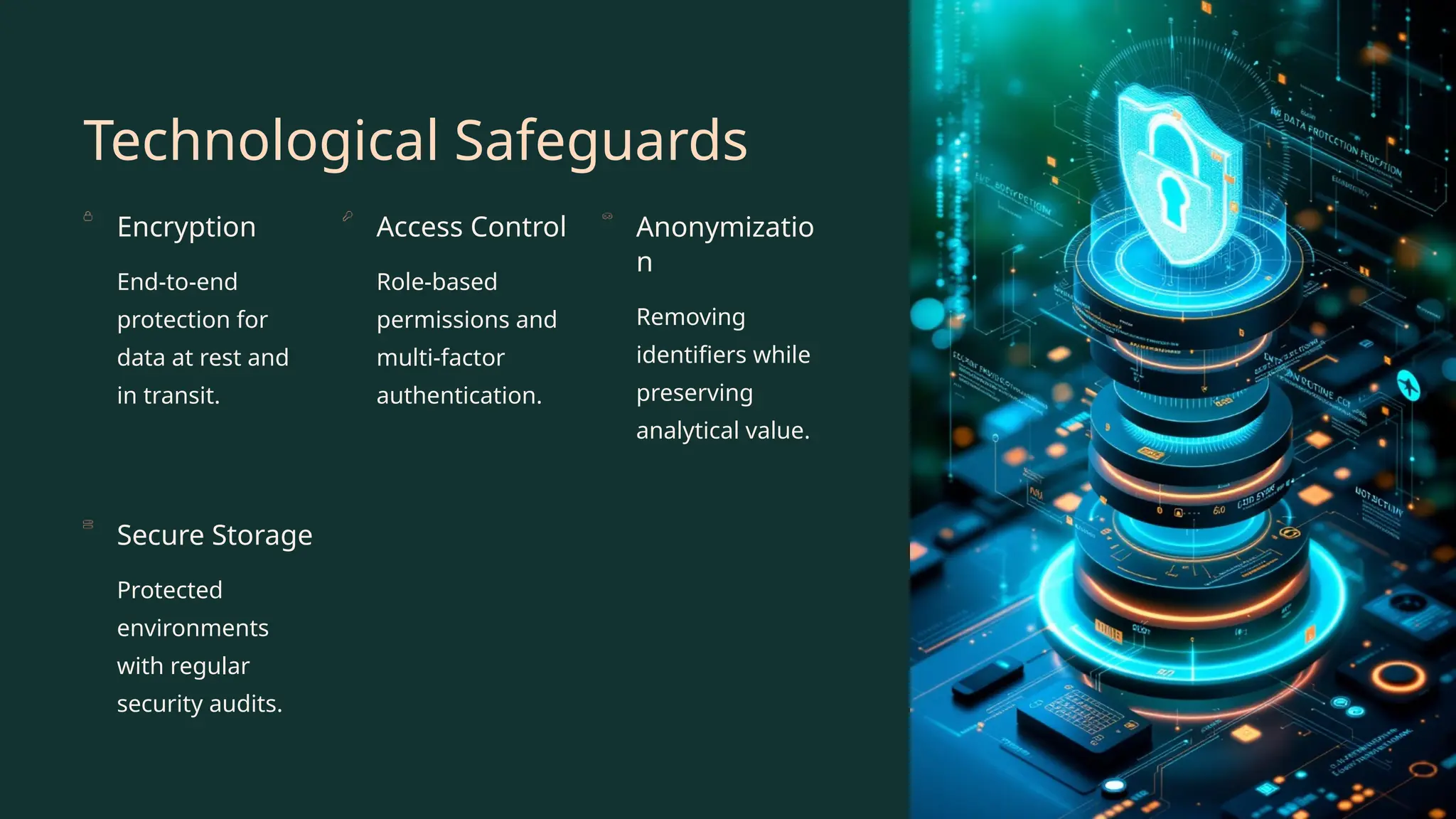
Technological Safeguards
Encryption
End-to-end
protection for
data at rest and
in transit.
Access Control
Role-based
permissions and
multi-factor
authentication.
Anonymizatio
n
Removing
identifiers while
preserving
analytical value.
Secure Storage
Protected
environments
with regular
security audits.
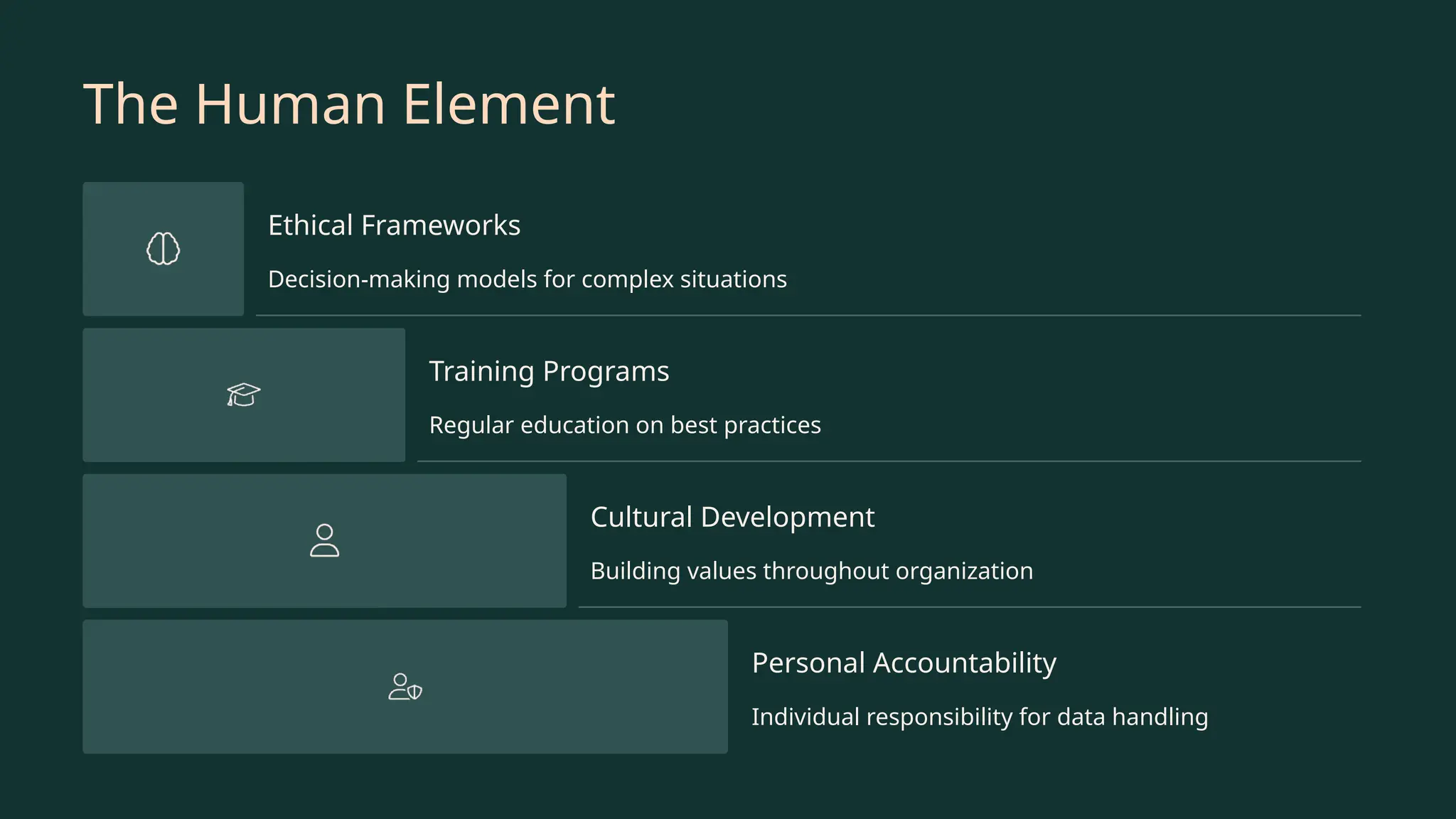
The Human Element
Ethical Frameworks
Decision-making models for complex situations
Training Programs
Regular education on best practices
Cultural Development
Building values throughout organization
Personal Accountability
Individual responsibility for data handling
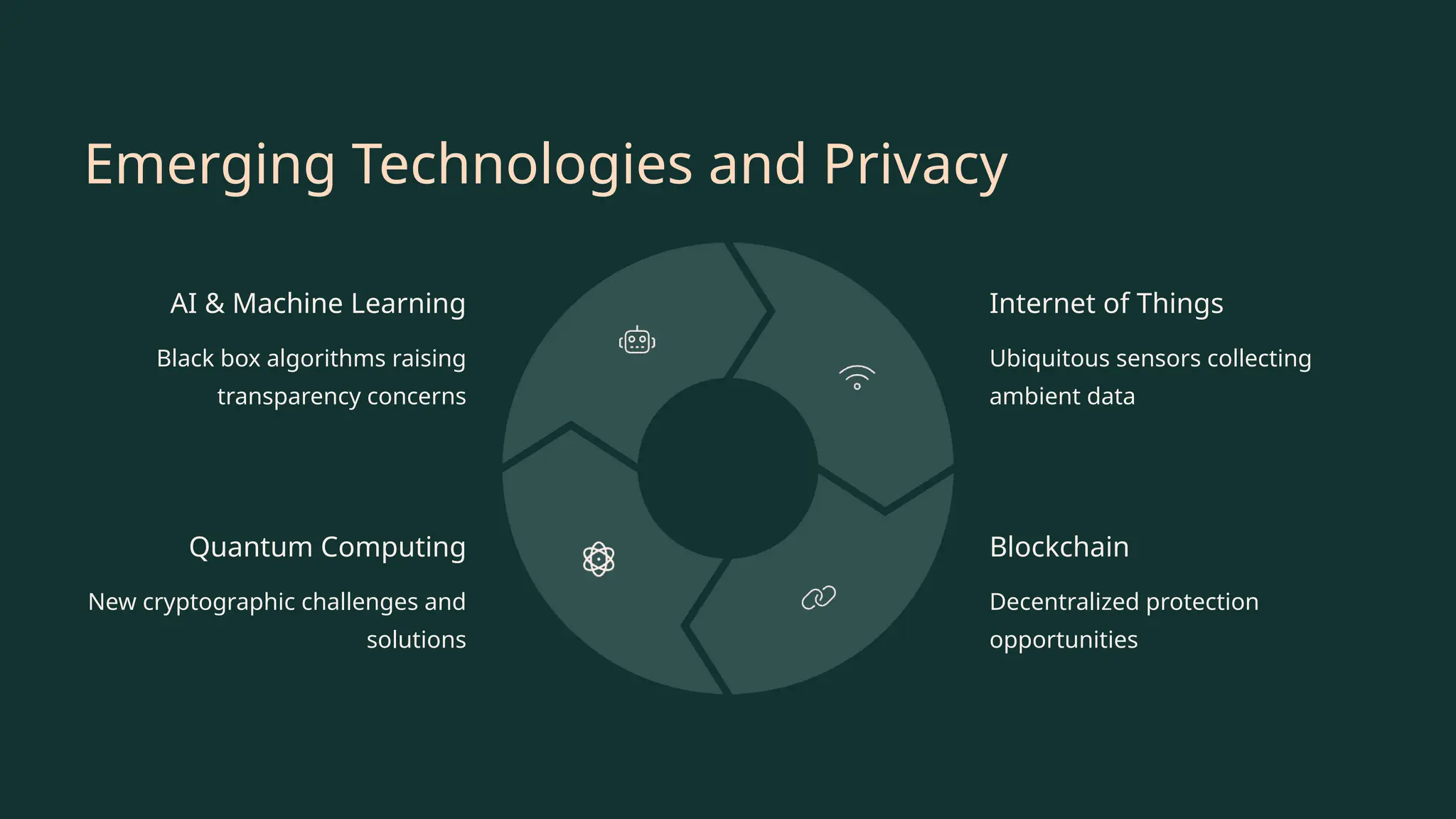
Emerging Technologies and Privacy
AI & Machine Learning
Black box algorithms raising
transparency concerns
Internet of Things
Ubiquitous sensors collecting
ambient data
Blockchain
Decentralized protection
opportunities
Quantum Computing
New cryptographic challenges and
solutions
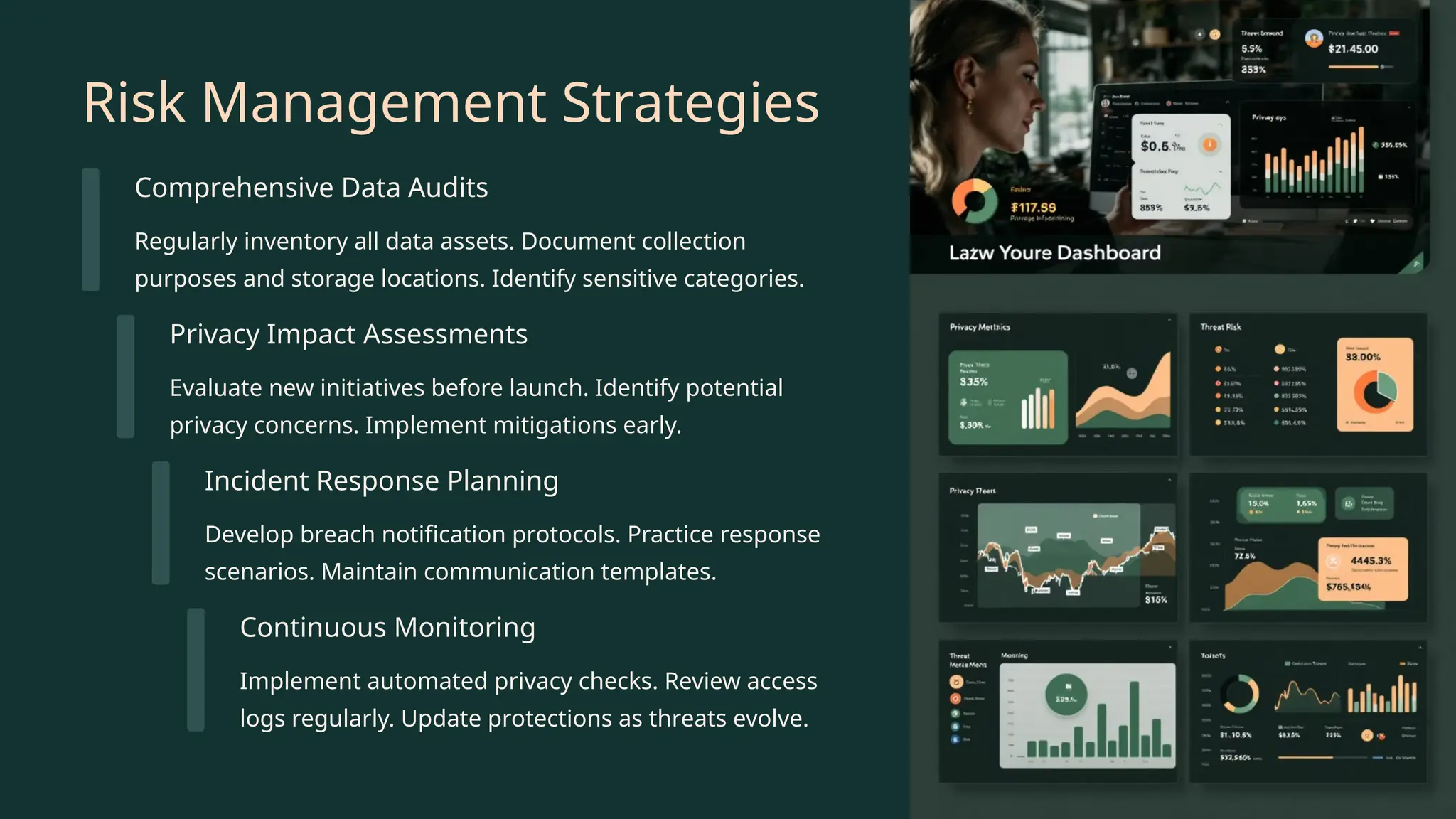
Risk Management Strategies
Comprehensive Data Audits
Regularly inventory all data assets. Document collection
purposes and storage locations. Identify sensitive categories.
Privacy Impact Assessments
Evaluate new initiatives before launch. Identify potential
privacy concerns. Implement mitigations early.
Incident Response Planning
Develop breach notification protocols. Practice response
scenarios. Maintain communication templates.
Continuous Monitoring
Implement automated privacy checks. Review access
logs regularly. Update protections as threats evolve.
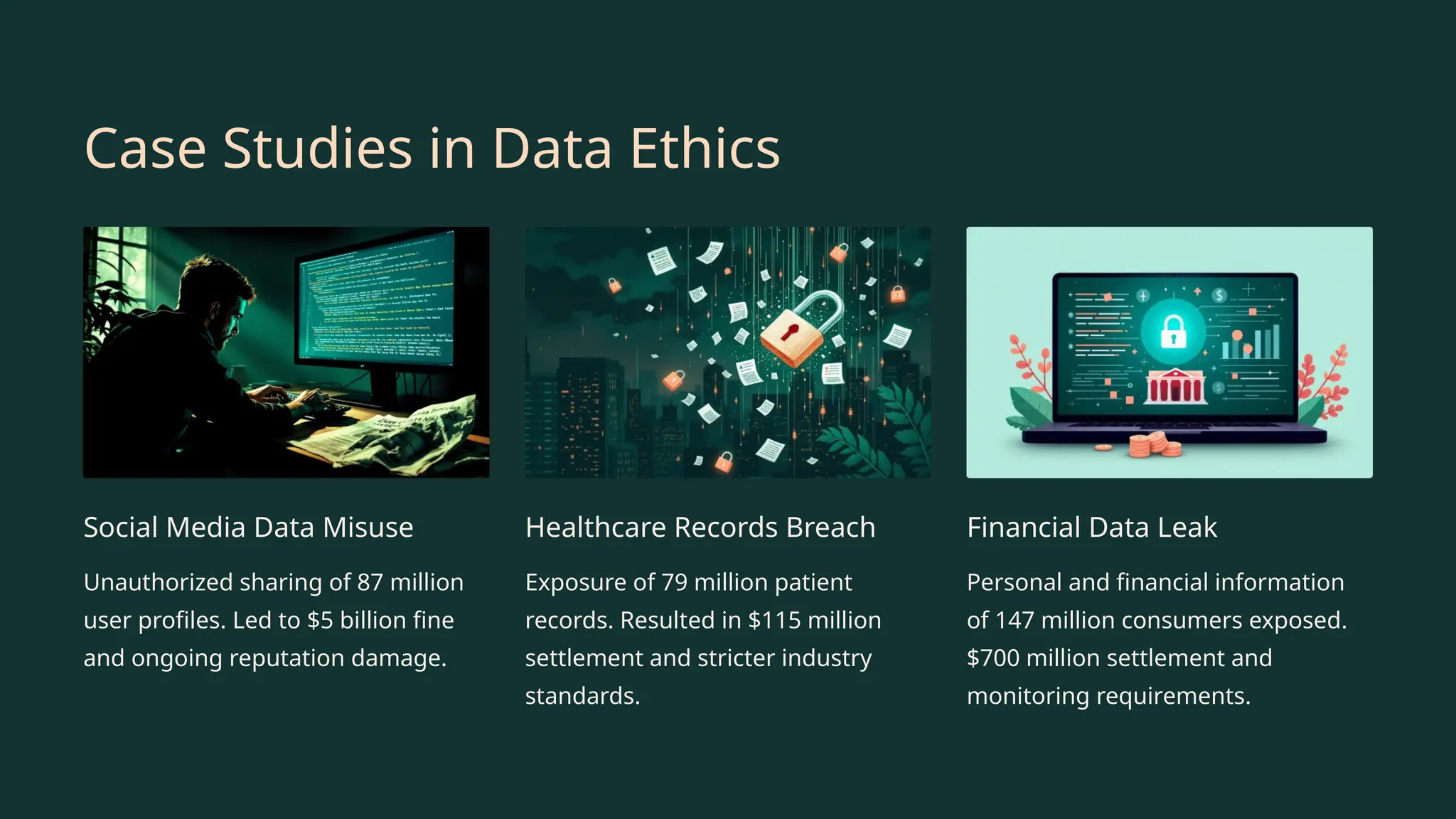
Case Studies in Data Ethics
Social Media Data Misuse
Unauthorized sharing of 87 million
user profiles. Led to $5 billion fine
and ongoing reputation damage.
Healthcare Records Breach
Exposure of 79 million patient
records. Resulted in $115 million
settlement and stricter industry
standards.
Financial Data Leak
Personal and financial information
of 147 million consumers exposed.
$700 million settlement and
monitoring requirements.
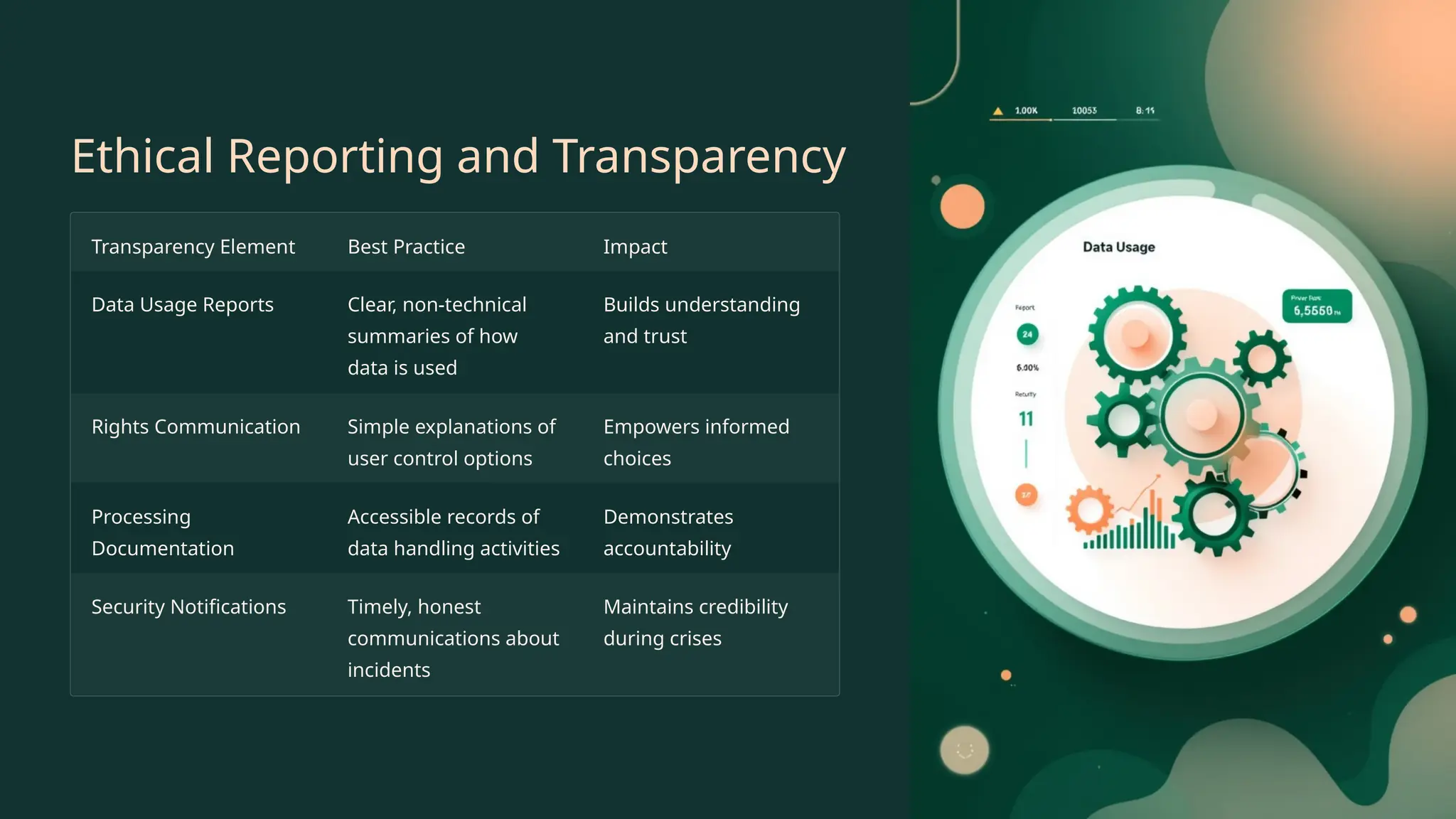
Ethical Reporting and Transparency
Transparency Element Best Practice Impact
Data Usage Reports Clear, non-technical
summaries of how
data is used
Builds understanding
and trust
Rights Communication Simple explanations of
user control options
Empowers informed
choices
Processing
Documentation
Accessible records of
data handling activities
Demonstrates
accountability
Security Notifications Timely, honest
communications about
incidents
Maintains credibility
during crises
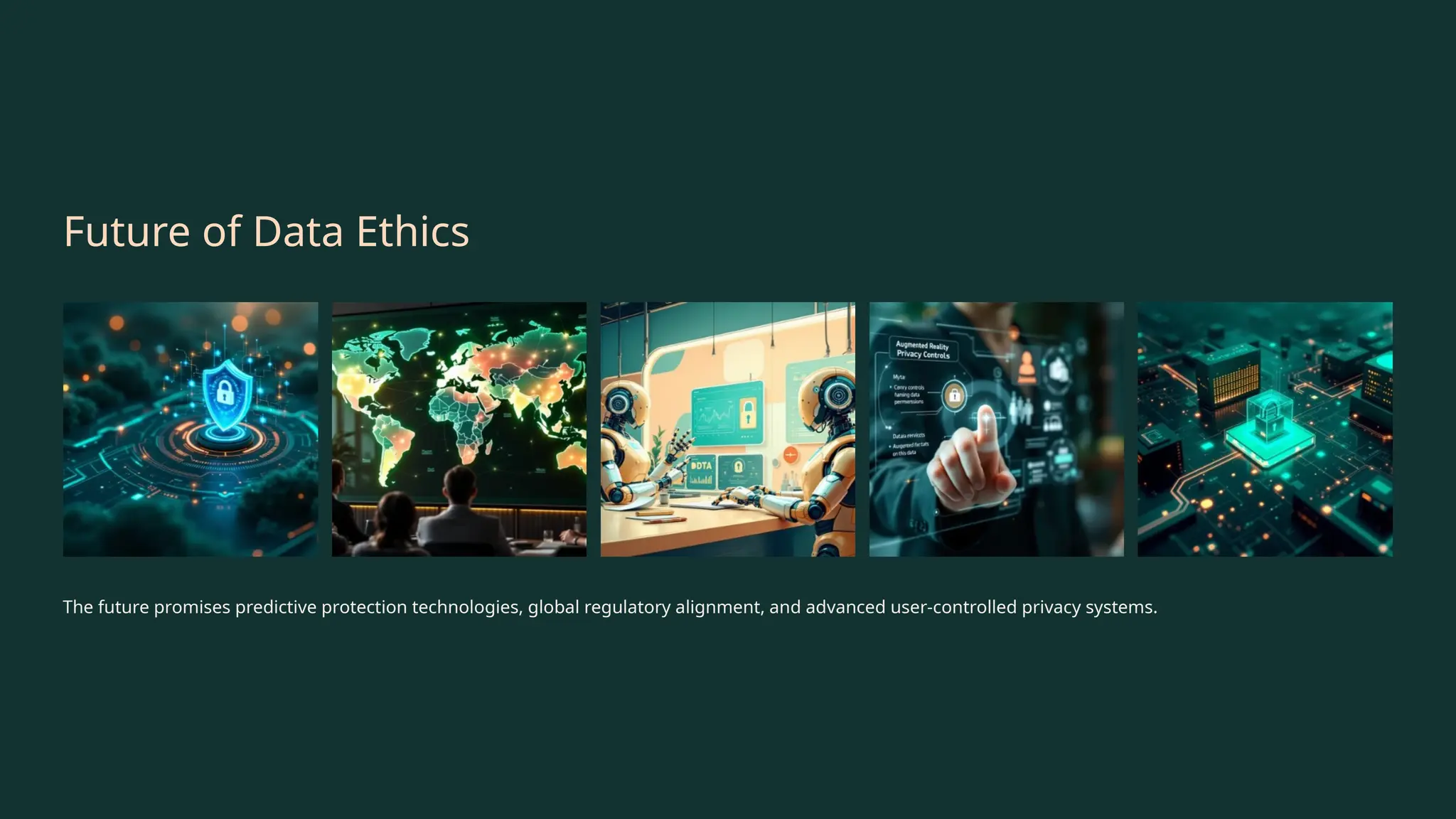
Future of Data Ethics
The future promises predictive protection technologies, global regulatory alignment, and advanced user-controlled privacy systems.
Personal Action Steps
Develop Ethical Skills
Take courses in data ethics and privacy fundamentals.
Stay Updated
Follow privacy regulation developments in your industry.
Implement Protections
Apply privacy-by-design principles in all projects.
Build Community
Share best practices with colleagues and peers.
Professional Development Opportunity
The Complete Excel, AI and
Data Science Mega Bundle
• Comprehensive curriculum
• Expert instructors
• Industry-recognized
certification
Exclusive Features
• Member area access
• On-demand video tutorials
• Hands-on practice projects
Ethics Coverage
• Privacy frameworks
• Ethical algorithm design
• Real-world case studies
Course Benefits
Professional
Certification
Industry-recognized
credentials in data
ethics and privacy
compliance.
Advanced Analytics
Ethical techniques for
extracting insights
while protecting
privacy.
Career
Advancement
Stand out with in-
demand ethical data
handling expertise.
Network Building
Connect with like-
minded professionals
in the ethical data
community.
Take Action Now!
Click
Visit our exclusive offer link
Enroll
Join the data ethics community
Learn
Master ethical data practices
Excel
Transform your data career
Limited-time access to The Complete Excel, AI and Data Science Mega Bundle!
Visit: https://www.digistore24.com/redir/511391/oziasrondon2/

Data-Ethics-and-Privacy-What-Every-Analyst-Should-Know

  • 1.
    Data Ethics &Privacy: What Every Analyst Should Know Critical insights for responsible data handling in today's digital landscape. Learn to protect individual rights while navigating complex ethical challenges. by Ozías Rondón
  • 2.
    The Data Explosion 2.5Q BytesDaily New data created every day worldwide 90% Recent Creation World's data generated in last two years 73% Companies Struggle with data management ethics
  • 3.
    What is DataEthics? Moral Framework Principles guiding responsible data use Balancing Act Organization needs vs. individual rights Core Values Fairness, transparency, and respect
  • 4.
    The Four Pillarsof Data Ethics Consent & Transparency Clearly communicating data collection purposes. Obtaining explicit permission from individuals. Data Minimization Collecting only necessary data. Limiting storage to required timeframes. Purpose Limitation Using data only for stated purposes. Avoiding scope creep in data analysis. Individual Rights Respecting access, correction, and deletion rights. Empowering data subjects.
  • 5.
    Privacy Risks inModern Analytics Sensitive Data Collection 98% of companies collect sensitive personal information. Financial Impact Average data breach costs $4.35 million per incident. Reputational Damage Trust erosion often exceeds direct financial losses.
  • 6.
    Legal Landscape ofData Protection GDPR (2018) European Union's comprehensive privacy framework with fines up to 4% of global revenue. CCPA (2020) California's privacy act protects consumer rights and imposes strict requirements. Global Expansion Similar laws emerging worldwide, creating complex compliance requirements.
  • 7.
    Types of DataSensitivity Personally Identifiable Information (PII) Names, addresses, ID numbers High protection required Protected Health Information (PHI) Medical records, diagnoses Highest protection level Financial Data Account numbers, transactions High security controls Biometric Data Fingerprints, facial recognition Unique protection challenges
  • 8.
    Ethical Data Collection Practices InformedConsent • Clear, jargon-free explanations • Revocable at any time • Separate consent for different uses Communication • Plain language policies • Visual explanations of data flow • Regular updates on usage Opt-in Strategy • Default to privacy • No pre-checked boxes • Granular permission options
  • 9.
    Bias and Fairnessin Data Analysis Detect Bias Audit algorithms for unfair patterns. Test with diverse datasets. Ensure Representation Sample across demographics. Include marginalized populations. Mitigate Discrimination Remove proxy variables. Apply fairness constraints. Validate Results Test outcomes across groups. Measure disparate impacts.
  • 10.
    Technological Safeguards Encryption End-to-end protection for dataat rest and in transit. Access Control Role-based permissions and multi-factor authentication. Anonymizatio n Removing identifiers while preserving analytical value. Secure Storage Protected environments with regular security audits.
  • 11.
    The Human Element EthicalFrameworks Decision-making models for complex situations Training Programs Regular education on best practices Cultural Development Building values throughout organization Personal Accountability Individual responsibility for data handling
  • 12.
    Emerging Technologies andPrivacy AI & Machine Learning Black box algorithms raising transparency concerns Internet of Things Ubiquitous sensors collecting ambient data Blockchain Decentralized protection opportunities Quantum Computing New cryptographic challenges and solutions
  • 13.
    Risk Management Strategies ComprehensiveData Audits Regularly inventory all data assets. Document collection purposes and storage locations. Identify sensitive categories. Privacy Impact Assessments Evaluate new initiatives before launch. Identify potential privacy concerns. Implement mitigations early. Incident Response Planning Develop breach notification protocols. Practice response scenarios. Maintain communication templates. Continuous Monitoring Implement automated privacy checks. Review access logs regularly. Update protections as threats evolve.
  • 14.
    Case Studies inData Ethics Social Media Data Misuse Unauthorized sharing of 87 million user profiles. Led to $5 billion fine and ongoing reputation damage. Healthcare Records Breach Exposure of 79 million patient records. Resulted in $115 million settlement and stricter industry standards. Financial Data Leak Personal and financial information of 147 million consumers exposed. $700 million settlement and monitoring requirements.
  • 15.
    Ethical Reporting andTransparency Transparency Element Best Practice Impact Data Usage Reports Clear, non-technical summaries of how data is used Builds understanding and trust Rights Communication Simple explanations of user control options Empowers informed choices Processing Documentation Accessible records of data handling activities Demonstrates accountability Security Notifications Timely, honest communications about incidents Maintains credibility during crises
  • 16.
    Future of DataEthics The future promises predictive protection technologies, global regulatory alignment, and advanced user-controlled privacy systems.
  • 17.
    Personal Action Steps DevelopEthical Skills Take courses in data ethics and privacy fundamentals. Stay Updated Follow privacy regulation developments in your industry. Implement Protections Apply privacy-by-design principles in all projects. Build Community Share best practices with colleagues and peers.
  • 18.
    Professional Development Opportunity TheComplete Excel, AI and Data Science Mega Bundle • Comprehensive curriculum • Expert instructors • Industry-recognized certification Exclusive Features • Member area access • On-demand video tutorials • Hands-on practice projects Ethics Coverage • Privacy frameworks • Ethical algorithm design • Real-world case studies
  • 19.
    Course Benefits Professional Certification Industry-recognized credentials indata ethics and privacy compliance. Advanced Analytics Ethical techniques for extracting insights while protecting privacy. Career Advancement Stand out with in- demand ethical data handling expertise. Network Building Connect with like- minded professionals in the ethical data community.
  • 20.
    Take Action Now! Click Visitour exclusive offer link Enroll Join the data ethics community Learn Master ethical data practices Excel Transform your data career Limited-time access to The Complete Excel, AI and Data Science Mega Bundle! Visit: https://www.digistore24.com/redir/511391/oziasrondon2/