Social Web + Data Breaches =
       Reputation Risk


                   Boyd Neil
           National Practice Leader
   Social Media and Digital Communications
          boyd.neil@hkstrategies.com


                                             June 28, 2012
3


            The Social Web Changes Crisis
             Communications Permanently


6/28/2012
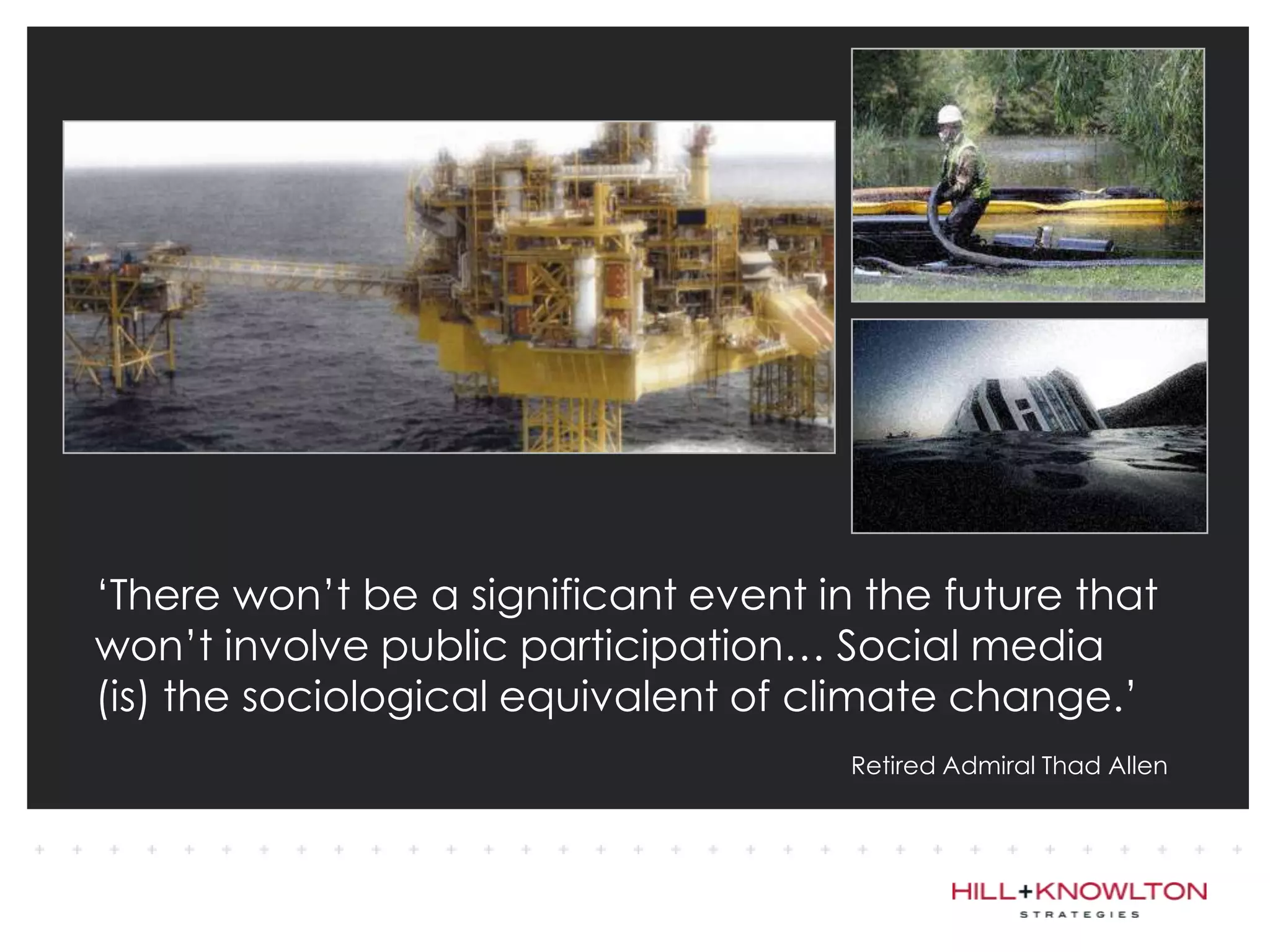
‘There won’t be a significant event in the future that
won’t involve public participation… Social media
(is) the sociological equivalent of climate change.’
                                      Retired Admiral Thad Allen
5


     New voices
                         Two-way channels         Providing organizations
empowered through
                       creating opportunities      with means to directly
 digital challenging
                       for dialogue yet to be      touch most important
  traditional media
                           fully exploited               audiences
       primacy


              Reputation & risk
                                     Mobile technologies
            management models
                                     moving us into new
             impacted: speed,
                                      areas still not fully
               transparency,
                                         understood
                 inaccuracy
6


            A New Frontier for Risk:
                Data Breaches


6/28/2012
8


6/28/2012
19


            The Social Web Loves Data
                    Breaches


6/28/2012
20


6/28/2012
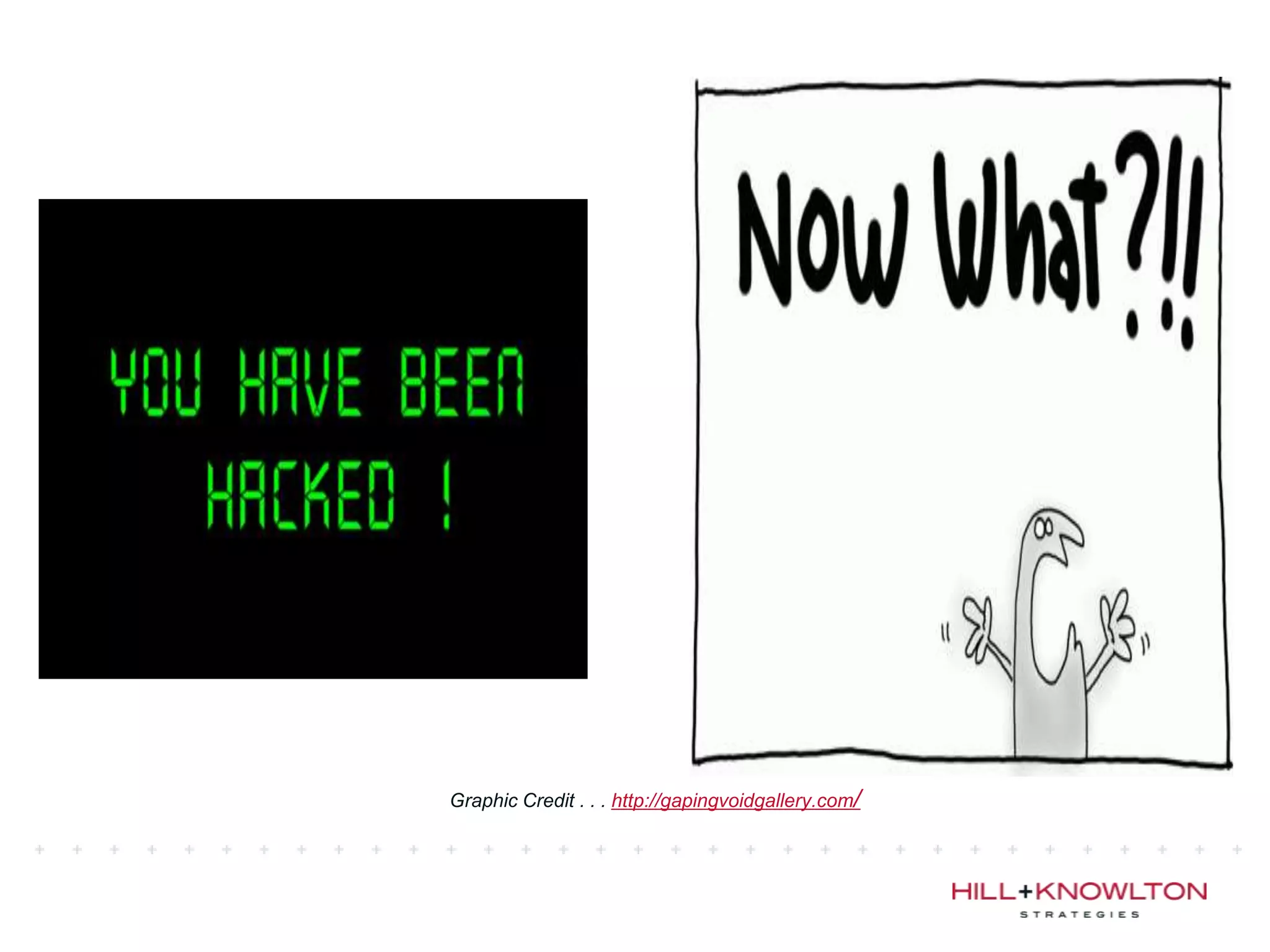
Graphic Credit . . . http://gapingvoidgallery.com/
25


“[Brands suffering data leaks] should email people, post on Twitter,
Facebook and address their customers where they are - you shouldn‟t
have to let people do a Google search or find out through word of
mouth.”
   •   Alys Woodward, research director at market intelligence firm IDC
       Europe
11 principles for managing            26

data breach communication
      on the social web

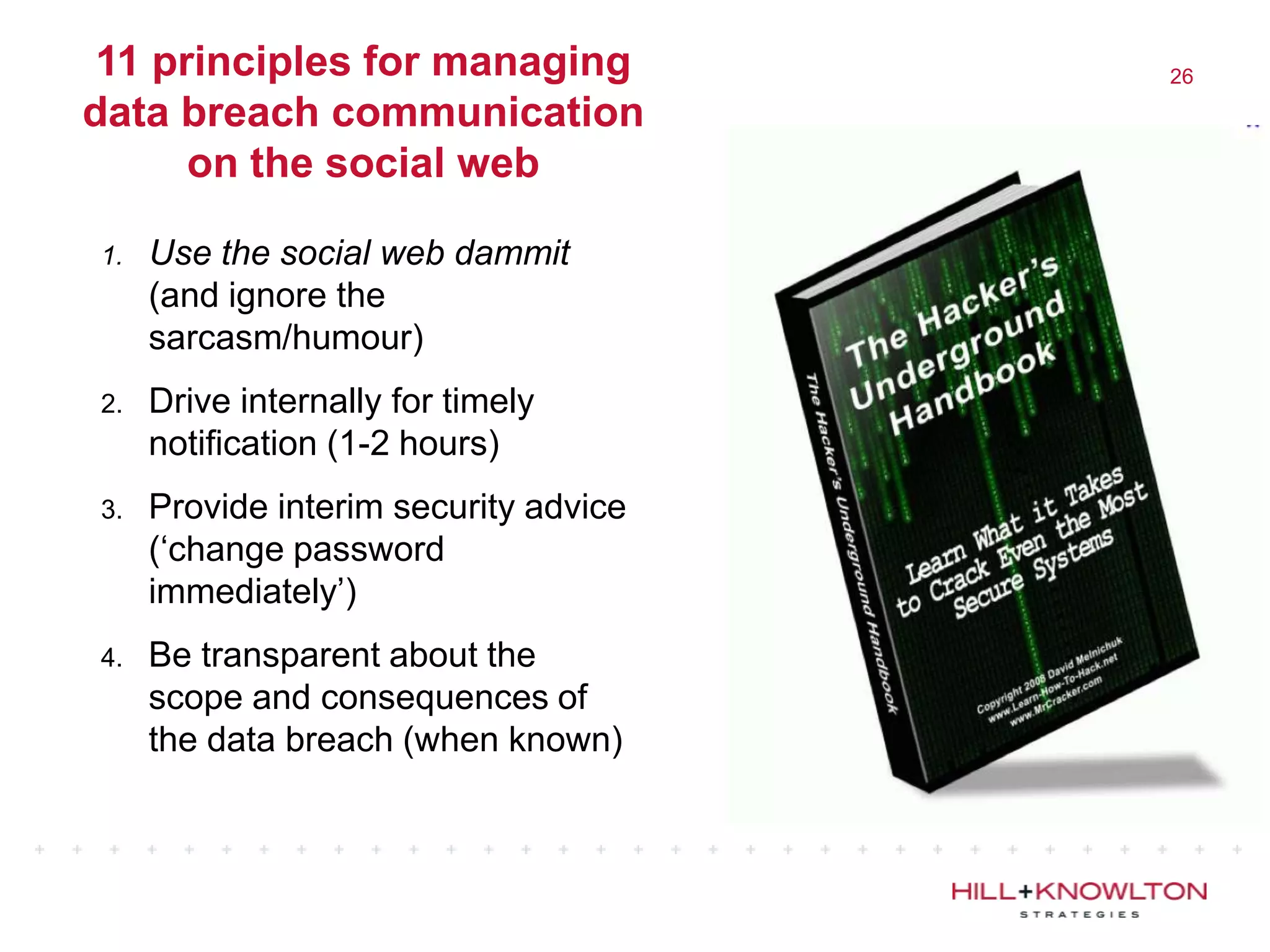
1.   Use the social web dammit
     (and ignore the
     sarcasm/humour)
2.   Drive internally for timely
     notification (1-2 hours)
3.   Provide interim security advice
     („change password
     immediately‟)
4.   Be transparent about the
     scope and consequences of
     the data breach (when known)
11 principles for managing            27

data breach communication
      on the social web

5.   Coordinate internal protocols
     for multi-platform
     communications (Twitter,
     Facebook, YouTube, etc.)
6.   Use #hashtags related to
     incident so your info. is there
     in frame used to share news
     (Twitter/Facebook
7.   Use multiple media formats
     (visuals + video + text) . . .
     facilitates sharing
11 principles for managing         28

data breach communication
      on the social web

8.    Amplify through
      paid/promoted
      tweets/Facebook posts
9.    Reply to social web
      dialogue + questions with
      „confident humility‟
10.   Commit to fixing your
      firewall and/or internal
      security processes
11.   Get ready now for the
      social web part of the hack
      dammit
29
Sources:
   http://www.marketingweek.co.uk/news/linkedins-slow-reaction-to-data-leaks-hits-
   brand/4002126.article

   http://www.cloudhance.com/how-data-breaches-happen/

   http://www.pcmag.com/article2/0,2817,2394743,00.asp

   http://www.focus.com/fyi/high-profile-data-breaches/

   http://www.backgroundcheck.org/state-of-it-security/

   http://siliconangle.com/blog/2011/06/26/the-largest-data-breaches-of-all-time-
   infographic/

   http://www.infographs.org/2012/02/the-high-cost-of-a-data-breach-infographic/#

   http://paranoid-security.blogspot.ca/

   http://www.youtube.com/watch?v=xyIxFhQ_g5g


6/28/2012

Data Breaches and the Social Web

  • 1.
    Social Web +Data Breaches = Reputation Risk Boyd Neil National Practice Leader Social Media and Digital Communications boyd.neil@hkstrategies.com June 28, 2012
  • 3.
    3 The Social Web Changes Crisis Communications Permanently 6/28/2012
  • 4.
    ‘There won’t bea significant event in the future that won’t involve public participation… Social media (is) the sociological equivalent of climate change.’ Retired Admiral Thad Allen
  • 5.
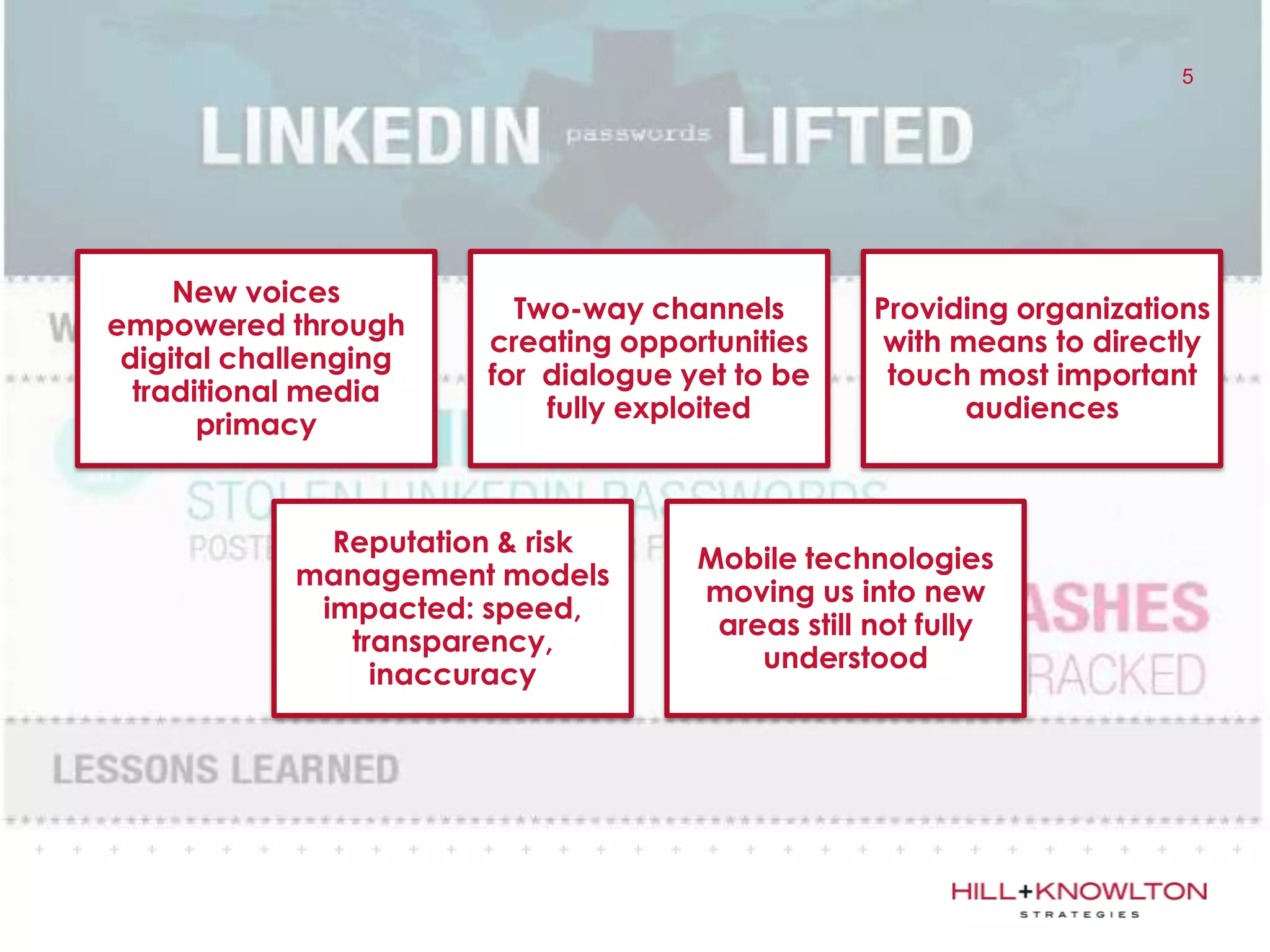
    5 New voices Two-way channels Providing organizations empowered through creating opportunities with means to directly digital challenging for dialogue yet to be touch most important traditional media fully exploited audiences primacy Reputation & risk Mobile technologies management models moving us into new impacted: speed, areas still not fully transparency, understood inaccuracy
  • 6.
    6 A New Frontier for Risk: Data Breaches 6/28/2012
  • 8.
  • 19.
    19 The Social Web Loves Data Breaches 6/28/2012
  • 20.
  • 22.
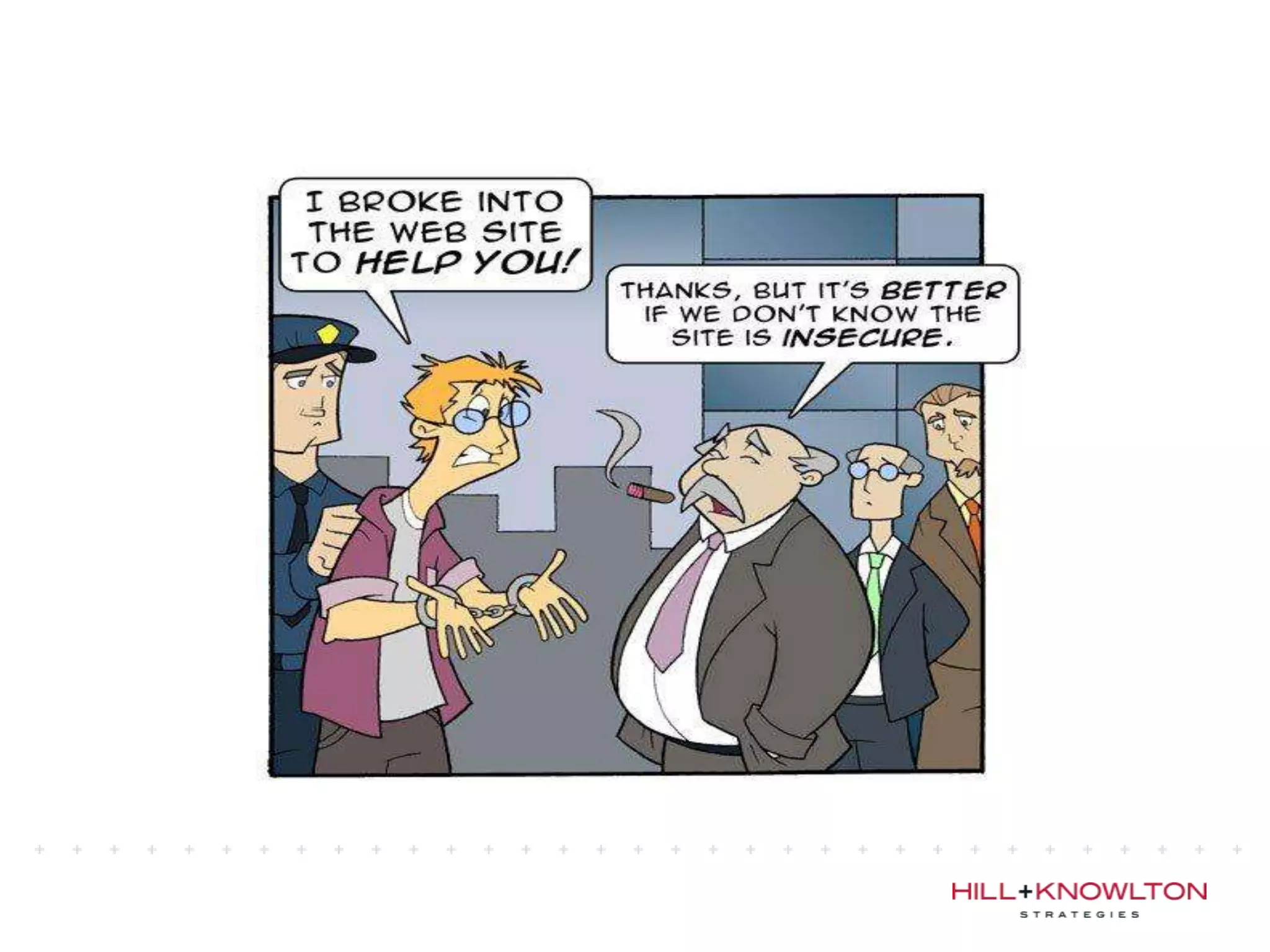
    Graphic Credit .. . http://gapingvoidgallery.com/
  • 25.
    25 “[Brands suffering dataleaks] should email people, post on Twitter, Facebook and address their customers where they are - you shouldn‟t have to let people do a Google search or find out through word of mouth.” • Alys Woodward, research director at market intelligence firm IDC Europe
  • 26.
    11 principles formanaging 26 data breach communication on the social web 1. Use the social web dammit (and ignore the sarcasm/humour) 2. Drive internally for timely notification (1-2 hours) 3. Provide interim security advice („change password immediately‟) 4. Be transparent about the scope and consequences of the data breach (when known)
  • 27.
    11 principles formanaging 27 data breach communication on the social web 5. Coordinate internal protocols for multi-platform communications (Twitter, Facebook, YouTube, etc.) 6. Use #hashtags related to incident so your info. is there in frame used to share news (Twitter/Facebook 7. Use multiple media formats (visuals + video + text) . . . facilitates sharing
  • 28.
    11 principles formanaging 28 data breach communication on the social web 8. Amplify through paid/promoted tweets/Facebook posts 9. Reply to social web dialogue + questions with „confident humility‟ 10. Commit to fixing your firewall and/or internal security processes 11. Get ready now for the social web part of the hack dammit
  • 29.
    29 Sources: http://www.marketingweek.co.uk/news/linkedins-slow-reaction-to-data-leaks-hits- brand/4002126.article http://www.cloudhance.com/how-data-breaches-happen/ http://www.pcmag.com/article2/0,2817,2394743,00.asp http://www.focus.com/fyi/high-profile-data-breaches/ http://www.backgroundcheck.org/state-of-it-security/ http://siliconangle.com/blog/2011/06/26/the-largest-data-breaches-of-all-time- infographic/ http://www.infographs.org/2012/02/the-high-cost-of-a-data-breach-infographic/# http://paranoid-security.blogspot.ca/ http://www.youtube.com/watch?v=xyIxFhQ_g5g 6/28/2012

Editor's Notes

  • #2 I’ll cover three things today:1 . . . A perspective on the social web (define it Boyd)2 . . . The prevalence and impact of data breaches today3 . . . 11 principles for managing communications on the social web should your organization be faced with a data breach
  • #3 Definition of ‘data breach’ . . . “A data breach is the intentional or unintentional release of secure information to an untrusted environment . . . It is a security incident in which sensitive, protected or confidential data is copied, transmitted, viewed, stolen or used by an individual unauthorized to do so.”
  • #4 Before discussing data breaches, their frequency and impact, and how to manage communication around data breaches in social media, I want to make a few foundational points about the relationship between the social web and crisis communications.
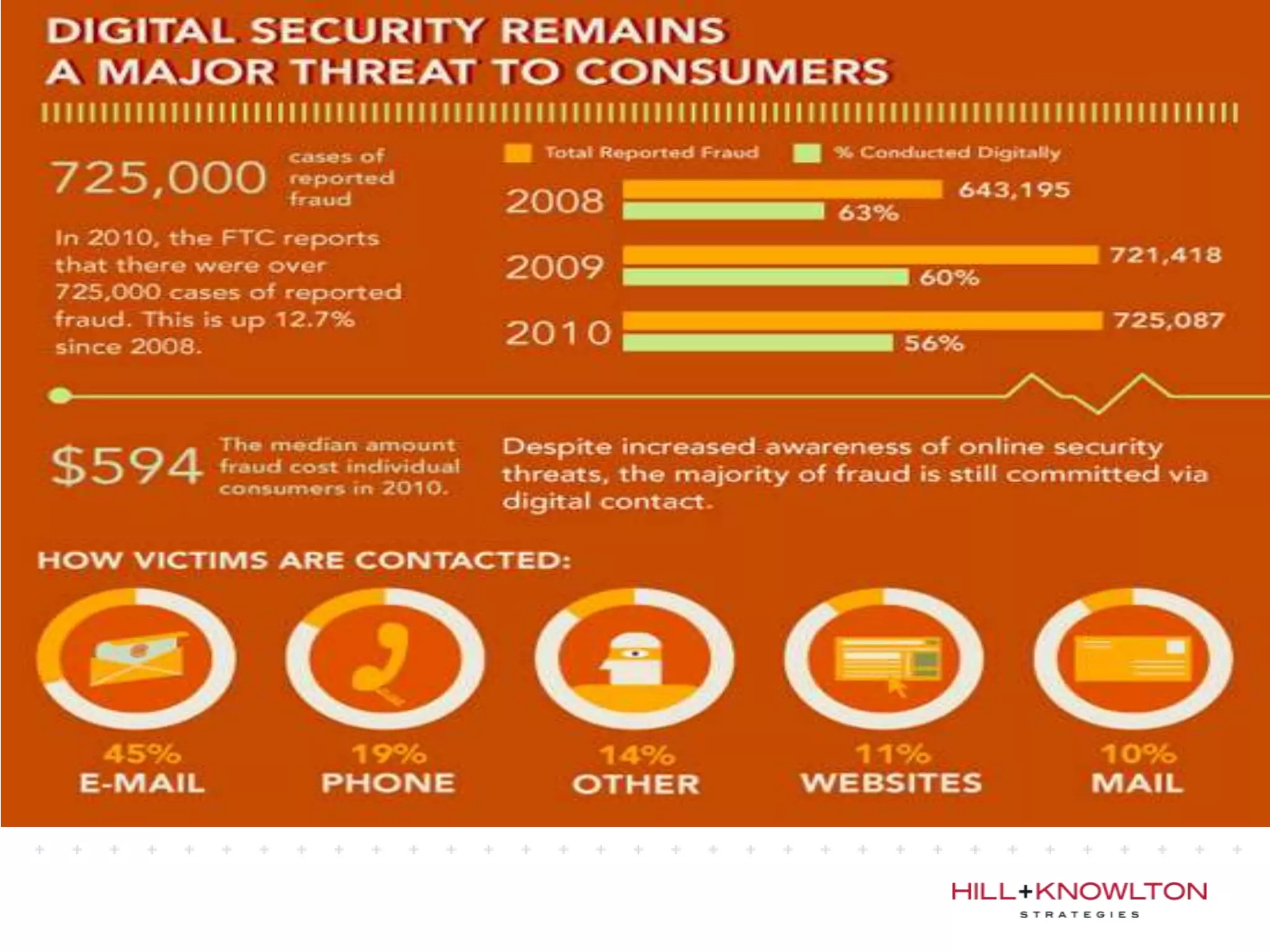
  • #8 In general, digital security is considered a major threat by consumersWhile it appears that the percentage of digital contact as a proportion of all fraud has stayed the same, this is in spite of the fact that our awareness of online security threats has increased significantly
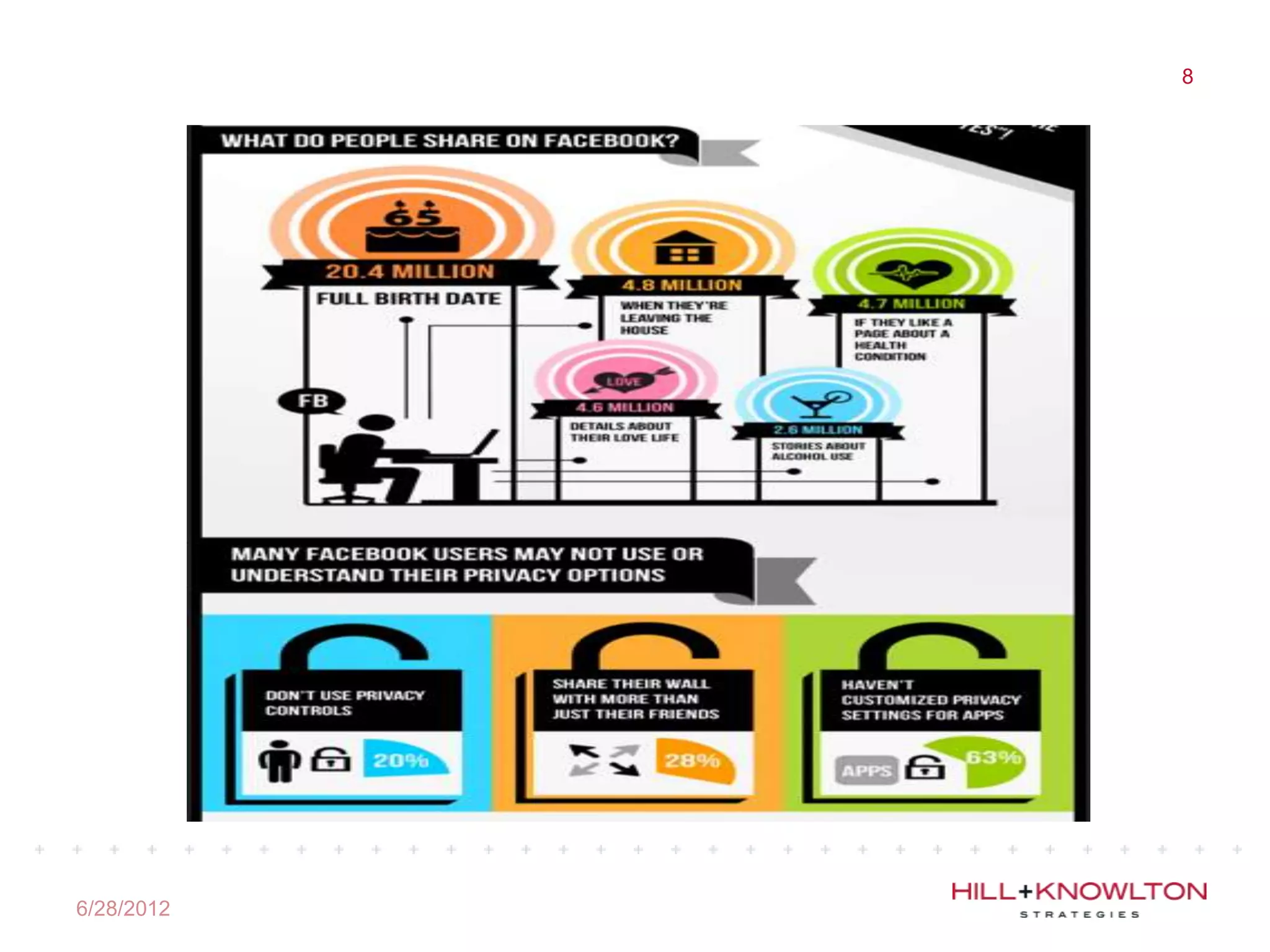
  • #9 Yet as individuals we are remarkably incautious about what information we share when we go online, especially on platforms like Facebook which we see as a private exchange with friends . . . This is a whole new area of social interest and books are being written about it.There is also something which I like to call the ‘fallacy of the password paradigm’ . . . The believe that our single username and password will protect out account . . . Even though that data is sitting on corporate organizational databases.
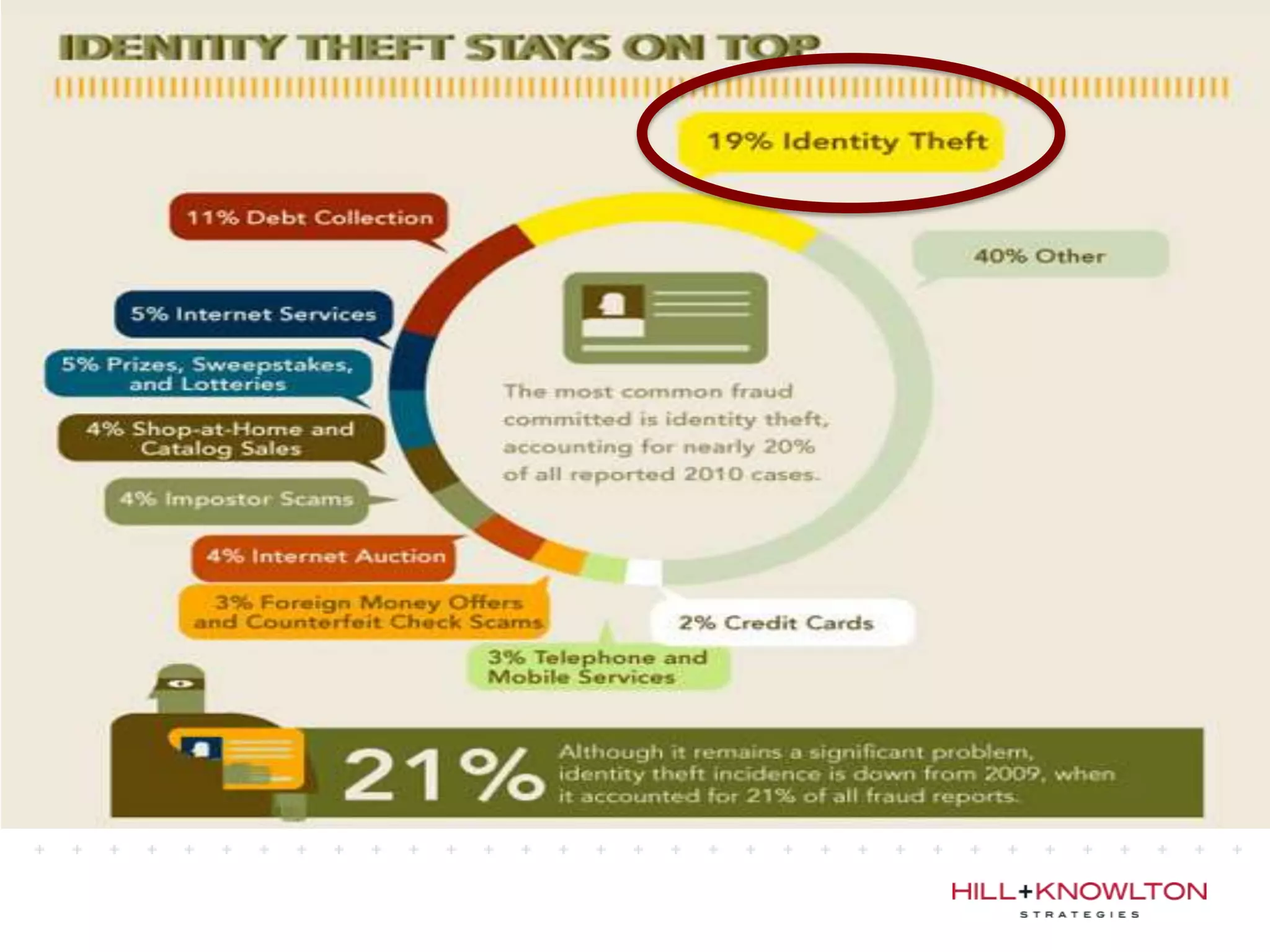
  • #10 Not surprisingly then, identity theft remains the biggest threat even though it has declined by 2.0 % over the past three years.But while individuals are vulnerable given their propensity to share indiscriminately, the biggest security threats are when companies are hacked.
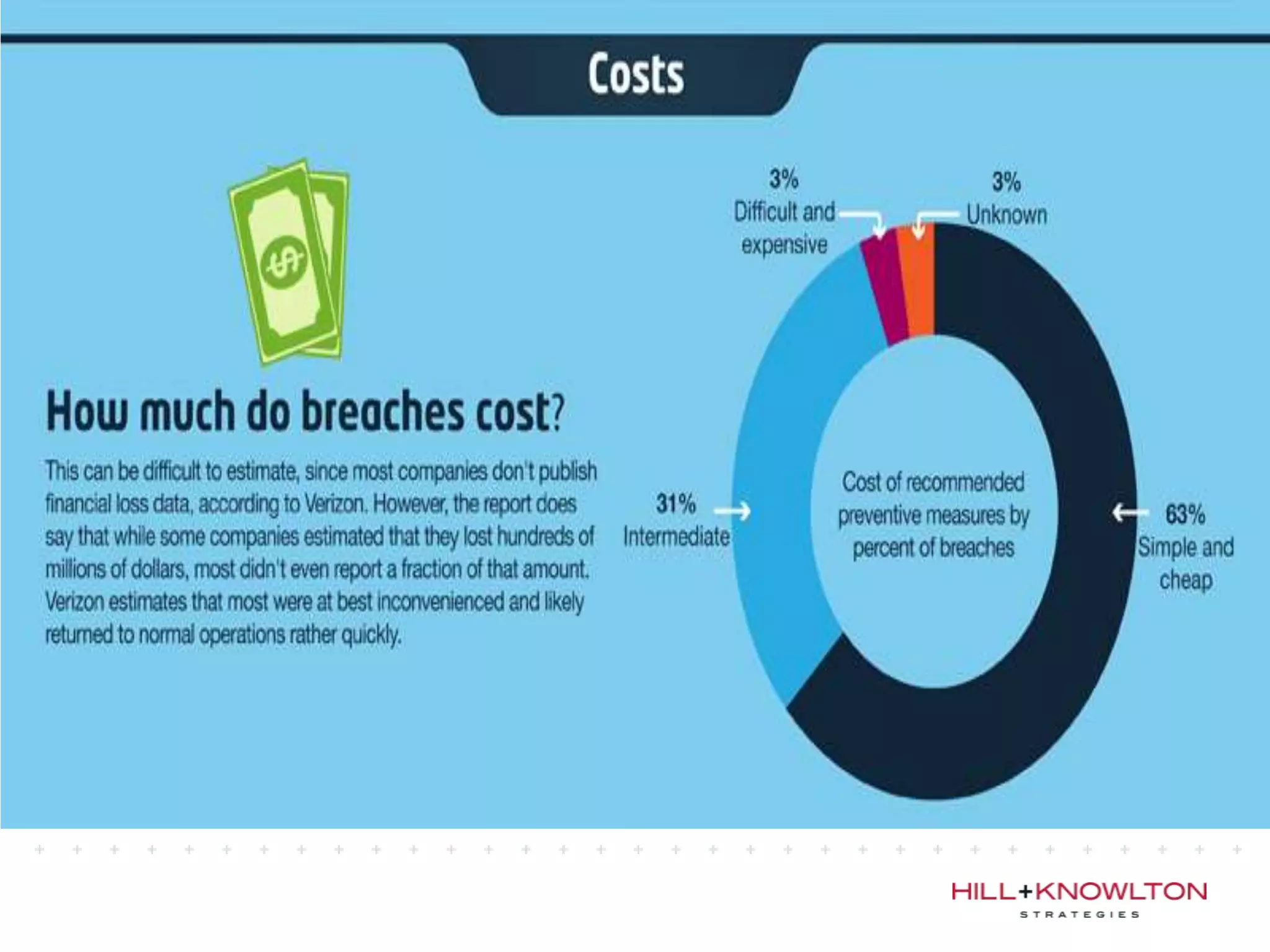
  • #11 It is difficult to put a dollar value on these breaches since they often resolve very quickly . . . But as we will get to, there are significant so-called ‘soft’ costs that may be more profound.
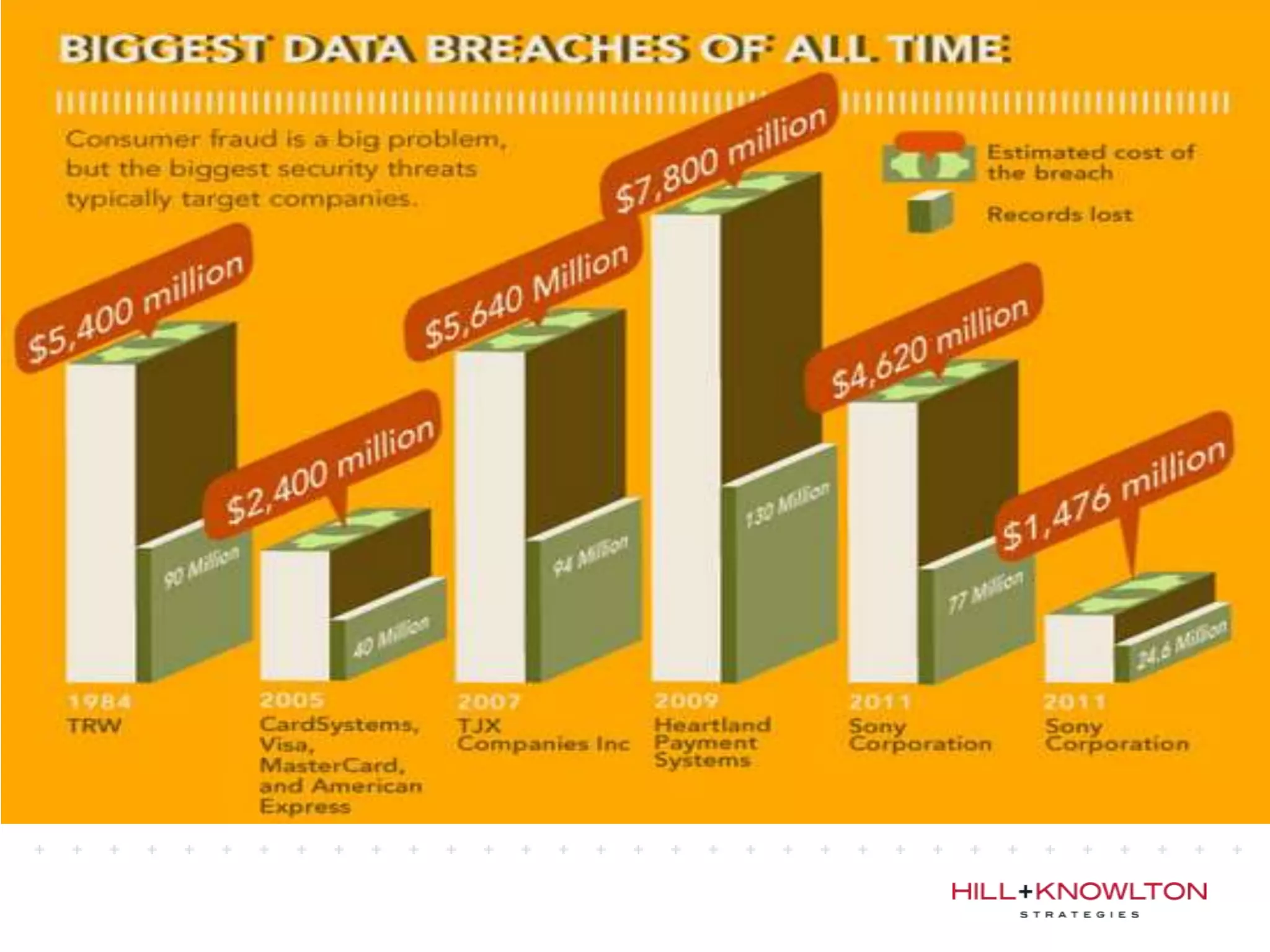
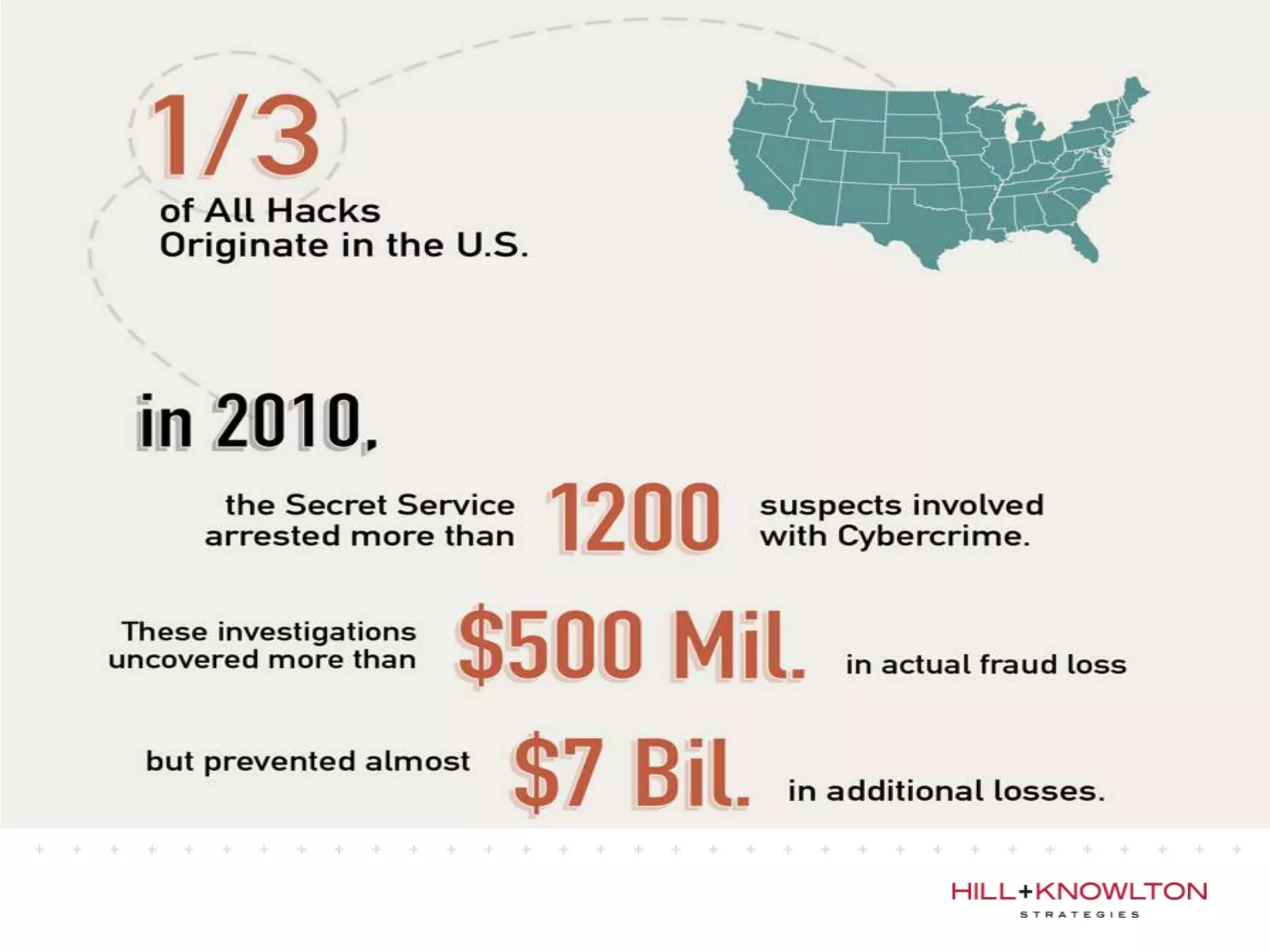
  • #12 Nevertheless, the cost to the companies and, therefore, to consumers because we pay through rising product and service costs, is huge. In the last five years, it is estimated that the cost of security breaches over the last twenty years or so is in the neighbourhood of $22 billion.
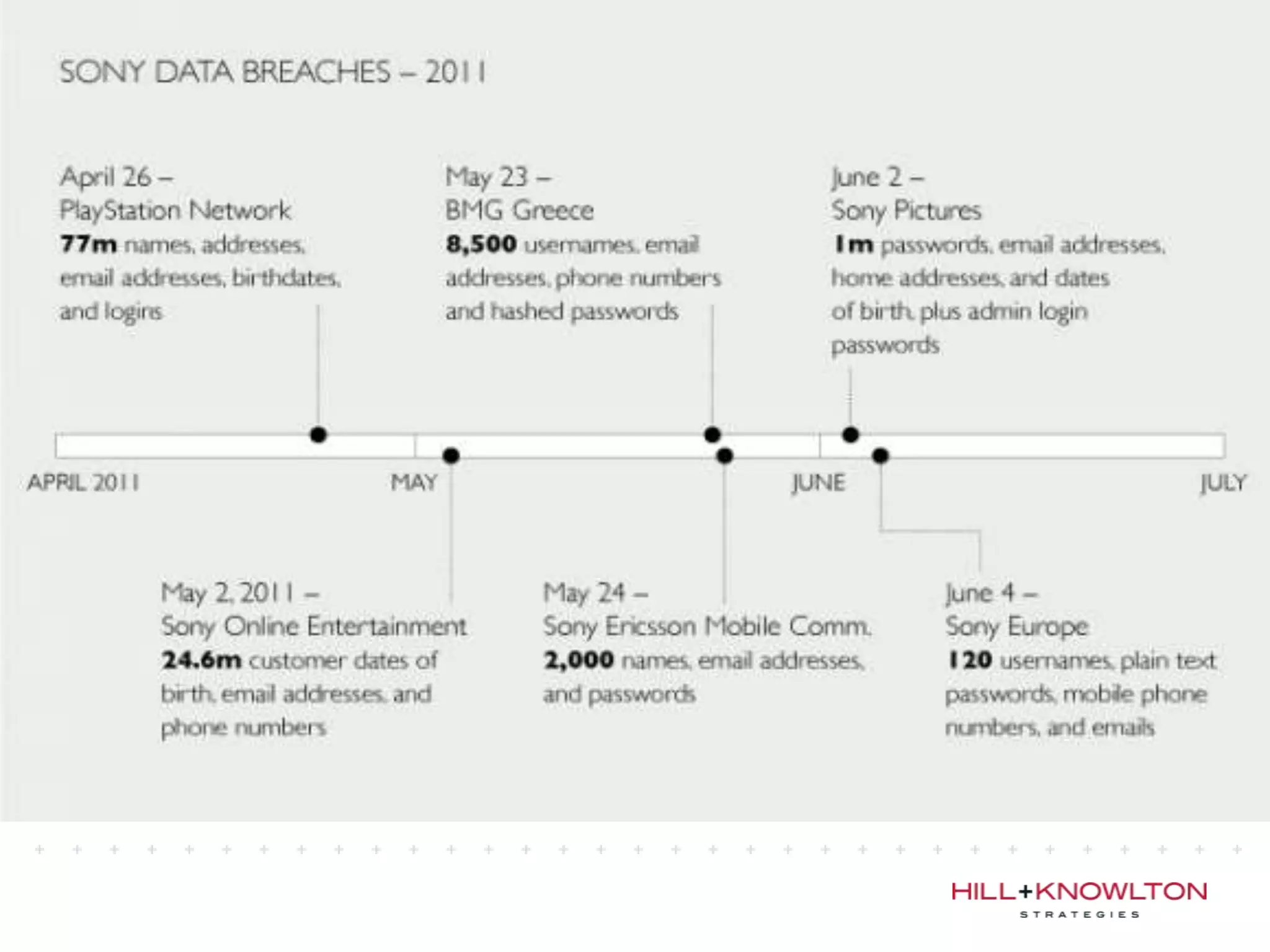
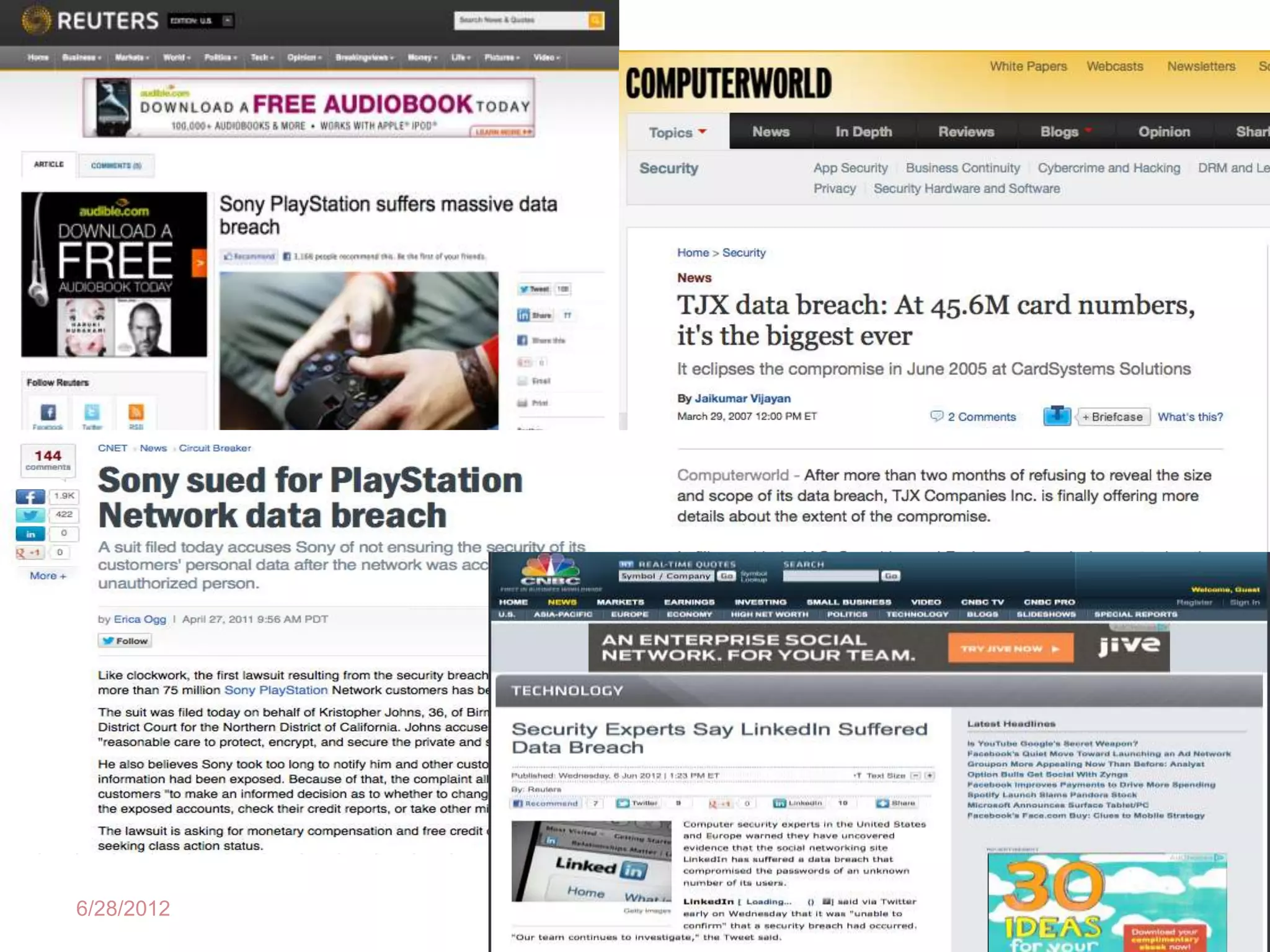
  • #13 Sony Corporation in the last year alone has been the target of hacks and inadvertent data breaches affecting in the range of 26 million customers.The highest profile one was the April 26, 2011 attack on Sony’s PlayStation Network.
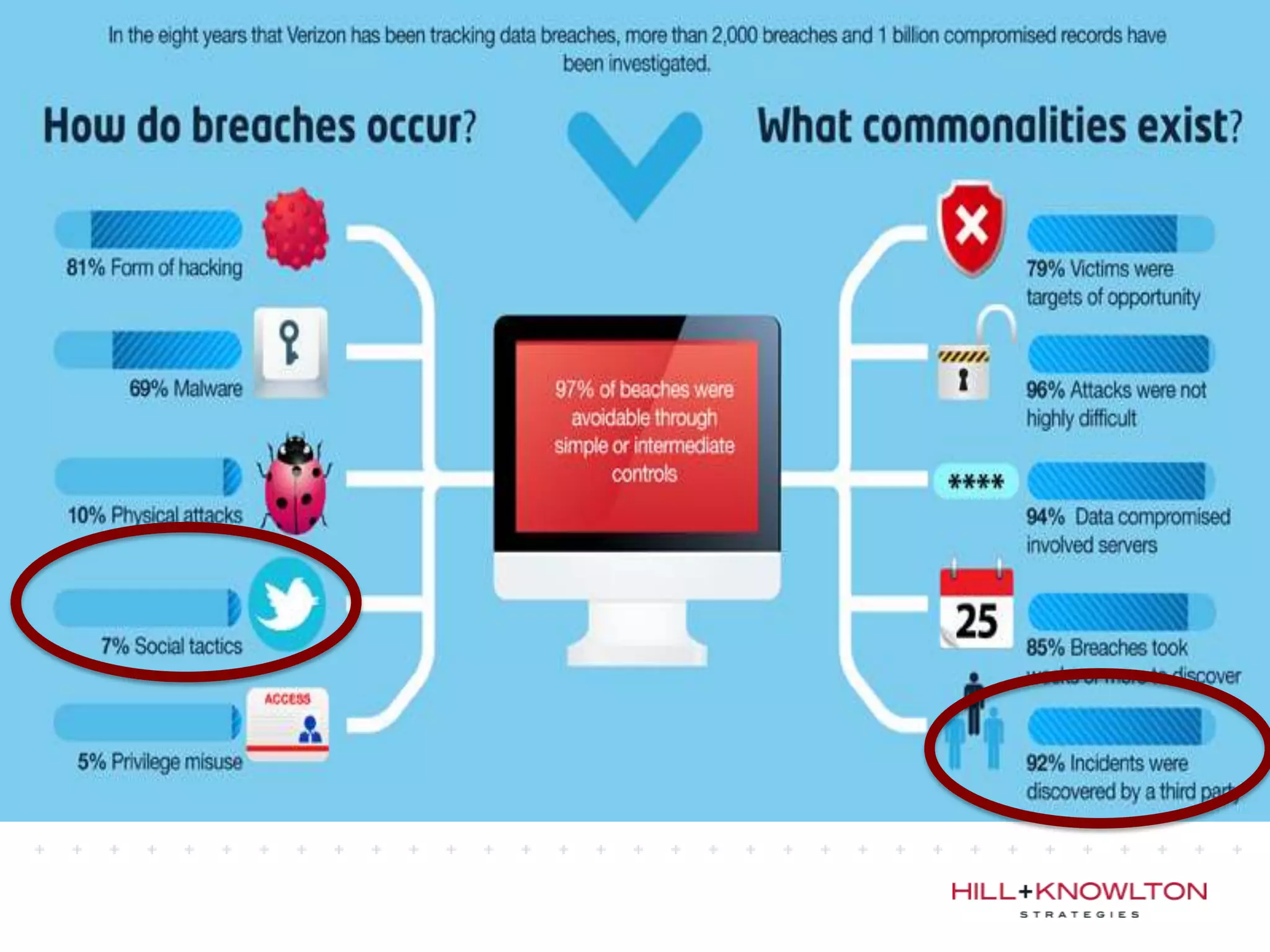
  • #14 How are these breaches made?Most are from hacking . . . Relatively few from social tactics such as the release of secure data over Twitter or Facebook for example92% of incidents were discovered by a third party which means:1 . . . Companies are likely not as rigorous as they should be2 . . . Because they are discovered by third parties it means that they are susceptible to being released through social networks like Twitter . . . The social web can easily find out about data breaches before you do . . . And begin the assault on your organization for its lack of diligence etc.
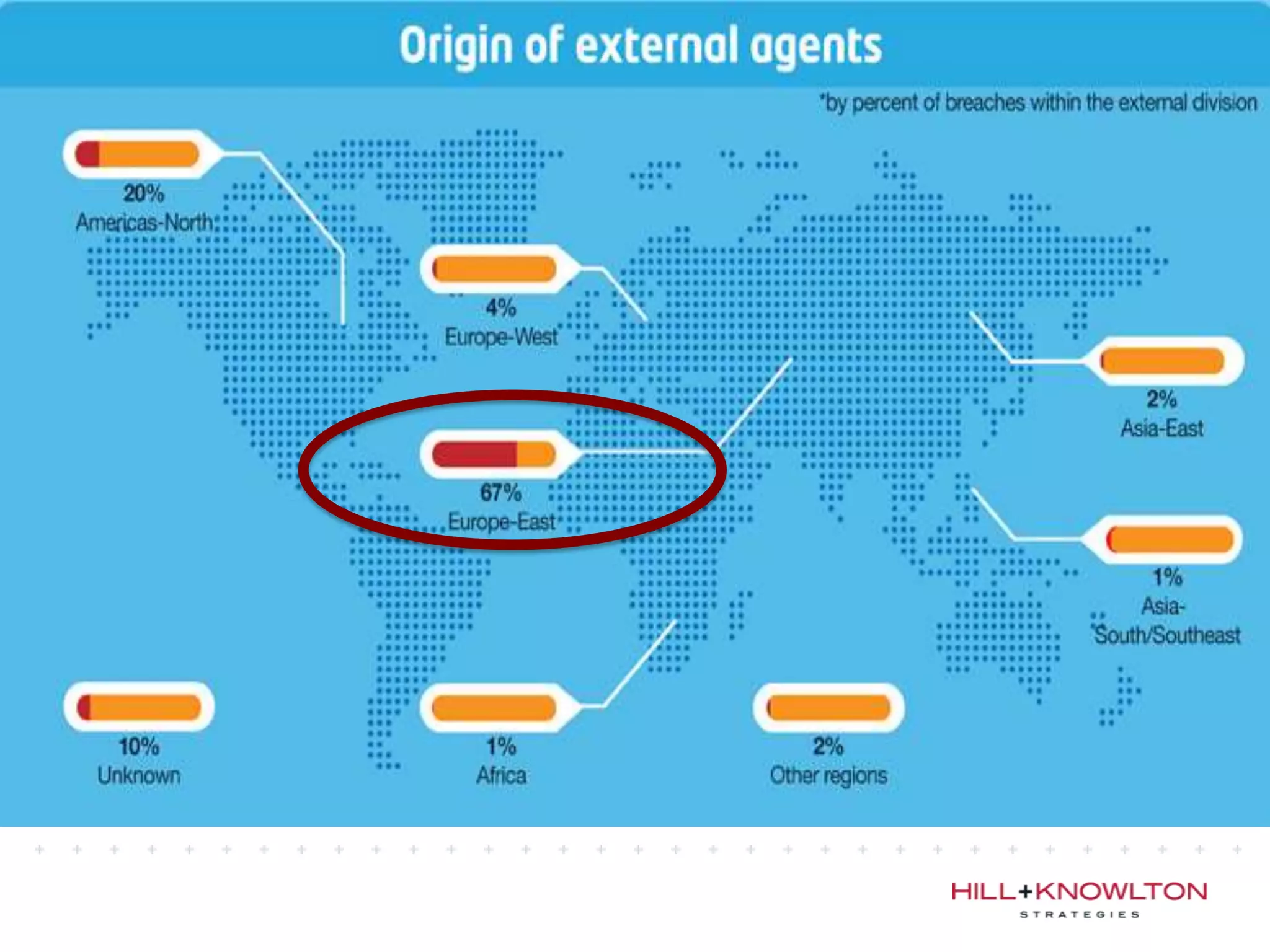
  • #20 The impact of these data breaches is not so much the dollar cost . . . But the two-fold consequence of the central place the Internet and the social web have in our lives today:1 . . . The level of trust people have in the organization that is the target of the data breach2 . . . The reputation of the organization among governments, suppliers and customers.
  • #21 These breaches are seldom hidden anymore and it is often people on social networks who 1 . . . Uncover the breach through the immediate evidence they have of their own accounts being hacked.2 . . . Amplify the news of the breach through the social networks which now connect a billion or so of us
  • #22 So . . . If your organization is hacked
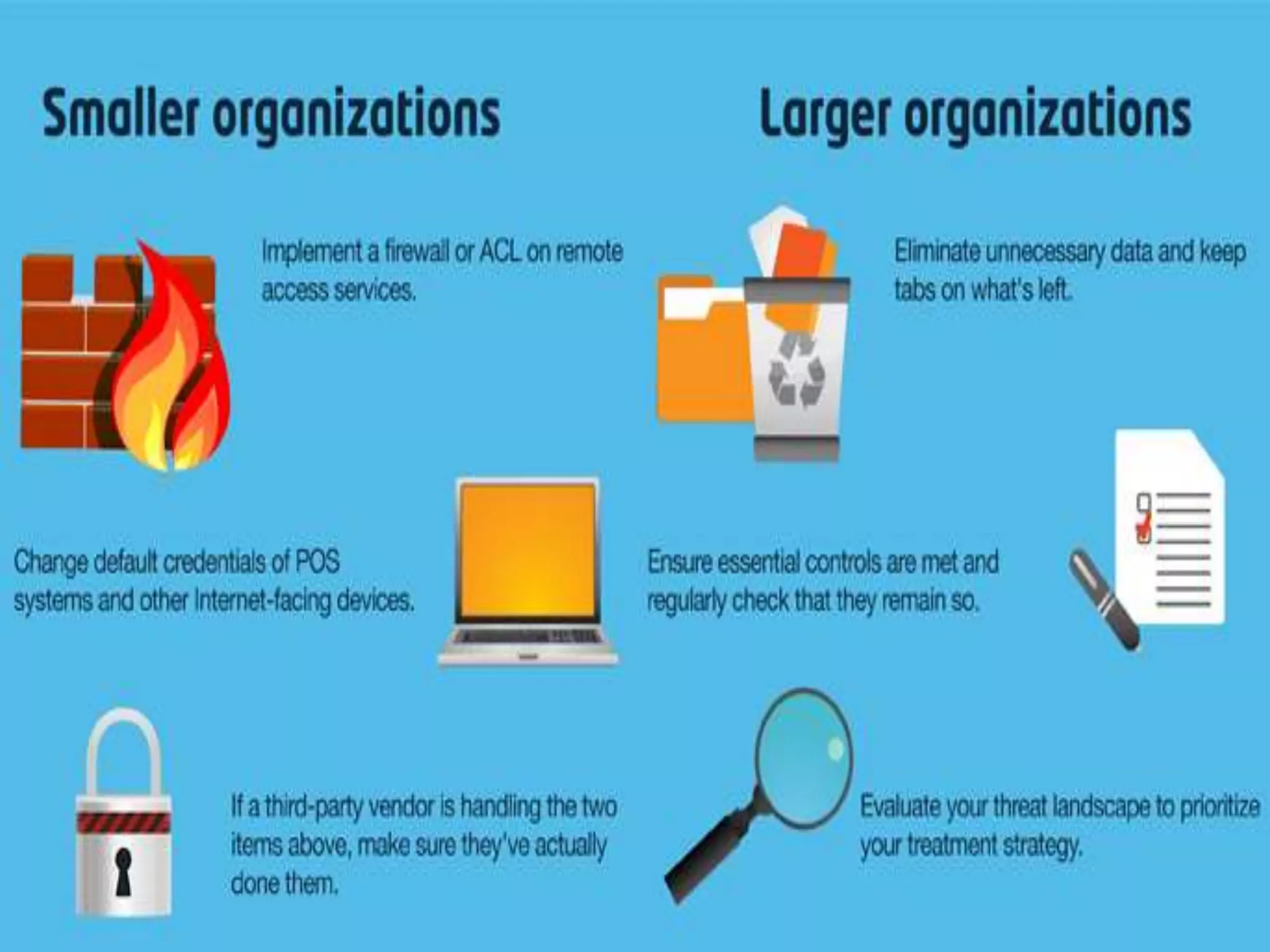
  • #23 What do you do:
  • #24 ACL . . . ACCESS CONTROL LIST … a set of data that informs a computer’s operating system about access permissions.POS … POINT OF SALE . . . But also means Parent Over Shoulder when teens are texing.
  • #25 What do you do:First is to recognize that how you react on the social web will make a difference to both trustand reputation, which in my view are where the worst damage can be done.Second is to recognize that you can avoid what I call the risk of inaction; in other words, you can prepare your social web response in advance in the same way prepare and practice your crisis communication plans.
  • #26 When you are faced with a data breach, you should use every social channel at your disposal – as soon as possible – to tell customers about the problem and what they should do.