DATA ANALYTICS
(ANALYTICS IMPROVE BUSINESS
PROCESS)
Srini
Different Analytics
 Web Analytics
 Mobile Analytics
 Retail Analytics
 Social Media Analytics
 Unstructured Analytics
In total we call it as “Business Analytics” or “Data
Analytics”.
Business Analytics
 Integration of disparate data sources from
inside and outside the enterprise that are
required to answer and act on forward-looking
business questions tied to key business
objectives.
Big data and Little Data
 Big data: Data from Web behavior, mobile
phone usage patterns, in-store shopping
activity, public surveillance videos, GPS
tracking data, automotive driving patterns,
physical fitness data, social media data,
satellite imagery, video streams, or car
telematic data, and the list goes on and on.
Big data and Little Data…
 Little Data: It is for anything not considered big
data. Although big data is in vogue, little data
sources are just as crucial for successful
business analytics and answering the critical
business questions.
Criteria For Analytics

Business challenges. Align business analytics initiatives to the most
pressing business problems your organization needs to address.

Data foundation. The data foundation that will support the business
analytics process must be strong in terms of reliability, validity, and
governance.

Analytics implementation. Ensuring that business analytics solutions are
developed and provided to the enterprise with the end goals in mind is
crucial for success.

Insight. Business analytics must transform data from information into
intelligence and insight for the organization.

Execution and measurement. Business analytics must be put to work and
must lead to organizational action, as well as provide guidance on how to
track the results of the actions taken.

Distributed knowledge. Business analytics must be communicated in an
effective and efficient manner, as well as made available to as broad a
group of stakeholders as is appropriate.

Innovation. Business analytics must be relentlessly innovative, both in
analytical approach and in how it affects the organization, by developing
solutions that will "wow" customers.
Future Of Analytics
 Every company must cope with big data, must have a
data strategy, and must use various data assets and
tools to augment the data it collects internally. Days are
gone simply talking benefits of data analytics. This
is implementation time.
 Data management will become separate department in
every organization. In the same way that most
companies have strategies for human capital, marketing,
product, and technology, they will also have a formal
strategy for analytics.
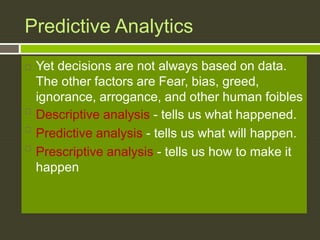
Predictive Analytics
 Yet decisions are not always based on data.
The other factors are Fear, bias, greed,
ignorance, arrogance, and other human foibles

Descriptive analysis - tells us what happened.

Predictive analysis - tells us what will happen.

Prescriptive analysis - tells us how to make it
happen
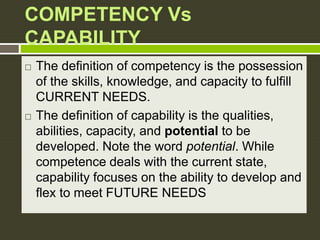
COMPETENCY Vs
CAPABILITY
 The definition of competency is the possession
of the skills, knowledge, and capacity to fulfill
CURRENT NEEDS.
 The definition of capability is the qualities,
abilities, capacity, and potential to be
developed. Note the word potential. While
competence deals with the current state,
capability focuses on the ability to develop and
flex to meet FUTURE NEEDS
Thank You
www.biganalytics.me

Data Analytics

  • 1.
    DATA ANALYTICS (ANALYTICS IMPROVEBUSINESS PROCESS) Srini
  • 2.
    Different Analytics  WebAnalytics  Mobile Analytics  Retail Analytics  Social Media Analytics  Unstructured Analytics In total we call it as “Business Analytics” or “Data Analytics”.
  • 3.
    Business Analytics  Integrationof disparate data sources from inside and outside the enterprise that are required to answer and act on forward-looking business questions tied to key business objectives.
  • 4.
    Big data andLittle Data  Big data: Data from Web behavior, mobile phone usage patterns, in-store shopping activity, public surveillance videos, GPS tracking data, automotive driving patterns, physical fitness data, social media data, satellite imagery, video streams, or car telematic data, and the list goes on and on.
  • 5.
    Big data andLittle Data…  Little Data: It is for anything not considered big data. Although big data is in vogue, little data sources are just as crucial for successful business analytics and answering the critical business questions.
  • 6.
    Criteria For Analytics  Businesschallenges. Align business analytics initiatives to the most pressing business problems your organization needs to address.  Data foundation. The data foundation that will support the business analytics process must be strong in terms of reliability, validity, and governance.  Analytics implementation. Ensuring that business analytics solutions are developed and provided to the enterprise with the end goals in mind is crucial for success.  Insight. Business analytics must transform data from information into intelligence and insight for the organization.  Execution and measurement. Business analytics must be put to work and must lead to organizational action, as well as provide guidance on how to track the results of the actions taken.  Distributed knowledge. Business analytics must be communicated in an effective and efficient manner, as well as made available to as broad a group of stakeholders as is appropriate.  Innovation. Business analytics must be relentlessly innovative, both in analytical approach and in how it affects the organization, by developing solutions that will "wow" customers.
  • 7.
    Future Of Analytics Every company must cope with big data, must have a data strategy, and must use various data assets and tools to augment the data it collects internally. Days are gone simply talking benefits of data analytics. This is implementation time.  Data management will become separate department in every organization. In the same way that most companies have strategies for human capital, marketing, product, and technology, they will also have a formal strategy for analytics.
  • 8.
    Predictive Analytics  Yetdecisions are not always based on data. The other factors are Fear, bias, greed, ignorance, arrogance, and other human foibles  Descriptive analysis - tells us what happened.  Predictive analysis - tells us what will happen.  Prescriptive analysis - tells us how to make it happen
  • 9.
    COMPETENCY Vs CAPABILITY  Thedefinition of competency is the possession of the skills, knowledge, and capacity to fulfill CURRENT NEEDS.  The definition of capability is the qualities, abilities, capacity, and potential to be developed. Note the word potential. While competence deals with the current state, capability focuses on the ability to develop and flex to meet FUTURE NEEDS
  • 10.