

-GEETASHREE MAJUMDAR
-ASSISTANT PROFESSOR
DEPARTMENT OF RADIOLOGY AND IMAGING
TECHNOLOGY
DARK ROOM
What is Darkroom?
Darkroom is a room from which normal light is
excluded.It is made completely dark to allow the processing
of light sensitive photographic film . Darkroom is also called
as processing room.
Ideal size of dark is 100 square feet floor space.
Location of Darkroom.
 Centrally located.
 Away from damp or hot area.
 Services by hatches from the adjacent image
room..
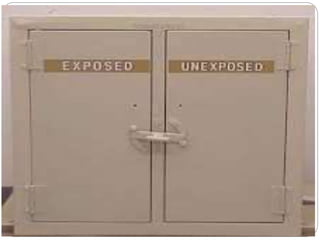
Hatches or passbox.
•Hatches are designed to transfer film cassette to
and from the darkroom without radiation light
entering.
•It consists of metallic structures with a lead lining to
provide x-ray shielding.
•They are typically wall mounted and include
automatic interlocks thet close one door when
another opned.
•It is also used for the temporary storage of loaded
cassettes.
Size
 Minimum flior area of 20sq meter.
 Ceililng height of 2.5 to 3 mtr.
 Size may be reduced depending upon the
department.
Radiation protection.
 Eall adjacent to the radiographic room should be
shielded with correct thickness of the lead all the
way to the ceiling.
 1.6mm lead is mostly used.
Floors.
 Non-porous flooring.
 Non-slippery.
 Chemical resistant.
 Stain proof.
 Light colourel .
 Ceramic tiles of porcelain or natural clay are the
most satisfactory.
 Ordinary linoleum and concrete are unsuitable
because they are readily attacked by the
processing solutions.
Walls/ceiling.
 Light in colour to reflect as much light as possible
into the working surface.
 Should be easy to wpe or clean.
 The walls should be covered with chemical-
resistant materials such as special paint, varnish,
concrete or ceramic tiles.
Entrance
 Single door system
 Double door system
 Maze type door entrance.
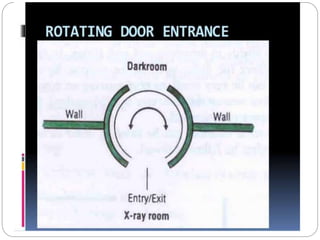
 Rotating door system.
Darkroom illumination.
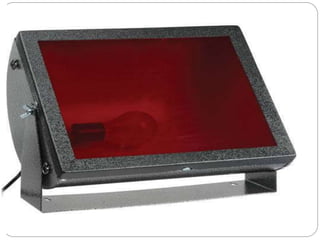
1,SAFELIGHT:
•Minimum distance of 1.2m from the working
surface.
•Best for loading and unloading areas.
•Voltage of safelight should not exceed 25 watt.
2,WHITELIGHT.
•Used for inspection and mantainance of cassette
and screens.
•Cleaning of work surface.
•Servicing of equipments.
•Changing of solutions.
Darkroom Equipments.
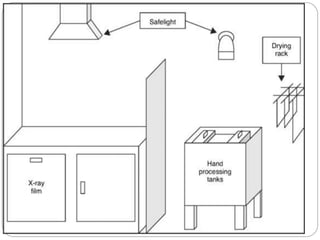
 Automatic processor.
 Mannual processor
 Processing chemicals.
 Hangers for suspending film.
 Cassette.
 Pass box
 Safe light
 White light
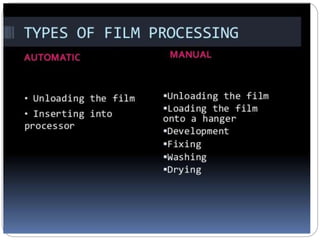
MANNUAL PROCESSING
 There are 4 tanks in processing procedure viz ;
 Developing
 Rinsing
 Fixing
 Washing
 Drying
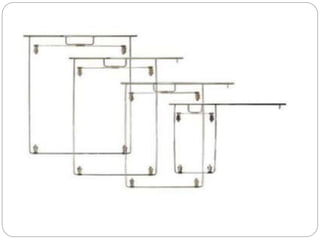
Hangers.
 A film hanger is an instrument or device for
holding radiographic film during processing
procedure.
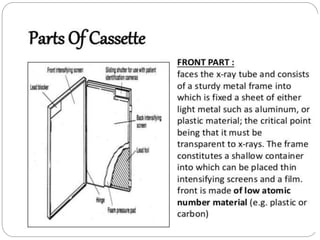
Cassette.
 Used to hold the x-ray film (exposed or unexposed)
and intensifying screen in close and uniform contact
with one another.
 SIZE;
 17"×14"
 15"×12"
 14"×14"
 12"×12"
 12"×10"
 12"×08"
 12"×06"(OPG).
Uses of cassette.
 Holds intensifying screen and protocol them from
damage.
 Exclude all light from entering the cassette and
fogging the film.
 Mantain a close and uniform contact between
screen and film.
 Exclude dust and dirt from the sensitive films.
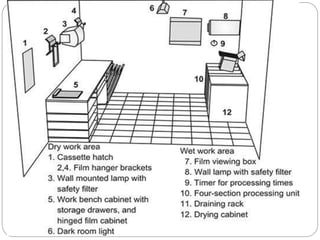
DRY SIDE?
Components of dry side-
 Loading bench.
 Compartment of cassette.
 Film storage
 Film hangers
WET SIDE??
 The processing tanks comprise the major
equipement of the wet side of the dark room.
Dark room ( g.majumdar)

Dark room ( g.majumdar)

  • 1.
    -GEETASHREE MAJUMDAR -ASSISTANT PROFESSOR DEPARTMENTOF RADIOLOGY AND IMAGING TECHNOLOGY DARK ROOM
  • 2.
    What is Darkroom? Darkroomis a room from which normal light is excluded.It is made completely dark to allow the processing of light sensitive photographic film . Darkroom is also called as processing room. Ideal size of dark is 100 square feet floor space.
  • 4.
    Location of Darkroom. Centrally located.  Away from damp or hot area.  Services by hatches from the adjacent image room..
  • 6.
    Hatches or passbox. •Hatchesare designed to transfer film cassette to and from the darkroom without radiation light entering. •It consists of metallic structures with a lead lining to provide x-ray shielding. •They are typically wall mounted and include automatic interlocks thet close one door when another opned. •It is also used for the temporary storage of loaded cassettes.
  • 8.
    Size  Minimum fliorarea of 20sq meter.  Ceililng height of 2.5 to 3 mtr.  Size may be reduced depending upon the department.
  • 9.
    Radiation protection.  Ealladjacent to the radiographic room should be shielded with correct thickness of the lead all the way to the ceiling.  1.6mm lead is mostly used.
  • 10.
    Floors.  Non-porous flooring. Non-slippery.  Chemical resistant.  Stain proof.  Light colourel .
  • 11.
     Ceramic tilesof porcelain or natural clay are the most satisfactory.  Ordinary linoleum and concrete are unsuitable because they are readily attacked by the processing solutions.
  • 12.
    Walls/ceiling.  Light incolour to reflect as much light as possible into the working surface.  Should be easy to wpe or clean.  The walls should be covered with chemical- resistant materials such as special paint, varnish, concrete or ceramic tiles.
  • 13.
    Entrance  Single doorsystem  Double door system  Maze type door entrance.  Rotating door system.
  • 15.
    Darkroom illumination. 1,SAFELIGHT: •Minimum distanceof 1.2m from the working surface. •Best for loading and unloading areas. •Voltage of safelight should not exceed 25 watt.
  • 17.
    2,WHITELIGHT. •Used for inspectionand mantainance of cassette and screens. •Cleaning of work surface. •Servicing of equipments. •Changing of solutions.
  • 18.
    Darkroom Equipments.  Automaticprocessor.  Mannual processor  Processing chemicals.  Hangers for suspending film.  Cassette.  Pass box  Safe light  White light
  • 19.
    MANNUAL PROCESSING  Thereare 4 tanks in processing procedure viz ;  Developing  Rinsing  Fixing  Washing  Drying
  • 21.
    Hangers.  A filmhanger is an instrument or device for holding radiographic film during processing procedure.
  • 23.
    Cassette.  Used tohold the x-ray film (exposed or unexposed) and intensifying screen in close and uniform contact with one another.  SIZE;  17"×14"  15"×12"  14"×14"  12"×12"  12"×10"  12"×08"  12"×06"(OPG).
  • 24.
    Uses of cassette. Holds intensifying screen and protocol them from damage.  Exclude all light from entering the cassette and fogging the film.  Mantain a close and uniform contact between screen and film.  Exclude dust and dirt from the sensitive films.
  • 26.
    DRY SIDE? Components ofdry side-  Loading bench.  Compartment of cassette.  Film storage  Film hangers
  • 27.
    WET SIDE??  Theprocessing tanks comprise the major equipement of the wet side of the dark room.