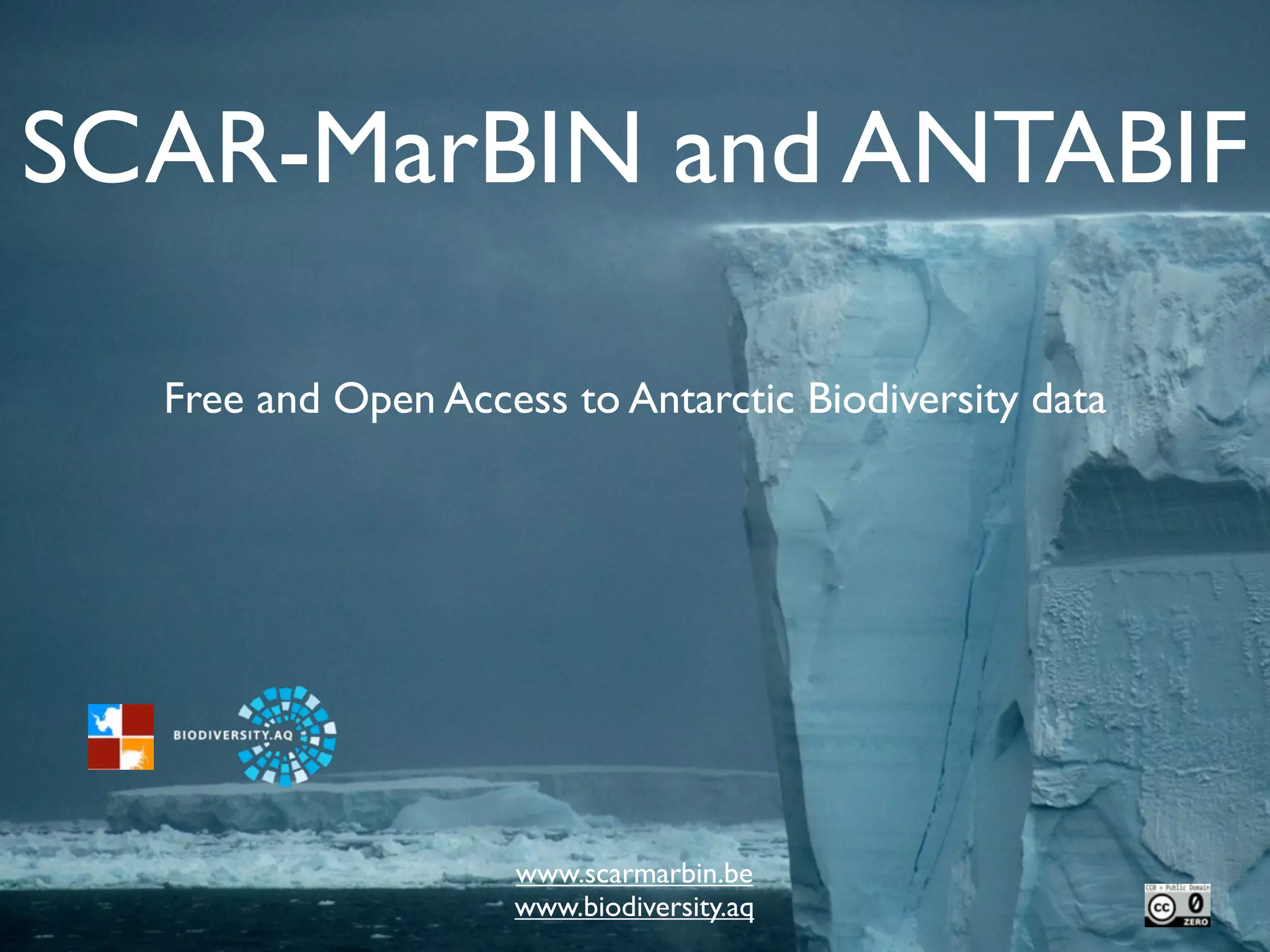
SCAR-MarBIN and ANTABIF

  Free and Open Access to Antarctic Biodiversity data


                    www.scarmarbin.be
                    www.biodiversity.aq
The background you need
Antarctic Environment
• Highest, driest windiest continent
• Fastest rates of change on the planet
• Heat sink in planet’s climate system
• High seasonality of light
• Marine: stable physico-chemical parameters
• Marine: low and constant temperature
• Marine: high productivity from phytoplancton
Antarctic (marine)
           Biodiversity
• Highly adapted to extreme (stable) environment
• High level of endemism
• Marine biomass and biodiversity second to tropical
  coral reefs
• Under-studied (especially the deep sea)
• Vulnerable to shifts!
• To understand these processes we need data
Antarctic Treaty
                     (our inspiration)


    « In order to promote international cooperation in
  scientific investigation in Antarctica, as provided for in
Article III (1c) of the Treaty, the Contracting Parties agree
 that, to the greatest extent feasible and practicable: […]
Scientific observations and results from Antarctica shall be
           exchanged and made freely available. »
“Exchanging” biodiversity
            data
• science-based, adaptative conservation and
  management
• testing fundamental theories
• consolidation of the community
• establish a benchmark for undisputed evidence of
  change/shifts
Data availability

• what? where? when?
• widely disseminated, patchy, hardly accessible
• (expensive) data and expertise are vanishing
  (fast!)
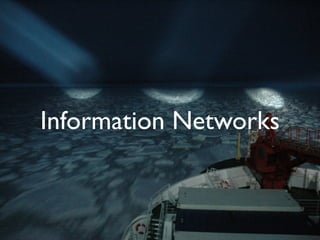
Information Networks
SCAR-MarBIN & ANTABIF
• www.scarmarbin.be: marine biodiversity information
  network
• www.biodiversity.aq: biodiversity information facility
• Main funding: Belgian science Policy office
• International Polar Year 2007/08
• Census of Antarctic Marine Life
• Ocean Biogeographic Information System
• Global Biodiversity Information Network
General philosophy
• Build an electronic ecosystem
• Offer free and open access to data and technology
• Expose all the (biodiversity) data and metadata, in
  multiple contexts
• Remain community-driven, and collaborative
• Adopt strong standardization
• Work for science, conservation, management
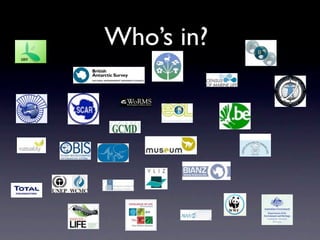
Who’s in?
Who *wants* to be in?
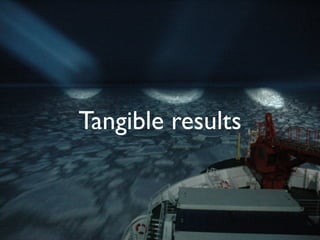
Tangible results
[results]: webportal (s)

               taxonomy, biogeography
                     vizualisation
                     open access
                   850,000 visitors
                    6,950,000 hits
                35,000,000 dld records
                    V2 coming up
                 ANTABIF coming up
[results]: taxonomic data

                                                • The first RAMS
     all taxa
                                                • Board of 60+ editors
  all species                                   • Feeds WoRMS, CoL and EoL
valid species
                                                • 17,098 taxa (RAMS)
                                                • Building a dynamic RAS
                                                • 24,248 taxa (RAS)
                0   3,750 7,500 11,250 15,000
[results]: geospatial data

                 1,275,799 records
                    190 datasets
                  106 geodatasets
                     5,235 taxa
                 Feeds OBIS, GBIF
                   Downloadable
                      WebGIS
                    Webservices
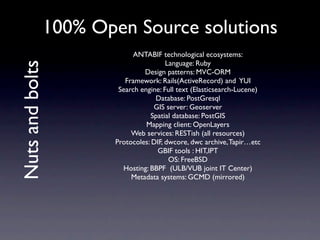
100% Open Source solutions
                           ANTABIF technological ecosystems:
                                      Language: Ruby
Nuts and bolts
                              Design patterns: MVC-ORM
                        Framework: Rails(ActiveRecord) and YUI
                      Search engine: Full text (Elasticsearch-Lucene)
                                  Database: PostGresql
                                  GIS server: Geoserver
                                 Spatial database: PostGIS
                               Mapping client: OpenLayers
                          Web services: RESTish (all resources)
                     Protocoles: DIF, dwcore, dwc archive, Tapir…etc
                                   GBIF tools : HIT,IPT
                                       OS: FreeBSD
                       Hosting: BBPF (ULB/VUB joint IT Center)
                          Metadata systems: GCMD (mirrored)
Projects
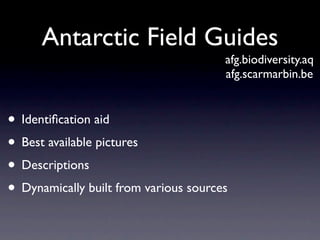
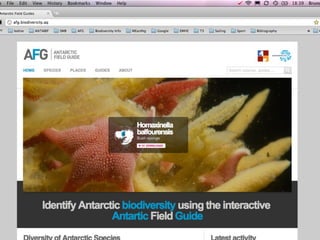
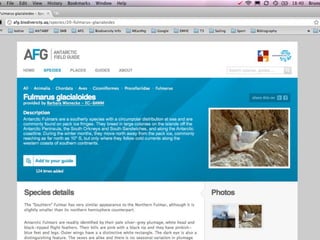
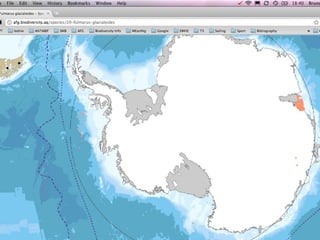
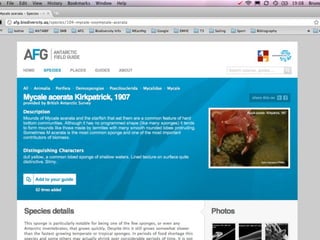
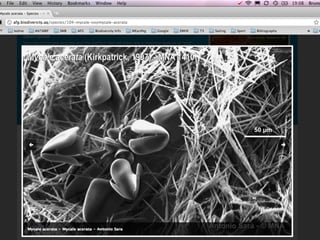
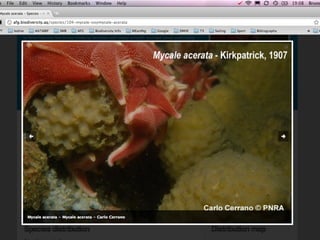
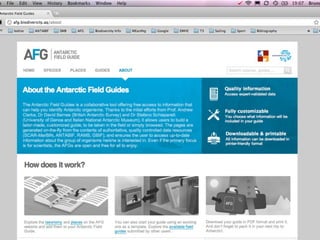
Antarctic Field Guides
                                       afg.biodiversity.aq
                                       afg.scarmarbin.be


• Identification aid
• Best available pictures
• Descriptions
• Dynamically built from various sources
Antarctic Field Guides
More Ideas... coming up

Georeferenced genetic data: CAML barcoding
Polar Macroscope working group: BiPolar analyses
Southern Ocean Biogeography Atlas: interactive Atlas
Getting the microbes in...
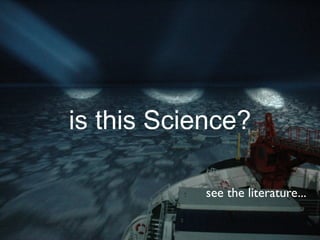
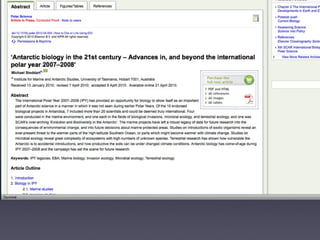
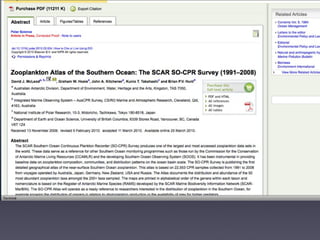
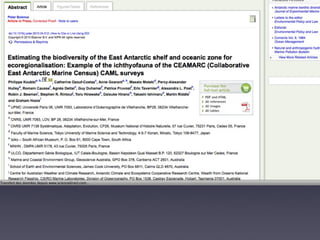
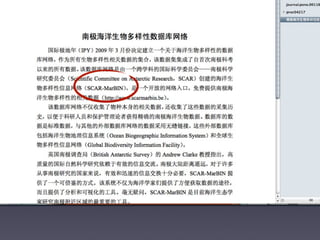
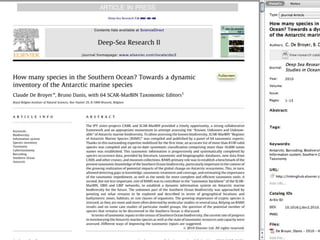
is this Science?

            see the literature...
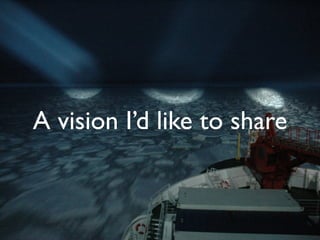
A vision I’d like to share
Data are discoverable,
open, linked, useful, and safe

                  Mark Parsons, PIC
Discoverable

Data should be accessible soon after collection
(online wherever possible) in a discovery portal such
as the Global Change Master Directory.
The importance of METADATA
Open

Open Data is a philosophy and practice requiring that
certain data are freely available to everyone, without
restrictions from copyright, patents or other
mechanisms of control.—Wikipedia
Anything else than Open slows down processes.
Linked
The term Linked Data is used to describe a method
of exposing, sharing, and connecting data [using] the
Web.—Wikipedia
Web2.0 philosophy.
Useful
 Data from different projects, disciplines, and data
 centers should be easily understood and used in
conjunction with each other in standard tools and
               analysis frameworks

Data should be well described so to be useful for a
                broad audience.
Interoperable

Metadata and data should be readily interchangeable
between different polar data systems to enable data
discovery across multiple portals.
So we stop reinventing the wheel all the time...
Safe
Safe from hackers, from obsolescence, from
undocumented change, from loss, and from the
ravages of time.


That’s quite a challenge!
Thanks for your
  attention!

        www.scarmarbin.be

        www.biodiversity.aq


   bruno.danis@scarmarbin.be

   www.slideshare.net/scarmarbin

Danis biosystematics2011

  • 1.
    SCAR-MarBIN and ANTABIF Free and Open Access to Antarctic Biodiversity data www.scarmarbin.be www.biodiversity.aq
  • 2.
  • 3.
    Antarctic Environment • Highest,driest windiest continent • Fastest rates of change on the planet • Heat sink in planet’s climate system • High seasonality of light • Marine: stable physico-chemical parameters • Marine: low and constant temperature • Marine: high productivity from phytoplancton
  • 4.
    Antarctic (marine) Biodiversity • Highly adapted to extreme (stable) environment • High level of endemism • Marine biomass and biodiversity second to tropical coral reefs • Under-studied (especially the deep sea) • Vulnerable to shifts! • To understand these processes we need data
  • 5.
    Antarctic Treaty (our inspiration) « In order to promote international cooperation in scientific investigation in Antarctica, as provided for in Article III (1c) of the Treaty, the Contracting Parties agree that, to the greatest extent feasible and practicable: […] Scientific observations and results from Antarctica shall be exchanged and made freely available. »
  • 6.
    “Exchanging” biodiversity data • science-based, adaptative conservation and management • testing fundamental theories • consolidation of the community • establish a benchmark for undisputed evidence of change/shifts
  • 7.
    Data availability • what?where? when? • widely disseminated, patchy, hardly accessible • (expensive) data and expertise are vanishing (fast!)
  • 8.
  • 9.
    SCAR-MarBIN & ANTABIF •www.scarmarbin.be: marine biodiversity information network • www.biodiversity.aq: biodiversity information facility • Main funding: Belgian science Policy office • International Polar Year 2007/08 • Census of Antarctic Marine Life • Ocean Biogeographic Information System • Global Biodiversity Information Network
  • 10.
    General philosophy • Buildan electronic ecosystem • Offer free and open access to data and technology • Expose all the (biodiversity) data and metadata, in multiple contexts • Remain community-driven, and collaborative • Adopt strong standardization • Work for science, conservation, management
  • 11.
  • 12.
  • 13.
  • 14.
    [results]: webportal (s) taxonomy, biogeography vizualisation open access 850,000 visitors 6,950,000 hits 35,000,000 dld records V2 coming up ANTABIF coming up
  • 15.
    [results]: taxonomic data • The first RAMS all taxa • Board of 60+ editors all species • Feeds WoRMS, CoL and EoL valid species • 17,098 taxa (RAMS) • Building a dynamic RAS • 24,248 taxa (RAS) 0 3,750 7,500 11,250 15,000
  • 16.
    [results]: geospatial data 1,275,799 records 190 datasets 106 geodatasets 5,235 taxa Feeds OBIS, GBIF Downloadable WebGIS Webservices
  • 17.
    100% Open Sourcesolutions ANTABIF technological ecosystems: Language: Ruby Nuts and bolts Design patterns: MVC-ORM Framework: Rails(ActiveRecord) and YUI Search engine: Full text (Elasticsearch-Lucene) Database: PostGresql GIS server: Geoserver Spatial database: PostGIS Mapping client: OpenLayers Web services: RESTish (all resources) Protocoles: DIF, dwcore, dwc archive, Tapir…etc GBIF tools : HIT,IPT OS: FreeBSD Hosting: BBPF (ULB/VUB joint IT Center) Metadata systems: GCMD (mirrored)
  • 18.
  • 19.
    Antarctic Field Guides afg.biodiversity.aq afg.scarmarbin.be • Identification aid • Best available pictures • Descriptions • Dynamically built from various sources
  • 20.
  • 27.
    More Ideas... comingup Georeferenced genetic data: CAML barcoding Polar Macroscope working group: BiPolar analyses Southern Ocean Biogeography Atlas: interactive Atlas Getting the microbes in...
  • 28.
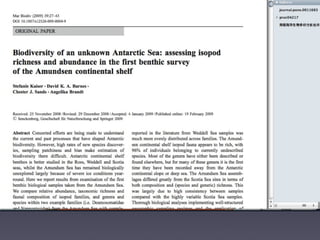
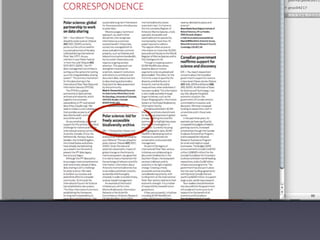
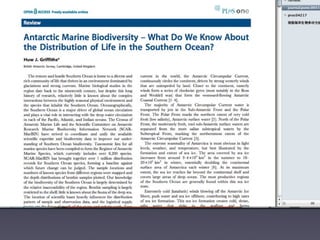
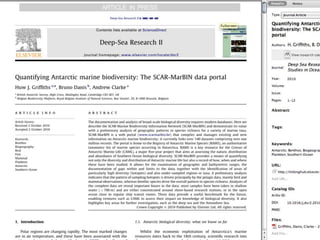
    is this Science? see the literature...
  • 38.
    A vision I’dlike to share
  • 39.
    Data are discoverable, open,linked, useful, and safe Mark Parsons, PIC
  • 40.
    Discoverable Data should beaccessible soon after collection (online wherever possible) in a discovery portal such as the Global Change Master Directory. The importance of METADATA
  • 41.
    Open Open Data isa philosophy and practice requiring that certain data are freely available to everyone, without restrictions from copyright, patents or other mechanisms of control.—Wikipedia Anything else than Open slows down processes.
  • 42.
    Linked The term LinkedData is used to describe a method of exposing, sharing, and connecting data [using] the Web.—Wikipedia Web2.0 philosophy.
  • 43.
    Useful Data fromdifferent projects, disciplines, and data centers should be easily understood and used in conjunction with each other in standard tools and analysis frameworks Data should be well described so to be useful for a broad audience.
  • 44.
    Interoperable Metadata and datashould be readily interchangeable between different polar data systems to enable data discovery across multiple portals. So we stop reinventing the wheel all the time...
  • 45.
    Safe Safe from hackers,from obsolescence, from undocumented change, from loss, and from the ravages of time. That’s quite a challenge!
  • 46.
    Thanks for your attention! www.scarmarbin.be www.biodiversity.aq bruno.danis@scarmarbin.be www.slideshare.net/scarmarbin