

Presented By : Talha Arfi
Registration # 20090498
PRESENTATION SCHEME
Why Dams?
What is Dam?
Types of Dams
Uses Of Dams
Dams-Statistics
Impacts of Dams
Conclusion
WHY DAMS?
Water is essential for sustaining all life.
Population movement and increase require water
year round in remote areas.
Water collection and utilization is important.
Ability to sustain dough and dry situations.
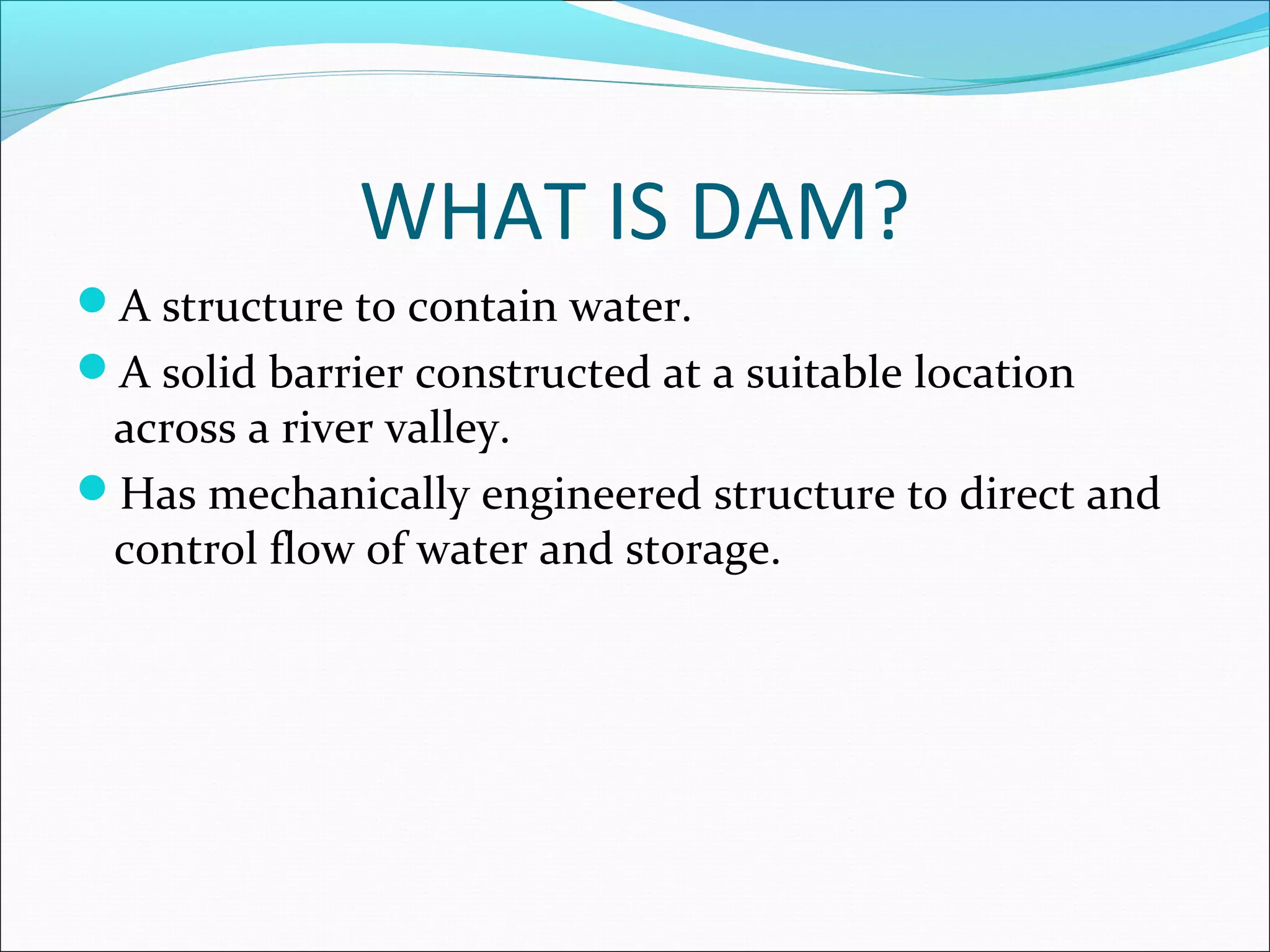
WHAT IS DAM?
A structure to contain water.
A solid barrier constructed at a suitable location
across a river valley.
Has mechanically engineered structure to direct and
control flow of water and storage.
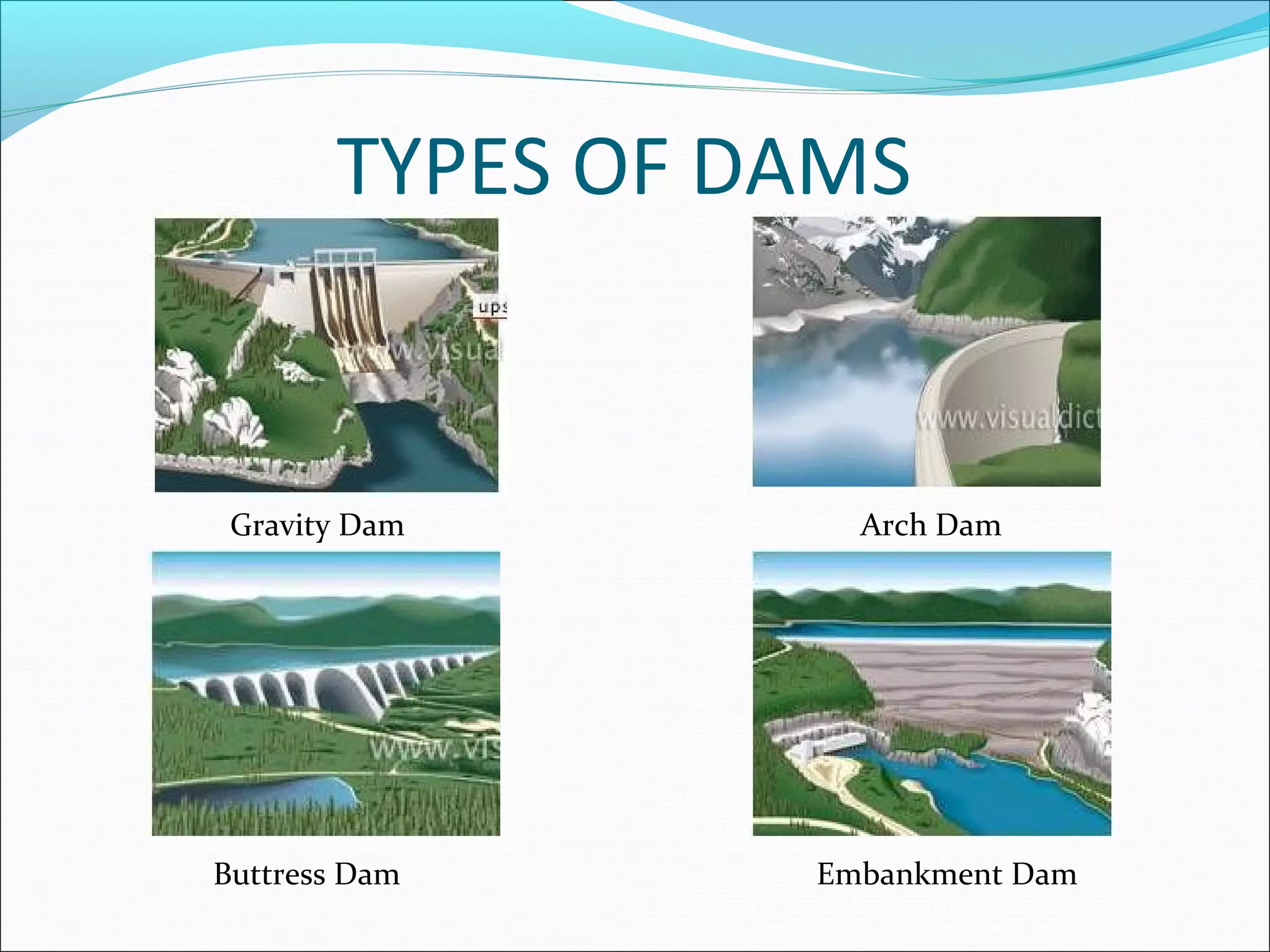
TYPES OF DAMS
Gravity Dam
Buttress Dam
Arch Dam
Embankment Dam
USES OF DAMS
Direct Water Usage
Indirect Uses
DIRECT WATER USAGE
Private/Domestic
Commercial
Irrigation
Livestock
Industrial
Mining
General Public Supply
INDIRECT USES
Hydroelectric Power
Flood Control
Transportation
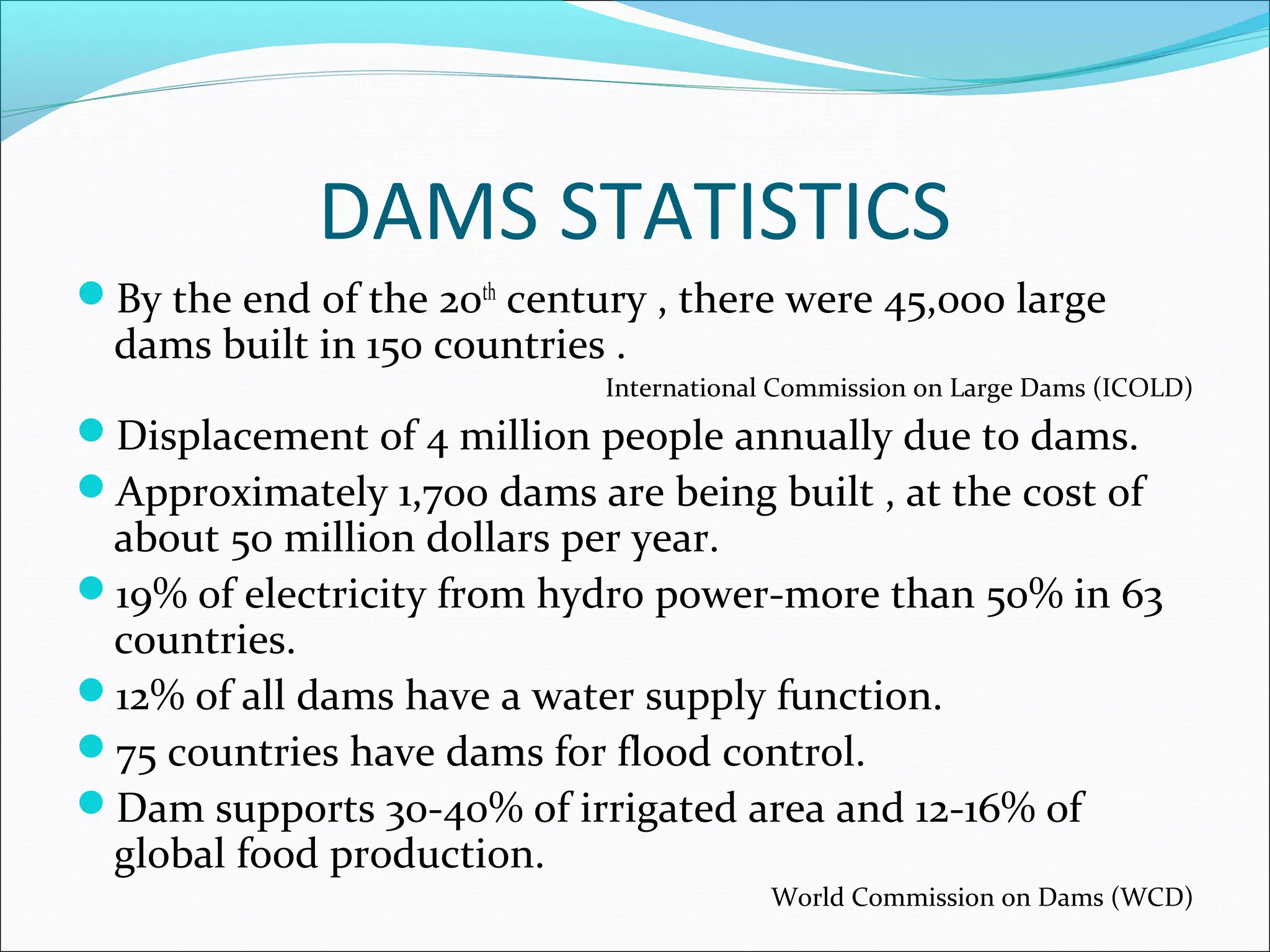
DAMS STATISTICS
By the end of the 20th
century , there were 45,000 large
dams built in 150 countries .
International Commission on Large Dams (ICOLD)
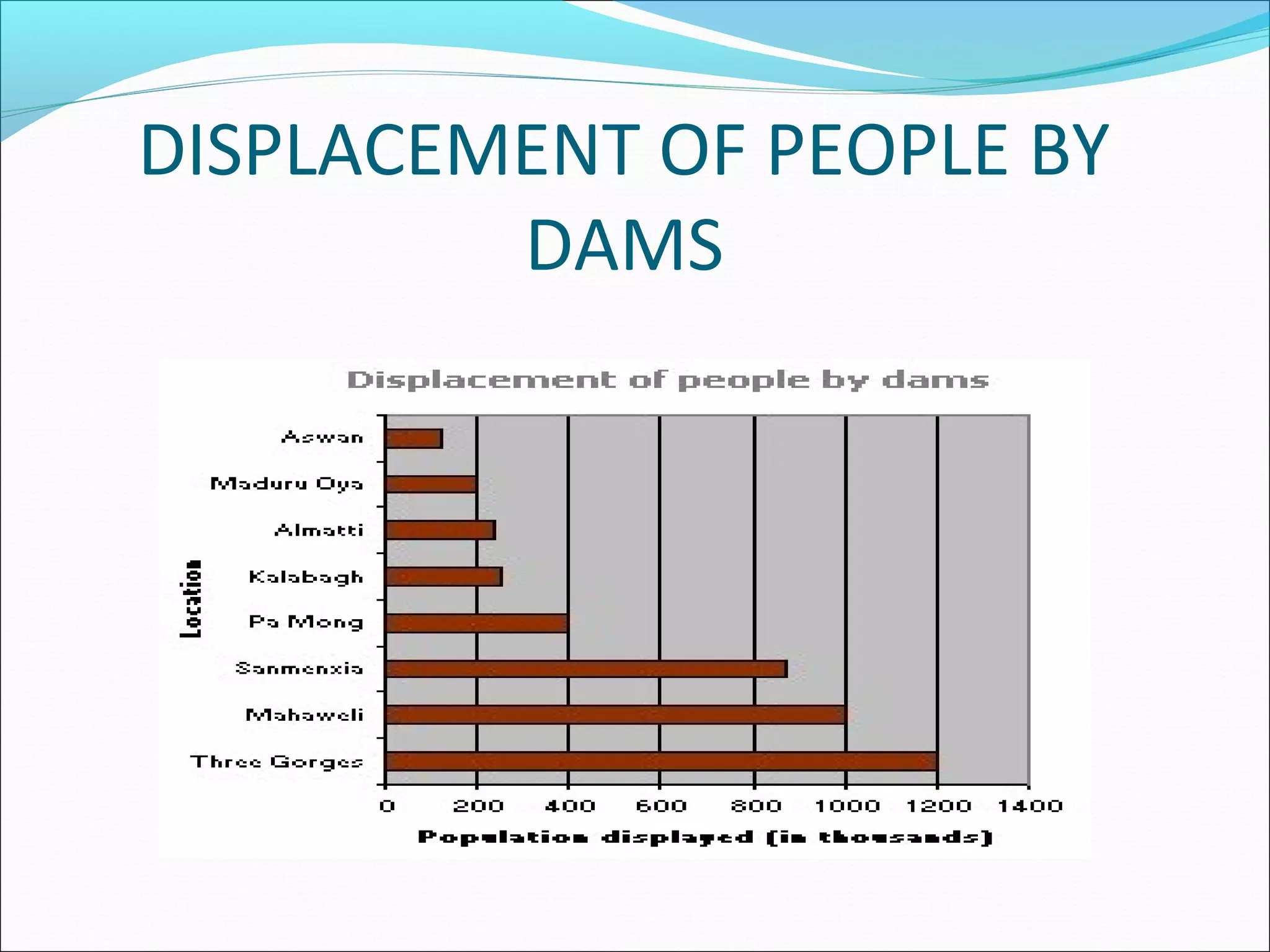
Displacement of 4 million people annually due to dams.
Approximately 1,700 dams are being built , at the cost of
about 50 million dollars per year.
19% of electricity from hydro power-more than 50% in 63
countries.
12% of all dams have a water supply function.
75 countries have dams for flood control.
Dam supports 30-40% of irrigated area and 12-16% of
global food production.
World Commission on Dams (WCD)
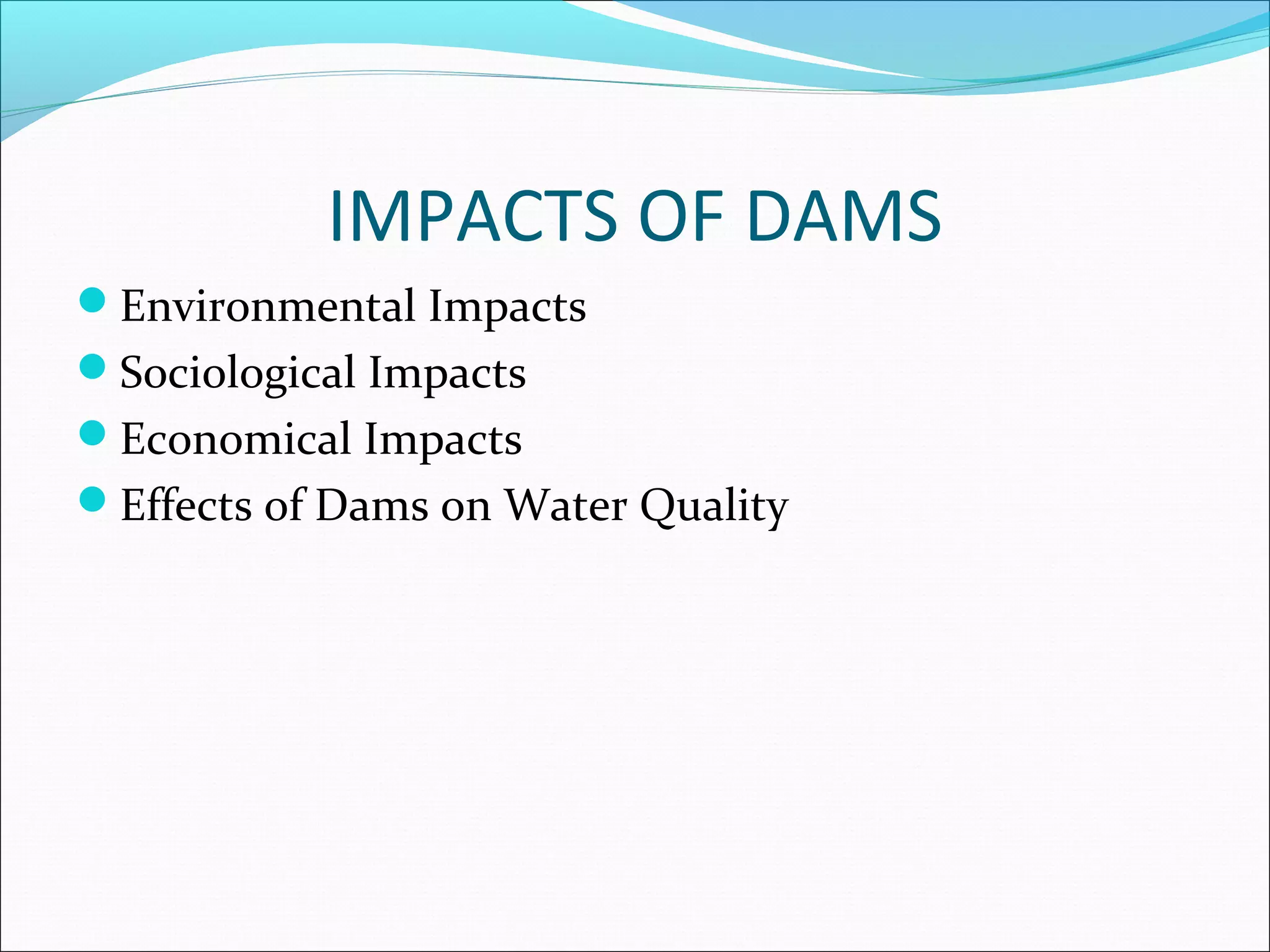
IMPACTS OF DAMS
Environmental Impacts
Sociological Impacts
Economical Impacts
Effects of Dams on Water Quality
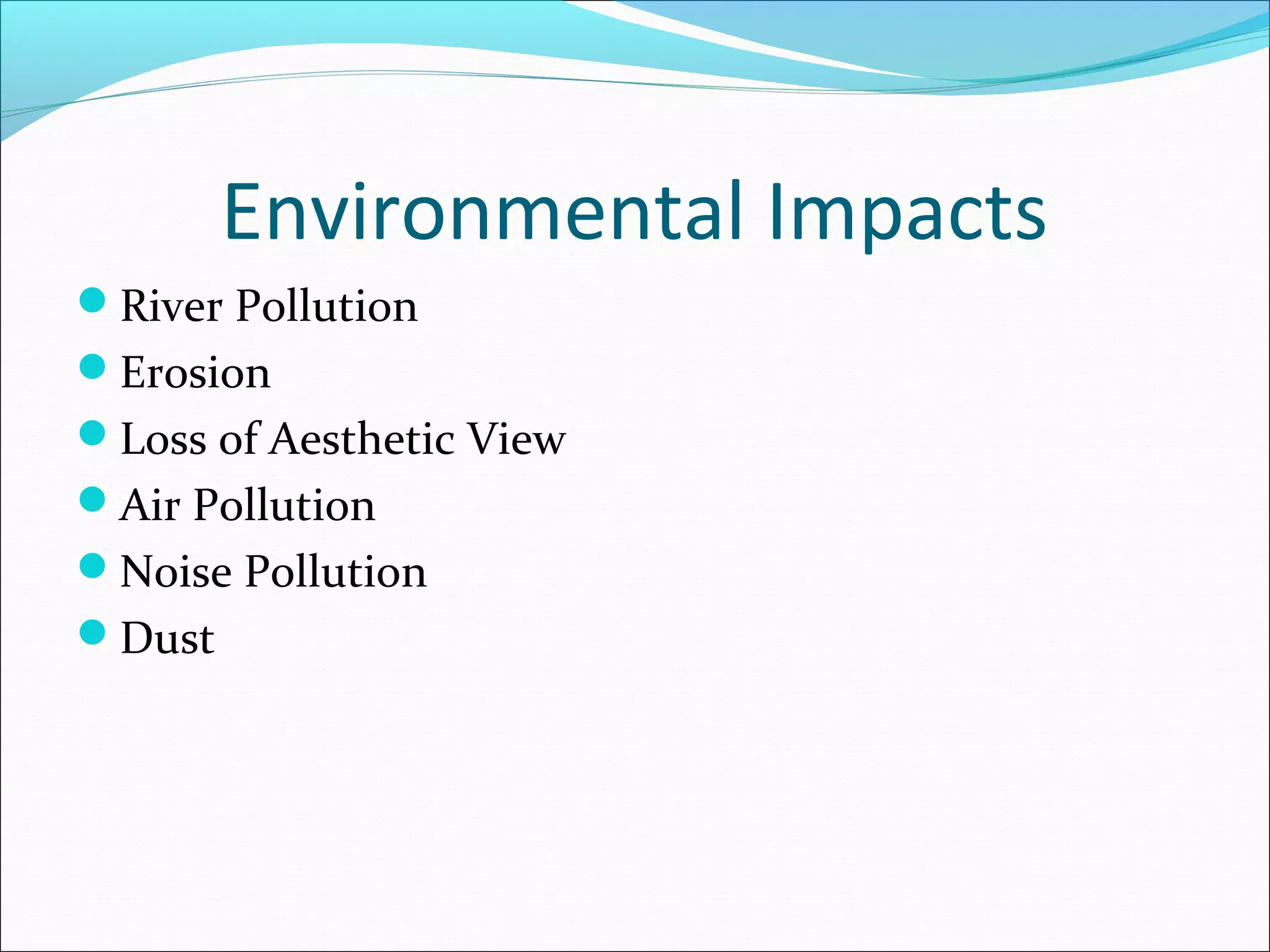
Environmental Impacts
River Pollution
Erosion
Loss of Aesthetic View
Air Pollution
Noise Pollution
Dust
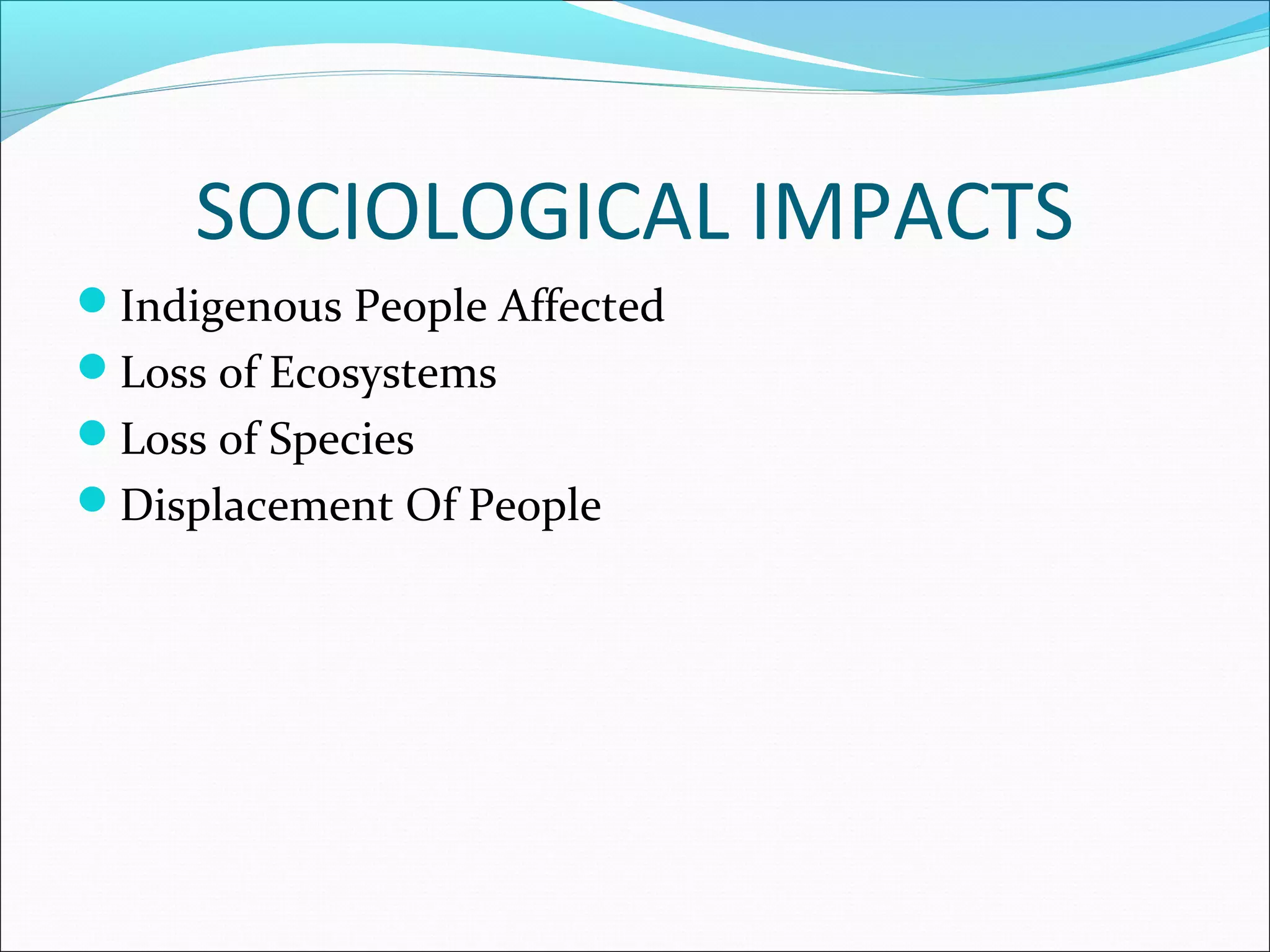
SOCIOLOGICAL IMPACTS
Indigenous People Affected
Loss of Ecosystems
Loss of Species
Displacement Of People
DISPLACEMENT OF PEOPLE BY
DAMS
ECONOMICAL IMPACTS
Agriculture
Power Generation
Water Supply
Employment
EFFECTSON WATER QUALITY
Change in Temperature
Turbidity
Dissolved Gas in the Water
Eutrophication
CONCLUSION
Small dams should be built instead of large dams
Careful planning throughout the site selection ,
design and construction of dam is critical
Sociological impacts should be considered along with
the main objectives of water supply , power
generation and flood control
Economic incentives should be weighed against
sociological impacts
QUESTION & ANSWERS SESSION

Damsornodams97 121009001230-phpapp01