Cyber Security vs. Ethical
Hacking
Ming Man
MVP Data Platform
http://chanmingman.wordpress.com
What is Cyber Security?
• Cybersecurity is the practice of protecting systems, networks, and
programs from digital attacks. These cyberattacks are usually aimed at
accessing, changing, or destroying sensitive information; extorting
money from users; or interrupting normal business processes.
• Implementing effective cybersecurity measures is particularly
challenging today because there are more devices than people, and
attackers are becoming more innovative.
Type of
Cybersecurity
attack
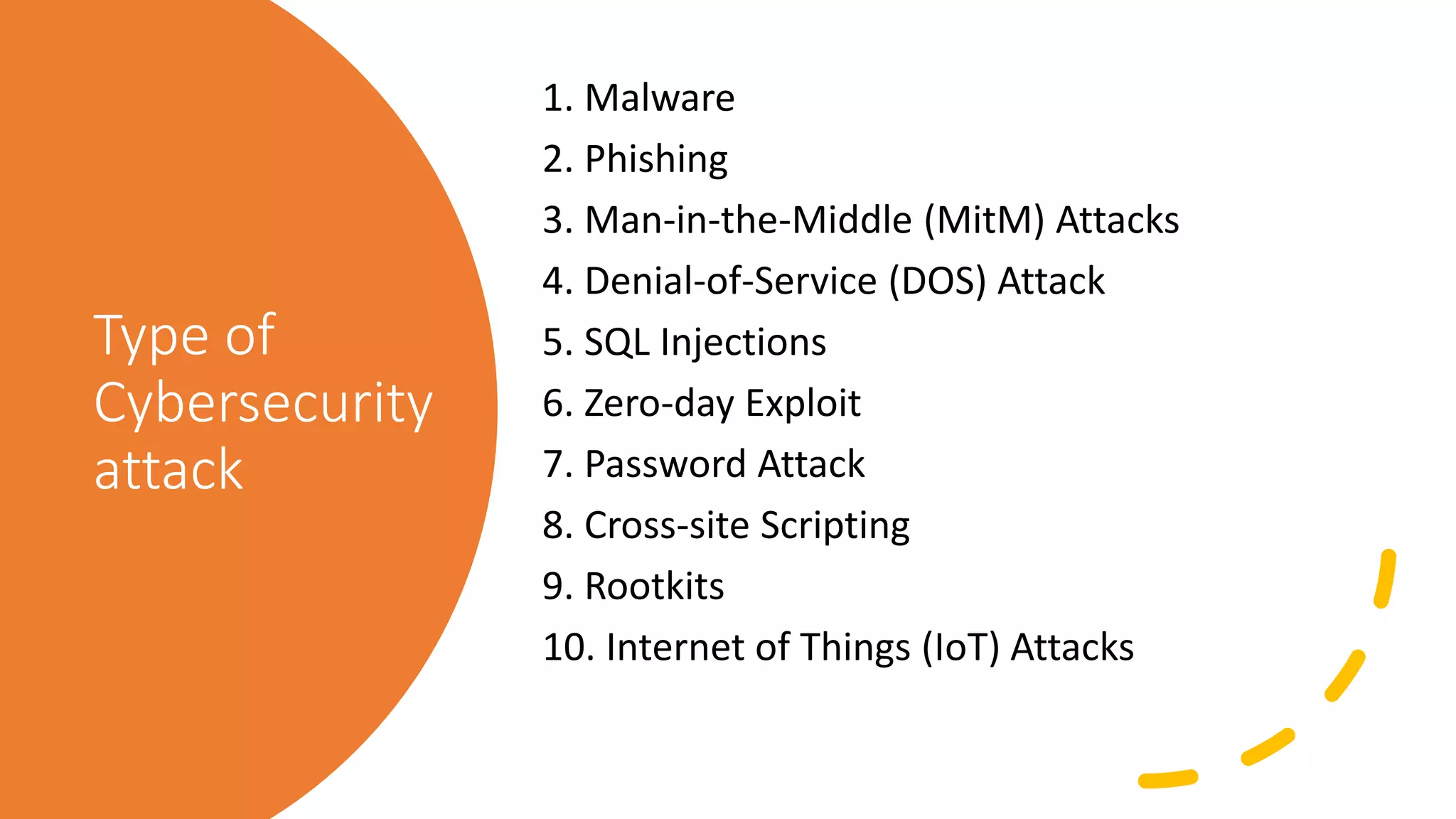
1. Malware
2. Phishing
3. Man-in-the-Middle (MitM) Attacks
4. Denial-of-Service (DOS) Attack
5. SQL Injections
6. Zero-day Exploit
7. Password Attack
8. Cross-site Scripting
9. Rootkits
10. Internet of Things (IoT) Attacks
What is Ethical Hacking?
• Ethical hacking involves an authorized attempt to gain unauthorized
access to a computer system, application, or data. Carrying out an
ethical hack involves duplicating strategies and actions of malicious
attackers. This practice helps to identify security
vulnerabilities which can then be resolved before a malicious
attacker has the opportunity to exploit them.
• Also known as “white hats,” ethical hackers are security experts that
perform these security assessments. The proactive work they do
helps to improve an organization’s security posture. With prior
approval from the organization or owner of the IT asset, the mission
of ethical hacking is opposite from malicious hacking.
Benefits of
Ethical
Hacking
• Weak points of a system can be easily found
and resolved by performing penetration
testing.
• You can implement solutions for
vulnerabilities to prevent security breaches.
• Ethical Hacking protects data from being
stolen by ‘black-hat hackers.’
• It helps protect networks with continuous
assessments.
• Customers and investors will trust your
company if the security of the data and the
system is well maintained.
Cyber
Security
vs Ethical
Hacking
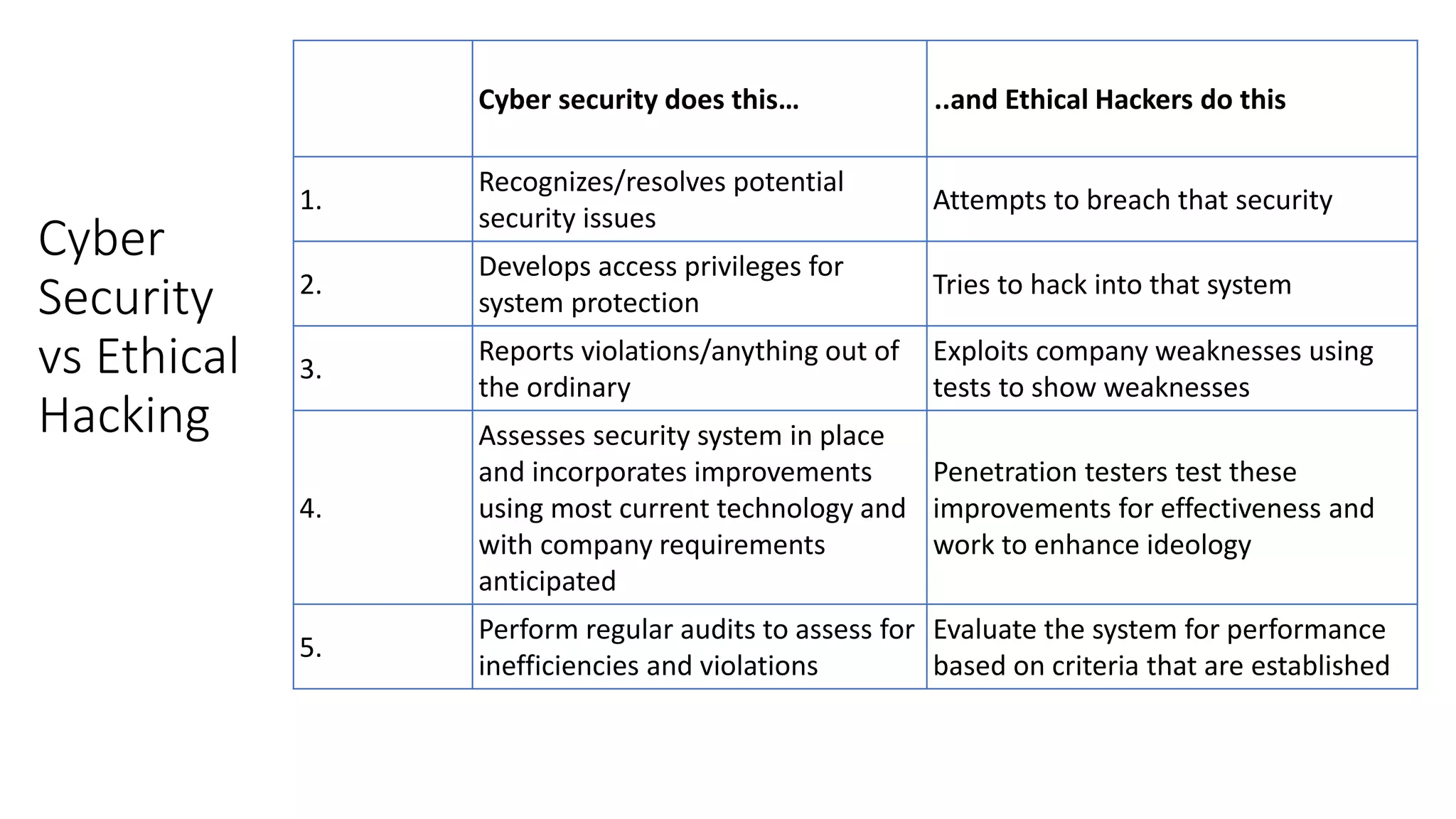
Cyber security does this… ..and Ethical Hackers do this
1.
Recognizes/resolves potential
security issues
Attempts to breach that security
2.
Develops access privileges for
system protection
Tries to hack into that system
3.
Reports violations/anything out of
the ordinary
Exploits company weaknesses using
tests to show weaknesses
4.
Assesses security system in place
and incorporates improvements
using most current technology and
with company requirements
anticipated
Penetration testers test these
improvements for effectiveness and
work to enhance ideology
5.
Perform regular audits to assess for
inefficiencies and violations
Evaluate the system for performance
based on criteria that are established
Cyber
Security
vs Ethical
Hacking
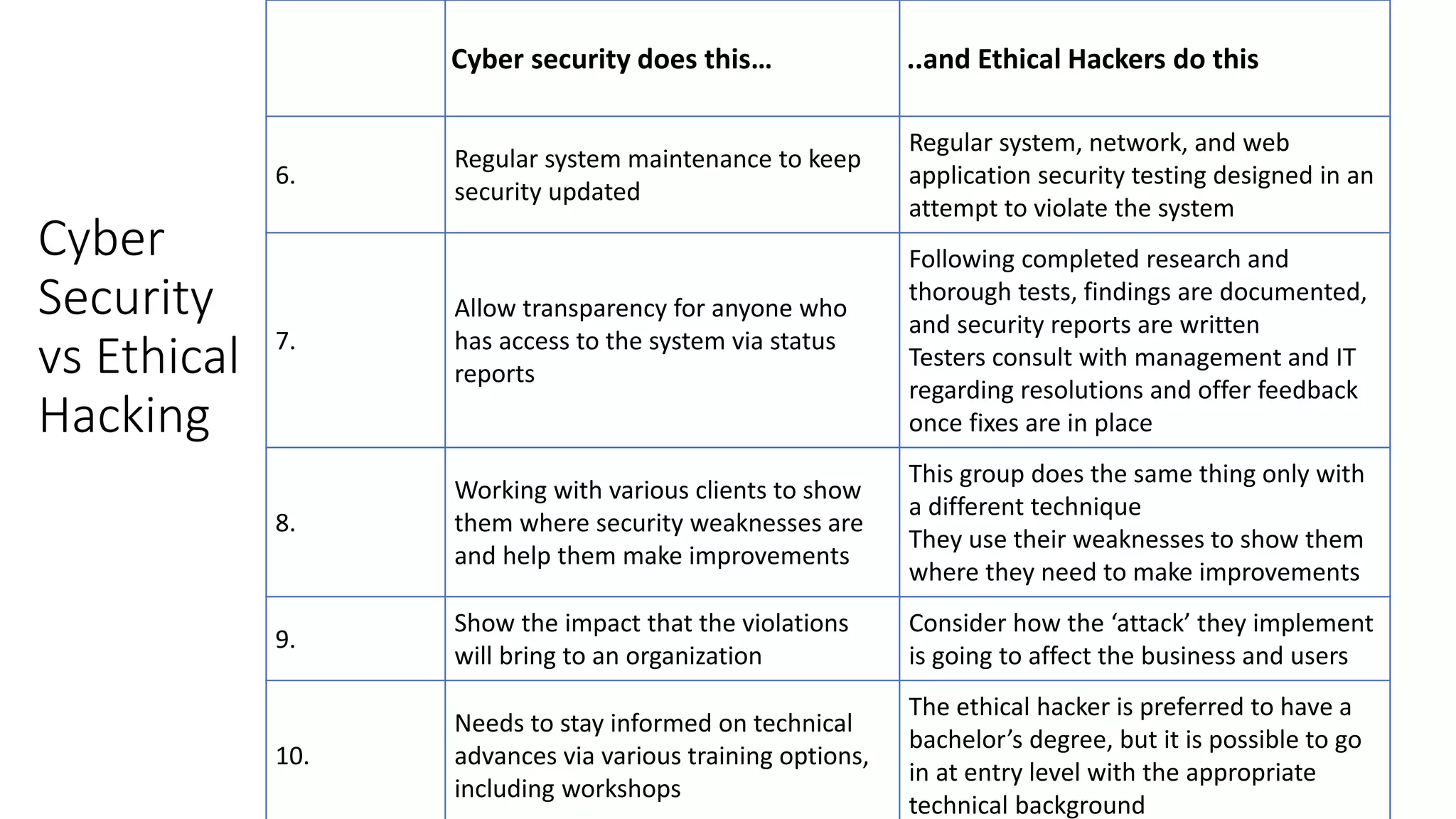
Cyber security does this… ..and Ethical Hackers do this
6.
Regular system maintenance to keep
security updated
Regular system, network, and web
application security testing designed in an
attempt to violate the system
7.
Allow transparency for anyone who
has access to the system via status
reports
Following completed research and
thorough tests, findings are documented,
and security reports are written
Testers consult with management and IT
regarding resolutions and offer feedback
once fixes are in place
8.
Working with various clients to show
them where security weaknesses are
and help them make improvements
This group does the same thing only with
a different technique
They use their weaknesses to show them
where they need to make improvements
9.
Show the impact that the violations
will bring to an organization
Consider how the ‘attack’ they implement
is going to affect the business and users
10.
Needs to stay informed on technical
advances via various training options,
including workshops
The ethical hacker is preferred to have a
bachelor’s degree, but it is possible to go
in at entry level with the appropriate
technical background
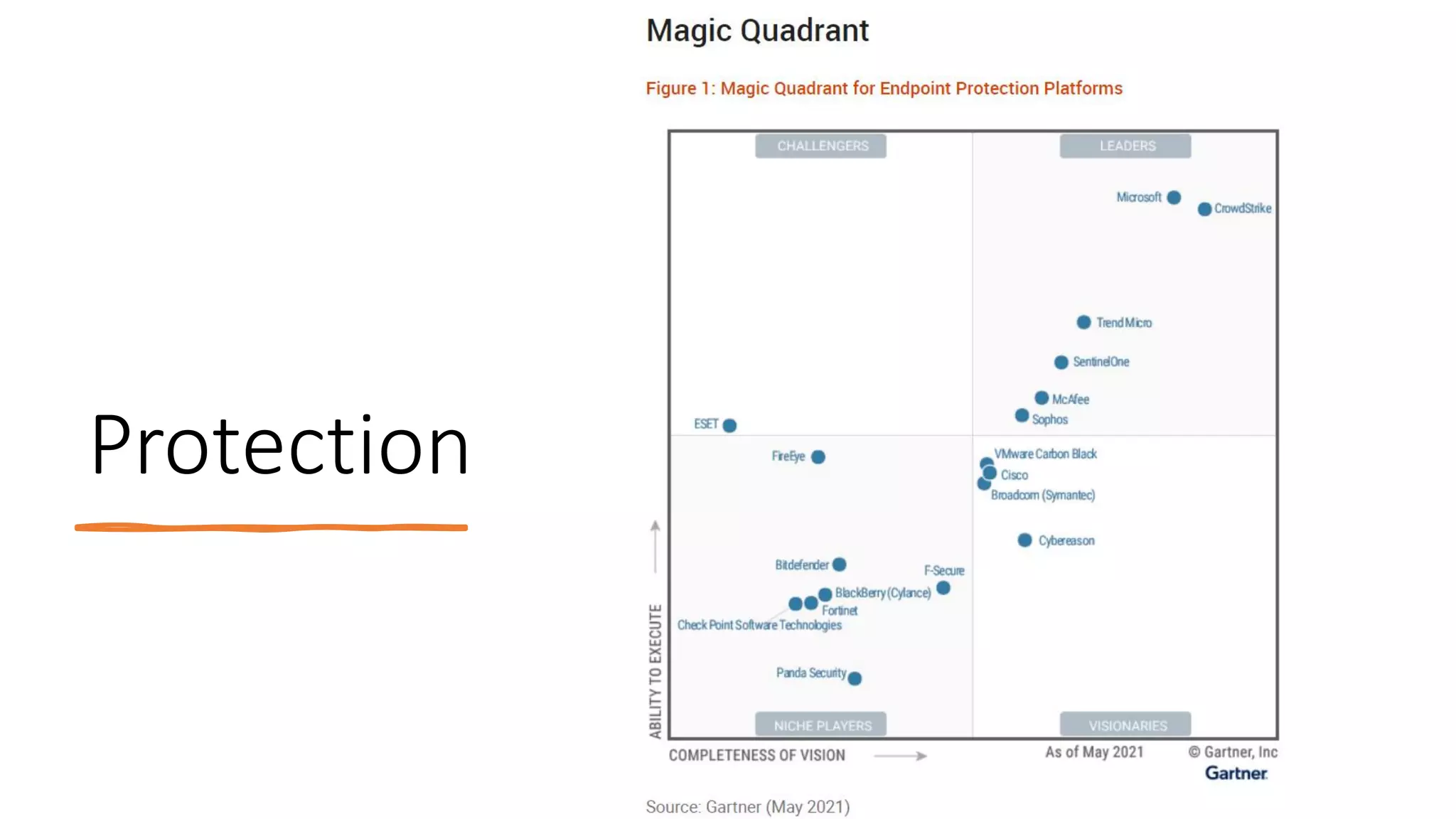
Protection
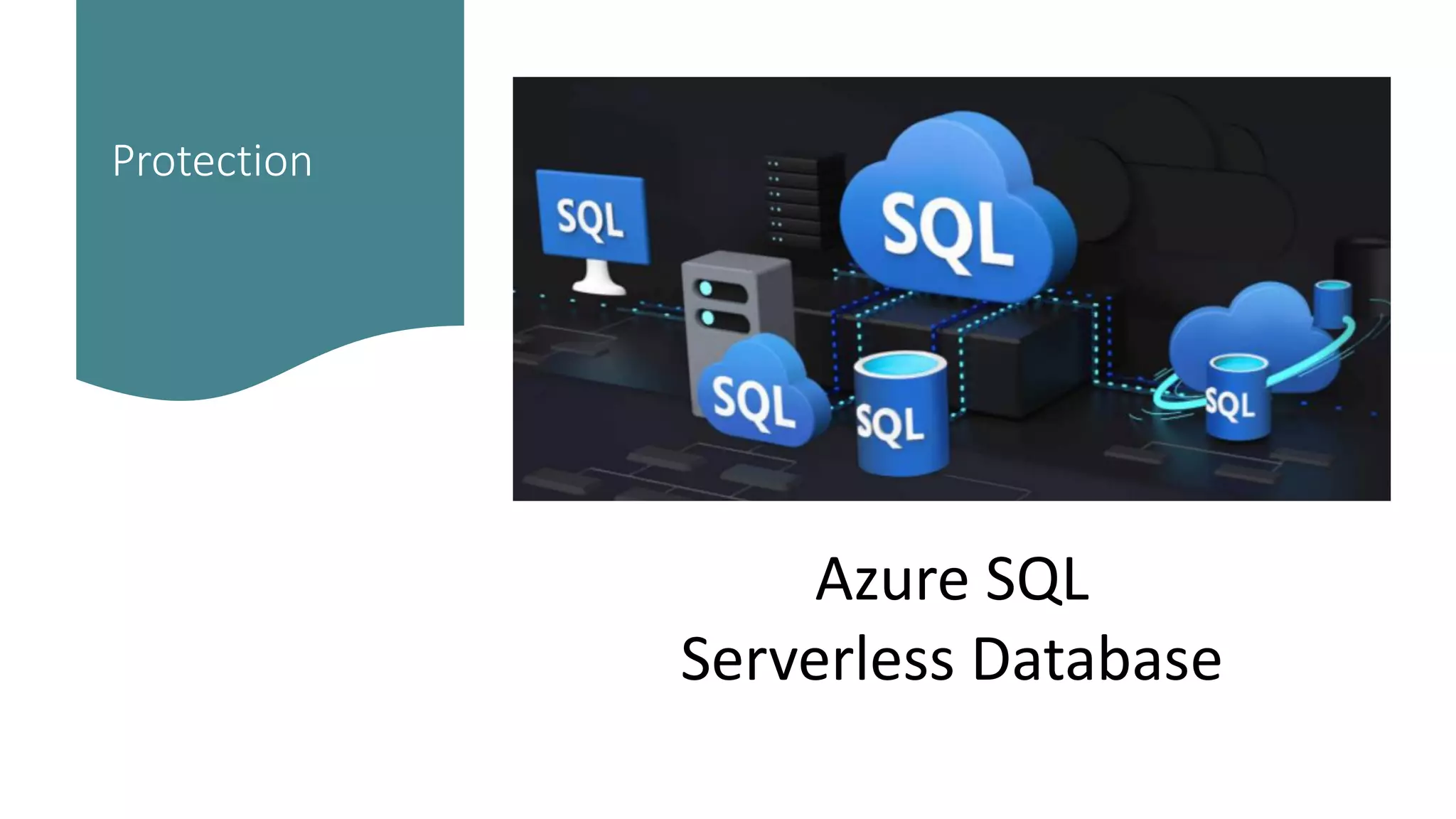
Protection
Azure SQL
Serverless Database
Thank you

Cyber Security vs.pdf

  • 1.
    Cyber Security vs.Ethical Hacking Ming Man MVP Data Platform http://chanmingman.wordpress.com
  • 2.
    What is CyberSecurity? • Cybersecurity is the practice of protecting systems, networks, and programs from digital attacks. These cyberattacks are usually aimed at accessing, changing, or destroying sensitive information; extorting money from users; or interrupting normal business processes. • Implementing effective cybersecurity measures is particularly challenging today because there are more devices than people, and attackers are becoming more innovative.
  • 3.
    Type of Cybersecurity attack 1. Malware 2.Phishing 3. Man-in-the-Middle (MitM) Attacks 4. Denial-of-Service (DOS) Attack 5. SQL Injections 6. Zero-day Exploit 7. Password Attack 8. Cross-site Scripting 9. Rootkits 10. Internet of Things (IoT) Attacks
  • 5.
    What is EthicalHacking? • Ethical hacking involves an authorized attempt to gain unauthorized access to a computer system, application, or data. Carrying out an ethical hack involves duplicating strategies and actions of malicious attackers. This practice helps to identify security vulnerabilities which can then be resolved before a malicious attacker has the opportunity to exploit them. • Also known as “white hats,” ethical hackers are security experts that perform these security assessments. The proactive work they do helps to improve an organization’s security posture. With prior approval from the organization or owner of the IT asset, the mission of ethical hacking is opposite from malicious hacking.
  • 6.
    Benefits of Ethical Hacking • Weakpoints of a system can be easily found and resolved by performing penetration testing. • You can implement solutions for vulnerabilities to prevent security breaches. • Ethical Hacking protects data from being stolen by ‘black-hat hackers.’ • It helps protect networks with continuous assessments. • Customers and investors will trust your company if the security of the data and the system is well maintained.
  • 7.
    Cyber Security vs Ethical Hacking Cyber securitydoes this… ..and Ethical Hackers do this 1. Recognizes/resolves potential security issues Attempts to breach that security 2. Develops access privileges for system protection Tries to hack into that system 3. Reports violations/anything out of the ordinary Exploits company weaknesses using tests to show weaknesses 4. Assesses security system in place and incorporates improvements using most current technology and with company requirements anticipated Penetration testers test these improvements for effectiveness and work to enhance ideology 5. Perform regular audits to assess for inefficiencies and violations Evaluate the system for performance based on criteria that are established
  • 8.
    Cyber Security vs Ethical Hacking Cyber securitydoes this… ..and Ethical Hackers do this 6. Regular system maintenance to keep security updated Regular system, network, and web application security testing designed in an attempt to violate the system 7. Allow transparency for anyone who has access to the system via status reports Following completed research and thorough tests, findings are documented, and security reports are written Testers consult with management and IT regarding resolutions and offer feedback once fixes are in place 8. Working with various clients to show them where security weaknesses are and help them make improvements This group does the same thing only with a different technique They use their weaknesses to show them where they need to make improvements 9. Show the impact that the violations will bring to an organization Consider how the ‘attack’ they implement is going to affect the business and users 10. Needs to stay informed on technical advances via various training options, including workshops The ethical hacker is preferred to have a bachelor’s degree, but it is possible to go in at entry level with the appropriate technical background
  • 9.
  • 10.
  • 11.