Cyber safety
An informative session on how to keep young children cyber-safe
What is cyber safety?
 The

ability to stay safe and act
responsibly when connecting online or
through other communicative tools.
 Promote behaviours that protect
personal information and build social
awareness
(iKeepSafe, 2013)
What is included within cyber safety?
 Children

are exposed to a wide variety of
technology, some of which include, but
are not limited to;
 Social

networking sites

 Children’s

 Video

virtual worlds

sharing sites (such as YouTube)

 Mobile
 Tablets

technology
(Holloway, Green,
and Livingstone 2013).


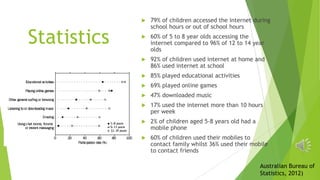
Statistics

79% of children accessed the internet during
school hours or out of school hours



60% of 5 to 8 year olds accessing the
internet compared to 96% of 12 to 14 year
olds



92% of children used internet at home and
86% used internet at school



85% played educational activities



69% played online games



47% downloaded music



17% used the internet more than 10 hours
per week



2% of children aged 5-8 years old had a
mobile phone



60% of children used their mobiles to
contact family whilst 36% used their mobile
to contact friends
Australian Bureau of
Statistics, 2012)
How can you teach children in Early
Childhood Cyber Safety rules?
 Digital

Media Literacy

 Positive
 Peer

Online Behaviour

and Personal Safety

 e-security

(ACMA, 2013)
Where to get additional help


http://www.cybersmart.gov.au/ (Australian website that provides
educational safety games for online play)



http://www.cybersafety.communications.gov.au/helpandadvice (Help and
advice for those that need more information for both children and adults)



http://www.cybersafekids.com.au/ (Provides more information on how to
keep students aware of their safety when online)

Cyber safety

  • 1.
    Cyber safety An informativesession on how to keep young children cyber-safe
  • 2.
    What is cybersafety?  The ability to stay safe and act responsibly when connecting online or through other communicative tools.  Promote behaviours that protect personal information and build social awareness (iKeepSafe, 2013)
  • 3.
    What is includedwithin cyber safety?  Children are exposed to a wide variety of technology, some of which include, but are not limited to;  Social networking sites  Children’s  Video virtual worlds sharing sites (such as YouTube)  Mobile  Tablets technology (Holloway, Green, and Livingstone 2013).
  • 4.
     Statistics 79% of childrenaccessed the internet during school hours or out of school hours  60% of 5 to 8 year olds accessing the internet compared to 96% of 12 to 14 year olds  92% of children used internet at home and 86% used internet at school  85% played educational activities  69% played online games  47% downloaded music  17% used the internet more than 10 hours per week  2% of children aged 5-8 years old had a mobile phone  60% of children used their mobiles to contact family whilst 36% used their mobile to contact friends Australian Bureau of Statistics, 2012)
  • 5.
    How can youteach children in Early Childhood Cyber Safety rules?  Digital Media Literacy  Positive  Peer Online Behaviour and Personal Safety  e-security (ACMA, 2013)
  • 6.
    Where to getadditional help  http://www.cybersmart.gov.au/ (Australian website that provides educational safety games for online play)  http://www.cybersafety.communications.gov.au/helpandadvice (Help and advice for those that need more information for both children and adults)  http://www.cybersafekids.com.au/ (Provides more information on how to keep students aware of their safety when online)