



Customer Based Brand Equity of
Amazon.com
Customer Based Brand Equity
(CBBE)
Customer based brand equity is a way of assessing
the value of a brand in customers minds.
To establish customer based brand equity Amazon
should build the right type of experiences around
the brand so that customers have specific, positive
thoughts, feelings, beliefs, opinions and perception
about the brand “Amazon” (Keller, 2013)
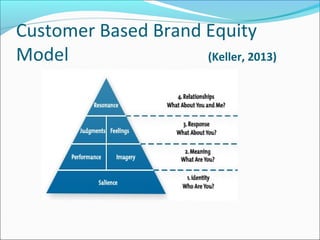
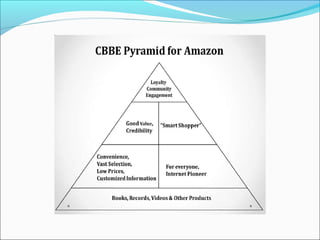
Customer Based Brand Equity
Model (Keller, 2013)
Brand Salience Dimensions
Amazon brand salience has two aspects
 Depth of brand awareness
Ease of recognition and recall brand Amazon
Strength and clarity of category membership
• Breath of Brand Awareness
Purchase consideration on Amazon.com website
Consumption or use of Amazon.com products
(Dahlen et al, 2010)
Brand Performance Dimension
Primary characteristics and supplementary features of
Amazon.com products
Product reliability, durability and serviceability
Service effectiveness, efficiency and empathy
Style and design
Price on Amazon.com
(Keller, 2008)
Brand Imagery Dimension
• User profile such as demographic and psychographic
characteristics. Actual or aspirational profile of
Amazon customers.
• Purchase and usage situation such as types of
channel, location and context of usage.
• Personality and values such as sincerity, excitement,
competence and sophistication
• History heritage and experiences of Amazon
customers.
Brand Judgment Dimension
Brand quality such as value and satisfaction
Brand credibility such as expertise, trustworthiness
and likability
Brand Consideration like relevance
Brand superiority such as differentiation from EBay or
other retailers
Brand Feeling Dimension
Amazon.com should cover the following aspects in
brand resonance dimension
• Warmth
• Fun
• Excitement
• Security
• Social approval
• Self respect
(Grant, 2011)
Brand Resonance Dimensions
Behavioural loyalty such as frequency and amount of
repeat purchase
Attitudinal attachment such as love and affection
towards Amazon and proud of brand
Sense of community such as kinship and affiliation
with Amazon.
Active engagement with Amazon.com
Benefits of Customer Based Brand
Equity
Amazon could get the following benefits by CBBE
Enjoy greater brand loyalty, usage and affinity
Command larger price premiums
Receive greater communication efficiency and
effectiveness
Yield licensing opportunity
Support brand extensions (Keller, 2013)
Thank You
If you have got any
question please feel
free to ask
References
 Keller K (2008) Strategic brand Management Harlow: Pearson Education Ltd.
 Keller, K. (2013). Building, measuring, and managing brand equity. New Jersey:
Pearson Education
 Kotler P & Armstrong G (2011) Principles of Marketing 14th
Ed. USA: Pearson
Education
 Kumar S (2009) Consumer behaviour and branding: Concepts, Reading and
Cases New Delhi: Pearson Education
 Dahlen, M. Lange, F. & Smith, T. (2010) “Marketing Communication: A brand
narrative approach” 1st Ed. West Sussex: John Wiley & Sons.
 Grant J (2011) The Brand Innovation manifesto: How to Build Brands, Redefine
Markets and Defy Conventions. New York: John Wiley & Sons.

Customer based brand equity

  • 1.
    Customer Based BrandEquity of Amazon.com
  • 2.
    Customer Based BrandEquity (CBBE) Customer based brand equity is a way of assessing the value of a brand in customers minds. To establish customer based brand equity Amazon should build the right type of experiences around the brand so that customers have specific, positive thoughts, feelings, beliefs, opinions and perception about the brand “Amazon” (Keller, 2013)
  • 3.
    Customer Based BrandEquity Model (Keller, 2013)
  • 4.
    Brand Salience Dimensions Amazonbrand salience has two aspects  Depth of brand awareness Ease of recognition and recall brand Amazon Strength and clarity of category membership • Breath of Brand Awareness Purchase consideration on Amazon.com website Consumption or use of Amazon.com products (Dahlen et al, 2010)
  • 5.
    Brand Performance Dimension Primarycharacteristics and supplementary features of Amazon.com products Product reliability, durability and serviceability Service effectiveness, efficiency and empathy Style and design Price on Amazon.com (Keller, 2008)
  • 6.
    Brand Imagery Dimension •User profile such as demographic and psychographic characteristics. Actual or aspirational profile of Amazon customers. • Purchase and usage situation such as types of channel, location and context of usage. • Personality and values such as sincerity, excitement, competence and sophistication • History heritage and experiences of Amazon customers.
  • 7.
    Brand Judgment Dimension Brandquality such as value and satisfaction Brand credibility such as expertise, trustworthiness and likability Brand Consideration like relevance Brand superiority such as differentiation from EBay or other retailers
  • 8.
    Brand Feeling Dimension Amazon.comshould cover the following aspects in brand resonance dimension • Warmth • Fun • Excitement • Security • Social approval • Self respect (Grant, 2011)
  • 9.
    Brand Resonance Dimensions Behaviouralloyalty such as frequency and amount of repeat purchase Attitudinal attachment such as love and affection towards Amazon and proud of brand Sense of community such as kinship and affiliation with Amazon. Active engagement with Amazon.com
  • 10.
    Benefits of CustomerBased Brand Equity Amazon could get the following benefits by CBBE Enjoy greater brand loyalty, usage and affinity Command larger price premiums Receive greater communication efficiency and effectiveness Yield licensing opportunity Support brand extensions (Keller, 2013)
  • 12.
    Thank You If youhave got any question please feel free to ask
  • 13.
    References  Keller K(2008) Strategic brand Management Harlow: Pearson Education Ltd.  Keller, K. (2013). Building, measuring, and managing brand equity. New Jersey: Pearson Education  Kotler P & Armstrong G (2011) Principles of Marketing 14th Ed. USA: Pearson Education  Kumar S (2009) Consumer behaviour and branding: Concepts, Reading and Cases New Delhi: Pearson Education  Dahlen, M. Lange, F. & Smith, T. (2010) “Marketing Communication: A brand narrative approach” 1st Ed. West Sussex: John Wiley & Sons.  Grant J (2011) The Brand Innovation manifesto: How to Build Brands, Redefine Markets and Defy Conventions. New York: John Wiley & Sons.