Jessica Cole, MLIS, AHIP
Northern Arizona University
At Phoenix Biomedical Campus
Library Instruction
Physician Assistant (PA) Program
About the PA Program
O NAU’s PA program is 24 continuous months.
O Phase I of the curriculum is didactic, with
students on campus for the first year.
O Phase II consists of several clinical rotations,
with students mostly off- campus.
O Library instruction is integrated into the
Evidence-Based Medicine curriculum over
multiple sessions throughout the first year
and facilitates active learning based on
clinical cases.
EBP in PA Curriculum
Evidence-based practice (EBP) instruction is
required by PA program accreditors.
“The curriculum establishes a strong foundation in health
information technology and evidence-based medicine and
emphasizes the importance of remaining current with the
changing nature of clinical practice.”
http://www.arc-pa.org/acc_standards/
PA Curriculum: Library
Instruction Needs
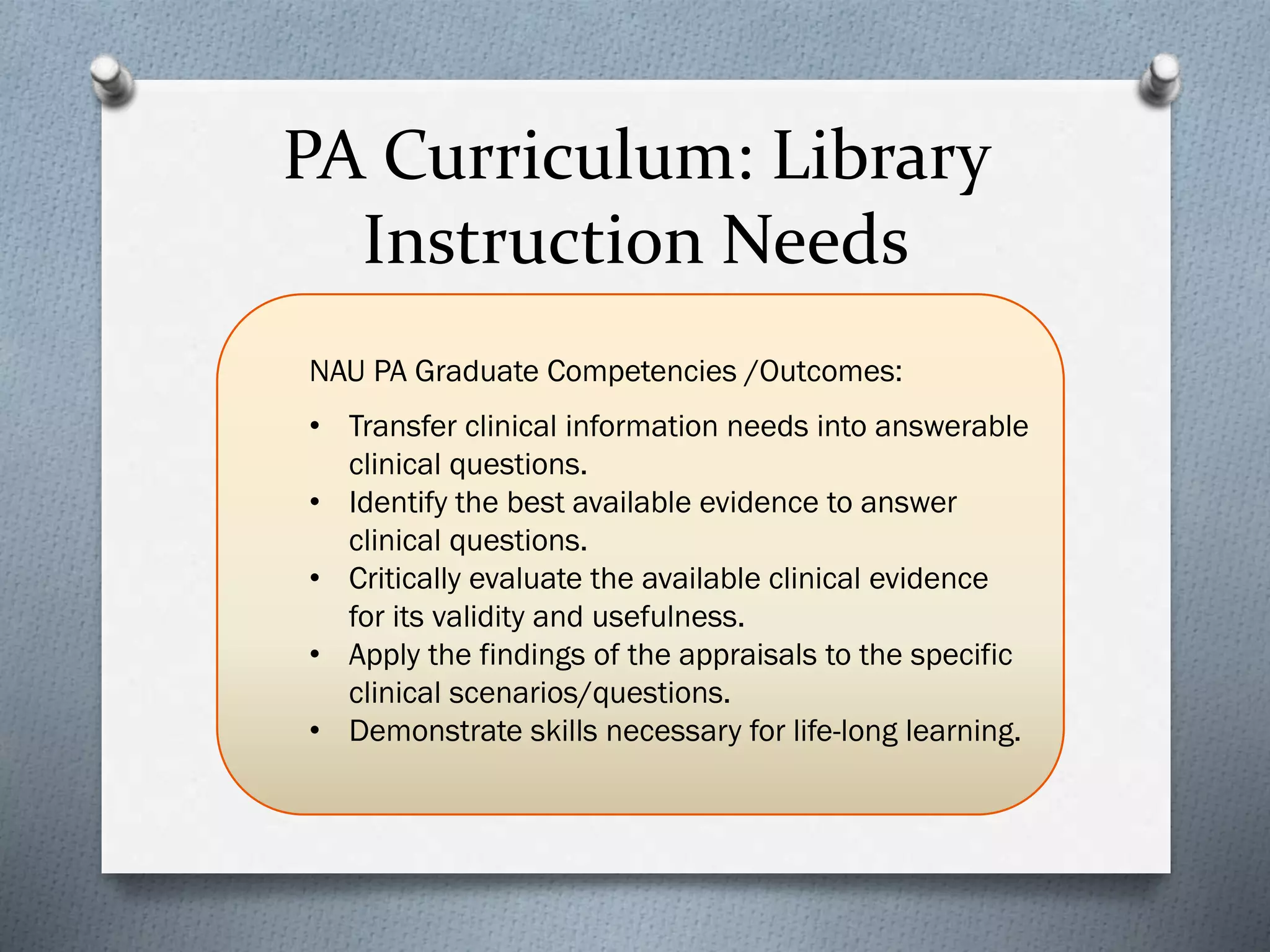
NAU PA Graduate Competencies /Outcomes:
• Transfer clinical information needs into answerable
clinical questions.
• Identify the best available evidence to answer
clinical questions.
• Critically evaluate the available clinical evidence
for its validity and usefulness.
• Apply the findings of the appraisals to the specific
clinical scenarios/questions.
• Demonstrate skills necessary for life-long learning.
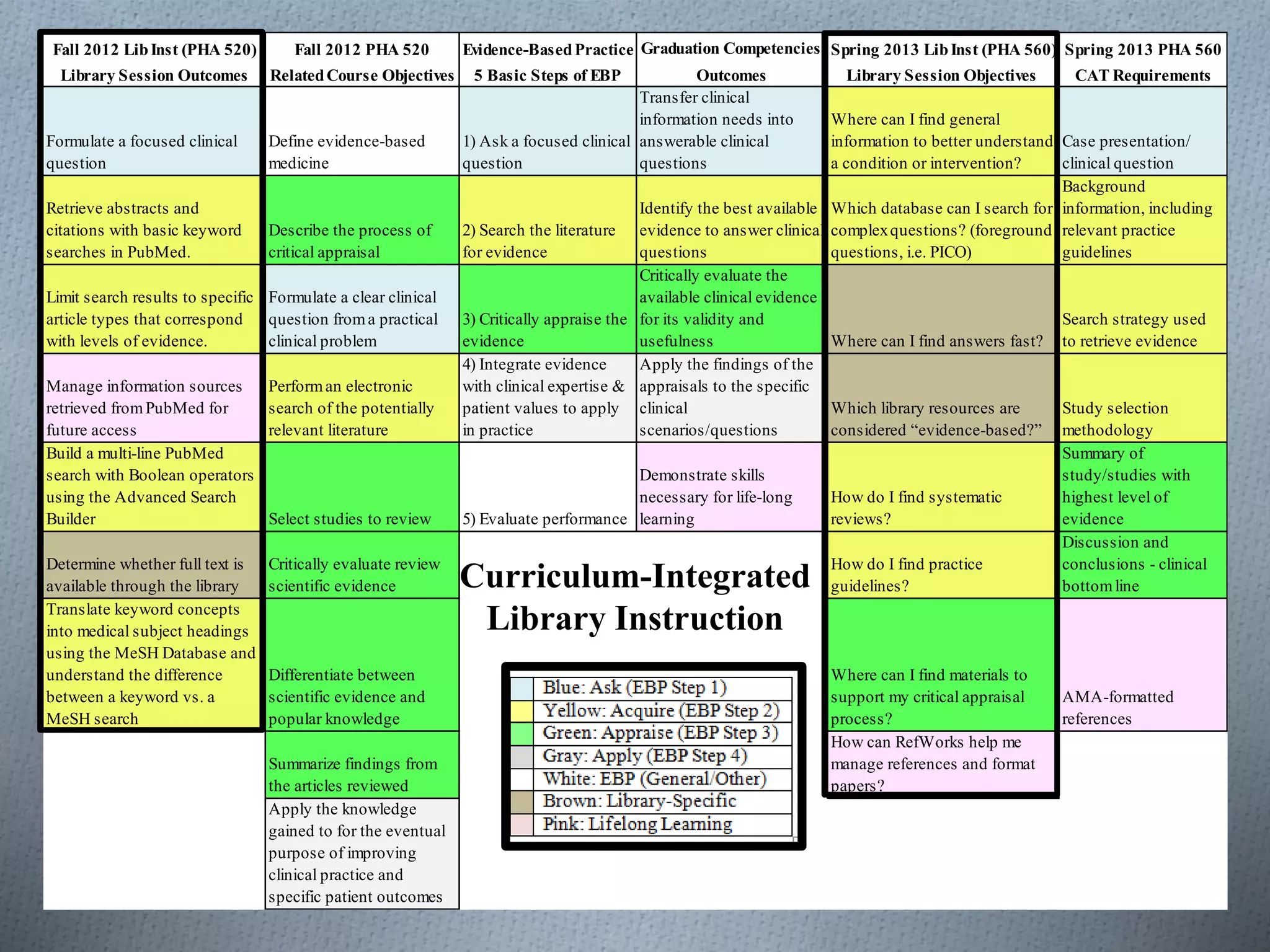
Fall 2012 LibInst (PHA 520) Fall 2012 PHA 520 Evidence-BasedPractice Graduation Competencies Spring 2013 LibInst (PHA 560) Spring 2013 PHA 560
Library Session Outcomes RelatedCourse Objectives 5 Basic Steps of EBP Outcomes Library Session Objectives CAT Requirements
Formulate a focused clinical
question
Define evidence-based
medicine
1) Ask a focused clinical
question
Transfer clinical
information needs into
answerable clinical
questions
Where can I find general
information to better understand
a condition or intervention?
Case presentation/
clinical question
Retrieve abstracts and
citations with basic keyword
searches in PubMed.
Describe the process of
critical appraisal
2) Search the literature
for evidence
Identify the best available
evidence to answer clinical
questions
Which database can I search for
complexquestions? (foreground
questions, i.e. PICO)
Background
information, including
relevant practice
guidelines
Limit search results to specific
article types that correspond
with levels of evidence.
Formulate a clear clinical
question froma practical
clinical problem
3) Critically appraise the
evidence
Critically evaluate the
available clinical evidence
for its validity and
usefulness Where can I find answers fast?
Search strategy used
to retrieve evidence
Manage information sources
retrieved fromPubMed for
future access
Performan electronic
search of the potentially
relevant literature
4) Integrate evidence
with clinical expertise &
patient values to apply
in practice
Apply the findings of the
appraisals to the specific
clinical
scenarios/questions
Which library resources are
considered “evidence-based?”
Study selection
methodology
Build a multi-line PubMed
search with Boolean operators
using the Advanced Search
Builder Select studies to review 5) Evaluate performance
Demonstrate skills
necessary for life-long
learning
How do I find systematic
reviews?
Summary of
study/studies with
highest level of
evidence
Determine whether full text is
available through the library
Critically evaluate review
scientific evidence
How do I find practice
guidelines?
Discussion and
conclusions - clinical
bottomline
Translate keyword concepts
into medical subject headings
using the MeSH Database and
understand the difference
between a keyword vs. a
MeSH search
Differentiate between
scientific evidence and
popular knowledge
Where can I find materials to
support my critical appraisal
process?
AMA-formatted
references
Summarize findings from
the articles reviewed
How can RefWorks help me
manage references and format
papers?
Apply the knowledge
gained to for the eventual
purpose of improving
clinical practice and
specific patient outcomes
Curriculum-Integrated
Library Instruction
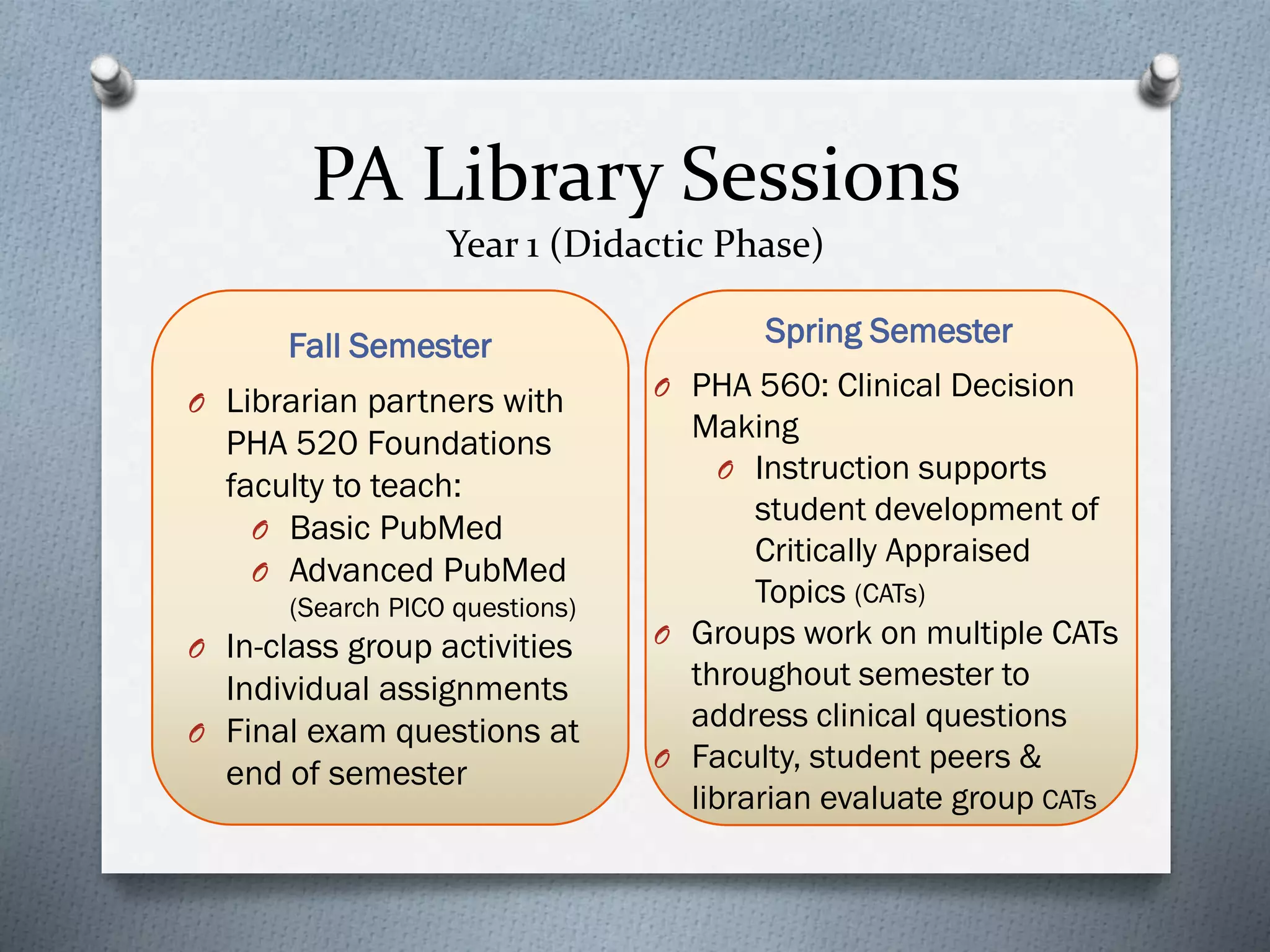
PA Library Sessions
Year 1 (Didactic Phase)
Fall Semester
O Librarian partners with
PHA 520 Foundations
faculty to teach:
O Basic PubMed
O Advanced PubMed
(Search PICO questions)
O In-class group activities
Individual assignments
O Final exam questions at
end of semester
Spring Semester
O PHA 560: Clinical Decision
Making
O Instruction supports
student development of
Critically Appraised
Topics (CATs)
O Groups work on multiple CATs
throughout semester to
address clinical questions
O Faculty, student peers &
librarian evaluate group CATs
Classroom: Learning Studios
Display presenter’s
monitor or one
connected device
per table. Great for
displaying case-
based group work to
whole class!
https://www.youtube.com/watch?v=pOggHOaYFJ4
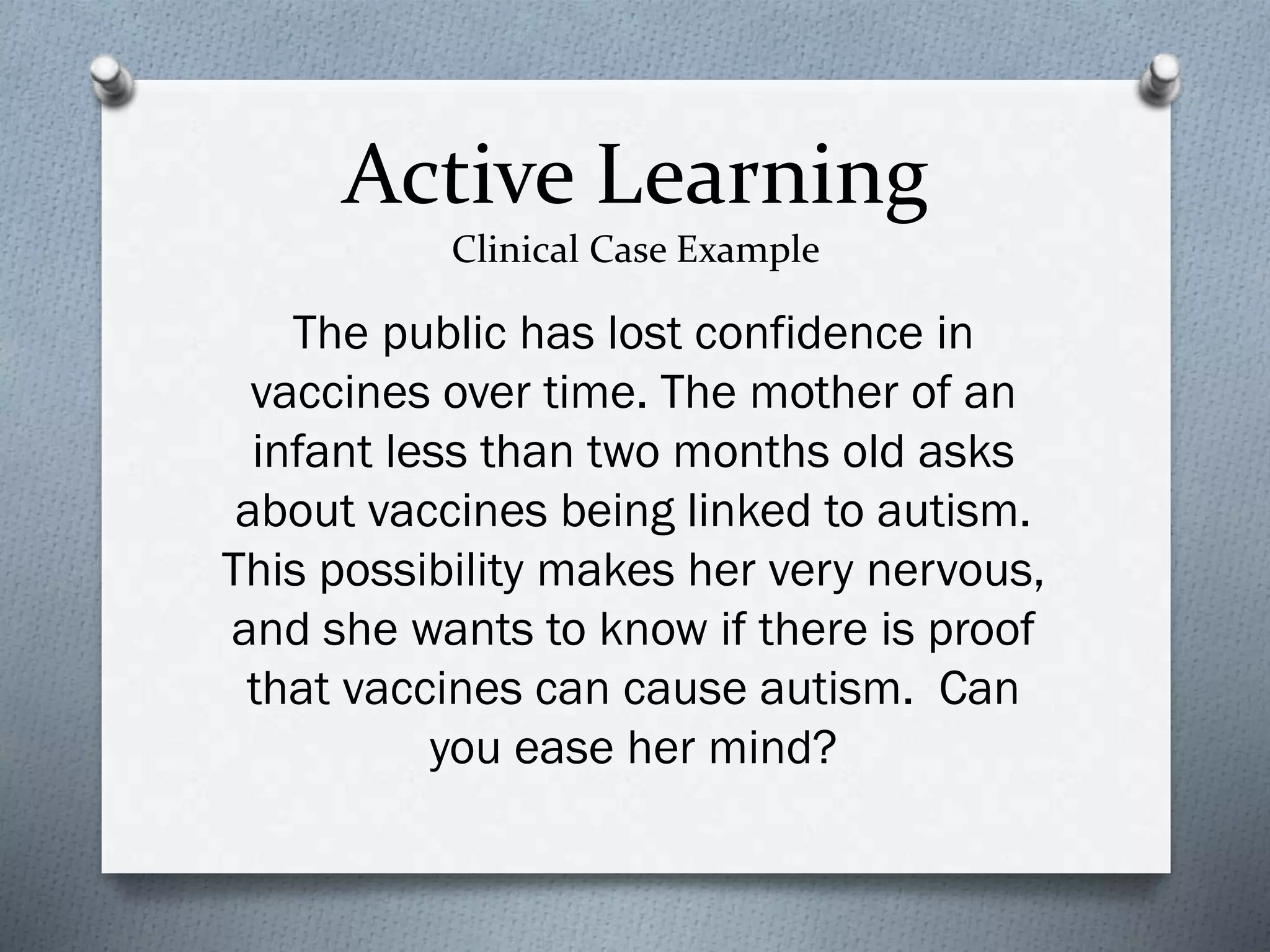
Active Learning
Clinical Case Example
The public has lost confidence in
vaccines over time. The mother of an
infant less than two months old asks
about vaccines being linked to autism.
This possibility makes her very nervous,
and she wants to know if there is proof
that vaccines can cause autism. Can
you ease her mind?
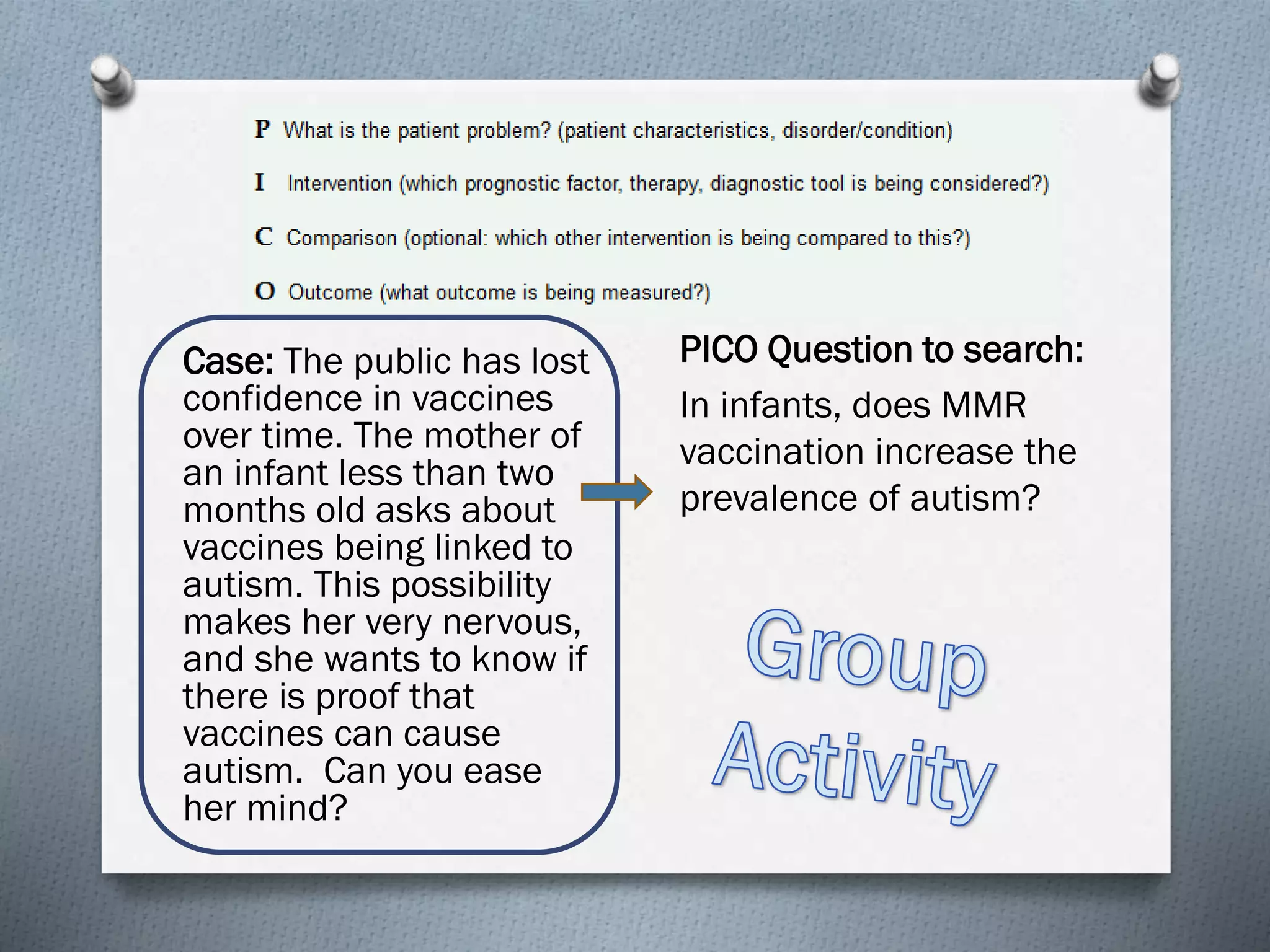
Case: The public has lost
confidence in vaccines
over time. The mother of
an infant less than two
months old asks about
vaccines being linked to
autism. This possibility
makes her very nervous,
and she wants to know if
there is proof that
vaccines can cause
autism. Can you ease
her mind?
PICO Question to search:
In infants, does MMR
vaccination increase the
prevalence of autism?
Online Library Resources for PAs
Years 1 & 2
Online content is also
available for students:
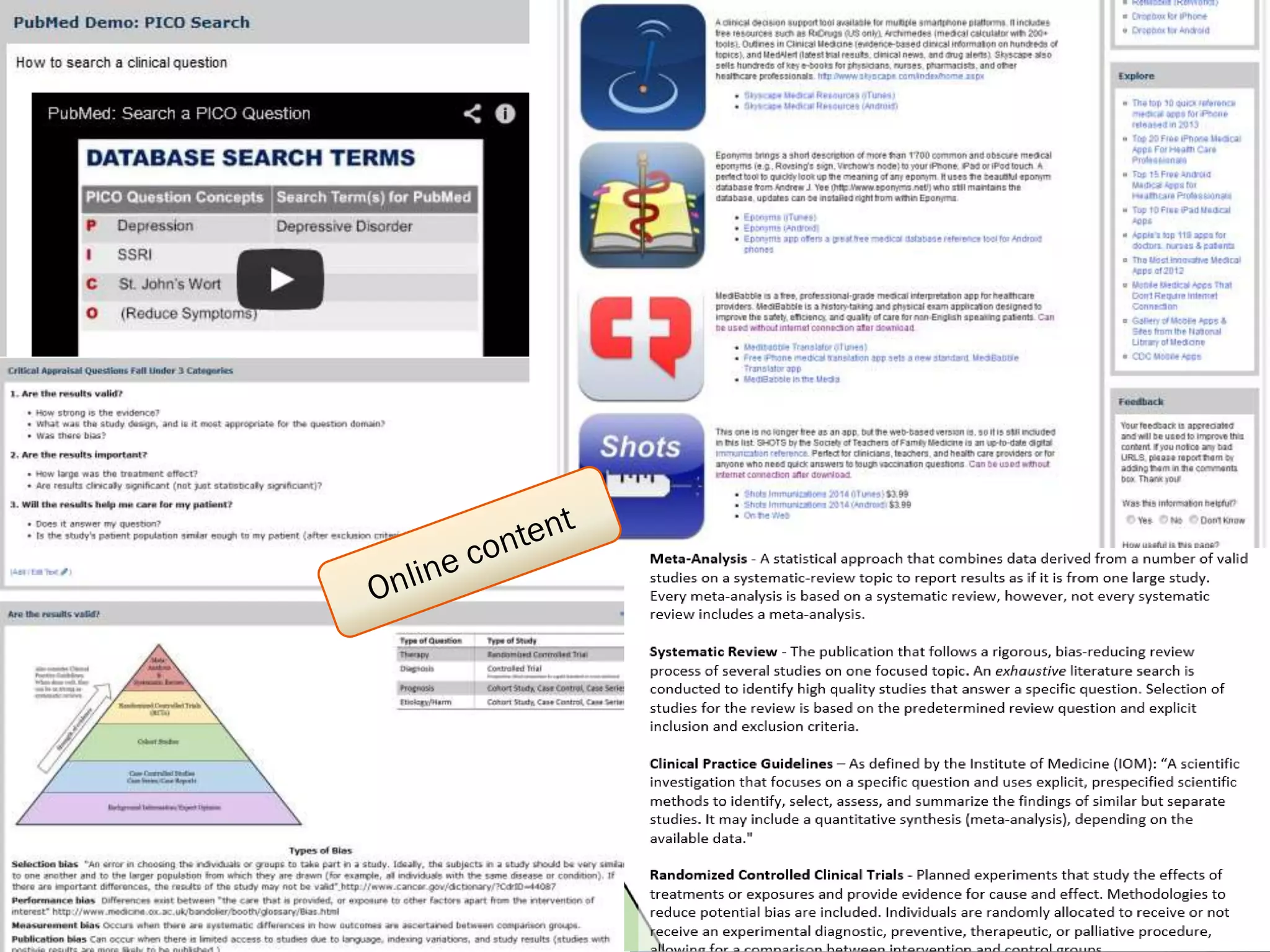
• Search Tutorials
• Resource Guides (Sources
for background vs.
foreground questions, etc.)
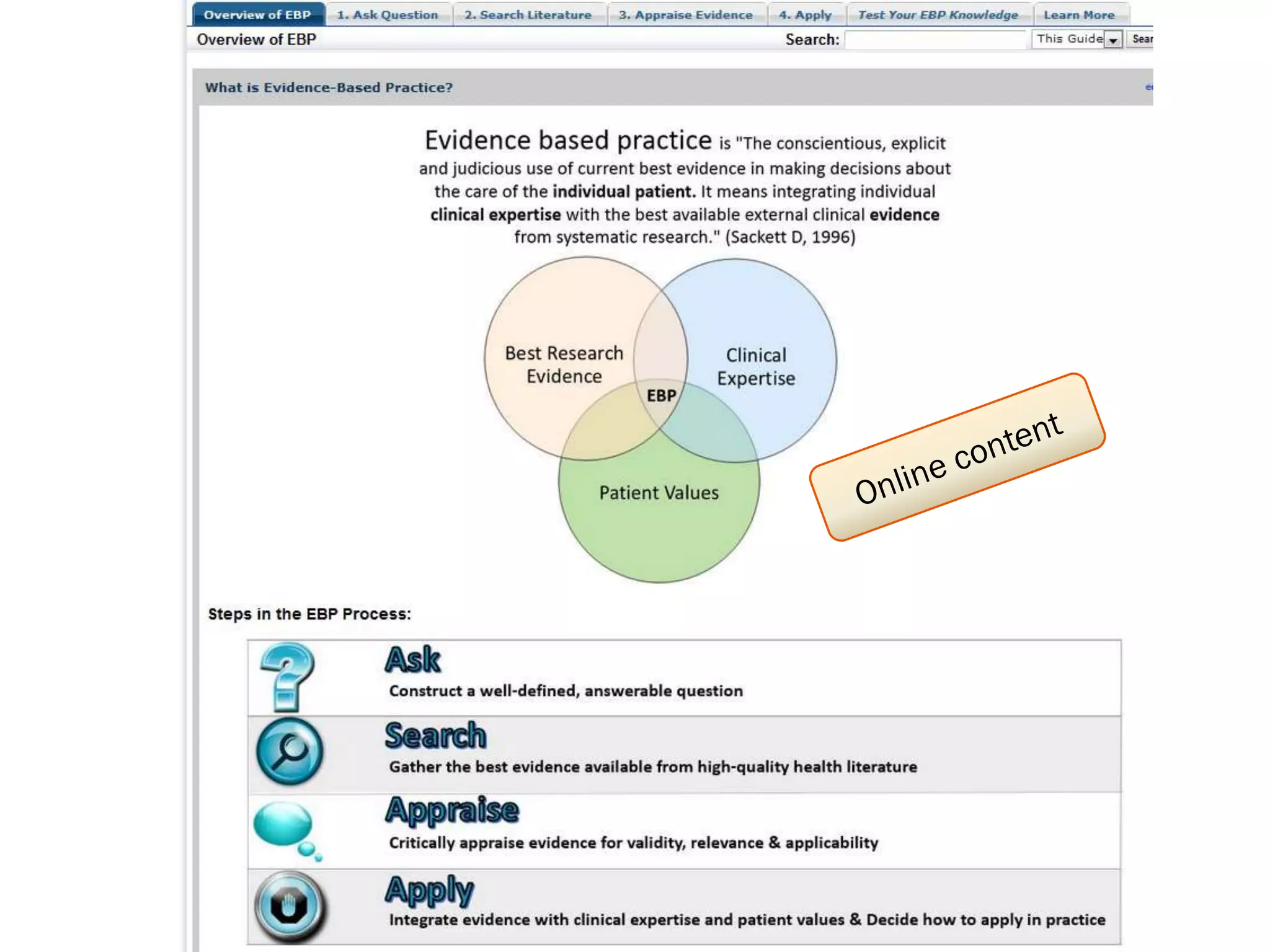
• Evidence-Based Practice
Modules
Curriculum-Integrated Library Instruction for PA Students (EBP)

Curriculum-Integrated Library Instruction for PA Students (EBP)

  • 1.
    Jessica Cole, MLIS,AHIP Northern Arizona University At Phoenix Biomedical Campus Library Instruction Physician Assistant (PA) Program
  • 3.
    About the PAProgram O NAU’s PA program is 24 continuous months. O Phase I of the curriculum is didactic, with students on campus for the first year. O Phase II consists of several clinical rotations, with students mostly off- campus. O Library instruction is integrated into the Evidence-Based Medicine curriculum over multiple sessions throughout the first year and facilitates active learning based on clinical cases.
  • 4.
    EBP in PACurriculum Evidence-based practice (EBP) instruction is required by PA program accreditors. “The curriculum establishes a strong foundation in health information technology and evidence-based medicine and emphasizes the importance of remaining current with the changing nature of clinical practice.” http://www.arc-pa.org/acc_standards/
  • 5.
    PA Curriculum: Library InstructionNeeds NAU PA Graduate Competencies /Outcomes: • Transfer clinical information needs into answerable clinical questions. • Identify the best available evidence to answer clinical questions. • Critically evaluate the available clinical evidence for its validity and usefulness. • Apply the findings of the appraisals to the specific clinical scenarios/questions. • Demonstrate skills necessary for life-long learning.
  • 6.
    Fall 2012 LibInst(PHA 520) Fall 2012 PHA 520 Evidence-BasedPractice Graduation Competencies Spring 2013 LibInst (PHA 560) Spring 2013 PHA 560 Library Session Outcomes RelatedCourse Objectives 5 Basic Steps of EBP Outcomes Library Session Objectives CAT Requirements Formulate a focused clinical question Define evidence-based medicine 1) Ask a focused clinical question Transfer clinical information needs into answerable clinical questions Where can I find general information to better understand a condition or intervention? Case presentation/ clinical question Retrieve abstracts and citations with basic keyword searches in PubMed. Describe the process of critical appraisal 2) Search the literature for evidence Identify the best available evidence to answer clinical questions Which database can I search for complexquestions? (foreground questions, i.e. PICO) Background information, including relevant practice guidelines Limit search results to specific article types that correspond with levels of evidence. Formulate a clear clinical question froma practical clinical problem 3) Critically appraise the evidence Critically evaluate the available clinical evidence for its validity and usefulness Where can I find answers fast? Search strategy used to retrieve evidence Manage information sources retrieved fromPubMed for future access Performan electronic search of the potentially relevant literature 4) Integrate evidence with clinical expertise & patient values to apply in practice Apply the findings of the appraisals to the specific clinical scenarios/questions Which library resources are considered “evidence-based?” Study selection methodology Build a multi-line PubMed search with Boolean operators using the Advanced Search Builder Select studies to review 5) Evaluate performance Demonstrate skills necessary for life-long learning How do I find systematic reviews? Summary of study/studies with highest level of evidence Determine whether full text is available through the library Critically evaluate review scientific evidence How do I find practice guidelines? Discussion and conclusions - clinical bottomline Translate keyword concepts into medical subject headings using the MeSH Database and understand the difference between a keyword vs. a MeSH search Differentiate between scientific evidence and popular knowledge Where can I find materials to support my critical appraisal process? AMA-formatted references Summarize findings from the articles reviewed How can RefWorks help me manage references and format papers? Apply the knowledge gained to for the eventual purpose of improving clinical practice and specific patient outcomes Curriculum-Integrated Library Instruction
  • 7.
    PA Library Sessions Year1 (Didactic Phase) Fall Semester O Librarian partners with PHA 520 Foundations faculty to teach: O Basic PubMed O Advanced PubMed (Search PICO questions) O In-class group activities Individual assignments O Final exam questions at end of semester Spring Semester O PHA 560: Clinical Decision Making O Instruction supports student development of Critically Appraised Topics (CATs) O Groups work on multiple CATs throughout semester to address clinical questions O Faculty, student peers & librarian evaluate group CATs
  • 8.
    Classroom: Learning Studios Displaypresenter’s monitor or one connected device per table. Great for displaying case- based group work to whole class! https://www.youtube.com/watch?v=pOggHOaYFJ4
  • 9.
    Active Learning Clinical CaseExample The public has lost confidence in vaccines over time. The mother of an infant less than two months old asks about vaccines being linked to autism. This possibility makes her very nervous, and she wants to know if there is proof that vaccines can cause autism. Can you ease her mind?
  • 10.
    Case: The publichas lost confidence in vaccines over time. The mother of an infant less than two months old asks about vaccines being linked to autism. This possibility makes her very nervous, and she wants to know if there is proof that vaccines can cause autism. Can you ease her mind? PICO Question to search: In infants, does MMR vaccination increase the prevalence of autism?
  • 11.
    Online Library Resourcesfor PAs Years 1 & 2 Online content is also available for students: • Search Tutorials • Resource Guides (Sources for background vs. foreground questions, etc.) • Evidence-Based Practice Modules