• A systematic arrangement of the sum total of selected experiences planned by a school for a
defined group of students to attain the aim of a particular educational program. – Florence
Nightingale.
• Curriculum is in the hands of the artist ( teacher ) to mold his material according to his ideals
( aims & objectives ) in his studio ( school ). - Cunningham
Definition
Aims of
curriculum
Character
Knowledge &
Skill
Health
Clear thinking
&
Observation
National
heritage
Aesthetic
expression
Social
relations &
Economic
efficiency
Bases of curriculum
Philosophical base Sociological base
Psychological base Scientific base
Areas of human
development involved in
curriculum
Intellectual
domain
Emotional
domain
Social
domain
Aesthetic
developmen
t domain
Spiritual
domain
Physical
developmen
t domain
Societal curriculum
Institutional curriculum
Instructional curriculum
Levels of curriculum
Philosophy of
nursing education
Educational
psychology
Student Life activities knowledge
Factors influencing curriculum development in nursing education
For Nursing
Life activities
Community
Leisure
Family
Professional
Spiritual
ABC of curriculum organization
…
Articulation Balance
...
Continuity
Interdisciplinary
problems
Application
of theory
Nature of
relationship
between
school and
society
Articulation
 Principle of learner centeredness
 Principle of continuity & sequence
 Principle of integration
 Principle of activity
 Principle of community centeredness
 Principle of conservation
 Principle of national integration
 Principle of correlation
 Principle of flexibility and elasticity
 Principle of social benefit
 Study of language
 Need for all round development of learner
 Principle of creativity
 Forward looking principle
 Principle of preparation for life
Principles of curriculum construction
Procedural
Dimension
Substantive
dimension
Human
relations
Dimension
Environmental
Dimension
Objectives for education
Derived from philosophy of nursing education
The educative process
Outcomes of the educational process
Directive stage
Formative stage
Functional stage
Evaluation stage
Stages of curriculum process
Curriculum development process
Philosophy of education
Goals & Aims
General instructional objectives
Specific instructional objectives & outcomes
Task analysis and content selection
Learning
activities
Types of
curriculum
Official
Operational
Illegitimate
Hidden or covert
Null
Phantom
Concomitant
Rhetorical
Overt, explicit
or written
Societal
Step-I
Establishment of
educational purposes
Step-II
Selection of learning
experiences
Step-III
Organization of
learning experiences
Step-IV
Planned, continued
evaluation
Steps in the development of curriculum
• Philosophical statement of the institute
• Social and health needs of the society
• Needs of the students
• Resources available in the society
• Entry criteria or level of students
• Specifications of positions to be held by the students
• Minimum requirements in terms of clinical and other prescribed by the statutory
bodies
• Future trends in nursing
• Criteria to be filled to appear international examination
Data required for formulating educational objectives
• Should be stated in terms of desired changes in behavior
• Should help in selection of learning experiences and guide teaching activity
• Should be attainable and practicable
• Should be worthwhile and contribute to the social needs and social changes
• Should consider the needs, ability, and level of students
• Should be easily understood by the teacher and the student
• Should be co-operatively planned by all teachers, by the teacher and student
• Each statement should have a single objective
• Should not be too detailed
• The scheme of evaluation should be included
Criteria for the selection & statement of objectives
1. Identify the needs of the learners
2. Identify the needs of the society
3. Study the suggestions of the expert
4. Formulate the philosophy
5. State the objectives gathered from various sources
6. Formulate a theory of learning
7. Screen the objectives
8. Define the objectives clearly in terms of content
9. State the educational objectives in terms of behavioral outcomes or change
Steps in the formulation of educational objectives
1. All learning needs should be in relation to the selected objectives
2. Learning activities should be in relation to real life situations
3. There should be an effective integration between theory and practice
4. Within the possibility for the students
5. The learners should be motivated constantly
6. Relationship between past and present experiences and focus on the future
needs
7. Wide variety of teaching & learning methods
8. Students will learn effectively if the experiences are satisfactory to them
9. Learning experience should consider the students ability to undergo the desired
changes in behavior
10. Should not be beyond the particular stage of development of the students
11. Should be according to the needs of the students and every student should be
given similar learning experiences
12. Should provide same or equal chances for all students
Principles to be followed in the selection of learning experiences
• Have to be organized that succeeding experiences build upon those which
preceded
• Learning experience in one area and other areas should be related to each other
• Should utilize the allotted time in a cost-effective manner
• Broad principles of education has to be applied and emphasized
• Provide ample opportunities
• Should be neither too flexible nor too rigid
• Clinical experience and assignments should be valued on the basis of experiences
provided to students
Principles to be followed while organizing learning experiences

Curriculum planning by Sasikalavathi Arunachalam

  • 1.
    • A systematicarrangement of the sum total of selected experiences planned by a school for a defined group of students to attain the aim of a particular educational program. – Florence Nightingale. • Curriculum is in the hands of the artist ( teacher ) to mold his material according to his ideals ( aims & objectives ) in his studio ( school ). - Cunningham Definition
  • 2.
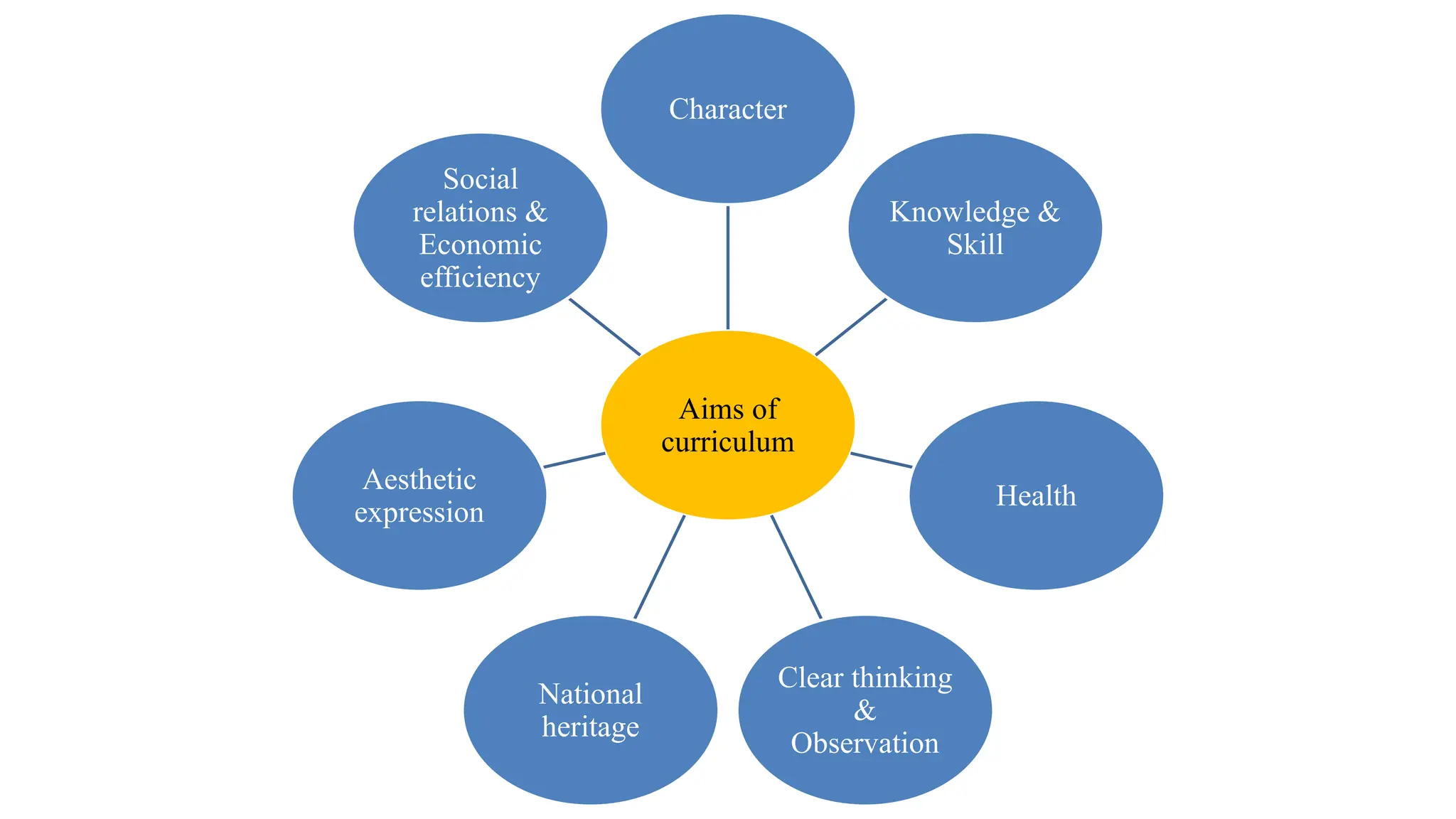
    Aims of curriculum Character Knowledge & Skill Health Clearthinking & Observation National heritage Aesthetic expression Social relations & Economic efficiency
  • 3.
    Bases of curriculum Philosophicalbase Sociological base Psychological base Scientific base
  • 4.
    Areas of human developmentinvolved in curriculum Intellectual domain Emotional domain Social domain Aesthetic developmen t domain Spiritual domain Physical developmen t domain
  • 5.
  • 6.
    Philosophy of nursing education Educational psychology StudentLife activities knowledge Factors influencing curriculum development in nursing education
  • 7.
  • 8.
    ABC of curriculumorganization … Articulation Balance ... Continuity
  • 9.
  • 10.
     Principle oflearner centeredness  Principle of continuity & sequence  Principle of integration  Principle of activity  Principle of community centeredness  Principle of conservation  Principle of national integration  Principle of correlation  Principle of flexibility and elasticity  Principle of social benefit  Study of language  Need for all round development of learner  Principle of creativity  Forward looking principle  Principle of preparation for life Principles of curriculum construction
  • 11.
    Procedural Dimension Substantive dimension Human relations Dimension Environmental Dimension Objectives for education Derivedfrom philosophy of nursing education The educative process Outcomes of the educational process
  • 12.
    Directive stage Formative stage Functionalstage Evaluation stage Stages of curriculum process
  • 13.
    Curriculum development process Philosophyof education Goals & Aims General instructional objectives Specific instructional objectives & outcomes Task analysis and content selection Learning activities
  • 14.
    Types of curriculum Official Operational Illegitimate Hidden orcovert Null Phantom Concomitant Rhetorical Overt, explicit or written Societal
  • 15.
    Step-I Establishment of educational purposes Step-II Selectionof learning experiences Step-III Organization of learning experiences Step-IV Planned, continued evaluation Steps in the development of curriculum
  • 16.
    • Philosophical statementof the institute • Social and health needs of the society • Needs of the students • Resources available in the society • Entry criteria or level of students • Specifications of positions to be held by the students • Minimum requirements in terms of clinical and other prescribed by the statutory bodies • Future trends in nursing • Criteria to be filled to appear international examination Data required for formulating educational objectives
  • 17.
    • Should bestated in terms of desired changes in behavior • Should help in selection of learning experiences and guide teaching activity • Should be attainable and practicable • Should be worthwhile and contribute to the social needs and social changes • Should consider the needs, ability, and level of students • Should be easily understood by the teacher and the student • Should be co-operatively planned by all teachers, by the teacher and student • Each statement should have a single objective • Should not be too detailed • The scheme of evaluation should be included Criteria for the selection & statement of objectives
  • 18.
    1. Identify theneeds of the learners 2. Identify the needs of the society 3. Study the suggestions of the expert 4. Formulate the philosophy 5. State the objectives gathered from various sources 6. Formulate a theory of learning 7. Screen the objectives 8. Define the objectives clearly in terms of content 9. State the educational objectives in terms of behavioral outcomes or change Steps in the formulation of educational objectives
  • 19.
    1. All learningneeds should be in relation to the selected objectives 2. Learning activities should be in relation to real life situations 3. There should be an effective integration between theory and practice 4. Within the possibility for the students 5. The learners should be motivated constantly 6. Relationship between past and present experiences and focus on the future needs 7. Wide variety of teaching & learning methods 8. Students will learn effectively if the experiences are satisfactory to them 9. Learning experience should consider the students ability to undergo the desired changes in behavior 10. Should not be beyond the particular stage of development of the students 11. Should be according to the needs of the students and every student should be given similar learning experiences 12. Should provide same or equal chances for all students Principles to be followed in the selection of learning experiences
  • 20.
    • Have tobe organized that succeeding experiences build upon those which preceded • Learning experience in one area and other areas should be related to each other • Should utilize the allotted time in a cost-effective manner • Broad principles of education has to be applied and emphasized • Provide ample opportunities • Should be neither too flexible nor too rigid • Clinical experience and assignments should be valued on the basis of experiences provided to students Principles to be followed while organizing learning experiences