MISSION
To be the best company to work for whereby
employees are treated as part of a big family
Create a globally recognized ASEAN brand
To attain the lowest cost so that everyone can
fly with Air Asia
Maintain the highest quality
product, embracing technology to reduce cost
and enhance service levels
VISION
To be the largest low cost airline in Asia and
serving the 3 billion people who are currently
underserved with poor connectivity and high
fares.
HISTORY OF AIR ASIA
• Air Asia was established in 1994 and started
the operations on 18 November 1996.
• On 2 December 2001, Air Asia debt is about
USD 11 million (MYR 40 million).
PEST ANALYSIS
Political
Malaysia
• Fares charged by Malaysia government were
the lowest
International
• Airline markets in ASEAN
- India and China
• Political uncertainty in India, Thailand and
Indonesia
Economic
Malaysia
• Gross Domestic Product (GDP) increase
• AirAsia low cost strategies gaining attraction in
the region
• Oil price
International
• H1N1 influenza
• Economic reform “Doi Moi”
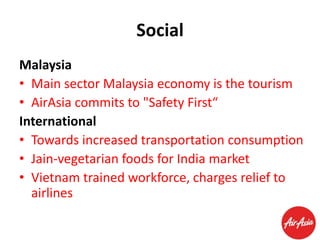
Social
Malaysia
• Main sector Malaysia economy is the tourism
• AirAsia commits to "Safety First“
International
• Towards increased transportation consumption
• Jain-vegetarian foods for India market
• Vietnam trained workforce, charges relief to
airlines
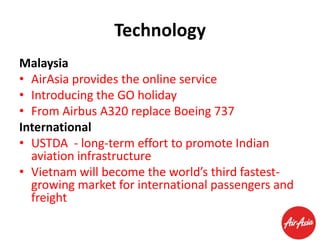
Technology
Malaysia
• AirAsia provides the online service
• Introducing the GO holiday
• From Airbus A320 replace Boeing 737
International
• USTDA - long-term effort to promote Indian
aviation infrastructure
• Vietnam will become the world’s third fastestgrowing market for international passengers and
freight
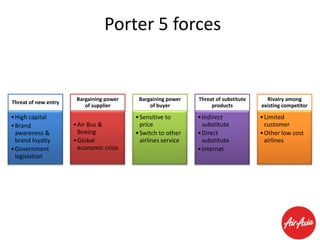
Porter 5 forces

Threat of new entry

• High capital
• Brand
awareness &
brand loyalty
• Government
legislation

Bargaining power
of supplier

• Air Bus &
Boeing
• Global
economic crisis

Bargaining power
of buyer

• Sensitive to
price
• Switch to other
airlines service

Threat of substitute
products

Rivalry among
existing competitor

• Indirect
substitute
• Direct
substitute
• Internet

• Limited
customer
• Other low cost
airlines
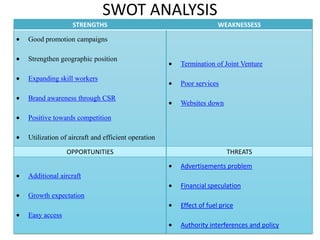
SWOT ANALYSIS
STRENGTHS

WEAKNESSESS

Good promotion campaigns
Strengthen geographic position
Expanding skill workers
Brand awareness through CSR

Termination of Joint Venture

Poor services
Websites down

Positive towards competition

Utilization of aircraft and efficient operation
OPPORTUNITIES

THREATS

Advertisements problem
Additional aircraft
Financial speculation
Growth expectation
Effect of fuel price
Easy access
Authority interferences and policy
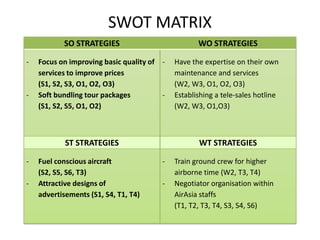
SWOT MATRIX
SO STRATEGIES
-

-

WO STRATEGIES

Focus on improving basic quality of services to improve prices
(S1, S2, S3, O1, O2, O3)
Soft bundling tour packages
(S1, S2, S5, O1, O2)

ST STRATEGIES
-

Fuel conscious aircraft
(S2, S5, S6, T3)
Attractive designs of
advertisements (S1, S4, T1, T4)

Have the expertise on their own
maintenance and services
(W2, W3, O1, O2, O3)
Establishing a tele-sales hotline
(W2, W3, O1,O3)

WT STRATEGIES
-

Train ground crew for higher
airborne time (W2, T3, T4)
Negotiator organisation within
AirAsia staffs
(T1, T2, T3, T4, S3, S4, S6)
SPACE ANALYSIS
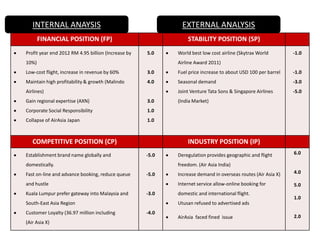
INTERNAL ANAYSIS

EXTERNAL ANALYSIS

FINANCIAL POSITION (FP)
Profit year end 2012 RM 4.95 billion (Increase by

STABILITY POSITION (SP)
5.0

10%)

World best low cost airline (Skytrax World

-1.0

Airline Award 2011)

Low-cost flight, increase in revenue by 60%

3.0

Fuel price increase to about USD 100 per barrel

-1.0

Maintain high profitability & growth (Malindo

4.0

Seasonal demand

-3.0

Joint Venture Tata Sons & Singapore Airlines

-5.0

Airlines)
Gain regional expertise (AXN)

3.0

Corporate Social Responsibility

1.0

Collapse of AirAsia Japan

1.0

COMPETITIVE POSITION (CP)
Establishment brand name globally and

INDUSTRY POSITION (IP)
-5.0

domestically.
Fast on-line and advance booking, reduce queue

(Air Asia X)

6.0

-3.0

Increase demand in overseas routes (Air Asia X)

4.0

Internet service allow-online booking for

-5.0

South-East Asia Region
Customer Loyalty (36.97 million including

Deregulation provides geographic and flight
freedom. (Air Asia India)

and hustle
Kuala Lumpur prefer gateway into Malaysia and

(India Market)

5.0

domestic and international flight.

1.0

Utusan refused to advertised ads
-4.0

AirAsia faced fined issue

2.0
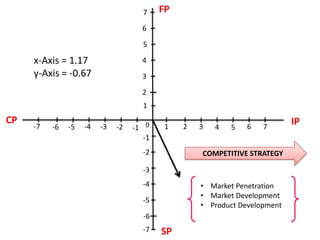
SPACE MATRIX
7

FP

6
5

x-Axis = 1.17
y-Axis = -0.67

4
3
2
1

CP

-7

-6

-5

-4

-3

-2

-1 0
-1

1

-2

2

3

4

5

6

7

COMPETITIVE STRATEGY

-3
-4

• Market Penetration
• Market Development
• Product Development

-5
-6
-7

SP

IP
RECOMMENDATION
• Improve local responsiveness
- Flight and routes ( avoiding flight delayed)
• Improve on advertisement
- Guerilla marketing and promotion
• Giving extra luggage allowance
- High utilization of aircraft
- Give convenience to passengers
• Expand business sponsorship
- Next summer Olympic 2016( Rio de
Janeiro,Brazil): to increase the income, expose and
maintain the brand in future.
AirAsia Strategic Management

AirAsia Strategic Management

  • 2.
    MISSION To be thebest company to work for whereby employees are treated as part of a big family Create a globally recognized ASEAN brand To attain the lowest cost so that everyone can fly with Air Asia Maintain the highest quality product, embracing technology to reduce cost and enhance service levels
  • 3.
    VISION To be thelargest low cost airline in Asia and serving the 3 billion people who are currently underserved with poor connectivity and high fares.
  • 4.
    HISTORY OF AIRASIA • Air Asia was established in 1994 and started the operations on 18 November 1996. • On 2 December 2001, Air Asia debt is about USD 11 million (MYR 40 million).
  • 5.
  • 6.
    Political Malaysia • Fares chargedby Malaysia government were the lowest International • Airline markets in ASEAN - India and China • Political uncertainty in India, Thailand and Indonesia
  • 7.
    Economic Malaysia • Gross DomesticProduct (GDP) increase • AirAsia low cost strategies gaining attraction in the region • Oil price International • H1N1 influenza • Economic reform “Doi Moi”
  • 8.
    Social Malaysia • Main sectorMalaysia economy is the tourism • AirAsia commits to "Safety First“ International • Towards increased transportation consumption • Jain-vegetarian foods for India market • Vietnam trained workforce, charges relief to airlines
  • 9.
    Technology Malaysia • AirAsia providesthe online service • Introducing the GO holiday • From Airbus A320 replace Boeing 737 International • USTDA - long-term effort to promote Indian aviation infrastructure • Vietnam will become the world’s third fastestgrowing market for international passengers and freight
  • 10.
    Porter 5 forces Threatof new entry • High capital • Brand awareness & brand loyalty • Government legislation Bargaining power of supplier • Air Bus & Boeing • Global economic crisis Bargaining power of buyer • Sensitive to price • Switch to other airlines service Threat of substitute products Rivalry among existing competitor • Indirect substitute • Direct substitute • Internet • Limited customer • Other low cost airlines
  • 11.
    SWOT ANALYSIS STRENGTHS WEAKNESSESS Good promotioncampaigns Strengthen geographic position Expanding skill workers Brand awareness through CSR Termination of Joint Venture Poor services Websites down Positive towards competition Utilization of aircraft and efficient operation OPPORTUNITIES THREATS Advertisements problem Additional aircraft Financial speculation Growth expectation Effect of fuel price Easy access Authority interferences and policy
  • 12.
    SWOT MATRIX SO STRATEGIES - - WOSTRATEGIES Focus on improving basic quality of services to improve prices (S1, S2, S3, O1, O2, O3) Soft bundling tour packages (S1, S2, S5, O1, O2) ST STRATEGIES - Fuel conscious aircraft (S2, S5, S6, T3) Attractive designs of advertisements (S1, S4, T1, T4) Have the expertise on their own maintenance and services (W2, W3, O1, O2, O3) Establishing a tele-sales hotline (W2, W3, O1,O3) WT STRATEGIES - Train ground crew for higher airborne time (W2, T3, T4) Negotiator organisation within AirAsia staffs (T1, T2, T3, T4, S3, S4, S6)
  • 13.
  • 14.
    INTERNAL ANAYSIS EXTERNAL ANALYSIS FINANCIALPOSITION (FP) Profit year end 2012 RM 4.95 billion (Increase by STABILITY POSITION (SP) 5.0 10%) World best low cost airline (Skytrax World -1.0 Airline Award 2011) Low-cost flight, increase in revenue by 60% 3.0 Fuel price increase to about USD 100 per barrel -1.0 Maintain high profitability & growth (Malindo 4.0 Seasonal demand -3.0 Joint Venture Tata Sons & Singapore Airlines -5.0 Airlines) Gain regional expertise (AXN) 3.0 Corporate Social Responsibility 1.0 Collapse of AirAsia Japan 1.0 COMPETITIVE POSITION (CP) Establishment brand name globally and INDUSTRY POSITION (IP) -5.0 domestically. Fast on-line and advance booking, reduce queue (Air Asia X) 6.0 -3.0 Increase demand in overseas routes (Air Asia X) 4.0 Internet service allow-online booking for -5.0 South-East Asia Region Customer Loyalty (36.97 million including Deregulation provides geographic and flight freedom. (Air Asia India) and hustle Kuala Lumpur prefer gateway into Malaysia and (India Market) 5.0 domestic and international flight. 1.0 Utusan refused to advertised ads -4.0 AirAsia faced fined issue 2.0
  • 15.
  • 16.
    7 FP 6 5 x-Axis = 1.17 y-Axis= -0.67 4 3 2 1 CP -7 -6 -5 -4 -3 -2 -1 0 -1 1 -2 2 3 4 5 6 7 COMPETITIVE STRATEGY -3 -4 • Market Penetration • Market Development • Product Development -5 -6 -7 SP IP
  • 17.
    RECOMMENDATION • Improve localresponsiveness - Flight and routes ( avoiding flight delayed) • Improve on advertisement - Guerilla marketing and promotion • Giving extra luggage allowance - High utilization of aircraft - Give convenience to passengers • Expand business sponsorship - Next summer Olympic 2016( Rio de Janeiro,Brazil): to increase the income, expose and maintain the brand in future.