Download to read offline


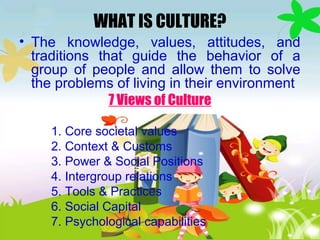
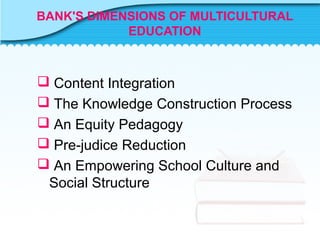
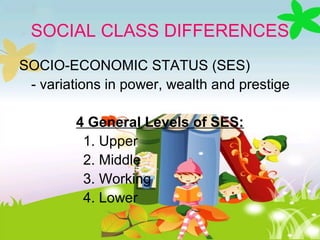
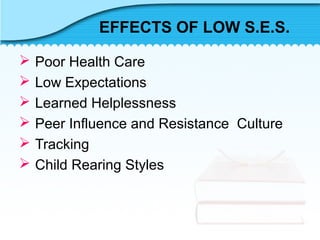
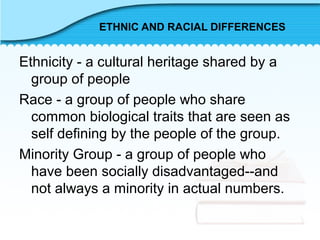
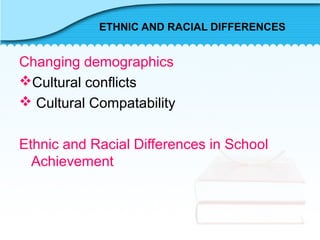

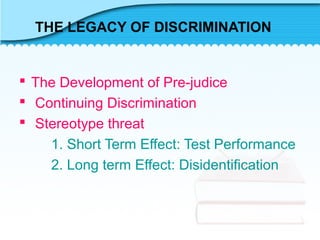


Culture is defined as the knowledge, values, attitudes, and traditions that guide group behavior and allow people to solve problems. Multicultural education rejects the idea of assimilation and teaches the value of diversity through curriculum changes and an empowering school environment. Social class differences like socioeconomic status affect student outcomes through factors like health, expectations, and parenting styles. Ethnic and racial minorities face challenges from cultural conflicts, discrimination, and stereotypes that can impact achievement and identity formation. Schools aim to overcome these challenges through family/community partnerships, communication, volunteering opportunities, and decision-making roles for all stakeholders.


![1 b%20lecture%20 %20lecture%201[1]](https://cdn.slidesharecdn.com/ss_thumbnails/1b20lecture20-20lecture2011-130605084520-phpapp01-thumbnail.jpg?width=640&height=640&fit=bounds)


