Cuba
Cuba’s Location an island 90 miles south of Florida, in the Caribbean Sea 700 miles long largest island in the West Indies location on ocean trading routes has been an important influence on its history and economy
Cuba’s Climate tropical but moderated by trade winds It’s warm to hot all year long, but the winds provide relief from the heat rainy season from May to October and a dry season from November to April target for hurricanes Hurricane season runs from June to November.
Cuba’s Natural Resources 28% of Cuba’s land is arable most important export: sugar cane other exports include: coffee, fish, fruits, & tobacco Tourism is a fast-growing industry.
 
Communism in Cuba The Communist government of the Soviet Union helped support Cuba for many years. When it collapsed in 1991, Cuba faced difficult times. Trade from other countries does not bring in enough money to meet needs of Cuba’s people. Government sometimes orders businesses & factories to close. Also orders  blackouts —times when all electricity is cut off in order to save electricity.
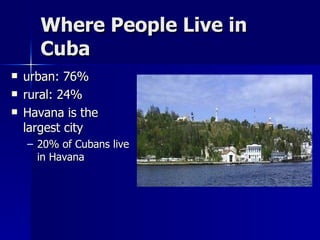
Where People Live in Cuba urban: 76% rural: 24% Havana is the largest city 20% of Cubans live in Havana
Cuba’s Trade 3 major seaports exports: sugar, nickel, tobacco, fish, medical products, citrus, coffee yourism  Venezuela is Cuba’s largest trading partner; it sells oil to Cuba at a reduced price.

Cuba

  • 1.
  • 2.
    Cuba’s Location anisland 90 miles south of Florida, in the Caribbean Sea 700 miles long largest island in the West Indies location on ocean trading routes has been an important influence on its history and economy
  • 3.
    Cuba’s Climate tropicalbut moderated by trade winds It’s warm to hot all year long, but the winds provide relief from the heat rainy season from May to October and a dry season from November to April target for hurricanes Hurricane season runs from June to November.
  • 4.
    Cuba’s Climate tropicalbut moderated by trade winds It’s warm to hot all year long, but the winds provide relief from the heat rainy season from May to October and a dry season from November to April target for hurricanes Hurricane season runs from June to November.
  • 5.
    Cuba’s Natural Resources28% of Cuba’s land is arable most important export: sugar cane other exports include: coffee, fish, fruits, & tobacco Tourism is a fast-growing industry.
  • 6.
  • 7.
    Communism in CubaThe Communist government of the Soviet Union helped support Cuba for many years. When it collapsed in 1991, Cuba faced difficult times. Trade from other countries does not bring in enough money to meet needs of Cuba’s people. Government sometimes orders businesses & factories to close. Also orders blackouts —times when all electricity is cut off in order to save electricity.
  • 8.
    Where People Livein Cuba urban: 76% rural: 24% Havana is the largest city 20% of Cubans live in Havana
  • 9.
    Cuba’s Trade 3major seaports exports: sugar, nickel, tobacco, fish, medical products, citrus, coffee yourism Venezuela is Cuba’s largest trading partner; it sells oil to Cuba at a reduced price.