Shaun Butler Commodity Procurement &  Logistics / Supply Chain Expert
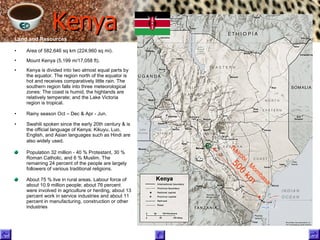
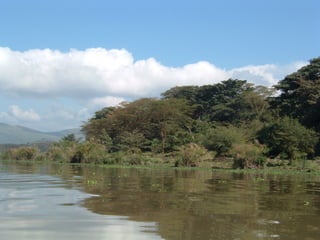
Kenya Land and Resources  Area of 582,646 sq km (224,960 sq mi).  Mount Kenya (5,199 m/17,058 ft).   Kenya is divided into two almost equal parts by the equator. The region north of the equator is hot and receives comparatively little rain. The southern region falls into three meteorological zones: The coast is humid, the highlands are relatively temperate; and the Lake Victoria region is tropical.  Rainy season Oct – Dec & Apr - Jun. Swahili spoken since the early 20th century & is the official language of Kenya; Kikuyu, Luo, English, and Asian languages such as Hindi are also widely used.   Population 32 million - 40 % Protestant, 30 % Roman Catholic, and 6 % Muslim. The remaining 24 percent of the people are largely followers of various traditional religions. About 75 % live in rural areas. Labour force of about 10.9 million people; about 76 percent were involved in agriculture or herding, about 13 percent work in service industries and about 11 percent in manufacturing, construction or other industries Nairobi - Mombasa 500 km
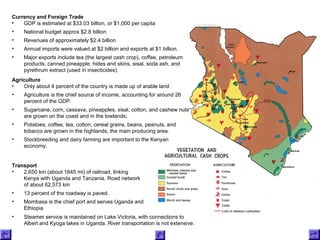
Agriculture  Only about 4 percent of the country is made up of arable land Agriculture is the chief source of income, accounting for around 26 percent of the GDP.  Sugarcane, corn, cassava, pineapples, sisal, cotton, and cashew nuts are grown on the coast and in the lowlands;  Potatoes, coffee, tea, cotton, cereal grains, beans, peanuts, and tobacco are grown in the highlands, the main producing area. Stockbreeding and dairy farming are important to the Kenyan economy. Currency and Foreign Trade  GDP is estimated at $33.03 billion, or $1,000 per capita National budget approx $2.8 billion  Revenues of approximately $2.4 billion Annual imports were valued at $2 billion and exports at $1 billion.  Major exports include tea (the largest cash crop), coffee, petroleum products, canned pineapple, hides and skins, sisal, soda ash, and pyrethrum extract (used in insecticides).  Transport   2,650 km (about 1645 mi) of railroad, linking Kenya with Uganda and Tanzania. Road network of about 62,573 km 13 percent of the roadway is paved.  Mombasa is the chief port and serves Uganda and Ethiopia Steamer service is maintained on Lake Victoria, with connections to Albert and Kyoga lakes in Uganda. River transportation is not extensive.
 
 
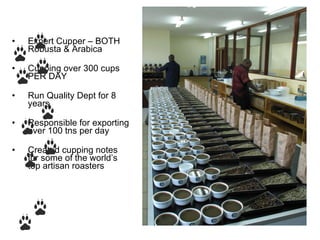
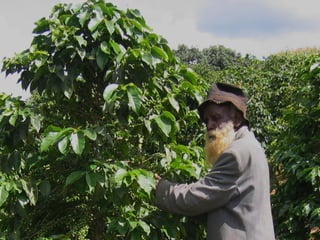
Expert Cupper – BOTH Robusta & Arabica Cupping over 300 cups PER DAY Run Quality Dept for 8 years Responsible for exporting over 100 tns per day Created cupping notes for some of the world’s top artisan roasters


Shaun Butler

  • 1.
    Shaun Butler CommodityProcurement & Logistics / Supply Chain Expert
  • 2.
    Kenya Land andResources Area of 582,646 sq km (224,960 sq mi). Mount Kenya (5,199 m/17,058 ft). Kenya is divided into two almost equal parts by the equator. The region north of the equator is hot and receives comparatively little rain. The southern region falls into three meteorological zones: The coast is humid, the highlands are relatively temperate; and the Lake Victoria region is tropical. Rainy season Oct – Dec & Apr - Jun. Swahili spoken since the early 20th century & is the official language of Kenya; Kikuyu, Luo, English, and Asian languages such as Hindi are also widely used. Population 32 million - 40 % Protestant, 30 % Roman Catholic, and 6 % Muslim. The remaining 24 percent of the people are largely followers of various traditional religions. About 75 % live in rural areas. Labour force of about 10.9 million people; about 76 percent were involved in agriculture or herding, about 13 percent work in service industries and about 11 percent in manufacturing, construction or other industries Nairobi - Mombasa 500 km
  • 3.
    Agriculture Onlyabout 4 percent of the country is made up of arable land Agriculture is the chief source of income, accounting for around 26 percent of the GDP. Sugarcane, corn, cassava, pineapples, sisal, cotton, and cashew nuts are grown on the coast and in the lowlands; Potatoes, coffee, tea, cotton, cereal grains, beans, peanuts, and tobacco are grown in the highlands, the main producing area. Stockbreeding and dairy farming are important to the Kenyan economy. Currency and Foreign Trade GDP is estimated at $33.03 billion, or $1,000 per capita National budget approx $2.8 billion Revenues of approximately $2.4 billion Annual imports were valued at $2 billion and exports at $1 billion. Major exports include tea (the largest cash crop), coffee, petroleum products, canned pineapple, hides and skins, sisal, soda ash, and pyrethrum extract (used in insecticides). Transport 2,650 km (about 1645 mi) of railroad, linking Kenya with Uganda and Tanzania. Road network of about 62,573 km 13 percent of the roadway is paved. Mombasa is the chief port and serves Uganda and Ethiopia Steamer service is maintained on Lake Victoria, with connections to Albert and Kyoga lakes in Uganda. River transportation is not extensive.
  • 4.
  • 5.
  • 6.
    Expert Cupper –BOTH Robusta & Arabica Cupping over 300 cups PER DAY Run Quality Dept for 8 years Responsible for exporting over 100 tns per day Created cupping notes for some of the world’s top artisan roasters
  • 7.
  • 8.
  • 9.
  • 10.
  • 11.
  • 12.
  • 13.