Digital Writing, the
CCSS and English
Language Learners:
Voice and Relevance
Matter
Janet Ilko Cajon Valley Middle School ELL Writing
Teacher
San Diego Area Writing Project Fellow
Student Choice Inspires
Voice
Passions to Words, Sharing Our
Stories
 “You don’t have to be the
  star, you can be the light
  shining on them.”

 RawandaIbrahem Writing
  for Change student

 Cajon Valley Middle School
  Grade 6
Welcome to CVMS!
Expect More, Achieve
More!
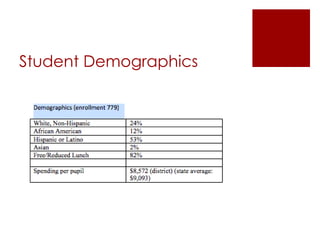
Student Demographics
The San Diego Area Writing
Project/ NWP
Building Language: Stanford
Graduate School of Education
The Understanding Language           Instruction focuses on
  District Engagement                 providing ELLs with
  subcommittee has released a         opportunities to engage in
  set of Six Key Principles to        discipline specific practices
  support ELL’s in meeting the        which are designed to build
  rigorous, grade level               conceptual understanding
  academic standards found in         and language competence
  the Common Core                     in tandem.
  Standards.
                                     Instruction leverages ELL’s
Blogging directly supports three      home language, cultural
  of those standards.                 assets and prior knowledge.

Ell.stanford.edu/content/six-key-    Standards aligned instruction
   principals-ell-instruction         for ELLs is rigorous, grade-level
                                      appropriate and provides
January 11, 2013                      deliberate and appropriate
                                      scaffolds.
Why Blog?
Student blogging is not just a short
term project, it’s become a forum
where students can share their
ideas and write for a real purpose.

The beauty of blogging is the
revision process becomes
seamlessly part of writing. Once
you push submit, there is an
instantaneous audience. That
realization that you will be read,
and that your words matter
create a sense of urgency and
need to clarify and justify the
posts.
Two Blogging Formats
Standards for the Lesson
 NETS for Students

 2. Communications and Collaboration

 Students use digital media and environments to
  communicate and work

 collaboratively, including at a distance, to support
  individual learning and

 Contribute to the learning of others. a. Interact,
  collaborate, and publish

 with peers, experts, or others employing a variety of digital
  environments

 and media
NETS Standards for Lesson
 5. Digital Citizenship

 Students understand human, cultural, and societal issues related to

 technology and practice legal and ethical behavior. Students:

 a. Advocate safe. Legal, and responsible use of information and
  technology.

 b. Exhibit a positive attitude toward using technology that supports

 collaboration, learning, and productivity.

 c. Demonstrate personal responsibility for lifelong learning.

 d. Exhibit leadership for digital citizenship.
Writing Standards
 7th and 8th Grade CCSS Writing Standards
 2 Write informative/explanatory texts to examine a
  topic and convey ideas, concepts, and information
  through the selection, organization and analysis of
  relevant content.
 4.Produce clear and coherent writing in which the
  development, organization, and style are
  appropriate to task, purpose, and audience.
 5.With some guidance and support from peers and
  adults, develop and strengthen writing as needed
  by planning, revising, editing, re-writing, or trying a
  new approach, focusing on how well purpose and
  audience have been addressed.
Writing Standards
 7th and 8th Grade CCSS Writing Standards

 6.Use technology, including the Internet, to produce and
  publish writing and link to and cite sources as well as to
  interact and collaborate with others, Including linking to
  and citing sources.

 7, Conduct short research projects to answer a question,
  drawing on several sources and generating additional
  related focused questions for further research and
  investigation.

 8. Gather relevant information form multiple print and
  digital sources, using search terms effectively, assess the
  credibility and accuracy of each source, and quote or
  paraphrase the data and conclusions of others while
  avoiding plagiarism and following a standard format for
  citation.
Lesson Objective
 By the end of today’s lesson we will:

 synthesize information from an article using the
  They Say, I Say, and So strategy to write
  informative text conveying information about the
  article.
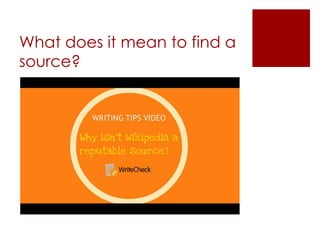
What does it mean to find a
source?
What is They Say, I Say, and
So?
.   Question   They Say   I Say       So…
     Why do     People     I blog to   One reason
     people     blog to    inform      to blog is to
     blog?      teach      people      teach
                people     about our   people
                           work.       things you
                                       know.
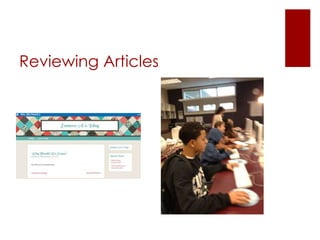
Reviewing Articles
Your Turn: They Say, I Say,
and So?
.   Question?     They Say   I Say   So…
     What are
     the key
     principals of
     EL
     Instruction?
Why Do My Students Blog? What
have they learned?
  Using Edmodo to
     collaborate    Working on Kidblog site
Sources
 Here are some additional sites to view our work:
 www.writingforchange.net a site where we display
  student work from the Writing for Change program
  and the San Diego Area Writing Project
 www.sandiegokidswrite.com our class blog
 www.writinginmyhand.org my personal blog where I
  document the work in our classroom.
 http://digitalis.nwp.org/resource/4670
 Journey to Digital Learning Day, a resource about
  our blog work and travel to Washington D.C. for the
  Second Annual Digital Learning Day
Sources That Support The
Work

 Digital Learning Day Links:

 https://vimeo.com/58016014 The introduction to the
  blogging lesson

 http://www.digitallearningday.org/learn-and-
  explore/lesson-portals/

 A lesson on academic commenting

 http://www.digitallearningday.org/learn-and-
  explore/exemplary-models/

 Exemplary Models Cajon Valley Union School District,
  Cajon Valley Middle School
Sources That Support The
Work

 Sites to Use With Your Students To Start
  Blogging/Interacting with your students

 www.edmodo.com

 www.kidblog.org

 www.edublog.com

 www.voki.com
Sources That Support The
Work
 Sites Used as Inspiration for this lesson/unit

 http://langwitches.org/blog/2008/12/25/blogging-lesson-plan-commenting/

 http://grammar.quickanddirtytips.com/how-to-write-a-blog-comment.aspx

 http://www.educationworld.com/a_lesson/better-blog-writing.shtml

 http://moblogsmoproblems.blogspot.com/2009/05/how-to-write-great-
  blogcomments.

 http://biancasblog.global2.vic.edu.au/2011/08/26/etiquette/

 http://www.readwritethink.org/professional-development/strategyguides/

 teaching-with-blogs-30108.html

 http://www.notesfrommcteach.com/2010/09/learning-to-blog-usingpaper.

Csmp eld institute presentation

  • 1.
    Digital Writing, the CCSSand English Language Learners: Voice and Relevance Matter Janet Ilko Cajon Valley Middle School ELL Writing Teacher San Diego Area Writing Project Fellow
  • 2.
  • 3.
    Passions to Words,Sharing Our Stories  “You don’t have to be the star, you can be the light shining on them.”  RawandaIbrahem Writing for Change student  Cajon Valley Middle School Grade 6
  • 4.
    Welcome to CVMS! ExpectMore, Achieve More!
  • 5.
  • 6.
    The San DiegoArea Writing Project/ NWP
  • 7.
    Building Language: Stanford GraduateSchool of Education The Understanding Language  Instruction focuses on District Engagement providing ELLs with subcommittee has released a opportunities to engage in set of Six Key Principles to discipline specific practices support ELL’s in meeting the which are designed to build rigorous, grade level conceptual understanding academic standards found in and language competence the Common Core in tandem. Standards.  Instruction leverages ELL’s Blogging directly supports three home language, cultural of those standards. assets and prior knowledge. Ell.stanford.edu/content/six-key-  Standards aligned instruction principals-ell-instruction for ELLs is rigorous, grade-level appropriate and provides January 11, 2013 deliberate and appropriate scaffolds.
  • 8.
    Why Blog? Student bloggingis not just a short term project, it’s become a forum where students can share their ideas and write for a real purpose. The beauty of blogging is the revision process becomes seamlessly part of writing. Once you push submit, there is an instantaneous audience. That realization that you will be read, and that your words matter create a sense of urgency and need to clarify and justify the posts.
  • 10.
  • 11.
    Standards for theLesson  NETS for Students  2. Communications and Collaboration  Students use digital media and environments to communicate and work  collaboratively, including at a distance, to support individual learning and  Contribute to the learning of others. a. Interact, collaborate, and publish  with peers, experts, or others employing a variety of digital environments  and media
  • 12.
    NETS Standards forLesson  5. Digital Citizenship  Students understand human, cultural, and societal issues related to  technology and practice legal and ethical behavior. Students:  a. Advocate safe. Legal, and responsible use of information and technology.  b. Exhibit a positive attitude toward using technology that supports  collaboration, learning, and productivity.  c. Demonstrate personal responsibility for lifelong learning.  d. Exhibit leadership for digital citizenship.
  • 13.
    Writing Standards  7thand 8th Grade CCSS Writing Standards  2 Write informative/explanatory texts to examine a topic and convey ideas, concepts, and information through the selection, organization and analysis of relevant content.  4.Produce clear and coherent writing in which the development, organization, and style are appropriate to task, purpose, and audience.  5.With some guidance and support from peers and adults, develop and strengthen writing as needed by planning, revising, editing, re-writing, or trying a new approach, focusing on how well purpose and audience have been addressed.
  • 14.
    Writing Standards  7thand 8th Grade CCSS Writing Standards  6.Use technology, including the Internet, to produce and publish writing and link to and cite sources as well as to interact and collaborate with others, Including linking to and citing sources.  7, Conduct short research projects to answer a question, drawing on several sources and generating additional related focused questions for further research and investigation.  8. Gather relevant information form multiple print and digital sources, using search terms effectively, assess the credibility and accuracy of each source, and quote or paraphrase the data and conclusions of others while avoiding plagiarism and following a standard format for citation.
  • 15.
    Lesson Objective  Bythe end of today’s lesson we will:  synthesize information from an article using the They Say, I Say, and So strategy to write informative text conveying information about the article.
  • 16.
    What does itmean to find a source?
  • 17.
    What is TheySay, I Say, and So? . Question They Say I Say So… Why do People I blog to One reason people blog to inform to blog is to blog? teach people teach people about our people work. things you know.
  • 18.
  • 19.
    Your Turn: TheySay, I Say, and So? . Question? They Say I Say So… What are the key principals of EL Instruction?
  • 20.
    Why Do MyStudents Blog? What have they learned? Using Edmodo to collaborate Working on Kidblog site
  • 21.
    Sources  Here aresome additional sites to view our work:  www.writingforchange.net a site where we display student work from the Writing for Change program and the San Diego Area Writing Project  www.sandiegokidswrite.com our class blog  www.writinginmyhand.org my personal blog where I document the work in our classroom.  http://digitalis.nwp.org/resource/4670  Journey to Digital Learning Day, a resource about our blog work and travel to Washington D.C. for the Second Annual Digital Learning Day
  • 22.
    Sources That SupportThe Work  Digital Learning Day Links:  https://vimeo.com/58016014 The introduction to the blogging lesson  http://www.digitallearningday.org/learn-and- explore/lesson-portals/  A lesson on academic commenting  http://www.digitallearningday.org/learn-and- explore/exemplary-models/  Exemplary Models Cajon Valley Union School District, Cajon Valley Middle School
  • 23.
    Sources That SupportThe Work  Sites to Use With Your Students To Start Blogging/Interacting with your students  www.edmodo.com  www.kidblog.org  www.edublog.com  www.voki.com
  • 24.
    Sources That SupportThe Work  Sites Used as Inspiration for this lesson/unit  http://langwitches.org/blog/2008/12/25/blogging-lesson-plan-commenting/  http://grammar.quickanddirtytips.com/how-to-write-a-blog-comment.aspx  http://www.educationworld.com/a_lesson/better-blog-writing.shtml  http://moblogsmoproblems.blogspot.com/2009/05/how-to-write-great- blogcomments.  http://biancasblog.global2.vic.edu.au/2011/08/26/etiquette/  http://www.readwritethink.org/professional-development/strategyguides/  teaching-with-blogs-30108.html  http://www.notesfrommcteach.com/2010/09/learning-to-blog-usingpaper.