WELCOME TO
OUR
PRESENTATIO
Presentation On Climate
Smart Livestock Production
PRESENTED BY –
 JD-01 Afrin Jahan Rani
 JJ-01 Mahbuba Kaniz
 JJ-07 Afroza Akter
 JJ-Bishwjit Basak Palash
 JJ-13 Rupok Chandra Dash
INTRODUCTION
The FAO has defined- as one that-
 Sustainably increasing productivity
 Enhancing adaptation
 Removing greenhouse gases
 Enhancing achievement of national food
security and development goals.
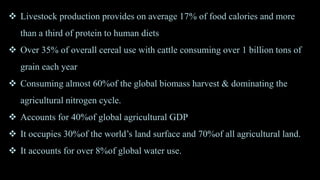
 Livestock production provides on average 17% of food calories and more
than a third of protein to human diets
 Over 35% of overall cereal use with cattle consuming over 1 billion tons of
grain each year
 Consuming almost 60%of the global biomass harvest & dominating the
agricultural nitrogen cycle.
 Accounts for 40%of global agricultural GDP
 It occupies 30%of the world’s land surface and 70%of all agricultural land.
 It accounts for over 8%of global water use.
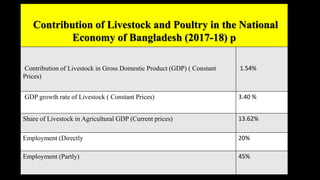
Contribution of Livestock and Poultry in the National
Economy of Bangladesh (2017-18) p
Contribution of Livestock in Gross Domestic Product (GDP) ( Constant
Prices)
1.54%
GDP growth rate of Livestock ( Constant Prices) 3.40 %
Share of Livestock in Agricultural GDP (Current prices) 13.62%
Employment (Directly 20%
Employment (Partly) 45%
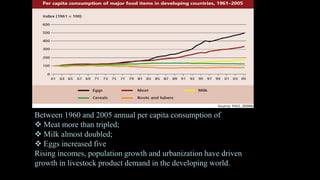
Between 1960 and 2005 annual per capita consumption of
 Meat more than tripled;
 Milk almost doubled;
 Eggs increased five
Rising incomes, population growth and urbanization have driven
growth in livestock product demand in the developing world.
OVERVIEW
OF
EMISSIONS
It has been estimated that livestock production
contributes about 12%–18% of all anthropogenic
greenhouse gas (GHG) emissions.
5%of anthropogenic CO2 emissions;
44%of anthropogenic methane emissions; and
53%of anthropogenic nitrous oxide emissions.
Sources of emissions include:
Direct sources such as
 Enteric fermentation by ruminants (39% of emissions) and
 Manure (26%)
Indirect sources such as
The production, processing and transport of animal feed
(which accounts for 45%of sector emissions).
Since 1860
CO2 concentration in atmosphere has increased by
24%.
 CH4 concentration in atmosphere has doubled.
 Mean global temperature has increased by 2 0F.
10 hottest years on record have occurred since 1980.
Evidence for Global Warming
The impact of climate
change on livestock
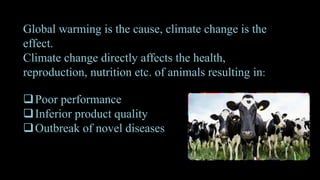
Global warming is the cause, climate change is the
effect.
Climate change directly affects the health,
reproduction, nutrition etc. of animals resulting in:
Poor performance
Inferior product quality
Outbreak of novel diseases
IMPACT ON ENERGY BALANCE AND
METABOLISM
Negative energy balance-
Increased level of circulating insulin.
20-30%more maintenance energy requirement .
Decreased nutrient absorption.
Reduction in blood glucose levels.
IMPACTS ON MILK PRODUCTION
Reduction in milk production.
 35%due to decreased feed intake .
 65%due to direct effect of thermal stress.
 Quantity of milk protein and solid not fat (SNF)
reduces.
1.8 million tonnes total milk production in India
decreases due to global warming impact, accounting to
a whopping Rs. 2661.62 crores per year
IMPACTS ON ANIMAL HEALTH
 Simple physiological disturbances, organ dysfunction o
even death.
 Cardiovascular disturbances.
 Reduced disease resistance of the animals.
 Reduced liver function and oxidative stress.
 Negative energy balance which compromise health.
 Nutrient absorption from GIT decreases.
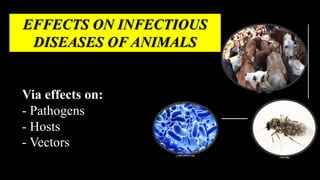
EFFECTS ON INFECTIOUS
DISEASES OF ANIMALS
Via effects on:
- Pathogens
- Hosts
- Vectors
SOLUTION
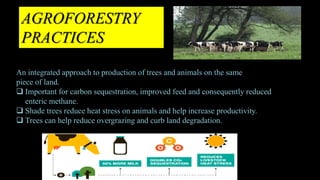
An integrated approach to production of trees and animals on the same
piece of land.
 Important for carbon sequestration, improved feed and consequently reduced
enteric methane.
 Shade trees reduce heat stress on animals and help increase productivity.
 Trees can help reduce overgrazing and curb land degradation.
AGROFORESTRY
PRACTICES
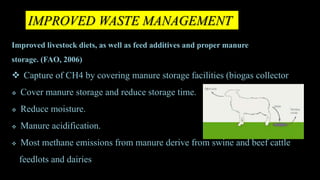
IMPROVED WASTE MANAGEMENT
Improved livestock diets, as well as feed additives and proper manure
storage. (FAO, 2006)
 Capture of CH4 by covering manure storage facilities (biogas collector
 Cover manure storage and reduce storage time.
 Reduce moisture.
 Manure acidification.
 Most methane emissions from manure derive from swine and beef cattle
feedlots and dairies
MITIGATION THROUGH BIOTECHNOLOGIES
Immunization and biological control:
Vaccines against methanogens in the rumen
Vaccine would stimulate the ruminant’s immune system to produce
antibodies against methane-producing methanogens.
The highly diverse methanogen community and replacement of the
ecological niche left by the targeted species by another
methanogens might account for immunization failures.
PLANT SECONDARY METABOLITES
 Tannins: Direct or indirect effect on hydrogen production due to lower feed
degradation .
 Condensed tannin reduced CH4 production in small ruminants by up to 30%
without altering digestibility
 Saponin-containing plants is a possible means of suppressing or eliminating
protozoa in the rumen without inhibiting bacterial activity
 Tea saponin decreased methanogenesis (8%) as well as the protozoal
abundance (50%).
 Garlic oil and some of its components decreased CH4 production
CONCLUSION
 Livestock contribution to environmental problems is on a
massive scale and its potential contribution to their solution is
equally large.
 The impact is so significant that it needs to be addressed with
urgency.
THANK YOU

Cslp pre

  • 1.
  • 2.
    Presentation On Climate SmartLivestock Production PRESENTED BY –  JD-01 Afrin Jahan Rani  JJ-01 Mahbuba Kaniz  JJ-07 Afroza Akter  JJ-Bishwjit Basak Palash  JJ-13 Rupok Chandra Dash
  • 3.
  • 4.
    The FAO hasdefined- as one that-  Sustainably increasing productivity  Enhancing adaptation  Removing greenhouse gases  Enhancing achievement of national food security and development goals.
  • 5.
     Livestock productionprovides on average 17% of food calories and more than a third of protein to human diets  Over 35% of overall cereal use with cattle consuming over 1 billion tons of grain each year  Consuming almost 60%of the global biomass harvest & dominating the agricultural nitrogen cycle.  Accounts for 40%of global agricultural GDP  It occupies 30%of the world’s land surface and 70%of all agricultural land.  It accounts for over 8%of global water use.
  • 6.
    Contribution of Livestockand Poultry in the National Economy of Bangladesh (2017-18) p Contribution of Livestock in Gross Domestic Product (GDP) ( Constant Prices) 1.54% GDP growth rate of Livestock ( Constant Prices) 3.40 % Share of Livestock in Agricultural GDP (Current prices) 13.62% Employment (Directly 20% Employment (Partly) 45%
  • 7.
    Between 1960 and2005 annual per capita consumption of  Meat more than tripled;  Milk almost doubled;  Eggs increased five Rising incomes, population growth and urbanization have driven growth in livestock product demand in the developing world.
  • 8.
  • 9.
    It has beenestimated that livestock production contributes about 12%–18% of all anthropogenic greenhouse gas (GHG) emissions. 5%of anthropogenic CO2 emissions; 44%of anthropogenic methane emissions; and 53%of anthropogenic nitrous oxide emissions.
  • 10.
    Sources of emissionsinclude: Direct sources such as  Enteric fermentation by ruminants (39% of emissions) and  Manure (26%) Indirect sources such as The production, processing and transport of animal feed (which accounts for 45%of sector emissions).
  • 11.
    Since 1860 CO2 concentrationin atmosphere has increased by 24%.  CH4 concentration in atmosphere has doubled.  Mean global temperature has increased by 2 0F. 10 hottest years on record have occurred since 1980. Evidence for Global Warming
  • 12.
    The impact ofclimate change on livestock
  • 13.
    Global warming isthe cause, climate change is the effect. Climate change directly affects the health, reproduction, nutrition etc. of animals resulting in: Poor performance Inferior product quality Outbreak of novel diseases
  • 14.
    IMPACT ON ENERGYBALANCE AND METABOLISM Negative energy balance- Increased level of circulating insulin. 20-30%more maintenance energy requirement . Decreased nutrient absorption. Reduction in blood glucose levels.
  • 15.
    IMPACTS ON MILKPRODUCTION Reduction in milk production.  35%due to decreased feed intake .  65%due to direct effect of thermal stress.  Quantity of milk protein and solid not fat (SNF) reduces. 1.8 million tonnes total milk production in India decreases due to global warming impact, accounting to a whopping Rs. 2661.62 crores per year
  • 16.
    IMPACTS ON ANIMALHEALTH  Simple physiological disturbances, organ dysfunction o even death.  Cardiovascular disturbances.  Reduced disease resistance of the animals.  Reduced liver function and oxidative stress.  Negative energy balance which compromise health.  Nutrient absorption from GIT decreases.
  • 17.
    EFFECTS ON INFECTIOUS DISEASESOF ANIMALS Via effects on: - Pathogens - Hosts - Vectors
  • 18.
  • 19.
    An integrated approachto production of trees and animals on the same piece of land.  Important for carbon sequestration, improved feed and consequently reduced enteric methane.  Shade trees reduce heat stress on animals and help increase productivity.  Trees can help reduce overgrazing and curb land degradation. AGROFORESTRY PRACTICES
  • 20.
    IMPROVED WASTE MANAGEMENT Improvedlivestock diets, as well as feed additives and proper manure storage. (FAO, 2006)  Capture of CH4 by covering manure storage facilities (biogas collector  Cover manure storage and reduce storage time.  Reduce moisture.  Manure acidification.  Most methane emissions from manure derive from swine and beef cattle feedlots and dairies
  • 21.
    MITIGATION THROUGH BIOTECHNOLOGIES Immunizationand biological control: Vaccines against methanogens in the rumen Vaccine would stimulate the ruminant’s immune system to produce antibodies against methane-producing methanogens. The highly diverse methanogen community and replacement of the ecological niche left by the targeted species by another methanogens might account for immunization failures.
  • 22.
    PLANT SECONDARY METABOLITES Tannins: Direct or indirect effect on hydrogen production due to lower feed degradation .  Condensed tannin reduced CH4 production in small ruminants by up to 30% without altering digestibility  Saponin-containing plants is a possible means of suppressing or eliminating protozoa in the rumen without inhibiting bacterial activity  Tea saponin decreased methanogenesis (8%) as well as the protozoal abundance (50%).  Garlic oil and some of its components decreased CH4 production
  • 23.
    CONCLUSION  Livestock contributionto environmental problems is on a massive scale and its potential contribution to their solution is equally large.  The impact is so significant that it needs to be addressed with urgency.
  • 24.