http://astonjournals.com/csj
1Chemical Sciences Journal, Vol. 2011: CSJ-46
Determination of Selenium in Human Blood Serum by
Electrothermal Atomic Absorption Spectrometry
F Čuparigova, T Stafilov*
Institute of Chemistry, Faculty of Science, Sts. Cyril and Methodius University, POB 162,
1000 Skopje, Macedonia.
*Correspondence to: Trajče Stafilov, trajcest@pmf.ukim.mk
Accepted: August 8, 2011; Published: November 11, 2011
Abstract
A method for direct selenium determination in human blood serum by electrothermal atomic absorption spectrometry
(ETAAS) was developed. Total selenium was measured by ETAAS employing 10 g of palladium as matrix modifier in a
graphite atomizer with pyrolytically coated tubes and Zeeman background correction. Blood serum was diluted 1+2 with
0.1 % v/v nitric acid and 0.1 % Triton X-100. Pyrolysis and atomization temperatures for palladium modifier are 1100 ºC and
2500 ºC, respectively. The measurements were confirmed by the analyses of standard reference material and by the
method of standard additions. Reference serum material Seronorm, Trace elements, Serum level 1 (lot JL 4409) was
analyzed and the results are in agreement with the certified value. The limit of detection of the direct ETAAS based on 3σ
of the blank signal is 0.60 g L
-1
Se in blood serum samples. The precision of the method ranges from 2.06 % to 5.95 %. The
obtained data from the selenium concentrations in serum samples from 83 patients show that the content of selenium is
relatively low, ranging from 43.91 ± 4.80 µg L
-1
for female to 45.21 ± 5.60 µg L
-1
for male.
Keywords: Selenium; serum; determination; ETAAS.
1. Introduction
Selenium is an essential micronutrient at low concentration but toxic at high concentration whit a relatively
small difference between these levels. Human body uses selenium to produce glutathione peroxidase [1],
which works with vitamin E [2] to protect cell membranes from damage caused by dangerous, naturally
occurring substances known as free radicals produced by oxidative metabolism [3]. Selenium is taking center
stage as a potential anticancer agent [4, 5] by promoting formation of white blood cells which destroys the
cancer cells and is an essential component of more than 10 selenoproteins with multiple biochemical
functions. Moreover, it boosts the immune system [6] by increasing the activity and number of white blood
cells and prevents premature aging, degenerative diseases, cardiovascular diseases, inflammatory diseases,
stroke, cataracts, and rheumatoid arthritis. It is also necessary for normal thyroid functions [7] and protection
of heavy metal toxicity. Deficiency of the element can cause Keshan disease, characterized by an enlarged
heart and poor heart function [8] or to be a factor for essential hypertension [9]. This disorder is endemic in
some of most selenium-poor soils in the world. High blood levels of selenium can result in selenosis, which is
associated with gastrointestinal upsets, hair loss, white blotchy nails and mild nerve damage [10]. The
optimum daily dietary intake of selenium is 55 µg/day for women and 70 µg/day for men [11].
The trace elements concentration in blood, serum, urine and tissue is used as an indicator of the trace
elements status of the human body. Namely, determination of metals in vivo in organs is not possible;
therefore indirect determination of metals in accessible tissue can point at the presence of toxic elements.
Because of that, it is very important to introduce accurate and precise methods for trace metal determination
(and their chemical forms, as well) in different biological fluids and tissue. There are a number of methods for
selenium determination in different biological materials, mainly by atomic absorption spectrometry (AAS),
both hydride generation AAS (HG-AAS) [12, 13] and electrothermal AAS (ETAAS) [14-17]. Atomic absorption
spectrometry is one of the most used techniques for trace element determination.
Direct electrothermal atomic absorption spectrometry (ETAAS) shows sensitivity and accuracy adequate for
selenium determination in biological fluids and requires little sample preparation, but is very sensitive to
matrix interference and reliable methods have been validated only for blood plasma and serum [18, 19]. In
direct ETAAS assay on diluted biological fluids, the main concern is reliability of background correction and
http://astonjournals.com/csj
2 Research Article
efficiency of thermal stabilization for all forms of endogenous selenium. Zeeman is the most powerful current
tool.
The purpose of this study was to define optimal instrumental parameters, suitable modifiers and calibration
procedure for direct ETAAS determination of selenium in serum. Analytical quality assurance was carried out
by analyzing standard reference materials and by the method of standard additions. The proposed method
was applied to the determination of selenium in the serum of normal presumable healthy individual.
2. Methods
2.1. Instrumentation
A Varian SpectrAA 640Z Zeeman electrothermal atomic absorption spectrometer equipped with a GTA-100
graphite furnace (Varian, USA) and PSD-100 autosampler (Varian, USA) was used. Pyrolytically coated tubes
were used as atomizers. A Varian selenium hollow cathode lamp was used and the measurements were
performed at 196.0 nm. Argon was applied as protective gas and 10 µL samples were injected into the graphite
furnace (GF). The graphite furnace operating parameters are presented in Table 1. Only integrated absorbance
values (peak height) were used for quantification.
Table 1: Optimal parameters for Se determination by Zeeman ETAAS.
Parameters Se
Wavelength 196.0 nm
Slit 1.0 nm
Lamp current 10.0 mA
Calibration mode Absorbance, peak height
Background correction Zeeman
Drying
Temperature 85; 95; 120
o
C
Time 5; 40; 10 s
Pyrolysis
Temperature 1100
o
C
Ramp time 5 s
Hold time 32 s
Atomization
Temperature 2500
o
C
Ramp time 1 s
Hold time 3 s
Cleaning
Temperature 2500
o
C
Hold time 2 s
Gas Argon
2.2. Reagents and samples
All reagents and standards were of analytical grade. Stock standard solutions for selenium were 1000 µg mL-1
Solution Plus Inc. (USA). The working standard solutions were prepared weekly by appropriate dilution and
kept refrigerated at 4 C. The palladium matrix modifier solution was prepared by the dilution (10 g L
-1
)
Pd(NO3)2 (Merck, Darmstadt, Germany), and iridium AA standard solution, 1000 g mL
-1
in 20% HCl (Alfa
Johnson Mathey), 0.1 % V/V nitric acid prepared by dilution trace pure 65 % nitric acid (Merck, Darmstadt,
Germany), and 0.1 % Triton X-100 (Merck, Darmstadt, Germany) were used. Doubly distilled water was used in
all operations.
http://astonjournals.com/csj
3Chemical Sciences Journal, Vol. 2011: CSJ-46
The following certified reference materials were used for the validation purposes: Seronorm, Trace elements,
Serum level 1 (lot JL 4409). All disposable devices were rigorously clean before use by brief immersion in hot
concentrated nitric acid and rinsing twice whit distilled water.
Serum samples were obtained from 83 presumable healthy volunteers. All patients signed agreement for
selenium testing of their serum during systematic medical checkup. Clinical experiments were performed
according to the Ethics Committee provisions of the Institute of Preventive Medical Care and Toxicology at the
Clinical Health Institution Center (Skopje, Macedonia). The serum samples were collected whit plastic iv
cannula No. 24 (TIK, Slovenia) whit an injection valve. The samples were kept frozen (-18˚C) until analysis.
2.3. Procedures
Blood serum samples (500 L) were diluted 1+2 with 0.1% V/V nitric acid and 0.1% Triton X-100 and 10 µL
were introduced into graphite furnace whit appropriate volume of palladium modifier (1.2 g; 2 g; 2.4 g; 5
g and 10 g) and iridium modifier (0.1 g; 0.5 g and 1 g) . The calibration curves (4–60 µg mL-1
Se) were
prepared using human serum in nitric acid-Triton X-100 mixture spiked with known amount of selenium
standard solution and palladium or iridium solution as matrix modifier.
3. Results and Discussion
3.1. Selection of chemical modifier
Several preliminary experiments were carried out to select an efficient chemical modifier for the measurement
of selenium in serum. The modifiers tested are: palladium (10 g L
-1
) and iridium (1 g L
-1
) modifier. Typically,
relatively high pyrolysis temperatures could be used for selenium determination, so the action of the modifier
is to assist and ensure complete matrix mineralization and removal during the ashing step. The matrix
modifiers used in this work were Pd and Ir with optimal concentration of 500 µg mL
-1
for Pd modifier and 100
µg mL
-1
for Ir modifier. Different masses of modifiers were tested, for palladium (1.2 g; 2 g; 2.4 g; 5 g and
10 g) and for iridium (0.1 g; 0.5 g and 1 g). Best results yielded 10 g or palladium and 1 g of iridium.
From this point of view, palladium is very useful to its high efficiency at relatively low masses and good
performance in presence of organic mater. It was observed that in presence of palladium the nonspecific
absorbance signals were remarkably lower, than iridium; therefore this modifier was selected for all further
investigations.
3.2. GFAAS program optimization
Optimization of temperature program for Se determination by electrothermal atomic absorption spectrometry
in human blood serum samples was performed. For the optimization of pretreatment and atomization
temperatures, pyrolysis–atomization curves were constructed from serum sample previously spiked with 10 g
L-1
Se in the presence of palladium (10 g) and iridium (1 g) as most widely used modifiers for thermal
stabilization of selenium in ETAAS. The modifiers were applied through the autosampler directly into the
graphite furnace with a volume of 10 µL for 10 µL serum sample. Parameters of the drying step were carefully
optimized so as to ensure complete matrix decomposition and removal during this step. Ashing temperatures
(from 800 to 1200
o
C) and atomization temperatures (from 2000
o
C to 2700
o
C) were assayed by using wall
atomization (pyrolytically graphite coated graphite tubes). Effects of pyrolysis and atomization temperatures
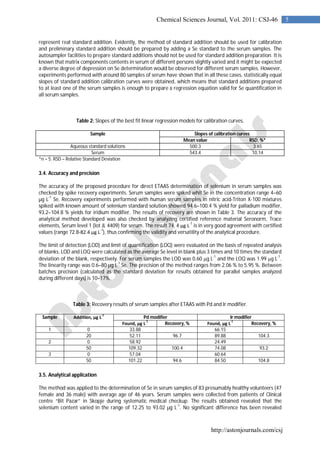
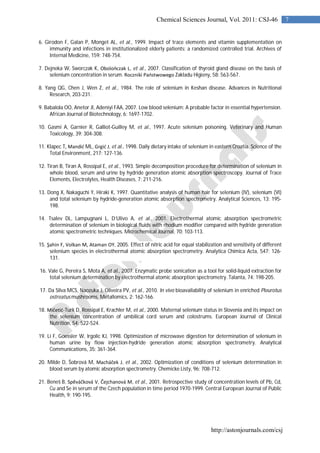
and times on integrated absorbance for serum samples with Pd modifier are given in Fig. 1 and with iridium
modifier are given in Fig. 2. As it can be seen, the optimal pyrolysis temperature with Pd and Ir modifiers was
found to be 1100
o
C, wile the optimal atomization temperature was 2500
o
C using Pd modifier and 2600
o
C
with Ir modifier. The optimal pyrolysis ramp time was established to be 5 s and hold time was 32 s (the last 2 s
without argon flow). The optimal atomization ramp time was 1 s and hold time 3 s. The behavior of Pd and Ir
for thermal stabilization of selenium proved identical. Both modifiers ensured loss-free ashing up to 1100 o
C is
serum samples diluted with 0.1% V/V nitric acid and 0.1% Triton X-100. Lower atomization temperatures are
preferable in this case because of lower background absorption signals, as well as better shaped absorbance-
time profiles for selenium. Therefore palladium is recommended as efficient modifier for ETAAS determination
of total Se in serum samples [20-23].
http://astonjournals.com/csj
4 Research Article
a b
Figure 1: Effect of pyrolysis (a) and atomization (b) temperature on the integrated absorbance signal for Se in
serum (▲) and in serum with 50 L Se (■) using Pd modifier 10 µg. Pyrolysis and atomization temperature -
1100 °C and 2500 °C.
a b
Figure 2: Effect of pyrolysis (a) and atomization (b) temperature on the integrated absorbance signal for Se in
serum (▲) and in serum with 50 L Se (■) using Ir modifier 1 µg. Pyrolysis and atomization temperature - 1100
°C and 2600 °C.
3.3. Calibration
In order to evaluated the degree of matrix depression on atomization of selenium, several serum samples
were spiked with Se in the range 4–60 µg L-1
, and 10 µL of these samples were introduced into the graphite
furnace. Spiking of serum samples was also performed by using the capabilities of the autosampler,
introducing into graphite furnace 10 µL serums and 10 µL aqueous standards of Se. Matrix interferences were
evaluated by the ratio of the slopes of calibration curves obtained in the presence of serum and in presence of
aqueous standard solutions. Results obtained are shown in Table 2 and clearly illustrate strong matrix
depression. In the presence of a matrix modifier there is a slight improvement and a decrease in matrix
interferences. It is worth mention that the matrix depression effect is much more pronounced for previously
spiked samples than for samples spiked directly into the graphite furnace. It might be assumed that some
chemical reaction between Se and sample components take place and only previously spiked serum samples
http://astonjournals.com/csj
5Chemical Sciences Journal, Vol. 2011: CSJ-46
represent real standard addition. Evidently, the method of standard addition should be used for calibration
and preliminary standard addition should be prepared by adding a Se standard to the serum samples. The
autosampler facilities to prepare standard additions should not be used for standard addition preparation. It is
known that matrix components contents in serum of different persons slightly varied and it might be expected
a diverse degree of depression on Se determination would be observed for different serum samples. However,
experiments performed with around 80 samples of serum have shown that in all these cases, statistically equal
slopes of standard addition calibration curves were obtained, which means that standard additions prepared
to at least one of the serum samples is enough to prepare a regression equation valid for Se quantification in
all serum samples.
Table 2: Slopes of the best fit linear regression models for calibration curves.
Sample Slopes of calibration curves
Mean value RSD, %*
Aqueous standard solutions 500.3 3.65
Serum 543.4 10.14
*n = 5; RSD – Relative Standard Deviation
3.4. Accuracy and precision
The accuracy of the proposed procedure for direct ETAAS determination of selenium in serum samples was
checked by spike recovery experiments. Serum samples were spiked whit Se in the concentration range 4–60
µg L-1
Se. Recovery experiments performed with human serum samples in nitric acid-Triton X-100 mixtures
spiked with known amount of selenium standard solution showed 94.6–100.4 % yield for palladium modifier,
93.2–104.8 % yields for iridium modifier. The results of recovery are shown in Table 3. The accuracy of the
analytical method developed was also checked by analyzing certified reference material Seronorm, Trace
elements, Serum level 1 (lot JL 4409) for serum. The result 74, 4 µg L
-1
is in very good agreement with certified
values (range 72.8-82.4 µg L
-1
), thus confirming the validity and versatility of the analytical procedure.
The limit of detection (LOD) and limit of quantification (LOQ) were evaluated on the basis of repeated analysis
of blanks. LOD and LOQ were calculated as the average Se level in blank plus 3 times and 10 times the standard
deviation of the blank, respectively. For serum samples the LOD was 0.60 g L-1
and the LOQ was 1.99 g L-1
.
The linearity range was 0.6–80 µg L-1
Se. The precision of the method ranges from 2.06 % to 5.95 %. Between
batches precision (calculated as the standard deviation for results obtained for parallel samples analyzed
during different days) is 10–17%.
Table 3: Recovery results of serum samples after ETAAS with Pd and Ir modifier.
Sample Addition, µg L
-1
Pd modifier Ir modifier
Found, µg L
-1
Recovery, % Found, µg L
-1
Recovery, %
1 0 33.88 66.15
20 52.11 96.7 89.88 104.3
2 0 58.92 24.49
50 109.32 100.4 74.08 93.2
3 0 57.04 60.64
50 101.22 94.6 84.50 104.8
3.5. Analytical application
The method was applied to the determination of Se in serum samples of 83 presumably healthy volunteers (47
female and 36 male) with average age of 46 years. Serum samples were collected from patients of Clinical
centre “Bit Pazar” in Skopje during systematic medical checkup. The results obtained revealed that the
selenium content varied in the range of 12.25 to 93.02 µg L-1
. No significant difference has been revealed
http://astonjournals.com/csj
6 Research Article
between women 43.91 ± 4.80 (16.88-89.93) µg L
-1
and men 45.21 ± 5.60 (12.25-93.02) µg L
-1
[9]. Our data
reveal that serum selenium levels of healthy people in Macedonia are among the lowest in Europe. These
values are comparable with those in serum of adults in Bulgaria (66.5±15.5 µg L-1
) [14], in Czech Republic
(46±14 µg L
-1
) [24], in Montenegro (51±26 µg L
-1
) [25] in Greece (63±14 µg L
-1
) [26], in Hungary (50±11 µg L
-1
)
[27], in Poland (57±8 µg L
-1
) [28], in Bosnia-Herzegovina (64±19 µg L
-1
) [25], in Croatia (69±17 µg L
-1
) [29] and in
Serbia (41±20 µg L-1
) [25].
Table 4: Content of Se in blood serum samples for total, male and female.
N Sex
Average age
(from-to) Range/µg L
-1
Median/µg L
-1
(Mean ± CL*)/µg L
-1
47 f 46 (15-84) 16.88 - 89.93 42.35 43.91 ± 4.80
36 m 46 (18-75) 12.25 – 93.02 52.63 45.21 ± 5.60
83 f + m 45 (15-84) 12.25 – 93.02 42.90 44.47 ± 5.13
N – Number of patients; f – female; m – male; *CL - Confidence level
4. Conclusion
The method for total selenium determination in human blood serum by ETAAS was optimized. It was found
that Pd modifier should be applied with the optimal pyrolysis temperature of 1100 ºC and optimal atomizing
temperature of 2500 ºC. It was also established that the serum samples should be diluted 1+2 with a mixture
of 0.1% v/v nitric acid and 0.1% Triton X-100. This method was applied for selenium determination in 83
samples of human serum collected during systematic medical checkup from patients of Clinical Centre “Bit
Pazar” in Skopje. The obtained data show that the content of selenium is relatively low, ranging from 16.88 to
89.93 µg L
-1
for female and from 12.25 to 93.02 µg L
-1
for male, which indicate that dietary intake of Se in the
Republic of Macedonia is low [19, 20]. The highest value for Se was found to be 93.02±1.52 µg L
-1
and the
lowest value was 12.25±0.57 µg L
-1
. These levels are in agreement with previous reports for this
biogeochemical region by Maksimović [25]: 35±7 µg L
-1
for selenium in blood serum. In comparison to other
European countries these selenium levels are among the lowest.
Competing Interests
The authors declare that they have no competing interests.
Authors’ Contributions
TS supervised the experimental work, preparation of manuscript and communicated to the journal; FČ did the
actual work and prepared the manuscript.
References
1. Hatanaka N, Nakaden H, Yamamoto Y, et al., 2000. Selenium kinetics and changes in glutathione peroxidase
activities in patients receiving long-therm parenteral nutrition and effects of supplementation with
selenite. Nutrition, 16: 22-26.
2. Douillet C, Bost M, Accominotti M, et al., 1998. Effect of selenium and vitamin E supplementation on lipid
abnormalities in plasma, aorta and adipose tissue of Zucker rats. Trace Elements Research, 65: 221-236.
3. Clausen J, Nielsen SA, Kristensen M, 1989. Biochemical and clinical effects of an antioxidant
supplementation of geriatric patients. Biological Trace Element Research, 20: 135-151.
4. Clark LC, Combs GF, Turnbull BW, et al., 1996. The nutritional prevention of cancer with selenium. 1983-
1993: a randomized clinical trial. Journal of the American Medical Association, 276: 1957-1963.
5. Combs GF, Clark LC, 1999. Selenium and cancer. In: Nutritional Oncology: Academic Press, San Diego.
http://astonjournals.com/csj
7Chemical Sciences Journal, Vol. 2011: CSJ-46
6. Girodon F, Galan P, Monget AL, et al., 1999. Impact of trace elements and vitamin supplementation on
immunity and infections in institutionalized elderly patients: a randomized controlled trial. Archives of
Internal Medicine, 159: 748-754.
7. Dejneka W, Sworczak K, Obolończak L, et al., 2007. Classification of thyroid gland disease on the basis of
selenium concentration in serum. Roczniki Państwowego Zakladu Higieny, 58: 563-567.
8. Yang QG, Chen J, Wen Z, et al., 1984. The role of selenium in Keshan disease. Advances in Nutritional
Research, 203-231.
9. Babalola OO, Anetor JI, Adeniyi FAA, 2007. Low blood selenium: A probable factor in essential hypertension.
African Journal of Biotechnology, 6: 1697-1702.
10. Gasmi A, Garnier R, Galliot-Guilley M, et al., 1997. Acute selenium poisoning. Veterinary and Human
Toxicology, 39: 304-308.
11. Klapec T, Mandić ML, Grgić J, et al., 1998. Daily dietary intake of selenium in eastern Croatia. Science of the
Total Environment, 217: 127-136.
12. Tiran B, Tiran A, Rossipal E, et al., 1993. Simple decomposition procedure for determination of selenium in
whole blood, serum and urine by hydride generation atomic absorption spectroscopy. Journal of Trace
Elements, Electrolytes, Health Diseases, 7: 211-216.
13. Dong X, Nakaguchi Y, Hiraki K, 1997. Quantitative analysis of human hair for selenium (IV), selenium (VI)
and total selenium by hydride-generation atomic absorption spectrometry. Analytical Sciences, 13: 195-
198.
14. Tsalev DL, Lampugnani L, D’Ulivo A, et al., 2001. Electrothermal atomic absorption spectrometric
determination of selenium in biological fluids with rhodium modifier compared with hydride generation
atomic spectrometric techniques. Microchemical Journal, 70: 103-113.
15. Şahin F, Volkan M, Ataman OY, 2005. Effect of nitric acid for equal stabilization and sensitivity of different
selenium species in electrothermal atomic absorption spectrometry. Analytica Chimica Acta, 547: 126-
131.
16. Vale G, Pereira S, Mota A, et al., 2007. Enzymatic probe sonication as a tool for solid-liquid extraction for
total selenium determination by electrothermal atomic absorption spectrometry. Talanta, 74: 198-205.
17. Da Silva MCS, Naozuka J, Oliveira PV, et al., 2010. In vivo bioavailability of selenium in enriched Pleurotus
ostreatus mushrooms. Metallomics, 2: 162-166.
18. Mičetić-Turk D, Rossipal E, Krachler M, et al., 2000. Maternal selenium status in Slovenia and its impact on
the selenium concentration of umbilical cord serum and colostrums. European Journal of Clinical
Nutrition, 54: 522-524.
19. Li F, Goessler W, Irgolic KJ, 1998. Optimization of microwave digestion for determination of selenium in
human urine by flow injection-hydride generation atomic absorption spectrometry. Analytical
Communications, 35: 361-364.
20. Milde D, Šobrová M, Macháček J, et al., 2002. Optimization of conditions of selenium determination in
blood serum by atomic absorption spectrometry. Chemicke Listy, 96: 708-712.
21. Beneš B, Spěváčková V, Čejchanová M, et al., 2001. Retrospective study of concentration levels of Pb, Cd,
Cu and Se in serum of the Czech population in time period 1970-1999. Central European Journal of Public
Health, 9: 190-195.
http://astonjournals.com/csj
8 Research Article
22. Gallignani M, Valero M, Brunetto MR, et al., 2000. Sequential determination of Se (IV) and Se (VI) by flow
injection-hydride generation-atomic absorption spectrometry with HCl/HBr microwave aided pre-
reduction of Se (VI) to Se (IV). Talanta, 52: 1015-1024.
23. Akl MA, Ismael DS, El-Asmy AA, 2006. Precipitate flotation-separation, speciation and hydride generation
atomic absorption spectrometric determination of selenium (IV) in food stuffs. Microchemical Journal, 83:
61-69.
24. Kvičala V, Čeřovska J, Bednář J, et al., 1995. Evaluation of selenium supply and status of inhabitants of
three selected rural and urban regions of the Czech Republic. Biological Trace Elements Research, 47:
365-375.
25. Maksimović ZJ, Djujić I, Jović V, et al., 1991. Selenium deficiency in Former Yugoslavia. Biological Trace
Elements Research, 33: 187-196.
26. Thorling EB, Overvald K, Geboers J, 1986. Selenium status in Europe-Human data - a multicenter study.
Annals of Clinical Research, 18: 3-7.
27. Cser MA, Sziklai-Laszlo I, Menzel H, et al., 1996. Selenium and glutathione peroxidase activity in Hungarian
children. Journal of Trace Elements in Medicine and Biology, 10: 167-173.
28. Zachra BA, Rybakowski J, Borowska K, et al., 1988. Blood selenium concentration and glutathione
peroxidase activity in male pacients with alcohol dependence. Selenium in Medicine and Biology, 269-
272.
29. Becker D, Romic Z, Kršnjavi H, et al., 1992. A contribution to the world selenium map. Biological Trace
Elements Research, 33: 43-49.

Csj 46 vol2011

  • 1.
    http://astonjournals.com/csj 1Chemical Sciences Journal,Vol. 2011: CSJ-46 Determination of Selenium in Human Blood Serum by Electrothermal Atomic Absorption Spectrometry F Čuparigova, T Stafilov* Institute of Chemistry, Faculty of Science, Sts. Cyril and Methodius University, POB 162, 1000 Skopje, Macedonia. *Correspondence to: Trajče Stafilov, trajcest@pmf.ukim.mk Accepted: August 8, 2011; Published: November 11, 2011 Abstract A method for direct selenium determination in human blood serum by electrothermal atomic absorption spectrometry (ETAAS) was developed. Total selenium was measured by ETAAS employing 10 g of palladium as matrix modifier in a graphite atomizer with pyrolytically coated tubes and Zeeman background correction. Blood serum was diluted 1+2 with 0.1 % v/v nitric acid and 0.1 % Triton X-100. Pyrolysis and atomization temperatures for palladium modifier are 1100 ºC and 2500 ºC, respectively. The measurements were confirmed by the analyses of standard reference material and by the method of standard additions. Reference serum material Seronorm, Trace elements, Serum level 1 (lot JL 4409) was analyzed and the results are in agreement with the certified value. The limit of detection of the direct ETAAS based on 3σ of the blank signal is 0.60 g L -1 Se in blood serum samples. The precision of the method ranges from 2.06 % to 5.95 %. The obtained data from the selenium concentrations in serum samples from 83 patients show that the content of selenium is relatively low, ranging from 43.91 ± 4.80 µg L -1 for female to 45.21 ± 5.60 µg L -1 for male. Keywords: Selenium; serum; determination; ETAAS. 1. Introduction Selenium is an essential micronutrient at low concentration but toxic at high concentration whit a relatively small difference between these levels. Human body uses selenium to produce glutathione peroxidase [1], which works with vitamin E [2] to protect cell membranes from damage caused by dangerous, naturally occurring substances known as free radicals produced by oxidative metabolism [3]. Selenium is taking center stage as a potential anticancer agent [4, 5] by promoting formation of white blood cells which destroys the cancer cells and is an essential component of more than 10 selenoproteins with multiple biochemical functions. Moreover, it boosts the immune system [6] by increasing the activity and number of white blood cells and prevents premature aging, degenerative diseases, cardiovascular diseases, inflammatory diseases, stroke, cataracts, and rheumatoid arthritis. It is also necessary for normal thyroid functions [7] and protection of heavy metal toxicity. Deficiency of the element can cause Keshan disease, characterized by an enlarged heart and poor heart function [8] or to be a factor for essential hypertension [9]. This disorder is endemic in some of most selenium-poor soils in the world. High blood levels of selenium can result in selenosis, which is associated with gastrointestinal upsets, hair loss, white blotchy nails and mild nerve damage [10]. The optimum daily dietary intake of selenium is 55 µg/day for women and 70 µg/day for men [11]. The trace elements concentration in blood, serum, urine and tissue is used as an indicator of the trace elements status of the human body. Namely, determination of metals in vivo in organs is not possible; therefore indirect determination of metals in accessible tissue can point at the presence of toxic elements. Because of that, it is very important to introduce accurate and precise methods for trace metal determination (and their chemical forms, as well) in different biological fluids and tissue. There are a number of methods for selenium determination in different biological materials, mainly by atomic absorption spectrometry (AAS), both hydride generation AAS (HG-AAS) [12, 13] and electrothermal AAS (ETAAS) [14-17]. Atomic absorption spectrometry is one of the most used techniques for trace element determination. Direct electrothermal atomic absorption spectrometry (ETAAS) shows sensitivity and accuracy adequate for selenium determination in biological fluids and requires little sample preparation, but is very sensitive to matrix interference and reliable methods have been validated only for blood plasma and serum [18, 19]. In direct ETAAS assay on diluted biological fluids, the main concern is reliability of background correction and
  • 2.
    http://astonjournals.com/csj 2 Research Article efficiencyof thermal stabilization for all forms of endogenous selenium. Zeeman is the most powerful current tool. The purpose of this study was to define optimal instrumental parameters, suitable modifiers and calibration procedure for direct ETAAS determination of selenium in serum. Analytical quality assurance was carried out by analyzing standard reference materials and by the method of standard additions. The proposed method was applied to the determination of selenium in the serum of normal presumable healthy individual. 2. Methods 2.1. Instrumentation A Varian SpectrAA 640Z Zeeman electrothermal atomic absorption spectrometer equipped with a GTA-100 graphite furnace (Varian, USA) and PSD-100 autosampler (Varian, USA) was used. Pyrolytically coated tubes were used as atomizers. A Varian selenium hollow cathode lamp was used and the measurements were performed at 196.0 nm. Argon was applied as protective gas and 10 µL samples were injected into the graphite furnace (GF). The graphite furnace operating parameters are presented in Table 1. Only integrated absorbance values (peak height) were used for quantification. Table 1: Optimal parameters for Se determination by Zeeman ETAAS. Parameters Se Wavelength 196.0 nm Slit 1.0 nm Lamp current 10.0 mA Calibration mode Absorbance, peak height Background correction Zeeman Drying Temperature 85; 95; 120 o C Time 5; 40; 10 s Pyrolysis Temperature 1100 o C Ramp time 5 s Hold time 32 s Atomization Temperature 2500 o C Ramp time 1 s Hold time 3 s Cleaning Temperature 2500 o C Hold time 2 s Gas Argon 2.2. Reagents and samples All reagents and standards were of analytical grade. Stock standard solutions for selenium were 1000 µg mL-1 Solution Plus Inc. (USA). The working standard solutions were prepared weekly by appropriate dilution and kept refrigerated at 4 C. The palladium matrix modifier solution was prepared by the dilution (10 g L -1 ) Pd(NO3)2 (Merck, Darmstadt, Germany), and iridium AA standard solution, 1000 g mL -1 in 20% HCl (Alfa Johnson Mathey), 0.1 % V/V nitric acid prepared by dilution trace pure 65 % nitric acid (Merck, Darmstadt, Germany), and 0.1 % Triton X-100 (Merck, Darmstadt, Germany) were used. Doubly distilled water was used in all operations.
  • 3.
    http://astonjournals.com/csj 3Chemical Sciences Journal,Vol. 2011: CSJ-46 The following certified reference materials were used for the validation purposes: Seronorm, Trace elements, Serum level 1 (lot JL 4409). All disposable devices were rigorously clean before use by brief immersion in hot concentrated nitric acid and rinsing twice whit distilled water. Serum samples were obtained from 83 presumable healthy volunteers. All patients signed agreement for selenium testing of their serum during systematic medical checkup. Clinical experiments were performed according to the Ethics Committee provisions of the Institute of Preventive Medical Care and Toxicology at the Clinical Health Institution Center (Skopje, Macedonia). The serum samples were collected whit plastic iv cannula No. 24 (TIK, Slovenia) whit an injection valve. The samples were kept frozen (-18˚C) until analysis. 2.3. Procedures Blood serum samples (500 L) were diluted 1+2 with 0.1% V/V nitric acid and 0.1% Triton X-100 and 10 µL were introduced into graphite furnace whit appropriate volume of palladium modifier (1.2 g; 2 g; 2.4 g; 5 g and 10 g) and iridium modifier (0.1 g; 0.5 g and 1 g) . The calibration curves (4–60 µg mL-1 Se) were prepared using human serum in nitric acid-Triton X-100 mixture spiked with known amount of selenium standard solution and palladium or iridium solution as matrix modifier. 3. Results and Discussion 3.1. Selection of chemical modifier Several preliminary experiments were carried out to select an efficient chemical modifier for the measurement of selenium in serum. The modifiers tested are: palladium (10 g L -1 ) and iridium (1 g L -1 ) modifier. Typically, relatively high pyrolysis temperatures could be used for selenium determination, so the action of the modifier is to assist and ensure complete matrix mineralization and removal during the ashing step. The matrix modifiers used in this work were Pd and Ir with optimal concentration of 500 µg mL -1 for Pd modifier and 100 µg mL -1 for Ir modifier. Different masses of modifiers were tested, for palladium (1.2 g; 2 g; 2.4 g; 5 g and 10 g) and for iridium (0.1 g; 0.5 g and 1 g). Best results yielded 10 g or palladium and 1 g of iridium. From this point of view, palladium is very useful to its high efficiency at relatively low masses and good performance in presence of organic mater. It was observed that in presence of palladium the nonspecific absorbance signals were remarkably lower, than iridium; therefore this modifier was selected for all further investigations. 3.2. GFAAS program optimization Optimization of temperature program for Se determination by electrothermal atomic absorption spectrometry in human blood serum samples was performed. For the optimization of pretreatment and atomization temperatures, pyrolysis–atomization curves were constructed from serum sample previously spiked with 10 g L-1 Se in the presence of palladium (10 g) and iridium (1 g) as most widely used modifiers for thermal stabilization of selenium in ETAAS. The modifiers were applied through the autosampler directly into the graphite furnace with a volume of 10 µL for 10 µL serum sample. Parameters of the drying step were carefully optimized so as to ensure complete matrix decomposition and removal during this step. Ashing temperatures (from 800 to 1200 o C) and atomization temperatures (from 2000 o C to 2700 o C) were assayed by using wall atomization (pyrolytically graphite coated graphite tubes). Effects of pyrolysis and atomization temperatures and times on integrated absorbance for serum samples with Pd modifier are given in Fig. 1 and with iridium modifier are given in Fig. 2. As it can be seen, the optimal pyrolysis temperature with Pd and Ir modifiers was found to be 1100 o C, wile the optimal atomization temperature was 2500 o C using Pd modifier and 2600 o C with Ir modifier. The optimal pyrolysis ramp time was established to be 5 s and hold time was 32 s (the last 2 s without argon flow). The optimal atomization ramp time was 1 s and hold time 3 s. The behavior of Pd and Ir for thermal stabilization of selenium proved identical. Both modifiers ensured loss-free ashing up to 1100 o C is serum samples diluted with 0.1% V/V nitric acid and 0.1% Triton X-100. Lower atomization temperatures are preferable in this case because of lower background absorption signals, as well as better shaped absorbance- time profiles for selenium. Therefore palladium is recommended as efficient modifier for ETAAS determination of total Se in serum samples [20-23].
  • 4.
    http://astonjournals.com/csj 4 Research Article ab Figure 1: Effect of pyrolysis (a) and atomization (b) temperature on the integrated absorbance signal for Se in serum (▲) and in serum with 50 L Se (■) using Pd modifier 10 µg. Pyrolysis and atomization temperature - 1100 °C and 2500 °C. a b Figure 2: Effect of pyrolysis (a) and atomization (b) temperature on the integrated absorbance signal for Se in serum (▲) and in serum with 50 L Se (■) using Ir modifier 1 µg. Pyrolysis and atomization temperature - 1100 °C and 2600 °C. 3.3. Calibration In order to evaluated the degree of matrix depression on atomization of selenium, several serum samples were spiked with Se in the range 4–60 µg L-1 , and 10 µL of these samples were introduced into the graphite furnace. Spiking of serum samples was also performed by using the capabilities of the autosampler, introducing into graphite furnace 10 µL serums and 10 µL aqueous standards of Se. Matrix interferences were evaluated by the ratio of the slopes of calibration curves obtained in the presence of serum and in presence of aqueous standard solutions. Results obtained are shown in Table 2 and clearly illustrate strong matrix depression. In the presence of a matrix modifier there is a slight improvement and a decrease in matrix interferences. It is worth mention that the matrix depression effect is much more pronounced for previously spiked samples than for samples spiked directly into the graphite furnace. It might be assumed that some chemical reaction between Se and sample components take place and only previously spiked serum samples
  • 5.
    http://astonjournals.com/csj 5Chemical Sciences Journal,Vol. 2011: CSJ-46 represent real standard addition. Evidently, the method of standard addition should be used for calibration and preliminary standard addition should be prepared by adding a Se standard to the serum samples. The autosampler facilities to prepare standard additions should not be used for standard addition preparation. It is known that matrix components contents in serum of different persons slightly varied and it might be expected a diverse degree of depression on Se determination would be observed for different serum samples. However, experiments performed with around 80 samples of serum have shown that in all these cases, statistically equal slopes of standard addition calibration curves were obtained, which means that standard additions prepared to at least one of the serum samples is enough to prepare a regression equation valid for Se quantification in all serum samples. Table 2: Slopes of the best fit linear regression models for calibration curves. Sample Slopes of calibration curves Mean value RSD, %* Aqueous standard solutions 500.3 3.65 Serum 543.4 10.14 *n = 5; RSD – Relative Standard Deviation 3.4. Accuracy and precision The accuracy of the proposed procedure for direct ETAAS determination of selenium in serum samples was checked by spike recovery experiments. Serum samples were spiked whit Se in the concentration range 4–60 µg L-1 Se. Recovery experiments performed with human serum samples in nitric acid-Triton X-100 mixtures spiked with known amount of selenium standard solution showed 94.6–100.4 % yield for palladium modifier, 93.2–104.8 % yields for iridium modifier. The results of recovery are shown in Table 3. The accuracy of the analytical method developed was also checked by analyzing certified reference material Seronorm, Trace elements, Serum level 1 (lot JL 4409) for serum. The result 74, 4 µg L -1 is in very good agreement with certified values (range 72.8-82.4 µg L -1 ), thus confirming the validity and versatility of the analytical procedure. The limit of detection (LOD) and limit of quantification (LOQ) were evaluated on the basis of repeated analysis of blanks. LOD and LOQ were calculated as the average Se level in blank plus 3 times and 10 times the standard deviation of the blank, respectively. For serum samples the LOD was 0.60 g L-1 and the LOQ was 1.99 g L-1 . The linearity range was 0.6–80 µg L-1 Se. The precision of the method ranges from 2.06 % to 5.95 %. Between batches precision (calculated as the standard deviation for results obtained for parallel samples analyzed during different days) is 10–17%. Table 3: Recovery results of serum samples after ETAAS with Pd and Ir modifier. Sample Addition, µg L -1 Pd modifier Ir modifier Found, µg L -1 Recovery, % Found, µg L -1 Recovery, % 1 0 33.88 66.15 20 52.11 96.7 89.88 104.3 2 0 58.92 24.49 50 109.32 100.4 74.08 93.2 3 0 57.04 60.64 50 101.22 94.6 84.50 104.8 3.5. Analytical application The method was applied to the determination of Se in serum samples of 83 presumably healthy volunteers (47 female and 36 male) with average age of 46 years. Serum samples were collected from patients of Clinical centre “Bit Pazar” in Skopje during systematic medical checkup. The results obtained revealed that the selenium content varied in the range of 12.25 to 93.02 µg L-1 . No significant difference has been revealed
  • 6.
    http://astonjournals.com/csj 6 Research Article betweenwomen 43.91 ± 4.80 (16.88-89.93) µg L -1 and men 45.21 ± 5.60 (12.25-93.02) µg L -1 [9]. Our data reveal that serum selenium levels of healthy people in Macedonia are among the lowest in Europe. These values are comparable with those in serum of adults in Bulgaria (66.5±15.5 µg L-1 ) [14], in Czech Republic (46±14 µg L -1 ) [24], in Montenegro (51±26 µg L -1 ) [25] in Greece (63±14 µg L -1 ) [26], in Hungary (50±11 µg L -1 ) [27], in Poland (57±8 µg L -1 ) [28], in Bosnia-Herzegovina (64±19 µg L -1 ) [25], in Croatia (69±17 µg L -1 ) [29] and in Serbia (41±20 µg L-1 ) [25]. Table 4: Content of Se in blood serum samples for total, male and female. N Sex Average age (from-to) Range/µg L -1 Median/µg L -1 (Mean ± CL*)/µg L -1 47 f 46 (15-84) 16.88 - 89.93 42.35 43.91 ± 4.80 36 m 46 (18-75) 12.25 – 93.02 52.63 45.21 ± 5.60 83 f + m 45 (15-84) 12.25 – 93.02 42.90 44.47 ± 5.13 N – Number of patients; f – female; m – male; *CL - Confidence level 4. Conclusion The method for total selenium determination in human blood serum by ETAAS was optimized. It was found that Pd modifier should be applied with the optimal pyrolysis temperature of 1100 ºC and optimal atomizing temperature of 2500 ºC. It was also established that the serum samples should be diluted 1+2 with a mixture of 0.1% v/v nitric acid and 0.1% Triton X-100. This method was applied for selenium determination in 83 samples of human serum collected during systematic medical checkup from patients of Clinical Centre “Bit Pazar” in Skopje. The obtained data show that the content of selenium is relatively low, ranging from 16.88 to 89.93 µg L -1 for female and from 12.25 to 93.02 µg L -1 for male, which indicate that dietary intake of Se in the Republic of Macedonia is low [19, 20]. The highest value for Se was found to be 93.02±1.52 µg L -1 and the lowest value was 12.25±0.57 µg L -1 . These levels are in agreement with previous reports for this biogeochemical region by Maksimović [25]: 35±7 µg L -1 for selenium in blood serum. In comparison to other European countries these selenium levels are among the lowest. Competing Interests The authors declare that they have no competing interests. Authors’ Contributions TS supervised the experimental work, preparation of manuscript and communicated to the journal; FČ did the actual work and prepared the manuscript. References 1. Hatanaka N, Nakaden H, Yamamoto Y, et al., 2000. Selenium kinetics and changes in glutathione peroxidase activities in patients receiving long-therm parenteral nutrition and effects of supplementation with selenite. Nutrition, 16: 22-26. 2. Douillet C, Bost M, Accominotti M, et al., 1998. Effect of selenium and vitamin E supplementation on lipid abnormalities in plasma, aorta and adipose tissue of Zucker rats. Trace Elements Research, 65: 221-236. 3. Clausen J, Nielsen SA, Kristensen M, 1989. Biochemical and clinical effects of an antioxidant supplementation of geriatric patients. Biological Trace Element Research, 20: 135-151. 4. Clark LC, Combs GF, Turnbull BW, et al., 1996. The nutritional prevention of cancer with selenium. 1983- 1993: a randomized clinical trial. Journal of the American Medical Association, 276: 1957-1963. 5. Combs GF, Clark LC, 1999. Selenium and cancer. In: Nutritional Oncology: Academic Press, San Diego.
  • 7.
    http://astonjournals.com/csj 7Chemical Sciences Journal,Vol. 2011: CSJ-46 6. Girodon F, Galan P, Monget AL, et al., 1999. Impact of trace elements and vitamin supplementation on immunity and infections in institutionalized elderly patients: a randomized controlled trial. Archives of Internal Medicine, 159: 748-754. 7. Dejneka W, Sworczak K, Obolończak L, et al., 2007. Classification of thyroid gland disease on the basis of selenium concentration in serum. Roczniki Państwowego Zakladu Higieny, 58: 563-567. 8. Yang QG, Chen J, Wen Z, et al., 1984. The role of selenium in Keshan disease. Advances in Nutritional Research, 203-231. 9. Babalola OO, Anetor JI, Adeniyi FAA, 2007. Low blood selenium: A probable factor in essential hypertension. African Journal of Biotechnology, 6: 1697-1702. 10. Gasmi A, Garnier R, Galliot-Guilley M, et al., 1997. Acute selenium poisoning. Veterinary and Human Toxicology, 39: 304-308. 11. Klapec T, Mandić ML, Grgić J, et al., 1998. Daily dietary intake of selenium in eastern Croatia. Science of the Total Environment, 217: 127-136. 12. Tiran B, Tiran A, Rossipal E, et al., 1993. Simple decomposition procedure for determination of selenium in whole blood, serum and urine by hydride generation atomic absorption spectroscopy. Journal of Trace Elements, Electrolytes, Health Diseases, 7: 211-216. 13. Dong X, Nakaguchi Y, Hiraki K, 1997. Quantitative analysis of human hair for selenium (IV), selenium (VI) and total selenium by hydride-generation atomic absorption spectrometry. Analytical Sciences, 13: 195- 198. 14. Tsalev DL, Lampugnani L, D’Ulivo A, et al., 2001. Electrothermal atomic absorption spectrometric determination of selenium in biological fluids with rhodium modifier compared with hydride generation atomic spectrometric techniques. Microchemical Journal, 70: 103-113. 15. Şahin F, Volkan M, Ataman OY, 2005. Effect of nitric acid for equal stabilization and sensitivity of different selenium species in electrothermal atomic absorption spectrometry. Analytica Chimica Acta, 547: 126- 131. 16. Vale G, Pereira S, Mota A, et al., 2007. Enzymatic probe sonication as a tool for solid-liquid extraction for total selenium determination by electrothermal atomic absorption spectrometry. Talanta, 74: 198-205. 17. Da Silva MCS, Naozuka J, Oliveira PV, et al., 2010. In vivo bioavailability of selenium in enriched Pleurotus ostreatus mushrooms. Metallomics, 2: 162-166. 18. Mičetić-Turk D, Rossipal E, Krachler M, et al., 2000. Maternal selenium status in Slovenia and its impact on the selenium concentration of umbilical cord serum and colostrums. European Journal of Clinical Nutrition, 54: 522-524. 19. Li F, Goessler W, Irgolic KJ, 1998. Optimization of microwave digestion for determination of selenium in human urine by flow injection-hydride generation atomic absorption spectrometry. Analytical Communications, 35: 361-364. 20. Milde D, Šobrová M, Macháček J, et al., 2002. Optimization of conditions of selenium determination in blood serum by atomic absorption spectrometry. Chemicke Listy, 96: 708-712. 21. Beneš B, Spěváčková V, Čejchanová M, et al., 2001. Retrospective study of concentration levels of Pb, Cd, Cu and Se in serum of the Czech population in time period 1970-1999. Central European Journal of Public Health, 9: 190-195.
  • 8.
    http://astonjournals.com/csj 8 Research Article 22.Gallignani M, Valero M, Brunetto MR, et al., 2000. Sequential determination of Se (IV) and Se (VI) by flow injection-hydride generation-atomic absorption spectrometry with HCl/HBr microwave aided pre- reduction of Se (VI) to Se (IV). Talanta, 52: 1015-1024. 23. Akl MA, Ismael DS, El-Asmy AA, 2006. Precipitate flotation-separation, speciation and hydride generation atomic absorption spectrometric determination of selenium (IV) in food stuffs. Microchemical Journal, 83: 61-69. 24. Kvičala V, Čeřovska J, Bednář J, et al., 1995. Evaluation of selenium supply and status of inhabitants of three selected rural and urban regions of the Czech Republic. Biological Trace Elements Research, 47: 365-375. 25. Maksimović ZJ, Djujić I, Jović V, et al., 1991. Selenium deficiency in Former Yugoslavia. Biological Trace Elements Research, 33: 187-196. 26. Thorling EB, Overvald K, Geboers J, 1986. Selenium status in Europe-Human data - a multicenter study. Annals of Clinical Research, 18: 3-7. 27. Cser MA, Sziklai-Laszlo I, Menzel H, et al., 1996. Selenium and glutathione peroxidase activity in Hungarian children. Journal of Trace Elements in Medicine and Biology, 10: 167-173. 28. Zachra BA, Rybakowski J, Borowska K, et al., 1988. Blood selenium concentration and glutathione peroxidase activity in male pacients with alcohol dependence. Selenium in Medicine and Biology, 269- 272. 29. Becker D, Romic Z, Kršnjavi H, et al., 1992. A contribution to the world selenium map. Biological Trace Elements Research, 33: 43-49.