IDENTIFY ETIOLOGY OF
MENINGITIS BASED ON
CSF FINDINGS
ANATOMY AND PHYSIOLOGY
• Cerebrospinal fluid (CSF) is present within the subarachnoid
space surrounding the brain in the skull and the spinal cord
in the spinal column.
• It is a clear , colorless , transparent fluid present in the
cerebral ventricles, spinal canal and subarachnoid spaces.
• Formed mainly by choroid plexus
Function of CSF
• _It's main function is to protect the brain and the spinal cord
from injury by acting as a fluid cushion.
• It is the medium through which nutrients and the waste
products are transported between brain/spinal
cord and the blood.
Formation of CSF
• CSF is derived by ultra filtration of plasma and by secretion
through the choroid plexus located in the ventricles of the
brain.
• Reabsorbtion of CSF occurs at the arachnoid villi which
projects in the venous sinuses in the duramater.
• CSF is produce at the rate of 500 mL/day.
• Rate of formation – about 20ml/hr
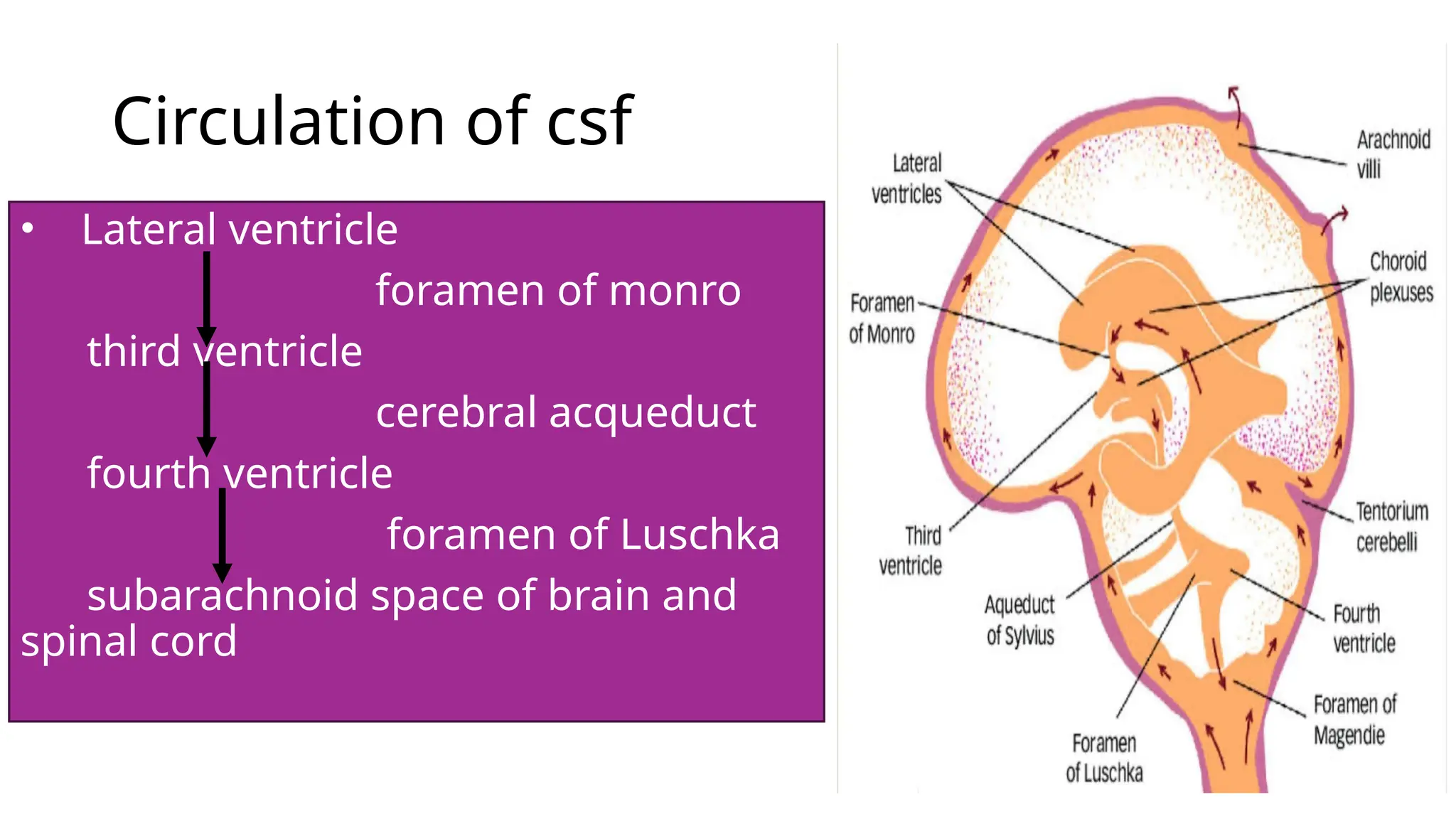
Circulation of csf
• Lateral ventricle
foramen of monro
third ventricle
cerebral acqueduct
fourth ventricle
foramen of Luschka
subarachnoid space of brain and
spinal cord
Indication of csf examination
Diagnosis of suspected cases-
1) CNS Infections: Meningitis, Encephalitis
2) Inflammatory conditions: multiple sclerosis, Guillain bare
syndrome.
3) Infiltrative conditions: Leukemia, lymphoma
4) Administration of drug in CSF (therapeutic aim):
Antibiotics
Anticancer drugs
Anesthetic drugs
5)Introduction of radiographic contrast media for
myelograpghy.
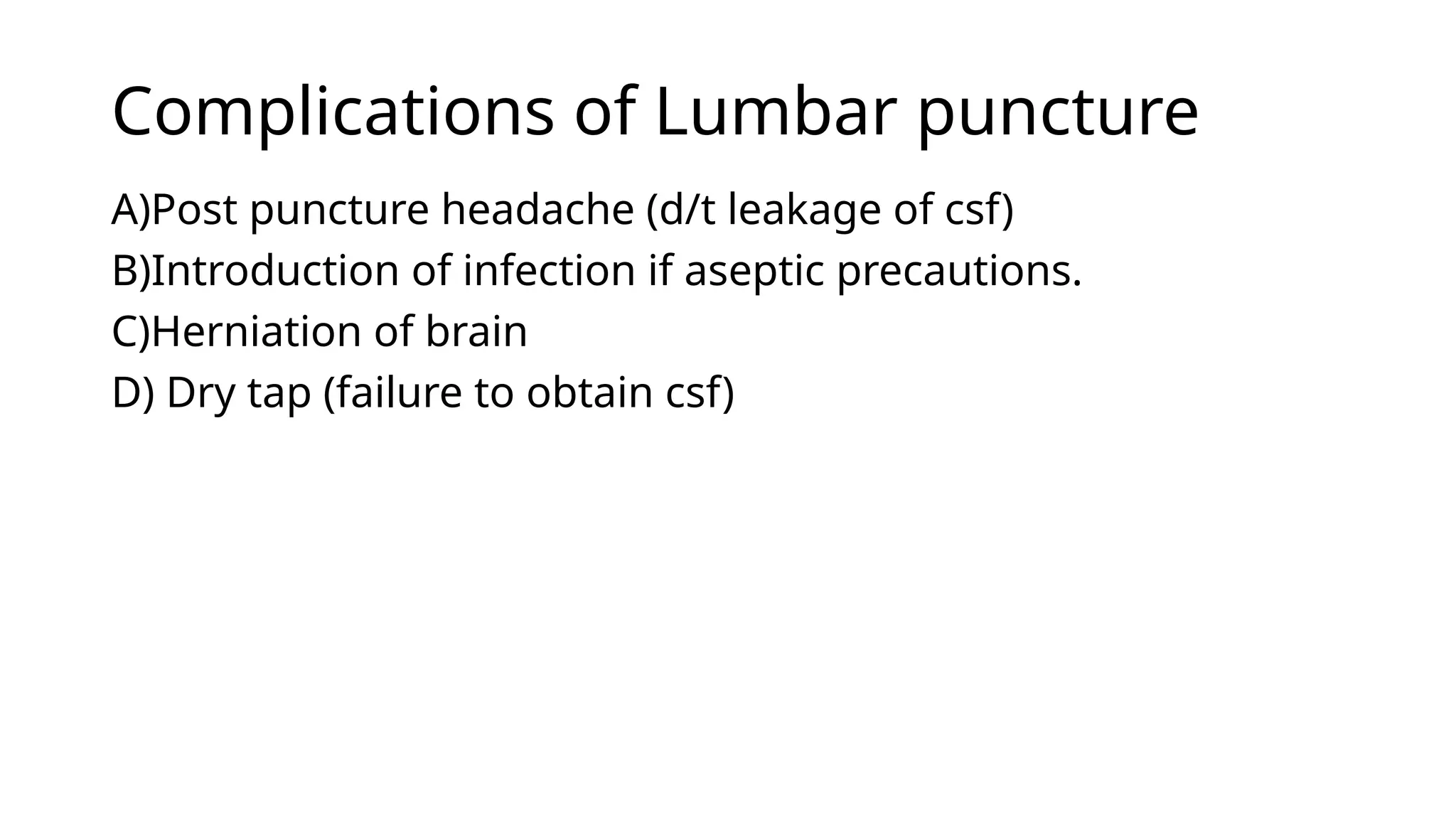
Complications of Lumbar puncture
A)Post puncture headache (d/t leakage of csf)
B)Introduction of infection if aseptic precautions.
C)Herniation of brain
D) Dry tap (failure to obtain csf)
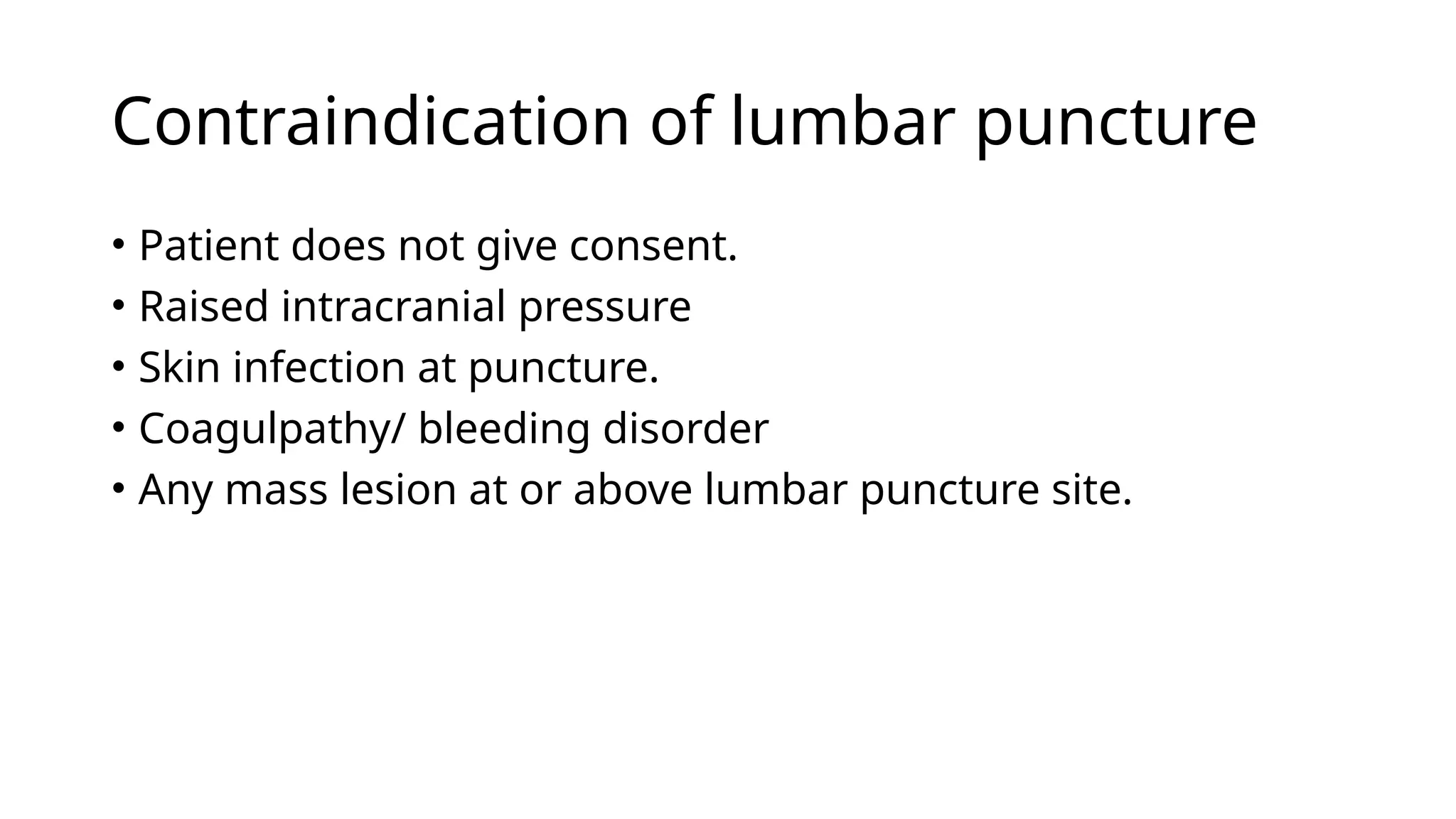
Contraindication of lumbar puncture
• Patient does not give consent.
• Raised intracranial pressure
• Skin infection at puncture.
• Coagulpathy/ bleeding disorder
• Any mass lesion at or above lumbar puncture site.
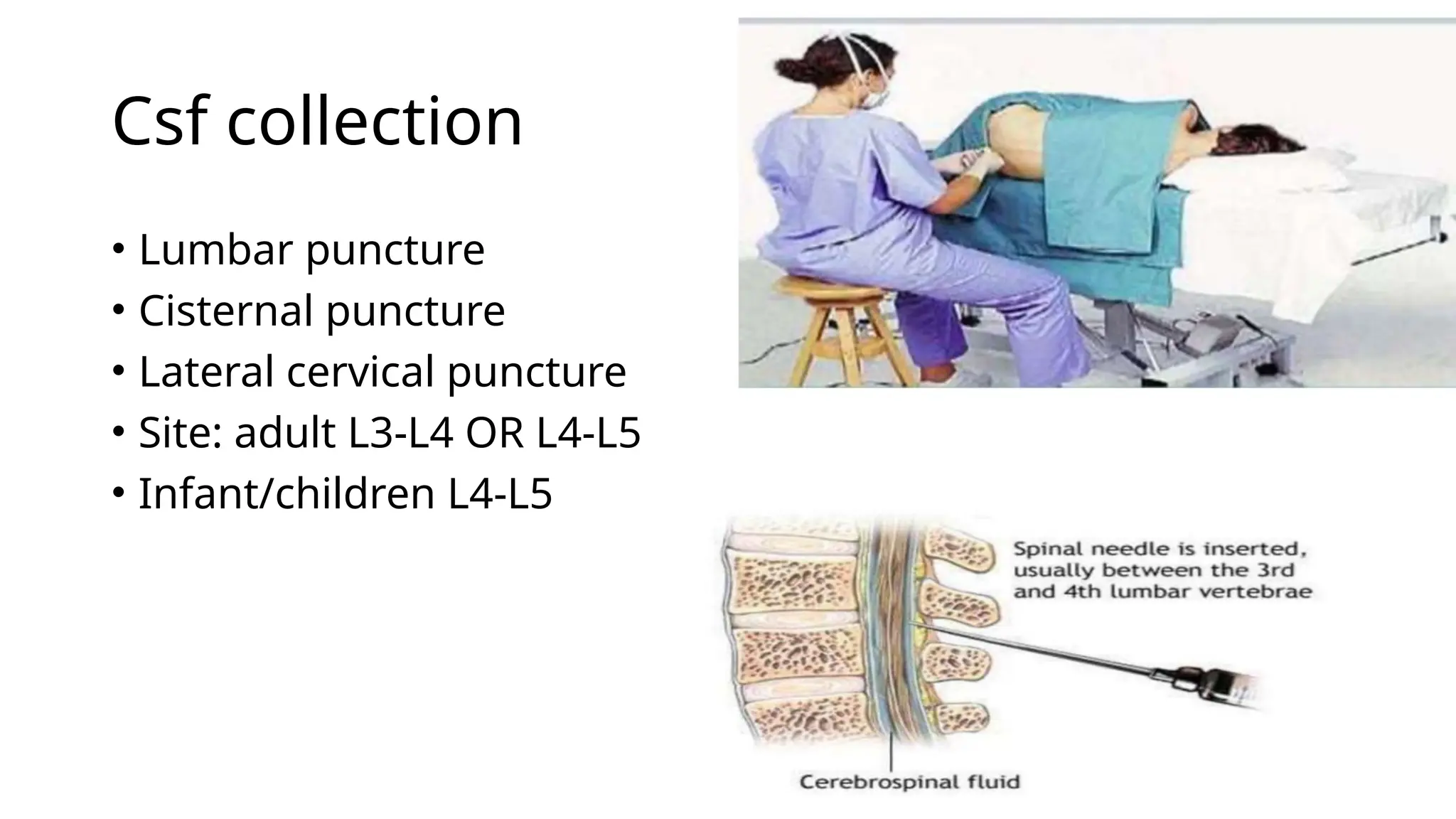
Csf collection
• Lumbar puncture
• Cisternal puncture
• Lateral cervical puncture
• Site: adult L3-L4 OR L4-L5
• Infant/children L4-L5
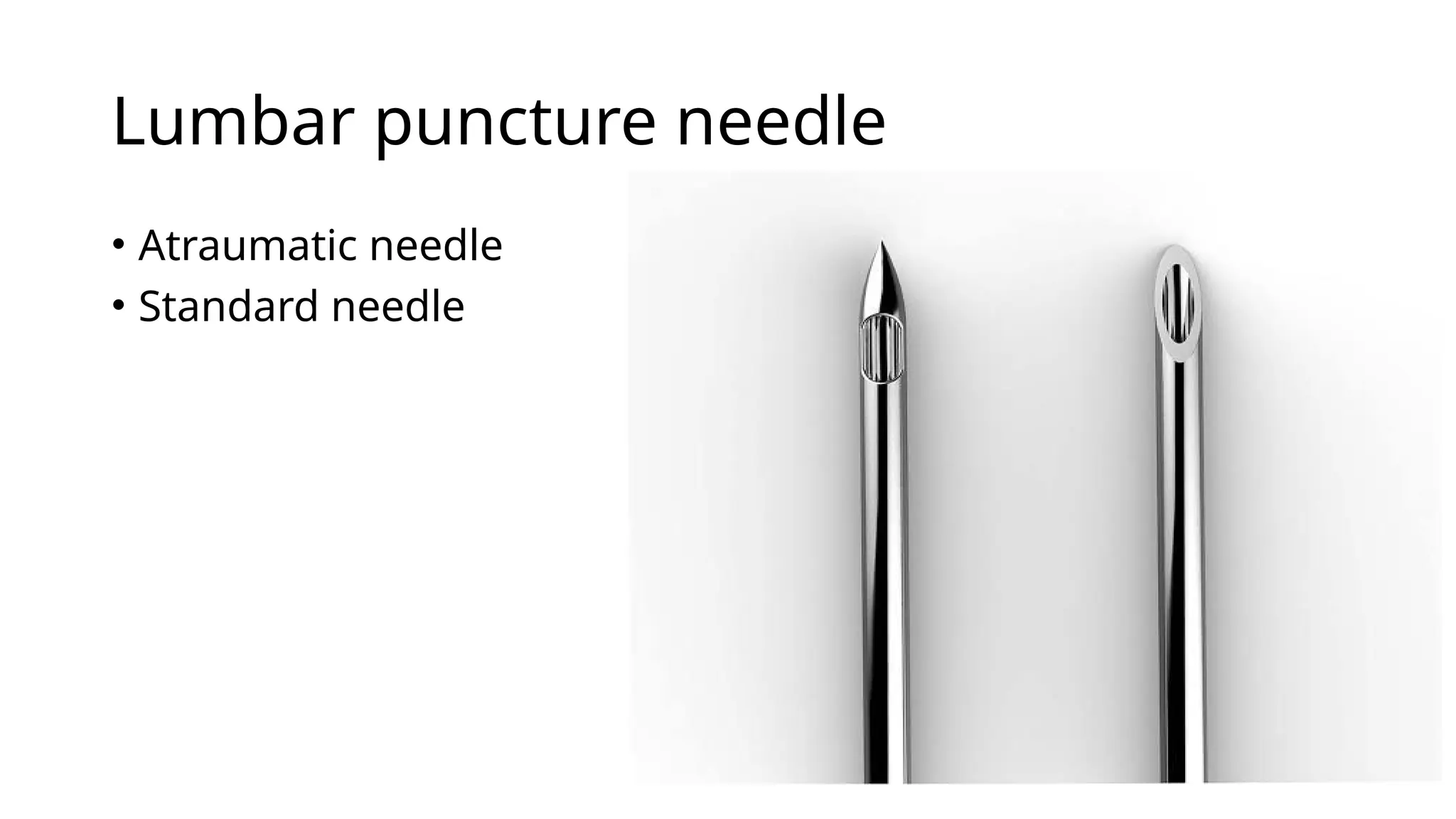
Lumbar puncture needle
• Atraumatic needle
• Standard needle
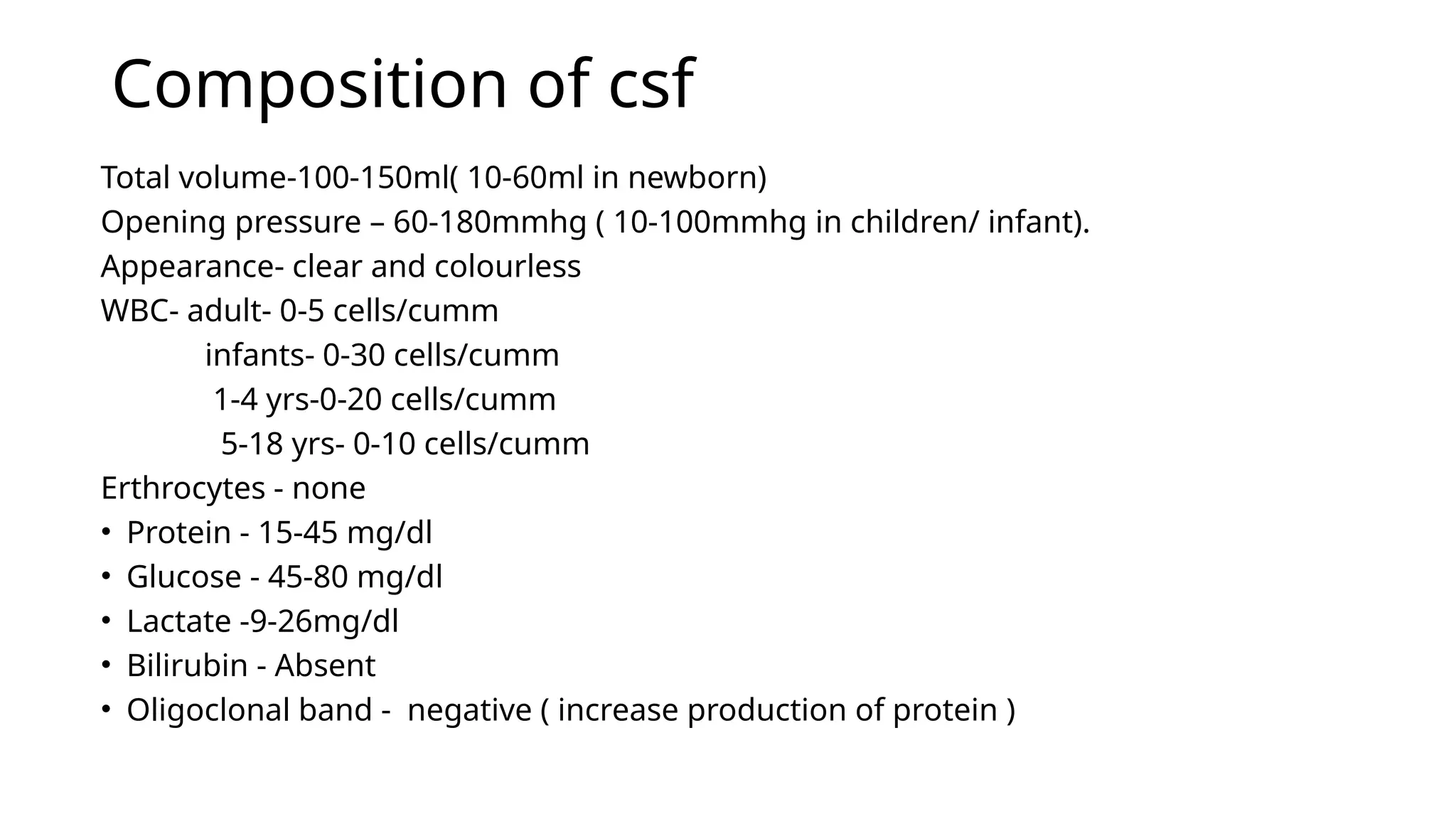
Composition of csf
Total volume-100-150ml( 10-60ml in newborn)
Opening pressure – 60-180mmhg ( 10-100mmhg in children/ infant).
Appearance- clear and colourless
WBC- adult- 0-5 cells/cumm
infants- 0-30 cells/cumm
1-4 yrs-0-20 cells/cumm
5-18 yrs- 0-10 cells/cumm
Erthrocytes - none
• Protein - 15-45 mg/dl
• Glucose - 45-80 mg/dl
• Lactate -9-26mg/dl
• Bilirubin - Absent
• Oligoclonal band - negative ( increase production of protein )
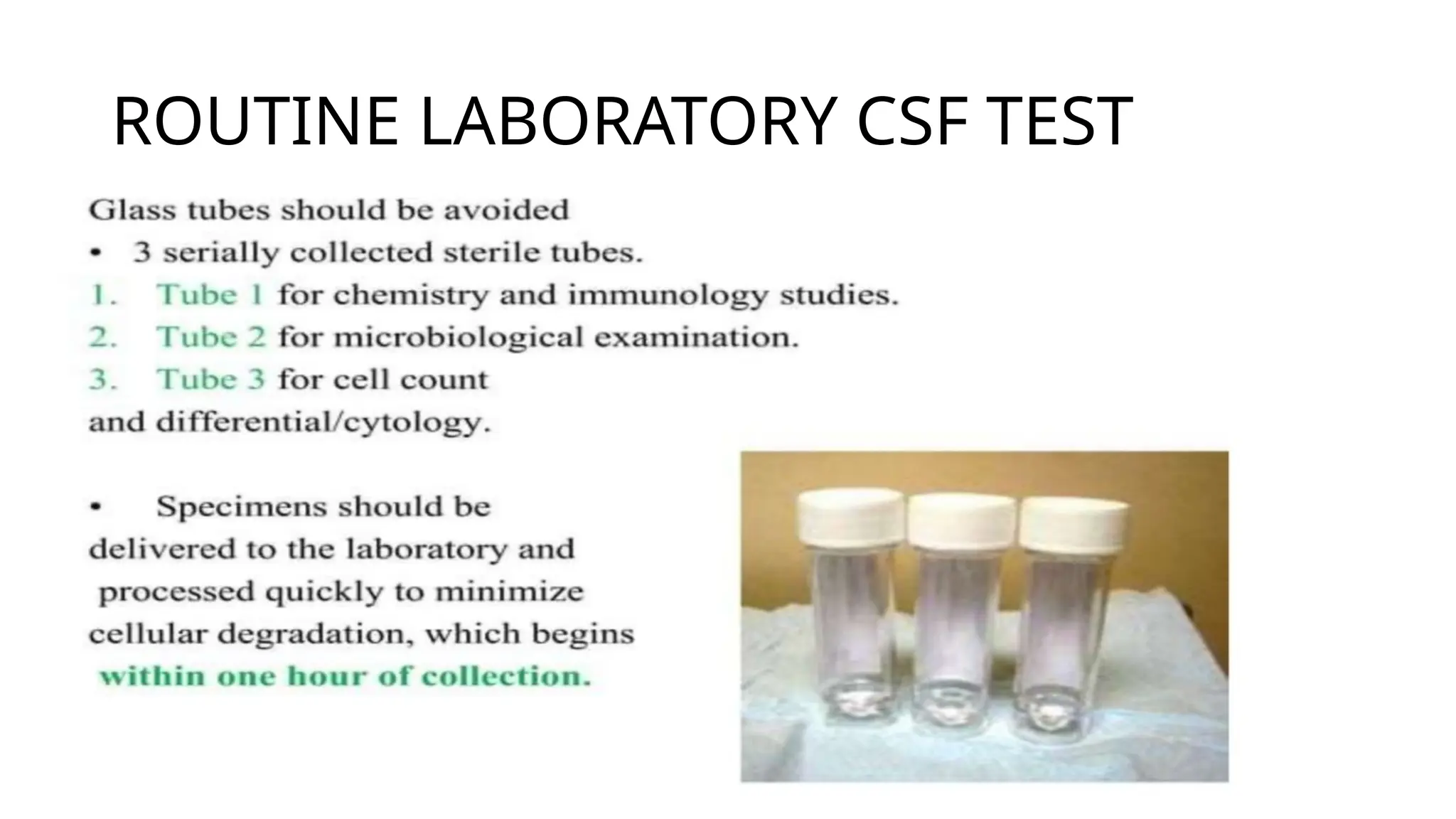
ROUTINE LABORATORY CSF TEST
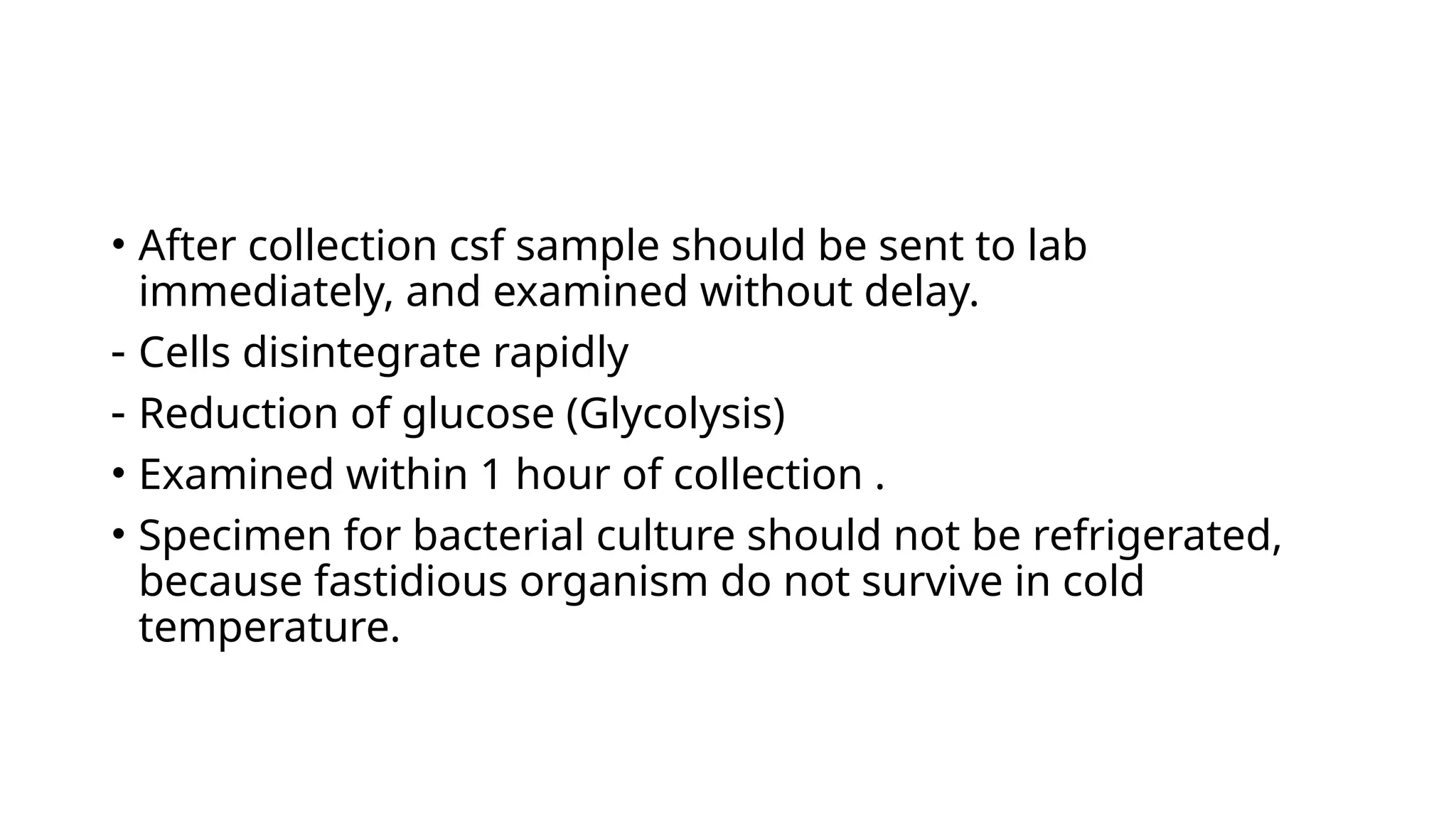
• After collection csf sample should be sent to lab
immediately, and examined without delay.
- Cells disintegrate rapidly
- Reduction of glucose (Glycolysis)
• Examined within 1 hour of collection .
• Specimen for bacterial culture should not be refrigerated,
because fastidious organism do not survive in cold
temperature.
GROSS EXAMINATION
• OPENING PRESSURE
• APPEARANCE
• VISCOSITY
OPENING PRESSURE
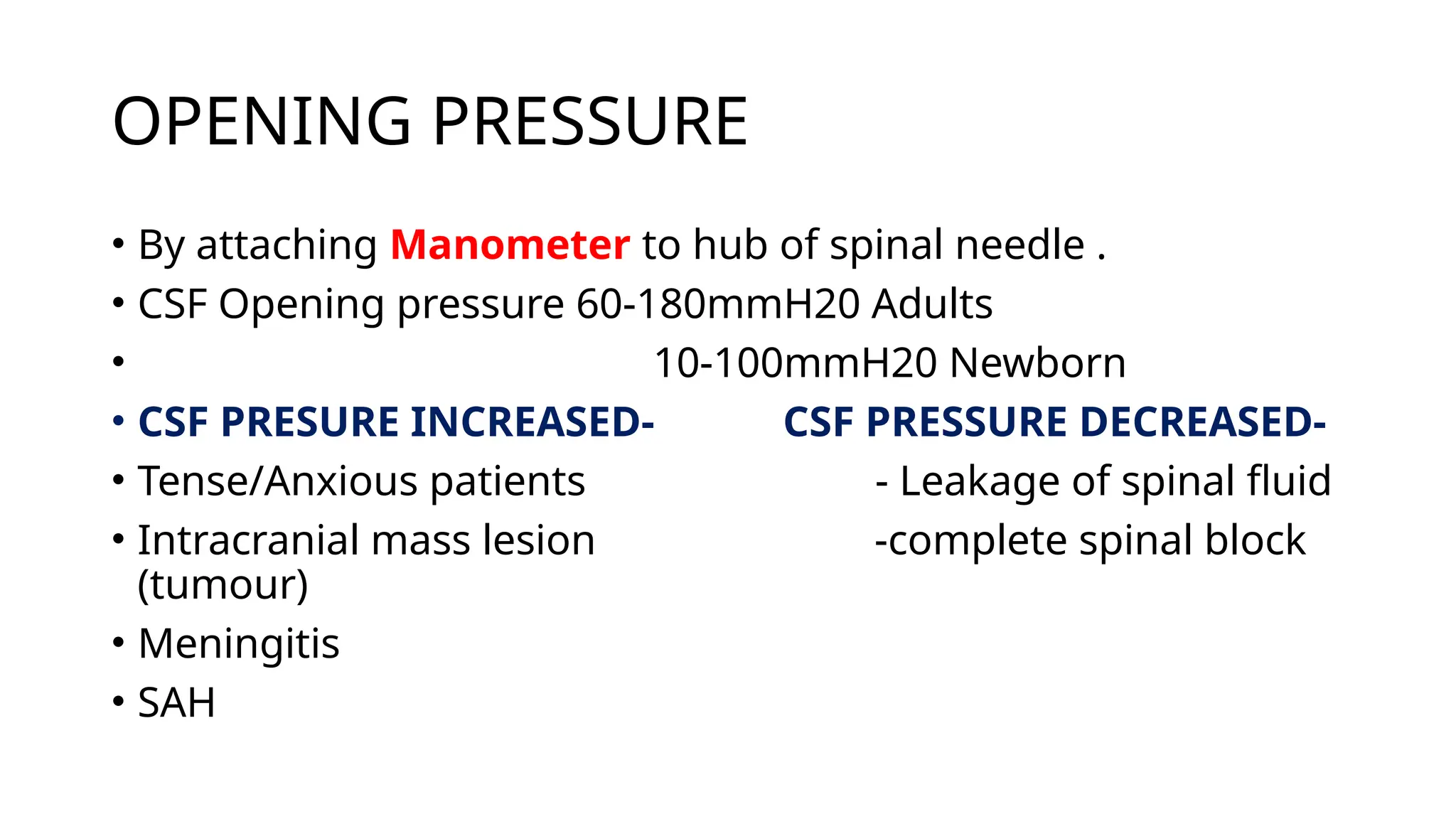
• By attaching Manometer to hub of spinal needle .
• CSF Opening pressure 60-180mmH20 Adults
• 10-100mmH20 Newborn
• CSF PRESURE INCREASED- CSF PRESSURE DECREASED-
• Tense/Anxious patients - Leakage of spinal fluid
• Intracranial mass lesion -complete spinal block
(tumour)
• Meningitis
• SAH
GROSS APPEARANCE
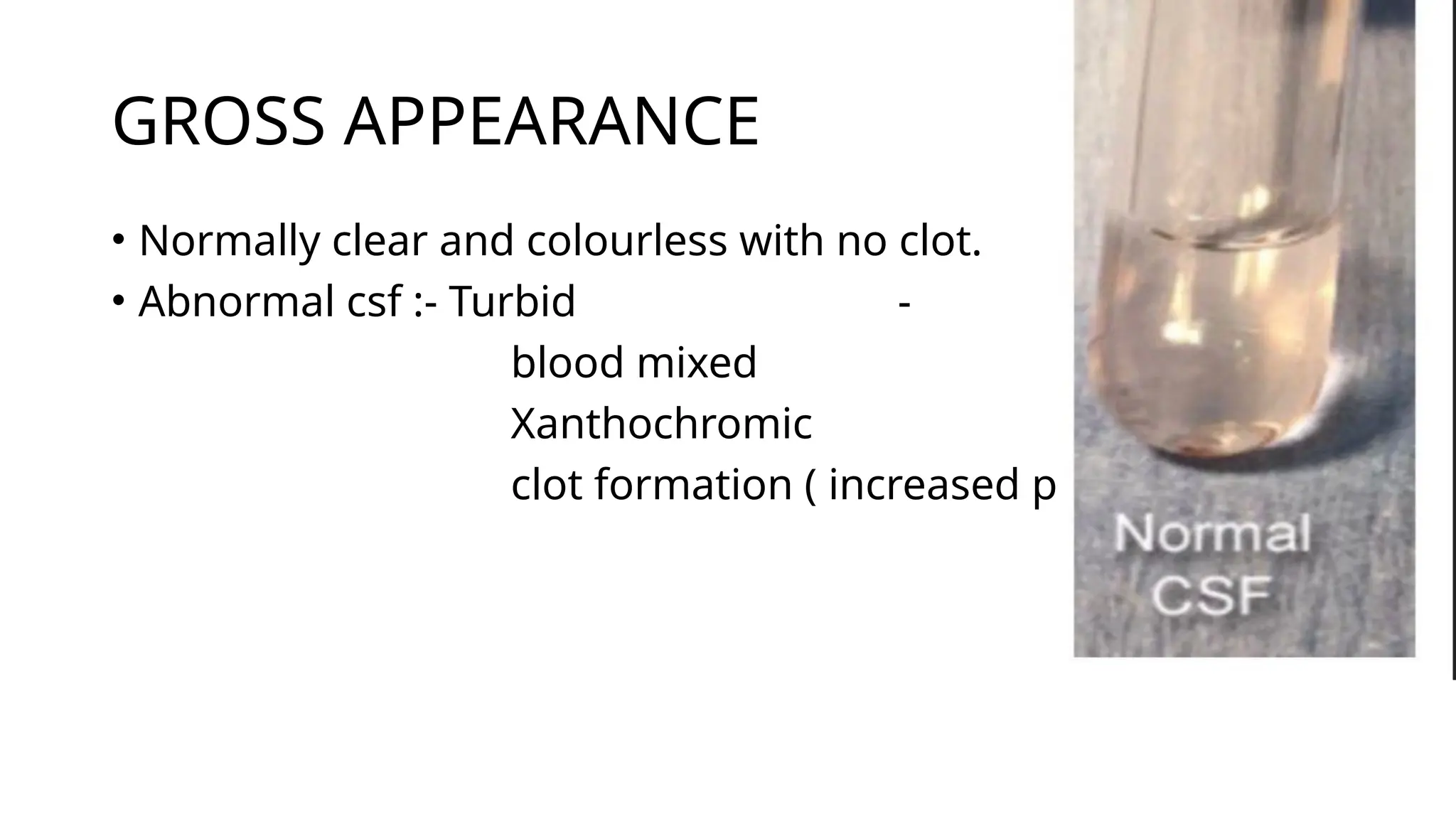
• Normally clear and colourless with no clot.
• Abnormal csf :- Turbid -
blood mixed
Xanthochromic
clot formation ( increased protein)
TURBIDITY
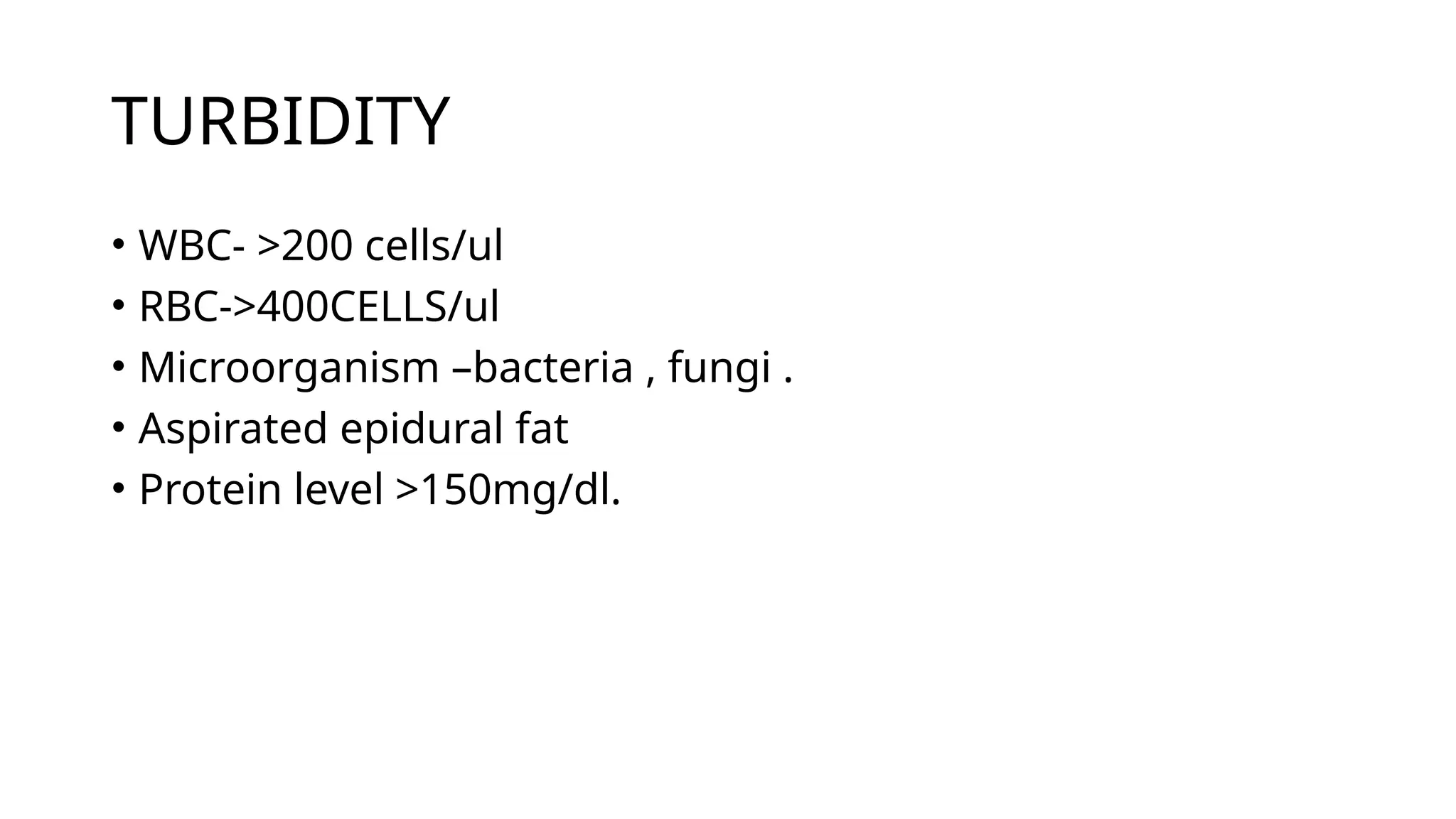
• WBC- >200 cells/ul
• RBC->400CELLS/ul
• Microorganism –bacteria , fungi .
• Aspirated epidural fat
• Protein level >150mg/dl.
Clot formation
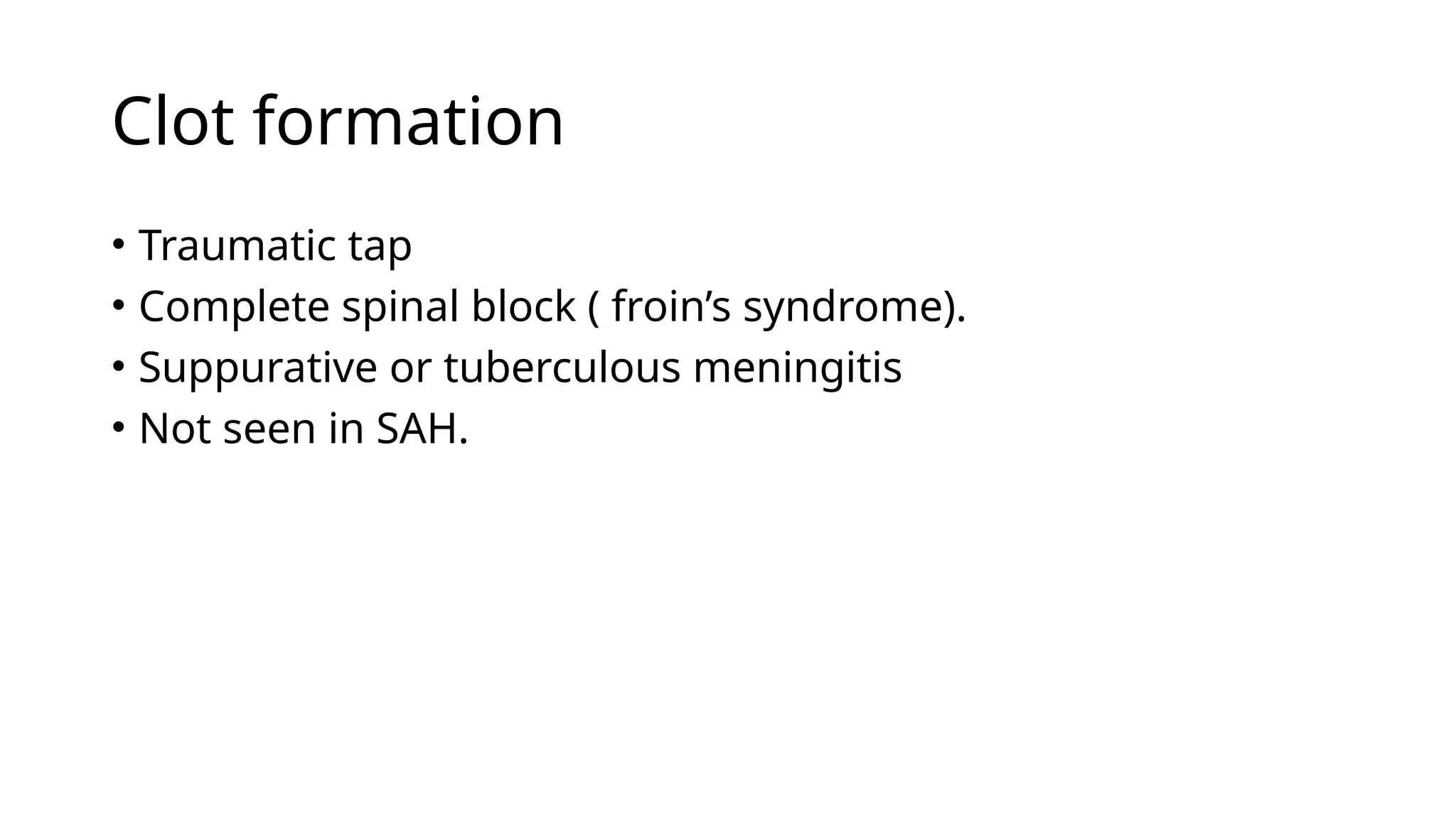
• Traumatic tap
• Complete spinal block ( froin’s syndrome).
• Suppurative or tuberculous meningitis
• Not seen in SAH.
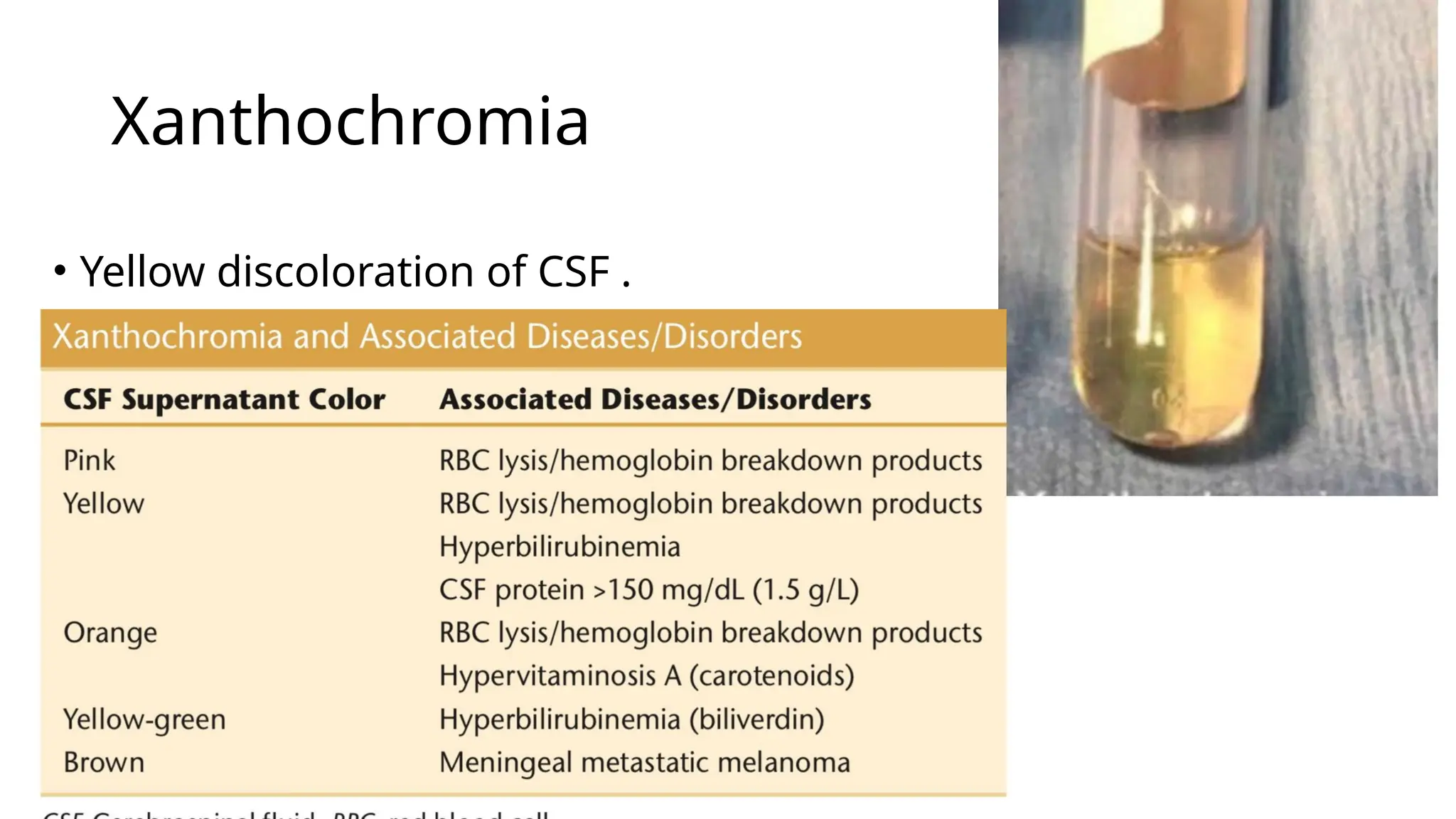
Xanthochromia
• Yellow discoloration of CSF .
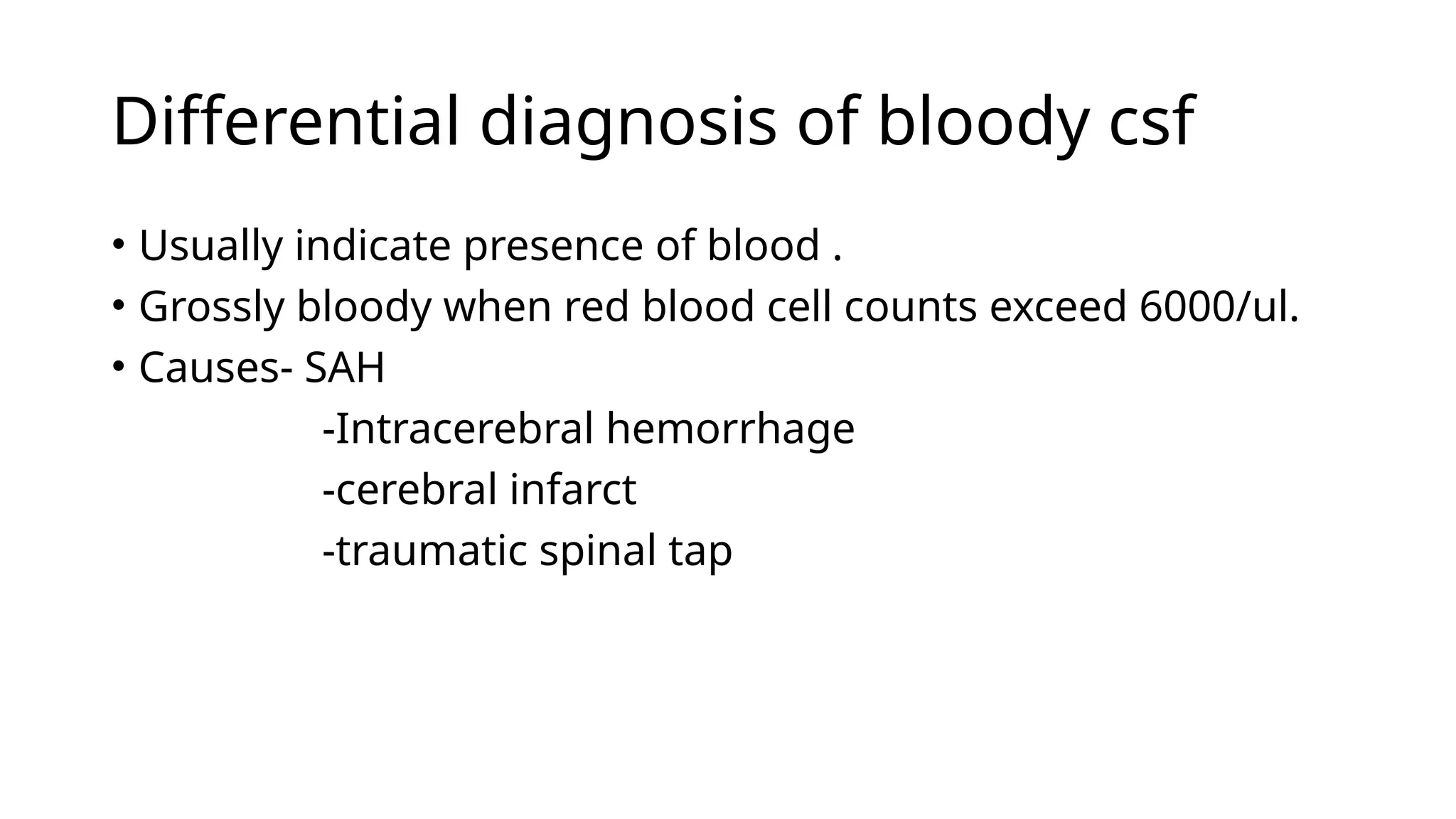
Differential diagnosis of bloody csf
• Usually indicate presence of blood .
• Grossly bloody when red blood cell counts exceed 6000/ul.
• Causes- SAH
-Intracerebral hemorrhage
-cerebral infarct
-traumatic spinal tap
MICROSCOPIC EXAMINATION
• TOTAL CELL COUNT
• DIFFERENTIAL CELL COUNT
DIFFERENTIAL CELL COUNT
• Preparation by centrifuge
• Other technique- cytocentrifuge, sedimentation , filtration
• Normally Lymphocytes and monocytes are present in small
numbers in a ratio of 70:30
• . Monocytes are more in number in neonates and children.
REFERENCES

CSF PPT.pptx important topic on the image and hematology

  • 1.
    IDENTIFY ETIOLOGY OF MENINGITISBASED ON CSF FINDINGS
  • 2.
    ANATOMY AND PHYSIOLOGY •Cerebrospinal fluid (CSF) is present within the subarachnoid space surrounding the brain in the skull and the spinal cord in the spinal column. • It is a clear , colorless , transparent fluid present in the cerebral ventricles, spinal canal and subarachnoid spaces. • Formed mainly by choroid plexus
  • 3.
    Function of CSF •_It's main function is to protect the brain and the spinal cord from injury by acting as a fluid cushion. • It is the medium through which nutrients and the waste products are transported between brain/spinal cord and the blood.
  • 4.
    Formation of CSF •CSF is derived by ultra filtration of plasma and by secretion through the choroid plexus located in the ventricles of the brain. • Reabsorbtion of CSF occurs at the arachnoid villi which projects in the venous sinuses in the duramater. • CSF is produce at the rate of 500 mL/day. • Rate of formation – about 20ml/hr
  • 5.
    Circulation of csf •Lateral ventricle foramen of monro third ventricle cerebral acqueduct fourth ventricle foramen of Luschka subarachnoid space of brain and spinal cord
  • 6.
    Indication of csfexamination Diagnosis of suspected cases- 1) CNS Infections: Meningitis, Encephalitis 2) Inflammatory conditions: multiple sclerosis, Guillain bare syndrome. 3) Infiltrative conditions: Leukemia, lymphoma 4) Administration of drug in CSF (therapeutic aim): Antibiotics Anticancer drugs Anesthetic drugs 5)Introduction of radiographic contrast media for myelograpghy.
  • 7.
    Complications of Lumbarpuncture A)Post puncture headache (d/t leakage of csf) B)Introduction of infection if aseptic precautions. C)Herniation of brain D) Dry tap (failure to obtain csf)
  • 8.
    Contraindication of lumbarpuncture • Patient does not give consent. • Raised intracranial pressure • Skin infection at puncture. • Coagulpathy/ bleeding disorder • Any mass lesion at or above lumbar puncture site.
  • 9.
    Csf collection • Lumbarpuncture • Cisternal puncture • Lateral cervical puncture • Site: adult L3-L4 OR L4-L5 • Infant/children L4-L5
  • 10.
    Lumbar puncture needle •Atraumatic needle • Standard needle
  • 11.
    Composition of csf Totalvolume-100-150ml( 10-60ml in newborn) Opening pressure – 60-180mmhg ( 10-100mmhg in children/ infant). Appearance- clear and colourless WBC- adult- 0-5 cells/cumm infants- 0-30 cells/cumm 1-4 yrs-0-20 cells/cumm 5-18 yrs- 0-10 cells/cumm Erthrocytes - none • Protein - 15-45 mg/dl • Glucose - 45-80 mg/dl • Lactate -9-26mg/dl • Bilirubin - Absent • Oligoclonal band - negative ( increase production of protein )
  • 12.
  • 13.
    • After collectioncsf sample should be sent to lab immediately, and examined without delay. - Cells disintegrate rapidly - Reduction of glucose (Glycolysis) • Examined within 1 hour of collection . • Specimen for bacterial culture should not be refrigerated, because fastidious organism do not survive in cold temperature.
  • 14.
    GROSS EXAMINATION • OPENINGPRESSURE • APPEARANCE • VISCOSITY
  • 15.
    OPENING PRESSURE • Byattaching Manometer to hub of spinal needle . • CSF Opening pressure 60-180mmH20 Adults • 10-100mmH20 Newborn • CSF PRESURE INCREASED- CSF PRESSURE DECREASED- • Tense/Anxious patients - Leakage of spinal fluid • Intracranial mass lesion -complete spinal block (tumour) • Meningitis • SAH
  • 16.
    GROSS APPEARANCE • Normallyclear and colourless with no clot. • Abnormal csf :- Turbid - blood mixed Xanthochromic clot formation ( increased protein)
  • 17.
    TURBIDITY • WBC- >200cells/ul • RBC->400CELLS/ul • Microorganism –bacteria , fungi . • Aspirated epidural fat • Protein level >150mg/dl.
  • 18.
    Clot formation • Traumatictap • Complete spinal block ( froin’s syndrome). • Suppurative or tuberculous meningitis • Not seen in SAH.
  • 19.
  • 20.
    Differential diagnosis ofbloody csf • Usually indicate presence of blood . • Grossly bloody when red blood cell counts exceed 6000/ul. • Causes- SAH -Intracerebral hemorrhage -cerebral infarct -traumatic spinal tap
  • 21.
    MICROSCOPIC EXAMINATION • TOTALCELL COUNT • DIFFERENTIAL CELL COUNT
  • 23.
    DIFFERENTIAL CELL COUNT •Preparation by centrifuge • Other technique- cytocentrifuge, sedimentation , filtration • Normally Lymphocytes and monocytes are present in small numbers in a ratio of 70:30 • . Monocytes are more in number in neonates and children.
  • 24.