Lecture 02
 The Relational Data Model
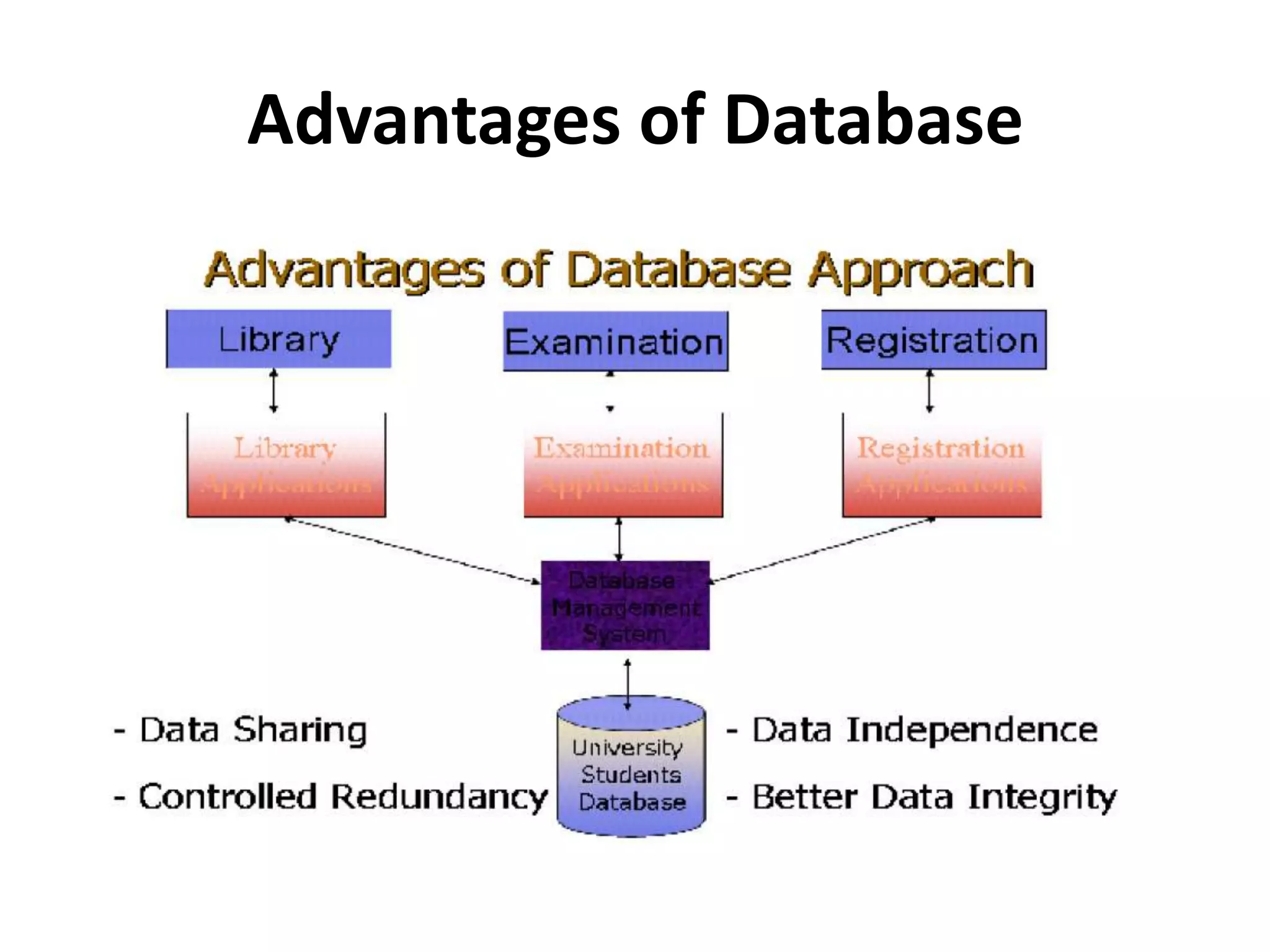
Advantages of Database
•   Data Consistency
•   Better Data Security
•   Faster Application Development
•   Economy of Scale
•   Better Concurrency Control
•   Better Backup and Recovery Facility
The Range of
            Database Applications
• Personal Database – standalone desktop database

• Workgroup Database – local area network (<25 users)

• Department Database – local area network (25-100 users)

• Enterprise Database – wide-area network (hundreds or thousands of
  users)
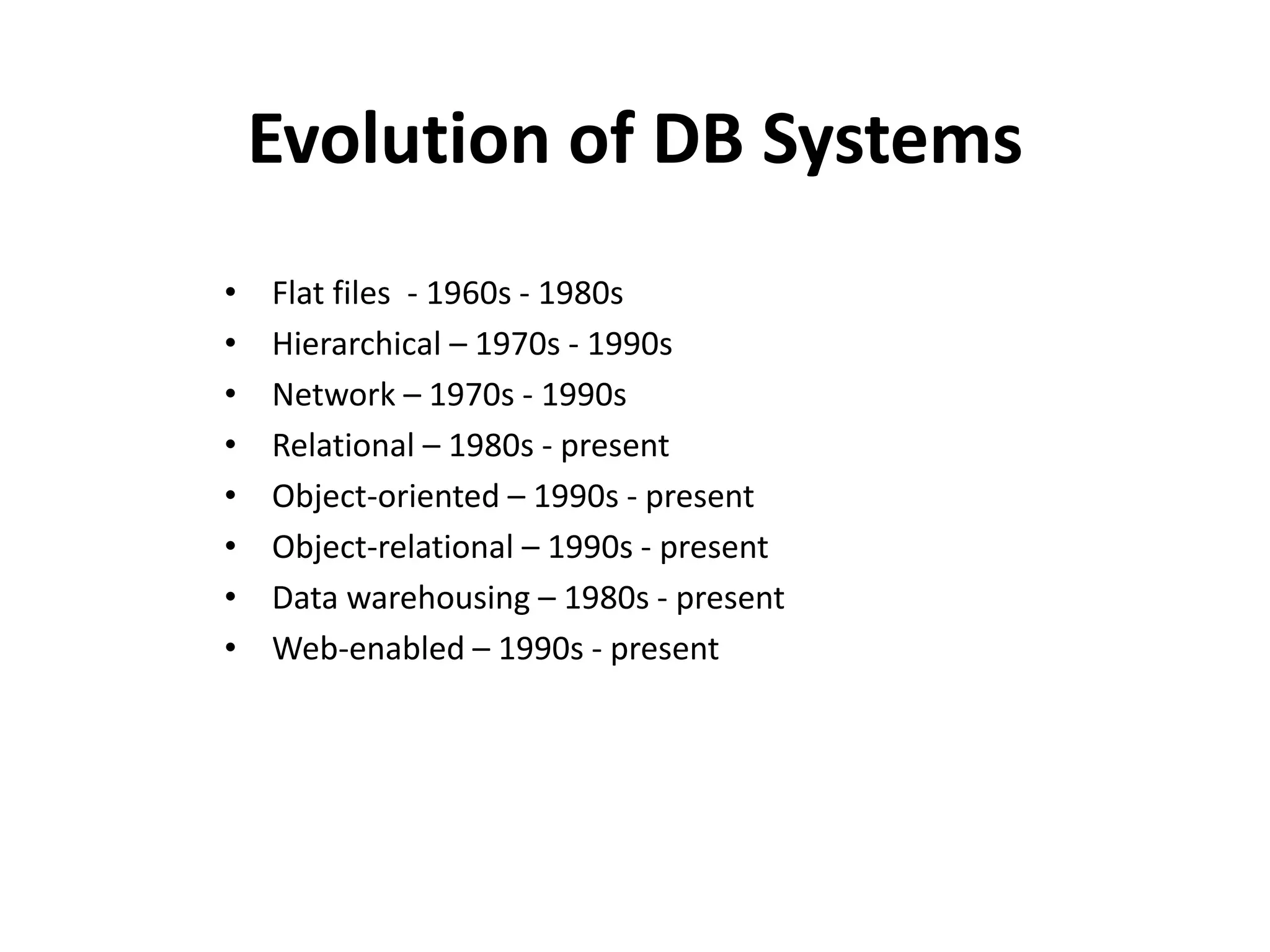
Evolution of DB Systems
•   Flat files - 1960s - 1980s
•   Hierarchical – 1970s - 1990s
•   Network – 1970s - 1990s
•   Relational – 1980s - present
•   Object-oriented – 1990s - present
•   Object-relational – 1990s - present
•   Data warehousing – 1980s - present
•   Web-enabled – 1990s - present
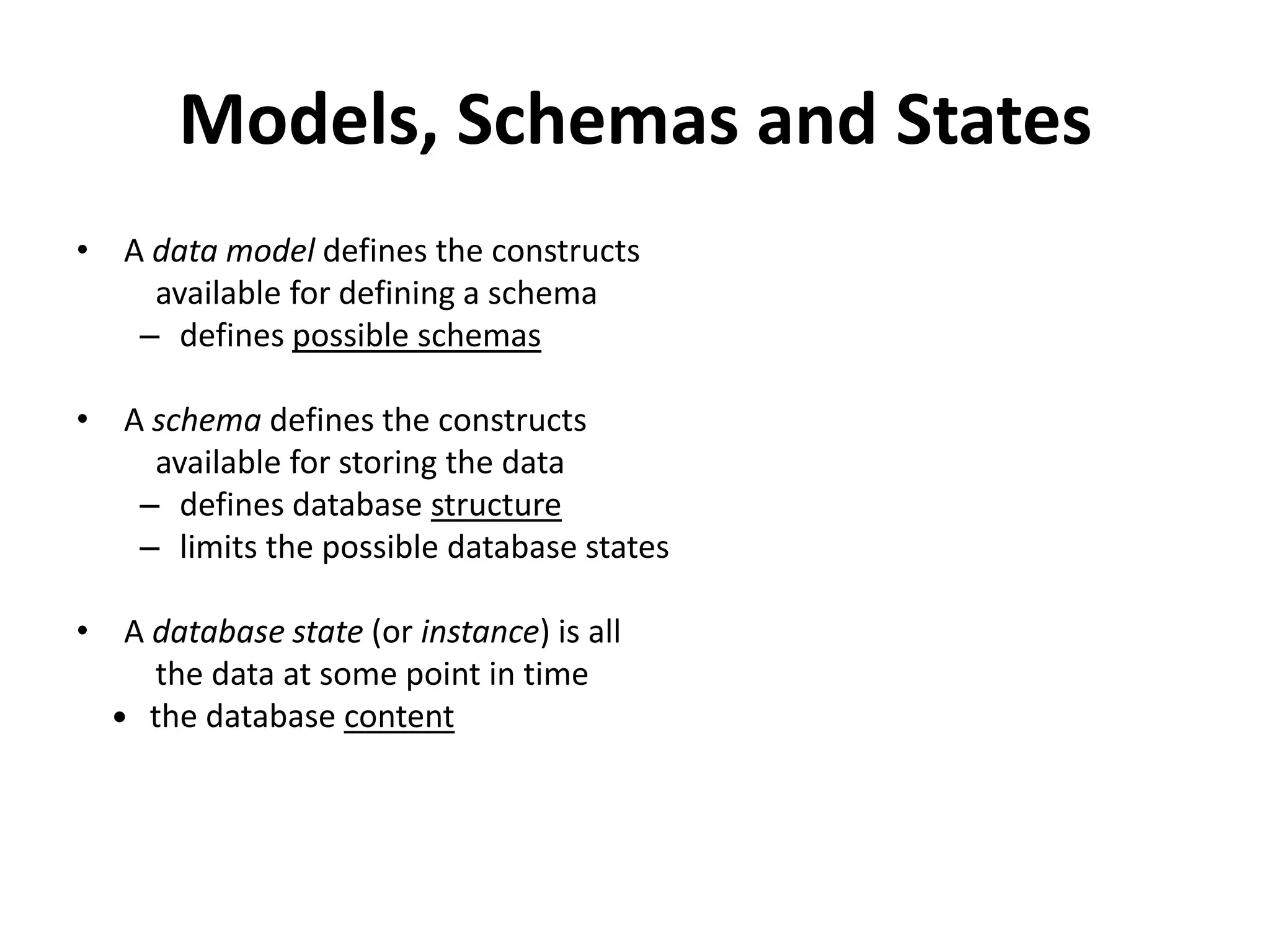
Models, Schemas and States
• A data model defines the constructs
    available for defining a schema
   – defines possible schemas

• A schema defines the constructs
    available for storing the data
   – defines database structure
   – limits the possible database states

• A database state (or instance) is all
    the data at some point in time
   the database content
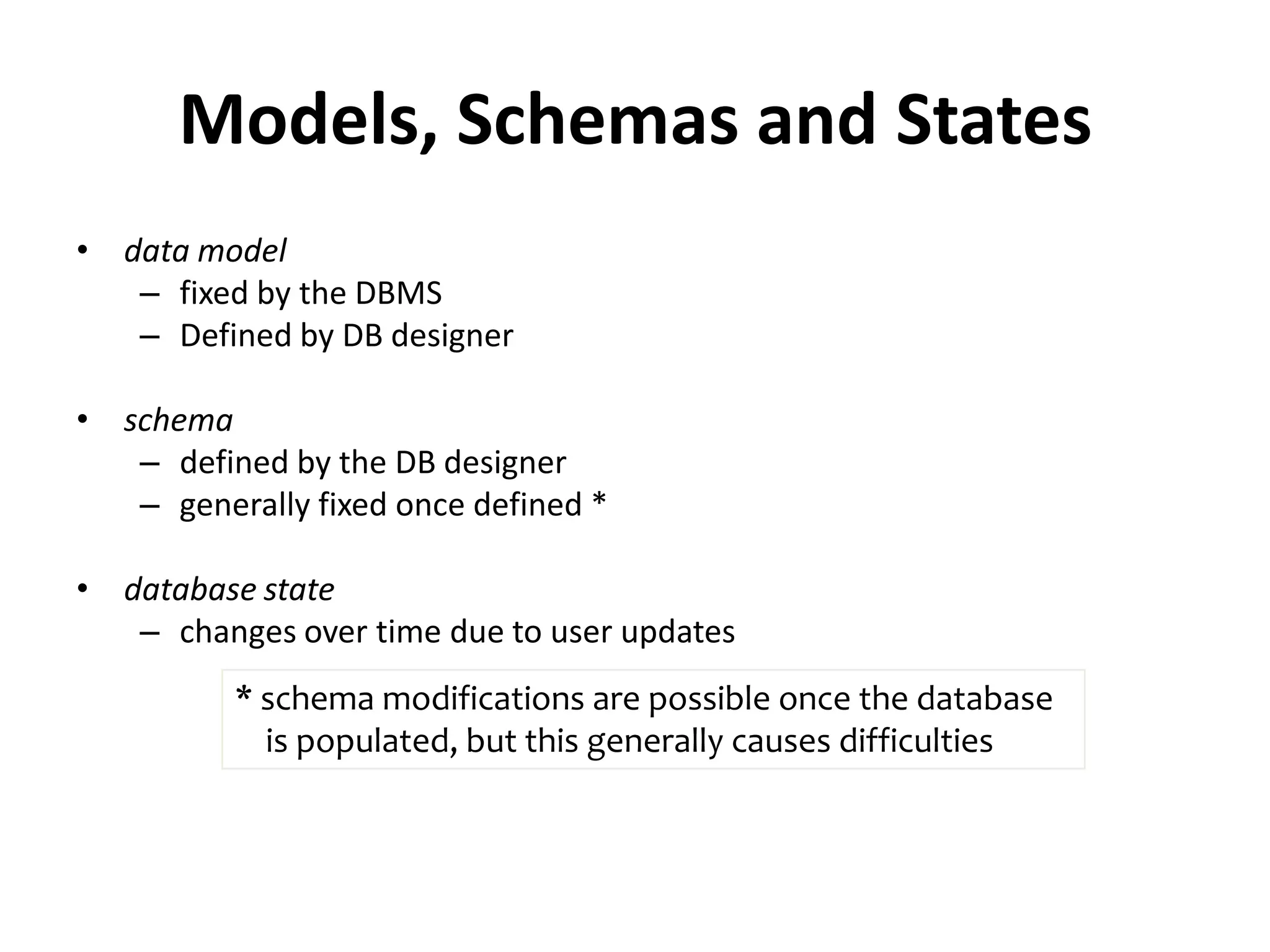
Models, Schemas and States
• data model
   – fixed by the DBMS
   – Defined by DB designer

• schema
   – defined by the DB designer
   – generally fixed once defined *

• database state
   – changes over time due to user updates
          * schema modifications are possible once the database
            is populated, but this generally causes difficulties
RELATION SCHEMAS
AND
RELATION INSTANCES
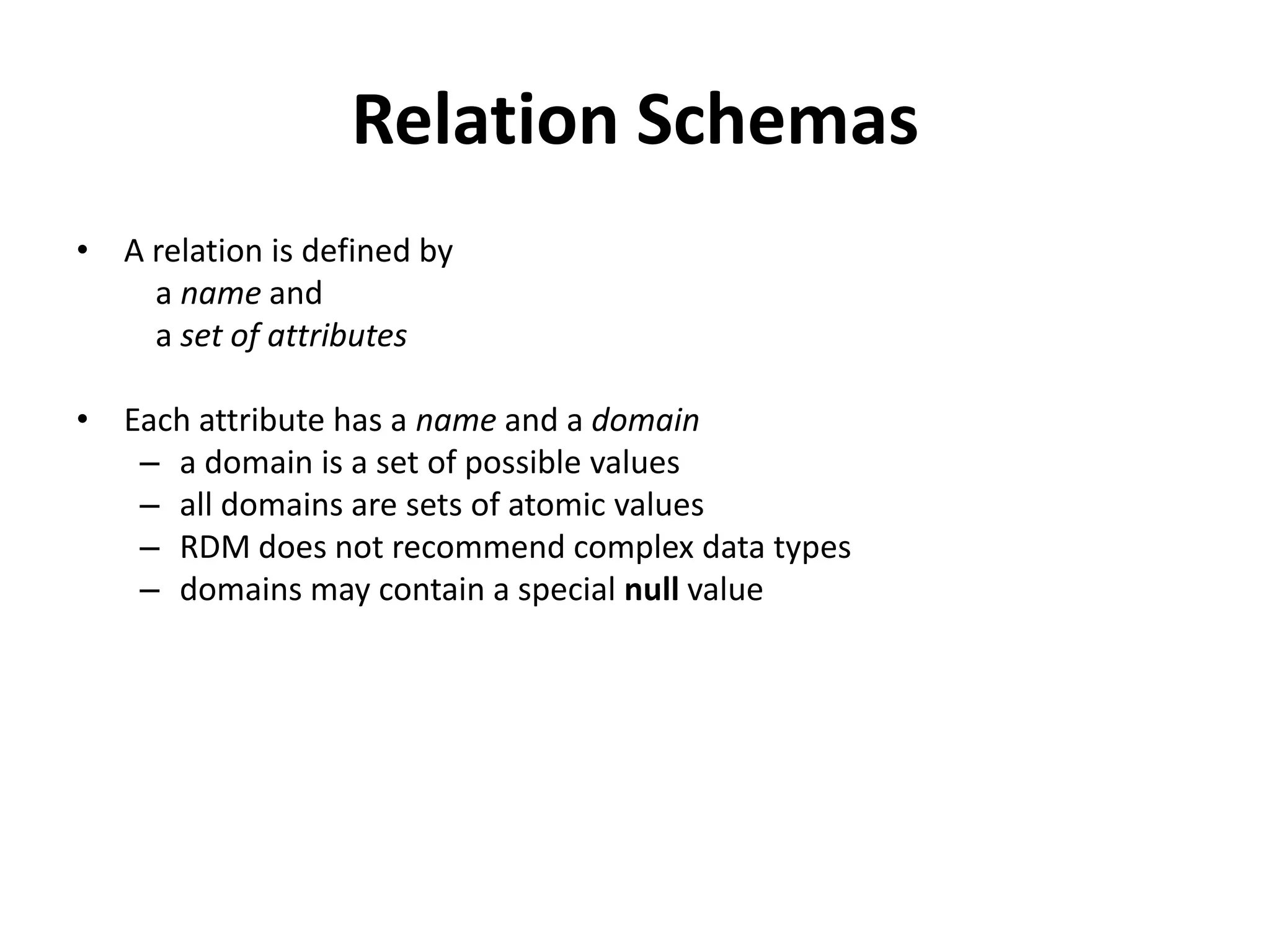
Relation Schemas
• A relation is defined by
    a name and
    a set of attributes

• Each attribute has a name and a domain
   – a domain is a set of possible values
   – all domains are sets of atomic values
   – RDM does not recommend complex data types
   – domains may contain a special null value
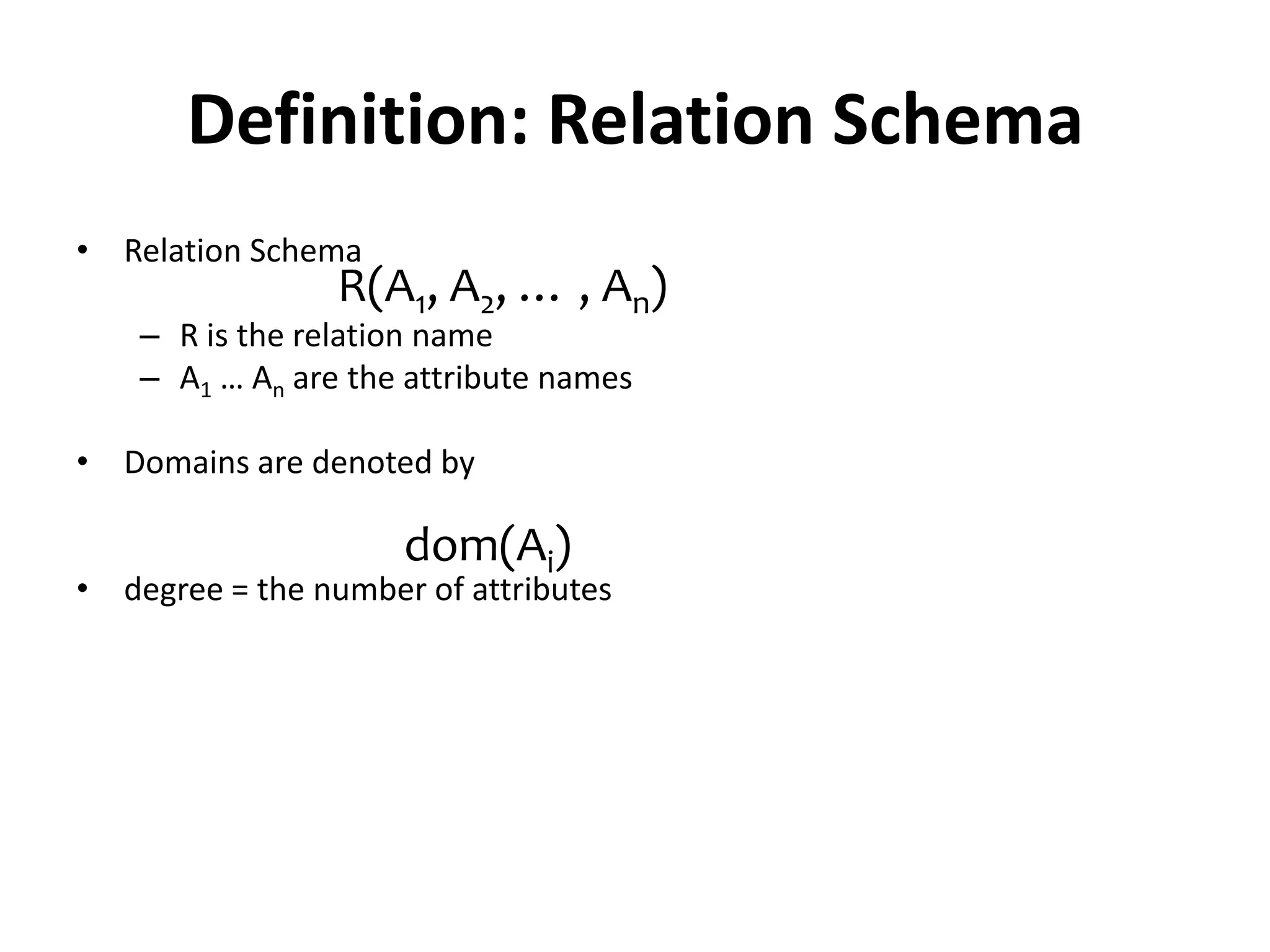
Definition: Relation Schema
• Relation Schema
                 R(A1, A2, … , An)
    – R is the relation name
    – A1 … An are the attribute names

• Domains are denoted by

                     dom(Ai)
• degree = the number of attributes
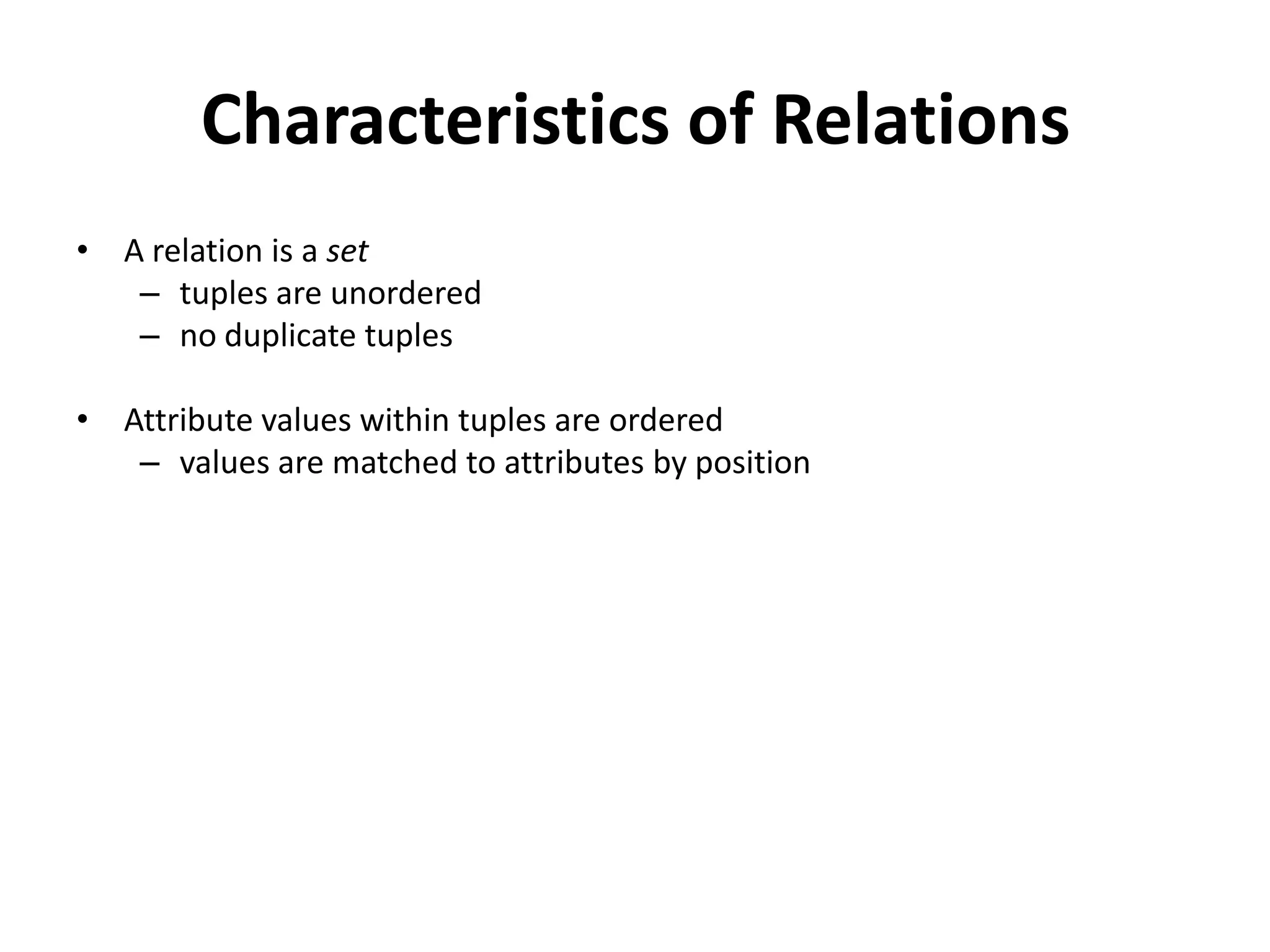
Characteristics of Relations
• A relation is a set
   – tuples are unordered
   – no duplicate tuples

• Attribute values within tuples are ordered
   – values are matched to attributes by position
Characteristics of Relations
• Values in tuples are atomic

• Each Column has distinct name

• The values of the attribute come from the same domain

• The order of the column is immaterial

• Each row/tuple/record is distinct
SQL: Relation States
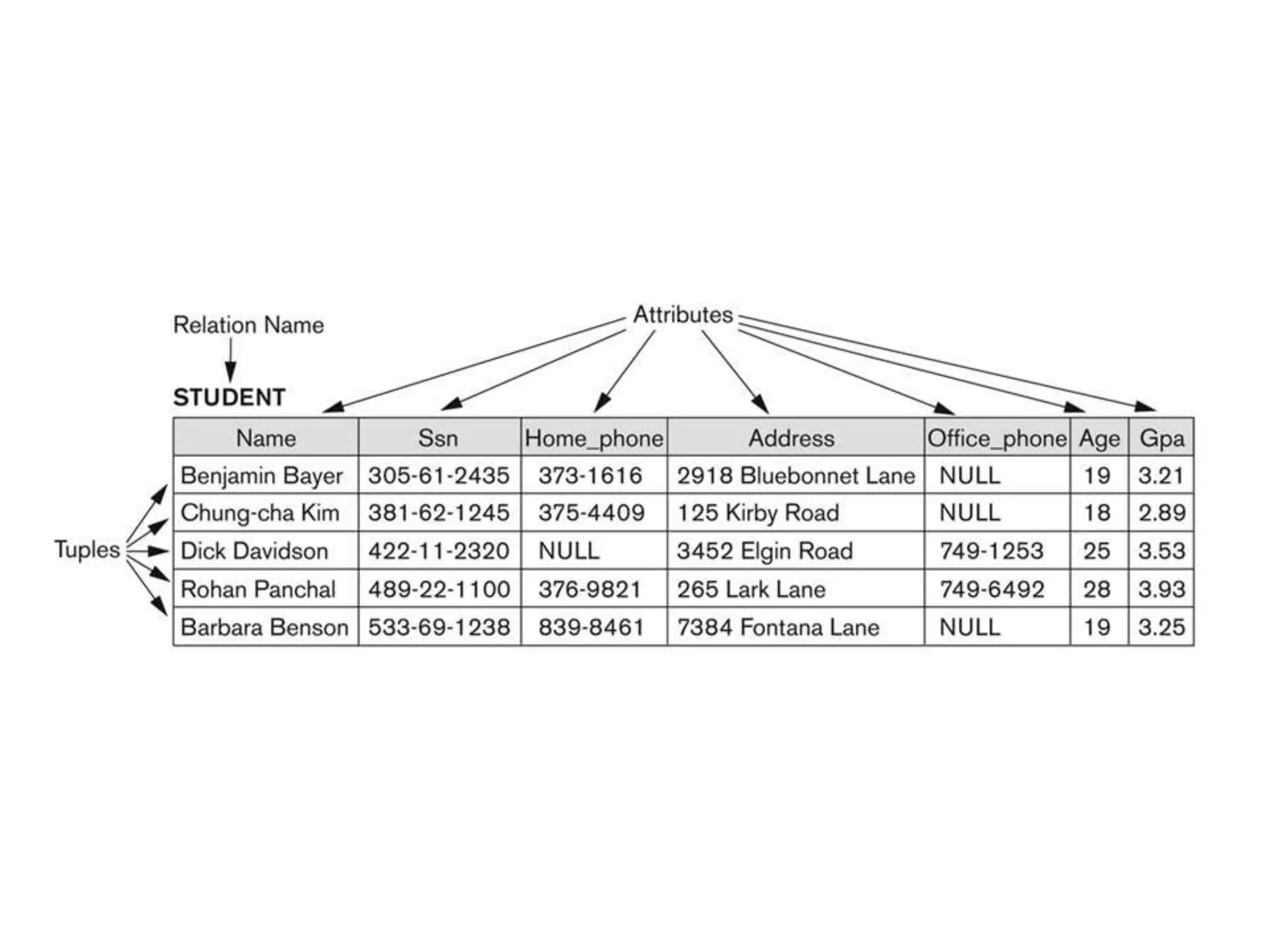
• A relation is viewed as a table

• The attributes define the columns of the table

• Each row in the table holds related
    values for each attribute
   – a row often represents a conceptual entity (object)

• Values in each column must come
    from the domain of the attribute
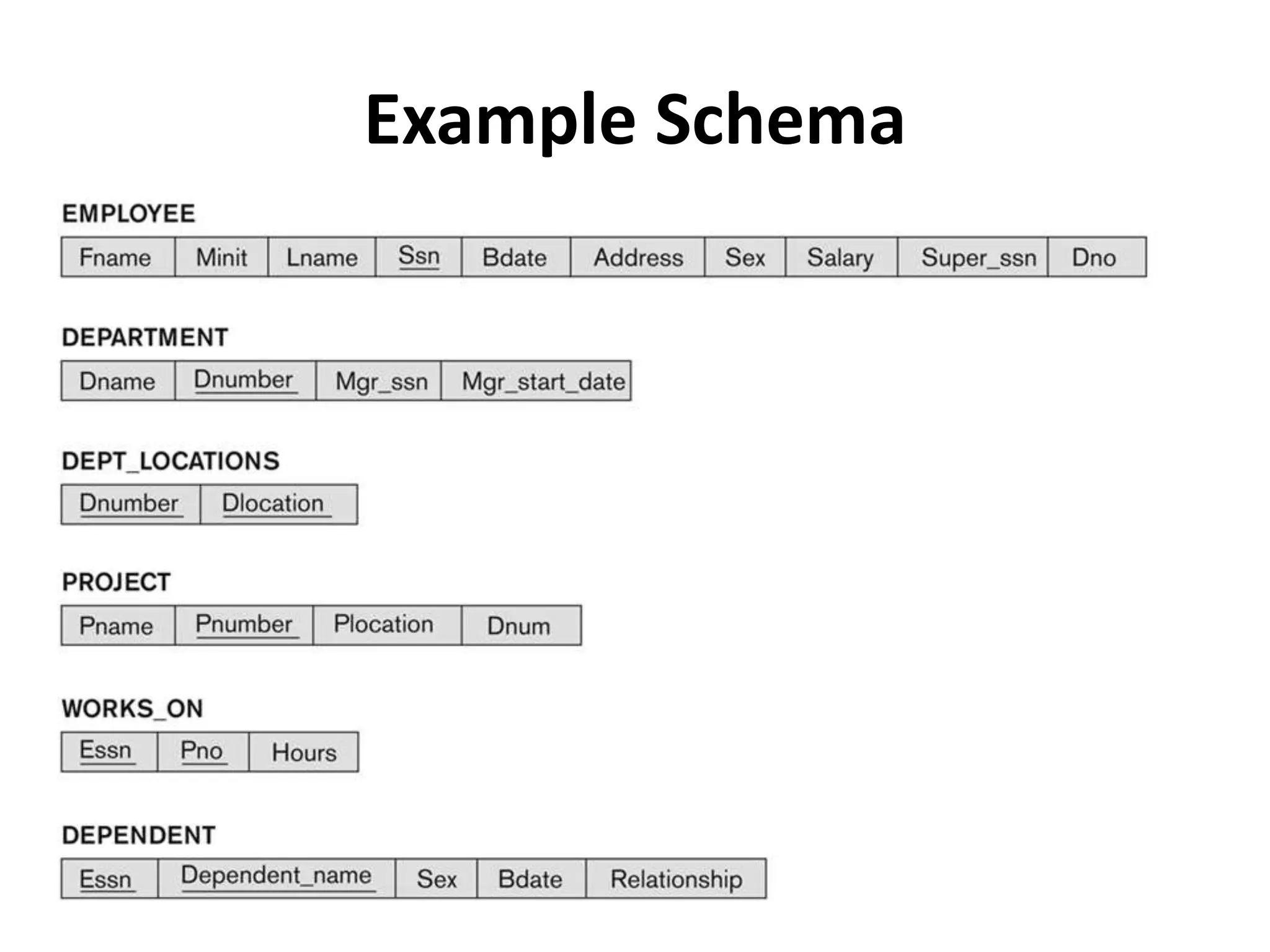
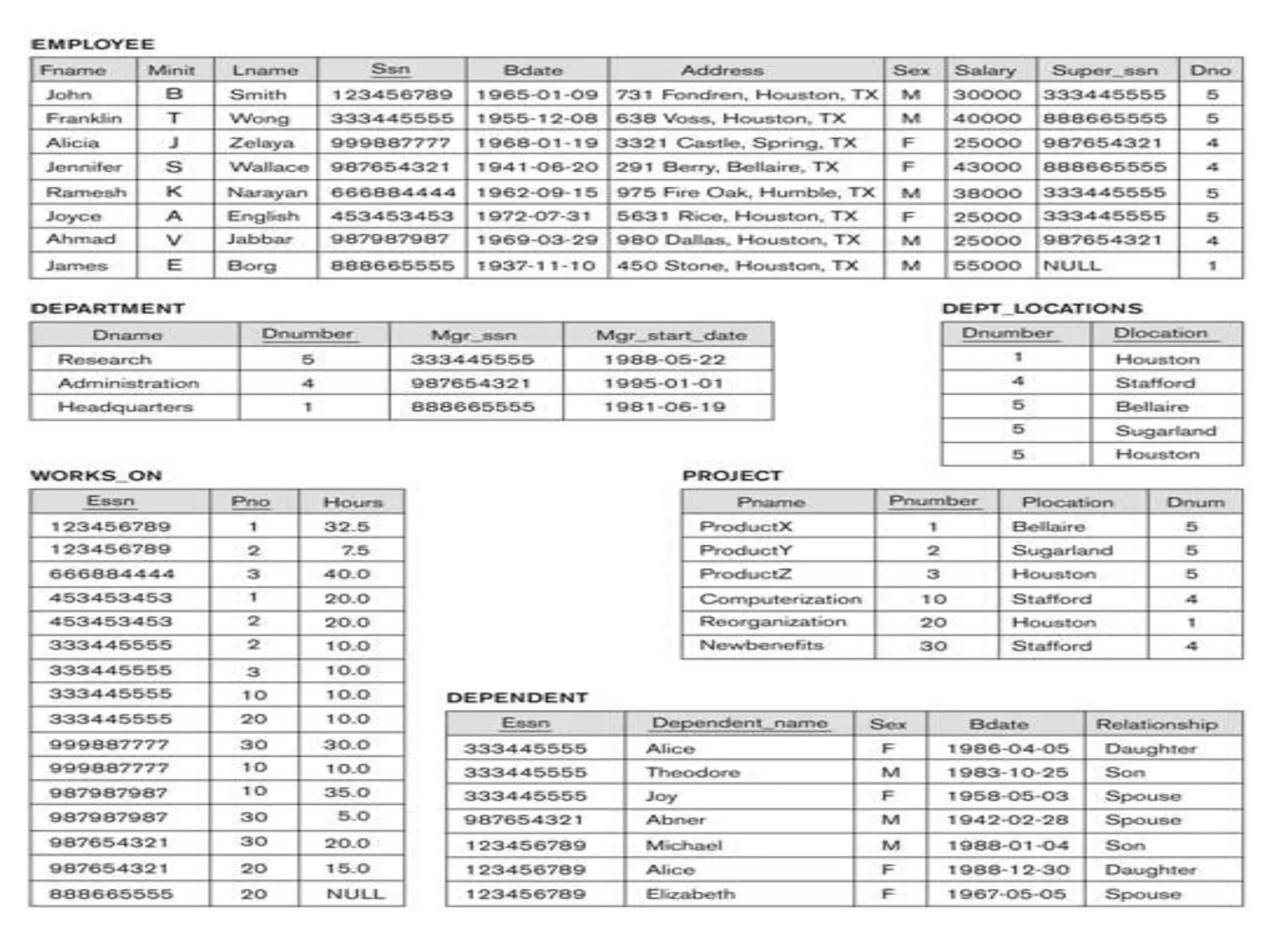
Example Schema
Cs 371-lecture-02

Cs 371-lecture-02

  • 1.
    Lecture 02 TheRelational Data Model
  • 2.
  • 3.
    Advantages of Database • Data Consistency • Better Data Security • Faster Application Development • Economy of Scale • Better Concurrency Control • Better Backup and Recovery Facility
  • 4.
    The Range of Database Applications • Personal Database – standalone desktop database • Workgroup Database – local area network (<25 users) • Department Database – local area network (25-100 users) • Enterprise Database – wide-area network (hundreds or thousands of users)
  • 5.
    Evolution of DBSystems • Flat files - 1960s - 1980s • Hierarchical – 1970s - 1990s • Network – 1970s - 1990s • Relational – 1980s - present • Object-oriented – 1990s - present • Object-relational – 1990s - present • Data warehousing – 1980s - present • Web-enabled – 1990s - present
  • 6.
    Models, Schemas andStates • A data model defines the constructs available for defining a schema – defines possible schemas • A schema defines the constructs available for storing the data – defines database structure – limits the possible database states • A database state (or instance) is all the data at some point in time  the database content
  • 7.
    Models, Schemas andStates • data model – fixed by the DBMS – Defined by DB designer • schema – defined by the DB designer – generally fixed once defined * • database state – changes over time due to user updates * schema modifications are possible once the database is populated, but this generally causes difficulties
  • 8.
  • 9.
    Relation Schemas • Arelation is defined by a name and a set of attributes • Each attribute has a name and a domain – a domain is a set of possible values – all domains are sets of atomic values – RDM does not recommend complex data types – domains may contain a special null value
  • 11.
    Definition: Relation Schema •Relation Schema R(A1, A2, … , An) – R is the relation name – A1 … An are the attribute names • Domains are denoted by dom(Ai) • degree = the number of attributes
  • 12.
    Characteristics of Relations •A relation is a set – tuples are unordered – no duplicate tuples • Attribute values within tuples are ordered – values are matched to attributes by position
  • 13.
    Characteristics of Relations •Values in tuples are atomic • Each Column has distinct name • The values of the attribute come from the same domain • The order of the column is immaterial • Each row/tuple/record is distinct
  • 14.
    SQL: Relation States •A relation is viewed as a table • The attributes define the columns of the table • Each row in the table holds related values for each attribute – a row often represents a conceptual entity (object) • Values in each column must come from the domain of the attribute
  • 15.