Downloaded 41 times





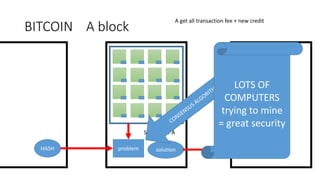












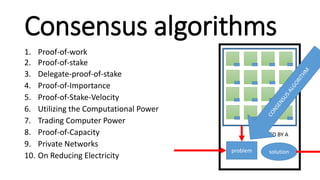











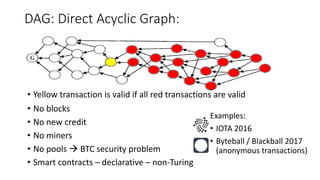






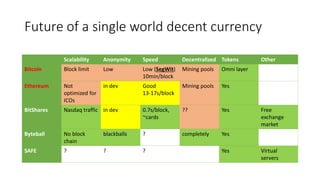


Cryptocurrencies have technological differences in their blockchains, consensus algorithms, and features. Blockchains solve the double spending problem by only allowing one valid transaction when multiple are presented. Bitcoin has faced issues with decentralization due to mining pools and scalability due to its 1MB block size limit. Newer cryptocurrencies implement different consensus algorithms like proof-of-stake to reduce energy use compared to Bitcoin's proof-of-work. Decentralized exchanges allow trading of cryptocurrencies without centralized control through techniques like multisignature transactions. Future cryptocurrencies may achieve better scalability, anonymity, and decentralization through approaches like directed acyclic graphs and masternode-based networks.


