PROVIDING LOANS TO BUSINESS AND
CONSUMERS
presented by:
Shumaila Bibi
PROVIDING LOANS TO BUSINESS
AND CONSUMERS
Types of loans made by banks
Factors determining the growth and mix of
bank loans
Regulation of lending
Establishing a written loan policy and steps in
the lending process
Credit analysis and sources of information
about loan customers
Handling problem loan situations
WHAT IS LOAN?
The act of giving money, property or other material
goods to another party in exchange for future repayment
of the principal amount along with interest or other
finance charges.
real estate
loans
Agricultural
loans
Auto
loans
personal
loans
short term
loans
long-term
loans
educational
loans
Types of
loans
FACTORS DETERMINING THE GROWTH AND MIX
OF BANK LOANS
 Characteristic of the market area its serves
 Lender size
 Expertise of management
 Loan policy
 Types of lending institution
 Expected yield
REGULATION OF LENDING
 provide information to members
 commercial/consumer related data
 2002 affect NPA recovery SARFAESI
(Securitization and Reconstruction of Financial and
Enforcement Security interest).
ESTABLISH A WRITTEN LOAN POLICY
one of the most important way a lending institution
can make sure its loans meet regulatory standards
and are profitable is to establish a written loan
policy. These elements include:
 A goal statement for the loan portfolio.
 specification of the lending authority given to each
loan officer and loan committee.
 lines of responsibility in making assignments and
reporting information.
 operating procedures for soliciting, evaluating, and
making decisions on customer loan applications.
STEPS IN THE LENDING PROCESS
finding prospective
loan customers
Evaluating a
prospective
customer's
character and
sincerity of purpose
Making site visits
and evaluating a
prospective
customer's credit
record
Evaluating a
prospective
customer's
financial condition
Assessing possible
loan collateral
and signing the
loan agreement
monitoring
compliance with the
loan agreement and
other customer
service needs
CREDIT ANALYSIS
1) Is the borrower creditworthy?
2)Can the loan agreement be properly structured and
documented?
3) Can the lender perfect its claim against the
borrower's earnings and any assets that may be
pledged as collateral?
SOURCES OF INFORMATION ABOUT LOAN
CUSTOMERS
information about business borrowing money:
 Financial reports
 copies of boards of directors' resolutions
 credit rating
 The world wide web
UNIT# 4
LENDING TO BUSINESS FIRMS
short term business loans:
 self-liquidating inventory loans
 working capital loans
 interim construction financing
 security dealer financing
 retailer and equipment financing
 Asset-based loans
 Syndicated loans
long term business loans:
 Term loans to support the purchase of equipment, rolling stock,
and structures
 Revolving credit financing
 project loans
 loans to support acquisitions of other business firms
ANALYZING BUSINESS LOAN APPLICATIONS
 your credit history
 your cash flow history and projections for the
business
 your collateral available to secure the loan
 your character
 capacity
 control
PREPARING SOURCES AND USES OF FUNDS STATEMENT
FORM BUSINESS FINANCIAL STATEMENTS
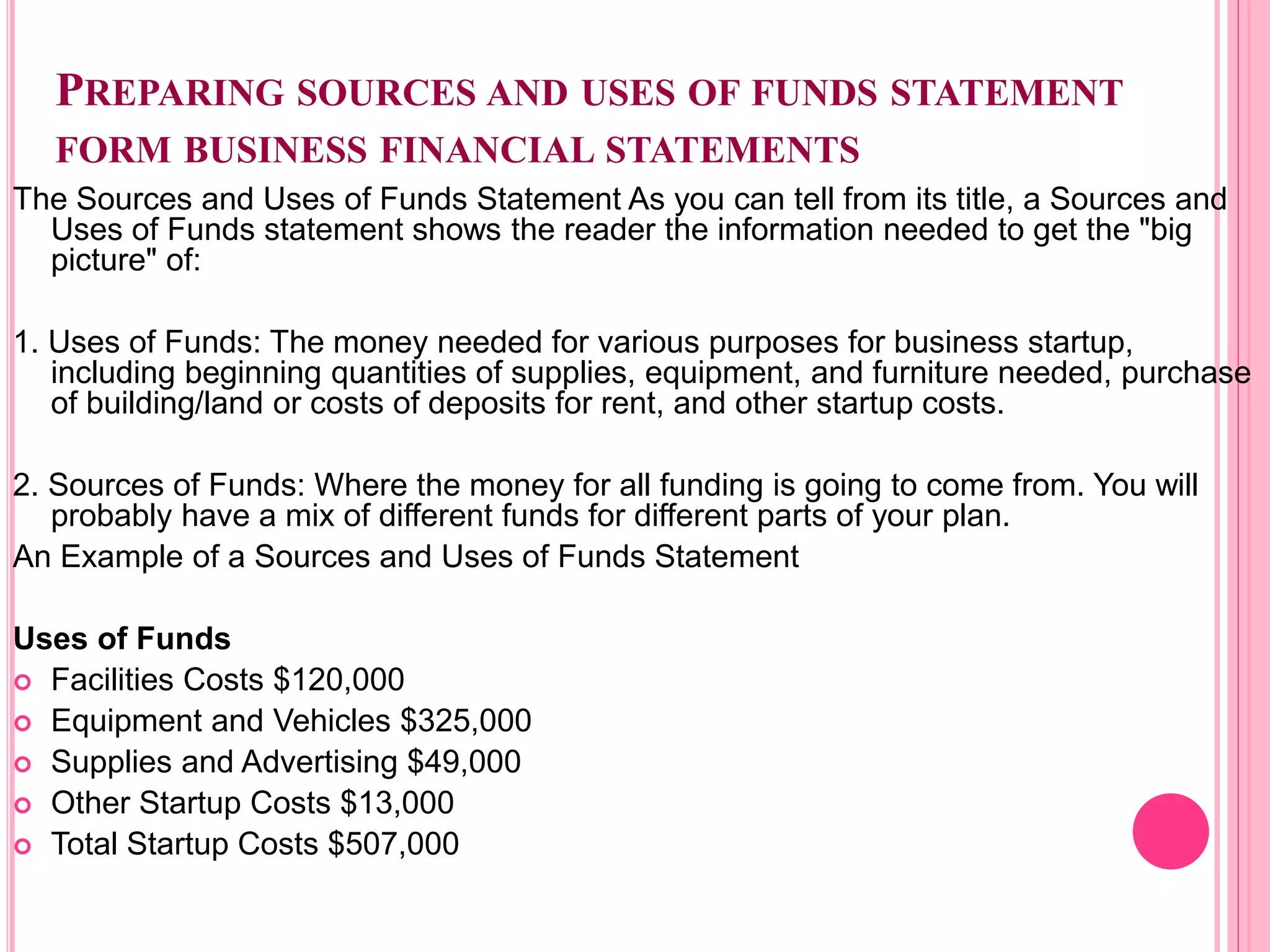
The Sources and Uses of Funds Statement As you can tell from its title, a Sources and
Uses of Funds statement shows the reader the information needed to get the "big
picture" of:
1. Uses of Funds: The money needed for various purposes for business startup,
including beginning quantities of supplies, equipment, and furniture needed, purchase
of building/land or costs of deposits for rent, and other startup costs.
2. Sources of Funds: Where the money for all funding is going to come from. You will
probably have a mix of different funds for different parts of your plan.
An Example of a Sources and Uses of Funds Statement
Uses of Funds
 Facilities Costs $120,000
 Equipment and Vehicles $325,000
 Supplies and Advertising $49,000
 Other Startup Costs $13,000
 Total Startup Costs $507,000
 Working Capital Required $100,000
 Total Uses of Funds $607,000
Sources of Funds:
 Owner Collateral:
 IRA $50,000
 Owner Savings $10,000
 Home Equity $30,000
 Total Collateral $90,000
 Total to be Financed $517,000
 Total Sources of Cash $607,000
PRICING BUSINESS LOANS
Credit ppt
Credit ppt

Credit ppt

  • 1.
    PROVIDING LOANS TOBUSINESS AND CONSUMERS presented by: Shumaila Bibi
  • 2.
    PROVIDING LOANS TOBUSINESS AND CONSUMERS Types of loans made by banks Factors determining the growth and mix of bank loans Regulation of lending Establishing a written loan policy and steps in the lending process Credit analysis and sources of information about loan customers Handling problem loan situations
  • 3.
    WHAT IS LOAN? Theact of giving money, property or other material goods to another party in exchange for future repayment of the principal amount along with interest or other finance charges.
  • 4.
  • 5.
    FACTORS DETERMINING THEGROWTH AND MIX OF BANK LOANS  Characteristic of the market area its serves  Lender size  Expertise of management  Loan policy  Types of lending institution  Expected yield
  • 6.
    REGULATION OF LENDING provide information to members  commercial/consumer related data  2002 affect NPA recovery SARFAESI (Securitization and Reconstruction of Financial and Enforcement Security interest).
  • 7.
    ESTABLISH A WRITTENLOAN POLICY one of the most important way a lending institution can make sure its loans meet regulatory standards and are profitable is to establish a written loan policy. These elements include:  A goal statement for the loan portfolio.  specification of the lending authority given to each loan officer and loan committee.  lines of responsibility in making assignments and reporting information.  operating procedures for soliciting, evaluating, and making decisions on customer loan applications.
  • 8.
    STEPS IN THELENDING PROCESS finding prospective loan customers Evaluating a prospective customer's character and sincerity of purpose Making site visits and evaluating a prospective customer's credit record Evaluating a prospective customer's financial condition Assessing possible loan collateral and signing the loan agreement monitoring compliance with the loan agreement and other customer service needs
  • 9.
    CREDIT ANALYSIS 1) Isthe borrower creditworthy? 2)Can the loan agreement be properly structured and documented? 3) Can the lender perfect its claim against the borrower's earnings and any assets that may be pledged as collateral?
  • 10.
    SOURCES OF INFORMATIONABOUT LOAN CUSTOMERS information about business borrowing money:  Financial reports  copies of boards of directors' resolutions  credit rating  The world wide web
  • 11.
    UNIT# 4 LENDING TOBUSINESS FIRMS short term business loans:  self-liquidating inventory loans  working capital loans  interim construction financing  security dealer financing  retailer and equipment financing  Asset-based loans  Syndicated loans long term business loans:  Term loans to support the purchase of equipment, rolling stock, and structures  Revolving credit financing  project loans  loans to support acquisitions of other business firms
  • 12.
    ANALYZING BUSINESS LOANAPPLICATIONS  your credit history  your cash flow history and projections for the business  your collateral available to secure the loan  your character  capacity  control
  • 13.
    PREPARING SOURCES ANDUSES OF FUNDS STATEMENT FORM BUSINESS FINANCIAL STATEMENTS The Sources and Uses of Funds Statement As you can tell from its title, a Sources and Uses of Funds statement shows the reader the information needed to get the "big picture" of: 1. Uses of Funds: The money needed for various purposes for business startup, including beginning quantities of supplies, equipment, and furniture needed, purchase of building/land or costs of deposits for rent, and other startup costs. 2. Sources of Funds: Where the money for all funding is going to come from. You will probably have a mix of different funds for different parts of your plan. An Example of a Sources and Uses of Funds Statement Uses of Funds  Facilities Costs $120,000  Equipment and Vehicles $325,000  Supplies and Advertising $49,000  Other Startup Costs $13,000  Total Startup Costs $507,000
  • 14.
     Working CapitalRequired $100,000  Total Uses of Funds $607,000 Sources of Funds:  Owner Collateral:  IRA $50,000  Owner Savings $10,000  Home Equity $30,000  Total Collateral $90,000  Total to be Financed $517,000  Total Sources of Cash $607,000
  • 15.