Creative methods for data generation:
    Learning Walks
         Learning Journals

                                             Dimi Kaneva
                                       Research Student
                                University of Manchester
              dimitrina.kaneva@postgrad.manchester.ac.uk
                                          @dimi_kaneva
Learning walks - background
   Management idea of ‘wandering around’


   Mobile methods and ‘walking interviews’ in community studies


   In education – a route into school improvement and CPD


   Learning walks as part of the Stockborough Equity Research
    Network
    ◦ Research question: What do we know about our Polish students and what
      are their experiences at school?
    ◦ A group learning walk with ten Y7 and Y8 students from Polish background
      led by myself and another researcher, the learning walk was followed by a
      focus group
What is a learning walk?
                                          An informal interview
                                           conducted on the move

                                          A way to understand the
                                           perceptions of a place

                                          A safe environment to
                                           stimulate reflections on
                                           existing practices

                                          A discussion prompted by
                                           the environment

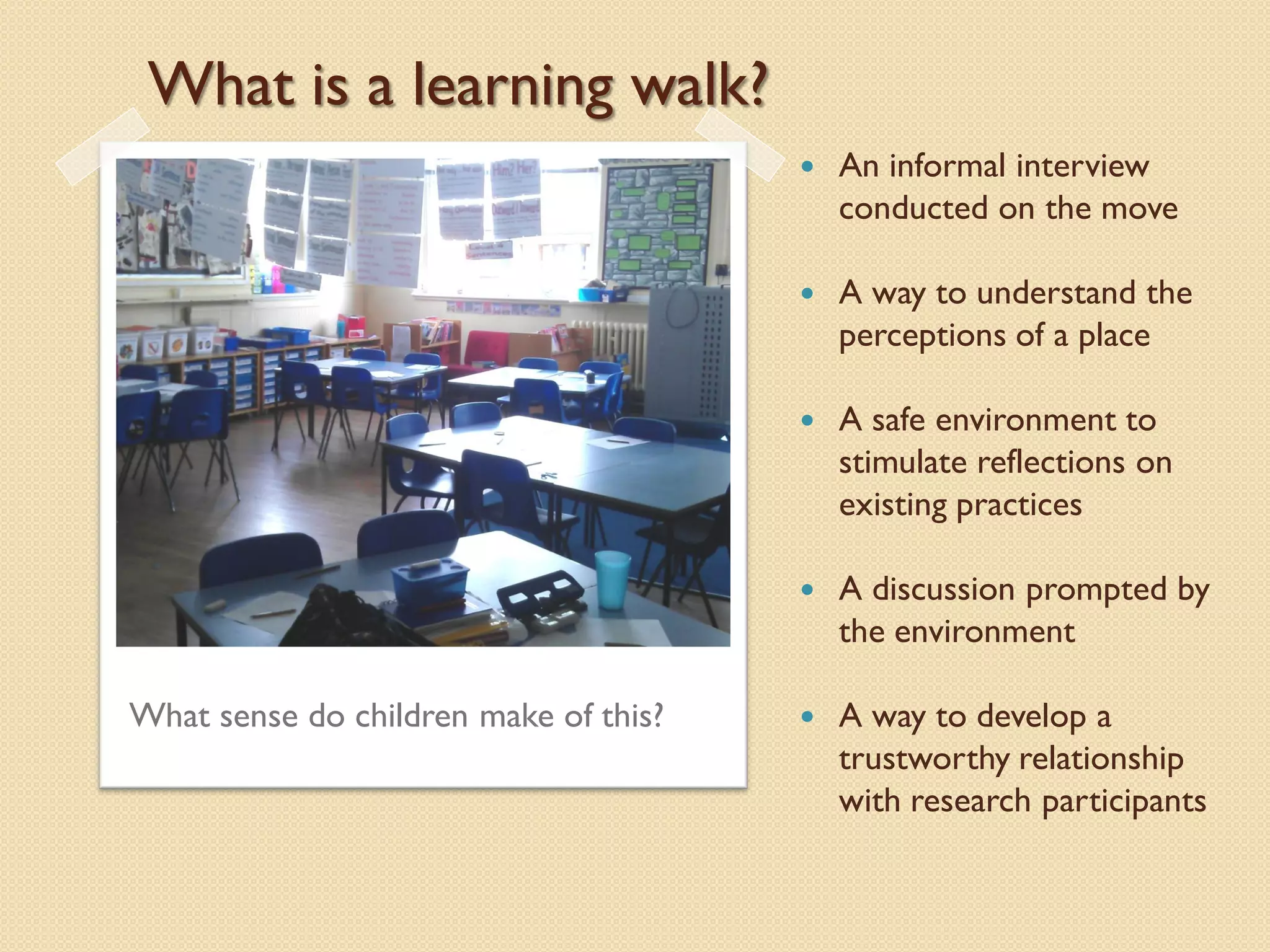
What sense do children make of this?      A way to develop a
                                           trustworthy relationship
                                           with research participants
Learning walks as part of my research
journey


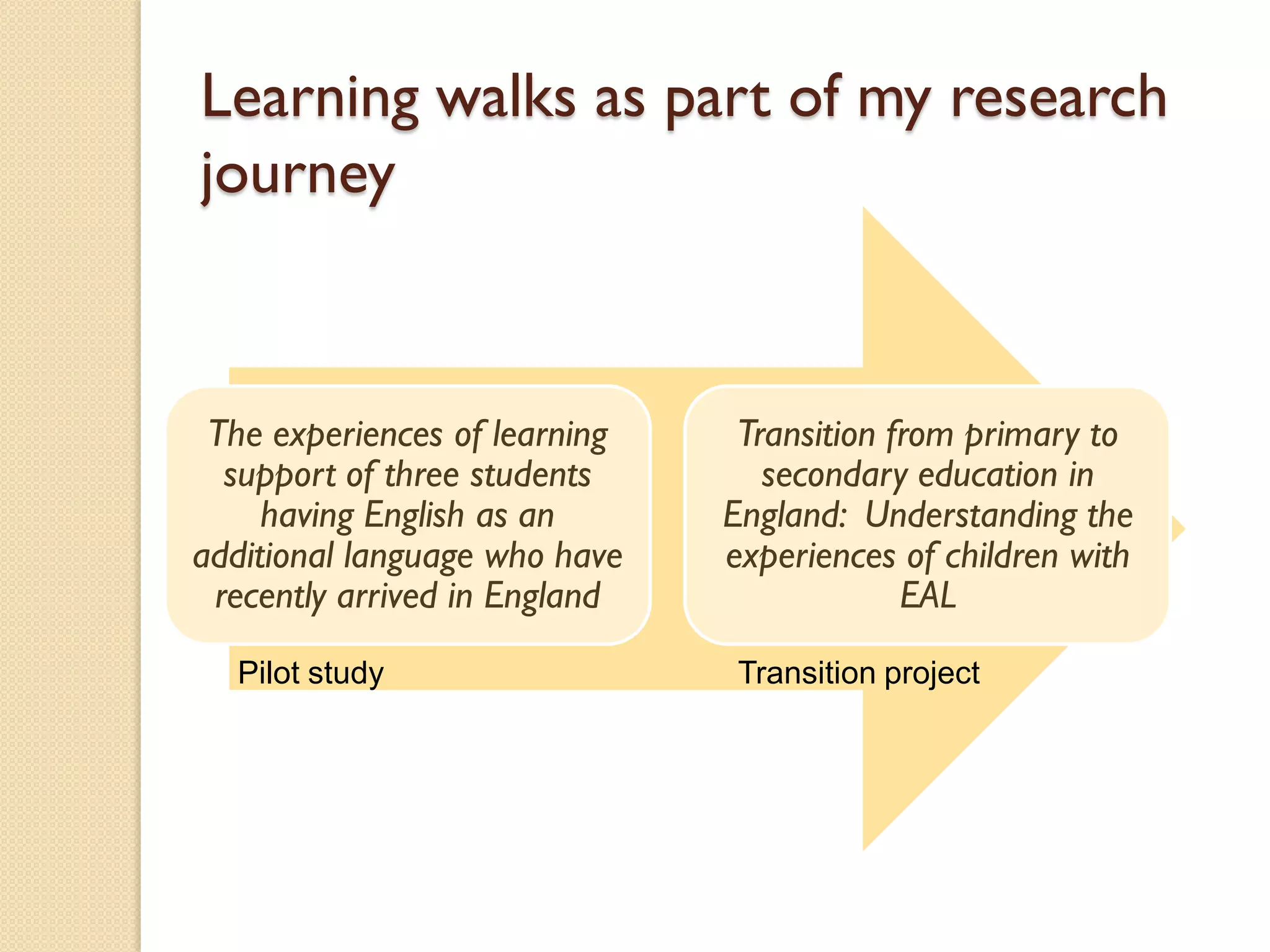
 The experiences of learning    Transition from primary to
  support of three students       secondary education in
     having English as an      England: Understanding the
additional language who have   experiences of children with
 recently arrived in England                EAL
  Pilot study                   Transition project
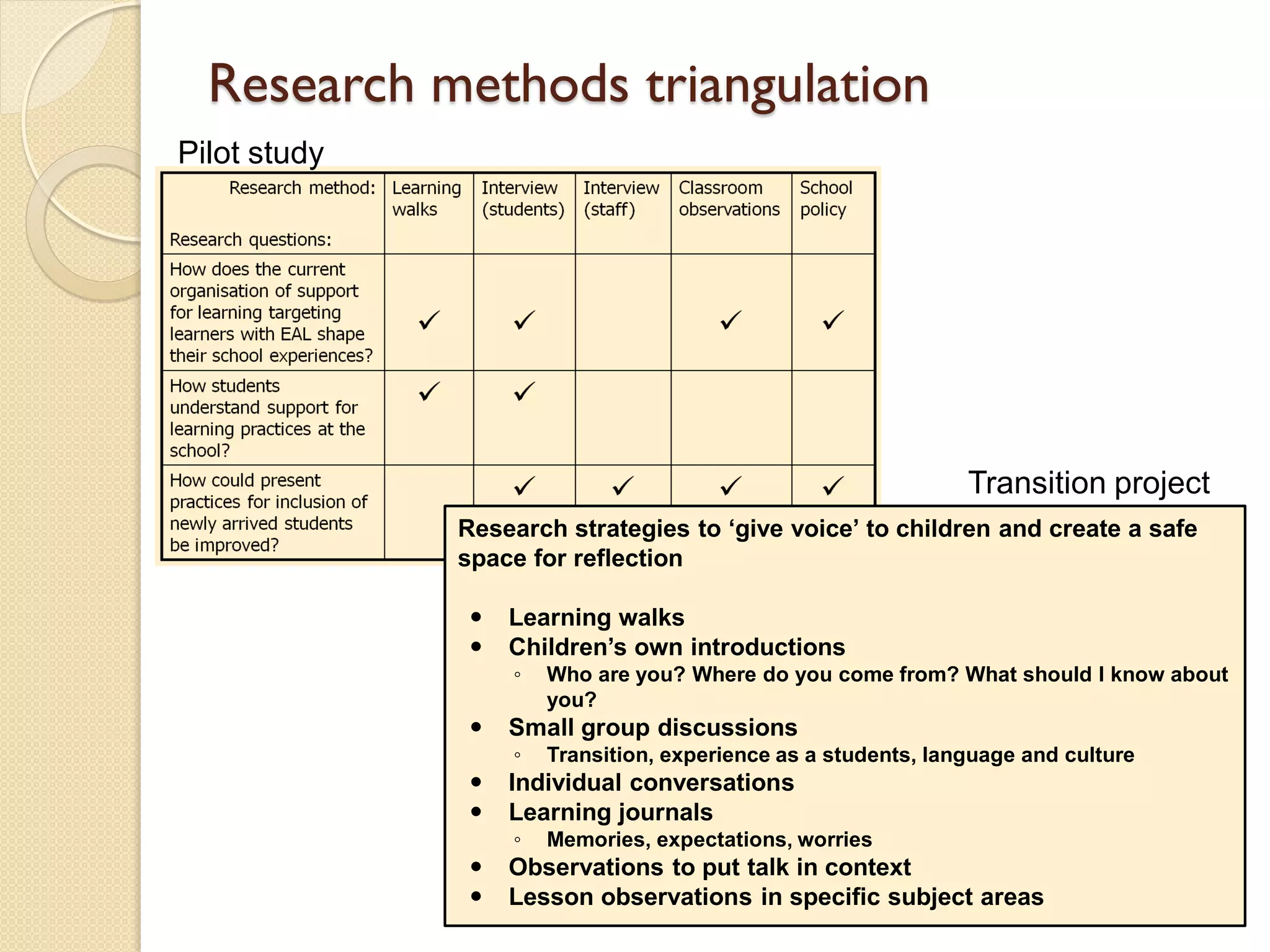
Research methods triangulation
Pilot study


                                                                Transition project
              Research strategies to ‘give voice’ to children and create a safe
              space for reflection

                  Learning walks
                  Children’s own introductions
                   ◦   Who are you? Where do you come from? What should I know about
                       you?
                  Small group discussions
                   ◦   Transition, experience as a students, language and culture
                  Individual conversations
                  Learning journals
                   ◦   Memories, expectations, worries
                  Observations to put talk in context
                  Lesson observations in specific subject areas
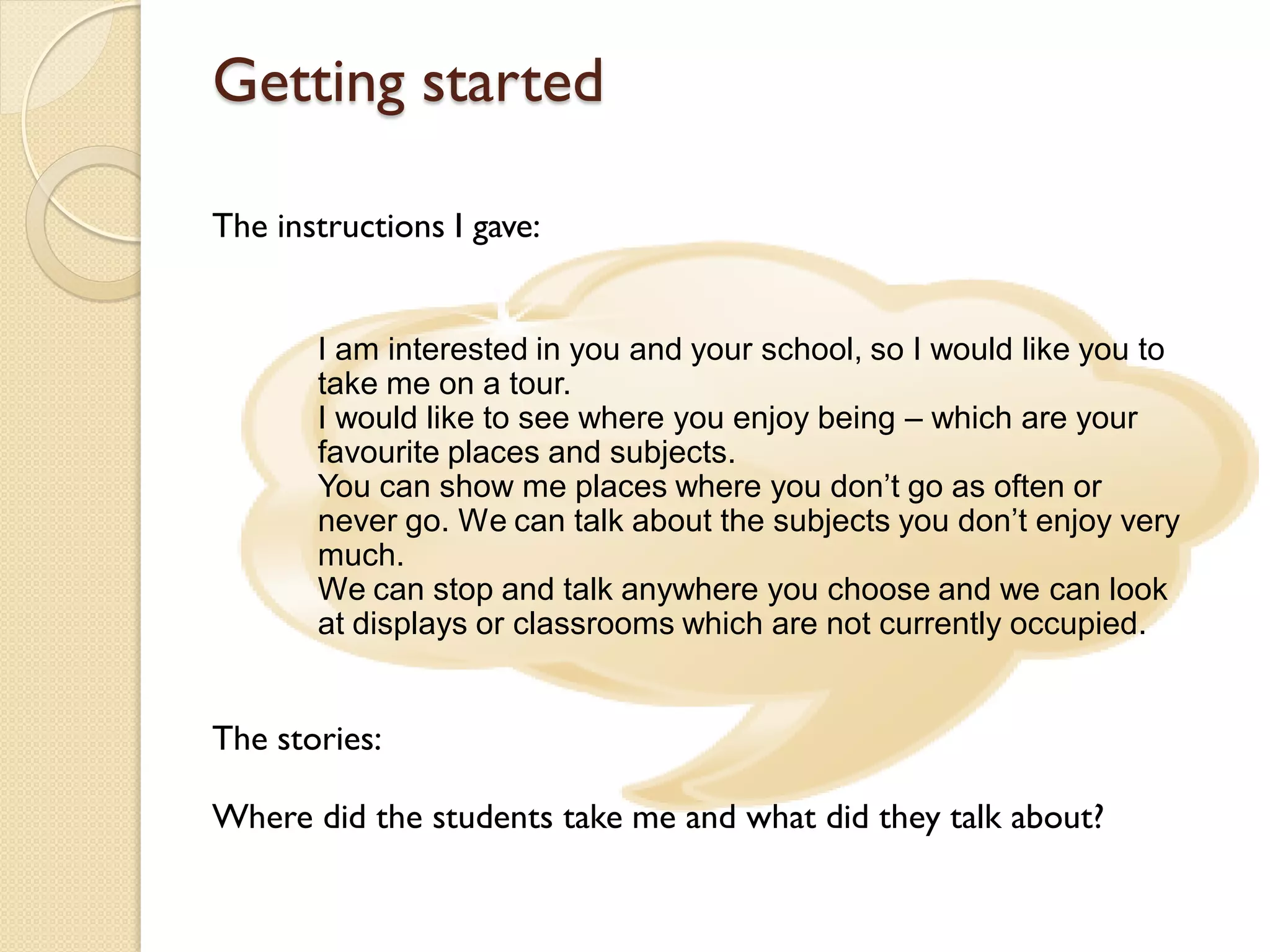
Getting started

The instructions I gave:


       I am interested in you and your school, so I would like you to
       take me on a tour.
       I would like to see where you enjoy being – which are your
       favourite places and subjects.
       You can show me places where you don’t go as often or
       never go. We can talk about the subjects you don’t enjoy very
       much.
       We can stop and talk anywhere you choose and we can look
       at displays or classrooms which are not currently occupied.


The stories:

Where did the students take me and what did they talk about?
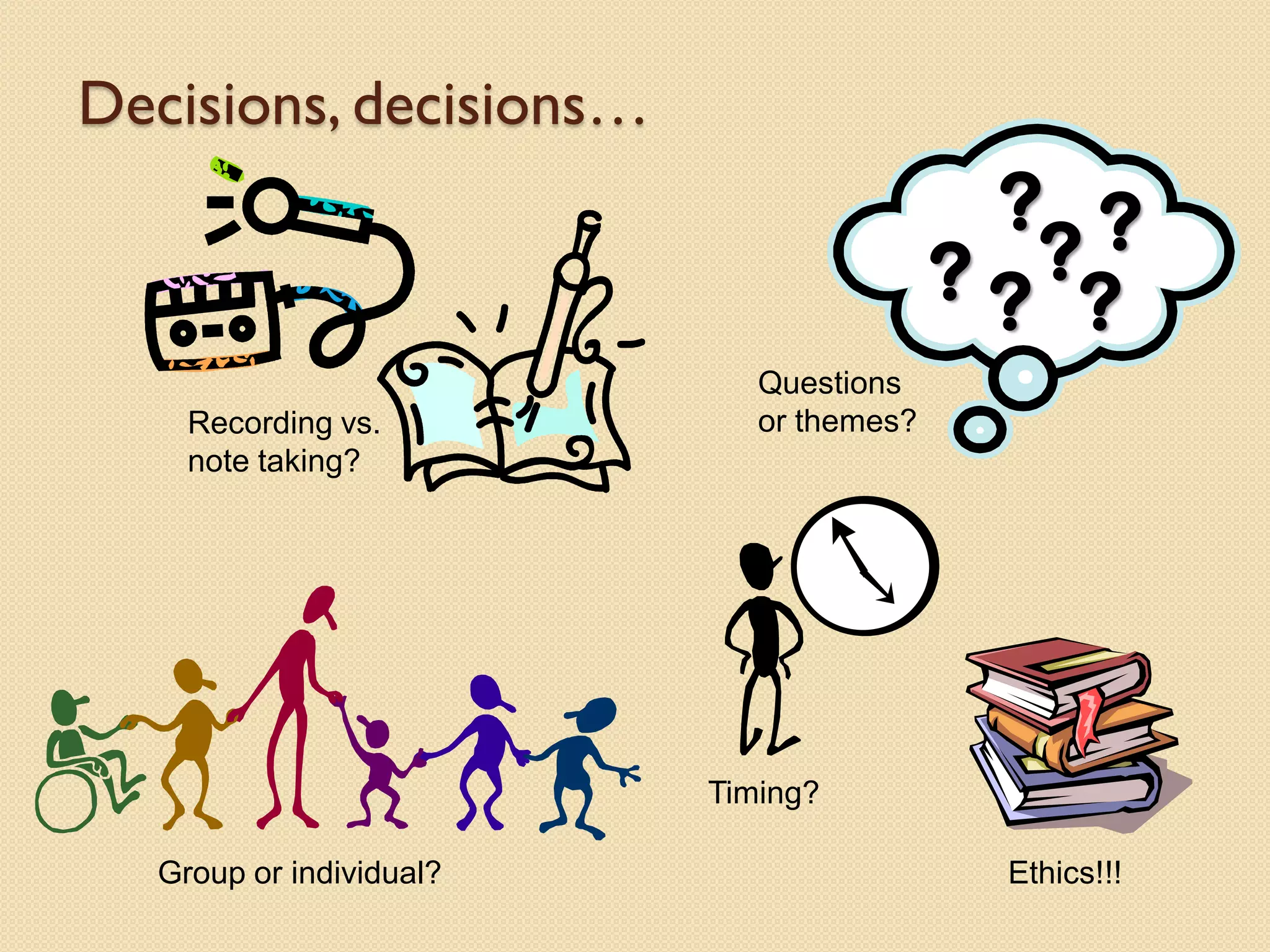
Decisions, decisions…
                                           ? ?
                                         ? ? ??
                            Questions
    Recording vs.           or themes?
    note taking?


                         Timing?

  Group or individual?                     Ethics!!!
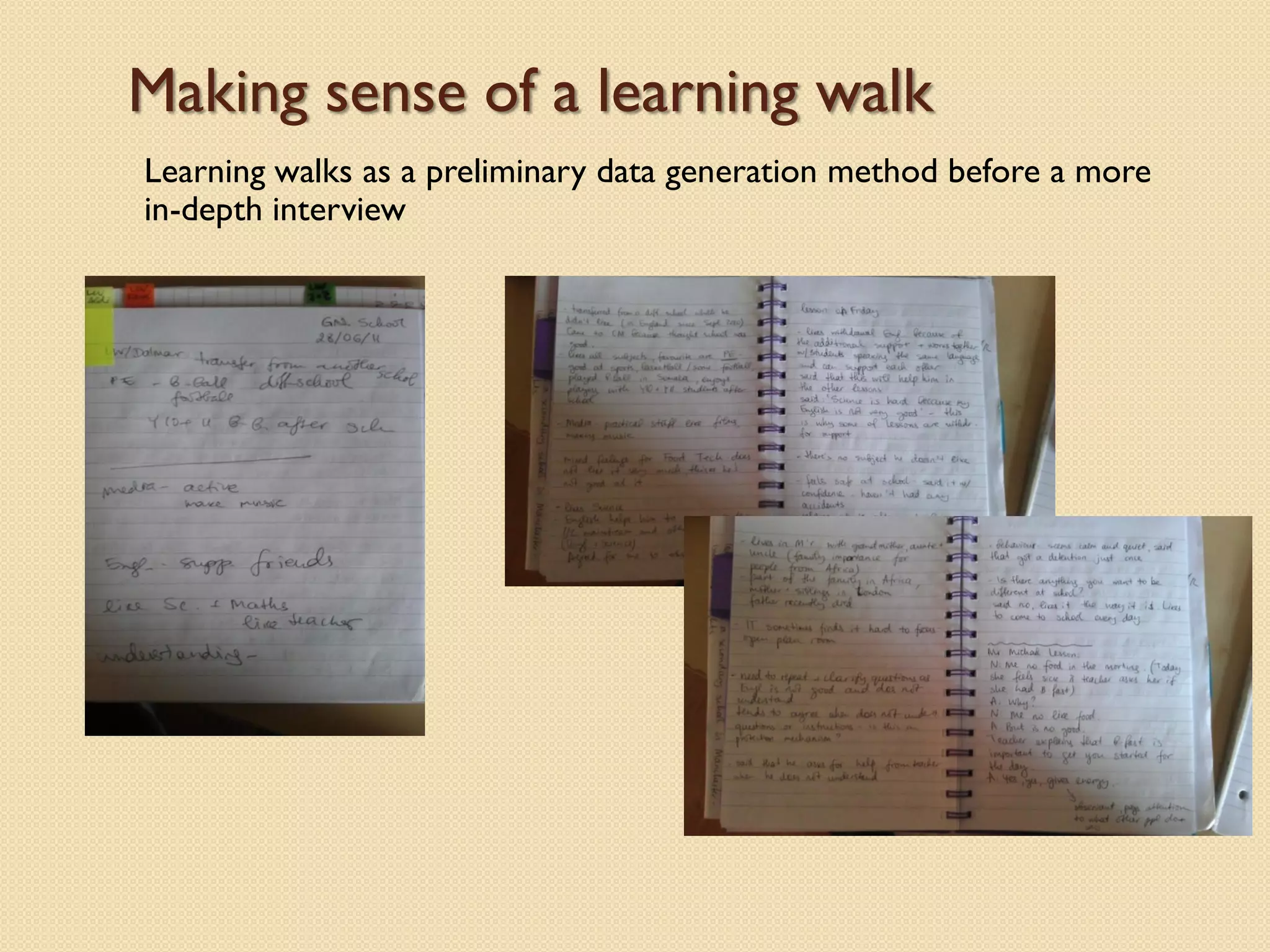
Making sense of a learning walk
Learning walks as a preliminary data generation method before a more
in-depth interview
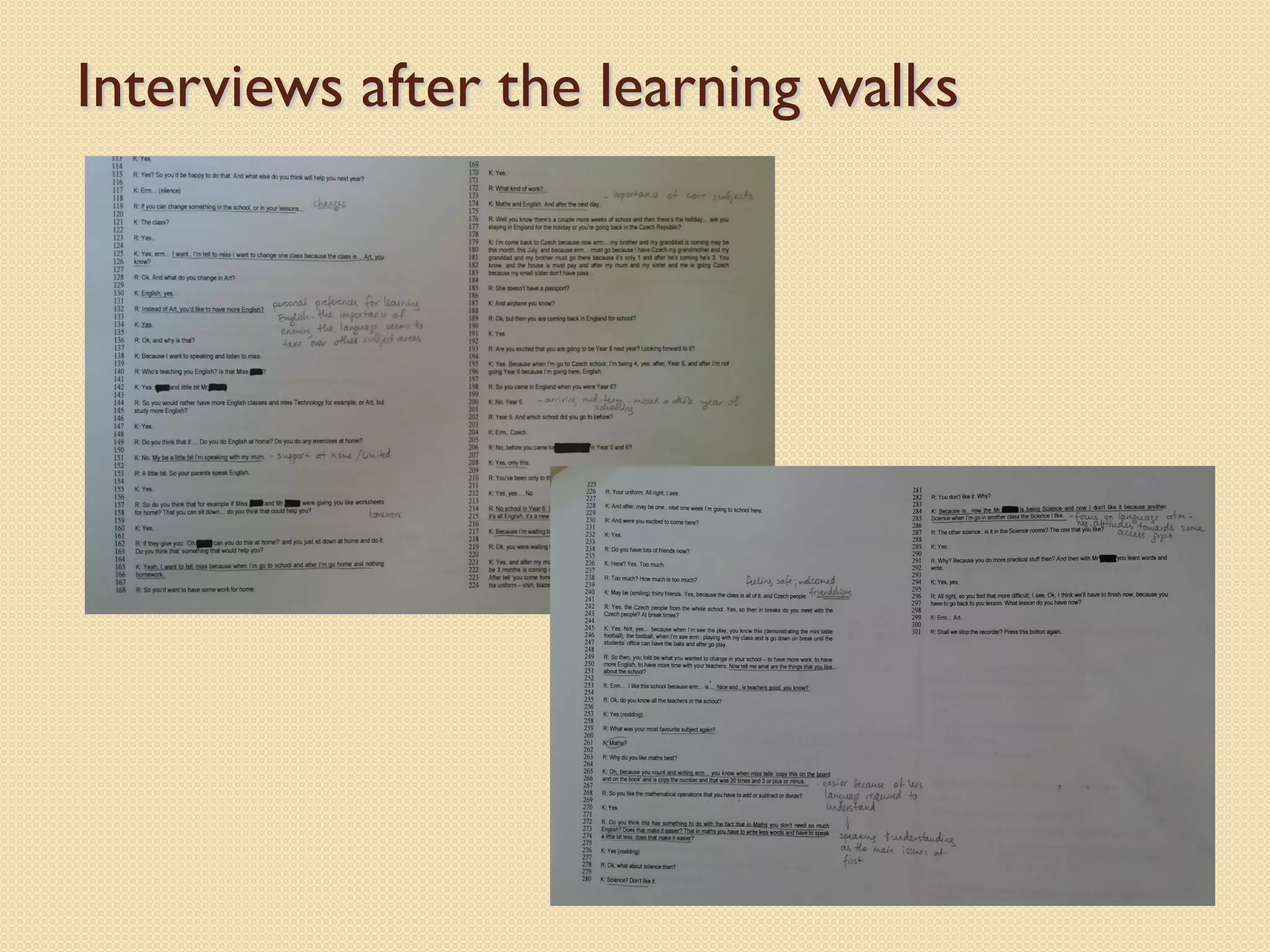
Interviews after the learning walks
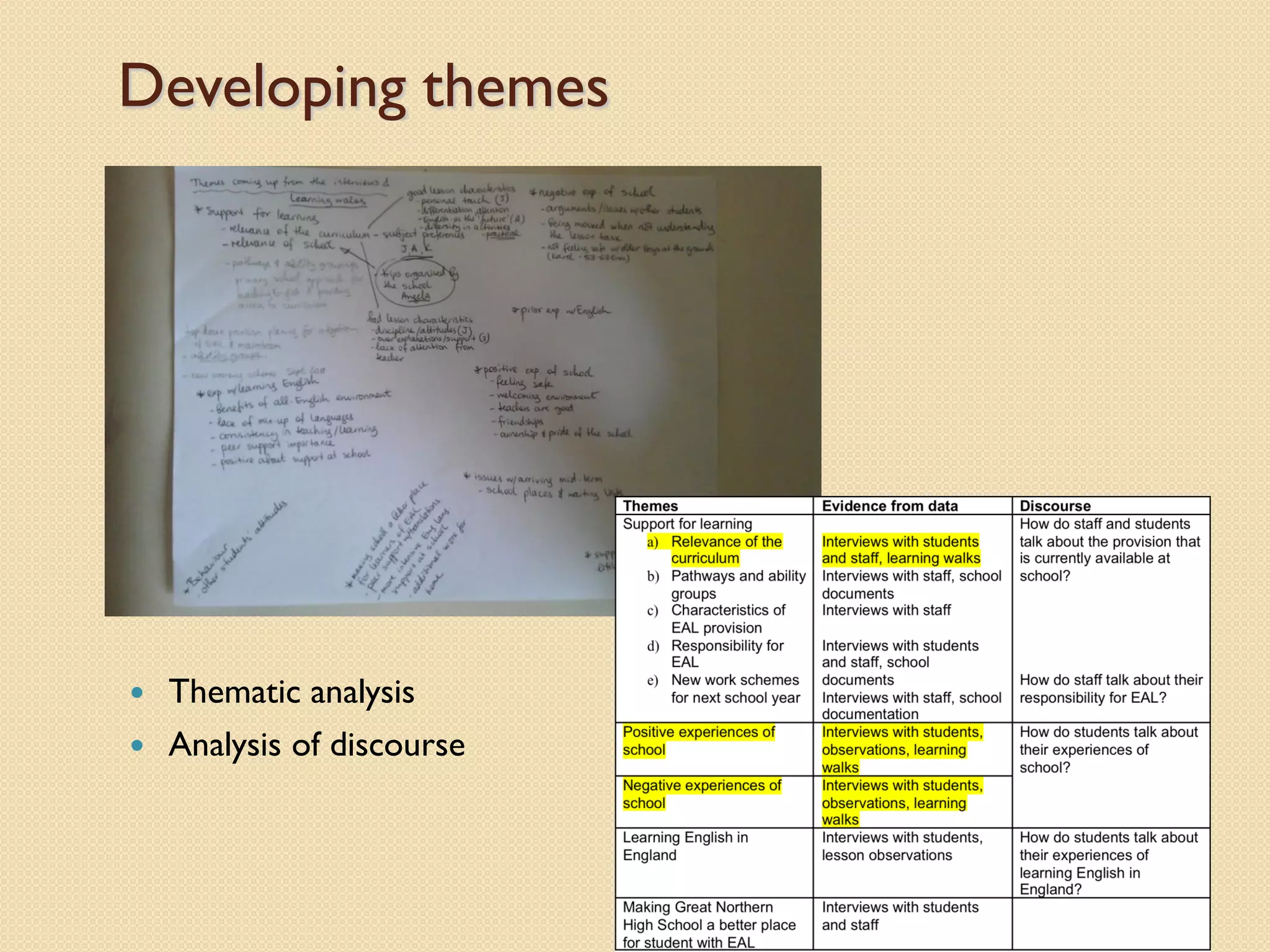
Developing themes


   Thematic analysis
   Analysis of discourse
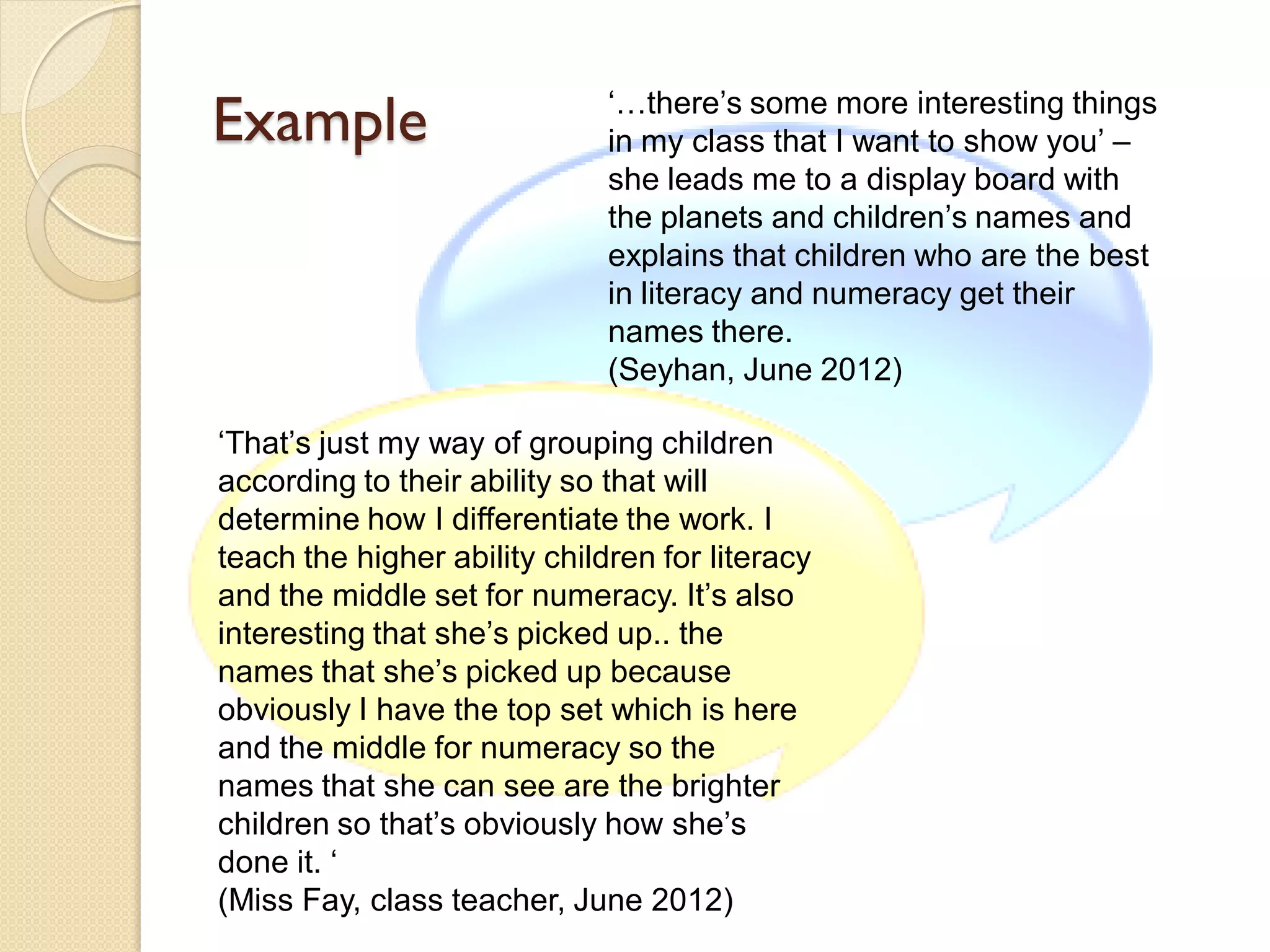
Example                       ‘…there’s some more interesting things
                              in my class that I want to show you’ –
                              she leads me to a display board with
                              the planets and children’s names and
                              explains that children who are the best
                              in literacy and numeracy get their
                              names there.
                              (Seyhan, June 2012)

‘That’s just my way of grouping children
according to their ability so that will
determine how I differentiate the work. I
teach the higher ability children for literacy
and the middle set for numeracy. It’s also
interesting that she’s picked up.. the
names that she’s picked up because
obviously I have the top set which is here
and the middle for numeracy so the
names that she can see are the brighter
children so that’s obviously how she’s
done it. ‘
(Miss Fay, class teacher, June 2012)
Lessons learnt
   Building a trustworthy relationship with research participants

   Making use of prompts around the school such as displays, classrooms and
    strategic places

   Ownership of the school


   What could be done differently?
    ◦ Instructions/guidelines are vital
    ◦ Recording and note-taking can be difficult while on the move
    ◦ Look into different ways to capture the emerging conversation and data
    ◦ Follow-up activities
    ◦ Joint reflection with children
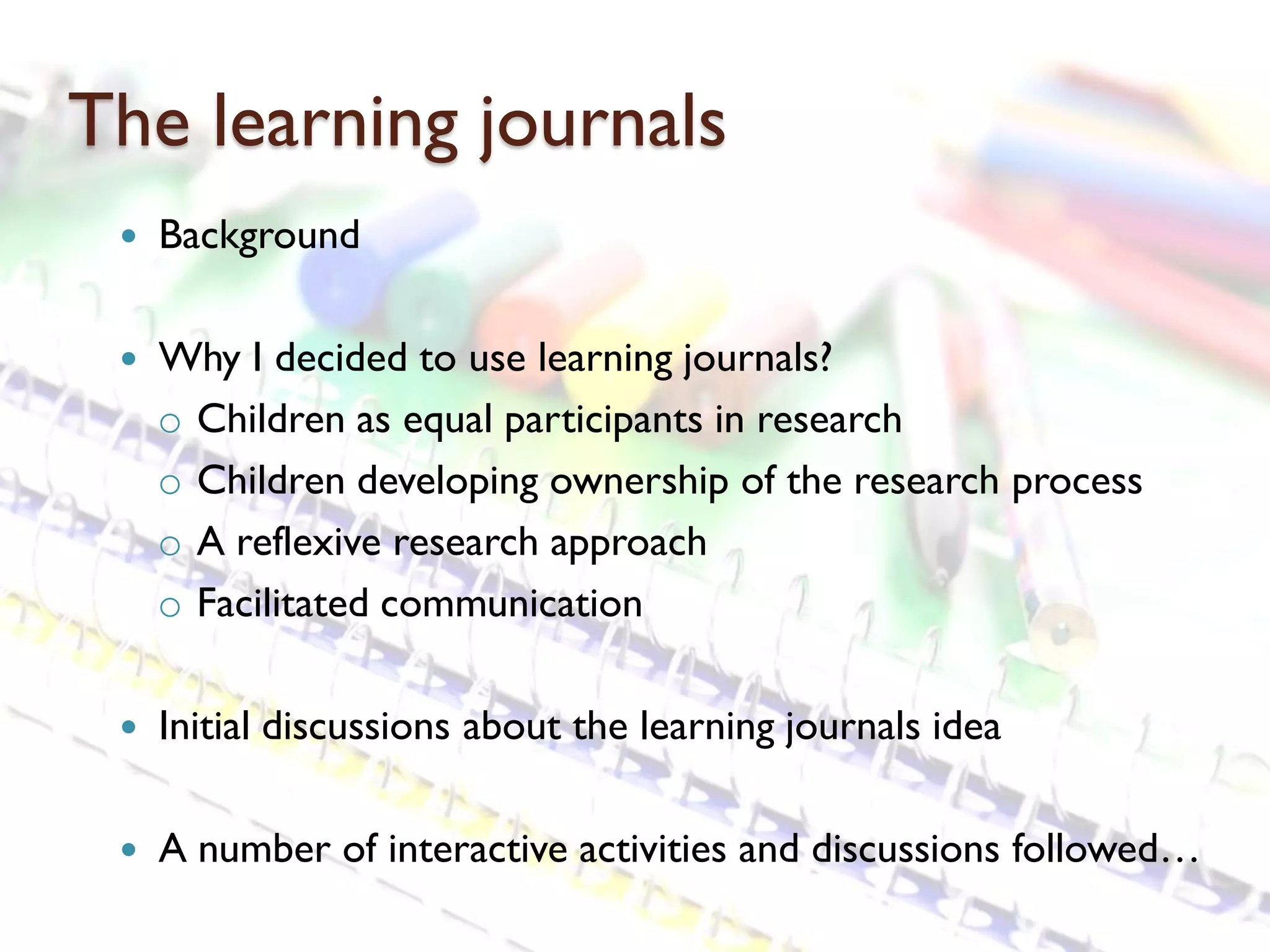
The learning journals
    Background

    Why I decided to use learning journals?
     o Children as equal participants in research
     o Children developing ownership of the research process
     o A reflexive research approach
     o Facilitated communication

    Initial discussions about the learning journals idea

    A number of interactive activities and discussions followed…
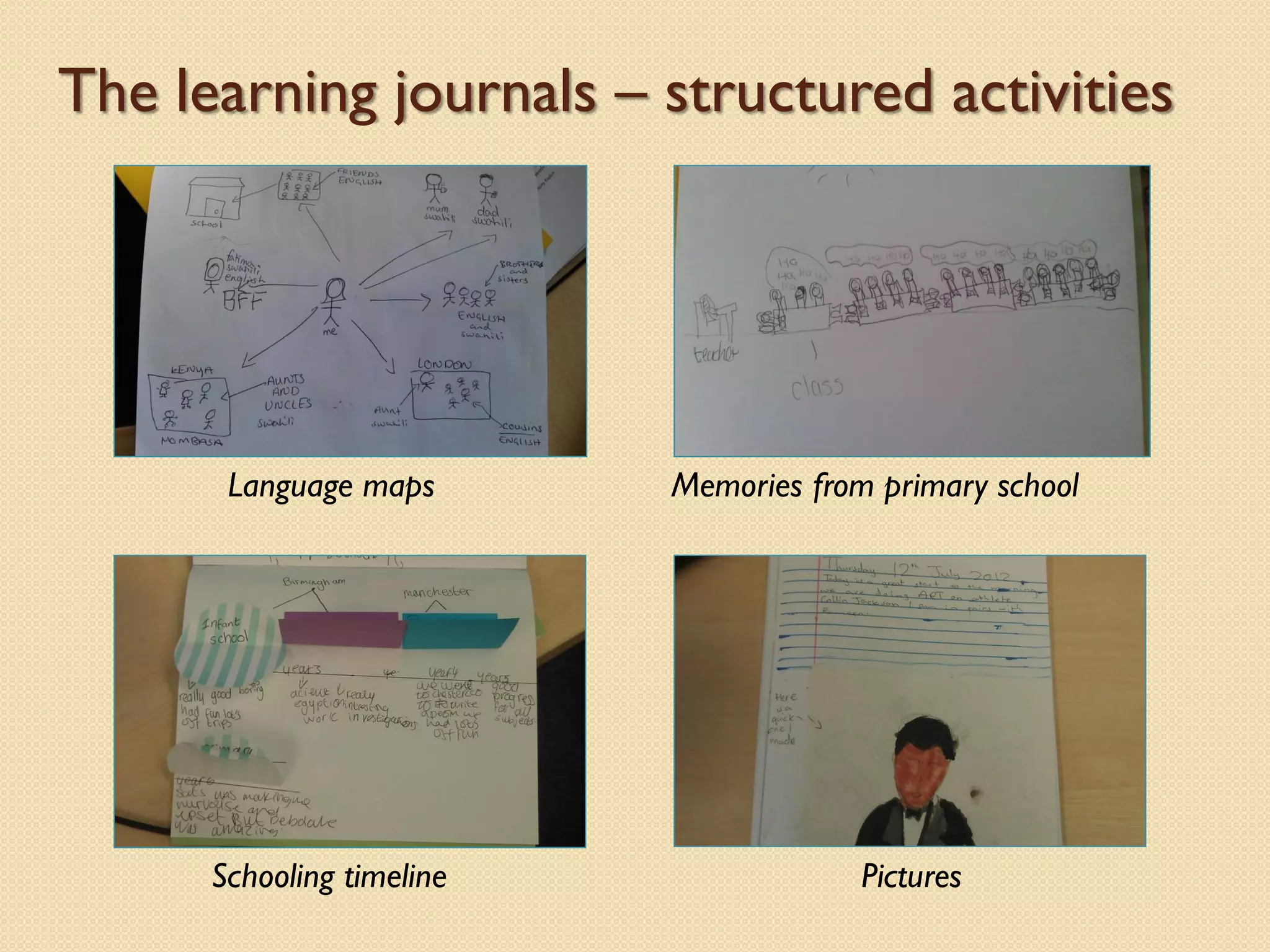
The learning journals – structured activities


       Language maps       Memories from primary school


      Schooling timeline                Pictures
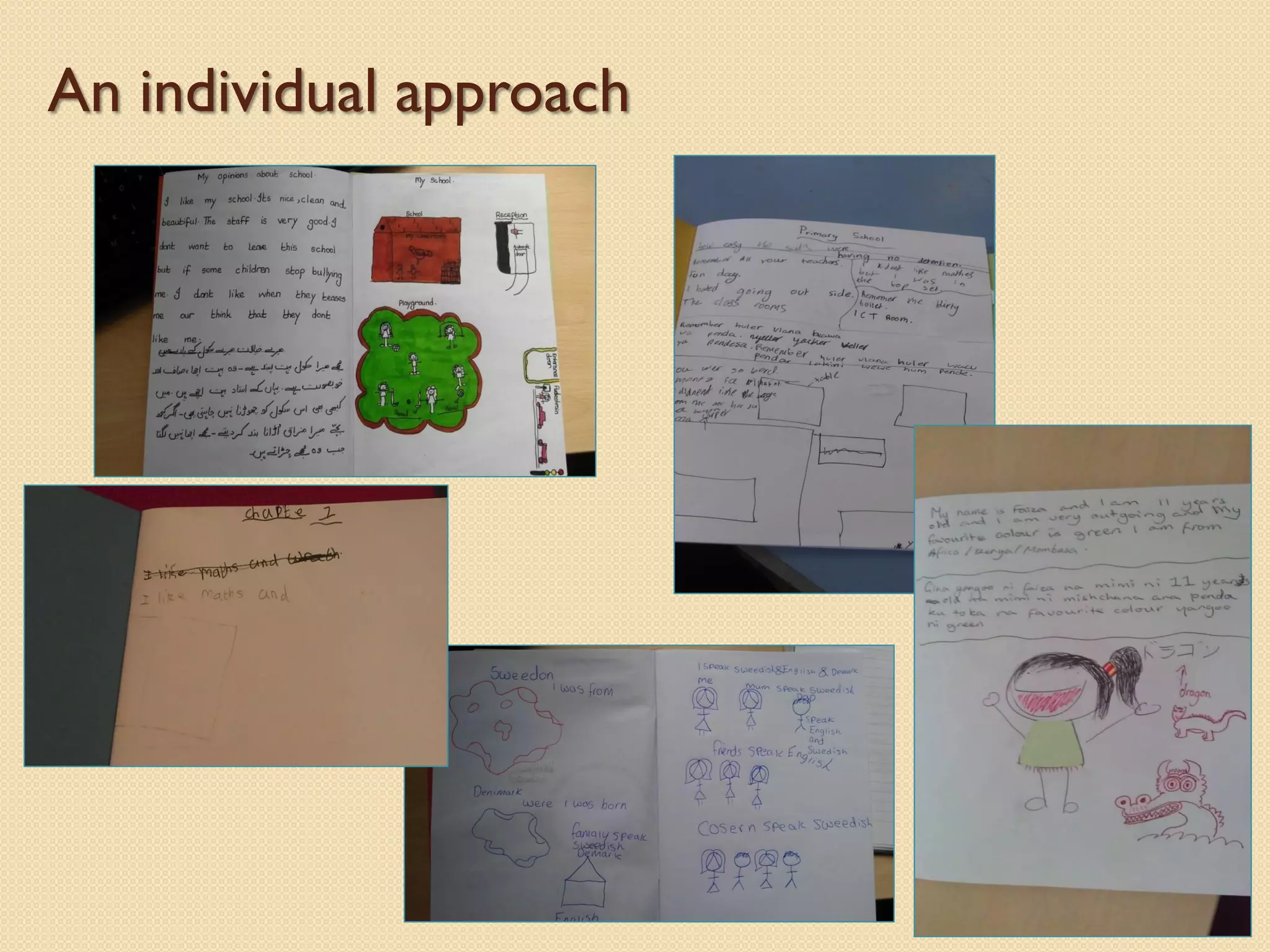
An individual approach
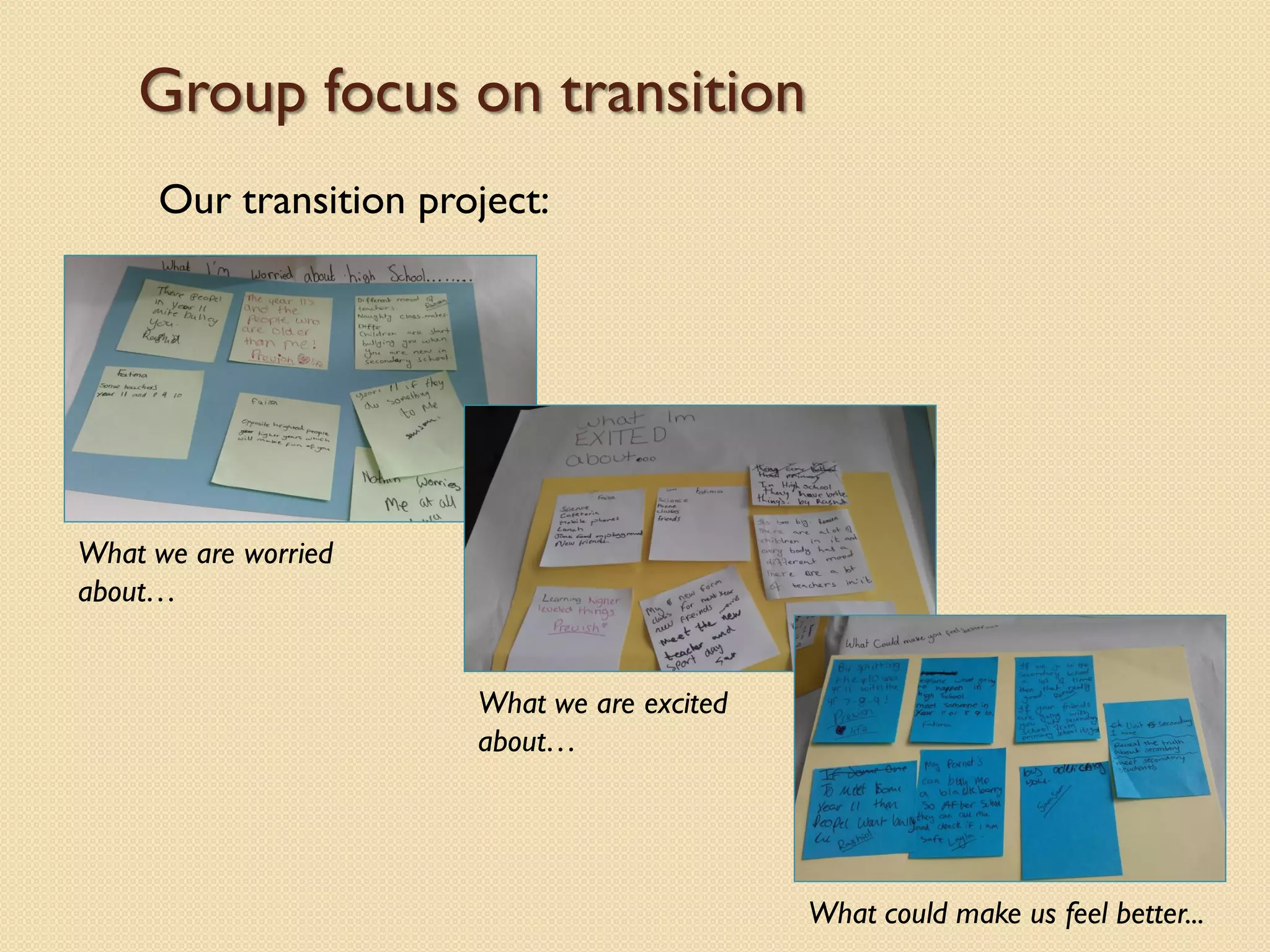
Group focus on transition
      Our transition project:


What we are worried
about…


                        What we are excited
                        about…


                                              What could make us feel better...
The learning journals - reflections
   Creative way to gather data

   Providing time and space to ‘stop and think’

   Options for communicating experiences and thoughts

   Adding information in the journals in their own time

   Ownership of the research

   Option to opt out of keeping a journal

   Further explanations and prompts to make sense of the data –
    member checks
Being a research participant or what
the children said…

   ‘Nice to have time to think about primary
    school / teachers / learning English’
   ‘It’s easier to think about high school when
    there is someone to talk to’
   ‘It’s encouraging to know that someone cares /
    listens to you’
   Feeling important and valued
   Proud of the learning journals work
Thank you!

Any questions?

Creative research methods for UoM PGCE Secondary 2012 13

  • 1.
    Creative methods fordata generation: Learning Walks Learning Journals Dimi Kaneva Research Student University of Manchester dimitrina.kaneva@postgrad.manchester.ac.uk @dimi_kaneva
  • 2.
    Learning walks -background  Management idea of ‘wandering around’  Mobile methods and ‘walking interviews’ in community studies  In education – a route into school improvement and CPD  Learning walks as part of the Stockborough Equity Research Network ◦ Research question: What do we know about our Polish students and what are their experiences at school? ◦ A group learning walk with ten Y7 and Y8 students from Polish background led by myself and another researcher, the learning walk was followed by a focus group
  • 3.
    What is alearning walk?  An informal interview conducted on the move  A way to understand the perceptions of a place  A safe environment to stimulate reflections on existing practices  A discussion prompted by the environment What sense do children make of this?  A way to develop a trustworthy relationship with research participants
  • 4.
    Learning walks aspart of my research journey The experiences of learning Transition from primary to support of three students secondary education in having English as an England: Understanding the additional language who have experiences of children with recently arrived in England EAL Pilot study Transition project
  • 5.
    Research methods triangulation Pilotstudy Transition project Research strategies to ‘give voice’ to children and create a safe space for reflection  Learning walks  Children’s own introductions ◦ Who are you? Where do you come from? What should I know about you?  Small group discussions ◦ Transition, experience as a students, language and culture  Individual conversations  Learning journals ◦ Memories, expectations, worries  Observations to put talk in context  Lesson observations in specific subject areas
  • 6.
    Getting started The instructionsI gave: I am interested in you and your school, so I would like you to take me on a tour. I would like to see where you enjoy being – which are your favourite places and subjects. You can show me places where you don’t go as often or never go. We can talk about the subjects you don’t enjoy very much. We can stop and talk anywhere you choose and we can look at displays or classrooms which are not currently occupied. The stories: Where did the students take me and what did they talk about?
  • 7.
    Decisions, decisions… ? ? ? ? ?? Questions Recording vs. or themes? note taking? Timing? Group or individual? Ethics!!!
  • 8.
    Making sense ofa learning walk Learning walks as a preliminary data generation method before a more in-depth interview
  • 9.
    Interviews after thelearning walks
  • 10.
    Developing themes  Thematic analysis  Analysis of discourse
  • 11.
    Example ‘…there’s some more interesting things in my class that I want to show you’ – she leads me to a display board with the planets and children’s names and explains that children who are the best in literacy and numeracy get their names there. (Seyhan, June 2012) ‘That’s just my way of grouping children according to their ability so that will determine how I differentiate the work. I teach the higher ability children for literacy and the middle set for numeracy. It’s also interesting that she’s picked up.. the names that she’s picked up because obviously I have the top set which is here and the middle for numeracy so the names that she can see are the brighter children so that’s obviously how she’s done it. ‘ (Miss Fay, class teacher, June 2012)
  • 12.
    Lessons learnt  Building a trustworthy relationship with research participants  Making use of prompts around the school such as displays, classrooms and strategic places  Ownership of the school  What could be done differently? ◦ Instructions/guidelines are vital ◦ Recording and note-taking can be difficult while on the move ◦ Look into different ways to capture the emerging conversation and data ◦ Follow-up activities ◦ Joint reflection with children
  • 13.
    The learning journals  Background  Why I decided to use learning journals? o Children as equal participants in research o Children developing ownership of the research process o A reflexive research approach o Facilitated communication  Initial discussions about the learning journals idea  A number of interactive activities and discussions followed…
  • 14.
    The learning journals– structured activities Language maps Memories from primary school Schooling timeline Pictures
  • 15.
  • 16.
    Group focus ontransition Our transition project: What we are worried about… What we are excited about… What could make us feel better...
  • 17.
    The learning journals- reflections  Creative way to gather data  Providing time and space to ‘stop and think’  Options for communicating experiences and thoughts  Adding information in the journals in their own time  Ownership of the research  Option to opt out of keeping a journal  Further explanations and prompts to make sense of the data – member checks
  • 18.
    Being a researchparticipant or what the children said…  ‘Nice to have time to think about primary school / teachers / learning English’  ‘It’s easier to think about high school when there is someone to talk to’  ‘It’s encouraging to know that someone cares / listens to you’  Feeling important and valued  Proud of the learning journals work
  • 19.