Creating a Safe & Engaged
Online Community
Emiliana Simon-Thomas, Science Director
Greater Good Science Center, UC Berkeley
Social Life & Well-Being
“Social relationships … do not guarantee high happiness but it does
not appear to occur without them.” (Ed Diener)
“SBT suggests the human brain expects access to social
relationships that mitigate risk and diminish the level of effort
needed to meet a variety of goals.”
“When you allow for all the other factors, you find that chronic
loneliness increases the odds of an early death by 20%.”
(John Cacioppo)
(James Coan & David Sbarra)
The Science of Happiness
• Positivity: gratitude, humor, awe, optimism, play, savoring…
• Resilience: meaning, purpose, emoversity, flexible awareness…
• Connection: empathy, compassion, kindness, trust, humility reconciliation…
(Rand & Greene)
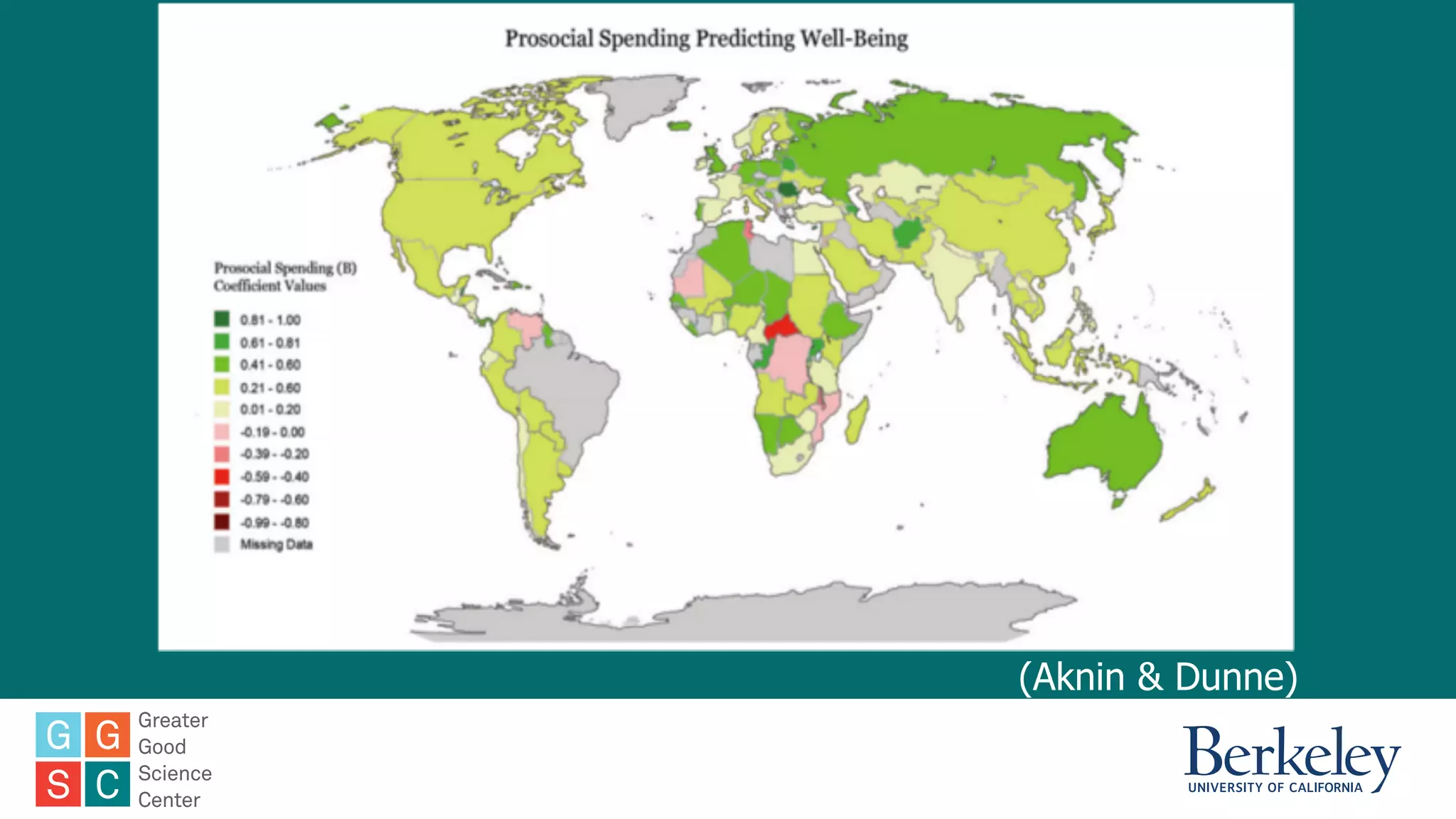
(Aknin & Dunne)
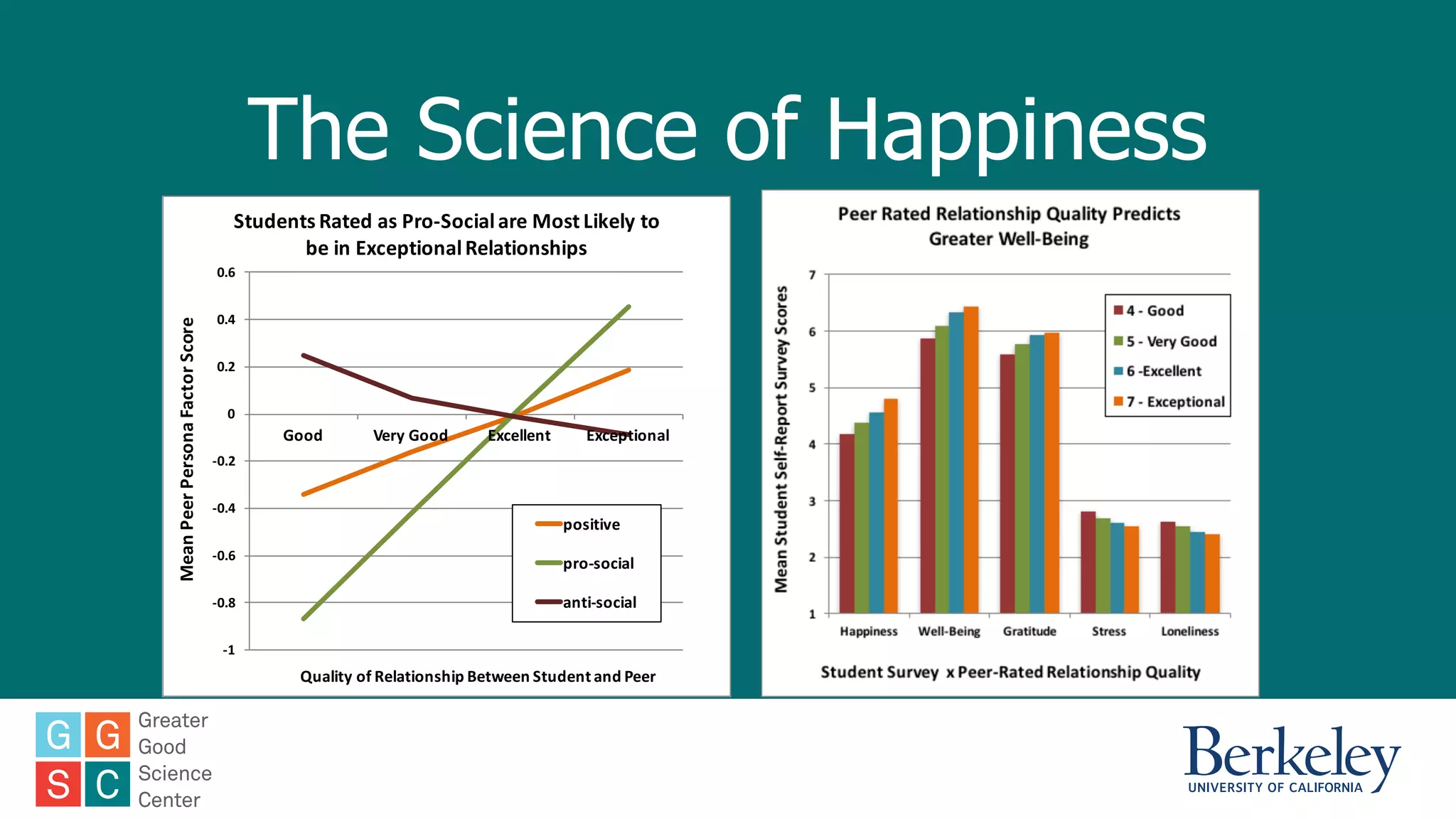
The Science of Happiness
-1
-0.8
-0.6
-0.4
-0.2
0
0.2
0.4
0.6
Good Very	Good Excellent Exceptional
Mean	Peer	Persona	Factor	Score
Quality	of	Relationship	Between	Student	and	Peer
Students	Rated	as	Pro-Social	are	Most	Likely	to	
be	in	Exceptional	Relationships
positive
pro-social
anti-social
Working with Facebook
Fostering:
• emotional awareness
• empathy
• social resolution
• trust
Working with Facebook
Creating norms of:
• social and emotional intelligence
• upstanding and social support
• rich, authentic and diverse
expression
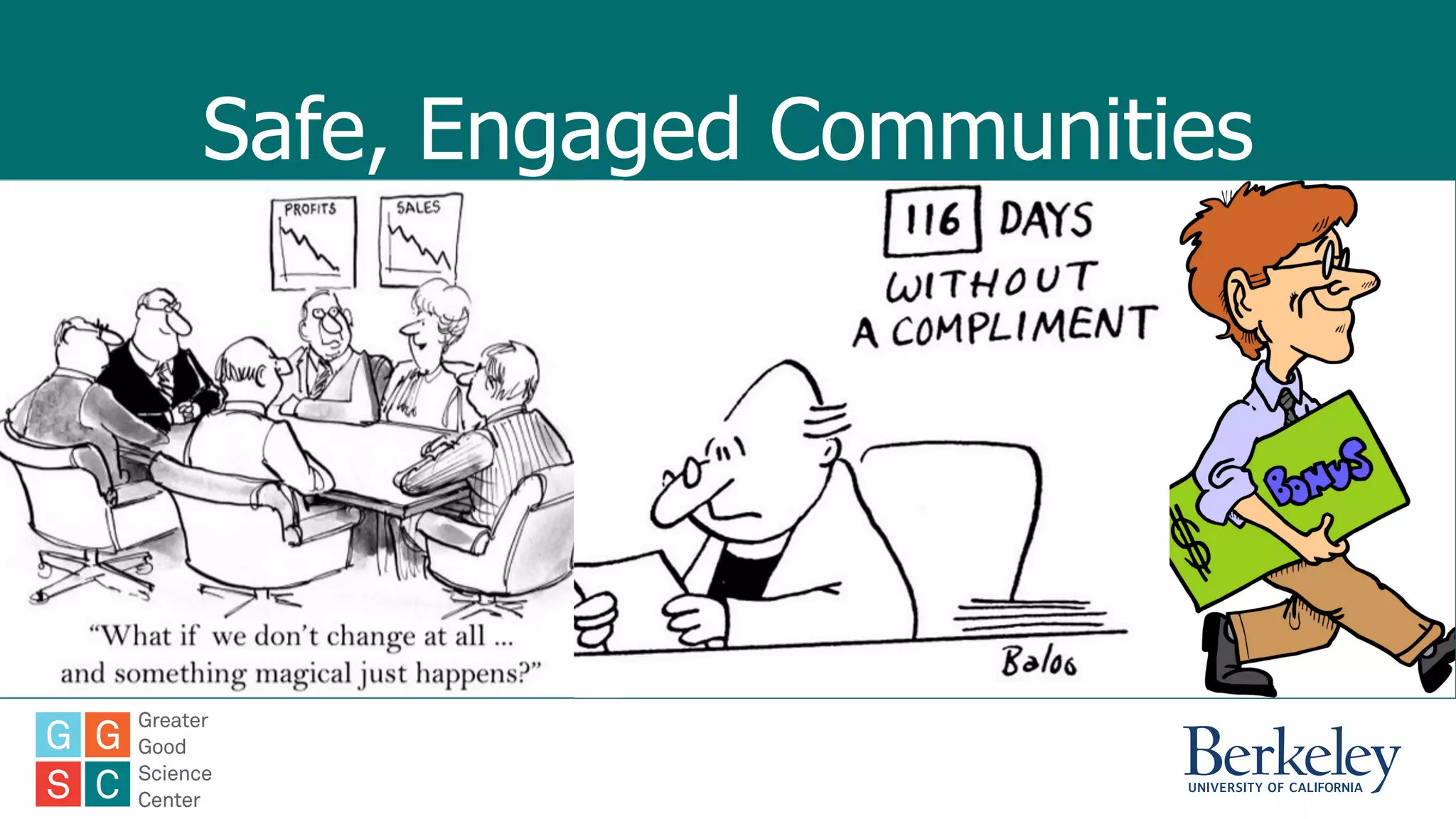
Safe, Engaged Communities
“Compassion becomes organizational, rather than individual,
when it is legitimized within an organizational context and
propagated among organization members…compassion in
organizations occurs when individuals in organizations collectively
notice, feel, and respond to human pain in a coordinated way.”
(Kim Cameron)
Safe, Engaged Communities
Make Pro-sociality Observable,
Highlight Effectiveness, and
Don’t Let ‘em Hide
• Model self-awareness and authenticity
• Publicly acknowledge pro-social
values, experiences and behaviors
like gratitude, generosity and
compassion
Safe, Engaged Communities
Normalize, Brand and Scaffold
“Habits of Virtue”
• pro-social intentions
• clear steps to cooperation
• multiple means to cooperation and
resolution of conflict
• pre-choosing kindness
Thank You
Find us at:
• greatergood.berkeley.edu
• GG101x: The Science of Happiness on edX.org
• Greater Good In Action: ggia.berkeley.edu

Creating a Safe and Engaged Online Community - CMX Summit West 2016

  • 1.
    Creating a Safe& Engaged Online Community Emiliana Simon-Thomas, Science Director Greater Good Science Center, UC Berkeley
  • 2.
    Social Life &Well-Being “Social relationships … do not guarantee high happiness but it does not appear to occur without them.” (Ed Diener) “SBT suggests the human brain expects access to social relationships that mitigate risk and diminish the level of effort needed to meet a variety of goals.” “When you allow for all the other factors, you find that chronic loneliness increases the odds of an early death by 20%.” (John Cacioppo) (James Coan & David Sbarra)
  • 3.
    The Science ofHappiness • Positivity: gratitude, humor, awe, optimism, play, savoring… • Resilience: meaning, purpose, emoversity, flexible awareness… • Connection: empathy, compassion, kindness, trust, humility reconciliation…
  • 6.
  • 7.
  • 8.
    The Science ofHappiness -1 -0.8 -0.6 -0.4 -0.2 0 0.2 0.4 0.6 Good Very Good Excellent Exceptional Mean Peer Persona Factor Score Quality of Relationship Between Student and Peer Students Rated as Pro-Social are Most Likely to be in Exceptional Relationships positive pro-social anti-social
  • 9.
    Working with Facebook Fostering: •emotional awareness • empathy • social resolution • trust
  • 10.
    Working with Facebook Creatingnorms of: • social and emotional intelligence • upstanding and social support • rich, authentic and diverse expression
  • 12.
    Safe, Engaged Communities “Compassionbecomes organizational, rather than individual, when it is legitimized within an organizational context and propagated among organization members…compassion in organizations occurs when individuals in organizations collectively notice, feel, and respond to human pain in a coordinated way.” (Kim Cameron)
  • 13.
  • 14.
    Safe, Engaged Communities MakePro-sociality Observable, Highlight Effectiveness, and Don’t Let ‘em Hide • Model self-awareness and authenticity • Publicly acknowledge pro-social values, experiences and behaviors like gratitude, generosity and compassion
  • 15.
    Safe, Engaged Communities Normalize,Brand and Scaffold “Habits of Virtue” • pro-social intentions • clear steps to cooperation • multiple means to cooperation and resolution of conflict • pre-choosing kindness
  • 16.
    Thank You Find usat: • greatergood.berkeley.edu • GG101x: The Science of Happiness on edX.org • Greater Good In Action: ggia.berkeley.edu