+
    Paying Attention @ Museums
    Rainey Tisdale, Crash Course in Creativity
    Assignment 2


    I’m a museum curator, so I adapted
    this assignment and observed
    museums, not stores. Here’s what I
    learned:
+
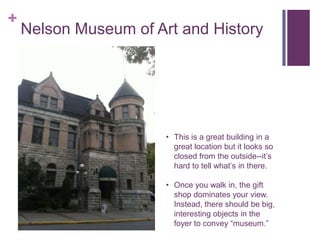
    Nelson Museum of Art and History


                       • This is a great building in a
                         great location but it looks so
                         closed from the outside--it’s
                         hard to tell what’s in there.

                       • Once you walk in, the gift
                         shop dominates your view.
                         Instead, there should be big,
                         interesting objects in the
                         foyer to convey “museum.”
+
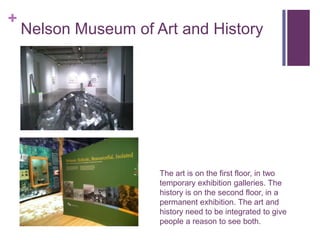
    Nelson Museum of Art and History


                      The art is on the first floor, in two
                      temporary exhibition galleries. The
                      history is on the second floor, in a
                      permanent exhibition. The art and
                      history need to be integrated to give
                      people a reason to see both.
+
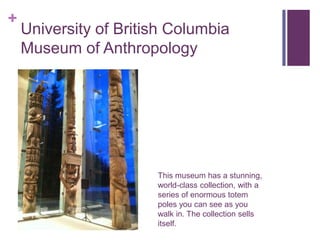
    University of British Columbia
    Museum of Anthropology


                       This museum has a stunning,
                       world-class collection, with a
                       series of enormous totem
                       poles you can see as you
                       walk in. The collection sells
                       itself.
+
    University of British Columbia
    Museum of Anthropology


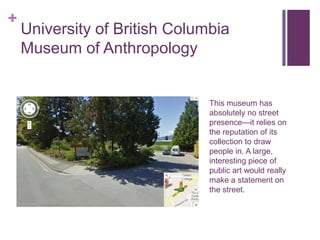
                               This museum has
                               absolutely no street
                               presence—it relies on
                               the reputation of its
                               collection to draw
                               people in. A large,
                               interesting piece of
                               public art would really
                               make a statement on
                               the street.
+
    Museum of Vancouver


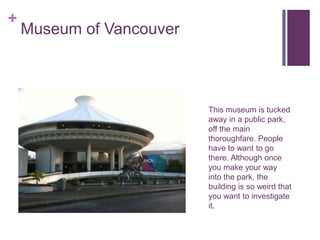
                          This museum is tucked
                          away in a public park,
                          off the main
                          thoroughfare. People
                          have to want to go
                          there. Although once
                          you make your way
                          into the park, the
                          building is so weird that
                          you want to investigate
                          it.
+
    Museum of Vancouver
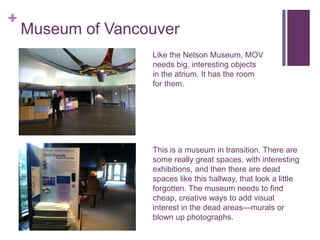
                   Like the Nelson Museum, MOV
                   needs big, interesting objects
                   in the atrium. It has the room
                   for them.


                   This is a museum in transition. There are
                   some really great spaces, with interesting
                   exhibitions, and then there are dead
                   spaces like this hallway, that look a little
                   forgotten. The museum needs to find
                   cheap, creative ways to add visual
                   interest in the dead areas—murals or
                   blown up photographs.
+
    In General:

    • Museum lighting is bad—the ceiling is covered in
      infrastructure, and the lights blind you if you look
      up—it’s like peeking behind the curtain of the
      exhibition. This is an area begging for innovation.
    • Maybe these museums should consider playing
      interesting music in the atrium that contributes to
      the tone of the museum?
    • These museums were filled with women—both
      staff and visitors.
    • Although it’s practical, institutional carpeting is not
      much fun.

Crash Course in Creativity Assignment 2

  • 1.
    + Paying Attention @ Museums Rainey Tisdale, Crash Course in Creativity Assignment 2 I’m a museum curator, so I adapted this assignment and observed museums, not stores. Here’s what I learned:
  • 2.
    + Nelson Museum of Art and History • This is a great building in a great location but it looks so closed from the outside--it’s hard to tell what’s in there. • Once you walk in, the gift shop dominates your view. Instead, there should be big, interesting objects in the foyer to convey “museum.”
  • 3.
    + Nelson Museum of Art and History The art is on the first floor, in two temporary exhibition galleries. The history is on the second floor, in a permanent exhibition. The art and history need to be integrated to give people a reason to see both.
  • 4.
    + University of British Columbia Museum of Anthropology This museum has a stunning, world-class collection, with a series of enormous totem poles you can see as you walk in. The collection sells itself.
  • 5.
    + University of British Columbia Museum of Anthropology This museum has absolutely no street presence—it relies on the reputation of its collection to draw people in. A large, interesting piece of public art would really make a statement on the street.
  • 6.
    + Museum of Vancouver This museum is tucked away in a public park, off the main thoroughfare. People have to want to go there. Although once you make your way into the park, the building is so weird that you want to investigate it.
  • 7.
    + Museum of Vancouver Like the Nelson Museum, MOV needs big, interesting objects in the atrium. It has the room for them. This is a museum in transition. There are some really great spaces, with interesting exhibitions, and then there are dead spaces like this hallway, that look a little forgotten. The museum needs to find cheap, creative ways to add visual interest in the dead areas—murals or blown up photographs.
  • 8.
    + In General: • Museum lighting is bad—the ceiling is covered in infrastructure, and the lights blind you if you look up—it’s like peeking behind the curtain of the exhibition. This is an area begging for innovation. • Maybe these museums should consider playing interesting music in the atrium that contributes to the tone of the museum? • These museums were filled with women—both staff and visitors. • Although it’s practical, institutional carpeting is not much fun.