The effects of carbohydrate feeding on metabolic responses to sub-maximal
steady state exercise
Introduction
Energy is required for muscle contraction during exercise and the main molecule that
enables muscle contraction is ATP (Baker et al., 2010). ATP is a high energy molecule
that is produced by various energy systems. The four main energy systems are the
phosphagen system, glycolytic system, oxidative phosphorylation system and
adenylate kinase system. These energy systems interact simultaneously during
exercise and these energy systems are affected by exercise intensity and duration.
During sub-maximal exercise, mainly glycolysis and oxidative phosphorylation are the
main energy systems that provide ATP however the flux of these energy systems is
dependent on the availability of fuels and the activity of key enzymes. During exercise
there are various fuel sources. The main fuels are lipids, carbohydrates (CHO) and
amino acids.
Fuel utilisation is particularly effected by intensity and duration. Based on previous
research (Romijn et al., 1993), lipid oxidation is maximised during low-moderate
intensity exercise and CHO sources are mainly utilised during high intensity exercise.
Duration effects fuel utilisation by increases in fat oxidation and decreases in CHO
oxidation as exercise time increases (Watt et al, 2002). These differences in fuel
utilisation are due to the switching on-off of key regulatory sites for CHO and lipid
metabolism. In this study we are aiming to investigate fuel utilisation during sub-
maximal exercise.
During sub-maximal exercise, fuel utilisation is regulated by key enzymes which are
allosterically regulated. Glycogenolysis is a key regulatory site for CHO metabolism
which is catalysed by enzymes glycogen phosphorylase and phosphoglucomutase.
These enzymes are particularly activated by Ca2+ ions, ADP, AMP and Pi and
adrenaline however inhibited by high ATP and glucose-6-phosphate (G-6-P)
concentrations (Dyck et al., 1996). Glycogenolysis rate is greatest during high intensity
exercise due to greater concentrations in AMP and Pi (Dyck et al., 1996). Glycolysis is
also a key regulatory site which is the process of breaking down glucose. This
mechanism has three rate limiting enzymes: hexokinase, phosphofructokinase (PFK)
and pyruvate dehydrogenase (PDH). PDH activity particularly increases with
increasing power output due to large increases in pyruvate, Ca2+, ADP, AMP and Pi
concentrations (Howlett et al., 1998). Increases in G-6-P have been found to inhibit
hexokinase activity during high intensity due to a greater glycogenolysis rate (Wilson,
2003) whereas glucose availability will increase hexokinase activity. PFK is
allosterically inhibited with high ATP, H+ and citrate concentrations (Uyeda & Racker,
1965) however high concentrations of ADP, AMP and Pi will activate PFK.
A regulatory site for lipid oxidation is lipolysis which is catalysed by hormone sensitive
lipase (HSL) in the adipose tissue, liver and skeletal muscle. Peak HSL activity is
during low-moderate intensity exercise due to elevation in adrenaline and low insulin
concentrations (Watt et al., 2003). However HSL activity is inhibited during high
intensity exercise due to increases in AMP concentrations and the activity of AMPK,
which inhibits HSL activity (Watt et al., 2005). Lastly another regulatory site is the
transfer of long chain fatty acids (LCFA) across the mitochondrial membrane. Malonyl-
CoA is an inhibitor of carnitine palmitoyl transferase I (CPT-I) and is usually activated
when acetyl-CoA concentrations is high (Jeukundrup, 2002) and in the presence of
insulin, however intensity does not significantly affect malonyl CoA concentrations
(Odland et al., 1998). There is also evidence to suggest that carnitine availability is
key and during high intensity exercise, carnitine concentrations is reduced due to high
a rate of acetyl-carnitine production (Roepstorff et al., 2004).
Based on availability of glucose and free fatty acids (FFA), previous research has
looked at the effects of feeding on metabolic responses during exercise. In competition,
athletes are advised to have a pre-exercise meal before performance to replenish
muscle glycogen and liver glycogen stores (Jeukendrup & Gleeson, 2010). A pre-
exercise meal maximises muscle glycogen content and there is a proportional
relationship between muscle glycogen content and cycling performance (Bergstrom,
1967). Research has also looked at the effects of a lipid diet on performance. However
based on the glucose-fatty acid cycle (Randle et al., 1963), increases in free fatty acid
availability will reduce glycolytic flux. This reduction in CHO utilisation has found a
decline in performance during steady state exercise (Starling et al., 1997). Therefore
as there was no significant effect of increased fat availability on performance, the aim
is to investigate the effect of CHO feeding before and during exercise on metabolism
rather than increasing lipid availability. As nutritional strategies are important for
maximal performance, this study aims to investigate the effect of feeding immediately
before and during exercise on metabolism. My hypothesis is CHO ingestion will
increase CHO utilisation compared to fasted group based on a greater CHO
availability. Also exercising in a fasted state, will utilise more lipids compared to fed
state.
Methods
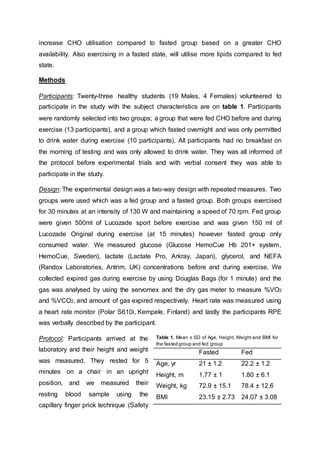
Participants: Twenty-three healthy students (19 Males, 4 Females) volunteered to
participate in the study with the subject characteristics are on table 1. Participants
were randomly selected into two groups; a group that were fed CHO before and during
exercise (13 participants), and a group which fasted overnight and was only permitted
to drink water during exercise (10 participants). All participants had no breakfast on
the morning of testing and was only allowed to drink water. They was all informed of
the protocol before experimental trials and with verbal consent they was able to
participate in the study.
Design: The experimental design was a two-way design with repeated measures. Two
groups were used which was a fed group and a fasted group. Both groups exercised
for 30 minutes at an intensity of 130 W and maintaining a speed of 70 rpm. Fed group
were given 500ml of Lucozade sport before exercise and was given 150 ml of
Lucozade Original during exercise (at 15 minutes) however fasted group only
consumed water. We measured glucose (Glucose HemoCue Hb 201+ system,
HemoCue, Sweden), lactate (Lactate Pro, Arkray, Japan), glycerol, and NEFA
(Randox Laboratories, Antrim, UK) concentrations before and during exercise. We
collected expired gas during exercise by using Douglas Bags (for 1 minute) and the
gas was analysed by using the servomex and the dry gas meter to measure %VO2
and %VCO2, and amount of gas expired respectively. Heart rate was measured using
a heart rate monitor (Polar S610i, Kempele, Finland) and lastly the participants RPE
was verbally described by the participant.
Protocol: Participants arrived at the
laboratory and their height and weight
was measured. They rested for 5
minutes on a chair in an upright
position, and we measured their
resting blood sample using the
capillary finger prick technique (Safety
Table 1. Mean ± SD of Age, Height, Weight and BMI for
the fasted group and fed group
Fasted Fed
Age, yr 21 ± 1.2 22.2 ± 1.2
Height, m 1.77 ± 1 1.80 ± 6.1
Weight, kg 72.9 ± 15.1 78.4 ± 12.6
BMI 23.15 ± 2.73 24.07 ± 3.08
Lancet, Sarstedt, Germany) to measure blood metabolites. All blood samples was
collected in a microcuvette tube, which was labelled and stored in an ice bucket for
future analysis. Then the participants consumed their 500ml drink of either Lucozade
Sport (fed group) or water (fasted group). Then blood samples were collected before
exercise and we also recorded their heart rate and RPE. Then the participants cycled
on a cycle ergometer for 30 minutes at an intensity of 130 W, and maintaining a speed
of 70 rpm. Participants consumed their drink at 15 minutes of exercise. Heart rate and
RPE was collected at 10, 20 and 30 min of exercise. Blood metabolites were collected
at 15 and 30 min of exercise. Gas was collected using the Douglas bags at 10 and 25
min of exercise. Gas was analysed by the servomex and dry gas meter to measure
the VO2 and VCO2 concentrations, and the temperature and volume of gas in the
Douglas bags. CHO and Lipid oxidation was calculated by using the formula:
CHO oxidation (g/min) = (4.21 x VCO2)–(2.962 x VO2)
Lipid Oxidation (g/min) = (1.695 x VO2)–(1.701 x VCO2)
(Jeukendrup & Wallis, 2005)
Statistical Analysis: Mean and standard deviation of the blood metabolites, RPE, heart
rate, and oxidation rates was calculated in Microsoft Excel (2013). Statistical analysis
was performed by using a two-way mixed ANOVA for all measured variables apart
from oxidation rates of CHO and lipids, which was performed by independent t-test.
Statistical analysis was performed on SPSS 23.
Results
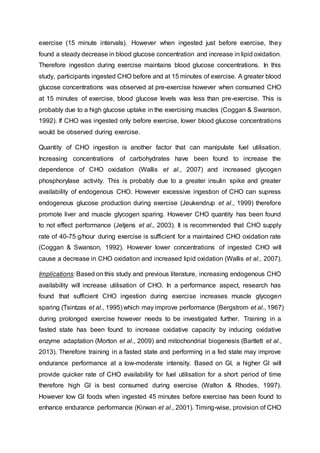
Blood glucose concentrations: There was a significant main effect for group
(F1,21=7.386, P=0.01) on blood glucose levels where blood glucose levels was greater
at pre-exercise and at 15 minutes of exercise for the fed group compared to fasted
group (Fig. 1). However glucose levels were similar between both groups at 30
minutes of exercise. There was a significant effect for the time (F2.2, 45.2=17.578,
P<0.001) where the fed groups blood glucose levels increased when CHO was
ingested and then gradually decreased during exercise. However for the fasted group,
glucose levels were unchanged (5.1 mmol/L). There was a significant interaction
(F2.2,45=15.467, P<0.001) where both groups had similar blood glucose levels at pre-
feeding and at the end of exercise, however blood glucose levels was higher at post
feeding (8.3 mmol/L) and at 15 minutes (5.9 mmol/L) during exercise for the fed group.
Fed groups blood glucose levels returned to normal at 30 minutes of exercise (5.3
mmol/L)
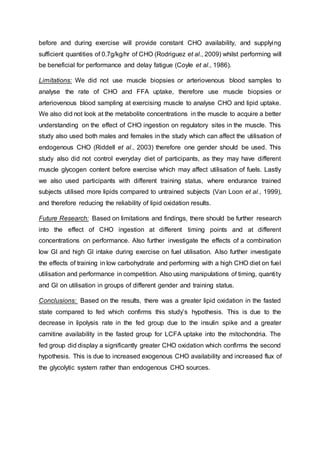
Blood Lactate concentrations: There was not a significant main effect for fed state
during exercise (F1, 21=1.86, P=0.19). However fasted group had a larger blood lactate
concentration at 15 minutes of exercise by a difference of 1.3 mmol/L (Fig. 2). There
was a significant main effect for time (F1.6, 33.3=100.498, P<0.001) on blood lactate
levels where lactate levels increase during exercise for both groups to a concentration
of 4.9-6.2 mmol/L and lactate concentrations decreased towards the end of exercise.
However there was no significant interaction (F1.6, 33.3= 1.71, P=0.174) of time and
group.
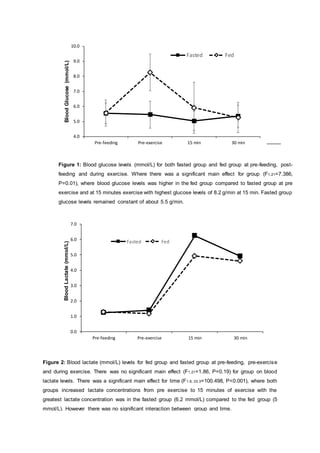
Blood NEFA concentrations: There is a significant main effect of group (F1,21=11.61,
P=0.003) on the concentration of NEFA (Fig. 3) during exercise where there were
increases in NEFA concentration for the fasted group with the greatest NEFA
concentration was at 30 minutes of exercise (0.67 mmol/L). However there was a
gradual decrease in NEFA concentrations in the fed group by a difference of 0.07
mmol/L. There was also a significant main effect of time ( F1.7, 36.5= 4.689, P=0.02)
where there were increases in NEFA concentrations during exercise for the fasted
group however there was a decrease in NEFA for the fed group. Lastly there was a
significant interaction between group and time (F1.74, 36.5= 17.23, P=0.001).
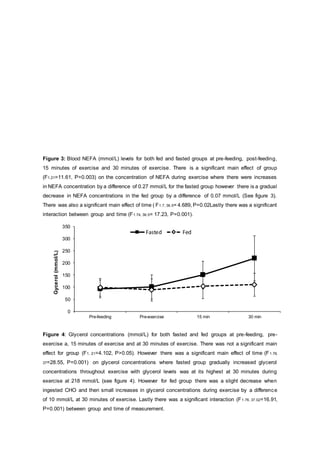
Blood Glycerol concentrations: There was not a significant main effect for group (F1,
21=4.102, P>0.05). However there was a significant main effect of time (F1.76, 37=28.55,
P=0.001) on glycerol concentrations (Fig. 4) where the fasted group gradually
increased glycerol concentrations throughout exercise with glycerol levels was at its
highest at 30 minutes during exercise (218 mmol/L). However for fed group there was
a slight decrease when ingesting CHO and then there were small increases in glycerol
concentration during exercise by a difference of 10 mmol/L at 30 minutes of exercise.
Lastly there was a significant interaction (F1.76, 37.02=16.91, P=0.001) between group
and time of measurement.
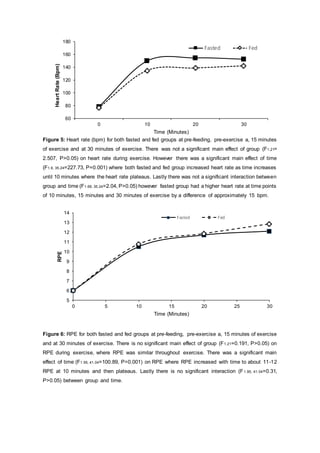
Heart Rate: There was not a significant main effect of group (F1,21= 2.507, P>0.05) on
heart rate (Fig. 5). However there was a significant main effect of time (F1.6,
35.24=227.73, P=0.001) where both fasted and fed group increased heart rate as time
increases until 10 minutes where the heart rate plateaus. Lastly there was not a
significant interaction between group and time (F1.68, 35.24=2.04, P>0.05) however
fasted group had a higher heart rate at time points of 10 minutes, 15 minutes and 30
minutes of exercise by a difference of approximately 15 bpm. The maximal heart rate
for fasted group and fed group was 155 bpm and 139 bpm respectively.
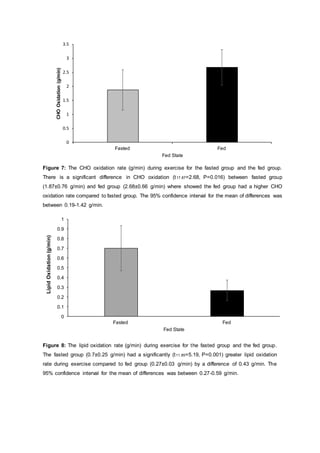
RPE: There was no significant main effect of group (F1,21=0.191, P>0.05) on RPE (Fig.
6), where RPE was similar throughout exercise. There was a significant main effect of
time (F1.95, 41.04=100.89, P=0.001) on RPE, where RPE increased with time to about
11-12 RPE at 10 minutes and then plateaus. Lastly there is no significant interaction
(F1.95, 41.04=0.31, P>0.05) between group and time.
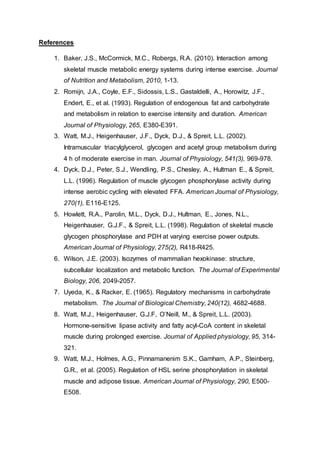
CHO oxidation: There is a significant difference in CHO oxidation (Fig. 7) (t17.87=2.68,
P=0.016) between fasted group (1.87±0.76 g/min) and fed group (2.68±0.66 g/min)
where the fed group had a higher CHO oxidation rate compared to fasted group. The
95% confidence interval for the mean of differences was between 0.19-1.42 g/min.
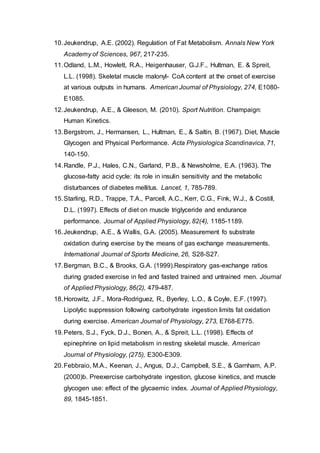
Lipid Oxidation: The fasted group (0.7±0.25 g/min) had a significantly (t11.85=5.19,
P=0.001) greater lipid oxidation (Fig. 8) rate during exercise compared to fed group
(0.27±0.03 g/min) by a difference of 0.43 g/min. The 95% confidence interval for the
mean of differences was between 0.27-0.59 g/min.
Discussion
The aim of this study was to investigate the effect of CHO feeding before exercise on
fuel utilisation during submaximal exercise. The main findings in this present study
was that lipid oxidation rate (Fig. 8) was significantly higher in the fasted group
compared to fed group by a difference of 0.43 g/min during exercise. This was
supported by gradual increases in blood NEFA and glycerol concentrations for the
fasted group (Fig. 3 & 4 respectively) however remained constant for the fed group.
Fed group (2.68 g/min) had a significantly higher CHO oxidation rate (Fig. 7)
compared to fasted group (1.88 g/min). These results were similar to Bergmen and
Brooks (1999) study, where they also found that the fed group utilised more CHO
sources and less lipid sources during moderate intensity (40% VO2max) exercise
whereas the fasted group utilised more lipids and less CHO.
Regulation of lipolysis: During moderate intensity exercise, more lipid oxidation is
usually observed due to a higher HSL activity which is caused by increases in
adrenaline and lower AMPK activity (Watt et al., 2003; Watt et al., 2005). In our study,
fasted group displayed increases in NEFA and glycerol concentrations (Fig. 3 & 4
respectively) as a result of increases in HSL activity and lipolysis. The fed group
maintained glycerol levels and NEFA concentrations decreased. Horowitz et al. (1997)
had similar blood glycerol and plasma FFA concentrations compared to this study, and
discussed that ingesting CHO caused the inhibition of HSL activity as a result of the
insulinemic response (Febbraio et al, 2000a). Horowitz et al. (1997) reported that
increases in insulin supresses lipolysis by >60%, which explains why there is a lower
glycerol and NEFA concentrations in the fed state.
Regulation of GLUT-4, Glycogenolysis, Glycolysis and PDH: On figure 1, there was
an increase in blood plasma glucose from pre-feeding to pre-exercise for the fed group
which was also found by Horowitz et al. (1997). This is due to ingestion of high GI
CHO and absorption of glucose into the bloodstream. Then during exercise (15 min),
there was a large decrease in glucose concentrations in the fed group. This is due to
a high insulin concentration (Richter & Hargreaves, 2013), which activates the
translocation of GLUT-4 to the muscle plasma membrane for the uptake of glucose
into the muscle. Muscle glycogen phosphorylase activity has been reported to be
augmented in the fed state compared to fasted, due to greater concentrations of AMP
and Pi (Dyck et al., 1996). Increases in glucose uptake would also increase the
glycolytic flux (hexokinase and PFK) and produce sufficient quantities in pyruvate to
allosterically activate PDH and convert pyruvate into acetyl CoA.
The fasted group had a lower CHO oxidation rate (Fig. 7) compared to the fed group
due to lower plasma glucose concentrations therefore depend on the muscle glycogen
stores and FFA from the adipose tissue and muscle. In the fasted group there was
less glycogen utilisation as there was increases in FFA availability (due to lipolysis),
causing the decrease in AMP and Pi concentrations (Horowitz et al, 1997). This will
cause the decrease in glycogen phosphorylase activity and glucose-6-phosphate
availability. Also based on the glucose-FA cycle, increases in FFA availability reduces
the glycolytic flux and PDH activity (Jeukendrup, 2002). Increases in blood glucose
concentrations was not observed for the fasted group (Fig. 1), and Horowitz et al.
(1997) also found no significant changes in blood glucose concentrations during
exercise.
Long chain fatty acid transport: Investigating the mechanisms of fatty acid uptake and
oxidation in the mitochondria was difficult as a result of not collecting muscle biopsies
and arteriovenous sampling. However we have found greater lipid oxidation in the
fasted group compared to fed group (Fig. 8) therefore there should be a greater uptake
of LCFA into the mitochondria in the fasted group to undergo β-oxidation. For fed
group as lipolysis rate has decreased there will be less FFA availability, decreasing
FAT/CD36 activity and LCFA uptake into mitochondria.
Carnitine availability is key for lipid oxidation as it is essential for LCFA transport into
the mitochondria (Jeukendrup, 2002). In fed groups, there was greater acetyl-CoA and
acetyl-carnitine concentrations, therefore decreasing carnitine availability which
explains the lower lipid oxidation rates for fed groups (Roepstorff et al., 2004).
However for fasted groups, there was a reduction in glycolytic flux and PDH activity
(Stephens et al., 2007) which increases carnitine availability therefore increasing the
capacity to transport of LCFA into mitochondria to undergo β-oxidation.
Effect of GlycaemicIndex, timingand quantity on Fuel Utilisation: Glycaemic index (GI)
is the rate of digestion and absorption of CHO sugars (Brouns et al., 2005). In this
study, Lucozade ‘sport’ and ‘original’ was used which is classed as a high GI
carbohydrate (Jenkins et al., 1981). Based on Horowitz et al. (1997), different GI
effects the rate of insulin release, where high GI has a greater insulin concentration
compared to low GI therefore greater inhibition of lipolysis. Both this study and theirs
found a significantly lower blood FFA concentrations and greater CHO oxidation during
exercise when ingested high GI CHO. However if we had used low GI CHO in our
study, we would observe greater blood FFA concentrations and greater lipid oxidation
(Febbraio et al., 2000) due to less inhibition of lipolysis. Jeukendrup and Jentjens
(2000) also found that ingesting high GI glucose and low GI fructose together will
increase overall CHO oxidation compared to just high GI CHO.
Timing of CHO intake is important as it effects muscle glycogen content and availability
of blood glucose for exercise. Febbraio et al. (2000b) looked at timings of feeding on
metabolism and found that CHO oxidation rates and blood glucose levels remained
constant, when CHO was ingested before (30 minutes before exercise) and during
exercise (15 minute intervals). However when ingested just before exercise, they
found a steady decrease in blood glucose concentration and increase in lipid oxidation.
Therefore ingestion during exercise maintains blood glucose concentrations. In this
study, participants ingested CHO before and at 15 minutes of exercise. A greater blood
glucose concentrations was observed at pre-exercise however when consumed CHO
at 15 minutes of exercise, blood glucose levels was less than pre-exercise. This is
probably due to a high glucose uptake in the exercising muscles (Coggan & Swanson,
1992). If CHO was ingested only before exercise, lower blood glucose concentrations
would be observed during exercise.
Quantity of CHO ingestion is another factor that can manipulate fuel utilisation.
Increasing concentrations of carbohydrates have been found to increase the
dependence of CHO oxidation (Wallis et al., 2007) and increased glycogen
phosphorylase activity. This is probably due to a greater insulin spike and greater
availability of endogenous CHO. However excessive ingestion of CHO can supress
endogenous glucose production during exercise (Jeukendrup et al., 1999) therefore
promote liver and muscle glycogen sparing. However CHO quantity has been found
to not effect performance (Jetjens et al., 2003). It is recommended that CHO supply
rate of 40-75 g/hour during exercise is sufficient for a maintained CHO oxidation rate
(Coggan & Swanson, 1992). However lower concentrations of ingested CHO will
cause a decrease in CHO oxidation and increased lipid oxidation (Wallis et al., 2007).
Implications: Based on this study and previous literature, increasing endogenous CHO
availability will increase utilisation of CHO. In a performance aspect, research has
found that sufficient CHO ingestion during exercise increases muscle glycogen
sparing (Tsintzas et al., 1995) which may improve performance (Bergstrom et al., 1967)
during prolonged exercise however needs to be investigated further. Training in a
fasted state has been found to increase oxidative capacity by inducing oxidative
enzyme adaptation (Morton et al., 2009) and mitochondrial biogenesis (Bartlett et al.,
2013). Therefore training in a fasted state and performing in a fed state may improve
endurance performance at a low-moderate intensity. Based on GI, a higher GI will
provide quicker rate of CHO availability for fuel utilisation for a short period of time
therefore high GI is best consumed during exercise (Walton & Rhodes, 1997).
However low GI foods when ingested 45 minutes before exercise has been found to
enhance endurance performance (Kirwan et al., 2001). Timing-wise, provision of CHO
before and during exercise will provide constant CHO availability, and supplying
sufficient quantities of 0.7g/kg/hr of CHO (Rodriguez et al., 2009) whilst performing will
be beneficial for performance and delay fatigue (Coyle et al., 1986).
Limitations: We did not use muscle biopsies or arteriovenous blood samples to
analyse the rate of CHO and FFA uptake, therefore use muscle biopsies or
arteriovenous blood sampling at exercising muscle to analyse CHO and lipid uptake.
We also did not look at the metabolite concentrations in the muscle to acquire a better
understanding on the effect of CHO ingestion on regulatory sites in the muscle. This
study also used both males and females in the study which can affect the utilisation of
endogenous CHO (Riddell et al., 2003) therefore one gender should be used. This
study also did not control everyday diet of participants, as they may have different
muscle glycogen content before exercise which may affect utilisation of fuels. Lastly
we also used participants with different training status, where endurance trained
subjects utilised more lipids compared to untrained subjects (Van Loon et al., 1999),
and therefore reducing the reliability of lipid oxidation results.
Future Research: Based on limitations and findings, there should be further research
into the effect of CHO ingestion at different timing points and at different
concentrations on performance. Also further investigate the effects of a combination
low GI and high GI intake during exercise on fuel utilisation. Also further investigate
the effects of training in low carbohydrate and performing with a high CHO diet on fuel
utilisation and performance in competition. Also using manipulations of timing, quantity
and GI on utilisation in groups of different gender and training status.
Conclusions: Based on the results, there was a greater lipid oxidation in the fasted
state compared to fed which confirms this study’s hypothesis. This is due to the
decrease in lipolysis rate in the fed group due to the insulin spike and a greater
carnitine availability in the fasted group for LCFA uptake into the mitochondria. The
fed group did display a significantly greater CHO oxidation which confirms the second
hypothesis. This is due to increased exogenous CHO availability and increased flux of
the glycolytic system rather than endogenous CHO sources.
Figure 2: Blood lactate (mmol/L) levels for fed group and fasted group at pre-feeding, pre-exercise
and during exercise. There was no significant main effect (F1,21=1.86, P=0.19) for group on blood
lactate levels. There was a significant main effect for time (F1.6, 33.3=100.498, P<0.001), where both
groups increased lactate concentrations from pre exercise to 15 minutes of exercise with the
greatest lactate concentration was in the fasted group (6.2 mmol/L) compared to the fed group (5
mmol/L). However there was no significant interaction between group and time.
0.00
0.20
0.40
0.60
0.80
1.00
1.20
Pre-feeding Pre-exercise 15 min 30 min
NEFA(mmol/L)
Fasted Fed
4.0
5.0
6.0
7.0
8.0
9.0
10.0
Pre-feeding Pre-exercise 15 min 30 min
BloodGlucose(mmol/L)
Fasted Fed
Figure 1: Blood glucose levels (mmol/L) for both fasted group and fed group at pre-feeding, post-
feeding and during exercise. Where there was a significant main effect for group (F1,21=7.386,
P=0.01), where blood glucose levels was higher in the fed group compared to fasted group at pre
exercise and at 15 minutes exercise with highest glucose levels of 8.2 g/min at 15 min. Fasted group
glucose levels remained constant of about 5.5 g/min.
0.0
1.0
2.0
3.0
4.0
5.0
6.0
7.0
Pre-feeding Pre-exercise 15 min 30 min
BloodLactate(mmol/L)
Fasted Fed
Figure 3: Blood NEFA (mmol/L) levels for both fed and fasted groups at pre-feeding, post-feeding,
15 minutes of exercise and 30 minutes of exercise. There is a significant main effect of group
(F1,21=11.61, P=0.003) on the concentration of NEFA during exercise where there were increases
in NEFA concentration by a difference of 0.27 mmol/L for the fasted group however there is a gradual
decrease in NEFA concentrations in the fed group by a difference of 0.07 mmol/L (See figure 3).
There was also a significant main effect of time ( F1.7, 36.5= 4.689, P=0.02Lastly there was a significant
interaction between group and time (F1.74, 36.5= 17.23, P=0.001).
0
50
100
150
200
250
300
350
Pre-feeding Pre-exercise 15 min 30 min
Gycerol(mmol/L)
Fasted Fed
Figure 4: Glycerol concentrations (mmol/L) for both fasted and fed groups at pre-feeding, pre-
exercise a, 15 minutes of exercise and at 30 minutes of exercise. There was not a significant main
effect for group (F1, 21=4.102, P>0.05). However there was a significant main effect of time (F1.76,
37=28.55, P=0.001) on glycerol concentrations where fasted group gradually increased glycerol
concentrations throughout exercise with glycerol levels was at its highest at 30 minutes during
exercise at 218 mmol/L (see figure 4). However for fed group there was a slight decrease when
ingested CHO and then small increases in glycerol concentrations during exercise by a difference
of 10 mmol/L at 30 minutes of exercise. Lastly there was a significant interaction (F1.76, 37.02=16.91,
P=0.001) between group and time of measurement.
5
6
7
8
9
10
11
12
13
14
0 5 10 15 20 25 30
RPE
Time (Minutes)
Fasted Fed
60
80
100
120
140
160
180
0 10 20 30
HeartRate(Bpm)
Time (Minutes)
Fasted Fed
Figure 5: Heart rate (bpm) for both fasted and fed groups at pre-feeding, pre-exercise a, 15 minutes
of exercise and at 30 minutes of exercise. There was not a significant main effect of group (F1,21=
2.507, P>0.05) on heart rate during exercise. However there was a significant main effect of time
(F1.6, 35.24=227.73, P=0.001) where both fasted and fed group increased heart rate as time increases
until 10 minutes where the heart rate plateaus. Lastly there was not a significant interaction between
group and time (F1.68, 35.24=2.04, P>0.05) however fasted group had a higher heart rate at time points
of 10 minutes, 15 minutes and 30 minutes of exercise by a difference of approximately 15 bpm.
Figure 6: RPE for both fasted and fed groups at pre-feeding, pre-exercise a, 15 minutes of exercise
and at 30 minutes of exercise. There is no significant main effect of group (F1,21=0.191, P>0.05) on
RPE during exercise, where RPE was similar throughout exercise. There was a significant main
effect of time (F1.95, 41.04=100.89, P=0.001) on RPE where RPE increased with time to about 11-12
RPE at 10 minutes and then plateaus. Lastly there is no significant interaction (F1.95, 41.04=0.31,
P>0.05) between group and time.
0
0.1
0.2
0.3
0.4
0.5
0.6
0.7
0.8
0.9
1
Fasted Fed
LipidOxidation(g/min)
Fed State
Figure 7: The CHO oxidation rate (g/min) during exercise for the fasted group and the fed group.
There is a significant difference in CHO oxidation (t17.87=2.68, P=0.016) between fasted group
(1.87±0.76 g/min) and fed group (2.68±0.66 g/min) where showed the fed group had a higher CHO
oxidation rate compared to fasted group. The 95% confidence interval for the mean of differences was
between 0.19-1.42 g/min.
0
0.5
1
1.5
2
2.5
3
3.5
Fasted Fed
CHOOxidation(g/min)
Fed State
Figure 8: The lipid oxidation rate (g/min) during exercise for the fasted group and the fed group.
The fasted group (0.7±0.25 g/min) had a significantly (t11.85=5.19, P=0.001) greater lipid oxidation
rate during exercise compared to fed group (0.27±0.03 g/min) by a difference of 0.43 g/min. The
95% confidence interval for the mean of differences was between 0.27-0.59 g/min.
References
1. Baker, J.S., McCormick, M.C., Robergs, R.A. (2010). Interaction among
skeletal muscle metabolic energy systems during intense exercise. Journal
of Nutrition and Metabolism, 2010, 1-13.
2. Romijn, J.A., Coyle, E.F., Sidossis, L.S., Gastaldelli, A., Horowitz, J.F.,
Endert, E., et al. (1993). Regulation of endogenous fat and carbohydrate
and metabolism in relation to exercise intensity and duration. American
Journal of Physiology, 265, E380-E391.
3. Watt, M.J., Heigenhauser, J.F., Dyck, D.J., & Spreit, L.L. (2002).
Intramuscular triacylglycerol, glycogen and acetyl group metabolism during
4 h of moderate exercise in man. Journal of Physiology, 541(3), 969-978.
4. Dyck, D.J., Peter, S.J., Wendling, P.S., Chesley, A., Hultman E., & Spreit,
L.L. (1996). Regulation of muscle glycogen phosphorylase activity during
intense aerobic cycling with elevated FFA. American Journal of Physiology,
270(1), E116-E125.
5. Howlett, R.A., Parolin, M.L., Dyck, D.J., Hultman, E., Jones, N.L.,
Heigenhauser, G.J.F., & Spreit, L.L. (1998). Regulation of skeletal muscle
glycogen phosphorylase and PDH at varying exercise power outputs.
American Journal of Physiology, 275(2), R418-R425.
6. Wilson, J.E. (2003). Isozymes of mammalian hexokinase: structure,
subcellular localization and metabolic function. The Journal of Experimental
Biology, 206, 2049-2057.
7. Uyeda, K., & Racker, E. (1965). Regulatory mechanisms in carbohydrate
metabolism. The Journal of Biological Chemistry, 240(12), 4682-4688.
8. Watt, M.J., Heigenhauser, G.J.F, O’Neill, M., & Spreit, L.L. (2003).
Hormone-sensitive lipase activity and fatty acyl-CoA content in skeletal
muscle during prolonged exercise. Journal of Applied physiology, 95, 314-
321.
9. Watt, M.J., Holmes, A.G., Pinnamanenim S.K., Garnham, A.P., Steinberg,
G.R., et al. (2005). Regulation of HSL serine phosphorylation in skeletal
muscle and adipose tissue. American Journal of Physiology, 290, E500-
E508.
10.Jeukendrup, A.E. (2002). Regulation of Fat Metabolism. Annals New York
Academy of Sciences, 967, 217-235.
11.Odland, L.M., Howlett, R.A., Heigenhauser, G.J.F., Hultman, E. & Spreit,
L.L. (1998). Skeletal muscle malonyl- CoA content at the onset of exercise
at various outputs in humans. American Journal of Physiology, 274, E1080-
E1085.
12.Jeukendrup, A.E., & Gleeson, M. (2010). Sport Nutrition. Champaign:
Human Kinetics.
13.Bergstrom, J., Hermansen, L., Hultman, E., & Saltin, B. (1967). Diet, Muscle
Glycogen and Physical Performance. Acta Physiologica Scandinavica, 71,
140-150.
14.Randle, P.J., Hales, C.N., Garland, P.B., & Newsholme, E.A. (1963). The
glucose-fatty acid cycle: its role in insulin sensitivity and the metabolic
disturbances of diabetes mellitus. Lancet, 1, 785-789.
15.Starling, R.D., Trappe, T.A., Parcell, A.C., Kerr, C.G., Fink, W.J., & Costill,
D.L. (1997). Effects of diet on muscle triglyceride and endurance
performance. Journal of Applied Physiology, 82(4), 1185-1189.
16.Jeukendrup, A.E., & Wallis, G.A. (2005). Measurement fo substrate
oxidation during exercise by the means of gas exchange measurements.
International Journal of Sports Medicine, 26, S28-S27.
17.Bergman, B.C., & Brooks, G.A. (1999).Respiratory gas-exchange ratios
during graded exercise in fed and fasted trained and untrained men. Journal
of Applied Physiology, 86(2), 479-487.
18.Horowitz, J.F., Mora-Rodriguez, R., Byerley, L.O., & Coyle, E.F. (1997).
Lipolytic suppression following carbohydrate ingestion limits fat oxidation
during exercise. American Journal of Physiology, 273, E768-E775.
19.Peters, S.J., Fyck, D.J., Bonen, A., & Spreit, L.L. (1998). Effects of
epinephrine on lipid metabolism in resting skeletal muscle. American
Journal of Physiology, (275), E300-E309.
20.Febbraio, M.A., Keenan, J., Angus, D.J., Campbell, S.E., & Garnham, A.P.
(2000)b. Preexercise carbohydrate ingestion, glucose kinetics, and muscle
glycogen use: effect of the glycaemic index. Journal of Applied Physiology,
89, 1845-1851.
21.Richter, E.A., & Hargreaves, M. (2013). Exercise, Glut-4, and skeletal
muscle glucose uptake. Physiological Review, 93, 993-1017.
22. Roepstorff, C., Halberg, N., Hillig, T., Saha, A.K., Ruderman, N.B.,
Wojtaszewski, J.F.P., et al. (2004). Malonyl-CoA and carnitine in regulation
of fat oxidation in human skeletal muscle during exercise. American Journal
of Physiology, 288, E113-E142.
23. Stephens, F.B., Constantin-Teodosiu, D., & Greenhadd, P.L. (2007). New
insights concerning the role of carnitine in the regulation of fuel metabolism
in skeletal muscle. Journal of Physiology, 581(2), 431-444.
24. Brouns, F., Bjorck, I., Frayn, K.N., Gibbs, A.L., Lang, V., Slama, G. et al.
(2005). Glycaemic index methodology. Nutrition Research Reviews, 18,
145-171.
25.Jenkins, D.J.A., Wolever, T.M.S., Taylor, R.H., Barker, H., Feilden, H.,
Baldwin, J.M. et al. (1981). Glycemic index of foods: a physiological basis
for carbohydrate exchange. The American Journal of Clinical Nutrition, 34,
362-366.
26.Jeukendrup, A.E., & Jentjens, R. (2000). Oxidation of carbohydrate feedings
during prolonged exercise: current thoughts, guidelines and directions for
future research. Sports Medicine, 29(6), 407-24.
27.Febbraio, M.A., Chiu, A., Angus, D.J., Arkinstall, M.J., & Hawley, J.A.
(2000). Effects of carbohydrate ingestion before and during exercise on
glucose kinetics and performance. Journal of Applied Physiology, 89, 2220-
2226.
28.Coggan, A.R., & Swanson, S.C. (1992). Nutritional manipulations before
and during endurance exercise: effects on performance. Medicine and
Science in Sports and Exercise, 24(9): 331-335.
29.Wallis, G.A., Yeo, S.E., Blannin, A.K., & Jeukendrup, A.E. (2007). Dose-
response effects of ingested carbohydrate on exercise metabolism in
women. Medicine and Science in Sport and Exercise, 39(1), 131-138.
30.Jetjens, R.L.P.G., Cale, C., Gutch, C., & Jeukendrup, A.E. (2003). Effects of
pre-exercise ingestion of different amounts of carbohydrate on subsequent
metabolism and cycling performance. European Journal of Spplied
Physiology, 88, 444-452.
31.Tsintzas, O.K., Williams, C., Boobis, L., & Greenhaff, P. (1995),
Carbohydrate ingestion and glycogen utilization in different muscle fibre
types in man. Journal of Physiology, 489(1), 243-250.
32.Jeukendrup, A.E., Wagenmakers, A.J.M., Stegen, J.H.C.H., Gisen, A.P.,
Brouns, F., & Saris, W.H.M. (1999). Carbohydrate ingestion can completely
supress endogenous glucose production during exercise. American Journal
of Physiology, 276(4), E672-E683.
33.Morton, J.P., Croft, L., Bartlett, J.D., MacLaren, D.P.M., Reilly, T., Evans, L.,
et al. (2009). Reduced carbohydrate availability does not modulate training-
induced heat shock protein adaptations but does upregulate oxidative
enzyme activity in human skeletal muscle. Journal of Applied Physiology,
106, 1513-1521.
34.Bartlett, J.D., Louhelainen, J., Iqbal, Z., Cochran, A.J., Gibala, M.J.,
Gregson, W. et al. (2013). Reduced carbohydrate availability enhances
exercise-induced p53 signalling in human skeletal muscle: implications for
mitochondrial biogenesis. American Journal of Physiology, 304, R450-R458.
35.Walton, P., & Rhodes, E.C. (1997). Glycaemic Index and Optimal
Performance. Sports Medicine, 23(3), 164-172.
36.Kirwan, J.P., Cyr-Campbell, D., Campbell, W.W., Scheiber, J. & Evans, W.J.
(2001). Effects of moderate and high glycemic index meals on metabolism
and exercise. Metabolism, 50(7), 849-855.
37.Rodriguez N.R., Di Marco N.M., & Langley, S. (2009). Nutrition and athletic
performance. Medicine and Science in Sports and Exercise, 41, 709-731.
38.Coyle, E.F., Coggan, A.R., Hemmert, M.K., & Ivy, J.L. (1986). Muscle
glycogen utilization during prolonged strenuous exercise when fed
carbohydrate. Journal of Applied Physiology, 61(1), 165-72.
39. Riddell, M.C., Partington, S.A., Stupka, N., Armstrong, D., Rennie, C.,
Tarnopolsky, M.A. (2003). Substrate utilisation during exercise performed
with and without glucose ingestion in female and male endurance-trained
athletes. International Journal of Sports Nutrition and Exercise Metabolism,
13, 407-421.
40.Van Loon, L.J.C., Jeukendrup, A.E., Saris, W.H.M., & Wagenmakers, A.J.M.
(1999). Effect of training status on fuel selection during submaximal
exercise with glucose ingestion. Journal of Applied Physiology, 87(4), 1413-
1420.

Coursework Finished

  • 1.
    The effects ofcarbohydrate feeding on metabolic responses to sub-maximal steady state exercise Introduction Energy is required for muscle contraction during exercise and the main molecule that enables muscle contraction is ATP (Baker et al., 2010). ATP is a high energy molecule that is produced by various energy systems. The four main energy systems are the phosphagen system, glycolytic system, oxidative phosphorylation system and adenylate kinase system. These energy systems interact simultaneously during exercise and these energy systems are affected by exercise intensity and duration. During sub-maximal exercise, mainly glycolysis and oxidative phosphorylation are the main energy systems that provide ATP however the flux of these energy systems is dependent on the availability of fuels and the activity of key enzymes. During exercise there are various fuel sources. The main fuels are lipids, carbohydrates (CHO) and amino acids. Fuel utilisation is particularly effected by intensity and duration. Based on previous research (Romijn et al., 1993), lipid oxidation is maximised during low-moderate intensity exercise and CHO sources are mainly utilised during high intensity exercise. Duration effects fuel utilisation by increases in fat oxidation and decreases in CHO oxidation as exercise time increases (Watt et al, 2002). These differences in fuel utilisation are due to the switching on-off of key regulatory sites for CHO and lipid metabolism. In this study we are aiming to investigate fuel utilisation during sub- maximal exercise. During sub-maximal exercise, fuel utilisation is regulated by key enzymes which are allosterically regulated. Glycogenolysis is a key regulatory site for CHO metabolism which is catalysed by enzymes glycogen phosphorylase and phosphoglucomutase. These enzymes are particularly activated by Ca2+ ions, ADP, AMP and Pi and adrenaline however inhibited by high ATP and glucose-6-phosphate (G-6-P) concentrations (Dyck et al., 1996). Glycogenolysis rate is greatest during high intensity exercise due to greater concentrations in AMP and Pi (Dyck et al., 1996). Glycolysis is also a key regulatory site which is the process of breaking down glucose. This mechanism has three rate limiting enzymes: hexokinase, phosphofructokinase (PFK) and pyruvate dehydrogenase (PDH). PDH activity particularly increases with increasing power output due to large increases in pyruvate, Ca2+, ADP, AMP and Pi
  • 2.
    concentrations (Howlett etal., 1998). Increases in G-6-P have been found to inhibit hexokinase activity during high intensity due to a greater glycogenolysis rate (Wilson, 2003) whereas glucose availability will increase hexokinase activity. PFK is allosterically inhibited with high ATP, H+ and citrate concentrations (Uyeda & Racker, 1965) however high concentrations of ADP, AMP and Pi will activate PFK. A regulatory site for lipid oxidation is lipolysis which is catalysed by hormone sensitive lipase (HSL) in the adipose tissue, liver and skeletal muscle. Peak HSL activity is during low-moderate intensity exercise due to elevation in adrenaline and low insulin concentrations (Watt et al., 2003). However HSL activity is inhibited during high intensity exercise due to increases in AMP concentrations and the activity of AMPK, which inhibits HSL activity (Watt et al., 2005). Lastly another regulatory site is the transfer of long chain fatty acids (LCFA) across the mitochondrial membrane. Malonyl- CoA is an inhibitor of carnitine palmitoyl transferase I (CPT-I) and is usually activated when acetyl-CoA concentrations is high (Jeukundrup, 2002) and in the presence of insulin, however intensity does not significantly affect malonyl CoA concentrations (Odland et al., 1998). There is also evidence to suggest that carnitine availability is key and during high intensity exercise, carnitine concentrations is reduced due to high a rate of acetyl-carnitine production (Roepstorff et al., 2004). Based on availability of glucose and free fatty acids (FFA), previous research has looked at the effects of feeding on metabolic responses during exercise. In competition, athletes are advised to have a pre-exercise meal before performance to replenish muscle glycogen and liver glycogen stores (Jeukendrup & Gleeson, 2010). A pre- exercise meal maximises muscle glycogen content and there is a proportional relationship between muscle glycogen content and cycling performance (Bergstrom, 1967). Research has also looked at the effects of a lipid diet on performance. However based on the glucose-fatty acid cycle (Randle et al., 1963), increases in free fatty acid availability will reduce glycolytic flux. This reduction in CHO utilisation has found a decline in performance during steady state exercise (Starling et al., 1997). Therefore as there was no significant effect of increased fat availability on performance, the aim is to investigate the effect of CHO feeding before and during exercise on metabolism rather than increasing lipid availability. As nutritional strategies are important for maximal performance, this study aims to investigate the effect of feeding immediately before and during exercise on metabolism. My hypothesis is CHO ingestion will
  • 3.
    increase CHO utilisationcompared to fasted group based on a greater CHO availability. Also exercising in a fasted state, will utilise more lipids compared to fed state. Methods Participants: Twenty-three healthy students (19 Males, 4 Females) volunteered to participate in the study with the subject characteristics are on table 1. Participants were randomly selected into two groups; a group that were fed CHO before and during exercise (13 participants), and a group which fasted overnight and was only permitted to drink water during exercise (10 participants). All participants had no breakfast on the morning of testing and was only allowed to drink water. They was all informed of the protocol before experimental trials and with verbal consent they was able to participate in the study. Design: The experimental design was a two-way design with repeated measures. Two groups were used which was a fed group and a fasted group. Both groups exercised for 30 minutes at an intensity of 130 W and maintaining a speed of 70 rpm. Fed group were given 500ml of Lucozade sport before exercise and was given 150 ml of Lucozade Original during exercise (at 15 minutes) however fasted group only consumed water. We measured glucose (Glucose HemoCue Hb 201+ system, HemoCue, Sweden), lactate (Lactate Pro, Arkray, Japan), glycerol, and NEFA (Randox Laboratories, Antrim, UK) concentrations before and during exercise. We collected expired gas during exercise by using Douglas Bags (for 1 minute) and the gas was analysed by using the servomex and the dry gas meter to measure %VO2 and %VCO2, and amount of gas expired respectively. Heart rate was measured using a heart rate monitor (Polar S610i, Kempele, Finland) and lastly the participants RPE was verbally described by the participant. Protocol: Participants arrived at the laboratory and their height and weight was measured. They rested for 5 minutes on a chair in an upright position, and we measured their resting blood sample using the capillary finger prick technique (Safety Table 1. Mean ± SD of Age, Height, Weight and BMI for the fasted group and fed group Fasted Fed Age, yr 21 ± 1.2 22.2 ± 1.2 Height, m 1.77 ± 1 1.80 ± 6.1 Weight, kg 72.9 ± 15.1 78.4 ± 12.6 BMI 23.15 ± 2.73 24.07 ± 3.08
  • 4.
    Lancet, Sarstedt, Germany)to measure blood metabolites. All blood samples was collected in a microcuvette tube, which was labelled and stored in an ice bucket for future analysis. Then the participants consumed their 500ml drink of either Lucozade Sport (fed group) or water (fasted group). Then blood samples were collected before exercise and we also recorded their heart rate and RPE. Then the participants cycled on a cycle ergometer for 30 minutes at an intensity of 130 W, and maintaining a speed of 70 rpm. Participants consumed their drink at 15 minutes of exercise. Heart rate and RPE was collected at 10, 20 and 30 min of exercise. Blood metabolites were collected at 15 and 30 min of exercise. Gas was collected using the Douglas bags at 10 and 25 min of exercise. Gas was analysed by the servomex and dry gas meter to measure the VO2 and VCO2 concentrations, and the temperature and volume of gas in the Douglas bags. CHO and Lipid oxidation was calculated by using the formula: CHO oxidation (g/min) = (4.21 x VCO2)–(2.962 x VO2) Lipid Oxidation (g/min) = (1.695 x VO2)–(1.701 x VCO2) (Jeukendrup & Wallis, 2005) Statistical Analysis: Mean and standard deviation of the blood metabolites, RPE, heart rate, and oxidation rates was calculated in Microsoft Excel (2013). Statistical analysis was performed by using a two-way mixed ANOVA for all measured variables apart from oxidation rates of CHO and lipids, which was performed by independent t-test. Statistical analysis was performed on SPSS 23. Results Blood glucose concentrations: There was a significant main effect for group (F1,21=7.386, P=0.01) on blood glucose levels where blood glucose levels was greater at pre-exercise and at 15 minutes of exercise for the fed group compared to fasted group (Fig. 1). However glucose levels were similar between both groups at 30 minutes of exercise. There was a significant effect for the time (F2.2, 45.2=17.578, P<0.001) where the fed groups blood glucose levels increased when CHO was ingested and then gradually decreased during exercise. However for the fasted group, glucose levels were unchanged (5.1 mmol/L). There was a significant interaction (F2.2,45=15.467, P<0.001) where both groups had similar blood glucose levels at pre- feeding and at the end of exercise, however blood glucose levels was higher at post
  • 5.
    feeding (8.3 mmol/L)and at 15 minutes (5.9 mmol/L) during exercise for the fed group. Fed groups blood glucose levels returned to normal at 30 minutes of exercise (5.3 mmol/L) Blood Lactate concentrations: There was not a significant main effect for fed state during exercise (F1, 21=1.86, P=0.19). However fasted group had a larger blood lactate concentration at 15 minutes of exercise by a difference of 1.3 mmol/L (Fig. 2). There was a significant main effect for time (F1.6, 33.3=100.498, P<0.001) on blood lactate levels where lactate levels increase during exercise for both groups to a concentration of 4.9-6.2 mmol/L and lactate concentrations decreased towards the end of exercise. However there was no significant interaction (F1.6, 33.3= 1.71, P=0.174) of time and group. Blood NEFA concentrations: There is a significant main effect of group (F1,21=11.61, P=0.003) on the concentration of NEFA (Fig. 3) during exercise where there were increases in NEFA concentration for the fasted group with the greatest NEFA concentration was at 30 minutes of exercise (0.67 mmol/L). However there was a gradual decrease in NEFA concentrations in the fed group by a difference of 0.07 mmol/L. There was also a significant main effect of time ( F1.7, 36.5= 4.689, P=0.02) where there were increases in NEFA concentrations during exercise for the fasted group however there was a decrease in NEFA for the fed group. Lastly there was a significant interaction between group and time (F1.74, 36.5= 17.23, P=0.001). Blood Glycerol concentrations: There was not a significant main effect for group (F1, 21=4.102, P>0.05). However there was a significant main effect of time (F1.76, 37=28.55, P=0.001) on glycerol concentrations (Fig. 4) where the fasted group gradually increased glycerol concentrations throughout exercise with glycerol levels was at its highest at 30 minutes during exercise (218 mmol/L). However for fed group there was a slight decrease when ingesting CHO and then there were small increases in glycerol concentration during exercise by a difference of 10 mmol/L at 30 minutes of exercise. Lastly there was a significant interaction (F1.76, 37.02=16.91, P=0.001) between group and time of measurement. Heart Rate: There was not a significant main effect of group (F1,21= 2.507, P>0.05) on heart rate (Fig. 5). However there was a significant main effect of time (F1.6, 35.24=227.73, P=0.001) where both fasted and fed group increased heart rate as time
  • 6.
    increases until 10minutes where the heart rate plateaus. Lastly there was not a significant interaction between group and time (F1.68, 35.24=2.04, P>0.05) however fasted group had a higher heart rate at time points of 10 minutes, 15 minutes and 30 minutes of exercise by a difference of approximately 15 bpm. The maximal heart rate for fasted group and fed group was 155 bpm and 139 bpm respectively. RPE: There was no significant main effect of group (F1,21=0.191, P>0.05) on RPE (Fig. 6), where RPE was similar throughout exercise. There was a significant main effect of time (F1.95, 41.04=100.89, P=0.001) on RPE, where RPE increased with time to about 11-12 RPE at 10 minutes and then plateaus. Lastly there is no significant interaction (F1.95, 41.04=0.31, P>0.05) between group and time. CHO oxidation: There is a significant difference in CHO oxidation (Fig. 7) (t17.87=2.68, P=0.016) between fasted group (1.87±0.76 g/min) and fed group (2.68±0.66 g/min) where the fed group had a higher CHO oxidation rate compared to fasted group. The 95% confidence interval for the mean of differences was between 0.19-1.42 g/min. Lipid Oxidation: The fasted group (0.7±0.25 g/min) had a significantly (t11.85=5.19, P=0.001) greater lipid oxidation (Fig. 8) rate during exercise compared to fed group (0.27±0.03 g/min) by a difference of 0.43 g/min. The 95% confidence interval for the mean of differences was between 0.27-0.59 g/min. Discussion The aim of this study was to investigate the effect of CHO feeding before exercise on fuel utilisation during submaximal exercise. The main findings in this present study was that lipid oxidation rate (Fig. 8) was significantly higher in the fasted group compared to fed group by a difference of 0.43 g/min during exercise. This was supported by gradual increases in blood NEFA and glycerol concentrations for the fasted group (Fig. 3 & 4 respectively) however remained constant for the fed group. Fed group (2.68 g/min) had a significantly higher CHO oxidation rate (Fig. 7) compared to fasted group (1.88 g/min). These results were similar to Bergmen and Brooks (1999) study, where they also found that the fed group utilised more CHO sources and less lipid sources during moderate intensity (40% VO2max) exercise whereas the fasted group utilised more lipids and less CHO.
  • 7.
    Regulation of lipolysis:During moderate intensity exercise, more lipid oxidation is usually observed due to a higher HSL activity which is caused by increases in adrenaline and lower AMPK activity (Watt et al., 2003; Watt et al., 2005). In our study, fasted group displayed increases in NEFA and glycerol concentrations (Fig. 3 & 4 respectively) as a result of increases in HSL activity and lipolysis. The fed group maintained glycerol levels and NEFA concentrations decreased. Horowitz et al. (1997) had similar blood glycerol and plasma FFA concentrations compared to this study, and discussed that ingesting CHO caused the inhibition of HSL activity as a result of the insulinemic response (Febbraio et al, 2000a). Horowitz et al. (1997) reported that increases in insulin supresses lipolysis by >60%, which explains why there is a lower glycerol and NEFA concentrations in the fed state. Regulation of GLUT-4, Glycogenolysis, Glycolysis and PDH: On figure 1, there was an increase in blood plasma glucose from pre-feeding to pre-exercise for the fed group which was also found by Horowitz et al. (1997). This is due to ingestion of high GI CHO and absorption of glucose into the bloodstream. Then during exercise (15 min), there was a large decrease in glucose concentrations in the fed group. This is due to a high insulin concentration (Richter & Hargreaves, 2013), which activates the translocation of GLUT-4 to the muscle plasma membrane for the uptake of glucose into the muscle. Muscle glycogen phosphorylase activity has been reported to be augmented in the fed state compared to fasted, due to greater concentrations of AMP and Pi (Dyck et al., 1996). Increases in glucose uptake would also increase the glycolytic flux (hexokinase and PFK) and produce sufficient quantities in pyruvate to allosterically activate PDH and convert pyruvate into acetyl CoA. The fasted group had a lower CHO oxidation rate (Fig. 7) compared to the fed group due to lower plasma glucose concentrations therefore depend on the muscle glycogen stores and FFA from the adipose tissue and muscle. In the fasted group there was less glycogen utilisation as there was increases in FFA availability (due to lipolysis), causing the decrease in AMP and Pi concentrations (Horowitz et al, 1997). This will cause the decrease in glycogen phosphorylase activity and glucose-6-phosphate availability. Also based on the glucose-FA cycle, increases in FFA availability reduces the glycolytic flux and PDH activity (Jeukendrup, 2002). Increases in blood glucose concentrations was not observed for the fasted group (Fig. 1), and Horowitz et al.
  • 8.
    (1997) also foundno significant changes in blood glucose concentrations during exercise. Long chain fatty acid transport: Investigating the mechanisms of fatty acid uptake and oxidation in the mitochondria was difficult as a result of not collecting muscle biopsies and arteriovenous sampling. However we have found greater lipid oxidation in the fasted group compared to fed group (Fig. 8) therefore there should be a greater uptake of LCFA into the mitochondria in the fasted group to undergo β-oxidation. For fed group as lipolysis rate has decreased there will be less FFA availability, decreasing FAT/CD36 activity and LCFA uptake into mitochondria. Carnitine availability is key for lipid oxidation as it is essential for LCFA transport into the mitochondria (Jeukendrup, 2002). In fed groups, there was greater acetyl-CoA and acetyl-carnitine concentrations, therefore decreasing carnitine availability which explains the lower lipid oxidation rates for fed groups (Roepstorff et al., 2004). However for fasted groups, there was a reduction in glycolytic flux and PDH activity (Stephens et al., 2007) which increases carnitine availability therefore increasing the capacity to transport of LCFA into mitochondria to undergo β-oxidation. Effect of GlycaemicIndex, timingand quantity on Fuel Utilisation: Glycaemic index (GI) is the rate of digestion and absorption of CHO sugars (Brouns et al., 2005). In this study, Lucozade ‘sport’ and ‘original’ was used which is classed as a high GI carbohydrate (Jenkins et al., 1981). Based on Horowitz et al. (1997), different GI effects the rate of insulin release, where high GI has a greater insulin concentration compared to low GI therefore greater inhibition of lipolysis. Both this study and theirs found a significantly lower blood FFA concentrations and greater CHO oxidation during exercise when ingested high GI CHO. However if we had used low GI CHO in our study, we would observe greater blood FFA concentrations and greater lipid oxidation (Febbraio et al., 2000) due to less inhibition of lipolysis. Jeukendrup and Jentjens (2000) also found that ingesting high GI glucose and low GI fructose together will increase overall CHO oxidation compared to just high GI CHO. Timing of CHO intake is important as it effects muscle glycogen content and availability of blood glucose for exercise. Febbraio et al. (2000b) looked at timings of feeding on metabolism and found that CHO oxidation rates and blood glucose levels remained constant, when CHO was ingested before (30 minutes before exercise) and during
  • 9.
    exercise (15 minuteintervals). However when ingested just before exercise, they found a steady decrease in blood glucose concentration and increase in lipid oxidation. Therefore ingestion during exercise maintains blood glucose concentrations. In this study, participants ingested CHO before and at 15 minutes of exercise. A greater blood glucose concentrations was observed at pre-exercise however when consumed CHO at 15 minutes of exercise, blood glucose levels was less than pre-exercise. This is probably due to a high glucose uptake in the exercising muscles (Coggan & Swanson, 1992). If CHO was ingested only before exercise, lower blood glucose concentrations would be observed during exercise. Quantity of CHO ingestion is another factor that can manipulate fuel utilisation. Increasing concentrations of carbohydrates have been found to increase the dependence of CHO oxidation (Wallis et al., 2007) and increased glycogen phosphorylase activity. This is probably due to a greater insulin spike and greater availability of endogenous CHO. However excessive ingestion of CHO can supress endogenous glucose production during exercise (Jeukendrup et al., 1999) therefore promote liver and muscle glycogen sparing. However CHO quantity has been found to not effect performance (Jetjens et al., 2003). It is recommended that CHO supply rate of 40-75 g/hour during exercise is sufficient for a maintained CHO oxidation rate (Coggan & Swanson, 1992). However lower concentrations of ingested CHO will cause a decrease in CHO oxidation and increased lipid oxidation (Wallis et al., 2007). Implications: Based on this study and previous literature, increasing endogenous CHO availability will increase utilisation of CHO. In a performance aspect, research has found that sufficient CHO ingestion during exercise increases muscle glycogen sparing (Tsintzas et al., 1995) which may improve performance (Bergstrom et al., 1967) during prolonged exercise however needs to be investigated further. Training in a fasted state has been found to increase oxidative capacity by inducing oxidative enzyme adaptation (Morton et al., 2009) and mitochondrial biogenesis (Bartlett et al., 2013). Therefore training in a fasted state and performing in a fed state may improve endurance performance at a low-moderate intensity. Based on GI, a higher GI will provide quicker rate of CHO availability for fuel utilisation for a short period of time therefore high GI is best consumed during exercise (Walton & Rhodes, 1997). However low GI foods when ingested 45 minutes before exercise has been found to enhance endurance performance (Kirwan et al., 2001). Timing-wise, provision of CHO
  • 10.
    before and duringexercise will provide constant CHO availability, and supplying sufficient quantities of 0.7g/kg/hr of CHO (Rodriguez et al., 2009) whilst performing will be beneficial for performance and delay fatigue (Coyle et al., 1986). Limitations: We did not use muscle biopsies or arteriovenous blood samples to analyse the rate of CHO and FFA uptake, therefore use muscle biopsies or arteriovenous blood sampling at exercising muscle to analyse CHO and lipid uptake. We also did not look at the metabolite concentrations in the muscle to acquire a better understanding on the effect of CHO ingestion on regulatory sites in the muscle. This study also used both males and females in the study which can affect the utilisation of endogenous CHO (Riddell et al., 2003) therefore one gender should be used. This study also did not control everyday diet of participants, as they may have different muscle glycogen content before exercise which may affect utilisation of fuels. Lastly we also used participants with different training status, where endurance trained subjects utilised more lipids compared to untrained subjects (Van Loon et al., 1999), and therefore reducing the reliability of lipid oxidation results. Future Research: Based on limitations and findings, there should be further research into the effect of CHO ingestion at different timing points and at different concentrations on performance. Also further investigate the effects of a combination low GI and high GI intake during exercise on fuel utilisation. Also further investigate the effects of training in low carbohydrate and performing with a high CHO diet on fuel utilisation and performance in competition. Also using manipulations of timing, quantity and GI on utilisation in groups of different gender and training status. Conclusions: Based on the results, there was a greater lipid oxidation in the fasted state compared to fed which confirms this study’s hypothesis. This is due to the decrease in lipolysis rate in the fed group due to the insulin spike and a greater carnitine availability in the fasted group for LCFA uptake into the mitochondria. The fed group did display a significantly greater CHO oxidation which confirms the second hypothesis. This is due to increased exogenous CHO availability and increased flux of the glycolytic system rather than endogenous CHO sources.
  • 11.
    Figure 2: Bloodlactate (mmol/L) levels for fed group and fasted group at pre-feeding, pre-exercise and during exercise. There was no significant main effect (F1,21=1.86, P=0.19) for group on blood lactate levels. There was a significant main effect for time (F1.6, 33.3=100.498, P<0.001), where both groups increased lactate concentrations from pre exercise to 15 minutes of exercise with the greatest lactate concentration was in the fasted group (6.2 mmol/L) compared to the fed group (5 mmol/L). However there was no significant interaction between group and time. 0.00 0.20 0.40 0.60 0.80 1.00 1.20 Pre-feeding Pre-exercise 15 min 30 min NEFA(mmol/L) Fasted Fed 4.0 5.0 6.0 7.0 8.0 9.0 10.0 Pre-feeding Pre-exercise 15 min 30 min BloodGlucose(mmol/L) Fasted Fed Figure 1: Blood glucose levels (mmol/L) for both fasted group and fed group at pre-feeding, post- feeding and during exercise. Where there was a significant main effect for group (F1,21=7.386, P=0.01), where blood glucose levels was higher in the fed group compared to fasted group at pre exercise and at 15 minutes exercise with highest glucose levels of 8.2 g/min at 15 min. Fasted group glucose levels remained constant of about 5.5 g/min. 0.0 1.0 2.0 3.0 4.0 5.0 6.0 7.0 Pre-feeding Pre-exercise 15 min 30 min BloodLactate(mmol/L) Fasted Fed
  • 12.
    Figure 3: BloodNEFA (mmol/L) levels for both fed and fasted groups at pre-feeding, post-feeding, 15 minutes of exercise and 30 minutes of exercise. There is a significant main effect of group (F1,21=11.61, P=0.003) on the concentration of NEFA during exercise where there were increases in NEFA concentration by a difference of 0.27 mmol/L for the fasted group however there is a gradual decrease in NEFA concentrations in the fed group by a difference of 0.07 mmol/L (See figure 3). There was also a significant main effect of time ( F1.7, 36.5= 4.689, P=0.02Lastly there was a significant interaction between group and time (F1.74, 36.5= 17.23, P=0.001). 0 50 100 150 200 250 300 350 Pre-feeding Pre-exercise 15 min 30 min Gycerol(mmol/L) Fasted Fed Figure 4: Glycerol concentrations (mmol/L) for both fasted and fed groups at pre-feeding, pre- exercise a, 15 minutes of exercise and at 30 minutes of exercise. There was not a significant main effect for group (F1, 21=4.102, P>0.05). However there was a significant main effect of time (F1.76, 37=28.55, P=0.001) on glycerol concentrations where fasted group gradually increased glycerol concentrations throughout exercise with glycerol levels was at its highest at 30 minutes during exercise at 218 mmol/L (see figure 4). However for fed group there was a slight decrease when ingested CHO and then small increases in glycerol concentrations during exercise by a difference of 10 mmol/L at 30 minutes of exercise. Lastly there was a significant interaction (F1.76, 37.02=16.91, P=0.001) between group and time of measurement.
  • 13.
    5 6 7 8 9 10 11 12 13 14 0 5 1015 20 25 30 RPE Time (Minutes) Fasted Fed 60 80 100 120 140 160 180 0 10 20 30 HeartRate(Bpm) Time (Minutes) Fasted Fed Figure 5: Heart rate (bpm) for both fasted and fed groups at pre-feeding, pre-exercise a, 15 minutes of exercise and at 30 minutes of exercise. There was not a significant main effect of group (F1,21= 2.507, P>0.05) on heart rate during exercise. However there was a significant main effect of time (F1.6, 35.24=227.73, P=0.001) where both fasted and fed group increased heart rate as time increases until 10 minutes where the heart rate plateaus. Lastly there was not a significant interaction between group and time (F1.68, 35.24=2.04, P>0.05) however fasted group had a higher heart rate at time points of 10 minutes, 15 minutes and 30 minutes of exercise by a difference of approximately 15 bpm. Figure 6: RPE for both fasted and fed groups at pre-feeding, pre-exercise a, 15 minutes of exercise and at 30 minutes of exercise. There is no significant main effect of group (F1,21=0.191, P>0.05) on RPE during exercise, where RPE was similar throughout exercise. There was a significant main effect of time (F1.95, 41.04=100.89, P=0.001) on RPE where RPE increased with time to about 11-12 RPE at 10 minutes and then plateaus. Lastly there is no significant interaction (F1.95, 41.04=0.31, P>0.05) between group and time.
  • 14.
    0 0.1 0.2 0.3 0.4 0.5 0.6 0.7 0.8 0.9 1 Fasted Fed LipidOxidation(g/min) Fed State Figure7: The CHO oxidation rate (g/min) during exercise for the fasted group and the fed group. There is a significant difference in CHO oxidation (t17.87=2.68, P=0.016) between fasted group (1.87±0.76 g/min) and fed group (2.68±0.66 g/min) where showed the fed group had a higher CHO oxidation rate compared to fasted group. The 95% confidence interval for the mean of differences was between 0.19-1.42 g/min. 0 0.5 1 1.5 2 2.5 3 3.5 Fasted Fed CHOOxidation(g/min) Fed State Figure 8: The lipid oxidation rate (g/min) during exercise for the fasted group and the fed group. The fasted group (0.7±0.25 g/min) had a significantly (t11.85=5.19, P=0.001) greater lipid oxidation rate during exercise compared to fed group (0.27±0.03 g/min) by a difference of 0.43 g/min. The 95% confidence interval for the mean of differences was between 0.27-0.59 g/min.
  • 15.
    References 1. Baker, J.S.,McCormick, M.C., Robergs, R.A. (2010). Interaction among skeletal muscle metabolic energy systems during intense exercise. Journal of Nutrition and Metabolism, 2010, 1-13. 2. Romijn, J.A., Coyle, E.F., Sidossis, L.S., Gastaldelli, A., Horowitz, J.F., Endert, E., et al. (1993). Regulation of endogenous fat and carbohydrate and metabolism in relation to exercise intensity and duration. American Journal of Physiology, 265, E380-E391. 3. Watt, M.J., Heigenhauser, J.F., Dyck, D.J., & Spreit, L.L. (2002). Intramuscular triacylglycerol, glycogen and acetyl group metabolism during 4 h of moderate exercise in man. Journal of Physiology, 541(3), 969-978. 4. Dyck, D.J., Peter, S.J., Wendling, P.S., Chesley, A., Hultman E., & Spreit, L.L. (1996). Regulation of muscle glycogen phosphorylase activity during intense aerobic cycling with elevated FFA. American Journal of Physiology, 270(1), E116-E125. 5. Howlett, R.A., Parolin, M.L., Dyck, D.J., Hultman, E., Jones, N.L., Heigenhauser, G.J.F., & Spreit, L.L. (1998). Regulation of skeletal muscle glycogen phosphorylase and PDH at varying exercise power outputs. American Journal of Physiology, 275(2), R418-R425. 6. Wilson, J.E. (2003). Isozymes of mammalian hexokinase: structure, subcellular localization and metabolic function. The Journal of Experimental Biology, 206, 2049-2057. 7. Uyeda, K., & Racker, E. (1965). Regulatory mechanisms in carbohydrate metabolism. The Journal of Biological Chemistry, 240(12), 4682-4688. 8. Watt, M.J., Heigenhauser, G.J.F, O’Neill, M., & Spreit, L.L. (2003). Hormone-sensitive lipase activity and fatty acyl-CoA content in skeletal muscle during prolonged exercise. Journal of Applied physiology, 95, 314- 321. 9. Watt, M.J., Holmes, A.G., Pinnamanenim S.K., Garnham, A.P., Steinberg, G.R., et al. (2005). Regulation of HSL serine phosphorylation in skeletal muscle and adipose tissue. American Journal of Physiology, 290, E500- E508.
  • 16.
    10.Jeukendrup, A.E. (2002).Regulation of Fat Metabolism. Annals New York Academy of Sciences, 967, 217-235. 11.Odland, L.M., Howlett, R.A., Heigenhauser, G.J.F., Hultman, E. & Spreit, L.L. (1998). Skeletal muscle malonyl- CoA content at the onset of exercise at various outputs in humans. American Journal of Physiology, 274, E1080- E1085. 12.Jeukendrup, A.E., & Gleeson, M. (2010). Sport Nutrition. Champaign: Human Kinetics. 13.Bergstrom, J., Hermansen, L., Hultman, E., & Saltin, B. (1967). Diet, Muscle Glycogen and Physical Performance. Acta Physiologica Scandinavica, 71, 140-150. 14.Randle, P.J., Hales, C.N., Garland, P.B., & Newsholme, E.A. (1963). The glucose-fatty acid cycle: its role in insulin sensitivity and the metabolic disturbances of diabetes mellitus. Lancet, 1, 785-789. 15.Starling, R.D., Trappe, T.A., Parcell, A.C., Kerr, C.G., Fink, W.J., & Costill, D.L. (1997). Effects of diet on muscle triglyceride and endurance performance. Journal of Applied Physiology, 82(4), 1185-1189. 16.Jeukendrup, A.E., & Wallis, G.A. (2005). Measurement fo substrate oxidation during exercise by the means of gas exchange measurements. International Journal of Sports Medicine, 26, S28-S27. 17.Bergman, B.C., & Brooks, G.A. (1999).Respiratory gas-exchange ratios during graded exercise in fed and fasted trained and untrained men. Journal of Applied Physiology, 86(2), 479-487. 18.Horowitz, J.F., Mora-Rodriguez, R., Byerley, L.O., & Coyle, E.F. (1997). Lipolytic suppression following carbohydrate ingestion limits fat oxidation during exercise. American Journal of Physiology, 273, E768-E775. 19.Peters, S.J., Fyck, D.J., Bonen, A., & Spreit, L.L. (1998). Effects of epinephrine on lipid metabolism in resting skeletal muscle. American Journal of Physiology, (275), E300-E309. 20.Febbraio, M.A., Keenan, J., Angus, D.J., Campbell, S.E., & Garnham, A.P. (2000)b. Preexercise carbohydrate ingestion, glucose kinetics, and muscle glycogen use: effect of the glycaemic index. Journal of Applied Physiology, 89, 1845-1851.
  • 17.
    21.Richter, E.A., &Hargreaves, M. (2013). Exercise, Glut-4, and skeletal muscle glucose uptake. Physiological Review, 93, 993-1017. 22. Roepstorff, C., Halberg, N., Hillig, T., Saha, A.K., Ruderman, N.B., Wojtaszewski, J.F.P., et al. (2004). Malonyl-CoA and carnitine in regulation of fat oxidation in human skeletal muscle during exercise. American Journal of Physiology, 288, E113-E142. 23. Stephens, F.B., Constantin-Teodosiu, D., & Greenhadd, P.L. (2007). New insights concerning the role of carnitine in the regulation of fuel metabolism in skeletal muscle. Journal of Physiology, 581(2), 431-444. 24. Brouns, F., Bjorck, I., Frayn, K.N., Gibbs, A.L., Lang, V., Slama, G. et al. (2005). Glycaemic index methodology. Nutrition Research Reviews, 18, 145-171. 25.Jenkins, D.J.A., Wolever, T.M.S., Taylor, R.H., Barker, H., Feilden, H., Baldwin, J.M. et al. (1981). Glycemic index of foods: a physiological basis for carbohydrate exchange. The American Journal of Clinical Nutrition, 34, 362-366. 26.Jeukendrup, A.E., & Jentjens, R. (2000). Oxidation of carbohydrate feedings during prolonged exercise: current thoughts, guidelines and directions for future research. Sports Medicine, 29(6), 407-24. 27.Febbraio, M.A., Chiu, A., Angus, D.J., Arkinstall, M.J., & Hawley, J.A. (2000). Effects of carbohydrate ingestion before and during exercise on glucose kinetics and performance. Journal of Applied Physiology, 89, 2220- 2226. 28.Coggan, A.R., & Swanson, S.C. (1992). Nutritional manipulations before and during endurance exercise: effects on performance. Medicine and Science in Sports and Exercise, 24(9): 331-335. 29.Wallis, G.A., Yeo, S.E., Blannin, A.K., & Jeukendrup, A.E. (2007). Dose- response effects of ingested carbohydrate on exercise metabolism in women. Medicine and Science in Sport and Exercise, 39(1), 131-138. 30.Jetjens, R.L.P.G., Cale, C., Gutch, C., & Jeukendrup, A.E. (2003). Effects of pre-exercise ingestion of different amounts of carbohydrate on subsequent metabolism and cycling performance. European Journal of Spplied Physiology, 88, 444-452.
  • 18.
    31.Tsintzas, O.K., Williams,C., Boobis, L., & Greenhaff, P. (1995), Carbohydrate ingestion and glycogen utilization in different muscle fibre types in man. Journal of Physiology, 489(1), 243-250. 32.Jeukendrup, A.E., Wagenmakers, A.J.M., Stegen, J.H.C.H., Gisen, A.P., Brouns, F., & Saris, W.H.M. (1999). Carbohydrate ingestion can completely supress endogenous glucose production during exercise. American Journal of Physiology, 276(4), E672-E683. 33.Morton, J.P., Croft, L., Bartlett, J.D., MacLaren, D.P.M., Reilly, T., Evans, L., et al. (2009). Reduced carbohydrate availability does not modulate training- induced heat shock protein adaptations but does upregulate oxidative enzyme activity in human skeletal muscle. Journal of Applied Physiology, 106, 1513-1521. 34.Bartlett, J.D., Louhelainen, J., Iqbal, Z., Cochran, A.J., Gibala, M.J., Gregson, W. et al. (2013). Reduced carbohydrate availability enhances exercise-induced p53 signalling in human skeletal muscle: implications for mitochondrial biogenesis. American Journal of Physiology, 304, R450-R458. 35.Walton, P., & Rhodes, E.C. (1997). Glycaemic Index and Optimal Performance. Sports Medicine, 23(3), 164-172. 36.Kirwan, J.P., Cyr-Campbell, D., Campbell, W.W., Scheiber, J. & Evans, W.J. (2001). Effects of moderate and high glycemic index meals on metabolism and exercise. Metabolism, 50(7), 849-855. 37.Rodriguez N.R., Di Marco N.M., & Langley, S. (2009). Nutrition and athletic performance. Medicine and Science in Sports and Exercise, 41, 709-731. 38.Coyle, E.F., Coggan, A.R., Hemmert, M.K., & Ivy, J.L. (1986). Muscle glycogen utilization during prolonged strenuous exercise when fed carbohydrate. Journal of Applied Physiology, 61(1), 165-72. 39. Riddell, M.C., Partington, S.A., Stupka, N., Armstrong, D., Rennie, C., Tarnopolsky, M.A. (2003). Substrate utilisation during exercise performed with and without glucose ingestion in female and male endurance-trained athletes. International Journal of Sports Nutrition and Exercise Metabolism, 13, 407-421. 40.Van Loon, L.J.C., Jeukendrup, A.E., Saris, W.H.M., & Wagenmakers, A.J.M. (1999). Effect of training status on fuel selection during submaximal
  • 19.
    exercise with glucoseingestion. Journal of Applied Physiology, 87(4), 1413- 1420.