Cosmetic surgery
DR HAFIZA SHEHREEN
DPT(KING EDWARD MEDICAL UNIVERSITY)
Cosmetic surgery
 Cosmetic surgery is a procedure to change your appearance. It's a
type of plastic surgery.
 There are many procedures, ranging from minimally invasive
treatments to complex surgeries. The procedures can smooth
wrinkles, reshape features or lift sagging skin. Cosmetic surgery is a
procedure to enhance, alter or reshape specific parts of your body.
The goal of cosmetic surgery is to change your appearance
(aesthetics). Healthcare providers can do cosmetic surgery on any
part of your body.
types of cosmetic surgery
 There are several types of cosmetic surgery. Providers
organize them into types based on how invasive they are.
Nonsurgical techniques use chemicals, needles or lasers to
produce results. Surgical procedures use incisions (cuts) into
your skin and require a longer recovery time.
Some of the most common nonsurgical
cosmetic procedures include:
 Botulinum toxin (Botox®) injections.
 Chemical peels.
 Dermal fillers.
 Intense pulsed light (IPL) treatment and laser skin resurfacing.
 Laser hair removal.
Some of the most common cosmetic
surgeries include:
 Abdominoplasty (tummy tuck).
 Breast augmentation.
 Butt lift.
 Eyelid surgery.
 Facelift.
 Liposuction.
 Rhinoplasty (nose job).
What does cosmetic surgery treat?
 Cosmetic surgery doesn’t treat any specific health conditions. Instead, it changes your
appearance. This can improve your confidence and self-esteem.
 Situations where you might think about getting cosmetic surgery may include:
 Dissatisfaction with the way an area of your body looks.
 Correcting a growth abnormality (like tubular breasts or asymmetry).
 Correcting the complications of an illness or injury.
 Removing excess skin after significant weight loss.
 Getting rid of fat or excess tissue that doesn’t go away with traditional weight loss
techniques.
How common is cosmetic surgery?
 Cosmetic surgery is very common. Worldwide, the number of
cosmetic procedures performed in 2022 was 11% higher than
in 2021.
Cosmetic surgery procedure
 Each type of cosmetic surgery is different. The steps of a cosmetic surgery may
include:
 An anesthesiologist gives you anesthesia. It’s most often general anesthesia that
puts you to sleep.
 Your surgeon makes an incision in your skin.
 Your surgeon repairs, moves, removes, adds or adjusts certain parts of your body.
 Your surgeon closes the incision site.
Nonsurgical cosmetic procedure
 You won’t need general anesthesia for nonsurgical cosmetic procedures. Your
healthcare provider may give you a local anesthetic so you won’t feel pain in only
one part of your body that they’re working on. You’ll be awake during the
procedure.
 What your provider does will vary based on what you’re getting done. For
example, if you’re undergoing botulinum toxin injections, your surgeon will poke
your skin with a thin needle and inject the medication underneath your skin.
 If you’re undergoing laser hair removal, your provider will pass a device with bright
lights over your skin. Your provider will give you protective eyeglasses to wear for
laser procedures to protect your eyes.
What happens after cosmetic surgery?
 After cosmetic surgery, you’ll move into an area of the hospital for observation
until your anesthetic wears off and you wake up. You may need to stay overnight
in the hospital. It isn’t safe to drive after you have anesthesia, so ask a friend or
family member to drive you home from the hospital.
 You may need assistance for a few days at home while you recover. You’ll need
plenty of rest after surgery. This requires time off of work or school. You’ll likely
receive medications to help with any soreness or discomfort after surgery. It’s
normal to have bruising and mild swelling.
 You can usually return to your daily routine after nonsurgical procedures, but
avoid strenuous activities until your provider approves it. You can drive yourself
home after nonsurgical cosmetic procedures.
What are the benefits of cosmetic
surgery?
 The benefits of cosmetic surgery include, but aren’t limited to, the following:
 It can change your appearance.
 It aims to meet your goals.
 It’s safe.
 You can feel more confident and comfortable with your appearance.
What are the risks or complications of
cosmetic surgery?
 As with any surgery, surgical cosmetic procedures do have risks. The most common
risks are:
 Infection.
 Bleeding.
 Swelling.
 Bruising.
 Pain or discomfort.
 Nerve damage.
 Anesthesia complications.
 Blood clots.
 Complications from nonsurgical cosmetic surgery procedures are rare. They vary
depending on the technique your provider used but may include:
 Burns.
 Scarring.
 Skin discoloration.
 Pain.
 Swelling.
 Bruising.
 Serious side effects and complications of nonsurgical procedures are also rare.
They include:
 Allergic reaction to the ingredients in an injection.
 Difficulty breathing.
 Droopy eyelids, weakness or paralysis in facial muscles. These symptoms are also
signs of a stroke.
 Nerve damage.
 Trouble speaking or difficulty swallowing.
 Vision loss.
Cosmetic surgery vs. plastic surgery:
What’s the difference?
 “Plastic surgery” is a broad term to describe a procedure that focuses on adding,
rebuilding, repairing or reshaping current parts of your body for a functional
and/or aesthetic goal.
 Cosmetic surgery and reconstructive surgery are types of plastic surgery. Cosmetic
surgery procedures focus on changing your appearance for aesthetic purposes.
Cosmetic surgery raises several ethical
issues, including:
 1. Informed consent: Ensuring patients understand risks, benefits, and
alternatives.
 2. Autonomy: Respecting patients' decisions and rights.
 3. Body image and self-esteem: Addressing underlying psychological issues.
 4. Unrealistic expectations: Managing patients' expectations and perceptions.
 5. Safety and risks: Minimizing complications and ensuring proper care.
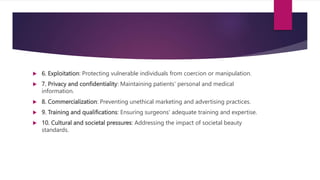
 6. Exploitation: Protecting vulnerable individuals from coercion or manipulation.
 7. Privacy and confidentiality: Maintaining patients' personal and medical
information.
 8. Commercialization: Preventing unethical marketing and advertising practices.
 9. Training and qualifications: Ensuring surgeons' adequate training and expertise.
 10. Cultural and societal pressures: Addressing the impact of societal beauty
standards.

cosmetic surgery presentation slides ppt

  • 1.
    Cosmetic surgery DR HAFIZASHEHREEN DPT(KING EDWARD MEDICAL UNIVERSITY)
  • 2.
    Cosmetic surgery  Cosmeticsurgery is a procedure to change your appearance. It's a type of plastic surgery.  There are many procedures, ranging from minimally invasive treatments to complex surgeries. The procedures can smooth wrinkles, reshape features or lift sagging skin. Cosmetic surgery is a procedure to enhance, alter or reshape specific parts of your body. The goal of cosmetic surgery is to change your appearance (aesthetics). Healthcare providers can do cosmetic surgery on any part of your body.
  • 3.
    types of cosmeticsurgery  There are several types of cosmetic surgery. Providers organize them into types based on how invasive they are. Nonsurgical techniques use chemicals, needles or lasers to produce results. Surgical procedures use incisions (cuts) into your skin and require a longer recovery time.
  • 4.
    Some of themost common nonsurgical cosmetic procedures include:  Botulinum toxin (Botox®) injections.  Chemical peels.  Dermal fillers.  Intense pulsed light (IPL) treatment and laser skin resurfacing.  Laser hair removal.
  • 5.
    Some of themost common cosmetic surgeries include:  Abdominoplasty (tummy tuck).  Breast augmentation.  Butt lift.  Eyelid surgery.  Facelift.  Liposuction.  Rhinoplasty (nose job).
  • 6.
    What does cosmeticsurgery treat?  Cosmetic surgery doesn’t treat any specific health conditions. Instead, it changes your appearance. This can improve your confidence and self-esteem.  Situations where you might think about getting cosmetic surgery may include:  Dissatisfaction with the way an area of your body looks.  Correcting a growth abnormality (like tubular breasts or asymmetry).  Correcting the complications of an illness or injury.  Removing excess skin after significant weight loss.  Getting rid of fat or excess tissue that doesn’t go away with traditional weight loss techniques.
  • 7.
    How common iscosmetic surgery?  Cosmetic surgery is very common. Worldwide, the number of cosmetic procedures performed in 2022 was 11% higher than in 2021.
  • 8.
    Cosmetic surgery procedure Each type of cosmetic surgery is different. The steps of a cosmetic surgery may include:  An anesthesiologist gives you anesthesia. It’s most often general anesthesia that puts you to sleep.  Your surgeon makes an incision in your skin.  Your surgeon repairs, moves, removes, adds or adjusts certain parts of your body.  Your surgeon closes the incision site.
  • 9.
    Nonsurgical cosmetic procedure You won’t need general anesthesia for nonsurgical cosmetic procedures. Your healthcare provider may give you a local anesthetic so you won’t feel pain in only one part of your body that they’re working on. You’ll be awake during the procedure.  What your provider does will vary based on what you’re getting done. For example, if you’re undergoing botulinum toxin injections, your surgeon will poke your skin with a thin needle and inject the medication underneath your skin.  If you’re undergoing laser hair removal, your provider will pass a device with bright lights over your skin. Your provider will give you protective eyeglasses to wear for laser procedures to protect your eyes.
  • 10.
    What happens aftercosmetic surgery?  After cosmetic surgery, you’ll move into an area of the hospital for observation until your anesthetic wears off and you wake up. You may need to stay overnight in the hospital. It isn’t safe to drive after you have anesthesia, so ask a friend or family member to drive you home from the hospital.  You may need assistance for a few days at home while you recover. You’ll need plenty of rest after surgery. This requires time off of work or school. You’ll likely receive medications to help with any soreness or discomfort after surgery. It’s normal to have bruising and mild swelling.  You can usually return to your daily routine after nonsurgical procedures, but avoid strenuous activities until your provider approves it. You can drive yourself home after nonsurgical cosmetic procedures.
  • 11.
    What are thebenefits of cosmetic surgery?  The benefits of cosmetic surgery include, but aren’t limited to, the following:  It can change your appearance.  It aims to meet your goals.  It’s safe.  You can feel more confident and comfortable with your appearance.
  • 12.
    What are therisks or complications of cosmetic surgery?  As with any surgery, surgical cosmetic procedures do have risks. The most common risks are:  Infection.  Bleeding.  Swelling.  Bruising.  Pain or discomfort.  Nerve damage.  Anesthesia complications.  Blood clots.
  • 13.
     Complications fromnonsurgical cosmetic surgery procedures are rare. They vary depending on the technique your provider used but may include:  Burns.  Scarring.  Skin discoloration.  Pain.  Swelling.  Bruising.
  • 14.
     Serious sideeffects and complications of nonsurgical procedures are also rare. They include:  Allergic reaction to the ingredients in an injection.  Difficulty breathing.  Droopy eyelids, weakness or paralysis in facial muscles. These symptoms are also signs of a stroke.  Nerve damage.  Trouble speaking or difficulty swallowing.  Vision loss.
  • 15.
    Cosmetic surgery vs.plastic surgery: What’s the difference?  “Plastic surgery” is a broad term to describe a procedure that focuses on adding, rebuilding, repairing or reshaping current parts of your body for a functional and/or aesthetic goal.  Cosmetic surgery and reconstructive surgery are types of plastic surgery. Cosmetic surgery procedures focus on changing your appearance for aesthetic purposes.
  • 16.
    Cosmetic surgery raisesseveral ethical issues, including:  1. Informed consent: Ensuring patients understand risks, benefits, and alternatives.  2. Autonomy: Respecting patients' decisions and rights.  3. Body image and self-esteem: Addressing underlying psychological issues.  4. Unrealistic expectations: Managing patients' expectations and perceptions.  5. Safety and risks: Minimizing complications and ensuring proper care.
  • 17.
     6. Exploitation:Protecting vulnerable individuals from coercion or manipulation.  7. Privacy and confidentiality: Maintaining patients' personal and medical information.  8. Commercialization: Preventing unethical marketing and advertising practices.  9. Training and qualifications: Ensuring surgeons' adequate training and expertise.  10. Cultural and societal pressures: Addressing the impact of societal beauty standards.