CODE OF ETHICSIN SOCIAL LIFE TO
PROTECT FROM EXTREMISM &
CLASHES
• DR HAFIZA SHEHREEN
3.
DEFINITION OF EXTREMISM
•AN EXTREMISM CLASH REFERS TO A CONFLICT BETWEEN
GROUPS OR INDIVIDUAL HOLDING EXTREME OPPOSING VIEW
OR IDEOLOGIES.
• EXAMPLES: POLITICAL, RELIGIOUS, OR SOCIAL EXTREMISM
LEADING TO VIOLENCE OR CONFLICT.
Understanding Clashes
• Conflicts arising from ideological, cultural, or social differences.
• Examples: Inter-group tensions, polarization, societal divisions.
4.
Importance of EthicalBehavior
1. Why ethics matter in social interactions
Ethics matter in social interactions because they:
• Promote respect: Treating others with respect and dignity, regardless of differences
• Build trust: Consistently acting with integrity and honesty fosters trust and reliability.
• Foster empathy: Considering others’ perspectives and feelings encourages
understanding and compassion.
• Support personal growth: Encouraging self-reflection and accountability helps
individuals develop and improve.
• Enhance reputation: Demonstrating ethical behavior enhances personal and
professional reputation.
5.
Principles of EthicalConduct
The Principles of Ethical Conduct are universal guidelines that promote
ethical behavior and decision-making. These principles include:
1. Respect: Treat others with dignity, worth, and respect.
2. Integrity: Be honest, transparent, and truthful in all interactions.
3. Responsibility: Take accountability for actions and their consequences.
4. Fairness: Practice justice, equity, and equal treatment for all.
5. Compassion: Show empathy, kindness, and concern for others’ well-being.
6. Accountability: Take ownership of mistakes and learn from them
7. Transparency: Be open and clear in all interactions and decisions.
7.
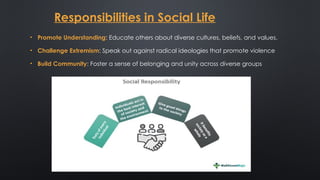
Responsibilities in SocialLife
• Promote Understanding: Educate others about diverse cultures, beliefs, and values.
• Challenge Extremism: Speak out against radical ideologies that promote violence
• Build Community: Foster a sense of belonging and unity across diverse groups
9.
Building Trust andCommunication
• Importance of open dialogue
• Listening actively and respecting
different viewpoints
Education and Awareness
• Role of education in promoting
tolerance
• Awareness of extremism signs
and prevention
10.
Strategies for Implementation
•Education: Integrate ethics education in schools and communities
• Media Literacy: Equip individuals to critically analyze media messages
• Legal Frameworks: Support policies that protect freedom of expression
while preventing hate speech
Role of Technology
• Social Media: Encourage responsible use to combat misinformation and
polarization
• Digital Literacy: Promote skills to navigate online spaces safely and
respectfully
11.
Challenges and Solutions
•Challenges: Resistance to change, deep-seated prejudices,
misinformation
• Solutions: Grassroots initiatives, leadership commitment, international
cooperation.
Conclusion
• Recap of key points: Respect, tolerance, dialogue, and empathy
• Call to action: Commit to upholding ethical standards for a harmonious
society.
Editor's Notes
#3 Beliefs or actions characterized by radical or fanatical views