Umbilical Cord Mesenchymal Stem Cells:
The New Gold Standard for Mesenchymal
Stem Cell-Based Therapies?
Reine El Omar,1,* Jacqueline Beroud,1,* Jean-Francois Stoltz, PhD,1,2
Patrick Menu, PhD,1
Emilie Velot, PhD,1
and Veronique Decot, PharmD, PhD1,2
Due to their self-renewal capacity, multilineage differentiation potential, paracrine effects, and immunosup-
pressive properties, mesenchymal stromal cells (MSCs) are an attractive and promising tool for regenerative
medicine. MSCs can be isolated from various tissues but despite their common immunophenotypic charac-
teristics and functional properties, source-dependent differences in MSCs properties have recently emerged and
lead to different clinical applications. Considered for a long time as a medical waste, umbilical cord appears
these days as a promising source of MSCs. Several reports have shown that umbilical cord-derived MSCs are
more primitive, proliferative, and immunosuppressive than their adult counterparts. In this review, we aim at
synthesizing the differences between umbilical cord MSCs and MSCs from other sources (bone marrow,
adipose tissue, periodontal ligament, dental pulp,.) with regard to their proliferation capacity, proteic and
transcriptomic profiles, and their secretome involved in their regenerative, homing, and immunomodulatory
capacities. Although umbilical cord MSCs are until now not particularly used as an MSC source in clinical
practice, accumulating evidence shows that they may have a therapeutic advantage to treat several diseases,
especially autoimmune and neurodegenerative diseases.
Introduction
Mesenchymal stromal cells (MSCs) are attractive
cells due to their capacity of long-term ex vivo pro-
liferation, multilineage differentiation potential, and immu-
nomodulatory properties. These cells were first identified
and isolated from the bone marrow (BM) and have emerged
as powerful tools in tissue engineering and regeneration.1
Al-
though adult BM is the most common and best-characterized
source of MSCs, Wharton’s jelly (WJ) of the umbilical cord
provides a novel source of MSCs with higher accessibility
and fewer ethical constraints than BM holding great promise
as an alternative. WJ in an extra-embryonic tissue that is
easily obtained after birth, and it has initially been described
by Thomas Wharton in 1656.2
While the isolation of MSCs
from BM requires an invasive procedure for the donor,
MSCs can be noninvasively isolated from WJ.3
These WJ-
MSCs are believed to be more primitive than MSCs derived
from more mature tissue sources and to have intermediate
properties between embryonic and adult stem cells.4
More-
over, WJ-MSCs are available in potentially large quantities,
have a fast proliferation rate, a great expansion capability,
do not induce teratomas, and harbor strong immunomodu-
latory capacities.5,6
In this review, we will focus on the similarities and dif-
ferences between WJ-MSCs and MSCs from other sources
with regard to their proliferation, their surface markers, and
their transcriptome profiles. The controversy between their
paracrine effects and trans-differentiation potential will be
discussed. In addition, we will particularly highlight their
roles as (a) immunomodulators and the mechanisms in-
volved in their immunosuppressive properties, as (b) anti-
tumor agents, (c) migratory curative cells with (d) a special
emphasis on their clinical and therapeutic applications in
autoimmune and neurodegenerative diseases.
Main Features of WJ-MSCs
Isolation methods
Isolation of MSCs from WJ requires complex processing.
Many isolation and expansion protocols have been demon-
strated for a fast and efficient ex vivo generation of large
quantities of cells. Currently, ‘‘enzymatic digestion’’ and
‘‘tissue explant’’ are the two types of methods used for the
isolation of WJ-MSCs.7
Those based on enzymatic digestion have mainly used
collagenase alone or in combination with other enzymes
1
CNRS UMR UL 7365, Baˆtiment Biopoˆle, Faculte´ de me´decine, Vandœuvre-le`s-Nancy, France.
2
CHU de Nancy, Unite´ de The´rapie Cellulaire et Tissus, Vandœuvre-le`s-Nancy, France.
*Both authors contributed equally to this work.
TISSUE ENGINEERING: Part B
Volume 20, Number 5, 2014
ª Mary Ann Liebert, Inc.
DOI: 10.1089/ten.teb.2013.0664
523
(e.g., trypsine, hayluronidase) and were performed with
or without the dissection of the umbilical cord into small
pieces and with or without removing the blood vessels.8
Recently, Han et al. have suggested that using 0.2% colla-
genase II at 37°C for a digestion of 16–20 h is an effective
and simple enzyme digestion method.7
Other groups have
found that enzymatic digestion can alter cell population
and function and, thus, have developed explant approaches
without using any enzyme and taking advantage of the
ability of MSCs to migrate from the tissue to adhere on the
plastic.8–10
Hua et al. have, very recently, compared three
explant and three enzymatic methods with regard to time of
primary culture, cell number, cell morphology, immune
phenotype, and differentiation potential of WJ-MSCs. They
have shown that the 10 mm-size tissue explant method was
the optimal protocol for the isolation of MSCs.11
Morphology and proliferation capacity
WJ-MSCs cultured in vitro shared a similar fibro-blastoid
shaped morphology to BM, amniotic fluid (AF), or teeth and
periodontal ligament (PDL)-MSC.12,13
The proliferation capacity of cells is important regarding
their application potential in cell therapy and tissue engi-
neering. WJ-MSCs proliferation capacity seems to be dif-
ferent from other sources MSCs. Indeed, for instance, Yu
et al. have shown that over a period of 7 days after seeding,
WJ-MSCs grew much faster than PDL-MSC and had a cell
doubling time of 22.23h against 27.51 h for PDL-MSC.14
Compared with BM-MSCs, WJ-MSCs grow much faster for
the early passages and have a cell doubling time (24h) almost
twice shorter than BM-MSCs (40h) over the 1st passage.
These observations were confirmed by Abu Kasim et al.
showing that WJ-MSCs and dental pulp-mesenchymal stem
cells (DP-MSCs) were highly proliferative as compared with
BM and adipose tissue (AT)-MSCs.15
Furthermore, WJ-MSCs
have a greater ability to form colony-forming unit-fibroblasts
colonies in vitro than BM-MSCs, and their formation’s fre-
quency depends on seeding cell density.4,16
Other studies focusing on DP-MSCs showed that cells
from both sources (WJ and teeth) initially grew slowly but
their proliferation rates were increased after the first sub-
culture.17
However, WJ-MSCs growth is influenced by the
number of culture passages in vitro, as amplifying these
cells until passage 10 will result in a slower cell growth
compared with the same cell culture at passage 5.18
A very recent study has evaluated the proliferation ki-
netics and phenotypic characteristics of MSCs derived
from WJ and AT during prolonged in vitro expansion and
found that WJ-MSCs were isolated with a high efficiency
and bore a substantially increased proliferation capac-
ity; whereas AT-MSCs exhibited a reduced proliferation
potential showing typical signs of senescence at an early
stage.19
Marker expression at protein level
A large number of studies have analyzed the surface
markers of WJ-MSCs and compared their expression pro-
files with other sources of MSCs such as BM, teeth, or AF.
Table 1. Phenotypic Profile of WJ-MSCs Compared with MSCs from Other Sources
WJ-MSCs markers Compared with [] References
Positive: CD29, CD105, HLA-ABC, Oct-4,
Gata-4, Cx43, a-actin, cTnt
[AF-MSCs]
Similar marker expression except Oct-4: *25% for
WJ-MSC vs. *51% for AF MSC
18
Negative: CD34, HLA-DR
Positive: CD44, CD13, CD56, CD61, CD73,
CD105, CD90, CD166, CD29, HLA-ABC,
CD59
[dental pulp of milk and adult wisdom teeth-derived
MSCs]
Similar marker expression
17
Negative: HLA-DR
Positive: CD73, CD105, CD90, [PDL-MSCs]
Similar marker expression
14
Negative: CD34, HLA-DR, CD45, CD19,
CD11b
Positive: CD68 [promyelocytic cell line (HL-60): known to express
CD68]
Similar level expression
20
Negative: CD34, CD45, CD163
Positive: CD13, CD29, CD44, CD105,
CD106, CD73, CD166, HLA-ABC, CD90
[Bone marrow MSCs]
Similar marker expression except:
 CD106: WJ    BM
 HLA-ABC: WJ   BM
13,16,21
Negative: CD14, CD34, CD38, CD45 CD31,
HLA-DR
Positive: CD105, CD146, CD73, CD90 [human MSCs from: tibial plateau (TP), trabecular
bone, iliac crest (IC), BM, and WJ umbilical cord]
Similar level expression for all markers except CD46
(twice more expressed for IC than for WJ and TP)
22
Negative: CD14, CD34, CD31, CD45, CD3
Positive: CD44, CD73, CD105, CD90,
CD106, CD29, vimentin, laminin, Oct-4,
Nanog,
[Adult and fetal bone marrow (aBM-MSCs and fBM-
MSCs) and adipose tissue-derived MSC (AT-
MSCs)]
Similar marker expression except Oct-4 and Nanog
expressed only by BM-MSCs and WJ-MSCs
23
Negative: CD34, CD14, CD45, CD31, vWF
AF, amniotic fluid; AT, adipose tissue; BM, bone marrow; IC, iliac crest; MSCs, mesenchymal stromal cells; PDL, periodontal ligament;
TP, tibial plateau; WJ, Wharton’s jelly.
524 EL OMAR ET AL.
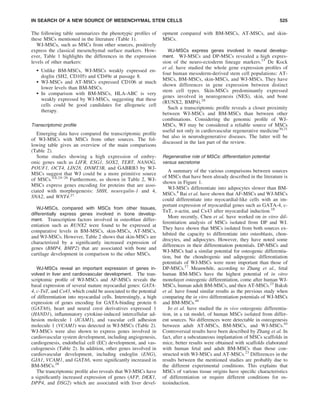
The following table summarizes the phenotypic profiles of
these MSCs mentioned in the literature (Table 1).
WJ-MSCs, such as MSCs from other sources, positively
express the classical mesenchymal surface markers. How-
ever, Table 1 highlights the differences in the expression
levels of other markers:
 Unlike BM-MSCs, WJ-MSCs weakly expressed en-
doglin (SH2, CD105) and CD49e at passage 8.
 WJ-MSCs and AT-MSCs expressed CD106 at much
lower levels than BM-MSCs.
 In comparison with BM-MSCs, HLA-ABC is very
weakly expressed by WJ-MSCs, suggesting that these
cells could be good candidates for allogeneic cell
therapy.
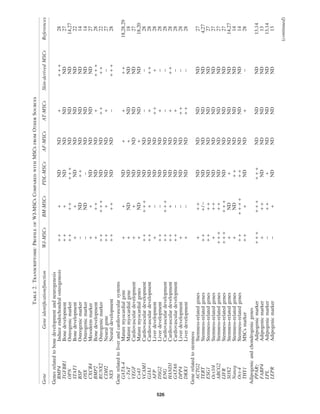
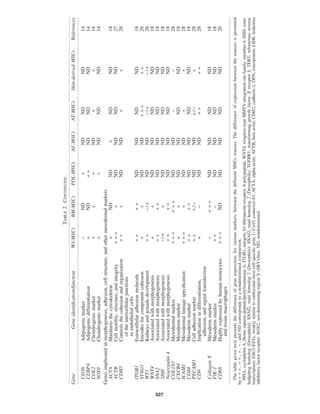
Transcriptomic profile
Emerging data have compared the transcriptomic profile
of WJ-MSCs with MSCs from other sources. The fol-
lowing table gives an overview of the main comparisons
(Table 2).
Some studies showing a high expression of embry-
onic genes such as LIFR, ESG1, SOX2, TERT, NANOG,
POUF1, OCT4, LIN28, DNMT3B, and GABRB3 by WJ-
MSCs suggest that WJ could be a more primitive source
of MSCs.4,6,24–26
Furthermore, as shown in Table 2, WJ-
MSCs express genes encoding for proteins that are asso-
ciated with morphogenesis: SHH, neuregulin-1 and 4,
SNA2, and WNT4.27
WJ-MSCs, compared with MSCs from other tissues,
differentially express genes involved in bone develop-
ment. Transcription factors involved in osteoblast differ-
entiation such as RUNX2 were found to be expressed at
comparative levels in BM-MSCs, skin-MSCs, AT-MSCs,
and WJ-MSCs. However, Table 2 shows that skin-MSCs are
characterized by a significantly increased expression of
genes (BMP4, BMP2) that are associated with bone and
cartilage development in comparison to the other MSCs.
WJ-MSCs reveal an important expression of genes in-
volved in liver and cardiovascular development. The tran-
scriptomic profile of WJ-MSCs and AF-MSCs reveals the
basal expression of several mature myocardial genes: GATA-
4, c-TnT, and Cx43, which could be associated to the potential
of differentiation into myocardial cells. Interestingly, a high
expression of genes encoding for GATA-binding protein 6
(GATA6), heart and neural crest derivatives expressed 1
(HAND1), inflammatory cytokine-induced intercellular ad-
hesion molecule 1 (ICAM1), and vascular cell adhesion
molecule 1 (VCAM1) was detected in WJ-MSCs (Table 2).
WJ-MSCs were also shown to express genes involved in
cardiovascular system development, including angiogenesis,
cardiogenesis, endothelial cell (EC) development, and vas-
culogenesis (Table 2). In addition, other genes involved in
cardiovascular development, including endoglin (ENG),
GJA1, VCAM1, and GATA6, were significantly increased in
BM-MSCs.28
The trancriptomic profile also reveals that WJ-MSCs have
a significantly increased expression of genes (AFP, DKK1,
DPP4, and DSG2) which are associated with liver devel-
opment compared with BM-MSCs, AT-MSCs, and skin-
MSCs.
WJ-MSCs express genes involved in neural develop-
ment. WJ-MSCs and DP-MSCs revealed a high expres-
sion of the neuro-ectoderm lineage markers.15
De Kock
et al. have studied the whole gene expression profiles of
four human mesoderm-derived stem cell populations: AT-
MSCs, BM-MSCs, skin-MSCs, and WJ-MSCs. They have
shown differences in gene expression between distinct
stem cell types. Skin-MSCs predominantly expressed
genes involved in neurogenesis (NES), skin, and bone
(RUNX2, BMP4).28
Such a transcriptomic profile reveals a closer proximity
between WJ-MSCs and BM-MSCs than between other
combinations. Considering the genomic profile of WJ-
MSCs, WJ may be considered a reliable source of MSCs
useful not only in cardiovascular regenerative medicine30,31
but also in neurodegenerative diseases. The latter will be
discussed in the last part of the review.
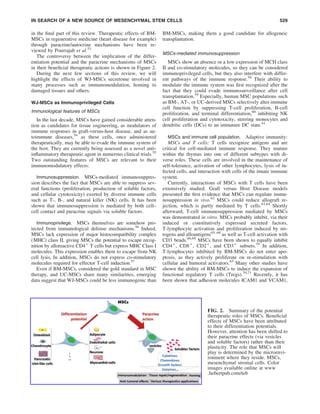
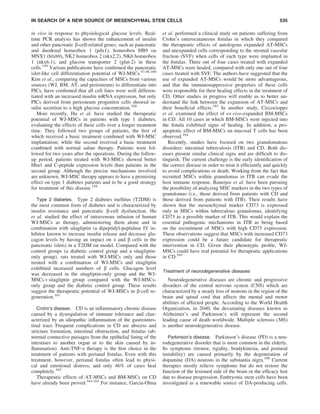
Regenerative role of MSCs: differentiation potential
versus secretome
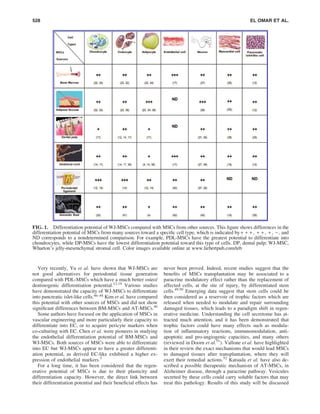
A summary of the various comparisons between sources
of MSCs that have been already described in the literature is
shown in Figure 1.
WJ-MSCs differentiate into adipocytes slower than BM-
MSCs.4
Bai et al. have shown that AF-MSCs and WJ-MSCs
could differentiate into myocardial-like cells with an im-
portant expression of myocardial genes such as GATA-4, c-
TnT, a-actin, and Cx43 after myocardial induction.18
More recently, Chen et al. have worked on in vitro dif-
ferentiation analysis of MSCs isolated from DP and WJ.
They have shown that MSCs isolated from both sources ex-
hibited the capacity to differentiate into osteoblasts, chon-
drocytes, and adipocytes. However, they have noted some
differences in their differentiation potentials. DP-MSCs and
WJ-MSCs had a similar potential for osteogenic differentia-
tion, but the chondrogenic and adipogenic differentiation
potentials of WJ-MSCs were more important than those of
DP-MSCs.17
Meanwhile, according to Zhang et al., fetal
human BM-MSCs have the highest potential of in vitro
monolayer osteogenic differentiation, come after human WJ-
MSCs, human adult BM-MSCs, and then AT-MSCs.23
Baksh
et al. have found similar results as the previous study when
comparing the in vitro differentiation potentials of WJ-MSCs
and BM-MSCs.44
Jo et al. have studied the in vivo osteogenic differentia-
tion, in a rat model, of human MSCs isolated from differ-
ent sources. No differences were detectable in osteogenesis
between adult AT-MSCs, BM-MSCs, and WJ-MSCs.45
Controversial results have been described by Zhang et al. In
fact, after a subcutaneous implantation of MSCs scaffolds in
mice, better results were obtained with scaffolds elaborated
with human fetal and adult BM-MSCs than those con-
structed with WJ-MSCs and AT-MSCs.23
Differences in the
results between the mentioned studies are probably due to
the different experimental conditions. This explains that
MSCs of various tissue origins have specific characteristics
of differentiation or require different conditions for os-
teoinduction.
IN SEARCH OF A NEW SOURCE OF MESENCHYMAL STEM CELLS 525
Table2.TranscriptomicProfileofWJ-MSCsComparedwithMSCsfromOtherSources
GeneGeneidentification/functionWJ-MSCsBM-MSCsPDL-MSCsAF-MSCsAT-MSCsSkin-derivedMSCsReferences
Genesrelatedtobonedevelopmentandneurogenesis
BMP4Induceendochondralosteogenesis+++NDND++++28
TGFBR1Bonedevelopment+++NDNDNDND27
OPNOsteogenicmarker+++++++NDNDND14,27
STAT1Bonedevelopment++NDNDNDND22
BSPOsteogenicmarker-ND++NDNDND14
OSXOsteogenicmarker-ND-NDNDND14
CXCR4Mesodermmarker++NDNDNDND27
BMP2Bonedevelopment+++NDND++++28
RUNX2Osteogenicmarker+++++NDND++++22
CDH2Neuralgene+++NDND+-27
NESNeuraldevelopment++++NDND-+++28
Generelatedtoliverandcardiovascularsystems
GATA-4Maturemyocardialgene++ND++++18,28,29
c-TnTMaturemyocardialgene+NDND+NDND18
VEGFCardiovasculardevelopment++NDNDNDND27
Cx43Maturemyocardialgenes+NDND+NDND18,20
VCAM1Cardiovasculardevelopment+++++NDND--28
GJA1Cardiovasculardevelopment+++NDND+++28
AFPLiverdevelopment+-NDND+++28
DSG2Liverdevelopment++-NDND+-28
ENGCardiovasculardevelopment+++++NDND--28
HAND1Cardiovasculardevelopment+++NDND+++28
GATA6Cardiovasculardevelopment++-NDND+-28
DPP4Liverdevelopment+-NDND++-28
DKK1Liverdevelopment+-NDND++-28
Generelatedtostemness
ACTG2Stemness-relatedgenes+++NDNDNDND27
TERTStemness-relatedgenes+++/-NDNDNDND4,27
ESG1Stemness-relatedgenes++++NDNDNDND27
Oct3/4Stemness-relatedgenes+++NDNDNDND27
ABCG2Stemness-relatedgenes+++++NDNDNDND27
LIFRStemness-relatedgenes++++++NDNDNDND27
SOX2Stemness-relatedgenes+ND+NDNDND14,27
NanogStemness-relatedgenes+ND++NDNDND14
Oct-4Stemness-relatedgenes++++++++NDNDND14
THY1MSCsmarker+++NDND+-28
Adipogenicandchondrogenicgenes
PPARcAdipogenicmarker+++++++++NDNDND13,14
FABP4Adipogenicmarker+++NDNDNDND13
LPLAdipogenicmarker-+++NDNDND13,14
LEPRAdipogenicmarker-+NDNDNDND13
(continued)
526
Table2.Continued
GeneGeneidentification/functionWJ-MSCsBM-MSCsPDL-MSCsAF-MSCsAT-MSCsSkin-derivedMSCsReferences
CD36Adipogenicmarker-ND+NDNDND14
CEBPAAdipogenicdifferentiation+ND++NDNDND14
COL2Chondrogenicmarker+++ND++14
SOX9Chondrogenicmarker++NDNDND14
Genesimplicatedinmorphogenesis,adhesion,cellstructure,andothermesodermalmarkers
ACTAMaintainsthecytoskeleton+NDND+NDND18
ACTBCellmotility,structure,andintegrity++++NDNDNDND27
CDH5Controlsthecohesionandorganization
oftheintercellularjunctions
inendothelialcells
+++NDND++28
ITGB1Extracellularadhesionmolecule++++NDNDNDND18
STAG1Encodesforcomponentcohesion++NDND+++++28
WT1Kidneysandgonadsdevelopment++-/+NDND-/+-/+28
WNT4Associatedwithmorphogenesis++NDNDNDND18
SNA2Associatedwithmorphogenesis++++NDNDNDND18
SHHAssociatedwithmorphogenesis-/++NDNDNDND18
Neuregulin4Associatedwithmorphogenesis++++NDNDNDND18
COL1A1Mesodermalmarker++++++NDND--28
CXCR4Mesodermmarker++NDNDNDND18
ICAM1Mesodermallineagespecification++++NDND++28
CD44Mesodermmarker++++NDNDNDND18
PECAM1Celladhesionmarker+++/-NDND+/-+28
CD9Implicationindifferentiation,
adhesion,andsignaltransduction
+-NDND++++28
CollagenXMesodermmarker-+++NDNDNDND18
FlK-1Mesodermmarker++-NDNDNDND18
CD68Highlyexpressedbyhumanmonocytes
andtissuemacrophages
+++NDNDNDNDND20
Thetablegivennextpresentsthedifferenceofgeneexpression,forvariousmarkers,betweenthedifferentMSCssources.Thedifferenceofexpressionbetweenthesourcesispresented
by+++,++,+,-,andNDcorrespondstoanondeterminedcomparison.
PPIA,cyclophilinA,HomosapienspeptidylprolylisomeraseA;ITGB1,integrin,b1:fibronectinreceptor,bpolypeptide;WNT4,wingless-typeMMTVintegrationsitefamily,member4;SHH,sonic
hedgehoghomolog(Drosophila);SNAI2,snailhomolog2(Drosophila);SNAI2,snailhomolog2(Drosophila);TGFBR1,transforminggrowthfactor,breceptorI;TERT,telomerasereverse
transcriptase;ESG1:ESTs,weaklysimilartoembryonalstemcellspecificgene1;Cx43,connexin-43;ACTA,alpha-actin;ACTB,betaactin;CDH2,cadherin2;OPN,osteopontin;LIFR,leukemia
inhibitoryfactorreceptor:SOX2,sex-determiningregionY(SRY)-box;ND,nondetermined.
527
Very recently, Yu et al. have shown that WJ-MSCs are
not good alternatives for periodontal tissue generation
compared with PDL-MSCs which have a much better osteo/
dentinogenic differentiation potential.12,14
Various studies
have demonstrated the capacity of WJ-MSCs to differentiate
into pancreatic islet-like cells.46–48
Kim et al. have compared
this potential with other sources of MSCs and did not show
significant differences between BM-MSCs and AT-MSCs.46
Some authors have focused on the application of MSCs in
vascular engineering and more particularly their capacity to
differentiate into EC, or to acquire pericyte markers when
co-culturing with EC. Chen et al. were pioneers in studying
the endothelial differentiation potential of BM-MSCs and
WJ-MSCs. Both sources of MSCs were able to differentiate
into EC but WJ-MSCs appear to have a greater differenti-
ation potential, as derived EC-like exhibited a higher ex-
pression of endothelial markers.5
For a long time, it has been considered that the regen-
erative potential of MSCs is due to their plasticity and
differentiation capacity. However, the direct link between
their differentiation potential and their beneficial effects has
never been proved. Indeed, recent studies suggest that the
benefits of MSCs transplantation may be associated to a
paracrine modulatory effect rather than the replacement of
affected cells, at the site of injury, by differentiated stem
cells.49,50
Emerging data suggest that stem cells could be
then considered as a reservoir of trophic factors which are
released when needed to modulate and repair surrounding
damaged tissues, which leads to a paradigm shift in regen-
erative medicine. Understanding the cell secretome has at-
tracted much attention, and it has been demonstrated that
trophic factors could have many effects such as modula-
tion of inflammatory reactions, immunomodulation, anti-
apoptotic and pro-angiogenic capacities, and many others
(reviewed in Doorn et al.51
). Vallone et al. have highlighted
in their review the exact mechanisms that would lead MSCs
to damaged tissues after transplantation, where they will
exert their remedial actions.52
Katsuda et al. have also de-
scribed a possible therapeutic mechanism of AT-MSCs, in
Alzheimer disease, through a paracrine pathway. Vesicules
secreted by these cells could carry soluble factors that may
treat this pathology. Results of this study will be discussed
FIG. 1. Differentiation potential of WJ-MSCs compared with MSCs from other sources. This figure shows differences in the
differentiation potential of MSCs from many sources toward a specific cell type, which is indicated by+ + + , + + , + , - , and
ND corresponds to a nondetermined comparison. For example, PDL-MSCs have the greatest potential to differentiate into
chondrocytes, while DP-MSCs have the lowest differentiation potential toward this type of cells. DP, dental pulp; WJ-MSC,
Wharton’s jelly-mesenchymal stromal cell. Color images available online at www.liebertpub.com/teb
528 EL OMAR ET AL.
in the final part of this review. Therapeutic effects of BM-
MSCs in regenerative medicine (heart disease for example)
through paracrine/autocrine mechanisms have been re-
viewed by Pourrajab et al.53
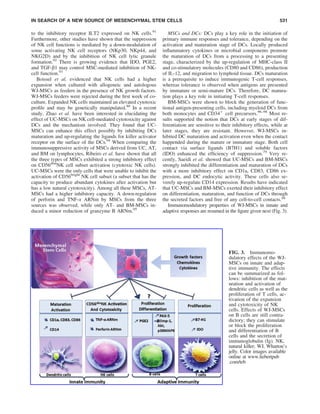
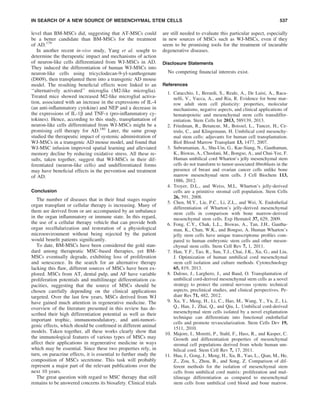
The controversy between the implication of the differ-
entiation potential and the paracrine mechanisms of MSCs
in their beneficial therapeutic actions is shown in Figure 2.
During the next few sections of this review, we will
highlight the effects of WJ-MSCs secretome involved in
many processes such as immunomodulation, homing to
damaged tissues and others.
WJ-MSCs as Immunoprivileged Cells
Immunological features of MSCs
In the last decade, MSCs have gained considerable atten-
tion as candidates for tissue engineering, as modulators of
immune responses in graft-versus-host disease, and as au-
toimmune diseases,54
as these cells, once administered
therapeutically, may be able to evade the immune system of
the host. They are currently being assessed as a novel anti-
inflammatory therapeutic agent in numerous clinical trials.55
Two outstanding features of MSCs are relevant to their
immunomodulatory effects:
Immunosuppression. MSCs-mediated immunosuppres-
sion describes the fact that MSCs are able to suppress sev-
eral functions (proliferation, production of soluble factors,
and cellular cytotoxicity) exerted by diverse immune cells
such as T-, B-, and natural killer (NK) cells. It has been
shown that immunosuppression is mediated by both cell–
cell contact and paracrine signals via soluble factors.
Immunoprivilege. MSCs themselves are somehow pro-
tected from immunological defense mechanisms.56
Indeed,
MSCs lack expression of major histocompatibility complex
(MHC) class II, giving MSCs the potential to escape recog-
nition by alloreactive CD4+
T cells but express MHC Class I
molecules. This expression enables them to escape from NK
cell lysis, In addition, MSCs do not express co-stimulatory
molecules required for effector T-cell induction.57
Even if BM-MSCs, considered the gold standard in MSC
therapy, and UC-MSCs share many similarities, emerging
data suggest that WJ-MSCs could be less immunogenic than
BM-MSCs, making them a good candidate for allogeneic
transplantation.
MSCs-mediated immunosuppression
MSCs show an absence or a low expression of MCH class
II and co-stimulatory molecules, so they can be considered
immunoprivileged cells, but they also interfere with differ-
ent pathways of the immune response.58
Their ability to
modulate the immune system was first recognized after the
fact that they could evade immunosurveillance after cell
transplantation.59
Especially, human MSC populations such
as BM-, AT-, or UC-derived MSCs selectively alter immune
cell function by suppressing T-cell proliferation, B-cell
proliferation, and terminal differentiation,60
inhibiting NK
cell proliferation and cytotoxicity, steering monocytes and
dendritic cells (DCs) to an immature DC state.61
MSCs and immune cell population. Adaptive immunity:
MSCs and T cells: T cells recognize antigens and are
critical for cell-mediated immune response. They mature
within the thymus into one of different subtypes with di-
verse roles. These cells are involved in the maintenance of
self-tolerance, activation of other lymphocytes, lysis of in-
fected cells, and interaction with cells of the innate immune
system.
Currently, interactions of MSCs with T cells have been
extensively studied. Graft versus Host Disease models
presented the first evidence that MSCs can regulate immu-
nosuppression in vivo.62
MSCs could reduce allograft re-
jection, which is partly mediated by T cells.63,64
Shortly
afterward, T-cell immunosuppression mediated by MSCs
was demonstrated in vitro. MSCs probably inhibit, via their
induced or constitutively expressed secreted factors,
T-lymphocyte activation and proliferation induced by mi-
togens and alloantigens65–68
as well as T-cell activation with
CD3 beads.66,69
MSCs have been shown to equally inhibit
CD4+
, CD8+
, CD2+
, and CD3+
subsets.70
In addition,
T-lymphocytes inhibited by BM-MSCs do not enter apo-
ptosis, as they actively proliferate on re-stimulation with
cellular and humoral activators.65
Many other studies have
shown the ability of BM-MSCs to induce the expansion of
functional regulatory T cells (Tregs).70,71
Recently, it has
been shown that adhesion molecules ICAM1 and VCAM1,
FIG. 2. Summary of the potential
therapeutic roles of MSCs. Beneficial
effects of MSCs have been attributed
to their differentiation potentials.
However, attention has been shifted to
their paracrine effects (via vesicles
and soluble factors) rather than their
plasticity. The role that MSCs will
play is determined by the microenvi-
ronment where they reside. MSCs,
mesenchymal stromal cells. Color
images available online at www
.liebertpub.com/teb
IN SEARCH OF A NEW SOURCE OF MESENCHYMAL STEM CELLS 529
which are required for a direct adhesion of MSCs to T
cells, are critical for subsequent MSC-mediated immuno-
suppression, and are inducible by the parallel presence of
interferon-gamma (IFN-g) and inflammatory cytokines.72
Another possible mechanism underlying the BM-MSC-
mediated suppression of T cells is to prevent their entry into
the S phase of the cell cycle by mediating irreversible
G0/G1 phase arrest through the inhibition of cyclin D2 ex-
pression.69,73
Similarly, it has been shown that the addition
of DP-MSCs to phytohemagglutinin-stimulated T cells
mediated an inhibition of their response.74
Increased ex-
pression of immunodulatory soluble factors (hepatocyte
growth factor [HGF]-b1, ICAM-1, IL-6, IL-10, trans-
forming growth factor-b1 [TGF-b1], VCAM1, and vas-
cular endothelial growth factor (VEGF)) secreted by
human DP-MSCs was detected in a co-culture system with
decreased expression levels of some pro-inflammatory
cytokines and increased levels of some anti-inflammatory
ones. Induction of Treg markers by human DP-MSCs
was also demonstrated.75
A very recent study has examined
the in vivo and in vitro immunomodulatory effects of
human supernumerary tooth-derived mesenchymal stem
cells (SNT-MSCs). It has been shown that, in in vitro co-
cultures, these cells suppressed the viability of T cells and
also the differentiation of Th17 cells. In vivo transplanta-
tion of SNT-MSCs in systemic lupus erythematosus model
MRL/Ipr mice suppressed increased levels of peripheral
Th17 cells and IL-17 as well as ex-vivo differentiation of
Th17 cells.76
Fetal MSCs have been reported to have similar inhib-
itory effects on T-lymphocytes. It has been shown that
mitogen-induced T-cell proliferation in an allogeneic
model transplant, as well as in a xenograft model, was
effectively suppressed by WJ-MSCs with levels compa-
rable to BM-MSCs immunosuppression.77
In addition,
IFN-g and/or tumor necrosis factor-alpha (TNF-a) pro-
duced by activated T cells stimulate the production of
indoleamine 2,3-dioxygenase (IDO) by MSCs, which, in
turn, inhibited T-cell proliferation.78
Tipnis et al. have
reported that the expression of B7-H1, a negative regu-
lator of T-cell activation constitutively expressed by WJ-
MSCs, is increased after IFN-g treatment. In addition,
IFN-g treatment induced IDO secretion by WJ-MSCs,
which inhibited T-cell proliferation.79
These results were
confirmed very recently by Manochantr et al. showing
that MSCs from amnion, placenta, and WJ can potentially
substitute BM-MSCs in several therapeutic applications.
Indeed, these cells inhibited alloreactive T-lymphocytes
in the mixed lymphocyte reaction in a similar degree as
BM-MSCs.80
MSCs and B cells: The reasearch on T-cell immunosup-
pression mediated by MSCs has attracted most of the at-
tention in clinical applications and has been widely studied.
However, B cells and humoral immune responses are more
and more known as important mediators of chronic allograft
rejection. Indeed, data about the influence of MSCs on B
cells growth, differentiation, and production of immuno-
globulins (Ig) are still scarce and controversial.81
B cells play an essential role in adaptive immunity. These
cells develop in the BM strictly after a close interaction
between B-cell progenitors and stromal cells that produce
cytokines which are capable of supporting B-cell survival
and proliferation.82
They are directly responsible for the
humoral immune response via the secretion of antibodies
against pathogenic or foreign antigens. A subset of B lin-
eage differentiates into memory B cells, which can medi-
ate a rapid response on secondary exposure to that same
antigen.
Corcione et al. demonstrated that BM-MSCs inhibited the
proliferation of B cells and significantly decreased the
production of IgM, IgG, and IgA83
; the same effect has been
reported by Che et al. showing that UC-MSCs significantly
suppressed the proliferation, differentiation, and immuno-
globulin secretion of B cells in vitro.84
To understand the
results of Che et al., it is essential to know that ‘‘B-
lymphcote-induced matruration protein-1’’ (Blimp-1), ‘‘X-
box binding protein-1’’ (Xbp-1), ‘‘B-cell lymphoma-6’’
(Bcl-6) and ‘‘paired box gene-5’’ (PAX-5) are known as the
main regulators of B-cell differentiation to immunoglobulin-
secreting cells. PAX-5 and Bcl-6 are required to keep B-cell
phenotypes. Blimp-1 inhibits the expression of both PAX-5
and Bcl-6 in order to let B cells differentiate. BCR signaling
involves the MAPK signaling pathway and increases the
transcriptional activity that is mediated by the transcription
factor activator protein-1 (AP-1), which leads to Blimp-1
expression. Che et al. have shown a suppression of Blimp-1
expression and an induction of PAX-5 in the co-cultures of
UC-MSCs and B-cells. Thay have also found that Akt and
p38 MAPK were inhibited by WJ-MSCs.84
However, these results have been contradicted by other
groups. Rasmusson et al. have shown an increase of B-cell
immunoglobulin secretion when co-cultured with BM-
MSCs; this effect varied depending on the type of stimulus
used to trigger B cells.85
Likewise, Traggiai et al. have
reported that BM-MSCs could promote B-cell expansion
and differentiation after treatment with an agonist of Toll-
like receptor 9.86
A recent study has demonstrated that UC-
MSCs promoted proliferation and differentiation of B cells
both in vitro and in vivo partially through prostaglandin E2
(PGE2) axis.82
Contradictions in the effects of MSCs on B cells could be
associated to the differences in the B-cell source, the manner
of their purification and stimulation, the culture conditions,
and many other factors. However, the microenvironment
plays a decisive role in determining the role that the MSCs
will play.
Innate response:
MSCs and NK cells: NK cells are major effector cells of
innate immunity, because they lack antigen-specific cell
surface receptors.87
They mediate antibody-dependent cel-
lular cytotoxicity as well as ‘‘spontaneous’’ killing of in-
fected or transformed cells through the release of perforin
and granzyme from cytotoxic granules.88
MSCs and NK cells have been shown to interact in vitro.
The outcome of this interaction may depend on the state of
NK-cell activation and/or the cytokines present in the cul-
ture medium. IFN-g-activated MSC-escaped NK cells me-
diated lysis through the induction of HLA-E and NK
inhibitory ligands.89,90
Previous studies have indicated that
cytokine-induced proliferation of NK cells leads to the
up-regulation of HLA class I on MSCs.90
In response to this
up-regulation, HLA class I molecules, including human
leukocyte antigen-G5 (HLA-G5), expressed by MSCs, bind
530 EL OMAR ET AL.
to the inhibitory receptor ILT2 expressed on NK cells.91
Furthermore, other studies have shown that the suppression
of NK cell functions is mediated by a down-modulation of
some activating NK cell receptors (NKp30, NKp44, and
NKG2D) and by the inhibition of NK cell lytic granule
formation.92
There is growing evidence that IDO, PGE2,
and TGF-b1 may control MSC-mediated inhibition of NK-
cell function.93
Boissel et al. evidenced that NK cells had a higher
expansion when cultured with allogeneic and autologous
WJ-MSCs as feeders in the presence of NK growth factors.
WJ-MSCs feeders were rejected during the first week of co-
culture. Expanded NK cells maintained an elevated cytotoxic
profile and may be genetically manipulated.88
In a recent
study, Zhao et al. have been interested in elucidating the
effect of UC-MSCs on NK cell-mediated cytotoxicity against
DCs and the mechanism involved. They found that UC-
MSCs can enhance this effect possibly by inhibiting DCs
maturation and up-regulating the ligands for killer activator
receptor on the surface of the DCs.94
When comparing the
immunosuppressive activity of MSCs derived from UC, AT,
and BM on lymphocytes, Ribeiro et al. have shown that all
the three types of MSCs exhibited a strong inhibitory effect
on CD56dim
NK cell subset activation (cytotoxic NK cells).
UC-MSCs were the only cells that were unable to inhibit the
activation of CD56bright
NK cell subset (a subset that has the
capacity to produce abundant cytokines after activation but
has a low natural cytotoxicity). Among all these MSCs, AT-
MSCs had a higher inhibitory capacity. A down-regulation
of perforin and TNF-a ARNm by MSCs from the three
sources was observed, while only AT- and BM-MSCs in-
duced a minor reduction of granzyme B ARNm.95
MSCs and DCs: DCs play a key role in the initiation of
primary immune responses and tolerance, depending on the
activation and maturation stage of DCs. Locally produced
inflammatory cytokines or microbial components promote
the maturation of DCs from a processing to a presenting
stage, characterized by the up-regulation of MHC-class II
and co-stimulatory molecules (CD80 and CD86), production
of IL-12, and migration to lymphoid tissue. DCs maturation
is a prerequisite to induce immunogenic T-cell responses,
whereas tolerance is observed when antigens are presented
by immature or semi-mature DCs. Therefore, DC matura-
tion plays a key role in initiating T-cell responses.
BM-MSCs were shown to block the generation of func-
tional antigen-presenting cells, including myeloid DCs from
both monocytes and CD34+
cell precursors.96–98
Most re-
sults supported the notion that DCs at early stages of dif-
ferentiation are sensitive to their inhibitory effects, while at
later stages, they are resistant. However, WJ-MSCs in-
hibited DC maturation and activation even when the contact
happended during the mature or immature stage. Both cell
contact via surface ligands (B7H1) and soluble factors
(IDO) enhanced the efficiency of suppression.79
Very re-
cently, Saeidi et al. showed that UC-MSCs and BM-MSCs
strongly inhibited the differentiation and maturation of DCs
with a more inhibitory effect on CD1a, CD83, CD86 ex-
pression, and DC endocytic activity. These cells also se-
verely up-regulate CD14 expression. Results have indicated
that UC-MSCs and BM-MSCs exerted their inhibitory effect
on differentiation, maturation, and function of DCs through
the secreted factors and free of any cell-to-cell contacts.99
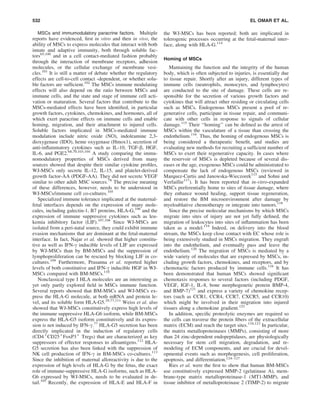
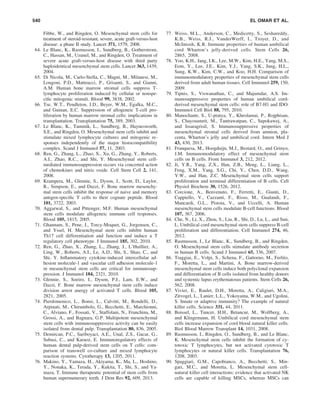
Immunomodulatory properties of WJ-MSCs in innate and
adaptive responses are resumed in the figure given next (Fig. 3).
FIG. 3. Immunomo-
dulatory effects of the WJ-
MSCs on innate and adap-
tive immunity. The effects
can be summarized as fol-
lows: inhibition of the mat-
uration and activation of
dendritic cells as well as the
proliferation of T cells, ac-
tivation of the expansion
and cytotoxicity of NK
cells. Effects of WJ-MSCs
on B cells are still contra-
dictory; they can stimulate
or block the proliferation
and differentiation of B
cells and the secretion of
immunoglobulin (Ig). NK,
natural killer; WJ, Wharton’s
jelly. Color images available
online at www.liebertpub
.com/teb
IN SEARCH OF A NEW SOURCE OF MESENCHYMAL STEM CELLS 531
MSCs and immumodulatory paracrine factors. Multiple
reports have evidenced, first in vitro and then in vivo, the
ability of MSCs to express molecules that interact with both
innate and adaptive immunity, both through soluble fac-
tors65,100
and in a cell contact-mediated fashion probably
through the interaction of membrane receptors, adhesion
molecules, or the cellular exchange of membrane vesi-
cles.101
It is still a matter of debate whether the regulatory
effects are cell-to-cell contact -dependent, or whether solu-
ble factors are sufficient.102
The MSCs immune modulating
effects will also depend on the ratio between MSCs and
immune cells, and the state and stage of immune cell acti-
vation or maturation. Several factors that contribute to the
MSCs-mediated effects have been identified, in particular
growth factors, cytokines, chemokines, and hormones, all of
which exert paracrine effects on immune cells and enable
homing, migration, and their attachment to injured cells.
Soluble factors implicated in MSCs-mediated immune
modulation include nitric oxide (NO), indoleamine 2,3-
dioxygenase (IDO), heme oxygenase (Hmox1), secretion of
anti-inflammatory cytokines such as IL-10, TGF-b, HGF,
IL-6, and PGE2.68,70,103,104
A study comparing the immu-
nomodulatory properties of MSCs derived from many
sources showed that despite their similar cytokine profiles,
WJ-MSCs only secrete IL-12, IL-15, and platelet-derived
growth factor-AA (PDGF-AA). They did not secrete VEGF
similar to other adult MSC sources.78
The precise meaning
of these differences, however, needs to be understood in
WJ-MSCs/immune cell co-cultures.105
Specialized immune tolerance implicated at the maternal-
fetal interfaces depends on the expression of many mole-
cules, including galectin-1, B7 proteins, HLA-G,106
and the
expression of immune suppressive cytokines such as leu-
kemia inhibitory factor (LIF).107,108
Since WJ-MSCs are
isolated from a peri-natal source, they could exhibit immune
evasion mechanisms that are dominant at the fetal-maternal
interface. In fact, Najar et al. showed that higher constitu-
tive as well as IFN-g inducible levels of LIF are expressed
by WJ-MSCs than by BM-MSCs and the suppression of
lymphoproliferation can be rescued by blocking LIF in co-
cultures.109
Furthermore, Prasanna et al. reported higher
levels of both constitutive and IFN-g inducible HGF in WJ-
MSCs compared with BM-MSCs.110
Nonclassical type I HLA molecules are an interesting as
yet only partly explored field in MSCs immune function.
Several reports showed that BM-MSCs and WJ-MSCs ex-
press the HLA-G molecule, at both mRNA and protein le-
vel, and its soluble form HLA-G5.29,77,111
Weiss et al. also
showed that WJ-MSCs constitutively express high levels of
the immune suppressive HLA-G6 isoform, while BM-MSCs
express the HLA-G5 isoform constitutively and its expres-
sion is not induced by IFN-g.77
HLA-G5 secretion has been
directly implicated in the induction of regulatory cells
(CD4+
CD25+
FoxP3+
Tregs) that are characterized as key
suppressors of effector responses to alloantigens.112
HLA-
G5 secretion has also been linked with the suppression of
NK cell production of IFN-g in BM-MSCs co-cultures.113
Since the inhibition of maternal alloreactivity is due to the
expression of high levels of HLA-G by the fetus, the exact
role of immune-suppressive HLA-G isoforms, such as HLA-
G6 expressed by WJ-MSCs, needs to be evaluated in de-
tail.105
Recently, the expression of HLA-E and HLA-F in
the WJ-MSCs has been reported; both are implicated in
tolerogenic processes occurring at the fetal-maternal inter-
face, along with HLA-G.114
Homing of MSCs
Mantaining the function and the integrity of the human
body, which is often subjected to injuries, is essentially due
to tissue repair. Shortly after an injury, different types of
immune cells (neutrophils, monocytes, and lymphocytes)
are conducted to the site of damage. These cells are re-
sponsible for the secretion of various growth factors and
cytokines that will attract other residing or circulating cells
such as MSCs. Endogenous MSCs present a pool of re-
generative cells, participate in tissue repair, and communi-
cate with other cells in response to signals of cellular
damage.115
Their ‘‘homing’’ can be defined as the arrest of
MSCs within the vasculature of a tissue than crossing the
endothelium.116
. Thus, the homing of endogenous MSCs is
being considered a therapeutic benefit, and studies are
evaluating new methods for recruiting a sufficient number of
MSCs to exert their regenerative capacity. In cases where
the reservoir of MSCs is depleted because of several dis-
eases or the age, exogenous MSCs could be administrated to
compensate the lack of endogenous MSCs (reviewed in
Marquez-Curtis and Janowska-Wieczorek115
and Sohni and
Verfaillie117
). It has been reported that in-vitro-expanded
MSCs preferentially home to sites of tissue damage, where
they enhance wound healing, support tissue regeneration,
and restore the BM microenvironment after damage by
myeloablative chemotherapy or integrate into tumors.118
Since the precise molecular mechanisms by which MSCs
migrate into sites of injury are not yet fully defined, the
migration of leukocytes into sites of inflammation has been
taken as a model.119
Indeed, on delivery into the blood
stream, the MSCs keep close contact with EC whose role is
being extensively studied in MSCs migration. They engraft
into the endothelium, and eventually pass and leave the
endothelium.120
The migration of MSCs is mediated by a
wide variety of molecules that are expressed by MSCs, in-
cluding growth factors, chemokines, and receptors, and by
chemotactic factors produced by immune cells.116
It has
been demonstrated that human MSCs showed significant
chemotaxis responses to several factors (including PDGF,
VEGF, IGF-1, IL-8, bone morphogenetic protein BMP-4,
and BMP-7)121
and express a variety of chemokine recep-
tors (such as CCR1, CCR4, CCR7, CXCR5, and CCR10)
which might be involved in their migration into injured
tissues along a chemokine gradient.122
In addition, specific proteolytic enzymes are required so
the cells can traverse the protein fibers of the extracellular
matrix (ECM) and reach the target sites.118,123
In particular,
the matrix metalloproteinases (MMPs), consisting of more
than 24 zinc-dependent endopeptidases, are physiologically
necessary for stem cell migration, degradation, and re-
modeling of ECM components, and are crucial for devel-
opmental events such as morphogenesis, cell proliferation,
apoptosis, and differentiation.124–127
Ries et al. were the first to show that human BM-MSCs
use constitutively expressed MMP-2 (gelatinase A), mem-
brane-type matrix metalloproteinase-1 (MT1-MMP), and
tissue inhibitor of metalloproteinase 2 (TIMP-2) to migrate
532 EL OMAR ET AL.
through human recombinant basement membranes. In-
flammatory cytokines such as TGF-b1, IL-1b, and TNF-a
are able to exert chemoattractive potential on hBM-MSCs
and to up-regulate MMP-2, MT1-MMP, and/or MMP-9,
enabling cellular trafficking of MSCs across human ECM
barriers.118
MMP-2 has been also detected in WJ-MSCs in
association with MMP-9 (gelatinase B), MMP-8, and MMP-
13 (respectively collagenase-1 and -2), as well as in dif-
ferent regions of full-term human umbilical cord and in
cultured HUVEC. The wide expression of these enzymes in
the umbilical cord has been attributed to their role in the
degradation and remodeling of ECM and in other physio-
logical processes.128
Recently, Balasubramanian et al. have compared che-
mokine and receptor gene expression between WJ- and BM-
MSCs. Their results have shown that Chemokine (C-C
motif ) receptor 3 (CCR3) was more expressed in WJ-MSCs
than in BM-MSCs; whereas the latter have presented a
higher expression of CCR1, CCR7, CCRL2, Chemokine (C-
X3-C motif ) receptor 1 (CX3CR1), and CXCR5. MSCs
from both sources had a similar expression of CCR5, CCR6,
and CCRL1.
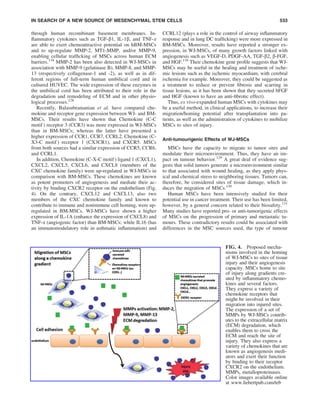
In addition, Chemokine (C-X-C motif ) ligand 1 (CXCL1),
CXCL2, CXCL5, CXCL6, and CXCL8 (members of the
CXC chemokine family) were up-regulated in WJ-MSCs in
comparison with BM-MSCs. These chemokines are known
as potent promoters of angiogenesis and mediate their ac-
tivity by binding CXCR2 receptor on the endothelium (Fig.
4). On the contrary, CXCL12 and CXCL13, also two
members of the CXC chemokine family and known to
contribute to immune and nonimmune cell homing, were up-
regulated in BM-MSCs. WJ-MSCs have shown a higher
expression of IL-1A (enhance the expression of CXCL8) and
TNF-a (angiogenic factor) than BM-MSCs; while IL16 (has
an immunomodulatory role in asthmatic inflammation) and
CCRL12 (plays a role in the control of airway inflammatory
response and in lung DC trafficking) were more expressed in
BM-MSCs. Moreover, results have reported a stronger ex-
pression, in WJ-MSCs, of many growth factors linked with
angiogenesis such as VEGF-D, PDGF-AA, TGF-b2, b-FGF,
and HGF.116
Their chemokine gene profile suggests that WJ-
MSCs may be useful in the healing and treatment of ische-
mic lesions such as the ischemic myocardium, with cerebral
ischemia for example. Moreover, they could be suggested as
a treatment to reduce or prevent fibrosis and scarring in
tissue lesions, as it has been shown that they secreted bFGF
and HGF (known to have an anti-fibrotic effect).
Thus, ex vivo-expanded human MSCs with cytokines may
be a useful method, in clinical applications, to increase their
migration/homing potential after transplantation into pa-
tients, as well as the administration of cytokines to mobilize
MSCs to sites of injury.
Anti-tumourigenic Effects of WJ-MSCs
MSCs have the capacity to migrate to tumor sites and
modulate their microenvironment. Thus, they have an im-
pact on tumour behavior.129
A great deal of evidence sug-
gests that solid tumors generate a microenvironment similar
to that associated with wound healing, as they apply phys-
ical and chemical stress to neighboring tissues. Tumors can,
therefore, be considered sites of tissue damage, which in-
duces the migration of MSCs.130
Human MSCs have been intensively studied for their
potential use in cancer treatment. Their use has been limited,
however, by a general concern related to their biosafety.131
Many studies have reported pro- or anti-tumorigenic effects
of MSCs on the progression of primary and metastatic tu-
mours. These contradictory results could be associated with
differences in the MSC sources used, the type of tumour
FIG. 4. Proposed mecha-
nisms involved in the homing
of WJ-MSCs to sites of tissue
injury and their angiogenesis
capacity. MSCs home to site
of injury along gradients cre-
ated by inflammatory chemo-
kines and several factors.
They express a variety of
chemokine receptors that
might be involved in their
migration into injured sites.
The expression of a set of
MMPs by WJ-MSCs contrib-
utes to the extracellular matrix
(ECM) degradation, which
enables them to cross the
ECM and reach the site of
injury. They also express a
variety of chemokines that are
known as angiogenesis medi-
ators and exert their function
by binding to their receptor
CXCR2 on the endothelium.
MMPs, metalloproteinases.
Color images available online
at www.liebertpub.com/teb
IN SEARCH OF A NEW SOURCE OF MESENCHYMAL STEM CELLS 533
model, the method of administration, or other unknown
factors.130,132
The tumor stroma consists of a complex ECM in which
inflammatory and immune cells, fat cells, fibroblasts, and
blood vessels reside. It plays a crucial role in tumor pro-
gression, angiogenesis, and metastasis through its effects
on tumor-host interactions. Tumor-associated fibroblasts
(TAFs) are activated fibroblasts in the tumor stroma.131
Several reports have hypothesized that BM-MSCs selec-
tively proliferate to tumors and contribute to the formation
of tumor-associated stroma by transforming into TAFs.
They also promote tumor growth and metastasis by en-
hancing migration and angiogenesis and inhibiting apoptosis
of tumor cells.133–137
On the other hand, the immunosuppressive effects of
MSCs can impair the function of a variety of immune cells
(directly or through paracrine signals). This may be an im-
portant mechanism enabling MSCs to promote tumor growth
or to increase the incidence of tumor formation. For instance,
by increasing Tregs and reducing the activity of NK cells and
cytotoxic T lymphocytes (CTL) (known to kill tumour cells),
BM-MSCs can protect breast cancer cells.138
They also have
been linked to osteocarcinomas,139
prostate tumors,140,141
breast tumors,138,140,142
colon cancer,137
and others. A recent
study has also demonstrated a fusion between MSCs and
gastrointestinal epithelial cells, suggesting the formation of a
more cancer-prone cell type.143
Very recently, in order to examine the possible anticancer
therapeutic applications of MSCs from different sources,
Akimoto et al. have studied the inhibitory effects of MSCs
from umbilical cord blood (UCB) and AT on ‘‘glioblastoma
multiforme (GBM)’’ (the most aggressive type of primary
brain tumor in humans). They found that, both in vitro and
in vivo, GBM growth was inhibited by UCB-MSCs but
promoted by AT-MSCs. UCB-MSCs induced apoptosis
through the tumor necrosis factor-related apoptosis-inducing
ligand (TRAIL), which is more strongly expressed by UBC-
MSCs than by AT-MSCs.144
Furthermore, it has been shown
that naı¨ve WJ-MSCs are able to produce factors suppressing
cancer cell growth and inducing apoptosis, and so may be a
novel tool for cancer therapy in contrast to MSCs from some
other sources.145
Other reports have likewise shown that
WJ-MSCs can abrogate certain solid tumors.146–149
These
cells decreased the growth of human breast cancer in vitro
and stopped its growth when intravenously injected in an
SCID mouse model.150
Later, Fan et al. showed that WJ-
MSCs do not induce teratomas in immunodeficient SCID
mice, nor do they induce tumors when transplanted into
diseased animal models.151
In a recent study, Subramanian
et al. have examined whether WJ-MSCs, such as BM-
MSCs, transform to the TAF phenotype in the presence of
ovarian and breast cancer conditioned medium. Results have
shown no expression of tumor-associated markers for hWJ-
MSCs with a low expression of TAF-related genes, con-
firming that these cells are not associated with enhanced
growth of solid tumors.3
In order to determine whether WJ-
MSC-mediated inhibition of cancer cell growth was not
specific to breast cancer cells, the same group compared the
effects of WJ-MSC extracts and cell lysate on three other
types of solid tumors: breast adenocarcinoma, ovarian car-
cinoma, and osteocarcinoma. They observed the same ef-
fects, which were probably mediated via agents in WJ-MSC
extracts.152
In addition, Ma et al. have shown that WJ-MSCs
significantly inhibited the growth of breast cancer stem cells
in vitro and in vivo, probably by inducing a cell cycle arrest
and tumor cell apoptosis and inhibiting the activities of
phosphoinositide 3-kinase (PI3K) and AKT (also known as
protein kinase B).149
A more recent study has reported that
WJ-MSC conditioned medium as well as its cell lysate in-
hibits mammary carcinoma and osteosarcoma cell growth
via apoptosis and autophagy in vitro and in xenograft
mice.153
In another study evaluating the tumorigenesis po-
tential of WJ-MSCs in comparison with ESCs, animals in-
jected with ESCs developed teratomas with increased levels
of pro-inflammatory cytokines; whereas those injected with
WJ-MSCs developed no tumors or inflammatory reactions at
the injection sites and exhibited increased production of
anti-inflammatory cytokines.154
A very recent study on the
effects of WJ-MSCs on intrahepatic cholangiocarcinoma
(ICC, a common form of primary liver cancer) has shown
that these cells can inhibit the proliferation and induce the
apoptosis of human ICC cells. Apoptosis of tumour cells is
related to the inhibition of PI3K/Akt and the Wnt/b-catenin
signaling pathways.155
The effects of WJ-MSCs have also
been studied in hematopoietic tumours. Results obtained by
Tian et al. have provided a new insight on how these cells
may modulate leukemic tumour growth in vitro. According
to this study, p38 MAPK, a suppressor of tumor develop-
ment, was required for leukemic tumor suppression by WJ-
MSCs.156
These studies, taken together, indicate that WJ-MSCs are
nontumorigenic, anti-tumorigenic, and hypoimmunogenic;
do not transform to the TAF phenotype that is associated
with enhanced growth of solid tumors; and suppress he-
matopoietic tumor development. WJ-MSCs appear to be a
safe and promising tool for future cancer therapy and clin-
ical applications, but more pieces of evidence are needed to
further characterize their anti-tumorigenic mechanisms and
to confirm this hypothesis.
Therapeutic Applications
Treatment of autoimmune diseases
The immune properties of WJ-MSCs suggest that they
may be a therapeutic option to treat autoimmune diseases
such as type 1 diabetes or Crohn’s disease (CD).
Type 1 diabetes. Diabetes is a metabolic disease listed
among the leading causes of death in some countries. It is
characterized by absolute or relative insulin deficiency.
Type 1 diabetes is characterized by an absolute insulin
decrease due to T-cell-mediated destruction of insulin-
producing pancreatic b cells.157
This autoimmune destruc-
tion of pancreatic islet b-cells reduces the patient’s ability
to regulate blood glucose, leading to a high frequency of
vascular complications that compromise the quality and
expectancy of life.158
Transplantation of pancreatic islet cells (PICs) as a
potential cure for type I diabetes has been hampered by
immune rejection and recurrent attacks against islets by the
underlying autoimmunity. Studies have shown the capacity
of WJ-MSCs to differentiate into mature islet-like cell
clusters. These islet-like cell clusters have been shown to
contain human C-peptide and to release insulin in vitro and
534 EL OMAR ET AL.
in vivo in response to physiological glucose levels. Real-
time PCR analysis has shown the enhancement of insulin
and other pancreatic b-cell-related genes, such as pancreatic
and duodenal homeobox 1 (pdx1), homeobox HB9 ou
MNX1 (hlxb9), NK2 homeobox 2 (nkx2.2), NK6 homeobox
1 (nkx6.1), and glucose transporter 2 (glut-2) in these
cells.159
Various publications have confirmed the pancreatic
islet-like cell differentiation potential of WJ-MSCs.47,48,160
Kim et al., comparing the capacities of MSCs from various
sources (WJ, BM, AT, and periosteum) to differentiate into
PICs, have confirmed that all cell lines were well differen-
tiated with an increased insulin mRNA expression, but only
PICs derived from periosteum progenitor cells showed in-
sulin secretion to a high glucose concentration.160
More recently, Hu et al. have studied the therapeutic
potential of WJ-MSCs in patients with type 1 diabetes,
evaluating the effects of these cells over a longer treatment
time. They followed two groups of patients, the first of
which received a basic treatment combined with WJ-MSC
implantation; while the second received a basic treatment
combined with normal saline therapy. Patients were fol-
lowed for two years after the operations. During the follow-
up period, patients treated with WJ-MSCs showed better
Hba1 and C-peptide expression levels than patients in the
second group. Although the precise mechanisms involved
are unknown, WJ-MSC therapy appears to have a promising
effect on type 1 diabetes patients and to be a good strategy
for treatment of this disease.158
Type 2 diabetes. Type 2 diabetes mellitus (T2DM) is
the most common form of diabetes and is characterized by
insulin resistance and pancreatic b-cell dysfunction. Hu
et al. studied the effect of intravenous infusion of human
WJ-MSCs as therapy, administering them alone and in
combination with sitagliptin (a dipeptidyl-peptidase IV in-
hibitor known to increase insulin release and decrease glu-
cagon levels by having an impact on a and b cells in the
pancreatic islets) in a T2DM rat model. Compared with the
control groups (a diabetic control group and a sitagliptin-
only group), rats treated with WJ-MSCs only and those
treated with a combination of WJ-MSCs and sitagliptin
exhibited increased numbers of b cells. Glucagon level
was decreased in the sitagliptin-only group and the WJ-
MSCs + sitagliptin group compared with the WJ-MSCs-
only group and the diabetic control group. These results
suggest the therapeutic potential of WJ-MSCs in b-cell re-
generation.161
Crohn’s disease. CD is an inflammatory chronic disease
caused by a dysregulation of immune tolerance and char-
acterized by an idiopathic inflammation of the gastrointes-
tinal tract. Frequent complications in CD are abscess and
stricture formation, intestinal obstruction, and fistulas (ab-
normal connective passages from the epithelial lining of the
intestines to another organ or to the skin caused by in-
flammation). Anti-TNF-a therapy is the first choice in the
treatment of patients with perianal fistulas. Even with this
treatment, however, perianal fistulas often lead to physi-
cal and emotional distress, and only 46% of cases heal
completely.162
Therapeutic effects of AT-MSCs and BM-MSCs on CD
have already been proved.163,164
For instance, Garcia-Olma
et al. performed a clinical study on patients suffering from
Crohn’s enterocutaneous fistulas in which they compared
the therapeutic effects of autologous expanded AT-MSCs
and unexpanded cells corresponding to the stromal vascular
fraction (SVF) when cells of each type were implanted in
the fistulas. Three out of four cases treated with expanded
AT-MSCs were healed, compared with only one out of four
cases treated with SVF. The authors have suggested that the
use of expanded AT-MSCs would be more advantageous,
and that the immunosuppressive properties of these cells
were responsible for their healing effects in the treatment of
CD. Other studies in progress will enable us to better un-
derstand the link between the expansion of AT-MSCs and
their beneficial effects.163
In another study, Ciccocioppo
et al. examined the effect of ex-vivo-expanded BM-MSCs
in CD. All 10 cases in which BM-MSCs were injected into
the fistula exhibited signs of healing. In addition, a pro-
apoptotic effect of BM-MSCs on mucosal T cells has been
observed.164
Recently, studies have focused on two granulomatous
disorders: intestinal tuberculosis (ITB) and CD. Both dis-
eases present similar clinical signs and are difficult to dis-
tinguish. The current challenge is the early identification of
the correct disease in order to treat it efficiently and quickly
to avoid complications or death. Working from the fact that
recruited MSCs within granulomas in ITB can evade the
host immune response, Banerjee et al. have been pursuing
the possibility of analyzing MSC markers in the two types of
granulomas (i.e., those derived from patients with CD and
those derived from patients with ITB). Their results have
shown that the mesenchymal marker CD73 is expressed
only in MSCs within tuberculous granulomas, identifying
CD73 as a possible marker of ITB. This would explain the
essential pathogenic mechanisms in ITB as being based
on the recruitment of MSCs with high CD73 expression.
These observations suggest that MSCs with increased CD73
expression could be a future candidate for therapeutic
intervention in CD. Given their phenotypic profile, WJ-
MSCs could have real potential for therapeutic applications
in CD.165
Treatment of neurodegenerative diseases
Neurodegenerative diseases are chronic and progressive
disorders of the central nervous system (CNS) which are
characterized by a steady loss of neurons in the region of the
brain and spinal cord that affects the mental and motor
abilities of affected people. According to the World Health
Organization, in 2040, the devastating diseases known as
Alzheimer’s and Parkinson’s will represent the second
leading cause of death worldwide. Multiple sclerosis (MS)
is another neurodegenerative disease.
Parkinson’s disease. Parkinson’s disease (PD) is a neu-
rodegenerative disorder that is more common in the elderly.
Its symptoms (tremor, rigidity, bradykinesia, and postural
instability) are caused primarily by the degeneration of
dopamine (DA) neurons in the substantia nigra.166
Current
therapies mostly relieve symptoms but do not restore the
function of the lesioned side of the brain or the efficacy lost
due to disease progression. Embryonic stem cells have been
investigated as a renewable source of DA-producing cells.
IN SEARCH OF A NEW SOURCE OF MESENCHYMAL STEM CELLS 535
However, technical and ethical obstacles have limited the
application of this therapy.167
Several groups have been interested in determining the
effect of MSCs on the CNS. Ribeiro et al. have shown
that AT-MSCs and WJ-MSCs are able to release trophic/
neuroregulatory factors that could improve the metabolic
viability of hippocampal neurons in vitro. These two types
of MSCs do not have similar functionality, however, be-
cause their secretomes act differently on cell viability and
on the densities of hippocampal neurons. Indeed, AT-MSCs
require exogenous factors such as bFGF to be added in the
primary cultures of hippocampal neurons in order to influ-
ence the metabolic viability and neuronal cell densities;
whereas WJ-MSCs are able to promote neuronal survival
without the addition of exogenous factors.168
Weiss et al. have characterized WJ-MSCs and compared
them with MSCs derived from other sources. In their study,
they tested the therapeutic effects of WJ-MSCs in parkin-
sonian rats. Their initial results demonstrated that WJ-MSCs
express growth factors and angiogenic factors, suggesting
that they may be useful for the treatment of neurodegener-
ative diseases. Indeed, the characterization of WJ-MSCs
reveals that they produce glial cell line-derived neurotrophic
factor located in the cytoplasm. WJ-MSCs also express
nestin, a marker of primitive neural stem cells.4
After neural
induction of WJ-MSCs, the expression of nestin was lower
in differentiated cells than in undifferentiated cells; whereas
the expression of tyrosine hydroxylase (a mature neural
marker of catecholaminergic neurons) was greater in dif-
ferentiated cells. Moreover, it has been shown that WJ-
MSCs express some genes encoding for proteins with a
neurotrophic effect: CNTF (ciliary neurotrophic factor),
VEGF, FGF20, and TRKC (neurotrophic tyrosine kinase).
In addition, when they are transplanted into parkinsonian
rats, WJ-MSCs can partially reverse the parkinsonian behav-
ioral phenotype.27
Yan et al. have managed to differentiate
WJ-MSCs into neural-like cells in vitro and have subse-
quently tested the therapeutic potential of differentiated
cells by implanting them into the striatum and substantia
nigra of methyl-4-phenyl-1, 2, 3, 6-tetrahydropyridine
(MPTP) lesioned hemi-parkinsonian rhesus monkeys. PD
monkeys transplanted with the induced cells showed an
improvement in behavioral measures. Furthermore, patho-
logical and immunohistochemical data have indicated
the presence of neuronal-like cells in the right brain hemi-
sphere of PD monkeys, suggesting that they may be dopa-
minergic neurons.167
Nearly identical results were obtained
when WJ-MSCs were replaced by AT-MSCs.169
The ben-
eficial effect of BM-MSCs on a parkinsonian rat model was
shown by Ye et al.170
Multiple Sclerosis. Multiple sclerosis (MS) is a progressive
neurodegenerative disorder of the CNS that is characterized by
chronic inflammation, demyelination, and neuronal damage.
Currently, there is no medical cure for MS, mainly owing to an
incomplete understanding of its pathophysiology.171
Recently, Payne et al. have assessed the therapeutic ef-
ficiency of BM-MSCs, AT-MSCs, and WJ-MSCs against
MS, using recombinant myelin oligodendrocyte glycopro-
tein (rMOG)-induced experimental autoimmune enceph-
alomyelitis (EAE), a model of MS in which both T- and
B-cells contribute to the disease pathogenesis. They have
demonstrated that BM-MSCs exerted more potent immu-
nomodulatory effects in vitro compared with AT-MSCs and
WJ-MSCs. Unexpectedly, however, BM-MSCs did not im-
pact the disease course, although the transplantation of AT-
MSCs ameliorated clinical signs in two animal models of
EAE. Furthermore, only AT-MSCs and WJ-MSCs ex-
pressed integrin-a4 (CD49d); BM-MSCs, which may not be
able to adhere to VCAM1, a critical step in the extravasation
of cells into the CNS during EAE, did not express integrin-
a4.172
In their recent work, Liu et al. showed that WJ-MSCs
could potentially play a therapeutic role in MS and could be
an alternative to BM-MSCs, which have been extensively
studied with regard to the treatment of MS.173–175
Thus, it is
believed that these cells could restore behavioral functions
and attenuate the histopathological deficits of EAE mice
over the long term (50 days).176
These results confirm those
of Liang et al., who transplanted WJ-MSCs to a patient with
refractory progressive MS and subsequently observed sta-
bilization of the disease.177
Alzheimer’s disease. Alzheimer’s disease (AD) is a pro-
gressive and fatal neurodegenerative disorder that is char-
acterized by a loss of memory and a deterioration of
cognitive ability. Cumulative evidence supports the hy-
pothesis that the accumulation of amyloid-b peptide (Ab) in
the brain and oxidative stress play critical roles in AD
pathogenesis.
Very recently, Liang et al. have attempted to differentiate
WJ-MSCs into cholinergic-like neurons. Cholinergic neu-
rons are neurons of the autonomic nervous system and are
one of the causes of cognitive disorders such as AD. To
induce differentiation, Liang et al. used a neural stem cell
conditioned medium supplemented with bone morphoge-
netic protein 4 (BMP4) and fibroblast growth factors 8
(FGF8). First, they observed morphological changes of WJ-
MSCs after culture in conditioned medium. These cells,
which under normal conditions have a bipolar spindle-like
morphology, changed into a bulbous shape with thin ex-
tensions touching each other to a certain extent after 16 days
of differentiation. These observations already suggest a
structural organization into axons. Moreover, they con-
firmed their hypothesis by showing an expression of cho-
linergic neuron markers, including choline acetyltransferase
and NF by immunofluorescence and RT-PCR 20 days after
the beginning of WJ-MSC induction. These in-vitro results
demonstrate that WJ-MSCs can be induced into cholinergic-
like neurons, which suggests that WJ-MSCs may be a very
good candidate for the treatment of AD.178
Patients suffer-
ing from AD show a decrease in the expression and activity
levels of neprilysin (neural endopeptidase [NEP]), which is
one of the several proteases involved in the proteolysis of
Ab. Thus, NEP has been intensively studied as a potential
therapeutic target for AD. Since MSCs have the ability to
synthesize vesicles (generated from the membrane), which
also have a real therapeutic potential, Katsuda et al. have
studied vesicles derived from AT-MSCs and identified their
effects in co-cultures with cells over-producing Ab. They
observed a decrease in the amount of Ab in the presence of
AT-MSC vesicles. This phenomenon is explained by the
initial expression on AT-MSC membranes of the NEP that is
later present as an active form in the vesicles. Furthermore,
they observed that AT-MSCs expressed NEP at a higher
536 EL OMAR ET AL.
level than BM-MSCs did, suggesting that AT-MSCs could
be a better candidate than BM-MSCs for the treatment
of AD.179
In another recent in-vivo study, Yang et al. sought to
determine the therapeutic impact and mechanisms of action
of neuron-like cells differentiated from WJ-MSCs in AD.
They induced the differentiation of human WJ-MSCs into
neuron-like cells using tricyclodecan-9-yl-xanthogenate
(D609), then transplanted them into a transgenic AD mouse
model. The resulting beneficial effects were linked to an
‘‘alternatively activated’’ microglia (M2-like microglia).
Treated mice showed increased M2-like microglial activa-
tion, associated with an increase in the expressions of IL-4
(an anti-inflammatory cytokine) and NEP and a decrease in
the expressions of IL-1b and TNF-a (pro-inflammatory cy-
tokines). Hence, according to this study, transplantation of
neuron-like cells differentiated from WJ-MSCs might be a
promising cell therapy for AD.180
Later, the same group
studied the therapeutic impact of systemic administration of
WJ-MSCs in a transgenic AD mouse model, and found that
WJ-MSC infusion improved spatial learning and alleviated
memory decline by reducing oxidative stress. All these re-
sults, taken together, suggest that WJ-MSCs in their dif-
ferentiated (neuron-like cells) and undifferentiated forms
may have beneficial effects in the prevention and treatment
of AD.
Conclusion
The number of diseases that in their final stages require
organ transplant or cellular therapy is increasing. Many of
them are derived from or are accompanied by an unbalance
in the organ inflammatory or immune state. In this regard,
the use of a cellular therapy vehicle that can provide both
organ recellularization and restoration of a physiological
microenvironment without being rejected by the patient
would benefit patients significantly.
To date, BM-MSCs have been considered the gold stan-
dard among therapeutic MSC-based therapies, yet BM-
MSCs eventually degrade, exhibiting loss of proliferation
and senescence. In the search for an alternative therapy
lacking this flaw, different sources of MSCs have been ex-
plored. MSCs from AT, dental pulp, and AF have variable
proliferation potentials and multilineage differentiation ca-
pacities, suggesting that the source of MSCs should be
chosen carefully depending on the clinical applications
targeted. Over the last few years, MSCs derived from WJ
have gained much attention in regenerative medicine. The
overview of the literature presented in this review has de-
scribed their high differentiation potential as well as their
important trophic, immunomodulatory, and anti-tumori-
genic effects, which should be confirmed in different animal
models. Taken together, all these works clearly show that
the immunological features of various types of MSCs may
affect their applications in regenerative medicine in ways
which may be essential. Since these two properties rely, in
turn, on paracrine effects, it is essential to further study the
composition of MSCs secretome. This task will probably
represent a major part of the relevant publications over the
next 10 years.
The great question with regard to MSC therapy that still
remains to be answered concerns its biosafety. Clinical trials
are still needed to evaluate this particular aspect, especially
in new sources of MSCs such as WJ-MSCs, even if they
seem to be promising tools for the treatment of incurable
degenerative diseases.
Disclosure Statements
No competing financial interests exist.
References
1. Catacchio, I., Berardi, S., Reale, A., De Luisi, A., Raca-
nelli, V., Vacca, A., and Ria, R. Evidence for bone mar-
row adult stem cell plasticity: properties, molecular
mechanisms, negative aspects, and clinical applications of
hematopoietic and mesenchymal stem cells transdiffer-
entiation. Stem Cells Int 2013, 589139, 2013.
2. Friedman, R., Betancur, M., Boissel, L., Tuncer, H., Ce-
trulo, C., and Klingemann, H. Umbilical cord mesenchy-
mal stem cells: adjuvants for human cell transplantation.
Biol Blood Marrow Transplant 13, 1477, 2007.
3. Subramanian, A., Shu-Uin, G., Kae-Siang, N., Gauthaman,
K., Biswas, A., Choolani, M., Bongso, A., and Chui-Yee, F.
Human umbilical cord Wharton’s jelly mesenchymal stem
cells do not transform to tumor-associated fibroblasts in the
presence of breast and ovarian cancer cells unlike bone
marrow mesenchymal stem cells. J Cell Biochem 113,
1886, 2012.
4. Troyer, D.L., and Weiss, M.L. Wharton’s jelly-derived
cells are a primitive stromal cell population. Stem Cells
26, 591, 2008.
5. Chen, M.Y., Lie, P.C., Li, Z.L., and Wei, X. Endothelial
differentiation of Wharton’s jelly-derived mesenchymal
stem cells in comparison with bone marrow-derived
mesenchymal stem cells. Exp Hematol 37, 629, 2009.
6. Fong, C.Y., Chak, L.L., Biswas, A., Tan, J.H., Gautha-
man, K., Chan, W.K., and Bongso, A. Human Wharton’s
jelly stem cells have unique transcriptome profiles com-
pared to human embryonic stem cells and other mesen-
chymal stem cells. Stem Cell Rev 7, 1, 2011.
7. Han, Y.F., Tao, R., Sun, T.J., Chai, J.K., Xu, G., and Liu,
J. Optimization of human umbilical cord mesenchymal
stem cell isolation and culture methods. Cytotechnology
65, 819, 2013.
8. Dalous, J., Larghero, J., and Baud, O. Transplantation of
umbilical cord-derived mesenchymal stem cells as a novel
strategy to protect the central nervous system: technical
aspects, preclinical studies, and clinical perspectives. Pe-
diatr Res 71, 482, 2012.
9. Xu, Y., Meng, H., Li, C., Hao, M., Wang, Y., Yu, Z., Li,
Q., Han, J., Zhai, Q., and Qiu, L. Umbilical cord-derived
mesenchymal stem cells isolated by a novel explantation
technique can differentiate into functional endothelial
cells and promote revascularization. Stem Cells Dev 19,
1511, 2010.
10. Majore, I., Moretti, P., Stahl, F., Hass, R., and Kasper, C.
Growth and differentiation properties of mesenchymal
stromal cell populations derived from whole human um-
bilical cord. Stem Cell Rev 7, 17, 2011.
11. Hua, J., Gong, J., Meng, H., Xu, B., Yao, L., Qian, M., He,
Z., Zou, S., Zhou, B., and Song, Z. Comparison of dif-
ferent methods for the isolation of mesenchymal stem
cells from umbilical cord matrix: proliferation and mul-
tilineage differentiation as compared to mesenchymal
stem cells from umbilical cord blood and bone marrow.
IN SEARCH OF A NEW SOURCE OF MESENCHYMAL STEM CELLS 537
Cell Biol Int 2013 [Epub ahead of print]; DOI: 10.1002/
cbin.10188.
12. Kim, S.S., Kwon, D.W., Im, I., Kim, Y.D., Hwang, D.S.,
Holliday, L.S., Donatelli, R.E., Son, W.S., and Jun, E.S.
Differentiation and characteristics of undifferentiated
mesenchymal stem cells originating from adult premolar
periodontal ligaments. Korean J Orthod 42, 307, 2012.
13. Hsieh, J.Y., Fu, Y.S., Chang, S.J., Tsuang, Y.H., and
Wang, H.W. Functional module analysis reveals differ-
ential osteogenic and stemness potentials in human mes-
enchymal stem cells from bone marrow and Wharton’s
jelly of umbilical cord. Stem Cells Dev 19, 1895, 2010.
14. Yu, S., Long, J., Yu, J., Du, J., Ma, P., Ma, Y., Yang, D.,
and Fan, Z. Analysis of differentiation potentials and gene
expression profiles of mesenchymal stem cells derived
from periodontal ligament and Wharton’s jelly of the
umbilical cord. Cells Tissues Organs 197, 209, 2013.
15. Abu Kasim, N.H., Govindasamy, V., Gnanasegaran, N.,
Musa, S., Pradeep, P.J., Srijaya, T.C., and Aziz, Z.A.
Unique molecular signatures influencing the biological
function and fate of post-natal stem cells isolated from
different sources. J Tissue Eng Regen Med 2012 [Epub
ahead of print]; DOI: 10.1002/term.
16. Lu, L.L., Liu, Y.J., Yang, S.G., Zhao, Q.J., Wang, X.,
Gong, W., Han, Z.B., Xu, Z.S., Lu, Y.X., Liu, D., Chen,
Z.Z., and Han, Z.C. Isolation and characterization of
human umbilical cord mesenchymal stem cells with
hematopoiesis-supportive function and other potentials.
Haematologica 91, 1017, 2006.
17. Chen, H.C., Lee, Y.S., Sieber, M., Lu, H.T., Wei, P.C.,
Wang, C.N., Peng, H.H., Chao, A.S., Cheng, P.J., Chang,
S.D., Chen, S.J., and Wang, T.H. MicroRNA and mes-
senger RNA analyses of mesenchymal stem cells derived
from teeth and the Wharton jelly of umbilical cord. Stem
Cells Dev 21, 911, 2012.
18. Bai, J., Hu, Y., Wang, Y.R., Liu, L.F., Chen, J., Su, S.P.,
and Wang, Y. Comparison of human amniotic fluid-
derived and umbilical cord Wharton’s Jelly-derived mes-
enchymal stromal cells: characterization and myocardial
differentiation capacity. J Geriatr Cardiol 9, 166, 2012.
19. Christodoulou, I., Kolisis, F.N., Papaevangeliou, D., and
Zoumpourlis, V. Comparative evaluation of human mes-
enchymal stem cells of fetal (Wharton’s jelly) and adult
(adipose tissue) origin during prolonged in vitro expan-
sion: considerations for cytotherapy. Stem Cells Int 2013,
246134, 2013.
20. La Rocca, G., Anzalone, R., and Farina, F. The expression
of CD68 in human umbilical cord mesenchymal stem
cells: new evidences of presence in non-myeloid cell
types. Scand J Immunol 70, 161, 2009.
21. Malgieri, A., Kantzari, E., Patrizi, M.P., and Gambardella,
S. Bone marrow and umbilical cord blood human mes-
enchymal stem cells: state of the art. Int J Clin Exp Med 3,
248, 2010.
22. Torreggiani, E., Lisignoli, G., Manferdini, C., Lambertini,
E., Penolazzi, L., Vecchiatini, R., Gabusi, E., Chieco, P.,
Facchini, A., Gambari, R., and Piva, R. Role of slug
transcription factor in human mesenchymal stem cells. J
Cell Mol Med 16, 740, 2012.
23. Zhang, Z.Y., Teoh, S.H., Chong, M.S., Schantz, J.T., Fisk,
N.M., Choolani, M.A., and Chan, J. Superior osteogenic
capacity for bone tissue engineering of fetal compared
with perinatal and adult mesenchymal stem cells. Stem
Cells 27, 126, 2009.
24. Salehinejad, P., Alitheen, N.B., Ali, A.M., Omar, A.R.,
Mohit, M., Janzamin, E., Samani, F.S., Torshizi, Z., and
Nematollahi-Mahani, S.N. Comparison of different
methods for the isolation of mesenchymal stem cells from
human umbilical cord Wharton’s jelly. In Vitro Cell Dev
Biol Anim 48, 75, 2012.
25. Nekanti, U., Rao, V.B., Bahirvani, A.G., Jan, M., Totey,
S., and Ta, M. Long-term expansion and pluripotent
marker array analysis of Wharton’s jelly-derived mesen-
chymal stem cells. Stem Cells Dev 19, 117, 2010.
26. Fong, C.Y., Subramanian, A., Gauthaman, K., Venugopal,
J., Biswas, A., Ramakrishna, S., and Bongso, A. Human
umbilical cord Wharton’s jelly stem cells undergo en-
hanced chondrogenic differentiation when grown on na-
nofibrous scaffolds and in a sequential two-stage culture
medium environment. Stem Cell Rev 8, 195, 2012.
27. Weiss, M.L., Medicetty, S., Bledsoe, A.R., Rachakatla,
R.S., Choi, M., Merchav, S., Luo, Y., Rao, M.S., Vela-
galeti, G., and Troyer, D. Human umbilical cord matrix
stem cells: preliminary characterization and effect of
transplantation in a rodent model of Parkinson’s disease.
Stem Cells 24, 781, 2006.
28. De Kock, J., Najar, M., Bolleyn, J., Al Battah, F.,
Rodrigues, R.M., Buyl, K., Raicevic, G., Govaere, O.,
Branson, S., Meganathan, K., Gaspar, J.A., Roskams, T.,
Sachinidis, A., Lagneaux, L., Vanhaecke, T., and Rogiers,
V. Mesoderm-derived stem cells: the link between the
transcriptome and their differentiation potential. Stem
Cells Dev 21, 3309, 2012.
29. La Rocca, G., Anzalone, R., Corrao, S., Magno, F., Loria,
T., Lo Iacono, M., Di Stefano, A., Giannuzzi, P., Marasa,
L., Cappello, F., Zummo, G., and Farina, F. Isolation and
characterization of Oct-4 + /HLA-G + mesenchymal stem
cells from human umbilical cord matrix: differentiation
potential and detection of new markers. Histochem Cell
Biol 131, 267, 2009.
30. Zhang, J., Chen, G.H., Wang, Y.W., Zhao, J., Duan, H.F.,
Liao, L.M., Zhang, X.Z., Chen, Y.D., and Chen, H. Hy-
drogen peroxide preconditioning enhances the therapeutic
efficacy of Wharton’s Jelly mesenchymal stem cells after
myocardial infarction. Chin Med J (Engl) 125, 3472,
2012.
31. Corrao, S., La Rocca, G., Lo Iacono, M., Zummo, G.,
Gerbino, A., Farina, F., and Anzalone, R. New frontiers in
regenerative medicine in cardiology: the potential of
Wharton’s jelly mesenchymal stem cells. Curr Stem Cell
Res Ther 8, 39, 2013.
32. Hoganson, D.M., Meppelink, A.M., Hinkel, C.J., Gold-
man, S.M., Liu, X.H., Nunley, R.M., Gaut, J.P., and Va-
canti, J.P. Differentiation of human bone marrow
mesenchymal stem cells on decellularized extracellular
matrix materials. J Biomed Mater Res A 2013 [Epub
ahead of print]; DOI: 10.1002/jbm.a.34941.
33. Park, J.S., Shim, M.S., Shim, S.H., Yang, H.N., Jeon,
S.Y., Woo, D.G., Lee, D.R., Yoon, T.K., and Park, K.H.
Chondrogenic potential of stem cells derived from amni-
otic fluid, adipose tissue, or bone marrow encapsulated in
fibrin gels containing TGF-beta3. Biomaterials 32, 8139,
2011.
34. Vishnubalaji, R., Al-Nbaheen, M., Kadalmani, B., Al-
dahmash, A., and Ramesh, T. Comparative investigation
of the differentiation capability of bone-marrow- and ad-
ipose-derived mesenchymal stem cells by qualitative and
quantitative analysis. Cell Tissue Res 347, 419, 2013.
538 EL OMAR ET AL.
35. Arminan, A., Gandia, C., Bartual, M., Garcia-Verdugo,
J.M., Lledo, E., Mirabet, V., Llop, M., Barea, J., Montero,
J.A., and Sepulveda, P. Cardiac differentiation is driven
by NKX2.5 and GATA4 nuclear translocation in tissue-
specific mesenchymal stem cells. Stem Cells Dev 18, 907,
2009.
36. Hu, L., Hu, J., Zhao, J., Liu, J., Ouyang, W., Yang, C.,
Gong, N., Du, L., Khanal, A., and Chen, L. Side-by-side
comparison of the biological characteristics of human
umbilical cord and adipose tissue-derived mesenchymal
stem cells. Biomed Res Int 2013, 438243, 2013.
37. Osathanon, T., Sawangmake, C., Nowwarote, N., and
Pavasant, P. Neurogenic differentiation of human dental
pulp stem cells using different induction protocols. Oral
Dis 2013 [Epub ahead of print]; DOI: 10.1111/odi.12119.
38. Kadar, K., Kiraly, M., Porcsalmy, B., Molnar, B., Racz,
G.Z., Blazsek, J., Kallo, K., Szabo, E.L., Gera, I., Gerber,
G., and Varga, G. Differentiation potential of stem cells
from human dental origin—promise for tissue engineer-
ing. J Physiol Pharmacol 60 Suppl 7, 167, 2009.
39. Carnevale, G., Riccio, M., Pisciotta, A., Beretti, F., Mar-
aldi, T., Zavatti, M., Cavallini, G.M., La Sala, G.B.,
Ferrari, A., and De Pol, A. In vitro differentiation into
insulin-producing beta-cells of stem cells isolated from
human amniotic fluid and dental pulp. Dig Liver Dis 45,
669, 2013.
40. Martinez, C., Rath, S., Van Gulden, S., Pelaez, D., Al-
fonso, A., Fernandez, N., Kos, L., Cheung, H., and Ra-
maswamy, S. Periodontal ligament cells cultured under
steady-flow environments demonstrate potential for use in
heart valve tissue engineering. Tissue Eng Part A 19, 458,
2013.
41. de Lara Janz, F., Favero, G.M., Bohatch, M.S., Jr., Aguiar
Debes, A., and Bydlowski, S.P. Simvastatin induces os-
teogenic differentiation in human amniotic fluid mesen-
chymal stem cells (AFMSC). Fundam Clin Pharmacol
2012 [Epub ahead of print]; DOI: 10.1111/fcp.12006.
42. Benavides, O.M., Petsche, J.J., Moise, K.J., Jr., Johnson,
A., and Jacot, J.G. Evaluation of endothelial cells differ-
entiated from amniotic fluid-derived stem cells. Tissue
Eng Part A 18, 1123, 2012.
43. Hartmann, K., Raabe, O., Wenisch, S., and Arnhold, S.
Amniotic fluid derived stem cells give rise to neuron-like
cells without a further differentiation potential into retina-
like cells. Am J Stem Cells 2, 108, 2013.
44. Baksh, D., Yao, R., and Tuan, R.S. Comparison of pro-
liferative and multilineage differentiation potential of
human mesenchymal stem cells derived from umbilical
cord and bone marrow. Stem Cells 25, 1384, 2007.
45. Jo, C.H., Yoon, P.W., Kim, H., Kang, K.S., and Yoon,
K.S. Comparative evaluation of in vivo osteogenic dif-
ferentiation of fetal and adult mesenchymal stem cell in
rat critical-sized femoral defect model. Cell Tissue Res
353, 41, 2013.
46. Kim, S.H., Abbasi, F., Lamendola, C., Reaven, G.M., and
McLaughlin, T. Glucose-stimulated insulin secretion in
gastric bypass patients with hypoglycemic syndrome: no
evidence for inappropriate pancreatic beta-cell function.
Obes Surg 20, 1110, 2012.
47. Tsai, P.J., Wang, H.S., Shyr, Y.M., Weng, Z.C., Tai, L.C.,
Shyu, J.F., and Chen, T.H. Transplantation of insulin-
producing cells from umbilical cord mesenchymal stem
cells for the treatment of streptozotocin-induced diabetic
rats. J Biomed Sci 19, 47, 2012.
48. Wang, H.S., Shyu, J.F., Shen, W.S., Hsu, H.C., Chi, T.C.,
Chen, C.P., Huang, S.W., Shyr, Y.M., Tang, K.T., and
Chen, T.H. Transplantation of insulin-producing cells
derived from umbilical cord stromal mesenchymal stem
cells to treat NOD mice. Cell Transplant 20, 455, 2011.
49. Bianco, P., Cao, X., Frenette, P.S., Mao, J.J., Robey, P.G.,
Simmons, P.J., and Wang, C.Y. The meaning, the sense
and the significance: translating the science of mesen-
chymal stem cells into medicine. Nat Med 19, 35, 2013.
50. Bollini, S., Gentili, C., Tasso, R., Anderson, K.S., and
Cancedda, R. The regenerative role of the fetal and adult
stem cell secretome. J Clin Med 2, 302, 2013.
51. Doorn, J., Moll, G., Le Blanc, K., van Blitterswijk, C., and
de Boer, J. Therapeutic applications of mesenchymal
stromal cells: paracrine effects and potential improve-
ments. Tissue Eng Part B Rev 18, 101, 2011.
52. Fernandez Vallone, V.B., Romaniuk, M.A., Choi, H.,
Labovsky, V., Otaegui, J., and Chasseing, N.A. Me-
senchymal stem cells and their use in therapy: what has
been achieved? Differentiation 85, 1, 2013.
53. Pourrajab, F., Forouzannia, S.K., and Tabatabaee, S.A.
Molecular characteristics of bone marrow mesenchymal
stem cells, source of regenerative medicine. Int J Cardiol
163, 125, 2013.
54. Stubbendorff, M., Deuse, T., Hua, X., Phan, T.T., Bie-
back, K., Atkinson, K., Eiermann, T.H., Velden, J.,
Schroeder, C., Reichenspurner, H., Robbins, R.C., Volk,
H.D., and Schrepfer, S. Immunological properties of
extraembryonic human mesenchymal stromal cells de-
rived from gestational tissue. Stem Cells Dev 22, 2619,
2013.
55. Patel, D.M., Shah, J., and Srivastava, A.S. Therapeutic
potential of mesenchymal stem cells in regenerative
medicine. Stem Cells Int 2013, 496218, 2013.
56. Hass, R., Kasper, C., Bohm, S., and Jacobs, R. Different
populations and sources of human mesenchymal stem
cells (MSC): a comparison of adult and neonatal tissue-
derived MSC. Cell Commun Signal 9, 12, 2011.
57. Ryan, J.M., Barry, F.P., Murphy, J.M., and Mahon, B.P.
Mesenchymal stem cells avoid allogeneic rejection. J In-
flamm (Lond) 2, 8, 2005.
58. De Miguel, M.P., Fuentes-Julian, S., Blazquez-Martinez,
A., Pascual, C.Y., Aller, M.A., Arias, J., and Arnalich-
Montiel, F. Immunosuppressive properties of mesenchy-
mal stem cells: advances and applications. Curr Mol Med
12, 574, 2012.
59. Yagi, H., Soto-Gutierrez, A., Parekkadan, B., Kitagawa,
Y., Tompkins, R.G., Kobayashi, N., and Yarmush, M.L.
Mesenchymal stem cells: Mechanisms of immuno-
modulation and homing. Cell Transplant 19, 667, 2010.
60. English, K., French, A., and Wood, K.J. Mesenchymal
stromal cells: facilitators of successful transplantation?
Cell Stem Cell 7, 431, 2010.
61. Uccelli, A., Moretta, L., and Pistoia, V. Mesenchymal
stem cells in health and disease. Nat Rev Immunol 8, 726,
2008.
62. Maitra, B., Szekely, E., Gjini, K., Laughlin, M.J., Dennis,
J., Haynesworth, S.E., and Koc, O.N. Human mesenchy-
mal stem cells support unrelated donor hematopoietic
stem cells and suppress T-cell activation. Bone Marrow
Transplant 33, 597, 2004.
63. Le Blanc, K., Frassoni, F., Ball, L., Locatelli, F., Roelofs,
H., Lewis, I., Lanino, E., Sundberg, B., Bernardo, M.E.,
Remberger, M., Dini, G., Egeler, R.M., Bacigalupo, A.,
IN SEARCH OF A NEW SOURCE OF MESENCHYMAL STEM CELLS 539
Fibbe, W., and Ringden, O. Mesenchymal stem cells for
treatment of steroid-resistant, severe, acute graft-versus-host
disease: a phase II study. Lancet 371, 1579, 2008.
64. Le Blanc, K., Rasmusson, I., Sundberg, B., Gotherstrom,
C., Hassan, M., Uzunel, M., and Ringden, O. Treatment of
severe acute graft-versus-host disease with third party
haploidentical mesenchymal stem cells. Lancet 363, 1439,
2004.
65. Di Nicola, M., Carlo-Stella, C., Magni, M., Milanesi, M.,
Longoni, P.D., Matteucci, P., Grisanti, S., and Gianni,
A.M. Human bone marrow stromal cells suppress T-
lymphocyte proliferation induced by cellular or nonspe-
cific mitogenic stimuli. Blood 99, 3838, 2002.
66. Tse, W.T., Pendleton, J.D., Beyer, W.M., Egalka, M.C.,
and Guinan, E.C. Suppression of allogeneic T-cell pro-
liferation by human marrow stromal cells: implications in
transplantation. Transplantation 75, 389, 2003.
67. Le Blanc, K., Tammik, L., Sundberg, B., Haynesworth,
S.E., and Ringden, O. Mesenchymal stem cells inhibit and
stimulate mixed lymphocyte cultures and mitogenic re-
sponses independently of the major histocompatibility
complex. Scand J Immunol 57, 11, 2003.
68. Ren, G., Zhang, L., Zhao, X., Xu, G., Zhang, Y., Roberts,
A.I., Zhao, R.C., and Shi, Y. Mesenchymal stem cell-
mediated immunosuppression occurs via concerted action
of chemokines and nitric oxide. Cell Stem Cell 2, 141,
2008.
69. Krampera, M., Glennie, S., Dyson, J., Scott, D., Laylor,
R., Simpson, E., and Dazzi, F. Bone marrow mesenchy-
mal stem cells inhibit the response of naive and memory
antigen-specific T cells to their cognate peptide. Blood
101, 3722, 2003.
70. Aggarwal, S., and Pittenger, M.F. Human mesenchymal
stem cells modulate allogeneic immune cell responses.
Blood 105, 1815, 2005.
71. Ghannam, S., Pene, J., Torcy-Moquet, G., Jorgensen, C.,
and Yssel, H. Mesenchymal stem cells inhibit human
Th17 cell differentiation and function and induce a T
regulatory cell phenotype. J Immunol 185, 302, 2010.
72. Ren, G., Zhao, X., Zhang, L., Zhang, J., L’Huillier, A.,
Ling, W., Roberts, A.I., Le, A.D., Shi, S., Shao, C., and
Shi, Y. Inflammatory cytokine-induced intercellular ad-
hesion molecule-1 and vascular cell adhesion molecule-1
in mesenchymal stem cells are critical for immunosup-
pression. J Immunol 184, 2321, 2010.
73. Glennie, S., Soeiro, I., Dyson, P.J., Lam, E.W., and
Dazzi, F. Bone marrow mesenchymal stem cells induce
division arrest anergy of activated T cells. Blood 105,
2821, 2005.
74. Pierdomenico, L., Bonsi, L., Calvitti, M., Rondelli, D.,
Arpinati, M., Chirumbolo, G., Becchetti, E., Marchionni,
C., Alviano, F., Fossati, V., Staffolani, N., Franchina, M.,
Grossi, A., and Bagnara, G.P. Multipotent mesenchymal
stem cells with immunosuppressive activity can be easily
isolated from dental pulp. Transplantation 80, 836, 2005.
75. Demircan, P.C., Sariboyaci, A.E., Unal, Z.S., Gacar, G.,
Subasi, C., and Karaoz, E. Immunoregulatory effects of
human dental pulp-derived stem cells on T cells: com-
parison of transwell co-culture and mixed lymphocyte
reaction systems. Cytotherapy 13, 1205, 2011.
76. Makino, Y., Yamaza, H., Akiyama, K., Ma, L., Hoshino,
Y., Nonaka, K., Terada, Y., Kukita, T., Shi, S., and Ya-
maza, T. Immune therapeutic potential of stem cells from
human supernumerary teeth. J Dent Res 92, 609, 2013.
77. Weiss, M.L., Anderson, C., Medicetty, S., Seshareddy,
K.B., Weiss, R.J., VanderWerff, I., Troyer, D., and
McIntosh, K.R. Immune properties of human umbilical
cord Wharton’s jelly-derived cells. Stem Cells 26,
2865, 2008.
78. Yoo, K.H., Jang, I.K., Lee, M.W., Kim, H.E., Yang, M.S.,
Eom, Y., Lee, J.E., Kim, Y.J., Yang, S.K., Jung, H.L.,
Sung, K.W., Kim, C.W., and Koo, H.H. Comparison of
immunomodulatory properties of mesenchymal stem cells
derived from adult human tissues. Cell Immunol 259, 150,
2009.
79. Tipnis, S., Viswanathan, C., and Majumdar, A.S. Im-
munosuppressive properties of human umbilical cord-
derived mesenchymal stem cells: role of B7-H1 and IDO.
Immunol Cell Biol 88, 795, 2010.
80. Manochantr, S., U-pratya, Y., Kheolamai, P., Rojphisan,
S., Chayosumrit, M., Tantrawatpan, C., Supokawej, A.,
and Issaragrisil, S. Immunosuppressive properties of
mesenchymal stromal cells derived from amnion, pla-
centa, Wharton’s jelly and umbilical cord. Intern Med J
43, 430, 2013.
81. Franquesa, M., Hoogduijn, M.J., Bestard, O., and Grinyo,
J.M. Immunomodulatory effect of mesenchymal stem
cells on B cells. Front Immunol 3, 212, 2012.
82. Ji, Y.R., Yang, Z.X., Han, Z.B., Meng, L., Liang, L.,
Feng, X.M., Yang, S.G., Chi, Y., Chen, D.D., Wang,
Y.W., and Han, Z.C. Mesenchymal stem cells support
proliferation and terminal differentiation of B cells. Cell
Physiol Biochem 30, 1526, 2012.
83. Corcione, A., Benvenuto, F., Ferretti, E., Giunti, D.,
Cappiello, V., Cazzanti, F., Risso, M., Gualandi, F.,
Mancardi, G.L., Pistoia, V., and Uccelli, A. Human
mesenchymal stem cells modulate B-cell functions. Blood
107, 367, 2006.
84. Che, N., Li, X., Zhou, S., Liu, R., Shi, D., Lu, L., and Sun,
L. Umbilical cord mesenchymal stem cells suppress B-cell
proliferation and differentiation. Cell Immunol 274, 46,
2012.
85. Rasmusson, I., Le Blanc, K., Sundberg, B., and Ringden,
O. Mesenchymal stem cells stimulate antibody secretion
in human B cells. Scand J Immunol 65, 336, 2007.
86. Traggiai, E., Volpi, S., Schena, F., Gattorno, M., Ferlito,
F., Moretta, L., and Martini, A. Bone marrow-derived
mesenchymal stem cells induce both polyclonal expansion
and differentiation of B cells isolated from healthy donors
and systemic lupus erythematosus patients. Stem Cells 26,
562, 2008.
87. Vivier, E., Raulet, D.H., Moretta, A., Caligiuri, M.A.,
Zitvogel, L., Lanier, L.L., Yokoyama, W.M., and Ugolini,
S. Innate or adaptive immunity? The example of natural
killer cells. Science 331, 44, 2011.
88. Boissel, L., Tuncer, H.H., Betancur, M., Wolfberg, A.,
and Klingemann, H. Umbilical cord mesenchymal stem
cells increase expansion of cord blood natural killer cells.
Biol Blood Marrow Transplant 14, 1031, 2008.
89. Rasmusson, I., Ringden, O., Sundberg, B., and Le Blanc,
K. Mesenchymal stem cells inhibit the formation of cy-
totoxic T lymphocytes, but not activated cytotoxic T
lymphocytes or natural killer cells. Transplantation 76,
1208, 2003.
90. Spaggiari, G.M., Capobianco, A., Becchetti, S., Min-
gari, M.C., and Moretta, L. Mesenchymal stem cell-
natural killer cell interactions: evidence that activated NK
cells are capable of killing MSCs, whereas MSCs can
540 EL OMAR ET AL.
inhibit IL-2-induced NK-cell proliferation. Blood 107,
1484, 2006.
91. Shiroishi, M., Tsumoto, K., Amano, K., Shirakihara, Y.,
Colonna, M., Braud, V.M., Allan, D.S., Makadzange, A.,
Rowland-Jones, S., Willcox, B., Jones, E.Y., van der
Merwe, P.A., Kumagai, I., and Maenaka, K. Human in-
hibitory receptors Ig-like transcript 2 (ILT2) and ILT4
compete with CD8 for MHC class I binding and bind
preferentially to HLA-G. Proc Natl Acad Sci U S A 100,
8856, 2003.
92. Favier, B., Lemaoult, J., Lesport, E., and Carosella, E.D.
ILT2/HLA-G interaction impairs NK-cell functions
through the inhibition of the late but not the early events
of the NK-cell activating synapse. FASEB J 24, 689,
2010.
93. Spaggiari, G.M., Capobianco, A., Abdelrazik, H., Bec-
chetti, F., Mingari, M.C., and Moretta, L. Mesenchymal
stem cells inhibit natural killer-cell proliferation, cytotox-
icity, and cytokine production: role of indoleamine 2,3-
dioxygenase and prostaglandin E2. Blood 111, 1327, 2008.
94. Zhao, Y., Cao, D., and Chen, W. [Regulation of mesen-
chymal stem cells derived from umbilical cord on natural
killer cells-mediated cytotoxicity against dendritic cells].
Nan Fang Yi Ke Da Xue Xue Bao 33, 121, 2013.
95. Ribeiro, A., Laranjeira, P., Mendes, S., Velada, I., Leite,
C., Andrade, P., Santos, F., Henriques, A., Graos, M.,
Cardoso, C.M., Martinho, A., Pais, M., da Silva, C.,
Cabral, J., Trindade, H., and Paiva, A. Mesenchymal stem
cells from umbilical cord matrix, adipose tissue and bone
marrow exhibit different capability to suppress peripheral
blood B, natural killer and T cells. Stem Cell Res Ther 4,
125, 2013.
96. Nauta, A.J., Kruisselbrink, A.B., Lurvink, E., Willemze,
R., and Fibbe, W.E. Mesenchymal stem cells inhibit gen-
eration and function of both CD34 + -derived and mono-
cyte-derived dendritic cells. J Immunol 177, 2080, 2006.
97. Spaggiari, G.M., Abdelrazik, H., Becchetti, F., and Mor-
etta, L. MSCs inhibit monocyte-derived DC maturation
and function by selectively interfering with the generation
of immature DCs: central role of MSC-derived prosta-
glandin E2. Blood 113, 6576, 2009.
98. Beyth, S., Borovsky, Z., Mevorach, D., Liebergall, M.,
Gazit, Z., Aslan, H., Galun, E., and Rachmilewitz, J.
Human mesenchymal stem cells alter antigen-presenting
cell maturation and induce T-cell unresponsiveness. Blood
105, 2214, 2005.
99. Saeidi, M., Masoud, A., Shakiba, Y., Hadjati, J., Mo-
hyeddin Bonab, M., Nicknam, M.H., Latifpour, M., and
Nikbin, B. Immunomodulatory effects of human umbilical
cord Wharton’s jelly-derived mesenchymal stem cells on
differentiation, maturation and endocytosis of monocyte-
derived dendritic cells. Iran J Allergy Asthma Immunol
12, 37, 2013.
100. Vija, L., Farge, D., Gautier, J.F., Vexiau, P., Dumitrache,
C., Bourgarit, A., Verrecchia, F., and Larghero, J. Me-
senchymal stem cells: stem cell therapy perspectives for
type 1 diabetes. Diabetes Metab 35, 85, 2009.
101. Hass, R., and Otte, A. Mesenchymal stem cells as all-
round supporters in a normal and neoplastic microenvi-
ronment. Cell Commun Signal 10, 13, 2012.
102. Casiraghi, F., Noris, M., and Remuzzi, G. Immuno-
modulatory effects of mesenchymal stromal cells in solid
organ transplantation. Curr Opin Organ Transplant 15,
731, 2010.
103. Ghannam, S., Bouffi, C., Djouad, F., Jorgensen, C., and
Noel, D. Immunosuppression by mesenchymal stem cells:
mechanisms and clinical applications. Stem Cell Res Ther
1, 2, 2010.
104. Meisel, R., Zibert, A., Laryea, M., Gobel, U., Daubener,
W., and Dilloo, D. Human bone marrow stromal cells
inhibit allogeneic T-cell responses by indoleamine 2,3-
dioxygenase-mediated tryptophan degradation. Blood
103, 4619, 2004.
105. Prasanna, S.J., and Jahnavi, V.S. Wharton’s jelly mes-
enchymal stem cells as off-the-shelf cellular therapeutics:
a closer look into their regenerative and immunomodu-
latory properties. Open Tissue Eng Regen Med J 4, 28,
2011.
106. Than, N.G., Romero, R., Erez, O., Weckle, A., Tarca,
A.L., Hotra, J., Abbas, A., Han, Y.M., Kim, S.S., Kusa-
novic, J.P., Gotsch, F., Hou, Z., Santolaya-Forgas, J.,
Benirschke, K., Papp, Z., Grossman, L.I., Goodman, M.,
and Wildman, D.E. Emergence of hormonal and redox
regulation of galectin-1 in placental mammals: implica-
tion in maternal-fetal immune tolerance. Proc Natl Acad
Sci U S A 105, 15819, 2008.
107. Carosella, E.D., Moreau, P., Le Maoult, J., Le Discorde,
M., Dausset, J., and Rouas-Freiss, N. HLA-G molecules:
from maternal-fetal tolerance to tissue acceptance. Adv
Immunol 81, 199, 2003.
108. Vogiagis, D., and Salamonsen, L.A. Review: the role of
leukaemia inhibitory factor in the establishment of preg-
nancy. J Endocrinol 160, 181, 1999.
109. Najar, M., Raicevic, G., Boufker, H.I., Fayyad-Kazan, H.,
De Bruyn, C., Meuleman, N., Bron, D., Toungouz, M.,
and Lagneaux, L. Adipose-tissue-derived and Wharton’s
jelly-derived mesenchymal stromal cells suppress lym-
phocyte responses by secreting leukemia inhibitory factor.
Tissue Eng Part A 16, 3537, 2010.
110. Prasanna, S.J., Gopalakrishnan, D., Shankar, S.R., and
Vasandan, A.B. Pro-inflammatory cytokines, IFNgamma
and TNFalpha, influence immune properties of human
bone marrow and Wharton jelly mesenchymal stem cells
differentially. PLoS One 5, e9016, 2010.
111. Selmani, Z., Naji, A., Gaiffe, E., Obert, L., Tiberghien, P.,
Rouas-Freiss, N., Carosella, E.D., and Deschaseaux, F.
HLA-G is a crucial immunosuppressive molecule secreted
by adult human mesenchymal stem cells. Transplantation
87, S62, 2009.
112. Lee, J.M., Jung, J., Lee, H.J., Jeong, S.J., Cho, K.J.,
Hwang, S.G., and Kim, G.J. Comparison of immuno-
modulatory effects of placenta mesenchymal stem cells
with bone marrow and adipose mesenchymal stem cells.
Int Immunopharmacol 13, 219, 2012.
113. Selmani, Z., Naji, A., Zidi, I., Favier, B., Gaiffe, E., Obert,
L., Borg, C., Saas, P., Tiberghien, P., Rouas-Freiss, N.,
Carosella, E.D., and Deschaseaux, F. Human leukocyte
antigen-G5 secretion by human mesenchymal stem cells is
required to suppress T lymphocyte and natural killer
function and to induce CD4 + CD25highFOXP3 + regu-
latory T cells. Stem Cells 26, 212, 2008.
114. La Rocca, G., Corrao, S., Lo Iacono, M., Corsello, T.,
Farina, F., and Anzalone, R. Novel immunomodulatory
makers expressed by human WJ-MSC: and updated
review in regenerative and reparative medicine. Open
Tissue Eng Regen Med J 5, 50, 2012.
115. Marquez-Curtis, L.A., and Janowska-Wieczorek, A. En-
hancing the migration ability of mesenchymal stromal
IN SEARCH OF A NEW SOURCE OF MESENCHYMAL STEM CELLS 541
cells by targeting the SDF-1/CXCR4 Axis. Biomed Res
Int 2013, 15, 2013.
116. Balasubramanian, S., Venugopal, P., Sundarraj, S., Za-
karia, Z., Majumdar, A.S., and Ta, M. Comparison of
chemokine and receptor gene expression between Whar-
ton’s jelly and bone marrow-derived mesenchymal stro-
mal cells. Cytotherapy 14, 26, 2012.
117. Sohni, A., and Verfaillie, C.M. Mesenchymal stem cells
migration homing and tracking. Stem Cells Int 2013,
130763, 2013.
118. Ries, C., Egea, V., Karow, M., Kolb, H., Jochum, M., and
Neth, P. MMP-2, MT1-MMP, and TIMP-2 are essential
for the invasive capacity of human mesenchymal stem
cells: differential regulation by inflammatory cytokines.
Blood 109, 4055, 2007.
119. Chute, J.P. Stem cell homing. Curr Opin Hematol 13, 399,
2006.
120. Nourshargh, S., and Marelli-Berg, F.M. Transmigration
through venular walls: a key regulator of leukocyte
phenotype and function. Trends Immunol 26, 157,
2005.
121. Mishima, Y., and Lotz, M. Chemotaxis of human articular
chondrocytes and mesenchymal stem cells. J Orthop Res
26, 1407, 2008.
122. Chamberlain, G., Fox, J., Ashton, B., and Middleton, J.
Concise review: mesenchymal stem cells: their phenotype,
differentiation capacity, immunological features, and po-
tential for homing. Stem Cells 25, 2739, 2007.
123. Kalluri, R. Basement membranes: structure, assembly and
role in tumour angiogenesis. Nat Rev Cancer 3, 422, 2003.
124. Birkedal-Hansen, H., Moore, W.G., Bodden, M.K.,
Windsor, L.J., Birkedal-Hansen, B., DeCarlo, A., and
Engler, J.A. Matrix metalloproteinases: a review. Crit Rev
Oral Biol Med 4, 197, 1993.
125. Mandal, M., Mandal, A., Das, S., Chakraborti, T., and
Sajal, C. Clinical implications of matrix metalloprotei-
nases. Mol Cell Biochem 252, 305, 2003.
126. Lipari, L., Mauro, A., Tortorici, S., Burruano, F., Leone,
A., Spatola, G.F., Gerbino, A., Buscemi, M., and Tete, S.
Immunohistochemical and transcriptional expression of
the matrix metalloproteinases MMP-2 and MMP-9 in
normal and pathological human oral mucosa. J Biol Regul
Homeost Agents 23, 259, 2009.
127. Schneider, R.K., Puellen, A., Kramann, R., Raupach, K.,
Bornemann, J., Knuechel, R., Perez-Bouza, A., and Neuss,
S. The osteogenic differentiation of adult bone marrow
and perinatal umbilical mesenchymal stem cells and ma-
trix remodelling in three-dimensional collagen scaffolds.
Biomaterials 31, 467, 2010.
128. Mauro, A., Buscemi, M., and Gerbino, A. Immuno-
histochemical and transcriptional expression of matrix
metalloproteinases in full-term human umbilical cord and
human umbilical vein endothelial cells. J Mol Histol 41,
367, 2010.
129. Stagg, J. Mesenchymal stem cells in cancer. Stem Cell
Rev 4, 119, 2008.
130. Ljujic, B., Milovanovic, M., Volarevic, V., Murray, B.,
Bugarski, D., Przyborski, S., Arsenijevic, N., Lukic, M.L.,
and Stojkovic, M. Human mesenchymal stem cells cre-
ating an immunosuppressive environment and promote
breast cancer in mice. Sci Rep 3, 2298, 2013.
131. Torsvik, A., and Bjerkvig, R. Mesenchymal stem cell
signaling in cancer progression. Cancer Treat Rev 39, 180,
2013.
132. Mandel, K., Yang, Y., Schambach, A., Glage, S., Otte,
A., and Hass, R. Mesenchymal stem cells (MSC) directly
interact with breast cancer cells and promote tumor
cell growth in vitro and in vivo. Stem Cells Dev 22,
3114, 2013.
133. Studeny, M., Marini, F.C., Champlin, R.E., Zompetta, C.,
Fidler, I.J., and Andreeff, M. Bone marrow-derived mes-
enchymal stem cells as vehicles for interferon-beta de-
livery into tumors. Cancer Res 62, 3603, 2002.
134. Studeny, M., Marini, F.C., Dembinski, J.L., Zompetta, C.,
Cabreira-Hansen, M., Bekele, B.N., Champlin, R.E., and
Andreeff, M. Mesenchymal stem cells: potential precur-
sors for tumor stroma and targeted-delivery vehicles for
anticancer agents. J Natl Cancer Inst 96, 1593, 2004.
135. Mishra, P.J., Humeniuk, R., Medina, D.J., Alexe, G.,
Mesirov, J.P., Ganesan, S., Glod, J.W., and Banerjee, D.
Carcinoma-associated fibroblast-like differentiation of
human mesenchymal stem cells. Cancer Res 68, 4331,
2008.
136. Spaeth, E.L., Dembinski, J.L., Sasser, A.K., Watson, K.,
Klopp, A., Hall, B., Andreeff, M., and Marini, F. Me-
senchymal stem cell transition to tumor-associated fibro-
blasts contributes to fibrovascular network expansion and
tumor progression. PLoS One 4, e4992, 2009.
137. Shinagawa, K., Kitadai, Y., Tanaka, M., Sumida, T.,
Kodama, M., Higashi, Y., Tanaka, S., Yasui, W., and
Chayama, K. Mesenchymal stem cells enhance growth
and metastasis of colon cancer. Int J Cancer 127, 2323,
2010.
138. Patel, S.A., Meyer, J.R., Greco, S.J., Corcoran, K.E.,
Bryan, M., and Rameshwar, P. Mesenchymal stem cells
protect breast cancer cells through regulatory T cells: role
of mesenchymal stem cell-derived TGF-beta. J Immunol
184, 5885, 2010.
139. Amariglio, N., Hirshberg, A., Scheithauer, B.W., Cohen,
Y., Loewenthal, R., Trakhtenbrot, L., Paz, N., Koren-
Michowitz, M., Waldman, D., Leider-Trejo, L., Toren, A.,
Constantini, S., and Rechavi, G. Donor-derived brain tu-
mor following neural stem cell transplantation in an ataxia
telangiectasia patient. PLoS Med 6, e1000029, 2009.
140. Zhang, T., Lee, Y.W., Rui, Y.F., Cheng, T.Y., Jiang, X.H.,
and Li, G. Bone marrow-derived mesenchymal stem cells
promote growth and angiogenesis of breast and prostate
tumors. Stem Cell Res Ther 4, 70, 2013.
141. Luo, J., Ok Lee, S., Liang, L., Huang, C.K., Li, L., Wen,
S., and Chang, C. Infiltrating bone marrow mesenchymal
stem cells increase prostate cancer stem cell population
and metastatic ability via secreting cytokines to suppress
androgen receptor signaling. Oncogene 2013 [Epub ahead
of print]; DOI: 10.1038/onc.2013.233.
142. Karnoub, A.E., Dash, A.B., Vo, A.P., Sullivan, A.,
Brooks, M.W., Bell, G.W., Richardson, A.L., Polyak, K.,
Tubo, R., and Weinberg, R.A. Mesenchymal stem cells
within tumour stroma promote breast cancer metastasis.
Nature 449, 557, 2007.
143. Ferrand, J., Noel, D., Lehours, P., Prochazkova-Carlotti,
M., Chambonnier, L., Menard, A., Megraud, F., and
Varon, C. Human bone marrow-derived stem cells acquire
epithelial characteristics through fusion with gastrointes-
tinal epithelial cells. PLoS One 6, e19569, 2011.
144. Akimoto, K., Kimura, K., Nagano, M., Takano, S., To’a
Salazar, G., Yamashita, T., and Ohneda, O. Umbilical
cord blood-derived mesenchymal stem cells inhibit, but
adipose tissue-derived mesenchymal stem cells promote,
542 EL OMAR ET AL.
glioblastoma multiforme proliferation. Stem Cells Dev 22,
1370, 2013.
145. Kim, D.W., Staples, M., Shinozuka, K., Pantcheva, P.,
Kang, S.D., and Borlongan, C.V. Wharton’s jelly-derived
mesenchymal stem cells: phenotypic characterization and
optimizing their therapeutic potential for clinical appli-
cations. Int J Mol Sci 14, 11692, 2013.
146. Rachakatla, R.S., Marini, F., Weiss, M.L., Tamura, M.,
and Troyer, D. Development of human umbilical cord
matrix stem cell-based gene therapy for experimental lung
tumors. Cancer Gene Ther 14, 828, 2007.
147. Sun, B., Yu, K.R., Bhandari, D.R., Jung, J.W., Kang, S.K.,
and Kang, K.S. Human umbilical cord blood mesenchy-
mal stem cell-derived extracellular matrix prohibits met-
astatic cancer cell MDA-MB-231 proliferation. Cancer
Lett 296, 178, 2010.
148. Chao, K.C., Yang, H.T., and Chen, M.W. Human umbil-
ical cord mesenchymal stem cells suppress breast cancer
tumourigenesis through direct cell-cell contact and inter-
nalization. J Cell Mol Med 16, 1803, 2011.
149. Ma, Y., Hao, X., Zhang, S., and Zhang, J. The in vitro and
in vivo effects of human umbilical cord mesenchymal
stem cells on the growth of breast cancer cells. Breast
Cancer Res Treat 133, 473, 2012.
150. Ayuzawa, R., Doi, C., Rachakatla, R.S., Pyle, M.M.,
Maurya, D.K., Troyer, D., and Tamura, M. Naive human
umbilical cord matrix derived stem cells significantly at-
tenuate growth of human breast cancer cells in vitro and
in vivo. Cancer Lett 280, 31, 2009.
151. Fan, C.G., Zhang, Q.J., and Zhou, J.R. Therapeutic po-
tentials of mesenchymal stem cells derived from human
umbilical cord. Stem Cell Rev 7, 195, 2011.
152. Gauthaman, K., Yee, F.C., Cheyyatraivendran, S., Bis-
was, A., Choolani, M., and Bongso, A. Human umbilical
cord Wharton’s jelly stem cell (hWJSC) extracts inhibit
cancer cell growth in vitro. J Cell Biochem 113, 2027,
2012.
153. Gauthaman, K., Fong, C.Y., Arularasu, S., Subramanian,
A., Biswas, A., Choolani, M., and Bongso, A. Human
Wharton’s Jelly stem cell conditioned medium and cell-
free lysate inhibit human osteosarcoma and mammary
carcinoma cell growth in vitro and in xenograft mice.
J Cell Biochem 114, 366, 2013.
154. Gauthaman, K., Fong, C.Y., Suganya, C.A., Subramanian,
A., Biswas, A., Choolani, M., and Bongso, A. Extra-
embryonic human Wharton’s jelly stem cells do not in-
duce tumorigenesis, unlike human embryonic stem cells.
Reprod Biomed Online 24, 235, 2012.
155. Liu, J., Han, G., Liu, H., and Qin, C. Correction: sup-
pression of cholangiocarcinoma cell growth by human
umbilical cord mesenchymal stem cells: a possible role of
Wnt and Akt signaling. PLoS One 8: e6244, doi 10.1371/
journal.pone.0062844.
156. Tian, K., Yang, S., Ren, Q., Han, Z., Lu, S., Ma, F., and
Zhang, L. p38 MAPK contributes to the growth inhibition
of leukemic tumor cells mediated by human umbilical
cord mesenchymal stem cells. Cell Physiol Biochem 26,
799, 2010.
157. Anzalone, R., Lo Iacono, M., Loria, T., Di Stefano, A.,
Giannuzzi, P., Farina, F., and La Rocca, G. Wharton’s jelly
mesenchymal stem cells as candidates for beta cells re-
generation: extending the differentiative and immunomod-
ulatory benefits of adult mesenchymal stem cells for the
treatment of type 1 diabetes. Stem Cell Rev 7, 342, 2011.
158. Hu, J., Yu, X., Wang, Z., Wang, F., Wang, L., Gao, H.,
Chen, Y., Zhao, W., Jia, Z., Yan, S., and Wang, Y. Long
term effects of the implantation of Wharton’s jelly-
derived mesenchymal stem cells from the umbilical cord
for newly-onset type 1 diabetes mellitus. Endocr J 60, 347,
2013.
159. Chao, K.C., Chao, K.F., Fu, Y.S., and Liu, S.H. Islet-like
clusters derived from mesenchymal stem cells in Whar-
ton’s Jelly of the human umbilical cord for transplantation
to control type 1 diabetes. PLoS One 3, e1451, 2008.
160. Kim, S.J., Choi, Y.S., Ko, E.S., Lim, S.M., Lee, C.W., and
Kim, D.I. Glucose-stimulated insulin secretion of various
mesenchymal stem cells after insulin-producing cell dif-
ferentiation. J Biosci Bioeng 113, 771, 2012.
161. Hu, J., Wang, F., Sun, R., Wang, Z., Yu, X., Wang, L.,
Gao, H., Zhao, W., Yan, S., and Wang, Y. Effect of
combined therapy of human Wharton’s jelly-derived
mesenchymal stem cells from umbilical cord with si-
tagliptin in type 2 diabetic rats. Endocrine 45, 279, 2014.
162. Molendijk, I., Duijvestein, M., van der Meulen-de Jong,
A.E., van Deen, W.K., Swets, M., Hommes, D.W., and
Verspaget, H.W. Immunomodulatory effects of mesen-
chymal stromal cells in Crohn’s disease. J Allergy (Cairo)
2012, 187408, 2012.
163. Garcia-Olmo, D., Herreros, D., Pascual, M., Pascual, I.,
De-La-Quintana, P., Trebol, J., and Garcia-Arranz, M.
Treatment of enterocutaneous fistula in Crohn’s disease
with adipose-derived stem cells: a comparison of proto-
cols with and without cell expansion. Int J Colorectal Dis
24, 27, 2009.
164. Ciccocioppo, R., Bernardo, M.E., Sgarella, A., Maccario,
R., Avanzini, M.A., Ubezio, C., Minelli, A., Alvisi, C.,
Vanoli, A., Calliada, F., Dionigi, P., Perotti, C., Locatelli,
F., and Corazza, G.R. Autologous bone marrow-derived
mesenchymal stromal cells in the treatment of fistulising
Crohn’s disease. Gut 60, 788, 2011.
165. Banerjee, R., Balaji, M., Sasikala, M., Anuradha, S., Rao,
G.V., and Reddy, D.N. Granulomas of intestinal tuber-
culosis and Crohn’s disease can be differentiated by CD73
cell surface marker expression: a pilot study. Dig Dis Sci
58, 2301, 2013.
166. Vernier, P., Moret, F., Callier, S., Snapyan, M., Wer-
singer, C., and Sidhu, A. The degeneration of dopamine
neurons in Parkinson’s disease: insights from embryology
and evolution of the mesostriatocortical system. Ann N Y
Acad Sci 1035, 231, 2004.
167. Yan, M., Sun, M., Zhou, Y., Wang, W., He, Z., Tang, D.,
Lu, S., Wang, X., Li, S., and Li, H. Conversion of human
umbilical cord mesenchymal stem cells in Wharton’s jelly
to dopamine neurons mediated by the Lmx1a and neur-
turin in vitro: potential therapeutic application for Par-
kinson’s disease in a rhesus monkey model. PLoS One 8,
e64000, 2013.
168. Ribeiro, C.A., Fraga, J.S., Graos, M., Neves, N.M., Reis,
R.L., Gimble, J.M., Sousa, N., and Salgado, A.J. The se-
cretome of stem cells isolated from the adipose tissue and
Wharton jelly acts differently on central nervous system
derived cell populations. Stem Cell Res Ther 3, 18, 2012.
169. Zhou, Y., Sun, M., Li, H., Yan, M., He, Z., Wang, W.,
and Lu, S. Recovery of behavioral symptoms in hemi-
parkinsonian rhesus monkeys through combined gene and
stem cell therapy. Cytotherapy 15, 467, 2013.
170. Ye, M., Wang, X.J., Zhang, Y.H., Lu, G.Q., Liang, L., Xu,
J.Y., and Chen, S.D. Transplantation of bone marrow
IN SEARCH OF A NEW SOURCE OF MESENCHYMAL STEM CELLS 543
stromal cells containing the neurturin gene in rat model of
Parkinson’s disease. Brain Res 1142, 206, 2007.
171. Auletta, J.J., Bartholomew, A.M., Maziarz, R.T., Deans,
R.J., Miller, R.H., Lazarus, H.M., and Cohen, J.A. The
potential of mesenchymal stromal cells as a novel cellular
therapy for multiple sclerosis. Immunotherapy 4, 529,
2012.
172. Payne, N.L., Sun, G., McDonald, C., Layton, D., Moussa,
L., Emerson-Webber, A., Veron, N., Siatskas, C., Herszfeld,
D., Price, J., and Bernard, C.C. Distinct immunomodulatory
and migratory mechanisms underpin the therapeutic po-
tential of human mesenchymal stem cells in autoimmune
demyelination. Cell Transplant 22, 1409, 2013.
173. Zhang, J., Li, Y., Chen, J., Cui, Y., Lu, M., Elias, S.B.,
Mitchell, J.B., Hammill, L., Vanguri, P., and Chopp, M.
Human bone marrow stromal cell treatment improves
neurological functional recovery in EAE mice. Exp
Neurol 195, 16, 2005.
174. Zhang, J., Brodie, C., Li, Y., Zheng, X., Roberts, C., Lu,
M., Gao, Q., Borneman, J., Savant-Bhonsale, S., Elias,
S.B., and Chopp, M. Bone marrow stromal cell therapy
reduces proNGF and p75 expression in mice with exper-
imental autoimmune encephalomyelitis. J Neurol Sci 279,
30, 2009.
175. Ryu, C.H., Park, K.Y., Hou, Y., Jeong, C.H., Kim, S.M.,
and Jeun, S.S. Gene therapy of multiple sclerosis using
interferon beta -secreting human bone marrow mesen-
chymal stem cells. Biomed Res Int 2013, 696738, 2013.
176. Liu, R., Zhang, Z., Lu, Z., Borlongan, C., Pan, J., Chen, J.,
Qian, L., Liu, Z., Zhu, L., Zhang, J., and Xu, Y. Human
umbilical cord stem cells ameliorate experimental autoim-
mune encephalomyelitis by regulating immunoinflamma-
tion and remyelination. Stem Cells Dev 22, 1053, 2013.
177. Liang, J., Zhang, H., Hua, B., Wang, H., Wang, J., Han,
Z., and Sun, L. Allogeneic mesenchymal stem cells
transplantation in treatment of multiple sclerosis. Mult
Scler 15, 644, 2009.
178. Liang, J., Wu, S., Zhao, H., Li, S.L., Liu, Z.X., Wu, J., and
Zhou, L. Human umbilical cord mesenchymal stem cells
derived from Wharton’s jelly differentiate into choliner-
gic-like neurons in vitro. Neurosci Lett 532, 59, 2013.
179. Katsuda, T., Tsuchiya, R., Kosaka, N., Yoshioka, Y.,
Takagaki, K., Oki, K., Takeshita, F., Sakai, Y., Kuroda,
M., and Ochiya, T. Human adipose tissue-derived mes-
enchymal stem cells secrete functional neprilysin-bound
exosomes. Sci Rep 3, 1197, 2013.
180. Yang, H., Xie, Z., Wei, L., Yang, S., Zhu, Z., Wang, P.,
Zhao, C., and Bi, J. Human umbilical cord mesenchymal
stem cell-derived neuron-like cells rescue memory deficits
and reduce amyloid-beta deposition in an AbetaPP/PS1
transgenic mouse model. Stem Cell Res Ther 4, 76, 2013.
Address correspondence to:
Veronique Decot, PharmD, PhD
CNRS UMR UL 7365
Baˆtiment Biopoˆle
Faculte´ de me´decine
9 Ave. de la Foreˆt de Haye
54500 Vandœuvre-le`s-Nancy
France
E-mail: v.decot@chu-nancy.f
Received: October 24, 2013
Accepted: February 4, 2014
Online Publication Date: April 21, 2014
544 EL OMAR ET AL.
This article has been cited by:
1. NN Gonçalves, CE Ambrósio, JA Piedrahita. 2014. Stem Cells and Regenerative Medicine in Domestic and Companion Animals:
A Multispecies Perspective. Reproduction in Domestic Animals 49:10.1111/rda.2014.49.issue-s4, 2-10. [CrossRef]

Cord tissuegoldstandardarticle

  • 1.
    Umbilical Cord MesenchymalStem Cells: The New Gold Standard for Mesenchymal Stem Cell-Based Therapies? Reine El Omar,1,* Jacqueline Beroud,1,* Jean-Francois Stoltz, PhD,1,2 Patrick Menu, PhD,1 Emilie Velot, PhD,1 and Veronique Decot, PharmD, PhD1,2 Due to their self-renewal capacity, multilineage differentiation potential, paracrine effects, and immunosup- pressive properties, mesenchymal stromal cells (MSCs) are an attractive and promising tool for regenerative medicine. MSCs can be isolated from various tissues but despite their common immunophenotypic charac- teristics and functional properties, source-dependent differences in MSCs properties have recently emerged and lead to different clinical applications. Considered for a long time as a medical waste, umbilical cord appears these days as a promising source of MSCs. Several reports have shown that umbilical cord-derived MSCs are more primitive, proliferative, and immunosuppressive than their adult counterparts. In this review, we aim at synthesizing the differences between umbilical cord MSCs and MSCs from other sources (bone marrow, adipose tissue, periodontal ligament, dental pulp,.) with regard to their proliferation capacity, proteic and transcriptomic profiles, and their secretome involved in their regenerative, homing, and immunomodulatory capacities. Although umbilical cord MSCs are until now not particularly used as an MSC source in clinical practice, accumulating evidence shows that they may have a therapeutic advantage to treat several diseases, especially autoimmune and neurodegenerative diseases. Introduction Mesenchymal stromal cells (MSCs) are attractive cells due to their capacity of long-term ex vivo pro- liferation, multilineage differentiation potential, and immu- nomodulatory properties. These cells were first identified and isolated from the bone marrow (BM) and have emerged as powerful tools in tissue engineering and regeneration.1 Al- though adult BM is the most common and best-characterized source of MSCs, Wharton’s jelly (WJ) of the umbilical cord provides a novel source of MSCs with higher accessibility and fewer ethical constraints than BM holding great promise as an alternative. WJ in an extra-embryonic tissue that is easily obtained after birth, and it has initially been described by Thomas Wharton in 1656.2 While the isolation of MSCs from BM requires an invasive procedure for the donor, MSCs can be noninvasively isolated from WJ.3 These WJ- MSCs are believed to be more primitive than MSCs derived from more mature tissue sources and to have intermediate properties between embryonic and adult stem cells.4 More- over, WJ-MSCs are available in potentially large quantities, have a fast proliferation rate, a great expansion capability, do not induce teratomas, and harbor strong immunomodu- latory capacities.5,6 In this review, we will focus on the similarities and dif- ferences between WJ-MSCs and MSCs from other sources with regard to their proliferation, their surface markers, and their transcriptome profiles. The controversy between their paracrine effects and trans-differentiation potential will be discussed. In addition, we will particularly highlight their roles as (a) immunomodulators and the mechanisms in- volved in their immunosuppressive properties, as (b) anti- tumor agents, (c) migratory curative cells with (d) a special emphasis on their clinical and therapeutic applications in autoimmune and neurodegenerative diseases. Main Features of WJ-MSCs Isolation methods Isolation of MSCs from WJ requires complex processing. Many isolation and expansion protocols have been demon- strated for a fast and efficient ex vivo generation of large quantities of cells. Currently, ‘‘enzymatic digestion’’ and ‘‘tissue explant’’ are the two types of methods used for the isolation of WJ-MSCs.7 Those based on enzymatic digestion have mainly used collagenase alone or in combination with other enzymes 1 CNRS UMR UL 7365, Baˆtiment Biopoˆle, Faculte´ de me´decine, Vandœuvre-le`s-Nancy, France. 2 CHU de Nancy, Unite´ de The´rapie Cellulaire et Tissus, Vandœuvre-le`s-Nancy, France. *Both authors contributed equally to this work. TISSUE ENGINEERING: Part B Volume 20, Number 5, 2014 ª Mary Ann Liebert, Inc. DOI: 10.1089/ten.teb.2013.0664 523
  • 2.
    (e.g., trypsine, hayluronidase)and were performed with or without the dissection of the umbilical cord into small pieces and with or without removing the blood vessels.8 Recently, Han et al. have suggested that using 0.2% colla- genase II at 37°C for a digestion of 16–20 h is an effective and simple enzyme digestion method.7 Other groups have found that enzymatic digestion can alter cell population and function and, thus, have developed explant approaches without using any enzyme and taking advantage of the ability of MSCs to migrate from the tissue to adhere on the plastic.8–10 Hua et al. have, very recently, compared three explant and three enzymatic methods with regard to time of primary culture, cell number, cell morphology, immune phenotype, and differentiation potential of WJ-MSCs. They have shown that the 10 mm-size tissue explant method was the optimal protocol for the isolation of MSCs.11 Morphology and proliferation capacity WJ-MSCs cultured in vitro shared a similar fibro-blastoid shaped morphology to BM, amniotic fluid (AF), or teeth and periodontal ligament (PDL)-MSC.12,13 The proliferation capacity of cells is important regarding their application potential in cell therapy and tissue engi- neering. WJ-MSCs proliferation capacity seems to be dif- ferent from other sources MSCs. Indeed, for instance, Yu et al. have shown that over a period of 7 days after seeding, WJ-MSCs grew much faster than PDL-MSC and had a cell doubling time of 22.23h against 27.51 h for PDL-MSC.14 Compared with BM-MSCs, WJ-MSCs grow much faster for the early passages and have a cell doubling time (24h) almost twice shorter than BM-MSCs (40h) over the 1st passage. These observations were confirmed by Abu Kasim et al. showing that WJ-MSCs and dental pulp-mesenchymal stem cells (DP-MSCs) were highly proliferative as compared with BM and adipose tissue (AT)-MSCs.15 Furthermore, WJ-MSCs have a greater ability to form colony-forming unit-fibroblasts colonies in vitro than BM-MSCs, and their formation’s fre- quency depends on seeding cell density.4,16 Other studies focusing on DP-MSCs showed that cells from both sources (WJ and teeth) initially grew slowly but their proliferation rates were increased after the first sub- culture.17 However, WJ-MSCs growth is influenced by the number of culture passages in vitro, as amplifying these cells until passage 10 will result in a slower cell growth compared with the same cell culture at passage 5.18 A very recent study has evaluated the proliferation ki- netics and phenotypic characteristics of MSCs derived from WJ and AT during prolonged in vitro expansion and found that WJ-MSCs were isolated with a high efficiency and bore a substantially increased proliferation capac- ity; whereas AT-MSCs exhibited a reduced proliferation potential showing typical signs of senescence at an early stage.19 Marker expression at protein level A large number of studies have analyzed the surface markers of WJ-MSCs and compared their expression pro- files with other sources of MSCs such as BM, teeth, or AF. Table 1. Phenotypic Profile of WJ-MSCs Compared with MSCs from Other Sources WJ-MSCs markers Compared with [] References Positive: CD29, CD105, HLA-ABC, Oct-4, Gata-4, Cx43, a-actin, cTnt [AF-MSCs] Similar marker expression except Oct-4: *25% for WJ-MSC vs. *51% for AF MSC 18 Negative: CD34, HLA-DR Positive: CD44, CD13, CD56, CD61, CD73, CD105, CD90, CD166, CD29, HLA-ABC, CD59 [dental pulp of milk and adult wisdom teeth-derived MSCs] Similar marker expression 17 Negative: HLA-DR Positive: CD73, CD105, CD90, [PDL-MSCs] Similar marker expression 14 Negative: CD34, HLA-DR, CD45, CD19, CD11b Positive: CD68 [promyelocytic cell line (HL-60): known to express CD68] Similar level expression 20 Negative: CD34, CD45, CD163 Positive: CD13, CD29, CD44, CD105, CD106, CD73, CD166, HLA-ABC, CD90 [Bone marrow MSCs] Similar marker expression except: CD106: WJ BM HLA-ABC: WJ BM 13,16,21 Negative: CD14, CD34, CD38, CD45 CD31, HLA-DR Positive: CD105, CD146, CD73, CD90 [human MSCs from: tibial plateau (TP), trabecular bone, iliac crest (IC), BM, and WJ umbilical cord] Similar level expression for all markers except CD46 (twice more expressed for IC than for WJ and TP) 22 Negative: CD14, CD34, CD31, CD45, CD3 Positive: CD44, CD73, CD105, CD90, CD106, CD29, vimentin, laminin, Oct-4, Nanog, [Adult and fetal bone marrow (aBM-MSCs and fBM- MSCs) and adipose tissue-derived MSC (AT- MSCs)] Similar marker expression except Oct-4 and Nanog expressed only by BM-MSCs and WJ-MSCs 23 Negative: CD34, CD14, CD45, CD31, vWF AF, amniotic fluid; AT, adipose tissue; BM, bone marrow; IC, iliac crest; MSCs, mesenchymal stromal cells; PDL, periodontal ligament; TP, tibial plateau; WJ, Wharton’s jelly. 524 EL OMAR ET AL.
  • 3.
    The following tablesummarizes the phenotypic profiles of these MSCs mentioned in the literature (Table 1). WJ-MSCs, such as MSCs from other sources, positively express the classical mesenchymal surface markers. How- ever, Table 1 highlights the differences in the expression levels of other markers: Unlike BM-MSCs, WJ-MSCs weakly expressed en- doglin (SH2, CD105) and CD49e at passage 8. WJ-MSCs and AT-MSCs expressed CD106 at much lower levels than BM-MSCs. In comparison with BM-MSCs, HLA-ABC is very weakly expressed by WJ-MSCs, suggesting that these cells could be good candidates for allogeneic cell therapy. Transcriptomic profile Emerging data have compared the transcriptomic profile of WJ-MSCs with MSCs from other sources. The fol- lowing table gives an overview of the main comparisons (Table 2). Some studies showing a high expression of embry- onic genes such as LIFR, ESG1, SOX2, TERT, NANOG, POUF1, OCT4, LIN28, DNMT3B, and GABRB3 by WJ- MSCs suggest that WJ could be a more primitive source of MSCs.4,6,24–26 Furthermore, as shown in Table 2, WJ- MSCs express genes encoding for proteins that are asso- ciated with morphogenesis: SHH, neuregulin-1 and 4, SNA2, and WNT4.27 WJ-MSCs, compared with MSCs from other tissues, differentially express genes involved in bone develop- ment. Transcription factors involved in osteoblast differ- entiation such as RUNX2 were found to be expressed at comparative levels in BM-MSCs, skin-MSCs, AT-MSCs, and WJ-MSCs. However, Table 2 shows that skin-MSCs are characterized by a significantly increased expression of genes (BMP4, BMP2) that are associated with bone and cartilage development in comparison to the other MSCs. WJ-MSCs reveal an important expression of genes in- volved in liver and cardiovascular development. The tran- scriptomic profile of WJ-MSCs and AF-MSCs reveals the basal expression of several mature myocardial genes: GATA- 4, c-TnT, and Cx43, which could be associated to the potential of differentiation into myocardial cells. Interestingly, a high expression of genes encoding for GATA-binding protein 6 (GATA6), heart and neural crest derivatives expressed 1 (HAND1), inflammatory cytokine-induced intercellular ad- hesion molecule 1 (ICAM1), and vascular cell adhesion molecule 1 (VCAM1) was detected in WJ-MSCs (Table 2). WJ-MSCs were also shown to express genes involved in cardiovascular system development, including angiogenesis, cardiogenesis, endothelial cell (EC) development, and vas- culogenesis (Table 2). In addition, other genes involved in cardiovascular development, including endoglin (ENG), GJA1, VCAM1, and GATA6, were significantly increased in BM-MSCs.28 The trancriptomic profile also reveals that WJ-MSCs have a significantly increased expression of genes (AFP, DKK1, DPP4, and DSG2) which are associated with liver devel- opment compared with BM-MSCs, AT-MSCs, and skin- MSCs. WJ-MSCs express genes involved in neural develop- ment. WJ-MSCs and DP-MSCs revealed a high expres- sion of the neuro-ectoderm lineage markers.15 De Kock et al. have studied the whole gene expression profiles of four human mesoderm-derived stem cell populations: AT- MSCs, BM-MSCs, skin-MSCs, and WJ-MSCs. They have shown differences in gene expression between distinct stem cell types. Skin-MSCs predominantly expressed genes involved in neurogenesis (NES), skin, and bone (RUNX2, BMP4).28 Such a transcriptomic profile reveals a closer proximity between WJ-MSCs and BM-MSCs than between other combinations. Considering the genomic profile of WJ- MSCs, WJ may be considered a reliable source of MSCs useful not only in cardiovascular regenerative medicine30,31 but also in neurodegenerative diseases. The latter will be discussed in the last part of the review. Regenerative role of MSCs: differentiation potential versus secretome A summary of the various comparisons between sources of MSCs that have been already described in the literature is shown in Figure 1. WJ-MSCs differentiate into adipocytes slower than BM- MSCs.4 Bai et al. have shown that AF-MSCs and WJ-MSCs could differentiate into myocardial-like cells with an im- portant expression of myocardial genes such as GATA-4, c- TnT, a-actin, and Cx43 after myocardial induction.18 More recently, Chen et al. have worked on in vitro dif- ferentiation analysis of MSCs isolated from DP and WJ. They have shown that MSCs isolated from both sources ex- hibited the capacity to differentiate into osteoblasts, chon- drocytes, and adipocytes. However, they have noted some differences in their differentiation potentials. DP-MSCs and WJ-MSCs had a similar potential for osteogenic differentia- tion, but the chondrogenic and adipogenic differentiation potentials of WJ-MSCs were more important than those of DP-MSCs.17 Meanwhile, according to Zhang et al., fetal human BM-MSCs have the highest potential of in vitro monolayer osteogenic differentiation, come after human WJ- MSCs, human adult BM-MSCs, and then AT-MSCs.23 Baksh et al. have found similar results as the previous study when comparing the in vitro differentiation potentials of WJ-MSCs and BM-MSCs.44 Jo et al. have studied the in vivo osteogenic differentia- tion, in a rat model, of human MSCs isolated from differ- ent sources. No differences were detectable in osteogenesis between adult AT-MSCs, BM-MSCs, and WJ-MSCs.45 Controversial results have been described by Zhang et al. In fact, after a subcutaneous implantation of MSCs scaffolds in mice, better results were obtained with scaffolds elaborated with human fetal and adult BM-MSCs than those con- structed with WJ-MSCs and AT-MSCs.23 Differences in the results between the mentioned studies are probably due to the different experimental conditions. This explains that MSCs of various tissue origins have specific characteristics of differentiation or require different conditions for os- teoinduction. IN SEARCH OF A NEW SOURCE OF MESENCHYMAL STEM CELLS 525
  • 4.
    Table2.TranscriptomicProfileofWJ-MSCsComparedwithMSCsfromOtherSources GeneGeneidentification/functionWJ-MSCsBM-MSCsPDL-MSCsAF-MSCsAT-MSCsSkin-derivedMSCsReferences Genesrelatedtobonedevelopmentandneurogenesis BMP4Induceendochondralosteogenesis+++NDND++++28 TGFBR1Bonedevelopment+++NDNDNDND27 OPNOsteogenicmarker+++++++NDNDND14,27 STAT1Bonedevelopment++NDNDNDND22 BSPOsteogenicmarker-ND++NDNDND14 OSXOsteogenicmarker-ND-NDNDND14 CXCR4Mesodermmarker++NDNDNDND27 BMP2Bonedevelopment+++NDND++++28 RUNX2Osteogenicmarker+++++NDND++++22 CDH2Neuralgene+++NDND+-27 NESNeuraldevelopment++++NDND-+++28 Generelatedtoliverandcardiovascularsystems GATA-4Maturemyocardialgene++ND++++18,28,29 c-TnTMaturemyocardialgene+NDND+NDND18 VEGFCardiovasculardevelopment++NDNDNDND27 Cx43Maturemyocardialgenes+NDND+NDND18,20 VCAM1Cardiovasculardevelopment+++++NDND--28 GJA1Cardiovasculardevelopment+++NDND+++28 AFPLiverdevelopment+-NDND+++28 DSG2Liverdevelopment++-NDND+-28 ENGCardiovasculardevelopment+++++NDND--28 HAND1Cardiovasculardevelopment+++NDND+++28 GATA6Cardiovasculardevelopment++-NDND+-28 DPP4Liverdevelopment+-NDND++-28 DKK1Liverdevelopment+-NDND++-28 Generelatedtostemness ACTG2Stemness-relatedgenes+++NDNDNDND27 TERTStemness-relatedgenes+++/-NDNDNDND4,27 ESG1Stemness-relatedgenes++++NDNDNDND27 Oct3/4Stemness-relatedgenes+++NDNDNDND27 ABCG2Stemness-relatedgenes+++++NDNDNDND27 LIFRStemness-relatedgenes++++++NDNDNDND27 SOX2Stemness-relatedgenes+ND+NDNDND14,27 NanogStemness-relatedgenes+ND++NDNDND14 Oct-4Stemness-relatedgenes++++++++NDNDND14 THY1MSCsmarker+++NDND+-28 Adipogenicandchondrogenicgenes PPARcAdipogenicmarker+++++++++NDNDND13,14 FABP4Adipogenicmarker+++NDNDNDND13 LPLAdipogenicmarker-+++NDNDND13,14 LEPRAdipogenicmarker-+NDNDNDND13 (continued) 526
  • 5.
    Table2.Continued GeneGeneidentification/functionWJ-MSCsBM-MSCsPDL-MSCsAF-MSCsAT-MSCsSkin-derivedMSCsReferences CD36Adipogenicmarker-ND+NDNDND14 CEBPAAdipogenicdifferentiation+ND++NDNDND14 COL2Chondrogenicmarker+++ND++14 SOX9Chondrogenicmarker++NDNDND14 Genesimplicatedinmorphogenesis,adhesion,cellstructure,andothermesodermalmarkers ACTAMaintainsthecytoskeleton+NDND+NDND18 ACTBCellmotility,structure,andintegrity++++NDNDNDND27 CDH5Controlsthecohesionandorganization oftheintercellularjunctions inendothelialcells +++NDND++28 ITGB1Extracellularadhesionmolecule++++NDNDNDND18 STAG1Encodesforcomponentcohesion++NDND+++++28 WT1Kidneysandgonadsdevelopment++-/+NDND-/+-/+28 WNT4Associatedwithmorphogenesis++NDNDNDND18 SNA2Associatedwithmorphogenesis++++NDNDNDND18 SHHAssociatedwithmorphogenesis-/++NDNDNDND18 Neuregulin4Associatedwithmorphogenesis++++NDNDNDND18 COL1A1Mesodermalmarker++++++NDND--28 CXCR4Mesodermmarker++NDNDNDND18 ICAM1Mesodermallineagespecification++++NDND++28 CD44Mesodermmarker++++NDNDNDND18 PECAM1Celladhesionmarker+++/-NDND+/-+28 CD9Implicationindifferentiation, adhesion,andsignaltransduction +-NDND++++28 CollagenXMesodermmarker-+++NDNDNDND18 FlK-1Mesodermmarker++-NDNDNDND18 CD68Highlyexpressedbyhumanmonocytes andtissuemacrophages +++NDNDNDNDND20 Thetablegivennextpresentsthedifferenceofgeneexpression,forvariousmarkers,betweenthedifferentMSCssources.Thedifferenceofexpressionbetweenthesourcesispresented by+++,++,+,-,andNDcorrespondstoanondeterminedcomparison. PPIA,cyclophilinA,HomosapienspeptidylprolylisomeraseA;ITGB1,integrin,b1:fibronectinreceptor,bpolypeptide;WNT4,wingless-typeMMTVintegrationsitefamily,member4;SHH,sonic hedgehoghomolog(Drosophila);SNAI2,snailhomolog2(Drosophila);SNAI2,snailhomolog2(Drosophila);TGFBR1,transforminggrowthfactor,breceptorI;TERT,telomerasereverse transcriptase;ESG1:ESTs,weaklysimilartoembryonalstemcellspecificgene1;Cx43,connexin-43;ACTA,alpha-actin;ACTB,betaactin;CDH2,cadherin2;OPN,osteopontin;LIFR,leukemia inhibitoryfactorreceptor:SOX2,sex-determiningregionY(SRY)-box;ND,nondetermined. 527
  • 6.
    Very recently, Yuet al. have shown that WJ-MSCs are not good alternatives for periodontal tissue generation compared with PDL-MSCs which have a much better osteo/ dentinogenic differentiation potential.12,14 Various studies have demonstrated the capacity of WJ-MSCs to differentiate into pancreatic islet-like cells.46–48 Kim et al. have compared this potential with other sources of MSCs and did not show significant differences between BM-MSCs and AT-MSCs.46 Some authors have focused on the application of MSCs in vascular engineering and more particularly their capacity to differentiate into EC, or to acquire pericyte markers when co-culturing with EC. Chen et al. were pioneers in studying the endothelial differentiation potential of BM-MSCs and WJ-MSCs. Both sources of MSCs were able to differentiate into EC but WJ-MSCs appear to have a greater differenti- ation potential, as derived EC-like exhibited a higher ex- pression of endothelial markers.5 For a long time, it has been considered that the regen- erative potential of MSCs is due to their plasticity and differentiation capacity. However, the direct link between their differentiation potential and their beneficial effects has never been proved. Indeed, recent studies suggest that the benefits of MSCs transplantation may be associated to a paracrine modulatory effect rather than the replacement of affected cells, at the site of injury, by differentiated stem cells.49,50 Emerging data suggest that stem cells could be then considered as a reservoir of trophic factors which are released when needed to modulate and repair surrounding damaged tissues, which leads to a paradigm shift in regen- erative medicine. Understanding the cell secretome has at- tracted much attention, and it has been demonstrated that trophic factors could have many effects such as modula- tion of inflammatory reactions, immunomodulation, anti- apoptotic and pro-angiogenic capacities, and many others (reviewed in Doorn et al.51 ). Vallone et al. have highlighted in their review the exact mechanisms that would lead MSCs to damaged tissues after transplantation, where they will exert their remedial actions.52 Katsuda et al. have also de- scribed a possible therapeutic mechanism of AT-MSCs, in Alzheimer disease, through a paracrine pathway. Vesicules secreted by these cells could carry soluble factors that may treat this pathology. Results of this study will be discussed FIG. 1. Differentiation potential of WJ-MSCs compared with MSCs from other sources. This figure shows differences in the differentiation potential of MSCs from many sources toward a specific cell type, which is indicated by+ + + , + + , + , - , and ND corresponds to a nondetermined comparison. For example, PDL-MSCs have the greatest potential to differentiate into chondrocytes, while DP-MSCs have the lowest differentiation potential toward this type of cells. DP, dental pulp; WJ-MSC, Wharton’s jelly-mesenchymal stromal cell. Color images available online at www.liebertpub.com/teb 528 EL OMAR ET AL.
  • 7.
    in the finalpart of this review. Therapeutic effects of BM- MSCs in regenerative medicine (heart disease for example) through paracrine/autocrine mechanisms have been re- viewed by Pourrajab et al.53 The controversy between the implication of the differ- entiation potential and the paracrine mechanisms of MSCs in their beneficial therapeutic actions is shown in Figure 2. During the next few sections of this review, we will highlight the effects of WJ-MSCs secretome involved in many processes such as immunomodulation, homing to damaged tissues and others. WJ-MSCs as Immunoprivileged Cells Immunological features of MSCs In the last decade, MSCs have gained considerable atten- tion as candidates for tissue engineering, as modulators of immune responses in graft-versus-host disease, and as au- toimmune diseases,54 as these cells, once administered therapeutically, may be able to evade the immune system of the host. They are currently being assessed as a novel anti- inflammatory therapeutic agent in numerous clinical trials.55 Two outstanding features of MSCs are relevant to their immunomodulatory effects: Immunosuppression. MSCs-mediated immunosuppres- sion describes the fact that MSCs are able to suppress sev- eral functions (proliferation, production of soluble factors, and cellular cytotoxicity) exerted by diverse immune cells such as T-, B-, and natural killer (NK) cells. It has been shown that immunosuppression is mediated by both cell– cell contact and paracrine signals via soluble factors. Immunoprivilege. MSCs themselves are somehow pro- tected from immunological defense mechanisms.56 Indeed, MSCs lack expression of major histocompatibility complex (MHC) class II, giving MSCs the potential to escape recog- nition by alloreactive CD4+ T cells but express MHC Class I molecules. This expression enables them to escape from NK cell lysis, In addition, MSCs do not express co-stimulatory molecules required for effector T-cell induction.57 Even if BM-MSCs, considered the gold standard in MSC therapy, and UC-MSCs share many similarities, emerging data suggest that WJ-MSCs could be less immunogenic than BM-MSCs, making them a good candidate for allogeneic transplantation. MSCs-mediated immunosuppression MSCs show an absence or a low expression of MCH class II and co-stimulatory molecules, so they can be considered immunoprivileged cells, but they also interfere with differ- ent pathways of the immune response.58 Their ability to modulate the immune system was first recognized after the fact that they could evade immunosurveillance after cell transplantation.59 Especially, human MSC populations such as BM-, AT-, or UC-derived MSCs selectively alter immune cell function by suppressing T-cell proliferation, B-cell proliferation, and terminal differentiation,60 inhibiting NK cell proliferation and cytotoxicity, steering monocytes and dendritic cells (DCs) to an immature DC state.61 MSCs and immune cell population. Adaptive immunity: MSCs and T cells: T cells recognize antigens and are critical for cell-mediated immune response. They mature within the thymus into one of different subtypes with di- verse roles. These cells are involved in the maintenance of self-tolerance, activation of other lymphocytes, lysis of in- fected cells, and interaction with cells of the innate immune system. Currently, interactions of MSCs with T cells have been extensively studied. Graft versus Host Disease models presented the first evidence that MSCs can regulate immu- nosuppression in vivo.62 MSCs could reduce allograft re- jection, which is partly mediated by T cells.63,64 Shortly afterward, T-cell immunosuppression mediated by MSCs was demonstrated in vitro. MSCs probably inhibit, via their induced or constitutively expressed secreted factors, T-lymphocyte activation and proliferation induced by mi- togens and alloantigens65–68 as well as T-cell activation with CD3 beads.66,69 MSCs have been shown to equally inhibit CD4+ , CD8+ , CD2+ , and CD3+ subsets.70 In addition, T-lymphocytes inhibited by BM-MSCs do not enter apo- ptosis, as they actively proliferate on re-stimulation with cellular and humoral activators.65 Many other studies have shown the ability of BM-MSCs to induce the expansion of functional regulatory T cells (Tregs).70,71 Recently, it has been shown that adhesion molecules ICAM1 and VCAM1, FIG. 2. Summary of the potential therapeutic roles of MSCs. Beneficial effects of MSCs have been attributed to their differentiation potentials. However, attention has been shifted to their paracrine effects (via vesicles and soluble factors) rather than their plasticity. The role that MSCs will play is determined by the microenvi- ronment where they reside. MSCs, mesenchymal stromal cells. Color images available online at www .liebertpub.com/teb IN SEARCH OF A NEW SOURCE OF MESENCHYMAL STEM CELLS 529
  • 8.
    which are requiredfor a direct adhesion of MSCs to T cells, are critical for subsequent MSC-mediated immuno- suppression, and are inducible by the parallel presence of interferon-gamma (IFN-g) and inflammatory cytokines.72 Another possible mechanism underlying the BM-MSC- mediated suppression of T cells is to prevent their entry into the S phase of the cell cycle by mediating irreversible G0/G1 phase arrest through the inhibition of cyclin D2 ex- pression.69,73 Similarly, it has been shown that the addition of DP-MSCs to phytohemagglutinin-stimulated T cells mediated an inhibition of their response.74 Increased ex- pression of immunodulatory soluble factors (hepatocyte growth factor [HGF]-b1, ICAM-1, IL-6, IL-10, trans- forming growth factor-b1 [TGF-b1], VCAM1, and vas- cular endothelial growth factor (VEGF)) secreted by human DP-MSCs was detected in a co-culture system with decreased expression levels of some pro-inflammatory cytokines and increased levels of some anti-inflammatory ones. Induction of Treg markers by human DP-MSCs was also demonstrated.75 A very recent study has examined the in vivo and in vitro immunomodulatory effects of human supernumerary tooth-derived mesenchymal stem cells (SNT-MSCs). It has been shown that, in in vitro co- cultures, these cells suppressed the viability of T cells and also the differentiation of Th17 cells. In vivo transplanta- tion of SNT-MSCs in systemic lupus erythematosus model MRL/Ipr mice suppressed increased levels of peripheral Th17 cells and IL-17 as well as ex-vivo differentiation of Th17 cells.76 Fetal MSCs have been reported to have similar inhib- itory effects on T-lymphocytes. It has been shown that mitogen-induced T-cell proliferation in an allogeneic model transplant, as well as in a xenograft model, was effectively suppressed by WJ-MSCs with levels compa- rable to BM-MSCs immunosuppression.77 In addition, IFN-g and/or tumor necrosis factor-alpha (TNF-a) pro- duced by activated T cells stimulate the production of indoleamine 2,3-dioxygenase (IDO) by MSCs, which, in turn, inhibited T-cell proliferation.78 Tipnis et al. have reported that the expression of B7-H1, a negative regu- lator of T-cell activation constitutively expressed by WJ- MSCs, is increased after IFN-g treatment. In addition, IFN-g treatment induced IDO secretion by WJ-MSCs, which inhibited T-cell proliferation.79 These results were confirmed very recently by Manochantr et al. showing that MSCs from amnion, placenta, and WJ can potentially substitute BM-MSCs in several therapeutic applications. Indeed, these cells inhibited alloreactive T-lymphocytes in the mixed lymphocyte reaction in a similar degree as BM-MSCs.80 MSCs and B cells: The reasearch on T-cell immunosup- pression mediated by MSCs has attracted most of the at- tention in clinical applications and has been widely studied. However, B cells and humoral immune responses are more and more known as important mediators of chronic allograft rejection. Indeed, data about the influence of MSCs on B cells growth, differentiation, and production of immuno- globulins (Ig) are still scarce and controversial.81 B cells play an essential role in adaptive immunity. These cells develop in the BM strictly after a close interaction between B-cell progenitors and stromal cells that produce cytokines which are capable of supporting B-cell survival and proliferation.82 They are directly responsible for the humoral immune response via the secretion of antibodies against pathogenic or foreign antigens. A subset of B lin- eage differentiates into memory B cells, which can medi- ate a rapid response on secondary exposure to that same antigen. Corcione et al. demonstrated that BM-MSCs inhibited the proliferation of B cells and significantly decreased the production of IgM, IgG, and IgA83 ; the same effect has been reported by Che et al. showing that UC-MSCs significantly suppressed the proliferation, differentiation, and immuno- globulin secretion of B cells in vitro.84 To understand the results of Che et al., it is essential to know that ‘‘B- lymphcote-induced matruration protein-1’’ (Blimp-1), ‘‘X- box binding protein-1’’ (Xbp-1), ‘‘B-cell lymphoma-6’’ (Bcl-6) and ‘‘paired box gene-5’’ (PAX-5) are known as the main regulators of B-cell differentiation to immunoglobulin- secreting cells. PAX-5 and Bcl-6 are required to keep B-cell phenotypes. Blimp-1 inhibits the expression of both PAX-5 and Bcl-6 in order to let B cells differentiate. BCR signaling involves the MAPK signaling pathway and increases the transcriptional activity that is mediated by the transcription factor activator protein-1 (AP-1), which leads to Blimp-1 expression. Che et al. have shown a suppression of Blimp-1 expression and an induction of PAX-5 in the co-cultures of UC-MSCs and B-cells. Thay have also found that Akt and p38 MAPK were inhibited by WJ-MSCs.84 However, these results have been contradicted by other groups. Rasmusson et al. have shown an increase of B-cell immunoglobulin secretion when co-cultured with BM- MSCs; this effect varied depending on the type of stimulus used to trigger B cells.85 Likewise, Traggiai et al. have reported that BM-MSCs could promote B-cell expansion and differentiation after treatment with an agonist of Toll- like receptor 9.86 A recent study has demonstrated that UC- MSCs promoted proliferation and differentiation of B cells both in vitro and in vivo partially through prostaglandin E2 (PGE2) axis.82 Contradictions in the effects of MSCs on B cells could be associated to the differences in the B-cell source, the manner of their purification and stimulation, the culture conditions, and many other factors. However, the microenvironment plays a decisive role in determining the role that the MSCs will play. Innate response: MSCs and NK cells: NK cells are major effector cells of innate immunity, because they lack antigen-specific cell surface receptors.87 They mediate antibody-dependent cel- lular cytotoxicity as well as ‘‘spontaneous’’ killing of in- fected or transformed cells through the release of perforin and granzyme from cytotoxic granules.88 MSCs and NK cells have been shown to interact in vitro. The outcome of this interaction may depend on the state of NK-cell activation and/or the cytokines present in the cul- ture medium. IFN-g-activated MSC-escaped NK cells me- diated lysis through the induction of HLA-E and NK inhibitory ligands.89,90 Previous studies have indicated that cytokine-induced proliferation of NK cells leads to the up-regulation of HLA class I on MSCs.90 In response to this up-regulation, HLA class I molecules, including human leukocyte antigen-G5 (HLA-G5), expressed by MSCs, bind 530 EL OMAR ET AL.
  • 9.
    to the inhibitoryreceptor ILT2 expressed on NK cells.91 Furthermore, other studies have shown that the suppression of NK cell functions is mediated by a down-modulation of some activating NK cell receptors (NKp30, NKp44, and NKG2D) and by the inhibition of NK cell lytic granule formation.92 There is growing evidence that IDO, PGE2, and TGF-b1 may control MSC-mediated inhibition of NK- cell function.93 Boissel et al. evidenced that NK cells had a higher expansion when cultured with allogeneic and autologous WJ-MSCs as feeders in the presence of NK growth factors. WJ-MSCs feeders were rejected during the first week of co- culture. Expanded NK cells maintained an elevated cytotoxic profile and may be genetically manipulated.88 In a recent study, Zhao et al. have been interested in elucidating the effect of UC-MSCs on NK cell-mediated cytotoxicity against DCs and the mechanism involved. They found that UC- MSCs can enhance this effect possibly by inhibiting DCs maturation and up-regulating the ligands for killer activator receptor on the surface of the DCs.94 When comparing the immunosuppressive activity of MSCs derived from UC, AT, and BM on lymphocytes, Ribeiro et al. have shown that all the three types of MSCs exhibited a strong inhibitory effect on CD56dim NK cell subset activation (cytotoxic NK cells). UC-MSCs were the only cells that were unable to inhibit the activation of CD56bright NK cell subset (a subset that has the capacity to produce abundant cytokines after activation but has a low natural cytotoxicity). Among all these MSCs, AT- MSCs had a higher inhibitory capacity. A down-regulation of perforin and TNF-a ARNm by MSCs from the three sources was observed, while only AT- and BM-MSCs in- duced a minor reduction of granzyme B ARNm.95 MSCs and DCs: DCs play a key role in the initiation of primary immune responses and tolerance, depending on the activation and maturation stage of DCs. Locally produced inflammatory cytokines or microbial components promote the maturation of DCs from a processing to a presenting stage, characterized by the up-regulation of MHC-class II and co-stimulatory molecules (CD80 and CD86), production of IL-12, and migration to lymphoid tissue. DCs maturation is a prerequisite to induce immunogenic T-cell responses, whereas tolerance is observed when antigens are presented by immature or semi-mature DCs. Therefore, DC matura- tion plays a key role in initiating T-cell responses. BM-MSCs were shown to block the generation of func- tional antigen-presenting cells, including myeloid DCs from both monocytes and CD34+ cell precursors.96–98 Most re- sults supported the notion that DCs at early stages of dif- ferentiation are sensitive to their inhibitory effects, while at later stages, they are resistant. However, WJ-MSCs in- hibited DC maturation and activation even when the contact happended during the mature or immature stage. Both cell contact via surface ligands (B7H1) and soluble factors (IDO) enhanced the efficiency of suppression.79 Very re- cently, Saeidi et al. showed that UC-MSCs and BM-MSCs strongly inhibited the differentiation and maturation of DCs with a more inhibitory effect on CD1a, CD83, CD86 ex- pression, and DC endocytic activity. These cells also se- verely up-regulate CD14 expression. Results have indicated that UC-MSCs and BM-MSCs exerted their inhibitory effect on differentiation, maturation, and function of DCs through the secreted factors and free of any cell-to-cell contacts.99 Immunomodulatory properties of WJ-MSCs in innate and adaptive responses are resumed in the figure given next (Fig. 3). FIG. 3. Immunomo- dulatory effects of the WJ- MSCs on innate and adap- tive immunity. The effects can be summarized as fol- lows: inhibition of the mat- uration and activation of dendritic cells as well as the proliferation of T cells, ac- tivation of the expansion and cytotoxicity of NK cells. Effects of WJ-MSCs on B cells are still contra- dictory; they can stimulate or block the proliferation and differentiation of B cells and the secretion of immunoglobulin (Ig). NK, natural killer; WJ, Wharton’s jelly. Color images available online at www.liebertpub .com/teb IN SEARCH OF A NEW SOURCE OF MESENCHYMAL STEM CELLS 531
  • 10.
    MSCs and immumodulatoryparacrine factors. Multiple reports have evidenced, first in vitro and then in vivo, the ability of MSCs to express molecules that interact with both innate and adaptive immunity, both through soluble fac- tors65,100 and in a cell contact-mediated fashion probably through the interaction of membrane receptors, adhesion molecules, or the cellular exchange of membrane vesi- cles.101 It is still a matter of debate whether the regulatory effects are cell-to-cell contact -dependent, or whether solu- ble factors are sufficient.102 The MSCs immune modulating effects will also depend on the ratio between MSCs and immune cells, and the state and stage of immune cell acti- vation or maturation. Several factors that contribute to the MSCs-mediated effects have been identified, in particular growth factors, cytokines, chemokines, and hormones, all of which exert paracrine effects on immune cells and enable homing, migration, and their attachment to injured cells. Soluble factors implicated in MSCs-mediated immune modulation include nitric oxide (NO), indoleamine 2,3- dioxygenase (IDO), heme oxygenase (Hmox1), secretion of anti-inflammatory cytokines such as IL-10, TGF-b, HGF, IL-6, and PGE2.68,70,103,104 A study comparing the immu- nomodulatory properties of MSCs derived from many sources showed that despite their similar cytokine profiles, WJ-MSCs only secrete IL-12, IL-15, and platelet-derived growth factor-AA (PDGF-AA). They did not secrete VEGF similar to other adult MSC sources.78 The precise meaning of these differences, however, needs to be understood in WJ-MSCs/immune cell co-cultures.105 Specialized immune tolerance implicated at the maternal- fetal interfaces depends on the expression of many mole- cules, including galectin-1, B7 proteins, HLA-G,106 and the expression of immune suppressive cytokines such as leu- kemia inhibitory factor (LIF).107,108 Since WJ-MSCs are isolated from a peri-natal source, they could exhibit immune evasion mechanisms that are dominant at the fetal-maternal interface. In fact, Najar et al. showed that higher constitu- tive as well as IFN-g inducible levels of LIF are expressed by WJ-MSCs than by BM-MSCs and the suppression of lymphoproliferation can be rescued by blocking LIF in co- cultures.109 Furthermore, Prasanna et al. reported higher levels of both constitutive and IFN-g inducible HGF in WJ- MSCs compared with BM-MSCs.110 Nonclassical type I HLA molecules are an interesting as yet only partly explored field in MSCs immune function. Several reports showed that BM-MSCs and WJ-MSCs ex- press the HLA-G molecule, at both mRNA and protein le- vel, and its soluble form HLA-G5.29,77,111 Weiss et al. also showed that WJ-MSCs constitutively express high levels of the immune suppressive HLA-G6 isoform, while BM-MSCs express the HLA-G5 isoform constitutively and its expres- sion is not induced by IFN-g.77 HLA-G5 secretion has been directly implicated in the induction of regulatory cells (CD4+ CD25+ FoxP3+ Tregs) that are characterized as key suppressors of effector responses to alloantigens.112 HLA- G5 secretion has also been linked with the suppression of NK cell production of IFN-g in BM-MSCs co-cultures.113 Since the inhibition of maternal alloreactivity is due to the expression of high levels of HLA-G by the fetus, the exact role of immune-suppressive HLA-G isoforms, such as HLA- G6 expressed by WJ-MSCs, needs to be evaluated in de- tail.105 Recently, the expression of HLA-E and HLA-F in the WJ-MSCs has been reported; both are implicated in tolerogenic processes occurring at the fetal-maternal inter- face, along with HLA-G.114 Homing of MSCs Mantaining the function and the integrity of the human body, which is often subjected to injuries, is essentially due to tissue repair. Shortly after an injury, different types of immune cells (neutrophils, monocytes, and lymphocytes) are conducted to the site of damage. These cells are re- sponsible for the secretion of various growth factors and cytokines that will attract other residing or circulating cells such as MSCs. Endogenous MSCs present a pool of re- generative cells, participate in tissue repair, and communi- cate with other cells in response to signals of cellular damage.115 Their ‘‘homing’’ can be defined as the arrest of MSCs within the vasculature of a tissue than crossing the endothelium.116 . Thus, the homing of endogenous MSCs is being considered a therapeutic benefit, and studies are evaluating new methods for recruiting a sufficient number of MSCs to exert their regenerative capacity. In cases where the reservoir of MSCs is depleted because of several dis- eases or the age, exogenous MSCs could be administrated to compensate the lack of endogenous MSCs (reviewed in Marquez-Curtis and Janowska-Wieczorek115 and Sohni and Verfaillie117 ). It has been reported that in-vitro-expanded MSCs preferentially home to sites of tissue damage, where they enhance wound healing, support tissue regeneration, and restore the BM microenvironment after damage by myeloablative chemotherapy or integrate into tumors.118 Since the precise molecular mechanisms by which MSCs migrate into sites of injury are not yet fully defined, the migration of leukocytes into sites of inflammation has been taken as a model.119 Indeed, on delivery into the blood stream, the MSCs keep close contact with EC whose role is being extensively studied in MSCs migration. They engraft into the endothelium, and eventually pass and leave the endothelium.120 The migration of MSCs is mediated by a wide variety of molecules that are expressed by MSCs, in- cluding growth factors, chemokines, and receptors, and by chemotactic factors produced by immune cells.116 It has been demonstrated that human MSCs showed significant chemotaxis responses to several factors (including PDGF, VEGF, IGF-1, IL-8, bone morphogenetic protein BMP-4, and BMP-7)121 and express a variety of chemokine recep- tors (such as CCR1, CCR4, CCR7, CXCR5, and CCR10) which might be involved in their migration into injured tissues along a chemokine gradient.122 In addition, specific proteolytic enzymes are required so the cells can traverse the protein fibers of the extracellular matrix (ECM) and reach the target sites.118,123 In particular, the matrix metalloproteinases (MMPs), consisting of more than 24 zinc-dependent endopeptidases, are physiologically necessary for stem cell migration, degradation, and re- modeling of ECM components, and are crucial for devel- opmental events such as morphogenesis, cell proliferation, apoptosis, and differentiation.124–127 Ries et al. were the first to show that human BM-MSCs use constitutively expressed MMP-2 (gelatinase A), mem- brane-type matrix metalloproteinase-1 (MT1-MMP), and tissue inhibitor of metalloproteinase 2 (TIMP-2) to migrate 532 EL OMAR ET AL.
  • 11.
    through human recombinantbasement membranes. In- flammatory cytokines such as TGF-b1, IL-1b, and TNF-a are able to exert chemoattractive potential on hBM-MSCs and to up-regulate MMP-2, MT1-MMP, and/or MMP-9, enabling cellular trafficking of MSCs across human ECM barriers.118 MMP-2 has been also detected in WJ-MSCs in association with MMP-9 (gelatinase B), MMP-8, and MMP- 13 (respectively collagenase-1 and -2), as well as in dif- ferent regions of full-term human umbilical cord and in cultured HUVEC. The wide expression of these enzymes in the umbilical cord has been attributed to their role in the degradation and remodeling of ECM and in other physio- logical processes.128 Recently, Balasubramanian et al. have compared che- mokine and receptor gene expression between WJ- and BM- MSCs. Their results have shown that Chemokine (C-C motif ) receptor 3 (CCR3) was more expressed in WJ-MSCs than in BM-MSCs; whereas the latter have presented a higher expression of CCR1, CCR7, CCRL2, Chemokine (C- X3-C motif ) receptor 1 (CX3CR1), and CXCR5. MSCs from both sources had a similar expression of CCR5, CCR6, and CCRL1. In addition, Chemokine (C-X-C motif ) ligand 1 (CXCL1), CXCL2, CXCL5, CXCL6, and CXCL8 (members of the CXC chemokine family) were up-regulated in WJ-MSCs in comparison with BM-MSCs. These chemokines are known as potent promoters of angiogenesis and mediate their ac- tivity by binding CXCR2 receptor on the endothelium (Fig. 4). On the contrary, CXCL12 and CXCL13, also two members of the CXC chemokine family and known to contribute to immune and nonimmune cell homing, were up- regulated in BM-MSCs. WJ-MSCs have shown a higher expression of IL-1A (enhance the expression of CXCL8) and TNF-a (angiogenic factor) than BM-MSCs; while IL16 (has an immunomodulatory role in asthmatic inflammation) and CCRL12 (plays a role in the control of airway inflammatory response and in lung DC trafficking) were more expressed in BM-MSCs. Moreover, results have reported a stronger ex- pression, in WJ-MSCs, of many growth factors linked with angiogenesis such as VEGF-D, PDGF-AA, TGF-b2, b-FGF, and HGF.116 Their chemokine gene profile suggests that WJ- MSCs may be useful in the healing and treatment of ische- mic lesions such as the ischemic myocardium, with cerebral ischemia for example. Moreover, they could be suggested as a treatment to reduce or prevent fibrosis and scarring in tissue lesions, as it has been shown that they secreted bFGF and HGF (known to have an anti-fibrotic effect). Thus, ex vivo-expanded human MSCs with cytokines may be a useful method, in clinical applications, to increase their migration/homing potential after transplantation into pa- tients, as well as the administration of cytokines to mobilize MSCs to sites of injury. Anti-tumourigenic Effects of WJ-MSCs MSCs have the capacity to migrate to tumor sites and modulate their microenvironment. Thus, they have an im- pact on tumour behavior.129 A great deal of evidence sug- gests that solid tumors generate a microenvironment similar to that associated with wound healing, as they apply phys- ical and chemical stress to neighboring tissues. Tumors can, therefore, be considered sites of tissue damage, which in- duces the migration of MSCs.130 Human MSCs have been intensively studied for their potential use in cancer treatment. Their use has been limited, however, by a general concern related to their biosafety.131 Many studies have reported pro- or anti-tumorigenic effects of MSCs on the progression of primary and metastatic tu- mours. These contradictory results could be associated with differences in the MSC sources used, the type of tumour FIG. 4. Proposed mecha- nisms involved in the homing of WJ-MSCs to sites of tissue injury and their angiogenesis capacity. MSCs home to site of injury along gradients cre- ated by inflammatory chemo- kines and several factors. They express a variety of chemokine receptors that might be involved in their migration into injured sites. The expression of a set of MMPs by WJ-MSCs contrib- utes to the extracellular matrix (ECM) degradation, which enables them to cross the ECM and reach the site of injury. They also express a variety of chemokines that are known as angiogenesis medi- ators and exert their function by binding to their receptor CXCR2 on the endothelium. MMPs, metalloproteinases. Color images available online at www.liebertpub.com/teb IN SEARCH OF A NEW SOURCE OF MESENCHYMAL STEM CELLS 533
  • 12.
    model, the methodof administration, or other unknown factors.130,132 The tumor stroma consists of a complex ECM in which inflammatory and immune cells, fat cells, fibroblasts, and blood vessels reside. It plays a crucial role in tumor pro- gression, angiogenesis, and metastasis through its effects on tumor-host interactions. Tumor-associated fibroblasts (TAFs) are activated fibroblasts in the tumor stroma.131 Several reports have hypothesized that BM-MSCs selec- tively proliferate to tumors and contribute to the formation of tumor-associated stroma by transforming into TAFs. They also promote tumor growth and metastasis by en- hancing migration and angiogenesis and inhibiting apoptosis of tumor cells.133–137 On the other hand, the immunosuppressive effects of MSCs can impair the function of a variety of immune cells (directly or through paracrine signals). This may be an im- portant mechanism enabling MSCs to promote tumor growth or to increase the incidence of tumor formation. For instance, by increasing Tregs and reducing the activity of NK cells and cytotoxic T lymphocytes (CTL) (known to kill tumour cells), BM-MSCs can protect breast cancer cells.138 They also have been linked to osteocarcinomas,139 prostate tumors,140,141 breast tumors,138,140,142 colon cancer,137 and others. A recent study has also demonstrated a fusion between MSCs and gastrointestinal epithelial cells, suggesting the formation of a more cancer-prone cell type.143 Very recently, in order to examine the possible anticancer therapeutic applications of MSCs from different sources, Akimoto et al. have studied the inhibitory effects of MSCs from umbilical cord blood (UCB) and AT on ‘‘glioblastoma multiforme (GBM)’’ (the most aggressive type of primary brain tumor in humans). They found that, both in vitro and in vivo, GBM growth was inhibited by UCB-MSCs but promoted by AT-MSCs. UCB-MSCs induced apoptosis through the tumor necrosis factor-related apoptosis-inducing ligand (TRAIL), which is more strongly expressed by UBC- MSCs than by AT-MSCs.144 Furthermore, it has been shown that naı¨ve WJ-MSCs are able to produce factors suppressing cancer cell growth and inducing apoptosis, and so may be a novel tool for cancer therapy in contrast to MSCs from some other sources.145 Other reports have likewise shown that WJ-MSCs can abrogate certain solid tumors.146–149 These cells decreased the growth of human breast cancer in vitro and stopped its growth when intravenously injected in an SCID mouse model.150 Later, Fan et al. showed that WJ- MSCs do not induce teratomas in immunodeficient SCID mice, nor do they induce tumors when transplanted into diseased animal models.151 In a recent study, Subramanian et al. have examined whether WJ-MSCs, such as BM- MSCs, transform to the TAF phenotype in the presence of ovarian and breast cancer conditioned medium. Results have shown no expression of tumor-associated markers for hWJ- MSCs with a low expression of TAF-related genes, con- firming that these cells are not associated with enhanced growth of solid tumors.3 In order to determine whether WJ- MSC-mediated inhibition of cancer cell growth was not specific to breast cancer cells, the same group compared the effects of WJ-MSC extracts and cell lysate on three other types of solid tumors: breast adenocarcinoma, ovarian car- cinoma, and osteocarcinoma. They observed the same ef- fects, which were probably mediated via agents in WJ-MSC extracts.152 In addition, Ma et al. have shown that WJ-MSCs significantly inhibited the growth of breast cancer stem cells in vitro and in vivo, probably by inducing a cell cycle arrest and tumor cell apoptosis and inhibiting the activities of phosphoinositide 3-kinase (PI3K) and AKT (also known as protein kinase B).149 A more recent study has reported that WJ-MSC conditioned medium as well as its cell lysate in- hibits mammary carcinoma and osteosarcoma cell growth via apoptosis and autophagy in vitro and in xenograft mice.153 In another study evaluating the tumorigenesis po- tential of WJ-MSCs in comparison with ESCs, animals in- jected with ESCs developed teratomas with increased levels of pro-inflammatory cytokines; whereas those injected with WJ-MSCs developed no tumors or inflammatory reactions at the injection sites and exhibited increased production of anti-inflammatory cytokines.154 A very recent study on the effects of WJ-MSCs on intrahepatic cholangiocarcinoma (ICC, a common form of primary liver cancer) has shown that these cells can inhibit the proliferation and induce the apoptosis of human ICC cells. Apoptosis of tumour cells is related to the inhibition of PI3K/Akt and the Wnt/b-catenin signaling pathways.155 The effects of WJ-MSCs have also been studied in hematopoietic tumours. Results obtained by Tian et al. have provided a new insight on how these cells may modulate leukemic tumour growth in vitro. According to this study, p38 MAPK, a suppressor of tumor develop- ment, was required for leukemic tumor suppression by WJ- MSCs.156 These studies, taken together, indicate that WJ-MSCs are nontumorigenic, anti-tumorigenic, and hypoimmunogenic; do not transform to the TAF phenotype that is associated with enhanced growth of solid tumors; and suppress he- matopoietic tumor development. WJ-MSCs appear to be a safe and promising tool for future cancer therapy and clin- ical applications, but more pieces of evidence are needed to further characterize their anti-tumorigenic mechanisms and to confirm this hypothesis. Therapeutic Applications Treatment of autoimmune diseases The immune properties of WJ-MSCs suggest that they may be a therapeutic option to treat autoimmune diseases such as type 1 diabetes or Crohn’s disease (CD). Type 1 diabetes. Diabetes is a metabolic disease listed among the leading causes of death in some countries. It is characterized by absolute or relative insulin deficiency. Type 1 diabetes is characterized by an absolute insulin decrease due to T-cell-mediated destruction of insulin- producing pancreatic b cells.157 This autoimmune destruc- tion of pancreatic islet b-cells reduces the patient’s ability to regulate blood glucose, leading to a high frequency of vascular complications that compromise the quality and expectancy of life.158 Transplantation of pancreatic islet cells (PICs) as a potential cure for type I diabetes has been hampered by immune rejection and recurrent attacks against islets by the underlying autoimmunity. Studies have shown the capacity of WJ-MSCs to differentiate into mature islet-like cell clusters. These islet-like cell clusters have been shown to contain human C-peptide and to release insulin in vitro and 534 EL OMAR ET AL.
  • 13.
    in vivo inresponse to physiological glucose levels. Real- time PCR analysis has shown the enhancement of insulin and other pancreatic b-cell-related genes, such as pancreatic and duodenal homeobox 1 (pdx1), homeobox HB9 ou MNX1 (hlxb9), NK2 homeobox 2 (nkx2.2), NK6 homeobox 1 (nkx6.1), and glucose transporter 2 (glut-2) in these cells.159 Various publications have confirmed the pancreatic islet-like cell differentiation potential of WJ-MSCs.47,48,160 Kim et al., comparing the capacities of MSCs from various sources (WJ, BM, AT, and periosteum) to differentiate into PICs, have confirmed that all cell lines were well differen- tiated with an increased insulin mRNA expression, but only PICs derived from periosteum progenitor cells showed in- sulin secretion to a high glucose concentration.160 More recently, Hu et al. have studied the therapeutic potential of WJ-MSCs in patients with type 1 diabetes, evaluating the effects of these cells over a longer treatment time. They followed two groups of patients, the first of which received a basic treatment combined with WJ-MSC implantation; while the second received a basic treatment combined with normal saline therapy. Patients were fol- lowed for two years after the operations. During the follow- up period, patients treated with WJ-MSCs showed better Hba1 and C-peptide expression levels than patients in the second group. Although the precise mechanisms involved are unknown, WJ-MSC therapy appears to have a promising effect on type 1 diabetes patients and to be a good strategy for treatment of this disease.158 Type 2 diabetes. Type 2 diabetes mellitus (T2DM) is the most common form of diabetes and is characterized by insulin resistance and pancreatic b-cell dysfunction. Hu et al. studied the effect of intravenous infusion of human WJ-MSCs as therapy, administering them alone and in combination with sitagliptin (a dipeptidyl-peptidase IV in- hibitor known to increase insulin release and decrease glu- cagon levels by having an impact on a and b cells in the pancreatic islets) in a T2DM rat model. Compared with the control groups (a diabetic control group and a sitagliptin- only group), rats treated with WJ-MSCs only and those treated with a combination of WJ-MSCs and sitagliptin exhibited increased numbers of b cells. Glucagon level was decreased in the sitagliptin-only group and the WJ- MSCs + sitagliptin group compared with the WJ-MSCs- only group and the diabetic control group. These results suggest the therapeutic potential of WJ-MSCs in b-cell re- generation.161 Crohn’s disease. CD is an inflammatory chronic disease caused by a dysregulation of immune tolerance and char- acterized by an idiopathic inflammation of the gastrointes- tinal tract. Frequent complications in CD are abscess and stricture formation, intestinal obstruction, and fistulas (ab- normal connective passages from the epithelial lining of the intestines to another organ or to the skin caused by in- flammation). Anti-TNF-a therapy is the first choice in the treatment of patients with perianal fistulas. Even with this treatment, however, perianal fistulas often lead to physi- cal and emotional distress, and only 46% of cases heal completely.162 Therapeutic effects of AT-MSCs and BM-MSCs on CD have already been proved.163,164 For instance, Garcia-Olma et al. performed a clinical study on patients suffering from Crohn’s enterocutaneous fistulas in which they compared the therapeutic effects of autologous expanded AT-MSCs and unexpanded cells corresponding to the stromal vascular fraction (SVF) when cells of each type were implanted in the fistulas. Three out of four cases treated with expanded AT-MSCs were healed, compared with only one out of four cases treated with SVF. The authors have suggested that the use of expanded AT-MSCs would be more advantageous, and that the immunosuppressive properties of these cells were responsible for their healing effects in the treatment of CD. Other studies in progress will enable us to better un- derstand the link between the expansion of AT-MSCs and their beneficial effects.163 In another study, Ciccocioppo et al. examined the effect of ex-vivo-expanded BM-MSCs in CD. All 10 cases in which BM-MSCs were injected into the fistula exhibited signs of healing. In addition, a pro- apoptotic effect of BM-MSCs on mucosal T cells has been observed.164 Recently, studies have focused on two granulomatous disorders: intestinal tuberculosis (ITB) and CD. Both dis- eases present similar clinical signs and are difficult to dis- tinguish. The current challenge is the early identification of the correct disease in order to treat it efficiently and quickly to avoid complications or death. Working from the fact that recruited MSCs within granulomas in ITB can evade the host immune response, Banerjee et al. have been pursuing the possibility of analyzing MSC markers in the two types of granulomas (i.e., those derived from patients with CD and those derived from patients with ITB). Their results have shown that the mesenchymal marker CD73 is expressed only in MSCs within tuberculous granulomas, identifying CD73 as a possible marker of ITB. This would explain the essential pathogenic mechanisms in ITB as being based on the recruitment of MSCs with high CD73 expression. These observations suggest that MSCs with increased CD73 expression could be a future candidate for therapeutic intervention in CD. Given their phenotypic profile, WJ- MSCs could have real potential for therapeutic applications in CD.165 Treatment of neurodegenerative diseases Neurodegenerative diseases are chronic and progressive disorders of the central nervous system (CNS) which are characterized by a steady loss of neurons in the region of the brain and spinal cord that affects the mental and motor abilities of affected people. According to the World Health Organization, in 2040, the devastating diseases known as Alzheimer’s and Parkinson’s will represent the second leading cause of death worldwide. Multiple sclerosis (MS) is another neurodegenerative disease. Parkinson’s disease. Parkinson’s disease (PD) is a neu- rodegenerative disorder that is more common in the elderly. Its symptoms (tremor, rigidity, bradykinesia, and postural instability) are caused primarily by the degeneration of dopamine (DA) neurons in the substantia nigra.166 Current therapies mostly relieve symptoms but do not restore the function of the lesioned side of the brain or the efficacy lost due to disease progression. Embryonic stem cells have been investigated as a renewable source of DA-producing cells. IN SEARCH OF A NEW SOURCE OF MESENCHYMAL STEM CELLS 535
  • 14.
    However, technical andethical obstacles have limited the application of this therapy.167 Several groups have been interested in determining the effect of MSCs on the CNS. Ribeiro et al. have shown that AT-MSCs and WJ-MSCs are able to release trophic/ neuroregulatory factors that could improve the metabolic viability of hippocampal neurons in vitro. These two types of MSCs do not have similar functionality, however, be- cause their secretomes act differently on cell viability and on the densities of hippocampal neurons. Indeed, AT-MSCs require exogenous factors such as bFGF to be added in the primary cultures of hippocampal neurons in order to influ- ence the metabolic viability and neuronal cell densities; whereas WJ-MSCs are able to promote neuronal survival without the addition of exogenous factors.168 Weiss et al. have characterized WJ-MSCs and compared them with MSCs derived from other sources. In their study, they tested the therapeutic effects of WJ-MSCs in parkin- sonian rats. Their initial results demonstrated that WJ-MSCs express growth factors and angiogenic factors, suggesting that they may be useful for the treatment of neurodegener- ative diseases. Indeed, the characterization of WJ-MSCs reveals that they produce glial cell line-derived neurotrophic factor located in the cytoplasm. WJ-MSCs also express nestin, a marker of primitive neural stem cells.4 After neural induction of WJ-MSCs, the expression of nestin was lower in differentiated cells than in undifferentiated cells; whereas the expression of tyrosine hydroxylase (a mature neural marker of catecholaminergic neurons) was greater in dif- ferentiated cells. Moreover, it has been shown that WJ- MSCs express some genes encoding for proteins with a neurotrophic effect: CNTF (ciliary neurotrophic factor), VEGF, FGF20, and TRKC (neurotrophic tyrosine kinase). In addition, when they are transplanted into parkinsonian rats, WJ-MSCs can partially reverse the parkinsonian behav- ioral phenotype.27 Yan et al. have managed to differentiate WJ-MSCs into neural-like cells in vitro and have subse- quently tested the therapeutic potential of differentiated cells by implanting them into the striatum and substantia nigra of methyl-4-phenyl-1, 2, 3, 6-tetrahydropyridine (MPTP) lesioned hemi-parkinsonian rhesus monkeys. PD monkeys transplanted with the induced cells showed an improvement in behavioral measures. Furthermore, patho- logical and immunohistochemical data have indicated the presence of neuronal-like cells in the right brain hemi- sphere of PD monkeys, suggesting that they may be dopa- minergic neurons.167 Nearly identical results were obtained when WJ-MSCs were replaced by AT-MSCs.169 The ben- eficial effect of BM-MSCs on a parkinsonian rat model was shown by Ye et al.170 Multiple Sclerosis. Multiple sclerosis (MS) is a progressive neurodegenerative disorder of the CNS that is characterized by chronic inflammation, demyelination, and neuronal damage. Currently, there is no medical cure for MS, mainly owing to an incomplete understanding of its pathophysiology.171 Recently, Payne et al. have assessed the therapeutic ef- ficiency of BM-MSCs, AT-MSCs, and WJ-MSCs against MS, using recombinant myelin oligodendrocyte glycopro- tein (rMOG)-induced experimental autoimmune enceph- alomyelitis (EAE), a model of MS in which both T- and B-cells contribute to the disease pathogenesis. They have demonstrated that BM-MSCs exerted more potent immu- nomodulatory effects in vitro compared with AT-MSCs and WJ-MSCs. Unexpectedly, however, BM-MSCs did not im- pact the disease course, although the transplantation of AT- MSCs ameliorated clinical signs in two animal models of EAE. Furthermore, only AT-MSCs and WJ-MSCs ex- pressed integrin-a4 (CD49d); BM-MSCs, which may not be able to adhere to VCAM1, a critical step in the extravasation of cells into the CNS during EAE, did not express integrin- a4.172 In their recent work, Liu et al. showed that WJ-MSCs could potentially play a therapeutic role in MS and could be an alternative to BM-MSCs, which have been extensively studied with regard to the treatment of MS.173–175 Thus, it is believed that these cells could restore behavioral functions and attenuate the histopathological deficits of EAE mice over the long term (50 days).176 These results confirm those of Liang et al., who transplanted WJ-MSCs to a patient with refractory progressive MS and subsequently observed sta- bilization of the disease.177 Alzheimer’s disease. Alzheimer’s disease (AD) is a pro- gressive and fatal neurodegenerative disorder that is char- acterized by a loss of memory and a deterioration of cognitive ability. Cumulative evidence supports the hy- pothesis that the accumulation of amyloid-b peptide (Ab) in the brain and oxidative stress play critical roles in AD pathogenesis. Very recently, Liang et al. have attempted to differentiate WJ-MSCs into cholinergic-like neurons. Cholinergic neu- rons are neurons of the autonomic nervous system and are one of the causes of cognitive disorders such as AD. To induce differentiation, Liang et al. used a neural stem cell conditioned medium supplemented with bone morphoge- netic protein 4 (BMP4) and fibroblast growth factors 8 (FGF8). First, they observed morphological changes of WJ- MSCs after culture in conditioned medium. These cells, which under normal conditions have a bipolar spindle-like morphology, changed into a bulbous shape with thin ex- tensions touching each other to a certain extent after 16 days of differentiation. These observations already suggest a structural organization into axons. Moreover, they con- firmed their hypothesis by showing an expression of cho- linergic neuron markers, including choline acetyltransferase and NF by immunofluorescence and RT-PCR 20 days after the beginning of WJ-MSC induction. These in-vitro results demonstrate that WJ-MSCs can be induced into cholinergic- like neurons, which suggests that WJ-MSCs may be a very good candidate for the treatment of AD.178 Patients suffer- ing from AD show a decrease in the expression and activity levels of neprilysin (neural endopeptidase [NEP]), which is one of the several proteases involved in the proteolysis of Ab. Thus, NEP has been intensively studied as a potential therapeutic target for AD. Since MSCs have the ability to synthesize vesicles (generated from the membrane), which also have a real therapeutic potential, Katsuda et al. have studied vesicles derived from AT-MSCs and identified their effects in co-cultures with cells over-producing Ab. They observed a decrease in the amount of Ab in the presence of AT-MSC vesicles. This phenomenon is explained by the initial expression on AT-MSC membranes of the NEP that is later present as an active form in the vesicles. Furthermore, they observed that AT-MSCs expressed NEP at a higher 536 EL OMAR ET AL.
  • 15.
    level than BM-MSCsdid, suggesting that AT-MSCs could be a better candidate than BM-MSCs for the treatment of AD.179 In another recent in-vivo study, Yang et al. sought to determine the therapeutic impact and mechanisms of action of neuron-like cells differentiated from WJ-MSCs in AD. They induced the differentiation of human WJ-MSCs into neuron-like cells using tricyclodecan-9-yl-xanthogenate (D609), then transplanted them into a transgenic AD mouse model. The resulting beneficial effects were linked to an ‘‘alternatively activated’’ microglia (M2-like microglia). Treated mice showed increased M2-like microglial activa- tion, associated with an increase in the expressions of IL-4 (an anti-inflammatory cytokine) and NEP and a decrease in the expressions of IL-1b and TNF-a (pro-inflammatory cy- tokines). Hence, according to this study, transplantation of neuron-like cells differentiated from WJ-MSCs might be a promising cell therapy for AD.180 Later, the same group studied the therapeutic impact of systemic administration of WJ-MSCs in a transgenic AD mouse model, and found that WJ-MSC infusion improved spatial learning and alleviated memory decline by reducing oxidative stress. All these re- sults, taken together, suggest that WJ-MSCs in their dif- ferentiated (neuron-like cells) and undifferentiated forms may have beneficial effects in the prevention and treatment of AD. Conclusion The number of diseases that in their final stages require organ transplant or cellular therapy is increasing. Many of them are derived from or are accompanied by an unbalance in the organ inflammatory or immune state. In this regard, the use of a cellular therapy vehicle that can provide both organ recellularization and restoration of a physiological microenvironment without being rejected by the patient would benefit patients significantly. To date, BM-MSCs have been considered the gold stan- dard among therapeutic MSC-based therapies, yet BM- MSCs eventually degrade, exhibiting loss of proliferation and senescence. In the search for an alternative therapy lacking this flaw, different sources of MSCs have been ex- plored. MSCs from AT, dental pulp, and AF have variable proliferation potentials and multilineage differentiation ca- pacities, suggesting that the source of MSCs should be chosen carefully depending on the clinical applications targeted. Over the last few years, MSCs derived from WJ have gained much attention in regenerative medicine. The overview of the literature presented in this review has de- scribed their high differentiation potential as well as their important trophic, immunomodulatory, and anti-tumori- genic effects, which should be confirmed in different animal models. Taken together, all these works clearly show that the immunological features of various types of MSCs may affect their applications in regenerative medicine in ways which may be essential. Since these two properties rely, in turn, on paracrine effects, it is essential to further study the composition of MSCs secretome. This task will probably represent a major part of the relevant publications over the next 10 years. The great question with regard to MSC therapy that still remains to be answered concerns its biosafety. Clinical trials are still needed to evaluate this particular aspect, especially in new sources of MSCs such as WJ-MSCs, even if they seem to be promising tools for the treatment of incurable degenerative diseases. Disclosure Statements No competing financial interests exist. References 1. Catacchio, I., Berardi, S., Reale, A., De Luisi, A., Raca- nelli, V., Vacca, A., and Ria, R. Evidence for bone mar- row adult stem cell plasticity: properties, molecular mechanisms, negative aspects, and clinical applications of hematopoietic and mesenchymal stem cells transdiffer- entiation. Stem Cells Int 2013, 589139, 2013. 2. Friedman, R., Betancur, M., Boissel, L., Tuncer, H., Ce- trulo, C., and Klingemann, H. Umbilical cord mesenchy- mal stem cells: adjuvants for human cell transplantation. Biol Blood Marrow Transplant 13, 1477, 2007. 3. Subramanian, A., Shu-Uin, G., Kae-Siang, N., Gauthaman, K., Biswas, A., Choolani, M., Bongso, A., and Chui-Yee, F. Human umbilical cord Wharton’s jelly mesenchymal stem cells do not transform to tumor-associated fibroblasts in the presence of breast and ovarian cancer cells unlike bone marrow mesenchymal stem cells. J Cell Biochem 113, 1886, 2012. 4. Troyer, D.L., and Weiss, M.L. Wharton’s jelly-derived cells are a primitive stromal cell population. Stem Cells 26, 591, 2008. 5. Chen, M.Y., Lie, P.C., Li, Z.L., and Wei, X. Endothelial differentiation of Wharton’s jelly-derived mesenchymal stem cells in comparison with bone marrow-derived mesenchymal stem cells. Exp Hematol 37, 629, 2009. 6. Fong, C.Y., Chak, L.L., Biswas, A., Tan, J.H., Gautha- man, K., Chan, W.K., and Bongso, A. Human Wharton’s jelly stem cells have unique transcriptome profiles com- pared to human embryonic stem cells and other mesen- chymal stem cells. Stem Cell Rev 7, 1, 2011. 7. Han, Y.F., Tao, R., Sun, T.J., Chai, J.K., Xu, G., and Liu, J. Optimization of human umbilical cord mesenchymal stem cell isolation and culture methods. Cytotechnology 65, 819, 2013. 8. Dalous, J., Larghero, J., and Baud, O. Transplantation of umbilical cord-derived mesenchymal stem cells as a novel strategy to protect the central nervous system: technical aspects, preclinical studies, and clinical perspectives. Pe- diatr Res 71, 482, 2012. 9. Xu, Y., Meng, H., Li, C., Hao, M., Wang, Y., Yu, Z., Li, Q., Han, J., Zhai, Q., and Qiu, L. Umbilical cord-derived mesenchymal stem cells isolated by a novel explantation technique can differentiate into functional endothelial cells and promote revascularization. Stem Cells Dev 19, 1511, 2010. 10. Majore, I., Moretti, P., Stahl, F., Hass, R., and Kasper, C. Growth and differentiation properties of mesenchymal stromal cell populations derived from whole human um- bilical cord. Stem Cell Rev 7, 17, 2011. 11. Hua, J., Gong, J., Meng, H., Xu, B., Yao, L., Qian, M., He, Z., Zou, S., Zhou, B., and Song, Z. Comparison of dif- ferent methods for the isolation of mesenchymal stem cells from umbilical cord matrix: proliferation and mul- tilineage differentiation as compared to mesenchymal stem cells from umbilical cord blood and bone marrow. IN SEARCH OF A NEW SOURCE OF MESENCHYMAL STEM CELLS 537
  • 16.
    Cell Biol Int2013 [Epub ahead of print]; DOI: 10.1002/ cbin.10188. 12. Kim, S.S., Kwon, D.W., Im, I., Kim, Y.D., Hwang, D.S., Holliday, L.S., Donatelli, R.E., Son, W.S., and Jun, E.S. Differentiation and characteristics of undifferentiated mesenchymal stem cells originating from adult premolar periodontal ligaments. Korean J Orthod 42, 307, 2012. 13. Hsieh, J.Y., Fu, Y.S., Chang, S.J., Tsuang, Y.H., and Wang, H.W. Functional module analysis reveals differ- ential osteogenic and stemness potentials in human mes- enchymal stem cells from bone marrow and Wharton’s jelly of umbilical cord. Stem Cells Dev 19, 1895, 2010. 14. Yu, S., Long, J., Yu, J., Du, J., Ma, P., Ma, Y., Yang, D., and Fan, Z. Analysis of differentiation potentials and gene expression profiles of mesenchymal stem cells derived from periodontal ligament and Wharton’s jelly of the umbilical cord. Cells Tissues Organs 197, 209, 2013. 15. Abu Kasim, N.H., Govindasamy, V., Gnanasegaran, N., Musa, S., Pradeep, P.J., Srijaya, T.C., and Aziz, Z.A. Unique molecular signatures influencing the biological function and fate of post-natal stem cells isolated from different sources. J Tissue Eng Regen Med 2012 [Epub ahead of print]; DOI: 10.1002/term. 16. Lu, L.L., Liu, Y.J., Yang, S.G., Zhao, Q.J., Wang, X., Gong, W., Han, Z.B., Xu, Z.S., Lu, Y.X., Liu, D., Chen, Z.Z., and Han, Z.C. Isolation and characterization of human umbilical cord mesenchymal stem cells with hematopoiesis-supportive function and other potentials. Haematologica 91, 1017, 2006. 17. Chen, H.C., Lee, Y.S., Sieber, M., Lu, H.T., Wei, P.C., Wang, C.N., Peng, H.H., Chao, A.S., Cheng, P.J., Chang, S.D., Chen, S.J., and Wang, T.H. MicroRNA and mes- senger RNA analyses of mesenchymal stem cells derived from teeth and the Wharton jelly of umbilical cord. Stem Cells Dev 21, 911, 2012. 18. Bai, J., Hu, Y., Wang, Y.R., Liu, L.F., Chen, J., Su, S.P., and Wang, Y. Comparison of human amniotic fluid- derived and umbilical cord Wharton’s Jelly-derived mes- enchymal stromal cells: characterization and myocardial differentiation capacity. J Geriatr Cardiol 9, 166, 2012. 19. Christodoulou, I., Kolisis, F.N., Papaevangeliou, D., and Zoumpourlis, V. Comparative evaluation of human mes- enchymal stem cells of fetal (Wharton’s jelly) and adult (adipose tissue) origin during prolonged in vitro expan- sion: considerations for cytotherapy. Stem Cells Int 2013, 246134, 2013. 20. La Rocca, G., Anzalone, R., and Farina, F. The expression of CD68 in human umbilical cord mesenchymal stem cells: new evidences of presence in non-myeloid cell types. Scand J Immunol 70, 161, 2009. 21. Malgieri, A., Kantzari, E., Patrizi, M.P., and Gambardella, S. Bone marrow and umbilical cord blood human mes- enchymal stem cells: state of the art. Int J Clin Exp Med 3, 248, 2010. 22. Torreggiani, E., Lisignoli, G., Manferdini, C., Lambertini, E., Penolazzi, L., Vecchiatini, R., Gabusi, E., Chieco, P., Facchini, A., Gambari, R., and Piva, R. Role of slug transcription factor in human mesenchymal stem cells. J Cell Mol Med 16, 740, 2012. 23. Zhang, Z.Y., Teoh, S.H., Chong, M.S., Schantz, J.T., Fisk, N.M., Choolani, M.A., and Chan, J. Superior osteogenic capacity for bone tissue engineering of fetal compared with perinatal and adult mesenchymal stem cells. Stem Cells 27, 126, 2009. 24. Salehinejad, P., Alitheen, N.B., Ali, A.M., Omar, A.R., Mohit, M., Janzamin, E., Samani, F.S., Torshizi, Z., and Nematollahi-Mahani, S.N. Comparison of different methods for the isolation of mesenchymal stem cells from human umbilical cord Wharton’s jelly. In Vitro Cell Dev Biol Anim 48, 75, 2012. 25. Nekanti, U., Rao, V.B., Bahirvani, A.G., Jan, M., Totey, S., and Ta, M. Long-term expansion and pluripotent marker array analysis of Wharton’s jelly-derived mesen- chymal stem cells. Stem Cells Dev 19, 117, 2010. 26. Fong, C.Y., Subramanian, A., Gauthaman, K., Venugopal, J., Biswas, A., Ramakrishna, S., and Bongso, A. Human umbilical cord Wharton’s jelly stem cells undergo en- hanced chondrogenic differentiation when grown on na- nofibrous scaffolds and in a sequential two-stage culture medium environment. Stem Cell Rev 8, 195, 2012. 27. Weiss, M.L., Medicetty, S., Bledsoe, A.R., Rachakatla, R.S., Choi, M., Merchav, S., Luo, Y., Rao, M.S., Vela- galeti, G., and Troyer, D. Human umbilical cord matrix stem cells: preliminary characterization and effect of transplantation in a rodent model of Parkinson’s disease. Stem Cells 24, 781, 2006. 28. De Kock, J., Najar, M., Bolleyn, J., Al Battah, F., Rodrigues, R.M., Buyl, K., Raicevic, G., Govaere, O., Branson, S., Meganathan, K., Gaspar, J.A., Roskams, T., Sachinidis, A., Lagneaux, L., Vanhaecke, T., and Rogiers, V. Mesoderm-derived stem cells: the link between the transcriptome and their differentiation potential. Stem Cells Dev 21, 3309, 2012. 29. La Rocca, G., Anzalone, R., Corrao, S., Magno, F., Loria, T., Lo Iacono, M., Di Stefano, A., Giannuzzi, P., Marasa, L., Cappello, F., Zummo, G., and Farina, F. Isolation and characterization of Oct-4 + /HLA-G + mesenchymal stem cells from human umbilical cord matrix: differentiation potential and detection of new markers. Histochem Cell Biol 131, 267, 2009. 30. Zhang, J., Chen, G.H., Wang, Y.W., Zhao, J., Duan, H.F., Liao, L.M., Zhang, X.Z., Chen, Y.D., and Chen, H. Hy- drogen peroxide preconditioning enhances the therapeutic efficacy of Wharton’s Jelly mesenchymal stem cells after myocardial infarction. Chin Med J (Engl) 125, 3472, 2012. 31. Corrao, S., La Rocca, G., Lo Iacono, M., Zummo, G., Gerbino, A., Farina, F., and Anzalone, R. New frontiers in regenerative medicine in cardiology: the potential of Wharton’s jelly mesenchymal stem cells. Curr Stem Cell Res Ther 8, 39, 2013. 32. Hoganson, D.M., Meppelink, A.M., Hinkel, C.J., Gold- man, S.M., Liu, X.H., Nunley, R.M., Gaut, J.P., and Va- canti, J.P. Differentiation of human bone marrow mesenchymal stem cells on decellularized extracellular matrix materials. J Biomed Mater Res A 2013 [Epub ahead of print]; DOI: 10.1002/jbm.a.34941. 33. Park, J.S., Shim, M.S., Shim, S.H., Yang, H.N., Jeon, S.Y., Woo, D.G., Lee, D.R., Yoon, T.K., and Park, K.H. Chondrogenic potential of stem cells derived from amni- otic fluid, adipose tissue, or bone marrow encapsulated in fibrin gels containing TGF-beta3. Biomaterials 32, 8139, 2011. 34. Vishnubalaji, R., Al-Nbaheen, M., Kadalmani, B., Al- dahmash, A., and Ramesh, T. Comparative investigation of the differentiation capability of bone-marrow- and ad- ipose-derived mesenchymal stem cells by qualitative and quantitative analysis. Cell Tissue Res 347, 419, 2013. 538 EL OMAR ET AL.
  • 17.
    35. Arminan, A.,Gandia, C., Bartual, M., Garcia-Verdugo, J.M., Lledo, E., Mirabet, V., Llop, M., Barea, J., Montero, J.A., and Sepulveda, P. Cardiac differentiation is driven by NKX2.5 and GATA4 nuclear translocation in tissue- specific mesenchymal stem cells. Stem Cells Dev 18, 907, 2009. 36. Hu, L., Hu, J., Zhao, J., Liu, J., Ouyang, W., Yang, C., Gong, N., Du, L., Khanal, A., and Chen, L. Side-by-side comparison of the biological characteristics of human umbilical cord and adipose tissue-derived mesenchymal stem cells. Biomed Res Int 2013, 438243, 2013. 37. Osathanon, T., Sawangmake, C., Nowwarote, N., and Pavasant, P. Neurogenic differentiation of human dental pulp stem cells using different induction protocols. Oral Dis 2013 [Epub ahead of print]; DOI: 10.1111/odi.12119. 38. Kadar, K., Kiraly, M., Porcsalmy, B., Molnar, B., Racz, G.Z., Blazsek, J., Kallo, K., Szabo, E.L., Gera, I., Gerber, G., and Varga, G. Differentiation potential of stem cells from human dental origin—promise for tissue engineer- ing. J Physiol Pharmacol 60 Suppl 7, 167, 2009. 39. Carnevale, G., Riccio, M., Pisciotta, A., Beretti, F., Mar- aldi, T., Zavatti, M., Cavallini, G.M., La Sala, G.B., Ferrari, A., and De Pol, A. In vitro differentiation into insulin-producing beta-cells of stem cells isolated from human amniotic fluid and dental pulp. Dig Liver Dis 45, 669, 2013. 40. Martinez, C., Rath, S., Van Gulden, S., Pelaez, D., Al- fonso, A., Fernandez, N., Kos, L., Cheung, H., and Ra- maswamy, S. Periodontal ligament cells cultured under steady-flow environments demonstrate potential for use in heart valve tissue engineering. Tissue Eng Part A 19, 458, 2013. 41. de Lara Janz, F., Favero, G.M., Bohatch, M.S., Jr., Aguiar Debes, A., and Bydlowski, S.P. Simvastatin induces os- teogenic differentiation in human amniotic fluid mesen- chymal stem cells (AFMSC). Fundam Clin Pharmacol 2012 [Epub ahead of print]; DOI: 10.1111/fcp.12006. 42. Benavides, O.M., Petsche, J.J., Moise, K.J., Jr., Johnson, A., and Jacot, J.G. Evaluation of endothelial cells differ- entiated from amniotic fluid-derived stem cells. Tissue Eng Part A 18, 1123, 2012. 43. Hartmann, K., Raabe, O., Wenisch, S., and Arnhold, S. Amniotic fluid derived stem cells give rise to neuron-like cells without a further differentiation potential into retina- like cells. Am J Stem Cells 2, 108, 2013. 44. Baksh, D., Yao, R., and Tuan, R.S. Comparison of pro- liferative and multilineage differentiation potential of human mesenchymal stem cells derived from umbilical cord and bone marrow. Stem Cells 25, 1384, 2007. 45. Jo, C.H., Yoon, P.W., Kim, H., Kang, K.S., and Yoon, K.S. Comparative evaluation of in vivo osteogenic dif- ferentiation of fetal and adult mesenchymal stem cell in rat critical-sized femoral defect model. Cell Tissue Res 353, 41, 2013. 46. Kim, S.H., Abbasi, F., Lamendola, C., Reaven, G.M., and McLaughlin, T. Glucose-stimulated insulin secretion in gastric bypass patients with hypoglycemic syndrome: no evidence for inappropriate pancreatic beta-cell function. Obes Surg 20, 1110, 2012. 47. Tsai, P.J., Wang, H.S., Shyr, Y.M., Weng, Z.C., Tai, L.C., Shyu, J.F., and Chen, T.H. Transplantation of insulin- producing cells from umbilical cord mesenchymal stem cells for the treatment of streptozotocin-induced diabetic rats. J Biomed Sci 19, 47, 2012. 48. Wang, H.S., Shyu, J.F., Shen, W.S., Hsu, H.C., Chi, T.C., Chen, C.P., Huang, S.W., Shyr, Y.M., Tang, K.T., and Chen, T.H. Transplantation of insulin-producing cells derived from umbilical cord stromal mesenchymal stem cells to treat NOD mice. Cell Transplant 20, 455, 2011. 49. Bianco, P., Cao, X., Frenette, P.S., Mao, J.J., Robey, P.G., Simmons, P.J., and Wang, C.Y. The meaning, the sense and the significance: translating the science of mesen- chymal stem cells into medicine. Nat Med 19, 35, 2013. 50. Bollini, S., Gentili, C., Tasso, R., Anderson, K.S., and Cancedda, R. The regenerative role of the fetal and adult stem cell secretome. J Clin Med 2, 302, 2013. 51. Doorn, J., Moll, G., Le Blanc, K., van Blitterswijk, C., and de Boer, J. Therapeutic applications of mesenchymal stromal cells: paracrine effects and potential improve- ments. Tissue Eng Part B Rev 18, 101, 2011. 52. Fernandez Vallone, V.B., Romaniuk, M.A., Choi, H., Labovsky, V., Otaegui, J., and Chasseing, N.A. Me- senchymal stem cells and their use in therapy: what has been achieved? Differentiation 85, 1, 2013. 53. Pourrajab, F., Forouzannia, S.K., and Tabatabaee, S.A. Molecular characteristics of bone marrow mesenchymal stem cells, source of regenerative medicine. Int J Cardiol 163, 125, 2013. 54. Stubbendorff, M., Deuse, T., Hua, X., Phan, T.T., Bie- back, K., Atkinson, K., Eiermann, T.H., Velden, J., Schroeder, C., Reichenspurner, H., Robbins, R.C., Volk, H.D., and Schrepfer, S. Immunological properties of extraembryonic human mesenchymal stromal cells de- rived from gestational tissue. Stem Cells Dev 22, 2619, 2013. 55. Patel, D.M., Shah, J., and Srivastava, A.S. Therapeutic potential of mesenchymal stem cells in regenerative medicine. Stem Cells Int 2013, 496218, 2013. 56. Hass, R., Kasper, C., Bohm, S., and Jacobs, R. Different populations and sources of human mesenchymal stem cells (MSC): a comparison of adult and neonatal tissue- derived MSC. Cell Commun Signal 9, 12, 2011. 57. Ryan, J.M., Barry, F.P., Murphy, J.M., and Mahon, B.P. Mesenchymal stem cells avoid allogeneic rejection. J In- flamm (Lond) 2, 8, 2005. 58. De Miguel, M.P., Fuentes-Julian, S., Blazquez-Martinez, A., Pascual, C.Y., Aller, M.A., Arias, J., and Arnalich- Montiel, F. Immunosuppressive properties of mesenchy- mal stem cells: advances and applications. Curr Mol Med 12, 574, 2012. 59. Yagi, H., Soto-Gutierrez, A., Parekkadan, B., Kitagawa, Y., Tompkins, R.G., Kobayashi, N., and Yarmush, M.L. Mesenchymal stem cells: Mechanisms of immuno- modulation and homing. Cell Transplant 19, 667, 2010. 60. English, K., French, A., and Wood, K.J. Mesenchymal stromal cells: facilitators of successful transplantation? Cell Stem Cell 7, 431, 2010. 61. Uccelli, A., Moretta, L., and Pistoia, V. Mesenchymal stem cells in health and disease. Nat Rev Immunol 8, 726, 2008. 62. Maitra, B., Szekely, E., Gjini, K., Laughlin, M.J., Dennis, J., Haynesworth, S.E., and Koc, O.N. Human mesenchy- mal stem cells support unrelated donor hematopoietic stem cells and suppress T-cell activation. Bone Marrow Transplant 33, 597, 2004. 63. Le Blanc, K., Frassoni, F., Ball, L., Locatelli, F., Roelofs, H., Lewis, I., Lanino, E., Sundberg, B., Bernardo, M.E., Remberger, M., Dini, G., Egeler, R.M., Bacigalupo, A., IN SEARCH OF A NEW SOURCE OF MESENCHYMAL STEM CELLS 539
  • 18.
    Fibbe, W., andRingden, O. Mesenchymal stem cells for treatment of steroid-resistant, severe, acute graft-versus-host disease: a phase II study. Lancet 371, 1579, 2008. 64. Le Blanc, K., Rasmusson, I., Sundberg, B., Gotherstrom, C., Hassan, M., Uzunel, M., and Ringden, O. Treatment of severe acute graft-versus-host disease with third party haploidentical mesenchymal stem cells. Lancet 363, 1439, 2004. 65. Di Nicola, M., Carlo-Stella, C., Magni, M., Milanesi, M., Longoni, P.D., Matteucci, P., Grisanti, S., and Gianni, A.M. Human bone marrow stromal cells suppress T- lymphocyte proliferation induced by cellular or nonspe- cific mitogenic stimuli. Blood 99, 3838, 2002. 66. Tse, W.T., Pendleton, J.D., Beyer, W.M., Egalka, M.C., and Guinan, E.C. Suppression of allogeneic T-cell pro- liferation by human marrow stromal cells: implications in transplantation. Transplantation 75, 389, 2003. 67. Le Blanc, K., Tammik, L., Sundberg, B., Haynesworth, S.E., and Ringden, O. Mesenchymal stem cells inhibit and stimulate mixed lymphocyte cultures and mitogenic re- sponses independently of the major histocompatibility complex. Scand J Immunol 57, 11, 2003. 68. Ren, G., Zhang, L., Zhao, X., Xu, G., Zhang, Y., Roberts, A.I., Zhao, R.C., and Shi, Y. Mesenchymal stem cell- mediated immunosuppression occurs via concerted action of chemokines and nitric oxide. Cell Stem Cell 2, 141, 2008. 69. Krampera, M., Glennie, S., Dyson, J., Scott, D., Laylor, R., Simpson, E., and Dazzi, F. Bone marrow mesenchy- mal stem cells inhibit the response of naive and memory antigen-specific T cells to their cognate peptide. Blood 101, 3722, 2003. 70. Aggarwal, S., and Pittenger, M.F. Human mesenchymal stem cells modulate allogeneic immune cell responses. Blood 105, 1815, 2005. 71. Ghannam, S., Pene, J., Torcy-Moquet, G., Jorgensen, C., and Yssel, H. Mesenchymal stem cells inhibit human Th17 cell differentiation and function and induce a T regulatory cell phenotype. J Immunol 185, 302, 2010. 72. Ren, G., Zhao, X., Zhang, L., Zhang, J., L’Huillier, A., Ling, W., Roberts, A.I., Le, A.D., Shi, S., Shao, C., and Shi, Y. Inflammatory cytokine-induced intercellular ad- hesion molecule-1 and vascular cell adhesion molecule-1 in mesenchymal stem cells are critical for immunosup- pression. J Immunol 184, 2321, 2010. 73. Glennie, S., Soeiro, I., Dyson, P.J., Lam, E.W., and Dazzi, F. Bone marrow mesenchymal stem cells induce division arrest anergy of activated T cells. Blood 105, 2821, 2005. 74. Pierdomenico, L., Bonsi, L., Calvitti, M., Rondelli, D., Arpinati, M., Chirumbolo, G., Becchetti, E., Marchionni, C., Alviano, F., Fossati, V., Staffolani, N., Franchina, M., Grossi, A., and Bagnara, G.P. Multipotent mesenchymal stem cells with immunosuppressive activity can be easily isolated from dental pulp. Transplantation 80, 836, 2005. 75. Demircan, P.C., Sariboyaci, A.E., Unal, Z.S., Gacar, G., Subasi, C., and Karaoz, E. Immunoregulatory effects of human dental pulp-derived stem cells on T cells: com- parison of transwell co-culture and mixed lymphocyte reaction systems. Cytotherapy 13, 1205, 2011. 76. Makino, Y., Yamaza, H., Akiyama, K., Ma, L., Hoshino, Y., Nonaka, K., Terada, Y., Kukita, T., Shi, S., and Ya- maza, T. Immune therapeutic potential of stem cells from human supernumerary teeth. J Dent Res 92, 609, 2013. 77. Weiss, M.L., Anderson, C., Medicetty, S., Seshareddy, K.B., Weiss, R.J., VanderWerff, I., Troyer, D., and McIntosh, K.R. Immune properties of human umbilical cord Wharton’s jelly-derived cells. Stem Cells 26, 2865, 2008. 78. Yoo, K.H., Jang, I.K., Lee, M.W., Kim, H.E., Yang, M.S., Eom, Y., Lee, J.E., Kim, Y.J., Yang, S.K., Jung, H.L., Sung, K.W., Kim, C.W., and Koo, H.H. Comparison of immunomodulatory properties of mesenchymal stem cells derived from adult human tissues. Cell Immunol 259, 150, 2009. 79. Tipnis, S., Viswanathan, C., and Majumdar, A.S. Im- munosuppressive properties of human umbilical cord- derived mesenchymal stem cells: role of B7-H1 and IDO. Immunol Cell Biol 88, 795, 2010. 80. Manochantr, S., U-pratya, Y., Kheolamai, P., Rojphisan, S., Chayosumrit, M., Tantrawatpan, C., Supokawej, A., and Issaragrisil, S. Immunosuppressive properties of mesenchymal stromal cells derived from amnion, pla- centa, Wharton’s jelly and umbilical cord. Intern Med J 43, 430, 2013. 81. Franquesa, M., Hoogduijn, M.J., Bestard, O., and Grinyo, J.M. Immunomodulatory effect of mesenchymal stem cells on B cells. Front Immunol 3, 212, 2012. 82. Ji, Y.R., Yang, Z.X., Han, Z.B., Meng, L., Liang, L., Feng, X.M., Yang, S.G., Chi, Y., Chen, D.D., Wang, Y.W., and Han, Z.C. Mesenchymal stem cells support proliferation and terminal differentiation of B cells. Cell Physiol Biochem 30, 1526, 2012. 83. Corcione, A., Benvenuto, F., Ferretti, E., Giunti, D., Cappiello, V., Cazzanti, F., Risso, M., Gualandi, F., Mancardi, G.L., Pistoia, V., and Uccelli, A. Human mesenchymal stem cells modulate B-cell functions. Blood 107, 367, 2006. 84. Che, N., Li, X., Zhou, S., Liu, R., Shi, D., Lu, L., and Sun, L. Umbilical cord mesenchymal stem cells suppress B-cell proliferation and differentiation. Cell Immunol 274, 46, 2012. 85. Rasmusson, I., Le Blanc, K., Sundberg, B., and Ringden, O. Mesenchymal stem cells stimulate antibody secretion in human B cells. Scand J Immunol 65, 336, 2007. 86. Traggiai, E., Volpi, S., Schena, F., Gattorno, M., Ferlito, F., Moretta, L., and Martini, A. Bone marrow-derived mesenchymal stem cells induce both polyclonal expansion and differentiation of B cells isolated from healthy donors and systemic lupus erythematosus patients. Stem Cells 26, 562, 2008. 87. Vivier, E., Raulet, D.H., Moretta, A., Caligiuri, M.A., Zitvogel, L., Lanier, L.L., Yokoyama, W.M., and Ugolini, S. Innate or adaptive immunity? The example of natural killer cells. Science 331, 44, 2011. 88. Boissel, L., Tuncer, H.H., Betancur, M., Wolfberg, A., and Klingemann, H. Umbilical cord mesenchymal stem cells increase expansion of cord blood natural killer cells. Biol Blood Marrow Transplant 14, 1031, 2008. 89. Rasmusson, I., Ringden, O., Sundberg, B., and Le Blanc, K. Mesenchymal stem cells inhibit the formation of cy- totoxic T lymphocytes, but not activated cytotoxic T lymphocytes or natural killer cells. Transplantation 76, 1208, 2003. 90. Spaggiari, G.M., Capobianco, A., Becchetti, S., Min- gari, M.C., and Moretta, L. Mesenchymal stem cell- natural killer cell interactions: evidence that activated NK cells are capable of killing MSCs, whereas MSCs can 540 EL OMAR ET AL.
  • 19.
    inhibit IL-2-induced NK-cellproliferation. Blood 107, 1484, 2006. 91. Shiroishi, M., Tsumoto, K., Amano, K., Shirakihara, Y., Colonna, M., Braud, V.M., Allan, D.S., Makadzange, A., Rowland-Jones, S., Willcox, B., Jones, E.Y., van der Merwe, P.A., Kumagai, I., and Maenaka, K. Human in- hibitory receptors Ig-like transcript 2 (ILT2) and ILT4 compete with CD8 for MHC class I binding and bind preferentially to HLA-G. Proc Natl Acad Sci U S A 100, 8856, 2003. 92. Favier, B., Lemaoult, J., Lesport, E., and Carosella, E.D. ILT2/HLA-G interaction impairs NK-cell functions through the inhibition of the late but not the early events of the NK-cell activating synapse. FASEB J 24, 689, 2010. 93. Spaggiari, G.M., Capobianco, A., Abdelrazik, H., Bec- chetti, F., Mingari, M.C., and Moretta, L. Mesenchymal stem cells inhibit natural killer-cell proliferation, cytotox- icity, and cytokine production: role of indoleamine 2,3- dioxygenase and prostaglandin E2. Blood 111, 1327, 2008. 94. Zhao, Y., Cao, D., and Chen, W. [Regulation of mesen- chymal stem cells derived from umbilical cord on natural killer cells-mediated cytotoxicity against dendritic cells]. Nan Fang Yi Ke Da Xue Xue Bao 33, 121, 2013. 95. Ribeiro, A., Laranjeira, P., Mendes, S., Velada, I., Leite, C., Andrade, P., Santos, F., Henriques, A., Graos, M., Cardoso, C.M., Martinho, A., Pais, M., da Silva, C., Cabral, J., Trindade, H., and Paiva, A. Mesenchymal stem cells from umbilical cord matrix, adipose tissue and bone marrow exhibit different capability to suppress peripheral blood B, natural killer and T cells. Stem Cell Res Ther 4, 125, 2013. 96. Nauta, A.J., Kruisselbrink, A.B., Lurvink, E., Willemze, R., and Fibbe, W.E. Mesenchymal stem cells inhibit gen- eration and function of both CD34 + -derived and mono- cyte-derived dendritic cells. J Immunol 177, 2080, 2006. 97. Spaggiari, G.M., Abdelrazik, H., Becchetti, F., and Mor- etta, L. MSCs inhibit monocyte-derived DC maturation and function by selectively interfering with the generation of immature DCs: central role of MSC-derived prosta- glandin E2. Blood 113, 6576, 2009. 98. Beyth, S., Borovsky, Z., Mevorach, D., Liebergall, M., Gazit, Z., Aslan, H., Galun, E., and Rachmilewitz, J. Human mesenchymal stem cells alter antigen-presenting cell maturation and induce T-cell unresponsiveness. Blood 105, 2214, 2005. 99. Saeidi, M., Masoud, A., Shakiba, Y., Hadjati, J., Mo- hyeddin Bonab, M., Nicknam, M.H., Latifpour, M., and Nikbin, B. Immunomodulatory effects of human umbilical cord Wharton’s jelly-derived mesenchymal stem cells on differentiation, maturation and endocytosis of monocyte- derived dendritic cells. Iran J Allergy Asthma Immunol 12, 37, 2013. 100. Vija, L., Farge, D., Gautier, J.F., Vexiau, P., Dumitrache, C., Bourgarit, A., Verrecchia, F., and Larghero, J. Me- senchymal stem cells: stem cell therapy perspectives for type 1 diabetes. Diabetes Metab 35, 85, 2009. 101. Hass, R., and Otte, A. Mesenchymal stem cells as all- round supporters in a normal and neoplastic microenvi- ronment. Cell Commun Signal 10, 13, 2012. 102. Casiraghi, F., Noris, M., and Remuzzi, G. Immuno- modulatory effects of mesenchymal stromal cells in solid organ transplantation. Curr Opin Organ Transplant 15, 731, 2010. 103. Ghannam, S., Bouffi, C., Djouad, F., Jorgensen, C., and Noel, D. Immunosuppression by mesenchymal stem cells: mechanisms and clinical applications. Stem Cell Res Ther 1, 2, 2010. 104. Meisel, R., Zibert, A., Laryea, M., Gobel, U., Daubener, W., and Dilloo, D. Human bone marrow stromal cells inhibit allogeneic T-cell responses by indoleamine 2,3- dioxygenase-mediated tryptophan degradation. Blood 103, 4619, 2004. 105. Prasanna, S.J., and Jahnavi, V.S. Wharton’s jelly mes- enchymal stem cells as off-the-shelf cellular therapeutics: a closer look into their regenerative and immunomodu- latory properties. Open Tissue Eng Regen Med J 4, 28, 2011. 106. Than, N.G., Romero, R., Erez, O., Weckle, A., Tarca, A.L., Hotra, J., Abbas, A., Han, Y.M., Kim, S.S., Kusa- novic, J.P., Gotsch, F., Hou, Z., Santolaya-Forgas, J., Benirschke, K., Papp, Z., Grossman, L.I., Goodman, M., and Wildman, D.E. Emergence of hormonal and redox regulation of galectin-1 in placental mammals: implica- tion in maternal-fetal immune tolerance. Proc Natl Acad Sci U S A 105, 15819, 2008. 107. Carosella, E.D., Moreau, P., Le Maoult, J., Le Discorde, M., Dausset, J., and Rouas-Freiss, N. HLA-G molecules: from maternal-fetal tolerance to tissue acceptance. Adv Immunol 81, 199, 2003. 108. Vogiagis, D., and Salamonsen, L.A. Review: the role of leukaemia inhibitory factor in the establishment of preg- nancy. J Endocrinol 160, 181, 1999. 109. Najar, M., Raicevic, G., Boufker, H.I., Fayyad-Kazan, H., De Bruyn, C., Meuleman, N., Bron, D., Toungouz, M., and Lagneaux, L. Adipose-tissue-derived and Wharton’s jelly-derived mesenchymal stromal cells suppress lym- phocyte responses by secreting leukemia inhibitory factor. Tissue Eng Part A 16, 3537, 2010. 110. Prasanna, S.J., Gopalakrishnan, D., Shankar, S.R., and Vasandan, A.B. Pro-inflammatory cytokines, IFNgamma and TNFalpha, influence immune properties of human bone marrow and Wharton jelly mesenchymal stem cells differentially. PLoS One 5, e9016, 2010. 111. Selmani, Z., Naji, A., Gaiffe, E., Obert, L., Tiberghien, P., Rouas-Freiss, N., Carosella, E.D., and Deschaseaux, F. HLA-G is a crucial immunosuppressive molecule secreted by adult human mesenchymal stem cells. Transplantation 87, S62, 2009. 112. Lee, J.M., Jung, J., Lee, H.J., Jeong, S.J., Cho, K.J., Hwang, S.G., and Kim, G.J. Comparison of immuno- modulatory effects of placenta mesenchymal stem cells with bone marrow and adipose mesenchymal stem cells. Int Immunopharmacol 13, 219, 2012. 113. Selmani, Z., Naji, A., Zidi, I., Favier, B., Gaiffe, E., Obert, L., Borg, C., Saas, P., Tiberghien, P., Rouas-Freiss, N., Carosella, E.D., and Deschaseaux, F. Human leukocyte antigen-G5 secretion by human mesenchymal stem cells is required to suppress T lymphocyte and natural killer function and to induce CD4 + CD25highFOXP3 + regu- latory T cells. Stem Cells 26, 212, 2008. 114. La Rocca, G., Corrao, S., Lo Iacono, M., Corsello, T., Farina, F., and Anzalone, R. Novel immunomodulatory makers expressed by human WJ-MSC: and updated review in regenerative and reparative medicine. Open Tissue Eng Regen Med J 5, 50, 2012. 115. Marquez-Curtis, L.A., and Janowska-Wieczorek, A. En- hancing the migration ability of mesenchymal stromal IN SEARCH OF A NEW SOURCE OF MESENCHYMAL STEM CELLS 541
  • 20.
    cells by targetingthe SDF-1/CXCR4 Axis. Biomed Res Int 2013, 15, 2013. 116. Balasubramanian, S., Venugopal, P., Sundarraj, S., Za- karia, Z., Majumdar, A.S., and Ta, M. Comparison of chemokine and receptor gene expression between Whar- ton’s jelly and bone marrow-derived mesenchymal stro- mal cells. Cytotherapy 14, 26, 2012. 117. Sohni, A., and Verfaillie, C.M. Mesenchymal stem cells migration homing and tracking. Stem Cells Int 2013, 130763, 2013. 118. Ries, C., Egea, V., Karow, M., Kolb, H., Jochum, M., and Neth, P. MMP-2, MT1-MMP, and TIMP-2 are essential for the invasive capacity of human mesenchymal stem cells: differential regulation by inflammatory cytokines. Blood 109, 4055, 2007. 119. Chute, J.P. Stem cell homing. Curr Opin Hematol 13, 399, 2006. 120. Nourshargh, S., and Marelli-Berg, F.M. Transmigration through venular walls: a key regulator of leukocyte phenotype and function. Trends Immunol 26, 157, 2005. 121. Mishima, Y., and Lotz, M. Chemotaxis of human articular chondrocytes and mesenchymal stem cells. J Orthop Res 26, 1407, 2008. 122. Chamberlain, G., Fox, J., Ashton, B., and Middleton, J. Concise review: mesenchymal stem cells: their phenotype, differentiation capacity, immunological features, and po- tential for homing. Stem Cells 25, 2739, 2007. 123. Kalluri, R. Basement membranes: structure, assembly and role in tumour angiogenesis. Nat Rev Cancer 3, 422, 2003. 124. Birkedal-Hansen, H., Moore, W.G., Bodden, M.K., Windsor, L.J., Birkedal-Hansen, B., DeCarlo, A., and Engler, J.A. Matrix metalloproteinases: a review. Crit Rev Oral Biol Med 4, 197, 1993. 125. Mandal, M., Mandal, A., Das, S., Chakraborti, T., and Sajal, C. Clinical implications of matrix metalloprotei- nases. Mol Cell Biochem 252, 305, 2003. 126. Lipari, L., Mauro, A., Tortorici, S., Burruano, F., Leone, A., Spatola, G.F., Gerbino, A., Buscemi, M., and Tete, S. Immunohistochemical and transcriptional expression of the matrix metalloproteinases MMP-2 and MMP-9 in normal and pathological human oral mucosa. J Biol Regul Homeost Agents 23, 259, 2009. 127. Schneider, R.K., Puellen, A., Kramann, R., Raupach, K., Bornemann, J., Knuechel, R., Perez-Bouza, A., and Neuss, S. The osteogenic differentiation of adult bone marrow and perinatal umbilical mesenchymal stem cells and ma- trix remodelling in three-dimensional collagen scaffolds. Biomaterials 31, 467, 2010. 128. Mauro, A., Buscemi, M., and Gerbino, A. Immuno- histochemical and transcriptional expression of matrix metalloproteinases in full-term human umbilical cord and human umbilical vein endothelial cells. J Mol Histol 41, 367, 2010. 129. Stagg, J. Mesenchymal stem cells in cancer. Stem Cell Rev 4, 119, 2008. 130. Ljujic, B., Milovanovic, M., Volarevic, V., Murray, B., Bugarski, D., Przyborski, S., Arsenijevic, N., Lukic, M.L., and Stojkovic, M. Human mesenchymal stem cells cre- ating an immunosuppressive environment and promote breast cancer in mice. Sci Rep 3, 2298, 2013. 131. Torsvik, A., and Bjerkvig, R. Mesenchymal stem cell signaling in cancer progression. Cancer Treat Rev 39, 180, 2013. 132. Mandel, K., Yang, Y., Schambach, A., Glage, S., Otte, A., and Hass, R. Mesenchymal stem cells (MSC) directly interact with breast cancer cells and promote tumor cell growth in vitro and in vivo. Stem Cells Dev 22, 3114, 2013. 133. Studeny, M., Marini, F.C., Champlin, R.E., Zompetta, C., Fidler, I.J., and Andreeff, M. Bone marrow-derived mes- enchymal stem cells as vehicles for interferon-beta de- livery into tumors. Cancer Res 62, 3603, 2002. 134. Studeny, M., Marini, F.C., Dembinski, J.L., Zompetta, C., Cabreira-Hansen, M., Bekele, B.N., Champlin, R.E., and Andreeff, M. Mesenchymal stem cells: potential precur- sors for tumor stroma and targeted-delivery vehicles for anticancer agents. J Natl Cancer Inst 96, 1593, 2004. 135. Mishra, P.J., Humeniuk, R., Medina, D.J., Alexe, G., Mesirov, J.P., Ganesan, S., Glod, J.W., and Banerjee, D. Carcinoma-associated fibroblast-like differentiation of human mesenchymal stem cells. Cancer Res 68, 4331, 2008. 136. Spaeth, E.L., Dembinski, J.L., Sasser, A.K., Watson, K., Klopp, A., Hall, B., Andreeff, M., and Marini, F. Me- senchymal stem cell transition to tumor-associated fibro- blasts contributes to fibrovascular network expansion and tumor progression. PLoS One 4, e4992, 2009. 137. Shinagawa, K., Kitadai, Y., Tanaka, M., Sumida, T., Kodama, M., Higashi, Y., Tanaka, S., Yasui, W., and Chayama, K. Mesenchymal stem cells enhance growth and metastasis of colon cancer. Int J Cancer 127, 2323, 2010. 138. Patel, S.A., Meyer, J.R., Greco, S.J., Corcoran, K.E., Bryan, M., and Rameshwar, P. Mesenchymal stem cells protect breast cancer cells through regulatory T cells: role of mesenchymal stem cell-derived TGF-beta. J Immunol 184, 5885, 2010. 139. Amariglio, N., Hirshberg, A., Scheithauer, B.W., Cohen, Y., Loewenthal, R., Trakhtenbrot, L., Paz, N., Koren- Michowitz, M., Waldman, D., Leider-Trejo, L., Toren, A., Constantini, S., and Rechavi, G. Donor-derived brain tu- mor following neural stem cell transplantation in an ataxia telangiectasia patient. PLoS Med 6, e1000029, 2009. 140. Zhang, T., Lee, Y.W., Rui, Y.F., Cheng, T.Y., Jiang, X.H., and Li, G. Bone marrow-derived mesenchymal stem cells promote growth and angiogenesis of breast and prostate tumors. Stem Cell Res Ther 4, 70, 2013. 141. Luo, J., Ok Lee, S., Liang, L., Huang, C.K., Li, L., Wen, S., and Chang, C. Infiltrating bone marrow mesenchymal stem cells increase prostate cancer stem cell population and metastatic ability via secreting cytokines to suppress androgen receptor signaling. Oncogene 2013 [Epub ahead of print]; DOI: 10.1038/onc.2013.233. 142. Karnoub, A.E., Dash, A.B., Vo, A.P., Sullivan, A., Brooks, M.W., Bell, G.W., Richardson, A.L., Polyak, K., Tubo, R., and Weinberg, R.A. Mesenchymal stem cells within tumour stroma promote breast cancer metastasis. Nature 449, 557, 2007. 143. Ferrand, J., Noel, D., Lehours, P., Prochazkova-Carlotti, M., Chambonnier, L., Menard, A., Megraud, F., and Varon, C. Human bone marrow-derived stem cells acquire epithelial characteristics through fusion with gastrointes- tinal epithelial cells. PLoS One 6, e19569, 2011. 144. Akimoto, K., Kimura, K., Nagano, M., Takano, S., To’a Salazar, G., Yamashita, T., and Ohneda, O. Umbilical cord blood-derived mesenchymal stem cells inhibit, but adipose tissue-derived mesenchymal stem cells promote, 542 EL OMAR ET AL.
  • 21.
    glioblastoma multiforme proliferation.Stem Cells Dev 22, 1370, 2013. 145. Kim, D.W., Staples, M., Shinozuka, K., Pantcheva, P., Kang, S.D., and Borlongan, C.V. Wharton’s jelly-derived mesenchymal stem cells: phenotypic characterization and optimizing their therapeutic potential for clinical appli- cations. Int J Mol Sci 14, 11692, 2013. 146. Rachakatla, R.S., Marini, F., Weiss, M.L., Tamura, M., and Troyer, D. Development of human umbilical cord matrix stem cell-based gene therapy for experimental lung tumors. Cancer Gene Ther 14, 828, 2007. 147. Sun, B., Yu, K.R., Bhandari, D.R., Jung, J.W., Kang, S.K., and Kang, K.S. Human umbilical cord blood mesenchy- mal stem cell-derived extracellular matrix prohibits met- astatic cancer cell MDA-MB-231 proliferation. Cancer Lett 296, 178, 2010. 148. Chao, K.C., Yang, H.T., and Chen, M.W. Human umbil- ical cord mesenchymal stem cells suppress breast cancer tumourigenesis through direct cell-cell contact and inter- nalization. J Cell Mol Med 16, 1803, 2011. 149. Ma, Y., Hao, X., Zhang, S., and Zhang, J. The in vitro and in vivo effects of human umbilical cord mesenchymal stem cells on the growth of breast cancer cells. Breast Cancer Res Treat 133, 473, 2012. 150. Ayuzawa, R., Doi, C., Rachakatla, R.S., Pyle, M.M., Maurya, D.K., Troyer, D., and Tamura, M. Naive human umbilical cord matrix derived stem cells significantly at- tenuate growth of human breast cancer cells in vitro and in vivo. Cancer Lett 280, 31, 2009. 151. Fan, C.G., Zhang, Q.J., and Zhou, J.R. Therapeutic po- tentials of mesenchymal stem cells derived from human umbilical cord. Stem Cell Rev 7, 195, 2011. 152. Gauthaman, K., Yee, F.C., Cheyyatraivendran, S., Bis- was, A., Choolani, M., and Bongso, A. Human umbilical cord Wharton’s jelly stem cell (hWJSC) extracts inhibit cancer cell growth in vitro. J Cell Biochem 113, 2027, 2012. 153. Gauthaman, K., Fong, C.Y., Arularasu, S., Subramanian, A., Biswas, A., Choolani, M., and Bongso, A. Human Wharton’s Jelly stem cell conditioned medium and cell- free lysate inhibit human osteosarcoma and mammary carcinoma cell growth in vitro and in xenograft mice. J Cell Biochem 114, 366, 2013. 154. Gauthaman, K., Fong, C.Y., Suganya, C.A., Subramanian, A., Biswas, A., Choolani, M., and Bongso, A. Extra- embryonic human Wharton’s jelly stem cells do not in- duce tumorigenesis, unlike human embryonic stem cells. Reprod Biomed Online 24, 235, 2012. 155. Liu, J., Han, G., Liu, H., and Qin, C. Correction: sup- pression of cholangiocarcinoma cell growth by human umbilical cord mesenchymal stem cells: a possible role of Wnt and Akt signaling. PLoS One 8: e6244, doi 10.1371/ journal.pone.0062844. 156. Tian, K., Yang, S., Ren, Q., Han, Z., Lu, S., Ma, F., and Zhang, L. p38 MAPK contributes to the growth inhibition of leukemic tumor cells mediated by human umbilical cord mesenchymal stem cells. Cell Physiol Biochem 26, 799, 2010. 157. Anzalone, R., Lo Iacono, M., Loria, T., Di Stefano, A., Giannuzzi, P., Farina, F., and La Rocca, G. Wharton’s jelly mesenchymal stem cells as candidates for beta cells re- generation: extending the differentiative and immunomod- ulatory benefits of adult mesenchymal stem cells for the treatment of type 1 diabetes. Stem Cell Rev 7, 342, 2011. 158. Hu, J., Yu, X., Wang, Z., Wang, F., Wang, L., Gao, H., Chen, Y., Zhao, W., Jia, Z., Yan, S., and Wang, Y. Long term effects of the implantation of Wharton’s jelly- derived mesenchymal stem cells from the umbilical cord for newly-onset type 1 diabetes mellitus. Endocr J 60, 347, 2013. 159. Chao, K.C., Chao, K.F., Fu, Y.S., and Liu, S.H. Islet-like clusters derived from mesenchymal stem cells in Whar- ton’s Jelly of the human umbilical cord for transplantation to control type 1 diabetes. PLoS One 3, e1451, 2008. 160. Kim, S.J., Choi, Y.S., Ko, E.S., Lim, S.M., Lee, C.W., and Kim, D.I. Glucose-stimulated insulin secretion of various mesenchymal stem cells after insulin-producing cell dif- ferentiation. J Biosci Bioeng 113, 771, 2012. 161. Hu, J., Wang, F., Sun, R., Wang, Z., Yu, X., Wang, L., Gao, H., Zhao, W., Yan, S., and Wang, Y. Effect of combined therapy of human Wharton’s jelly-derived mesenchymal stem cells from umbilical cord with si- tagliptin in type 2 diabetic rats. Endocrine 45, 279, 2014. 162. Molendijk, I., Duijvestein, M., van der Meulen-de Jong, A.E., van Deen, W.K., Swets, M., Hommes, D.W., and Verspaget, H.W. Immunomodulatory effects of mesen- chymal stromal cells in Crohn’s disease. J Allergy (Cairo) 2012, 187408, 2012. 163. Garcia-Olmo, D., Herreros, D., Pascual, M., Pascual, I., De-La-Quintana, P., Trebol, J., and Garcia-Arranz, M. Treatment of enterocutaneous fistula in Crohn’s disease with adipose-derived stem cells: a comparison of proto- cols with and without cell expansion. Int J Colorectal Dis 24, 27, 2009. 164. Ciccocioppo, R., Bernardo, M.E., Sgarella, A., Maccario, R., Avanzini, M.A., Ubezio, C., Minelli, A., Alvisi, C., Vanoli, A., Calliada, F., Dionigi, P., Perotti, C., Locatelli, F., and Corazza, G.R. Autologous bone marrow-derived mesenchymal stromal cells in the treatment of fistulising Crohn’s disease. Gut 60, 788, 2011. 165. Banerjee, R., Balaji, M., Sasikala, M., Anuradha, S., Rao, G.V., and Reddy, D.N. Granulomas of intestinal tuber- culosis and Crohn’s disease can be differentiated by CD73 cell surface marker expression: a pilot study. Dig Dis Sci 58, 2301, 2013. 166. Vernier, P., Moret, F., Callier, S., Snapyan, M., Wer- singer, C., and Sidhu, A. The degeneration of dopamine neurons in Parkinson’s disease: insights from embryology and evolution of the mesostriatocortical system. Ann N Y Acad Sci 1035, 231, 2004. 167. Yan, M., Sun, M., Zhou, Y., Wang, W., He, Z., Tang, D., Lu, S., Wang, X., Li, S., and Li, H. Conversion of human umbilical cord mesenchymal stem cells in Wharton’s jelly to dopamine neurons mediated by the Lmx1a and neur- turin in vitro: potential therapeutic application for Par- kinson’s disease in a rhesus monkey model. PLoS One 8, e64000, 2013. 168. Ribeiro, C.A., Fraga, J.S., Graos, M., Neves, N.M., Reis, R.L., Gimble, J.M., Sousa, N., and Salgado, A.J. The se- cretome of stem cells isolated from the adipose tissue and Wharton jelly acts differently on central nervous system derived cell populations. Stem Cell Res Ther 3, 18, 2012. 169. Zhou, Y., Sun, M., Li, H., Yan, M., He, Z., Wang, W., and Lu, S. Recovery of behavioral symptoms in hemi- parkinsonian rhesus monkeys through combined gene and stem cell therapy. Cytotherapy 15, 467, 2013. 170. Ye, M., Wang, X.J., Zhang, Y.H., Lu, G.Q., Liang, L., Xu, J.Y., and Chen, S.D. Transplantation of bone marrow IN SEARCH OF A NEW SOURCE OF MESENCHYMAL STEM CELLS 543
  • 22.
    stromal cells containingthe neurturin gene in rat model of Parkinson’s disease. Brain Res 1142, 206, 2007. 171. Auletta, J.J., Bartholomew, A.M., Maziarz, R.T., Deans, R.J., Miller, R.H., Lazarus, H.M., and Cohen, J.A. The potential of mesenchymal stromal cells as a novel cellular therapy for multiple sclerosis. Immunotherapy 4, 529, 2012. 172. Payne, N.L., Sun, G., McDonald, C., Layton, D., Moussa, L., Emerson-Webber, A., Veron, N., Siatskas, C., Herszfeld, D., Price, J., and Bernard, C.C. Distinct immunomodulatory and migratory mechanisms underpin the therapeutic po- tential of human mesenchymal stem cells in autoimmune demyelination. Cell Transplant 22, 1409, 2013. 173. Zhang, J., Li, Y., Chen, J., Cui, Y., Lu, M., Elias, S.B., Mitchell, J.B., Hammill, L., Vanguri, P., and Chopp, M. Human bone marrow stromal cell treatment improves neurological functional recovery in EAE mice. Exp Neurol 195, 16, 2005. 174. Zhang, J., Brodie, C., Li, Y., Zheng, X., Roberts, C., Lu, M., Gao, Q., Borneman, J., Savant-Bhonsale, S., Elias, S.B., and Chopp, M. Bone marrow stromal cell therapy reduces proNGF and p75 expression in mice with exper- imental autoimmune encephalomyelitis. J Neurol Sci 279, 30, 2009. 175. Ryu, C.H., Park, K.Y., Hou, Y., Jeong, C.H., Kim, S.M., and Jeun, S.S. Gene therapy of multiple sclerosis using interferon beta -secreting human bone marrow mesen- chymal stem cells. Biomed Res Int 2013, 696738, 2013. 176. Liu, R., Zhang, Z., Lu, Z., Borlongan, C., Pan, J., Chen, J., Qian, L., Liu, Z., Zhu, L., Zhang, J., and Xu, Y. Human umbilical cord stem cells ameliorate experimental autoim- mune encephalomyelitis by regulating immunoinflamma- tion and remyelination. Stem Cells Dev 22, 1053, 2013. 177. Liang, J., Zhang, H., Hua, B., Wang, H., Wang, J., Han, Z., and Sun, L. Allogeneic mesenchymal stem cells transplantation in treatment of multiple sclerosis. Mult Scler 15, 644, 2009. 178. Liang, J., Wu, S., Zhao, H., Li, S.L., Liu, Z.X., Wu, J., and Zhou, L. Human umbilical cord mesenchymal stem cells derived from Wharton’s jelly differentiate into choliner- gic-like neurons in vitro. Neurosci Lett 532, 59, 2013. 179. Katsuda, T., Tsuchiya, R., Kosaka, N., Yoshioka, Y., Takagaki, K., Oki, K., Takeshita, F., Sakai, Y., Kuroda, M., and Ochiya, T. Human adipose tissue-derived mes- enchymal stem cells secrete functional neprilysin-bound exosomes. Sci Rep 3, 1197, 2013. 180. Yang, H., Xie, Z., Wei, L., Yang, S., Zhu, Z., Wang, P., Zhao, C., and Bi, J. Human umbilical cord mesenchymal stem cell-derived neuron-like cells rescue memory deficits and reduce amyloid-beta deposition in an AbetaPP/PS1 transgenic mouse model. Stem Cell Res Ther 4, 76, 2013. Address correspondence to: Veronique Decot, PharmD, PhD CNRS UMR UL 7365 Baˆtiment Biopoˆle Faculte´ de me´decine 9 Ave. de la Foreˆt de Haye 54500 Vandœuvre-le`s-Nancy France E-mail: v.decot@chu-nancy.f Received: October 24, 2013 Accepted: February 4, 2014 Online Publication Date: April 21, 2014 544 EL OMAR ET AL.
  • 23.
    This article hasbeen cited by: 1. NN Gonçalves, CE Ambrósio, JA Piedrahita. 2014. Stem Cells and Regenerative Medicine in Domestic and Companion Animals: A Multispecies Perspective. Reproduction in Domestic Animals 49:10.1111/rda.2014.49.issue-s4, 2-10. [CrossRef]