Coping with Symptoms Buddy Garfinkle, MSW
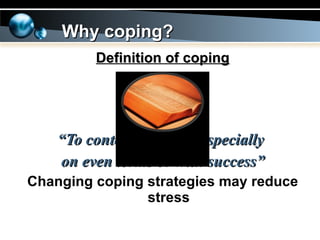
Definition of coping “ To contend or strive especially  on even terms or with success” Changing coping strategies may reduce stress Why coping?
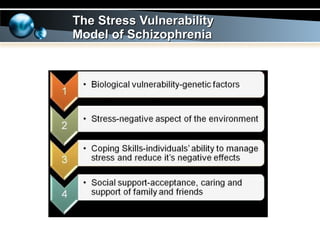
The Stress Vulnerability Model of Schizophrenia
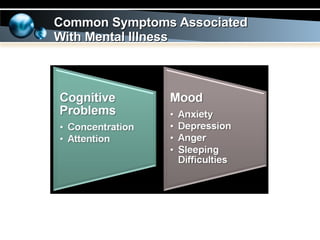
Common Symptoms Associated  With Mental Illness
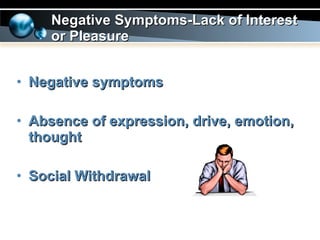
Negative symptoms Absence of expression, drive, emotion, thought   Social Withdrawal Negative Symptoms-Lack of Interest or Pleasure
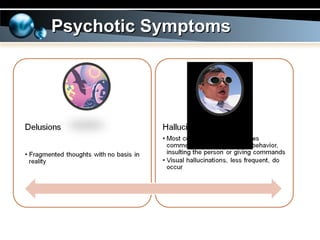
Psychotic Symptoms
Shift topics, usually unrelated and without logical sense   Difficulty in perceiving what is real Loose Associations
Medications Social skills training Cognitive Behavioral therapy Originally developed for residual symptoms, developed mainly for anxiety and depression Up to 60% of individuals taking prescribed medication still have persistent symptoms Treatment
 
Understanding persons experience irrespective of its connection to reality Interest in the person’s experience Developing a Therapeutic Alliance
What appears to be a void,  in fact,  has a cognitive component of contemplation and observation Reduction of Negative Symptoms
May be biological in nature, or May be reaction to past trauma May be a learned behavior, emotional blunting Affective Flattening
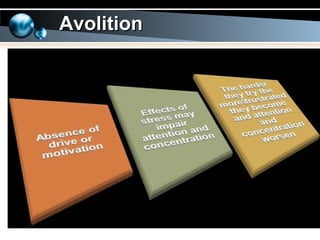
Avolition
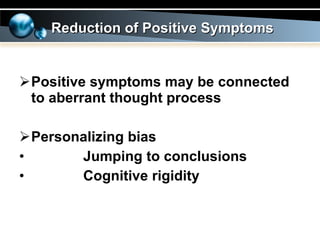
Positive symptoms may be connected to aberrant thought process Personalizing bias Jumping to conclusions Cognitive rigidity Reduction of Positive Symptoms
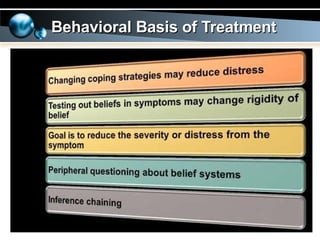
Behavioral Basis of Treatment
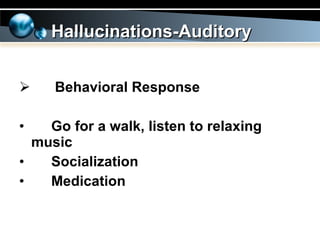
Behavioral Response Go for a walk, listen to relaxing  music Socialization Medication Hallucinations-Auditory
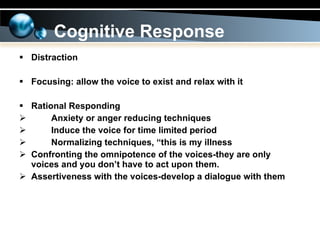
Distraction  Focusing: allow the voice to exist and relax with it Rational Responding Anxiety or anger reducing techniques Induce the voice for time limited period Normalizing techniques, “this is my illness Confronting the omnipotence of the voices-they are only voices and you don’t have to act upon them. Assertiveness with the voices-develop a dialogue with them Cognitive Response
Focus on the effects of stress, or sleep deprivation, rather than the etiology of symptoms Voice diary Ties voices and intensity to time of day triggers Identifies patterns, triggering coping strategies Affective responses (anger, anxiety) may lead to unhelpful behaviors Elicit the details of the experience
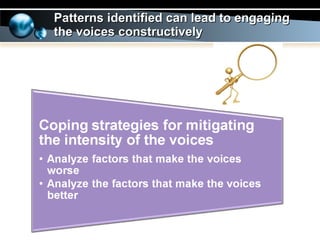
Patterns identified can lead to engaging the voices constructively
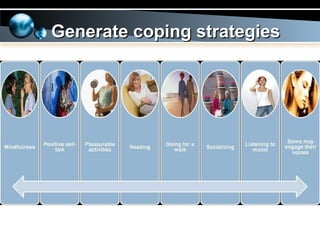
Generate coping strategies
Social skills training Relaxation techniques Breathing Progressive  muscle  relaxation Guided imagery
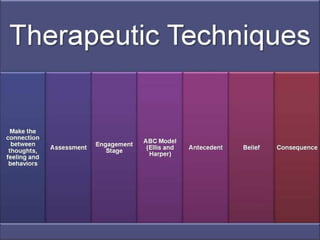
Teach the connections between thoughts and feelings Examine the evidence supporting the thoughts Challenge and modify beliefs not supported by evidence Explain automatic thoughts (biased thoughts) Teach to challenge thoughts or develop coping  strategies Cognitive Re-Structuring
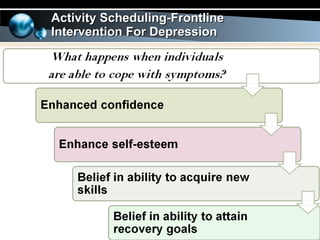
Activity Scheduling-Frontline  Intervention For Depression
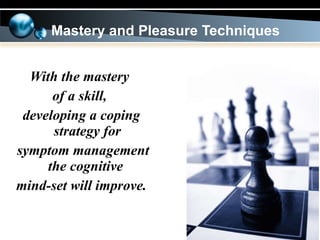
With the mastery  of a skill,  developing a coping strategy for symptom management the cognitive  mind-set will improve. Mastery and Pleasure Techniques
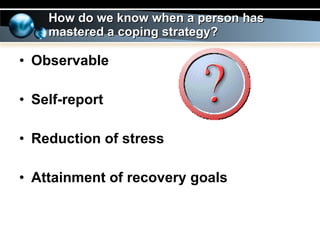
Observable Self-report Reduction of stress Attainment of recovery goals How do we know when a person has mastered a coping strategy?

Coping With Symptoms

  • 1.
    Coping with SymptomsBuddy Garfinkle, MSW
  • 2.
    Definition of coping“ To contend or strive especially on even terms or with success” Changing coping strategies may reduce stress Why coping?
  • 3.
    The Stress VulnerabilityModel of Schizophrenia
  • 4.
    Common Symptoms Associated With Mental Illness
  • 5.
    Negative symptoms Absenceof expression, drive, emotion, thought   Social Withdrawal Negative Symptoms-Lack of Interest or Pleasure
  • 6.
  • 7.
    Shift topics, usuallyunrelated and without logical sense   Difficulty in perceiving what is real Loose Associations
  • 8.
    Medications Social skillstraining Cognitive Behavioral therapy Originally developed for residual symptoms, developed mainly for anxiety and depression Up to 60% of individuals taking prescribed medication still have persistent symptoms Treatment
  • 9.
  • 10.
    Understanding persons experienceirrespective of its connection to reality Interest in the person’s experience Developing a Therapeutic Alliance
  • 11.
    What appears tobe a void, in fact, has a cognitive component of contemplation and observation Reduction of Negative Symptoms
  • 12.
    May be biologicalin nature, or May be reaction to past trauma May be a learned behavior, emotional blunting Affective Flattening
  • 13.
  • 14.
    Positive symptoms maybe connected to aberrant thought process Personalizing bias Jumping to conclusions Cognitive rigidity Reduction of Positive Symptoms
  • 15.
  • 16.
    Behavioral Response Gofor a walk, listen to relaxing music Socialization Medication Hallucinations-Auditory
  • 17.
    Distraction Focusing:allow the voice to exist and relax with it Rational Responding Anxiety or anger reducing techniques Induce the voice for time limited period Normalizing techniques, “this is my illness Confronting the omnipotence of the voices-they are only voices and you don’t have to act upon them. Assertiveness with the voices-develop a dialogue with them Cognitive Response
  • 18.
    Focus on theeffects of stress, or sleep deprivation, rather than the etiology of symptoms Voice diary Ties voices and intensity to time of day triggers Identifies patterns, triggering coping strategies Affective responses (anger, anxiety) may lead to unhelpful behaviors Elicit the details of the experience
  • 19.
    Patterns identified canlead to engaging the voices constructively
  • 20.
  • 21.
    Social skills trainingRelaxation techniques Breathing Progressive muscle relaxation Guided imagery
  • 22.
    Teach the connectionsbetween thoughts and feelings Examine the evidence supporting the thoughts Challenge and modify beliefs not supported by evidence Explain automatic thoughts (biased thoughts) Teach to challenge thoughts or develop coping strategies Cognitive Re-Structuring
  • 23.
    Activity Scheduling-Frontline Intervention For Depression
  • 24.
    With the mastery of a skill, developing a coping strategy for symptom management the cognitive mind-set will improve. Mastery and Pleasure Techniques
  • 25.
    Observable Self-report Reductionof stress Attainment of recovery goals How do we know when a person has mastered a coping strategy?