COPD Case Presentation
Farah Al Souheil, PharmD, RPh
Lebanese International University, Faculty of Pharmacy
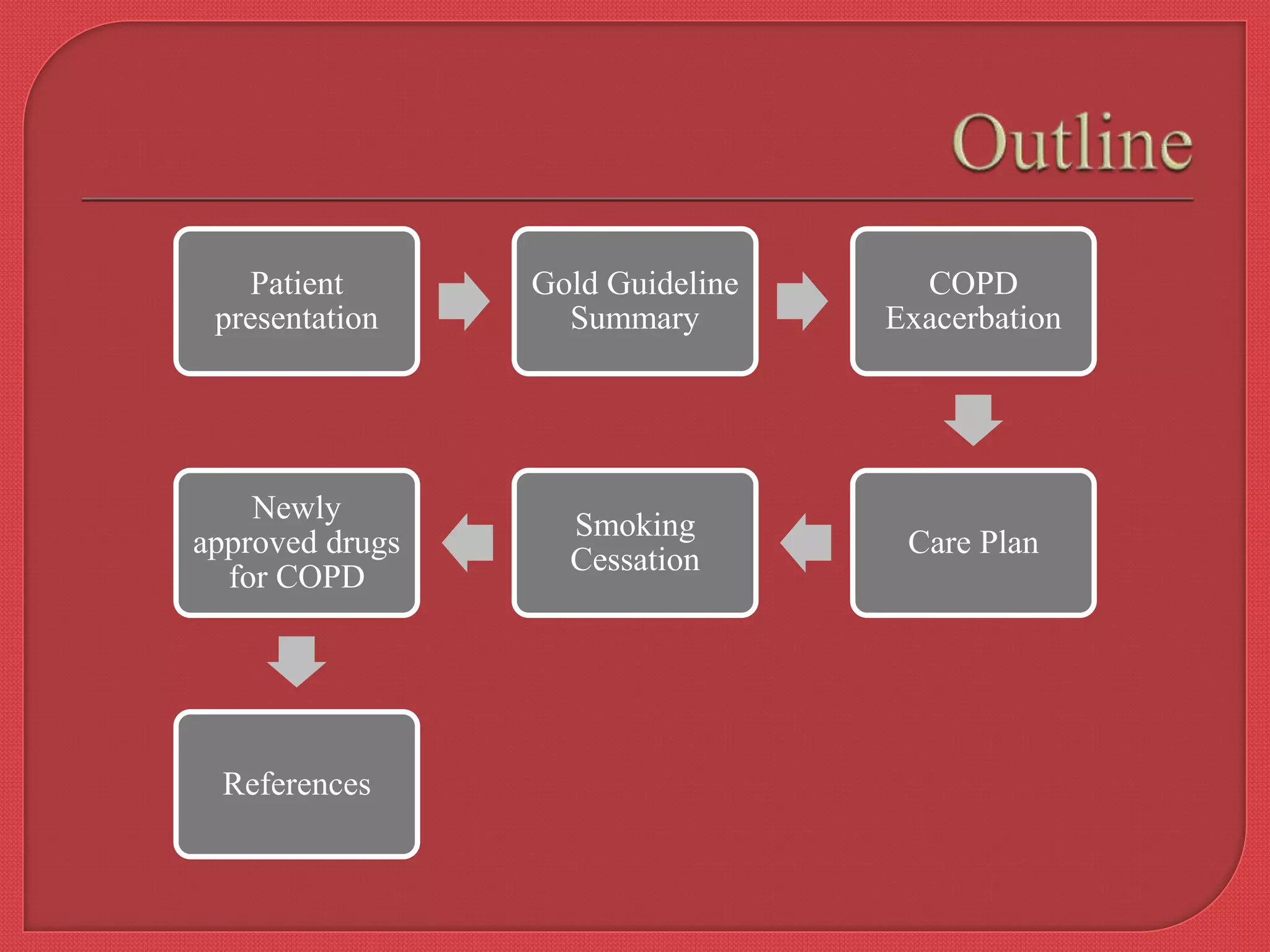
Patient
presentation
Gold Guideline
Summary
COPD
Exacerbation
Care Plan
Smoking
Cessation
Newly
approved drugs
for COPD
References
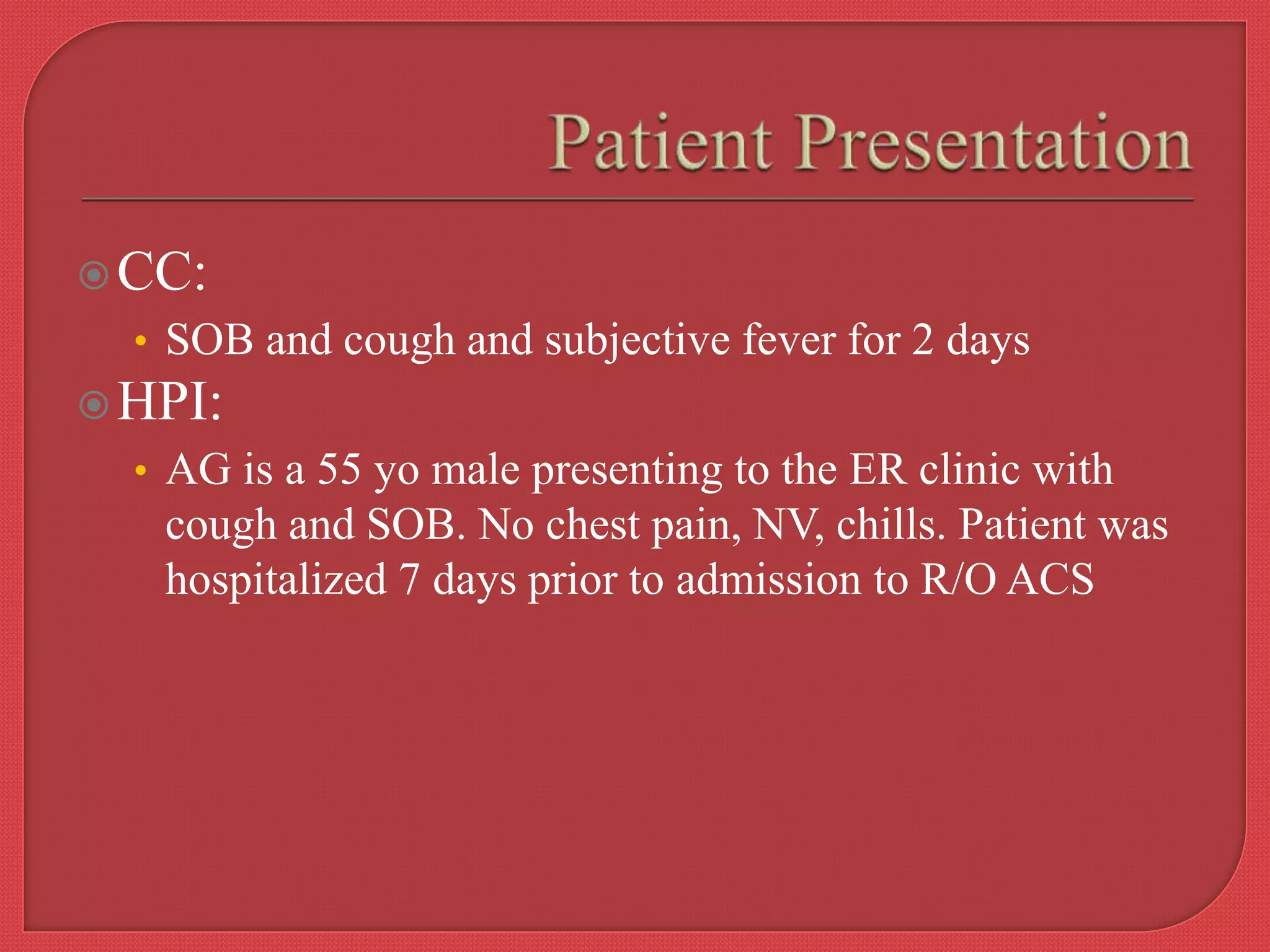
CC:
• SOB and cough and subjective fever for 2 days
HPI:
• AG is a 55 yo male presenting to the ER clinic with
cough and SOB. No chest pain, NV, chills. Patient was
hospitalized 7 days prior to admission to R/O ACS
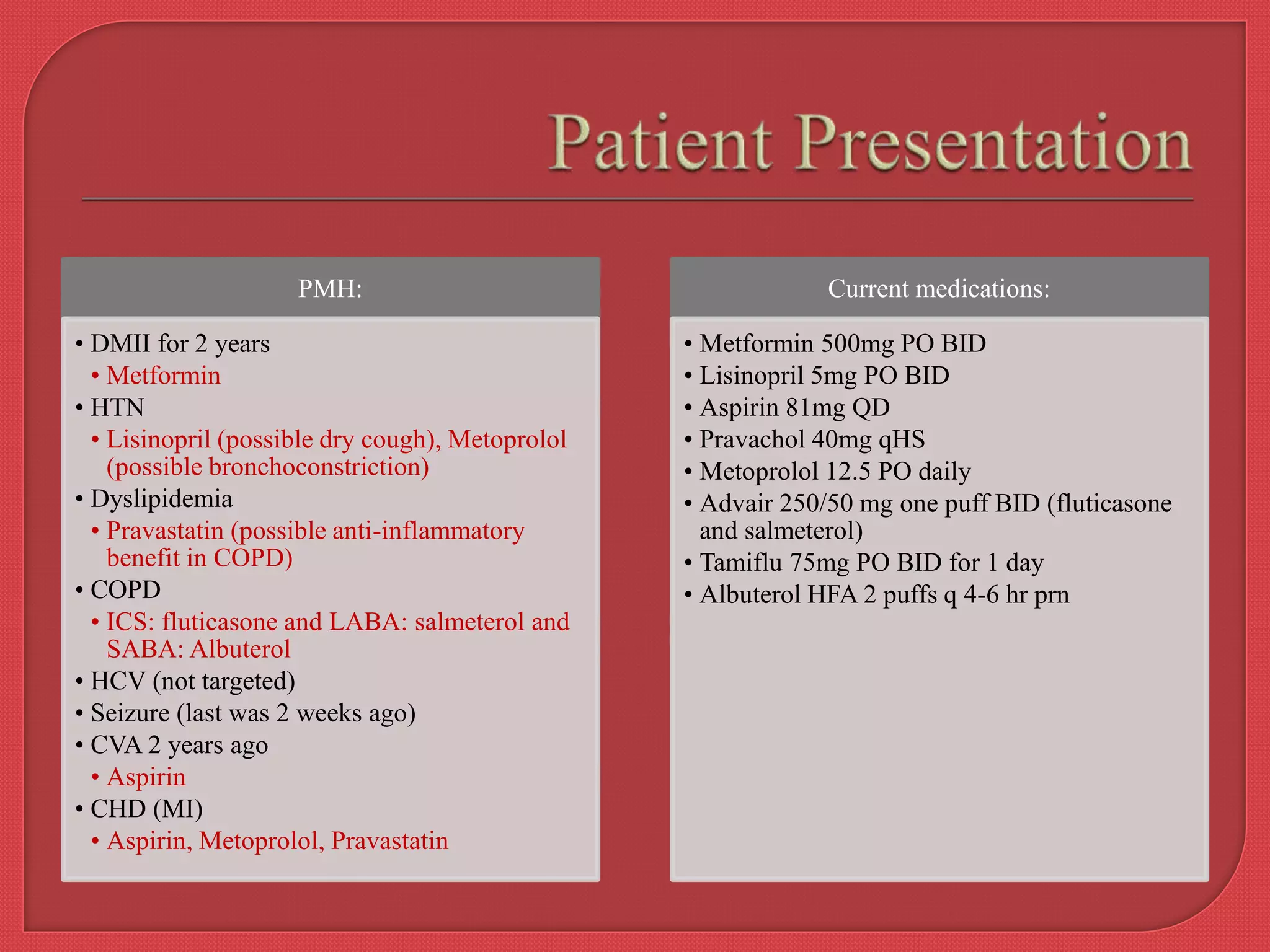
PMH:
• DMII for 2 years
• Metformin
• HTN
• Lisinopril (possible dry cough), Metoprolol
(possible bronchoconstriction)
• Dyslipidemia
• Pravastatin (possible anti-inflammatory
benefit in COPD)
• COPD
• ICS: fluticasone and LABA: salmeterol and
SABA: Albuterol
• HCV (not targeted)
• Seizure (last was 2 weeks ago)
• CVA 2 years ago
• Aspirin
• CHD (MI)
• Aspirin, Metoprolol, Pravastatin
Current medications:
• Metformin 500mg PO BID
• Lisinopril 5mg PO BID
• Aspirin 81mg QD
• Pravachol 40mg qHS
• Metoprolol 12.5 PO daily
• Advair 250/50 mg one puff BID (fluticasone
and salmeterol)
• Tamiflu 75mg PO BID for 1 day
• Albuterol HFA 2 puffs q 4-6 hr prn
SH:
• Tobacco 2-3 packs per day for 30 yrs (60-90 pack year)
• Etoh 2-4 beers for 3-4d/week
• Heroin and cocaine for 30 years (DC 5 years ago)
General: fatigue & fever
Skin: no rash, sores, itching, dryness
HEENT: pain around rt eye ( no recent injury), dizzy, blurred vision/ no hearing changes, tinnitus,
no dry mouth, hoarseness, congestion
Neck: no lumps or swollen glands or pain or stiffness
Respiratory: SOB and dry cough. Expiratory wheezes present in R&L upper & middle lobes
Cardiac: no chest pain, no palpitations, edema
GI: no trouble swallowing, heart burn, abd pain, jaundice, normal bowel sounds
Urinary: no polyuria or nocturia
Genital: no testicular pain or mass
Extremities: no varicose veins or leg cramps
Muscoloskeletal: limited in motion during inspiration
Psychiatric: no changes in mood or anxiety
Neurologic: seizure
Vitals:
• pulse 80-85, RR:17-20 BP: 95-129/ 58-73
General:
• Overweight (include in the plan)
HEENT:
• Visual acuity 20/20 in both eyes
• Poor dentition
• No tonsillar erythema or exudate
• No JVD
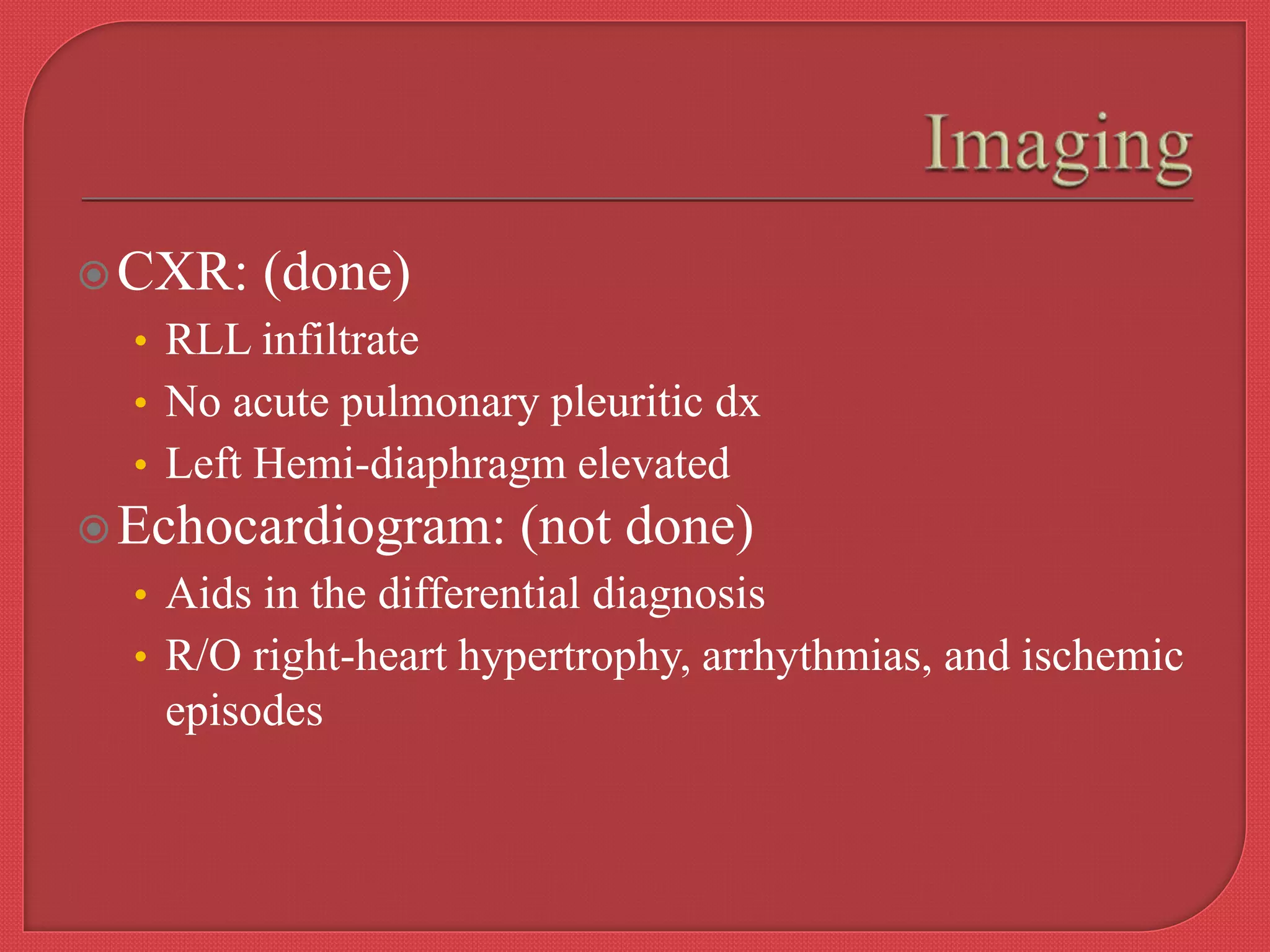
CXR: (done)
• RLL infiltrate
• No acute pulmonary pleuritic dx
• Left Hemi-diaphragm elevated
Echocardiogram: (not done)
• Aids in the differential diagnosis
• R/O right-heart hypertrophy, arrhythmias, and ischemic
episodes
Hgb: 14.4
Hct: 41.6
Plt: 157
Rbc: 4.4
Na: 137
K: 4.3
Cl: 102
Ca: 10 ( corrected Ca= 10+
0.8 (4-alb) =10.72) inc
Albumin: 3.1 dec
Scr: 0.8
Alk phosph 47
MISSED:
HBA1C
FBG
CBC-d
CRP
Spirometry measurements are
not accurate during an acute
exacerbation
ABG
• pH 7.41 pco2 42 po2 47 hco3 26
• Check for resp acidosis
Systemic inflammation
• Susceptibility to exacerbations is attributed to a genetic variance in the CCL1 gene(
encodes for chemotactic factors)
• CRP level, in the presence of a major exacerbation symptom, has been the most
effective biomarker for differentiating exacerbations from day-to-day symptom
variations, but it is not helpful in predicting severity
• Elevated fibrinogen levels(>400), is predictive for the occurrence of moderate-to-
severe exacerbations)
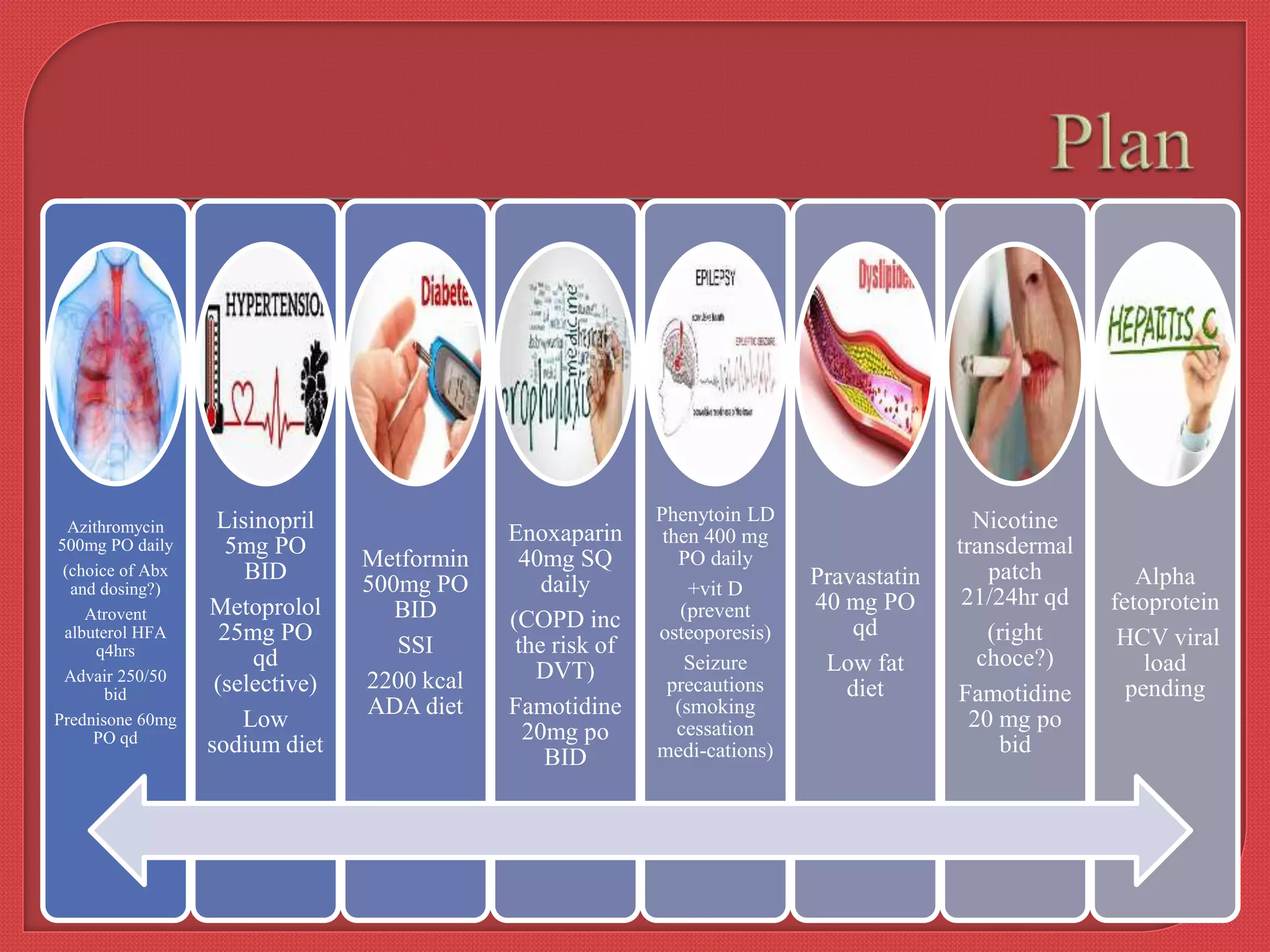
Azithromycin
500mg PO daily
(choice of Abx
and dosing?)
Atrovent
albuterol HFA
q4hrs
Advair 250/50
bid
Prednisone 60mg
PO qd
Lisinopril
5mg PO
BID
Metoprolol
25mg PO
qd
(selective)
Low
sodium diet
Metformin
500mg PO
BID
SSI
2200 kcal
ADA diet
Enoxaparin
40mg SQ
daily
(COPD inc
the risk of
DVT)
Famotidine
20mg po
BID
Phenytoin LD
then 400 mg
PO daily
+vit D
(prevent
osteoporesis)
Seizure
precautions
(smoking
cessation
medi-cations)
Pravastatin
40 mg PO
qd
Low fat
diet
Nicotine
transdermal
patch
21/24hr qd
(right
choce?)
Famotidine
20 mg po
bid
Alpha
fetoprotein
HCV viral
load
pending
Case
discussion
COPD
• Onset in
mid life
• Hx of
tobacco
use
Asthma
• Onset
early in
life
• Sx vary
on a day-
day basis
• Sx worse
at
night/earl
y morning
• Presence
of
allery/rhin
itis/eczem
a
• Obesity
• Family hx
CHF
• Dilated
heart on
CXR
• Volume
restriction
not
airflow
limitation
by PFTs
Bronchiect-
asis
• Purulent
sputum
• Associate
d with
bacterial
infections
• CXR:
brochial
dilation or
thickening
of the
wall
TB
• CXR:
lung
infiltrates
• Confirme
d by
microbiol
ogy
Obliterative
bronchiolitis
• Hx of RA
• Post Bone
marrow
transplant
Diffuse
panbronchiolitis
• Chronic
sinusitis
• CXR:
small
nodular
opacities
and
hyperinfla
tion
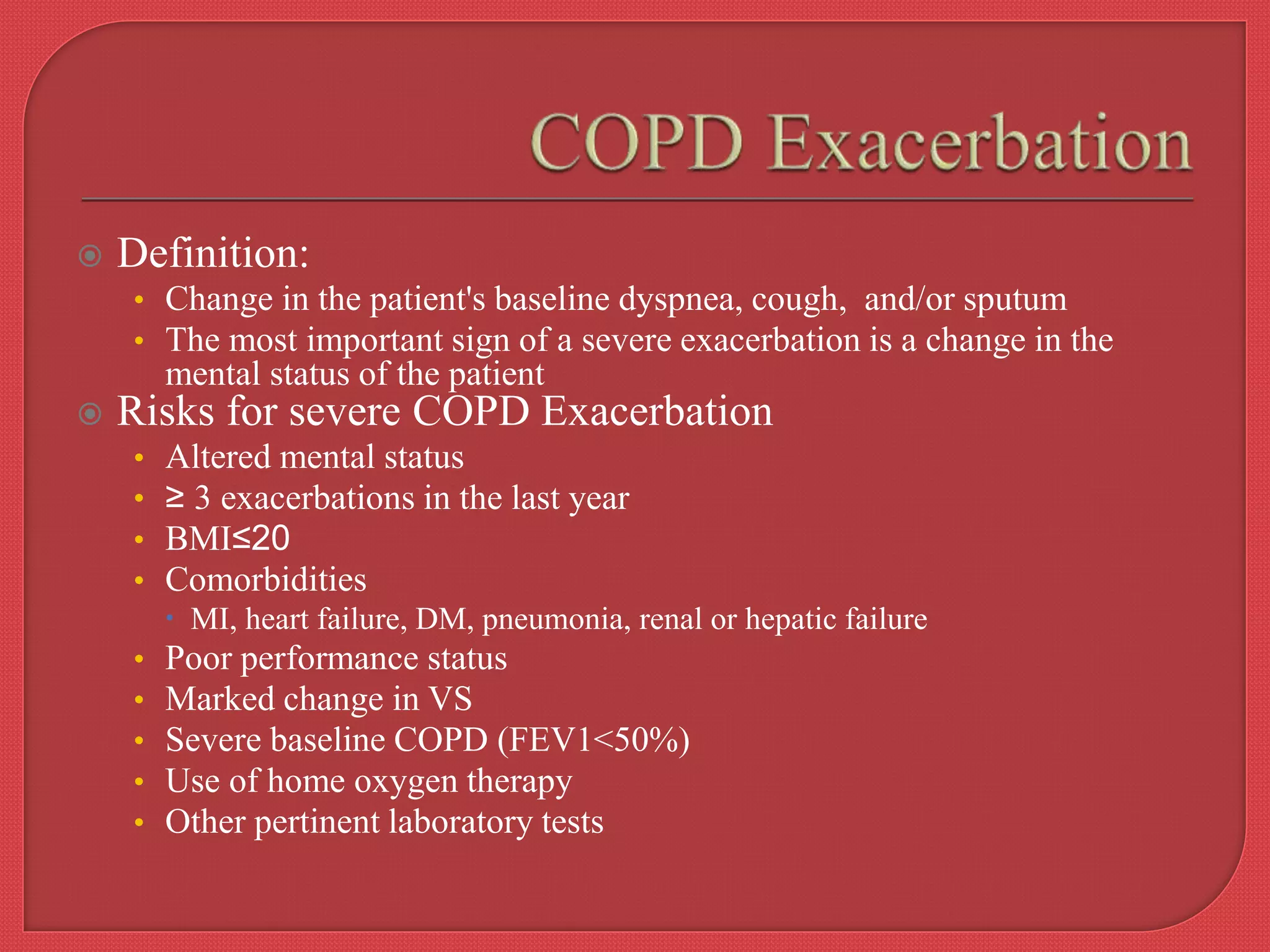
 Definition:
• Change in the patient's baseline dyspnea, cough, and/or sputum
• The most important sign of a severe exacerbation is a change in the
mental status of the patient
 Risks for severe COPD Exacerbation
• Altered mental status
• ≥ 3 exacerbations in the last year
• BMI≤20
• Comorbidities
 MI, heart failure, DM, pneumonia, renal or hepatic failure
• Poor performance status
• Marked change in VS
• Severe baseline COPD (FEV1<50%)
• Use of home oxygen therapy
• Other pertinent laboratory tests
Haemophilus influenzae
Streptococcus pneumoniae
Moraxella catarrhalis
Pseudomonas aeruginosa
• Isolated from patients with severe disease (who require
mechanical ventilation, have extremely low forced
expiratory volume in one second (FEV1), and have used
systemic steroids and/or antibiotics within the
preceding months)
Indications:
• Comorbidities
• Respiratory acidosis
• Older age
• Severe COPD
• Marked increase in
sputum
• Need for ventilation
• Onset of new
signs(edema,cyanosis)
ICU admission:
• Severe non responsive
dyspnea
• Altered mental status
• Need for invasive
ventilation
• Hemodynamic
instability
• Respiratory acidosis,
hypoxemia,
hypercapnia not
responsive to NIV
Actions:
• Monitor for dyspnea
and hypoxemia
• Confirm the relief of
bronchospasm
(improvement in
expiratory flow rate
and volume)
• Chest physiotherapy
with
• Postural drainage,
intermittent positive
pressure breathing,
increased fluid
intake, aerosol mist
(normal saline)
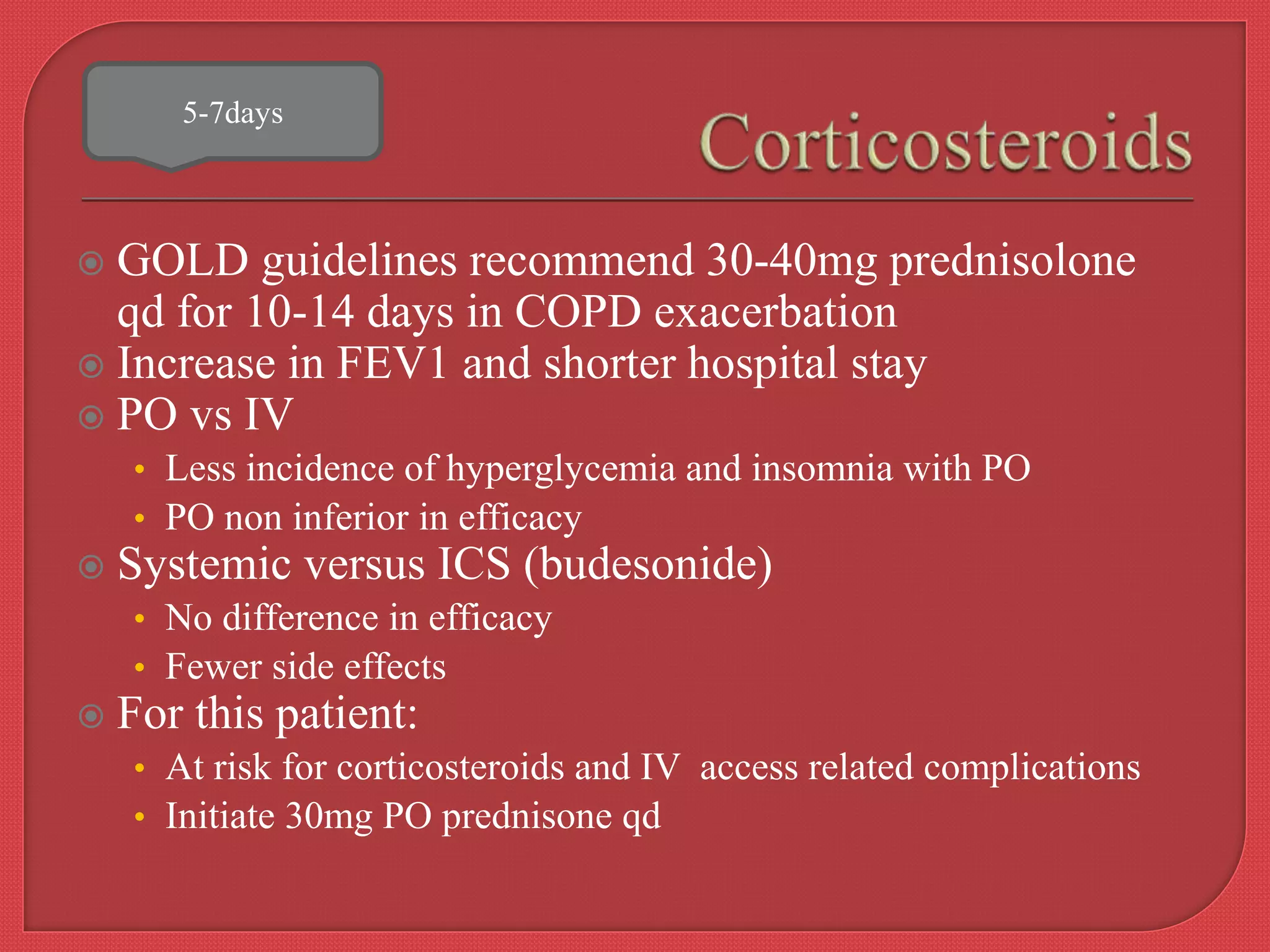
 GOLD guidelines recommend 30-40mg prednisolone
qd for 10-14 days in COPD exacerbation
 Increase in FEV1 and shorter hospital stay
 PO vs IV
• Less incidence of hyperglycemia and insomnia with PO
• PO non inferior in efficacy
 Systemic versus ICS (budesonide)
• No difference in efficacy
• Fewer side effects
 For this patient:
• At risk for corticosteroids and IV access related complications
• Initiate 30mg PO prednisone qd
5-7days
 Trimethoprim-sulfamethoxazole should not be
used due to increasing pneumococcal resistance
 Amoxicillin and first-generation cephalosporins
are not recommended due to beta-lactamase
susceptibility
 Erythromycin is not recommended due to
insufficient activity against H influenzae
 Decrease the risk of relapse or treatment failure
 Indicated if 2 of the following:
• Increased dyspnea
• Increased sputum volume/ viscosity
• Increased sputum purulence
5-7days
<2 per year
>2 per year
FEV1<30% predicted
Broad spectrum Ab in last 3 months
Bronchioctasis on CT scan
>2 per year
Cefuroxime,cefdinir,
cefpodoxime
 In hospital: improve survival in people with chronic
hypoxaemia
 Out-patient: recommended for patients with very severe
COPD (PaO2<55 mmHg or spO2<88%) and the goal of
therapy is to preserve the function of vital organs by
increasing the PaO2 to ≥60 mmHg and spO2 to ≥90%
 Increase survival in severe resting chronic hypoxemia
 No effect on survival in moderate resting chronic
hypoxemia and exercise induced hypoxemia
 Low dose long acting PO & IV opiods may be indicated
to treat dyspnea caused by severe COPD
Indications:
• Respiratory arrest
• Cardiovascular instability
• High aspiration risk
• Extreme obesity
• Impaired mental status
• Not responding to NIV
Post short acting bronchodilator
FEV1/FVC <0.7 -> COPD
Assessment of airflow limitation
FEV1≥80 mild
50≤FEV1<80 moderate
30≤FEV1<50 severe
FEV1<30 very severe
Assessment of symptoms and risk of
exacerbation
0/1 exacerbation not leading to
hospitalization -> A/B
•mMRC 0-1 or CAT<10 A
•Otherwise B
≥2 or 1 exacerbation leading to
hospitalization -> C/D
• mMRC 0-1 or CAT<10 C
•Otherwise D
GOLD classification based on assessment of symptoms and
future risk of exacerbations
 SABA:
• Fenoterol, Albuterol, levalbuterol( longer acting), terbutaline
• Preferred brochodilator (q4hrs)
• MDI & DPI are as effective as nebulization therapy and
favored due to reasons of cost and convenience, even in the
hospital setting
 If not effective, add SAMA q6hr
• Ipratropium/ oxitropium (longer acting)
 SABA/SAMA:
• Ipratropium +
 Fenoterol
 Albuterol
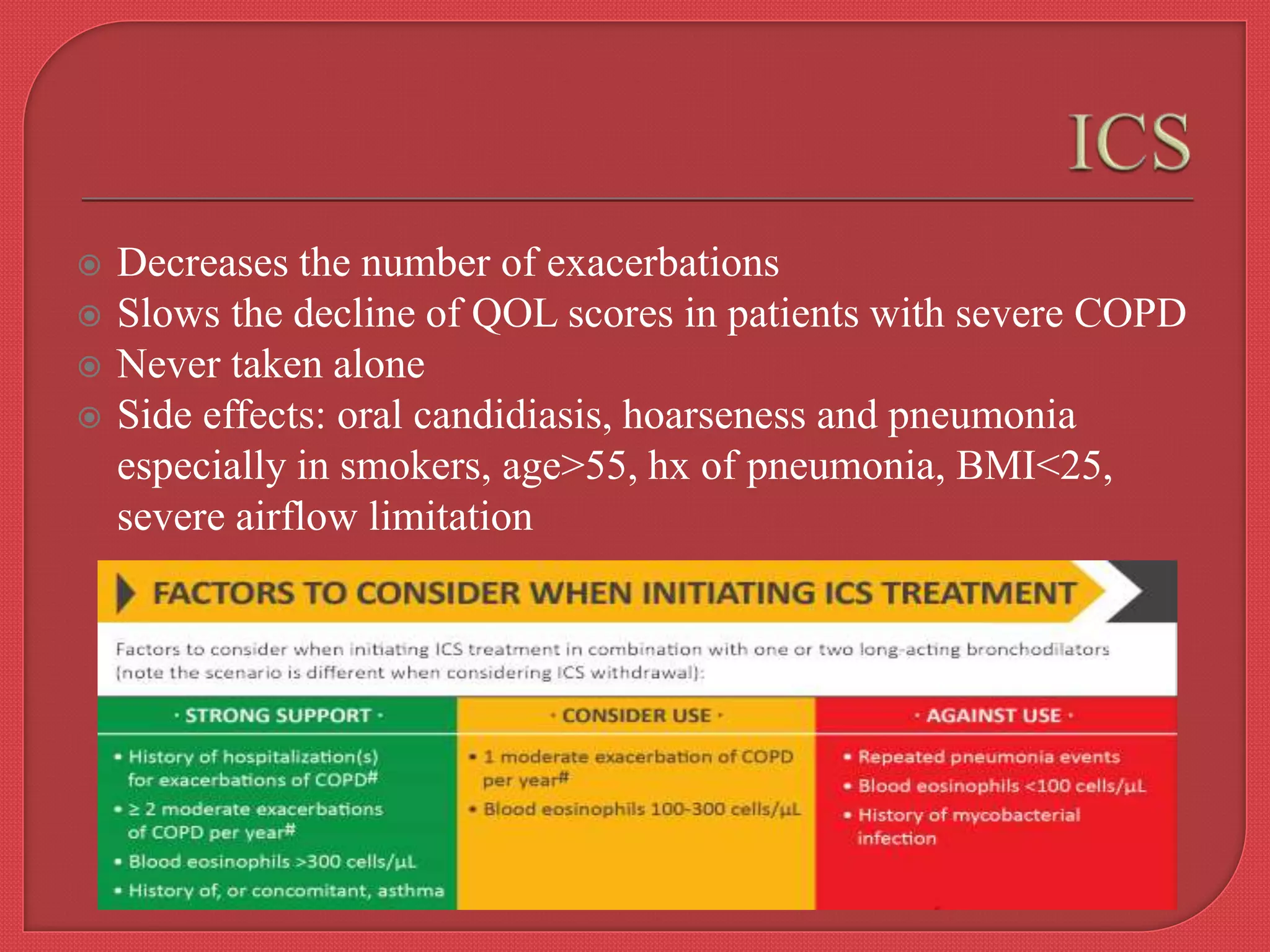
 Decreases the number of exacerbations
 Slows the decline of QOL scores in patients with severe COPD
 Never taken alone
 Side effects: oral candidiasis, hoarseness and pneumonia
especially in smokers, age>55, hx of pneumonia, BMI<25,
severe airflow limitation
Formoterol has a faster onset of action and a greater peak bronchodilatory effect than
salmeterol. This may be a result of formoterol’s higher selectivity for the beta2 receptor
and lower lipophilicity
Formeterol + (budesonide/
beclomethasone/
momtasone)
ipratropium is not recommended for use with tiotropium, whereas SABAs and LABAs
may be used concomitantly
LABA Vilanterol QD
LAMA Revefenacin QD
Beta 2 agonists increase CAMP production in the lungs and decrease
calcium concentration (smooth muscle relaxation)
• Side efffects: sweating, hypokalemia, somatic tremor and sinus tachycardia
LAMAs are associated with a lower rate of exacerbations compared with
LABAs and better side effect profile
• Occasional uriary retention, no CV side effects,
The inhaler technique needs to be checked and a suitable device selected
If the patient doesn’t respond to optimizing inhaled medication and
continues to have 2-3 exacerbations/year
• Add additional options: pulmonary rehabilitation, a macrolide, theophylline,
phosphodieseterase (PDE4) inhibitor or N-acetylocysteine/carbocysteine
+ Formeterol 2 puff bid / cough
LABA inc asthma deaths, UTI
+ tiotropium qd/ cough
Nasopharyngitis, backpain
+ indacaterol 1 tab bid /
nasopharangitis, HTN
Fluticasone,
umiclidinium,
vilanterol
Beclo-
methasone,
formeterol,
glyco-
perronium
DPI q24hrMDI q12hrs
After exacerbation step up to one of the
ICS/LABA/LAMA
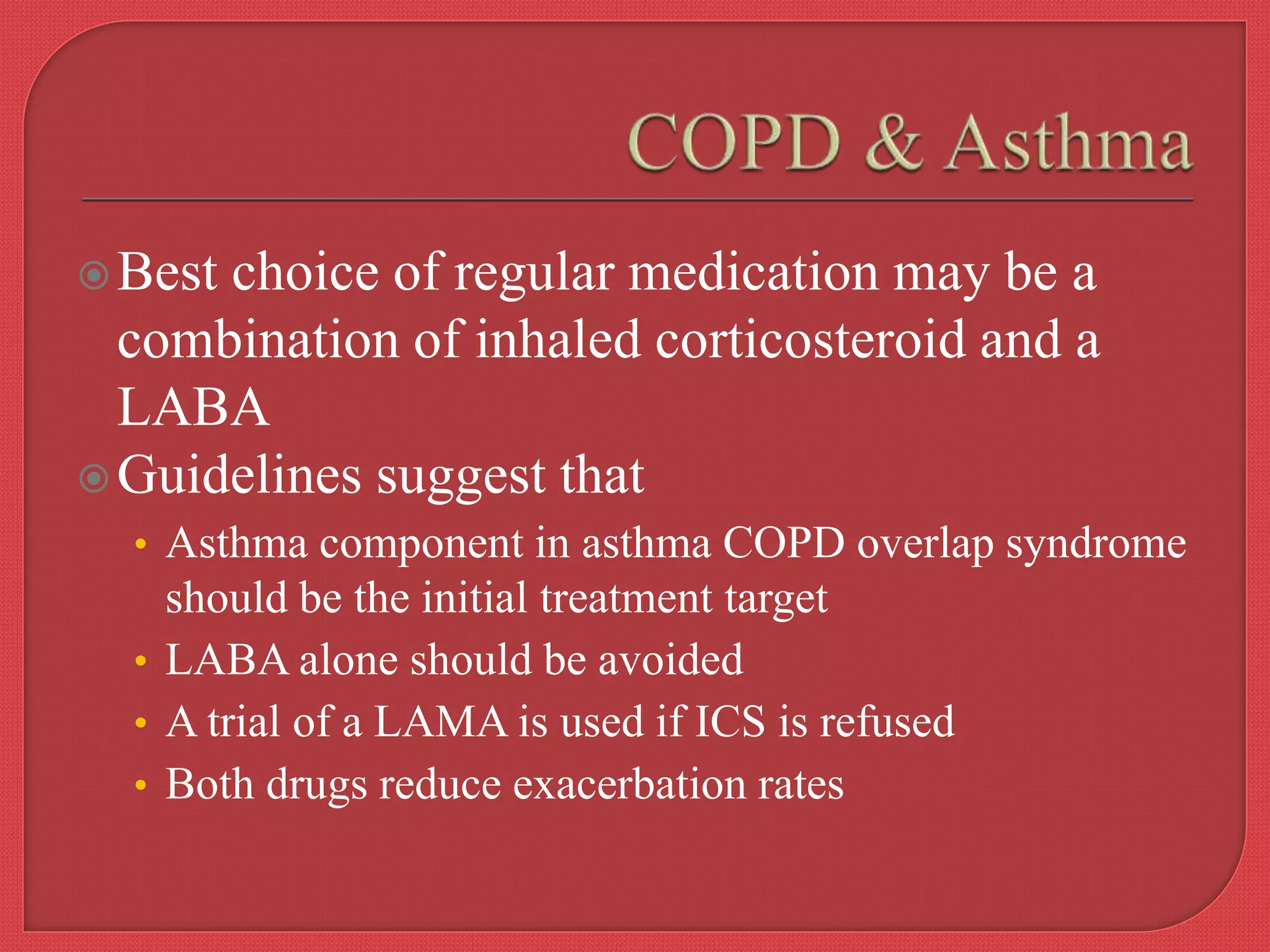
Best choice of regular medication may be a
combination of inhaled corticosteroid and a
LABA
Guidelines suggest that
• Asthma component in asthma COPD overlap syndrome
should be the initial treatment target
• LABA alone should be avoided
• A trial of a LAMA is used if ICS is refused
• Both drugs reduce exacerbation rates
Non
pharmacologic
treatment
 Medical evaluation & disease management
(medication and proper use)
 Lifestyle (smoking cessation, physical activities
and exercise
 Co-morbid diseases
 Self-care and functional abilities & Frailty
• Dynamic state associated with decline of physiologic
reserves in multiple systems and inability to respond to
stressful insults
• Frailty assessment tools, such as the seven-point Clinical
Frailty Index
Reduces further decline in lung function will
Decreases the severity of exacerbations
Reduces cough & phlegm
Doesn’t inhibit exacerbations
Bupropion and COPD
Bupropion, varenicline and seizure
Varenicline
Bupropion SR
Nicotine gum, inhaler, nasal spray, lozenges,
patch
Highest rates of abstinence reported with
combination nicotine therapy (patch 21/24 hr +
gum 2mg q1-2hrs for 14 weeks
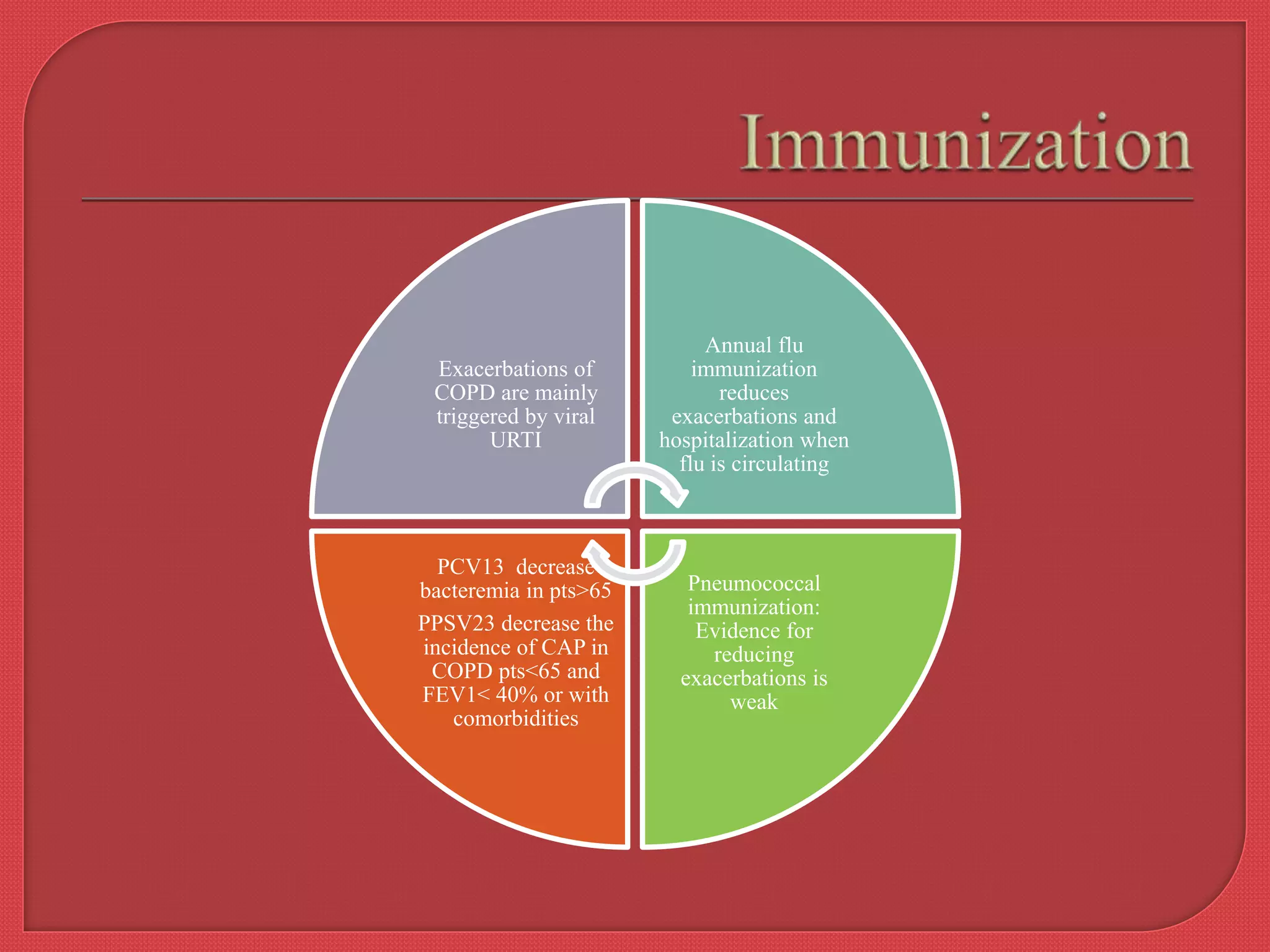
Exacerbations of
COPD are mainly
triggered by viral
URTI
Annual flu
immunization
reduces
exacerbations and
hospitalization when
flu is circulating
Pneumococcal
immunization:
Evidence for
reducing
exacerbations is
weak
PCV13 decrease
bacteremia in pts>65
PPSV23 decrease the
incidence of CAP in
COPD pts<65 and
FEV1< 40% or with
comorbidities
 Exercise training, education and behaviour change
 Improves symptoms, quality of life and reduces
hospital admission
 Moderate-to-very-severe COPD
 Most efficacious in patients who are symptomatic
(MRC dyspnoea scale 3 and above)
 Most effective in reducing exacerbations when
delivered early after an exacerbation (within 4
weeks)
Other
long term
options
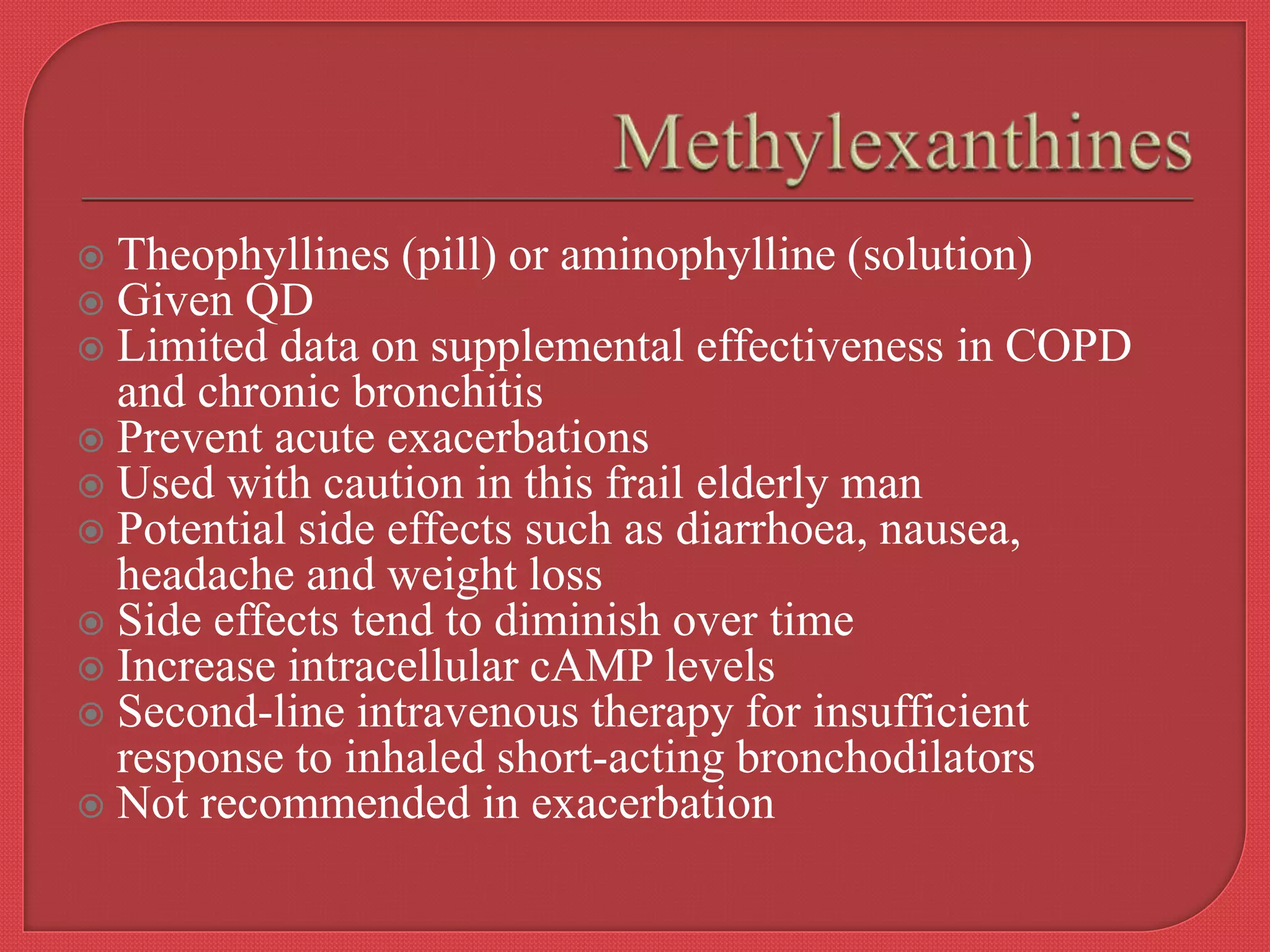
 Theophyllines (pill) or aminophylline (solution)
 Given QD
 Limited data on supplemental effectiveness in COPD
and chronic bronchitis
 Prevent acute exacerbations
 Used with caution in this frail elderly man
 Potential side effects such as diarrhoea, nausea,
headache and weight loss
 Side effects tend to diminish over time
 Increase intracellular cAMP levels
 Second-line intravenous therapy for insufficient
response to inhaled short-acting bronchodilators
 Not recommended in exacerbation
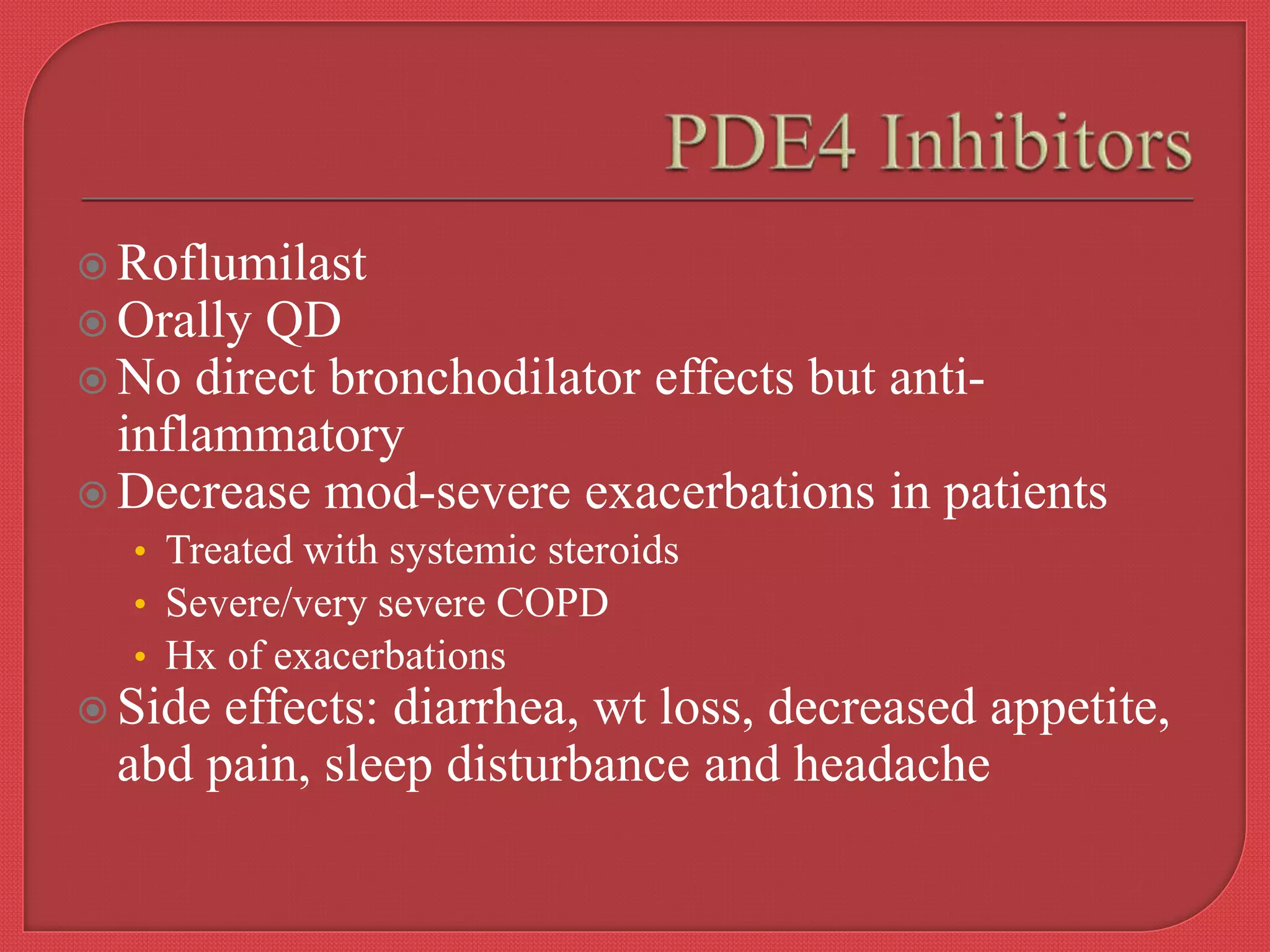
 Roflumilast
 Orally QD
 No direct bronchodilator effects but anti-
inflammatory
 Decrease mod-severe exacerbations in patients
• Treated with systemic steroids
• Severe/very severe COPD
• Hx of exacerbations
 Side effects: diarrhea, wt loss, decreased appetite,
abd pain, sleep disturbance and headache
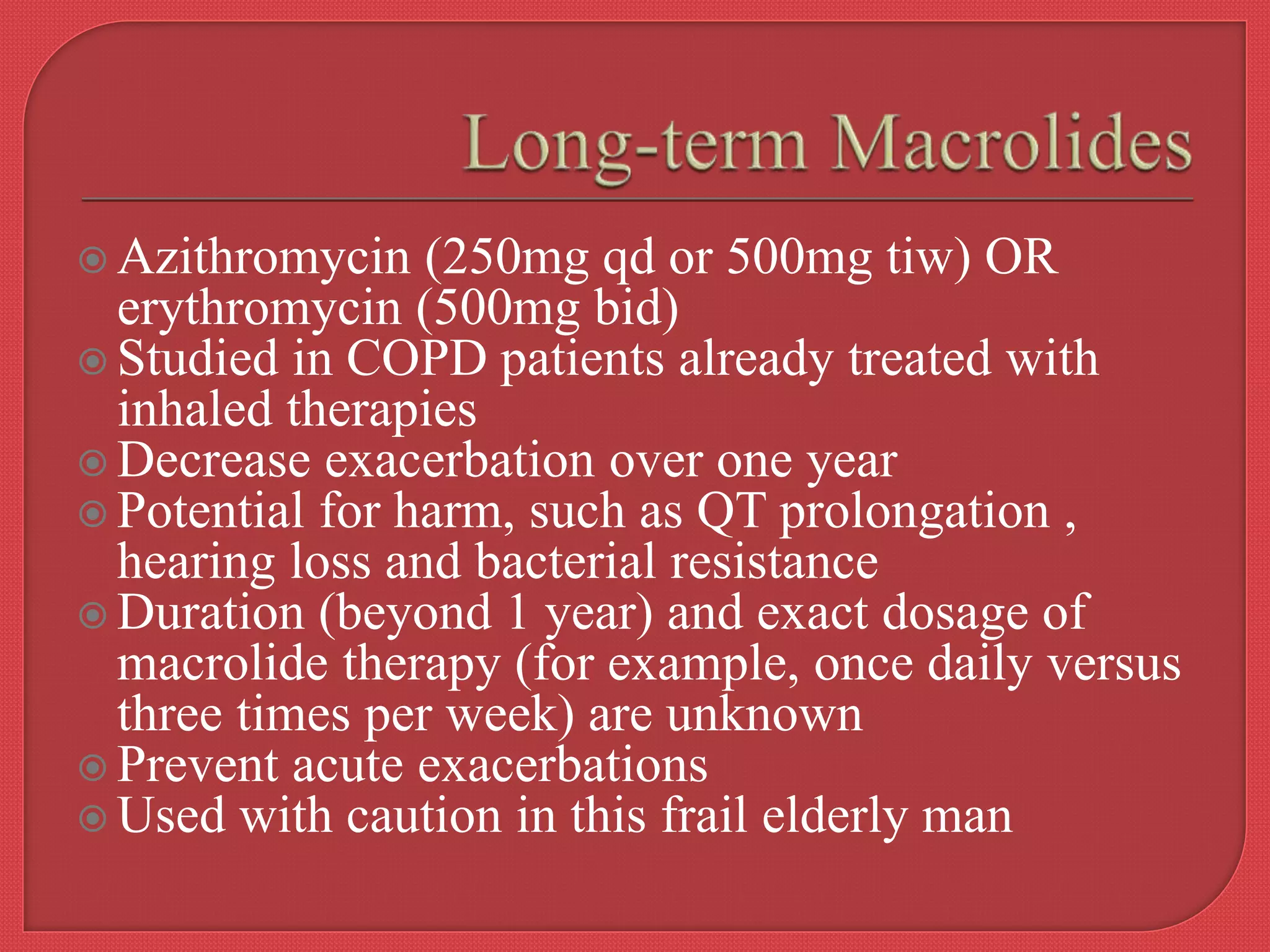
 Azithromycin (250mg qd or 500mg tiw) OR
erythromycin (500mg bid)
 Studied in COPD patients already treated with
inhaled therapies
 Decrease exacerbation over one year
 Potential for harm, such as QT prolongation ,
hearing loss and bacterial resistance
 Duration (beyond 1 year) and exact dosage of
macrolide therapy (for example, once daily versus
three times per week) are unknown
 Prevent acute exacerbations
 Used with caution in this frail elderly man
Erdosteine/ carbocysteine/ N-acetylcysteine
Orally BID
Prevent acute exacerbations
Used with caution in this frail elderly man
THERE’S NO EVIDENCE ABOUT THE
ROLE OF ANTITUSSIVES
No longer than 30 days after exacerbation
Improve FEV1 and oxygenation
Decrease hospital stay
Max for 5-7 days
Not recommended
Simvastatin doesn’t prevent COPD
exacerbations
If used for other indication can have positive
outcomes on COPD
Used as add-on therapy for patients with severe asthma
and blood eosinophil counts ≥300 cells/microL
In two parallel RCT
Over 3900 patients with moderate to very severe COPD
and frequent exacerbations, benralizumab did not reduce
the annualized rate of exacerbations relative to placebo,
(even if eosinophil counts ≥220 cells/microL)
In a post hoc analysis,
patients with (≥3 exacerbations in the previous year,
using triple inhaler therapy, and blood eosinophilia)
experienced a 30 % reduction in exacerbations with
benralizumab at the highest dose compared with placebo
IL-5 receptor Mab
May 28, 2019
Goldcopd.org
Up-to-date
Medscape

COPD exacerbation case presentation and disease overview

  • 1.
    COPD Case Presentation FarahAl Souheil, PharmD, RPh Lebanese International University, Faculty of Pharmacy
  • 2.
  • 3.
    CC: • SOB andcough and subjective fever for 2 days HPI: • AG is a 55 yo male presenting to the ER clinic with cough and SOB. No chest pain, NV, chills. Patient was hospitalized 7 days prior to admission to R/O ACS
  • 4.
    PMH: • DMII for2 years • Metformin • HTN • Lisinopril (possible dry cough), Metoprolol (possible bronchoconstriction) • Dyslipidemia • Pravastatin (possible anti-inflammatory benefit in COPD) • COPD • ICS: fluticasone and LABA: salmeterol and SABA: Albuterol • HCV (not targeted) • Seizure (last was 2 weeks ago) • CVA 2 years ago • Aspirin • CHD (MI) • Aspirin, Metoprolol, Pravastatin Current medications: • Metformin 500mg PO BID • Lisinopril 5mg PO BID • Aspirin 81mg QD • Pravachol 40mg qHS • Metoprolol 12.5 PO daily • Advair 250/50 mg one puff BID (fluticasone and salmeterol) • Tamiflu 75mg PO BID for 1 day • Albuterol HFA 2 puffs q 4-6 hr prn
  • 5.
    SH: • Tobacco 2-3packs per day for 30 yrs (60-90 pack year) • Etoh 2-4 beers for 3-4d/week • Heroin and cocaine for 30 years (DC 5 years ago)
  • 6.
    General: fatigue &fever Skin: no rash, sores, itching, dryness HEENT: pain around rt eye ( no recent injury), dizzy, blurred vision/ no hearing changes, tinnitus, no dry mouth, hoarseness, congestion Neck: no lumps or swollen glands or pain or stiffness Respiratory: SOB and dry cough. Expiratory wheezes present in R&L upper & middle lobes Cardiac: no chest pain, no palpitations, edema GI: no trouble swallowing, heart burn, abd pain, jaundice, normal bowel sounds Urinary: no polyuria or nocturia Genital: no testicular pain or mass Extremities: no varicose veins or leg cramps Muscoloskeletal: limited in motion during inspiration Psychiatric: no changes in mood or anxiety Neurologic: seizure
  • 7.
    Vitals: • pulse 80-85,RR:17-20 BP: 95-129/ 58-73 General: • Overweight (include in the plan) HEENT: • Visual acuity 20/20 in both eyes • Poor dentition • No tonsillar erythema or exudate • No JVD
  • 8.
    CXR: (done) • RLLinfiltrate • No acute pulmonary pleuritic dx • Left Hemi-diaphragm elevated Echocardiogram: (not done) • Aids in the differential diagnosis • R/O right-heart hypertrophy, arrhythmias, and ischemic episodes
  • 9.
    Hgb: 14.4 Hct: 41.6 Plt:157 Rbc: 4.4 Na: 137 K: 4.3 Cl: 102 Ca: 10 ( corrected Ca= 10+ 0.8 (4-alb) =10.72) inc Albumin: 3.1 dec Scr: 0.8 Alk phosph 47 MISSED: HBA1C FBG CBC-d CRP Spirometry measurements are not accurate during an acute exacerbation ABG • pH 7.41 pco2 42 po2 47 hco3 26 • Check for resp acidosis Systemic inflammation • Susceptibility to exacerbations is attributed to a genetic variance in the CCL1 gene( encodes for chemotactic factors) • CRP level, in the presence of a major exacerbation symptom, has been the most effective biomarker for differentiating exacerbations from day-to-day symptom variations, but it is not helpful in predicting severity • Elevated fibrinogen levels(>400), is predictive for the occurrence of moderate-to- severe exacerbations)
  • 10.
    Azithromycin 500mg PO daily (choiceof Abx and dosing?) Atrovent albuterol HFA q4hrs Advair 250/50 bid Prednisone 60mg PO qd Lisinopril 5mg PO BID Metoprolol 25mg PO qd (selective) Low sodium diet Metformin 500mg PO BID SSI 2200 kcal ADA diet Enoxaparin 40mg SQ daily (COPD inc the risk of DVT) Famotidine 20mg po BID Phenytoin LD then 400 mg PO daily +vit D (prevent osteoporesis) Seizure precautions (smoking cessation medi-cations) Pravastatin 40 mg PO qd Low fat diet Nicotine transdermal patch 21/24hr qd (right choce?) Famotidine 20 mg po bid Alpha fetoprotein HCV viral load pending
  • 11.
  • 12.
    COPD • Onset in midlife • Hx of tobacco use Asthma • Onset early in life • Sx vary on a day- day basis • Sx worse at night/earl y morning • Presence of allery/rhin itis/eczem a • Obesity • Family hx CHF • Dilated heart on CXR • Volume restriction not airflow limitation by PFTs Bronchiect- asis • Purulent sputum • Associate d with bacterial infections • CXR: brochial dilation or thickening of the wall TB • CXR: lung infiltrates • Confirme d by microbiol ogy Obliterative bronchiolitis • Hx of RA • Post Bone marrow transplant Diffuse panbronchiolitis • Chronic sinusitis • CXR: small nodular opacities and hyperinfla tion
  • 13.
     Definition: • Changein the patient's baseline dyspnea, cough, and/or sputum • The most important sign of a severe exacerbation is a change in the mental status of the patient  Risks for severe COPD Exacerbation • Altered mental status • ≥ 3 exacerbations in the last year • BMI≤20 • Comorbidities  MI, heart failure, DM, pneumonia, renal or hepatic failure • Poor performance status • Marked change in VS • Severe baseline COPD (FEV1<50%) • Use of home oxygen therapy • Other pertinent laboratory tests
  • 14.
    Haemophilus influenzae Streptococcus pneumoniae Moraxellacatarrhalis Pseudomonas aeruginosa • Isolated from patients with severe disease (who require mechanical ventilation, have extremely low forced expiratory volume in one second (FEV1), and have used systemic steroids and/or antibiotics within the preceding months)
  • 15.
    Indications: • Comorbidities • Respiratoryacidosis • Older age • Severe COPD • Marked increase in sputum • Need for ventilation • Onset of new signs(edema,cyanosis) ICU admission: • Severe non responsive dyspnea • Altered mental status • Need for invasive ventilation • Hemodynamic instability • Respiratory acidosis, hypoxemia, hypercapnia not responsive to NIV Actions: • Monitor for dyspnea and hypoxemia • Confirm the relief of bronchospasm (improvement in expiratory flow rate and volume) • Chest physiotherapy with • Postural drainage, intermittent positive pressure breathing, increased fluid intake, aerosol mist (normal saline)
  • 16.
     GOLD guidelinesrecommend 30-40mg prednisolone qd for 10-14 days in COPD exacerbation  Increase in FEV1 and shorter hospital stay  PO vs IV • Less incidence of hyperglycemia and insomnia with PO • PO non inferior in efficacy  Systemic versus ICS (budesonide) • No difference in efficacy • Fewer side effects  For this patient: • At risk for corticosteroids and IV access related complications • Initiate 30mg PO prednisone qd 5-7days
  • 17.
     Trimethoprim-sulfamethoxazole shouldnot be used due to increasing pneumococcal resistance  Amoxicillin and first-generation cephalosporins are not recommended due to beta-lactamase susceptibility  Erythromycin is not recommended due to insufficient activity against H influenzae  Decrease the risk of relapse or treatment failure  Indicated if 2 of the following: • Increased dyspnea • Increased sputum volume/ viscosity • Increased sputum purulence
  • 18.
    5-7days <2 per year >2per year FEV1<30% predicted Broad spectrum Ab in last 3 months Bronchioctasis on CT scan >2 per year Cefuroxime,cefdinir, cefpodoxime
  • 19.
     In hospital:improve survival in people with chronic hypoxaemia  Out-patient: recommended for patients with very severe COPD (PaO2<55 mmHg or spO2<88%) and the goal of therapy is to preserve the function of vital organs by increasing the PaO2 to ≥60 mmHg and spO2 to ≥90%  Increase survival in severe resting chronic hypoxemia  No effect on survival in moderate resting chronic hypoxemia and exercise induced hypoxemia  Low dose long acting PO & IV opiods may be indicated to treat dyspnea caused by severe COPD
  • 20.
    Indications: • Respiratory arrest •Cardiovascular instability • High aspiration risk • Extreme obesity • Impaired mental status • Not responding to NIV
  • 21.
    Post short actingbronchodilator FEV1/FVC <0.7 -> COPD Assessment of airflow limitation FEV1≥80 mild 50≤FEV1<80 moderate 30≤FEV1<50 severe FEV1<30 very severe Assessment of symptoms and risk of exacerbation 0/1 exacerbation not leading to hospitalization -> A/B •mMRC 0-1 or CAT<10 A •Otherwise B ≥2 or 1 exacerbation leading to hospitalization -> C/D • mMRC 0-1 or CAT<10 C •Otherwise D GOLD classification based on assessment of symptoms and future risk of exacerbations
  • 23.
     SABA: • Fenoterol,Albuterol, levalbuterol( longer acting), terbutaline • Preferred brochodilator (q4hrs) • MDI & DPI are as effective as nebulization therapy and favored due to reasons of cost and convenience, even in the hospital setting  If not effective, add SAMA q6hr • Ipratropium/ oxitropium (longer acting)  SABA/SAMA: • Ipratropium +  Fenoterol  Albuterol
  • 24.
     Decreases thenumber of exacerbations  Slows the decline of QOL scores in patients with severe COPD  Never taken alone  Side effects: oral candidiasis, hoarseness and pneumonia especially in smokers, age>55, hx of pneumonia, BMI<25, severe airflow limitation
  • 25.
    Formoterol has afaster onset of action and a greater peak bronchodilatory effect than salmeterol. This may be a result of formoterol’s higher selectivity for the beta2 receptor and lower lipophilicity Formeterol + (budesonide/ beclomethasone/ momtasone)
  • 26.
    ipratropium is notrecommended for use with tiotropium, whereas SABAs and LABAs may be used concomitantly
  • 27.
  • 28.
    Beta 2 agonistsincrease CAMP production in the lungs and decrease calcium concentration (smooth muscle relaxation) • Side efffects: sweating, hypokalemia, somatic tremor and sinus tachycardia LAMAs are associated with a lower rate of exacerbations compared with LABAs and better side effect profile • Occasional uriary retention, no CV side effects, The inhaler technique needs to be checked and a suitable device selected If the patient doesn’t respond to optimizing inhaled medication and continues to have 2-3 exacerbations/year • Add additional options: pulmonary rehabilitation, a macrolide, theophylline, phosphodieseterase (PDE4) inhibitor or N-acetylocysteine/carbocysteine
  • 29.
    + Formeterol 2puff bid / cough LABA inc asthma deaths, UTI + tiotropium qd/ cough Nasopharyngitis, backpain + indacaterol 1 tab bid / nasopharangitis, HTN
  • 30.
  • 31.
    After exacerbation stepup to one of the ICS/LABA/LAMA
  • 32.
    Best choice ofregular medication may be a combination of inhaled corticosteroid and a LABA Guidelines suggest that • Asthma component in asthma COPD overlap syndrome should be the initial treatment target • LABA alone should be avoided • A trial of a LAMA is used if ICS is refused • Both drugs reduce exacerbation rates
  • 33.
  • 34.
     Medical evaluation& disease management (medication and proper use)  Lifestyle (smoking cessation, physical activities and exercise  Co-morbid diseases  Self-care and functional abilities & Frailty • Dynamic state associated with decline of physiologic reserves in multiple systems and inability to respond to stressful insults • Frailty assessment tools, such as the seven-point Clinical Frailty Index
  • 35.
    Reduces further declinein lung function will Decreases the severity of exacerbations Reduces cough & phlegm Doesn’t inhibit exacerbations Bupropion and COPD Bupropion, varenicline and seizure
  • 36.
    Varenicline Bupropion SR Nicotine gum,inhaler, nasal spray, lozenges, patch Highest rates of abstinence reported with combination nicotine therapy (patch 21/24 hr + gum 2mg q1-2hrs for 14 weeks
  • 37.
    Exacerbations of COPD aremainly triggered by viral URTI Annual flu immunization reduces exacerbations and hospitalization when flu is circulating Pneumococcal immunization: Evidence for reducing exacerbations is weak PCV13 decrease bacteremia in pts>65 PPSV23 decrease the incidence of CAP in COPD pts<65 and FEV1< 40% or with comorbidities
  • 38.
     Exercise training,education and behaviour change  Improves symptoms, quality of life and reduces hospital admission  Moderate-to-very-severe COPD  Most efficacious in patients who are symptomatic (MRC dyspnoea scale 3 and above)  Most effective in reducing exacerbations when delivered early after an exacerbation (within 4 weeks)
  • 39.
  • 40.
     Theophyllines (pill)or aminophylline (solution)  Given QD  Limited data on supplemental effectiveness in COPD and chronic bronchitis  Prevent acute exacerbations  Used with caution in this frail elderly man  Potential side effects such as diarrhoea, nausea, headache and weight loss  Side effects tend to diminish over time  Increase intracellular cAMP levels  Second-line intravenous therapy for insufficient response to inhaled short-acting bronchodilators  Not recommended in exacerbation
  • 41.
     Roflumilast  OrallyQD  No direct bronchodilator effects but anti- inflammatory  Decrease mod-severe exacerbations in patients • Treated with systemic steroids • Severe/very severe COPD • Hx of exacerbations  Side effects: diarrhea, wt loss, decreased appetite, abd pain, sleep disturbance and headache
  • 42.
     Azithromycin (250mgqd or 500mg tiw) OR erythromycin (500mg bid)  Studied in COPD patients already treated with inhaled therapies  Decrease exacerbation over one year  Potential for harm, such as QT prolongation , hearing loss and bacterial resistance  Duration (beyond 1 year) and exact dosage of macrolide therapy (for example, once daily versus three times per week) are unknown  Prevent acute exacerbations  Used with caution in this frail elderly man
  • 43.
    Erdosteine/ carbocysteine/ N-acetylcysteine OrallyBID Prevent acute exacerbations Used with caution in this frail elderly man THERE’S NO EVIDENCE ABOUT THE ROLE OF ANTITUSSIVES
  • 44.
    No longer than30 days after exacerbation Improve FEV1 and oxygenation Decrease hospital stay Max for 5-7 days
  • 45.
    Not recommended Simvastatin doesn’tprevent COPD exacerbations If used for other indication can have positive outcomes on COPD
  • 46.
    Used as add-ontherapy for patients with severe asthma and blood eosinophil counts ≥300 cells/microL In two parallel RCT Over 3900 patients with moderate to very severe COPD and frequent exacerbations, benralizumab did not reduce the annualized rate of exacerbations relative to placebo, (even if eosinophil counts ≥220 cells/microL) In a post hoc analysis, patients with (≥3 exacerbations in the previous year, using triple inhaler therapy, and blood eosinophilia) experienced a 30 % reduction in exacerbations with benralizumab at the highest dose compared with placebo IL-5 receptor Mab May 28, 2019
  • 47.