Coordination
in a
organization.
COORDINATION IN AN INSTITUTION IS A CRUCIAL FUNCTION
OF MANAGEMENT THAT ENSURES DIFFERENT DEPARTMENTS
AND GROUPS WORK IN HARMONY. IT IS THE PROCESS BY
WHICH A MANAGER SYNCHRONIZES THE ACTIVITIES OF
DIFFERENT DEPARTMENTS. THIS SYNCHRONIZATION RESULTS
IN UNITY OF ACTION AMONG THE EMPLOYEES, GROUPS, AND
DEPARTMENTS. IT ALSO BRINGS HARMONY IN CARRYING OUT
THE DIFFERENT TASKS AND ACTIVITIES TO ACHIEVE THE
ORGANIZATION’S OBJECTIVES EFFICIENTLY.
Coordination is the force that binds all the other functions of management. It is the common thread that runs through all
activities such as purchase, production, sales, and finance to ensure continuity in the working of the organization.
In public policy research, coordination entails the presence of a shared result of the coordination process, for example, a
common position or a shared public policy. Coordination involves the working together of actors to achieve shared policy goals
and implies the political and social interaction of organizations.
The dynamics of coordination in an institution can change over time as the income distribution within a population changes.
Factors such as economic growth, government policies, and social changes can all affect the coordination.
Despite its widespread use, coordination has been criticized for its limitations. One criticism is that it can have the same value
for two different income distributions. This is because coordination only considers the relative income distribution and not the
absolute income levels.
In conclusion, coordination is a vital aspect of institutional management and public policy. It ensures the smooth functioning
of various departments and groups within an institution, thereby facilitating the achievement of common goals and
objectives. Despite its limitations, coordination continues to be a crucial tool in the study of institutional management and
public policy.
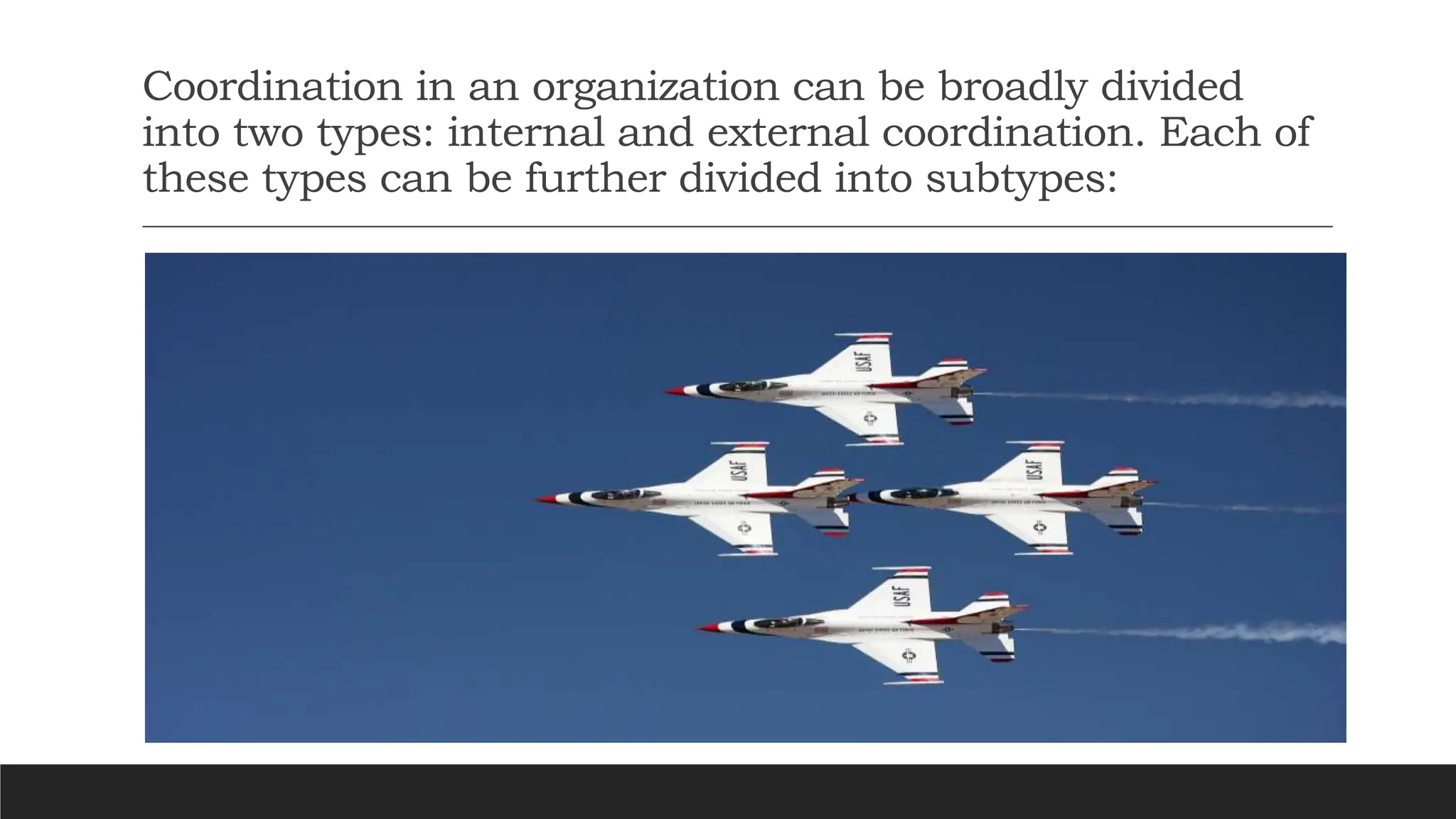
Coordination in an organization can be broadly divided
into two types: internal and external coordination. Each of
these types can be further divided into subtypes:
Internal Coordination.
1. Internal Coordination: This is about establishing a relationship between all the managers, executives,
departments, divisions, branches, and employees or workers. These relationships are established with a
view to coordinate the activities of the organization. Internal coordination has two groups:
Vertical Coordination: In vertical coordination, a superior authority coordinates his work with that of his
subordinates and vice versa. For example, a sales manager will coordinate his tasks with his sales
supervisors.
Horizontal Coordination: In horizontal coordination, employees of the same status establish a relationship
between them for better performance. For example, the coordination between department heads, or
supervisors, or co-workers, etc.
External Coordination.
2. External Coordination: As the name suggests, external coordination is all about establishing a
relationship between the employees of the organization and people outside it. These relationships
are established with a view to having a better understanding of outsiders like market agencies, public,
competitors, customers, government agencies, financial institutions, etc. Usually, organizations
entrust a Public Relations Officer (PRO) with the responsibility of establishing cordial relationships
between the employees of the organization and outsiders.
In addition to these, some sources also mention other types of coordination such as Procedural and
Substantive Coordination, Informal or Voluntary Coordination, Programmed Nonhuman Coordination,
and Matrix and Network Coordination. Each type of coordination plays a unique role and they
collectively contribute to the smooth functioning of an organization.

Coordination in an organization its types and factors

  • 1.
    Coordination in a organization. COORDINATION INAN INSTITUTION IS A CRUCIAL FUNCTION OF MANAGEMENT THAT ENSURES DIFFERENT DEPARTMENTS AND GROUPS WORK IN HARMONY. IT IS THE PROCESS BY WHICH A MANAGER SYNCHRONIZES THE ACTIVITIES OF DIFFERENT DEPARTMENTS. THIS SYNCHRONIZATION RESULTS IN UNITY OF ACTION AMONG THE EMPLOYEES, GROUPS, AND DEPARTMENTS. IT ALSO BRINGS HARMONY IN CARRYING OUT THE DIFFERENT TASKS AND ACTIVITIES TO ACHIEVE THE ORGANIZATION’S OBJECTIVES EFFICIENTLY.
  • 2.
    Coordination is theforce that binds all the other functions of management. It is the common thread that runs through all activities such as purchase, production, sales, and finance to ensure continuity in the working of the organization. In public policy research, coordination entails the presence of a shared result of the coordination process, for example, a common position or a shared public policy. Coordination involves the working together of actors to achieve shared policy goals and implies the political and social interaction of organizations. The dynamics of coordination in an institution can change over time as the income distribution within a population changes. Factors such as economic growth, government policies, and social changes can all affect the coordination. Despite its widespread use, coordination has been criticized for its limitations. One criticism is that it can have the same value for two different income distributions. This is because coordination only considers the relative income distribution and not the absolute income levels. In conclusion, coordination is a vital aspect of institutional management and public policy. It ensures the smooth functioning of various departments and groups within an institution, thereby facilitating the achievement of common goals and objectives. Despite its limitations, coordination continues to be a crucial tool in the study of institutional management and public policy.
  • 3.
    Coordination in anorganization can be broadly divided into two types: internal and external coordination. Each of these types can be further divided into subtypes:
  • 4.
    Internal Coordination. 1. InternalCoordination: This is about establishing a relationship between all the managers, executives, departments, divisions, branches, and employees or workers. These relationships are established with a view to coordinate the activities of the organization. Internal coordination has two groups: Vertical Coordination: In vertical coordination, a superior authority coordinates his work with that of his subordinates and vice versa. For example, a sales manager will coordinate his tasks with his sales supervisors. Horizontal Coordination: In horizontal coordination, employees of the same status establish a relationship between them for better performance. For example, the coordination between department heads, or supervisors, or co-workers, etc.
  • 5.
    External Coordination. 2. ExternalCoordination: As the name suggests, external coordination is all about establishing a relationship between the employees of the organization and people outside it. These relationships are established with a view to having a better understanding of outsiders like market agencies, public, competitors, customers, government agencies, financial institutions, etc. Usually, organizations entrust a Public Relations Officer (PRO) with the responsibility of establishing cordial relationships between the employees of the organization and outsiders. In addition to these, some sources also mention other types of coordination such as Procedural and Substantive Coordination, Informal or Voluntary Coordination, Programmed Nonhuman Coordination, and Matrix and Network Coordination. Each type of coordination plays a unique role and they collectively contribute to the smooth functioning of an organization.