Conventions of a soap opera trailer 
When researching into the conventions of a soap opera trailer I decided to observe 
products similar to the text I will be producing. 
In order to be able to do this I watched a trailer from 3 of the most popular soap operas: 
EastEnders, Coronation Street and Emmerdale. 
https://www.youtube.com/watch?v=VKbgDzox4FM 
https://www.youtube.com/watch?v=5vDuvkmOyXQ 
https://www.youtube.com/watch?v=sWyB6Nqfhv8 
https://www.youtube.com/watch?v=U8utOBfHCGo 
https://www.youtube.com/watch?v=SGXX2ubwoIU 
The main conventions I was looking for when watching these clips was: 
-characters 
-props 
-facial expressions 
-body language 
-music/soundtrack/voice over 
-length of shot 
http://prezi.com/0kxwnqwimj_f/codes-and-conventions-of-a-soap-opera-trailer/
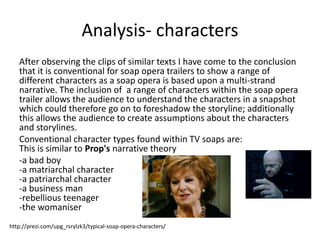
Analysis- characters 
After observing the clips of similar texts I have come to the conclusion 
that it is conventional for soap opera trailers to show a range of 
different characters as a soap opera is based upon a multi-strand 
narrative. The inclusion of a range of characters within the soap opera 
trailer allows the audience to understand the characters in a snapshot 
which could therefore go on to foreshadow the storyline; additionally 
this allows the audience to create assumptions about the characters 
and storylines. 
Conventional character types found within TV soaps are: 
This is similar to Prop's narrative theory 
-a bad boy 
-a matriarchal character 
-a patriarchal character 
-a business man 
-rebellious teenager 
-the womaniser 
http://prezi.com/upg_rsrylzk3/typical-soap-opera-characters/
Costume and Props 
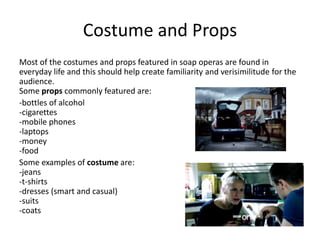
Most of the costumes and props featured in soap operas are found in 
everyday life and this should help create familiarity and verisimilitude for the 
audience. 
Some props commonly featured are: 
-bottles of alcohol 
-cigarettes 
-mobile phones 
-laptops 
-money 
-food 
Some examples of costume are: 
-jeans 
-t-shirts 
-dresses (smart and casual) 
-suits 
-coats
Facial expressions 
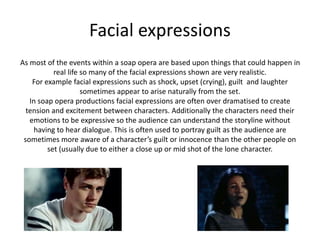
As most of the events within a soap opera are based upon things that could happen in 
real life so many of the facial expressions shown are very realistic. 
For example facial expressions such as shock, upset (crying), guilt and laughter 
sometimes appear to arise naturally from the set. 
In soap opera productions facial expressions are often over dramatised to create 
tension and excitement between characters. Additionally the characters need their 
emotions to be expressive so the audience can understand the storyline without 
having to hear dialogue. This is often used to portray guilt as the audience are 
sometimes more aware of a character’s guilt or innocence than the other people on 
set (usually due to either a close up or mid shot of the lone character.
Body language 
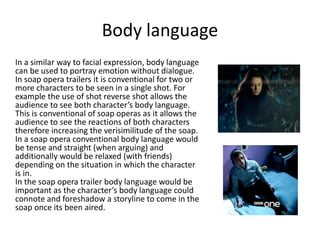
In a similar way to facial expression, body language 
can be used to portray emotion without dialogue. 
In soap opera trailers it is conventional for two or 
more characters to be seen in a single shot. For 
example the use of shot reverse shot allows the 
audience to see both character’s body language. 
This is conventional of soap operas as it allows the 
audience to see the reactions of both characters 
therefore increasing the verisimilitude of the soap. 
In a soap opera conventional body language would 
be tense and straight (when arguing) and 
additionally would be relaxed (with friends) 
depending on the situation in which the character 
is in. 
In the soap opera trailer body language would be 
important as the character’s body language could 
connote and foreshadow a storyline to come in the 
soap once its been aired.
Music/soundtrack/voiceover 
It is conventional for soap opera trailers to include a soundtrack that fits the genre 
of their production. The soundtrack is often chosen according to the themes 
included in the trailer. 
In most cases it is conventional for a soap opera trailer to contain a soundtrack 
that creates drama and tension as this attracts the target audience and can 
foreshadow events within the soap. 
It is also conventional for the soap opera trailer to contain some form of voice over. 
As a lot of soundtracks used include lyrics it is not always necessary for the trailer 
to include dialogue. However I have noticed that a voiceover at the end of the 
trailer is conventional. These are usually recorded in a male voice and inform the 
audience on date, time and channel that the new soap opera will be shown on.
Themes 
There are a range of themes used within soap operas and 
the trailer needs to show the most appealing themes to the 
target audience they have selected. 
Some themes include: 
Birth 
Marriage 
I found that the most conventional themes 
death 
within a soap opera were the themes that 
Illness 
best reflected real life. 
divorce 
This is in the hope that the audience will 
hatred 
be able to relate to the soap opera making 
love 
it more likely for it to be successful. 
revenge 
friendship 
relationships
Length of shot and shot type 
In soap opera trailers it is conventional for each shot to only remain for a shot to 
remain on screen for maximum of a few seconds. The fast pace camera work 
creates suspense and tension which is likely to intrigue the audience, making it 
more likely that they watch the new soap. 
Conventionally soap opera trailers use shot reverse shot, mid shots and close up 
shots the most regularly. This is conventional of soap operas as the audience need 
to feel familiar with the characters in order to relate. The use of these 3 shots 
portrays the character’s facial expressions the best and therefore producers tend 
to use these making them conventional of soap opera trailers. 
In particular the use of these 3 shots in a trailer is important because the audience 
need to be exposed to a proportion of the characters in order for them to want to 
watch the production. 
Lastly it is conventional for an establishing shot to be used in the trailer to give the 
audience an idea of settings included in order for them to be able to relate.
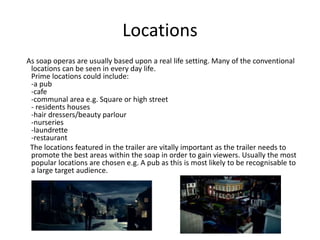
Locations 
As soap operas are usually based upon a real life setting. Many of the conventional 
locations can be seen in every day life. 
Prime locations could include: 
-a pub 
-cafe 
-communal area e.g. Square or high street 
- residents houses 
-hair dressers/beauty parlour 
-nurseries 
-laundrette 
-restaurant 
The locations featured in the trailer are vitally important as the trailer needs to 
promote the best areas within the soap in order to gain viewers. Usually the most 
popular locations are chosen e.g. A pub as this is most likely to be recognisable to 
a large target audience.
References 
http://www.bbc.co.uk/dna/place-london/ 
plain/A1087193 
http://prezi.com/upg_rsrylzk3/typical-soap-opera- 
characters/ 
http://prezi.com/0kxwnqwimj_f/codes-and-conventions- 
of-a-soap-opera-trailer/

Conventions of a soap opera trailer task 2

  • 1.
    Conventions of asoap opera trailer When researching into the conventions of a soap opera trailer I decided to observe products similar to the text I will be producing. In order to be able to do this I watched a trailer from 3 of the most popular soap operas: EastEnders, Coronation Street and Emmerdale. https://www.youtube.com/watch?v=VKbgDzox4FM https://www.youtube.com/watch?v=5vDuvkmOyXQ https://www.youtube.com/watch?v=sWyB6Nqfhv8 https://www.youtube.com/watch?v=U8utOBfHCGo https://www.youtube.com/watch?v=SGXX2ubwoIU The main conventions I was looking for when watching these clips was: -characters -props -facial expressions -body language -music/soundtrack/voice over -length of shot http://prezi.com/0kxwnqwimj_f/codes-and-conventions-of-a-soap-opera-trailer/
  • 2.
    Analysis- characters Afterobserving the clips of similar texts I have come to the conclusion that it is conventional for soap opera trailers to show a range of different characters as a soap opera is based upon a multi-strand narrative. The inclusion of a range of characters within the soap opera trailer allows the audience to understand the characters in a snapshot which could therefore go on to foreshadow the storyline; additionally this allows the audience to create assumptions about the characters and storylines. Conventional character types found within TV soaps are: This is similar to Prop's narrative theory -a bad boy -a matriarchal character -a patriarchal character -a business man -rebellious teenager -the womaniser http://prezi.com/upg_rsrylzk3/typical-soap-opera-characters/
  • 3.
    Costume and Props Most of the costumes and props featured in soap operas are found in everyday life and this should help create familiarity and verisimilitude for the audience. Some props commonly featured are: -bottles of alcohol -cigarettes -mobile phones -laptops -money -food Some examples of costume are: -jeans -t-shirts -dresses (smart and casual) -suits -coats
  • 4.
    Facial expressions Asmost of the events within a soap opera are based upon things that could happen in real life so many of the facial expressions shown are very realistic. For example facial expressions such as shock, upset (crying), guilt and laughter sometimes appear to arise naturally from the set. In soap opera productions facial expressions are often over dramatised to create tension and excitement between characters. Additionally the characters need their emotions to be expressive so the audience can understand the storyline without having to hear dialogue. This is often used to portray guilt as the audience are sometimes more aware of a character’s guilt or innocence than the other people on set (usually due to either a close up or mid shot of the lone character.
  • 5.
    Body language Ina similar way to facial expression, body language can be used to portray emotion without dialogue. In soap opera trailers it is conventional for two or more characters to be seen in a single shot. For example the use of shot reverse shot allows the audience to see both character’s body language. This is conventional of soap operas as it allows the audience to see the reactions of both characters therefore increasing the verisimilitude of the soap. In a soap opera conventional body language would be tense and straight (when arguing) and additionally would be relaxed (with friends) depending on the situation in which the character is in. In the soap opera trailer body language would be important as the character’s body language could connote and foreshadow a storyline to come in the soap once its been aired.
  • 6.
    Music/soundtrack/voiceover It isconventional for soap opera trailers to include a soundtrack that fits the genre of their production. The soundtrack is often chosen according to the themes included in the trailer. In most cases it is conventional for a soap opera trailer to contain a soundtrack that creates drama and tension as this attracts the target audience and can foreshadow events within the soap. It is also conventional for the soap opera trailer to contain some form of voice over. As a lot of soundtracks used include lyrics it is not always necessary for the trailer to include dialogue. However I have noticed that a voiceover at the end of the trailer is conventional. These are usually recorded in a male voice and inform the audience on date, time and channel that the new soap opera will be shown on.
  • 7.
    Themes There area range of themes used within soap operas and the trailer needs to show the most appealing themes to the target audience they have selected. Some themes include: Birth Marriage I found that the most conventional themes death within a soap opera were the themes that Illness best reflected real life. divorce This is in the hope that the audience will hatred be able to relate to the soap opera making love it more likely for it to be successful. revenge friendship relationships
  • 8.
    Length of shotand shot type In soap opera trailers it is conventional for each shot to only remain for a shot to remain on screen for maximum of a few seconds. The fast pace camera work creates suspense and tension which is likely to intrigue the audience, making it more likely that they watch the new soap. Conventionally soap opera trailers use shot reverse shot, mid shots and close up shots the most regularly. This is conventional of soap operas as the audience need to feel familiar with the characters in order to relate. The use of these 3 shots portrays the character’s facial expressions the best and therefore producers tend to use these making them conventional of soap opera trailers. In particular the use of these 3 shots in a trailer is important because the audience need to be exposed to a proportion of the characters in order for them to want to watch the production. Lastly it is conventional for an establishing shot to be used in the trailer to give the audience an idea of settings included in order for them to be able to relate.
  • 9.
    Locations As soapoperas are usually based upon a real life setting. Many of the conventional locations can be seen in every day life. Prime locations could include: -a pub -cafe -communal area e.g. Square or high street - residents houses -hair dressers/beauty parlour -nurseries -laundrette -restaurant The locations featured in the trailer are vitally important as the trailer needs to promote the best areas within the soap in order to gain viewers. Usually the most popular locations are chosen e.g. A pub as this is most likely to be recognisable to a large target audience.
  • 10.
    References http://www.bbc.co.uk/dna/place-london/ plain/A1087193 http://prezi.com/upg_rsrylzk3/typical-soap-opera- characters/ http://prezi.com/0kxwnqwimj_f/codes-and-conventions- of-a-soap-opera-trailer/