CHAPTER - 7
CONTROL AND COORDINATION
Subject : SCIENC – X
Teacher : Mr. H.G.S VERMA
School : KV UMARIA
Stimuli :-
The changes in the environment to which living organisms respond are
called stimuli. (singlar – stimulus)
Eg :- heat, cold, sound, smell, taste, touch, pressure, gravity, water etc.
Living organisms respond to stimuli in the form of body movements.
Coordination :-
For a proper response to a stimulus many organs in the body should
work together. The working together of various organs in an organism
to produce a proper response to a stimulus is called coordination.
i) In animals control and co ordination is done by the nervous system
and endocrine system.
There are two types of control and coordination: Chemical/ Harmonal and
Nervous control and coordination.
ii) In plants control and co ordination is done by chemical substances
called plant hormones or phytohormones.
Control Nervous Harmonal
Type of signal
Electrical (chemical at
synapses)
Chemical
Transmission of
signal
By nerve cells
(neurones)
By the bloodstream
Effectors Muscles or glands
Target cells in particular
tissues
Type of response
Muscle contraction or
secretion
Chemical change
Speed of
response
Very rapid Slower
Duration of
response
Short (until nerve
impulses stop)
Long (until hormone is
broken down)
Difference
Coordination in animals :-
In animals control and co ordination is done by the nervous system and
endocrine system.
The nervous system consists of the brain, spinal cord and nerves.
a) Receptors :- are the sense organs which receive the stimuli and
pass the message to the brain or spinal cord through the sensory
nerves.
Eg :- Photoreceptors in the eyes to detect light.
Phonoreceptors in the ears to detect sound.
Olfactory receptors in the nose to detect smell.
Gustatory receptors in the tongue to detect taste.
Tangoreceptors in the skin to detect touch.
b) Effectors :- are the muscles and glands which respond to the
information from the brain and spinal cord through the motor nerves.
c) Sensory nerves :- are nerves which carry information from the
receptors (sense organs) to the brain and spinal cord.
d) Motor nerves :- are nerves which carry information from the brain
and spinal cord to the effectors (muscles and glands).
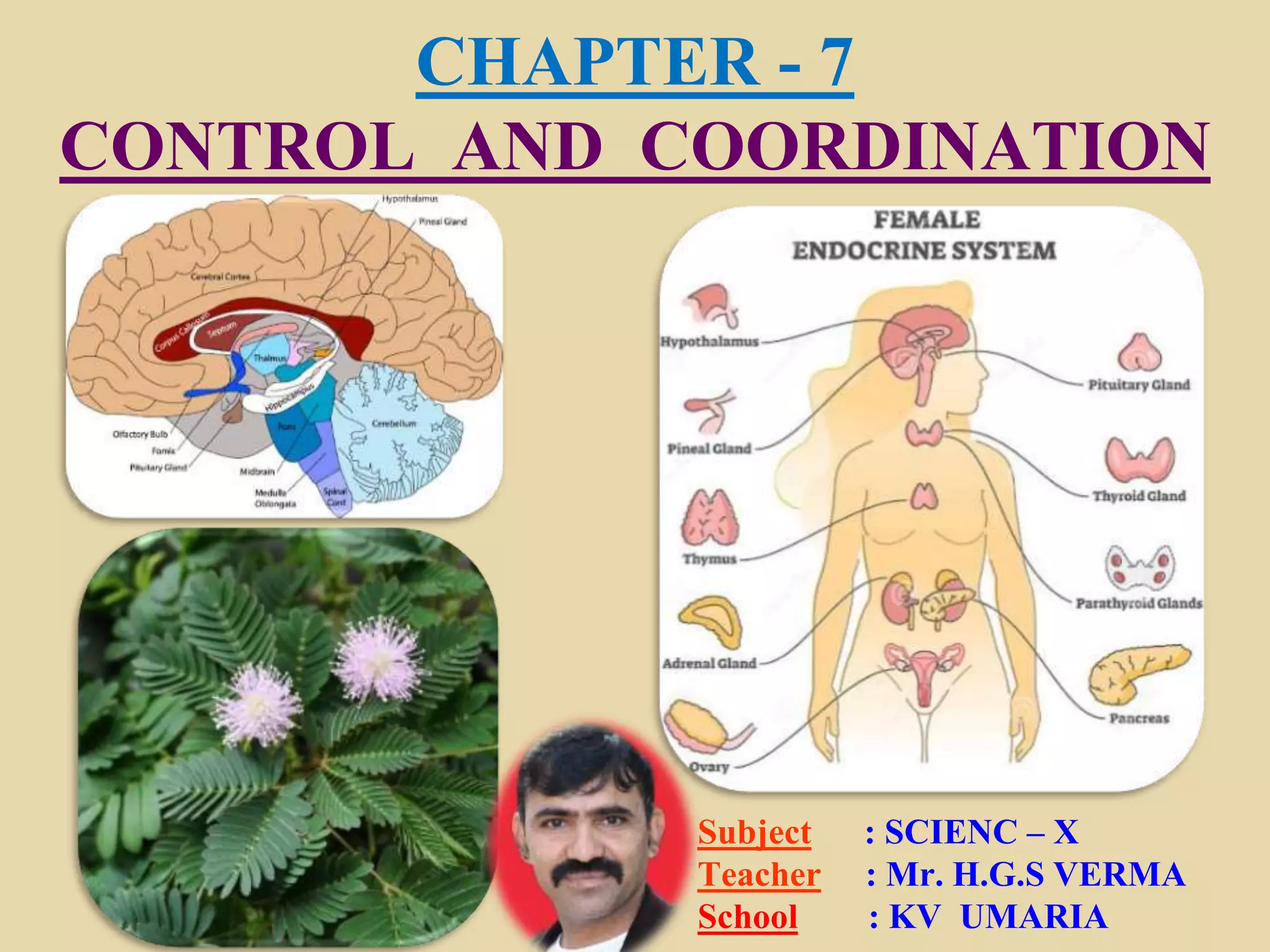
HUMAN NERVOUS SYSTEM
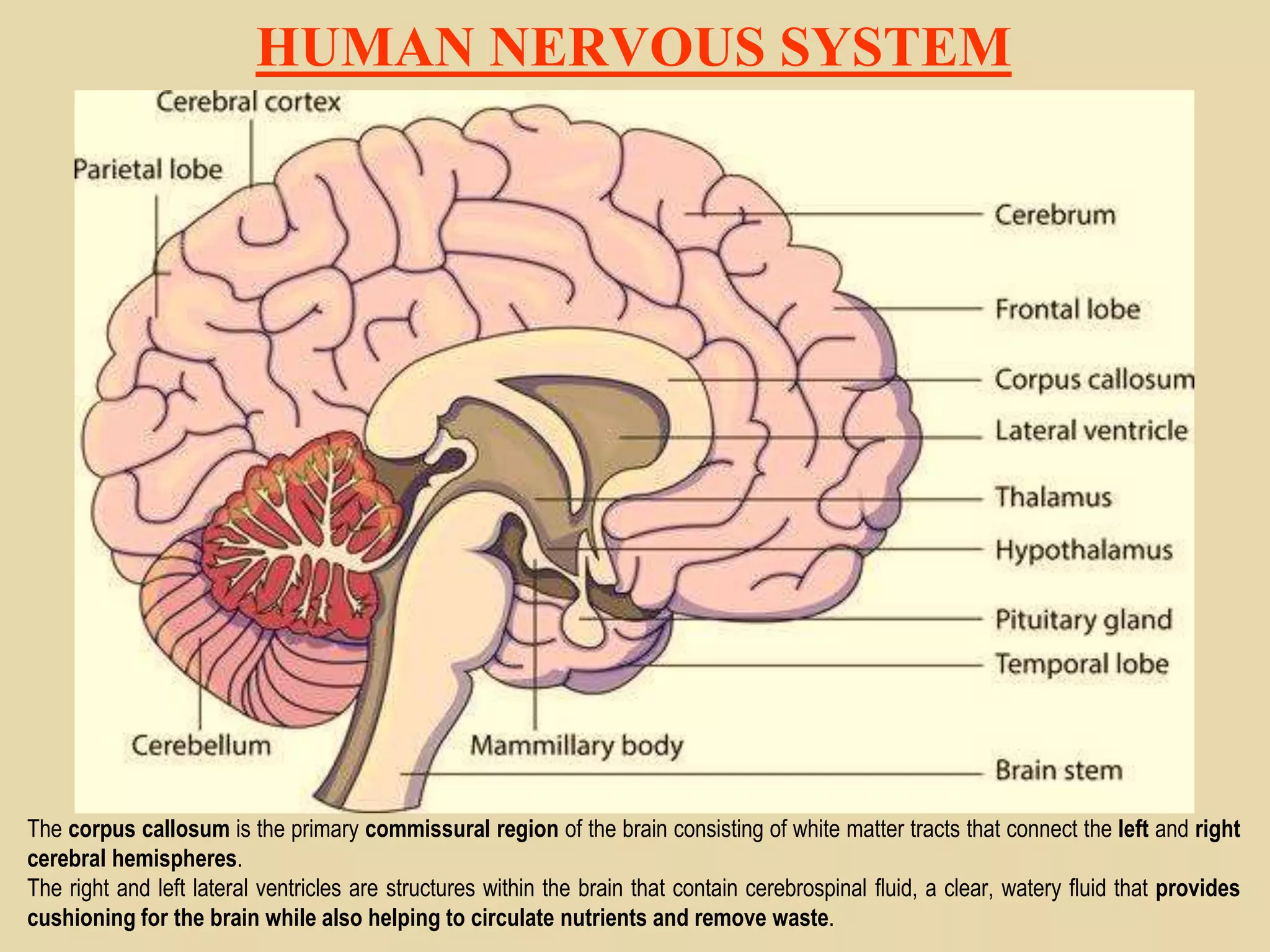
The corpus callosum is the primary commissural region of the brain consisting of white matter tracts that connect the left and right
cerebral hemispheres.
The right and left lateral ventricles are structures within the brain that contain cerebrospinal fluid, a clear, watery fluid that provides
cushioning for the brain while also helping to circulate nutrients and remove waste.
HUMAN NERVOUS
SYSTEM
3) Human nervous system :-
a) Parts of the nervous system :-
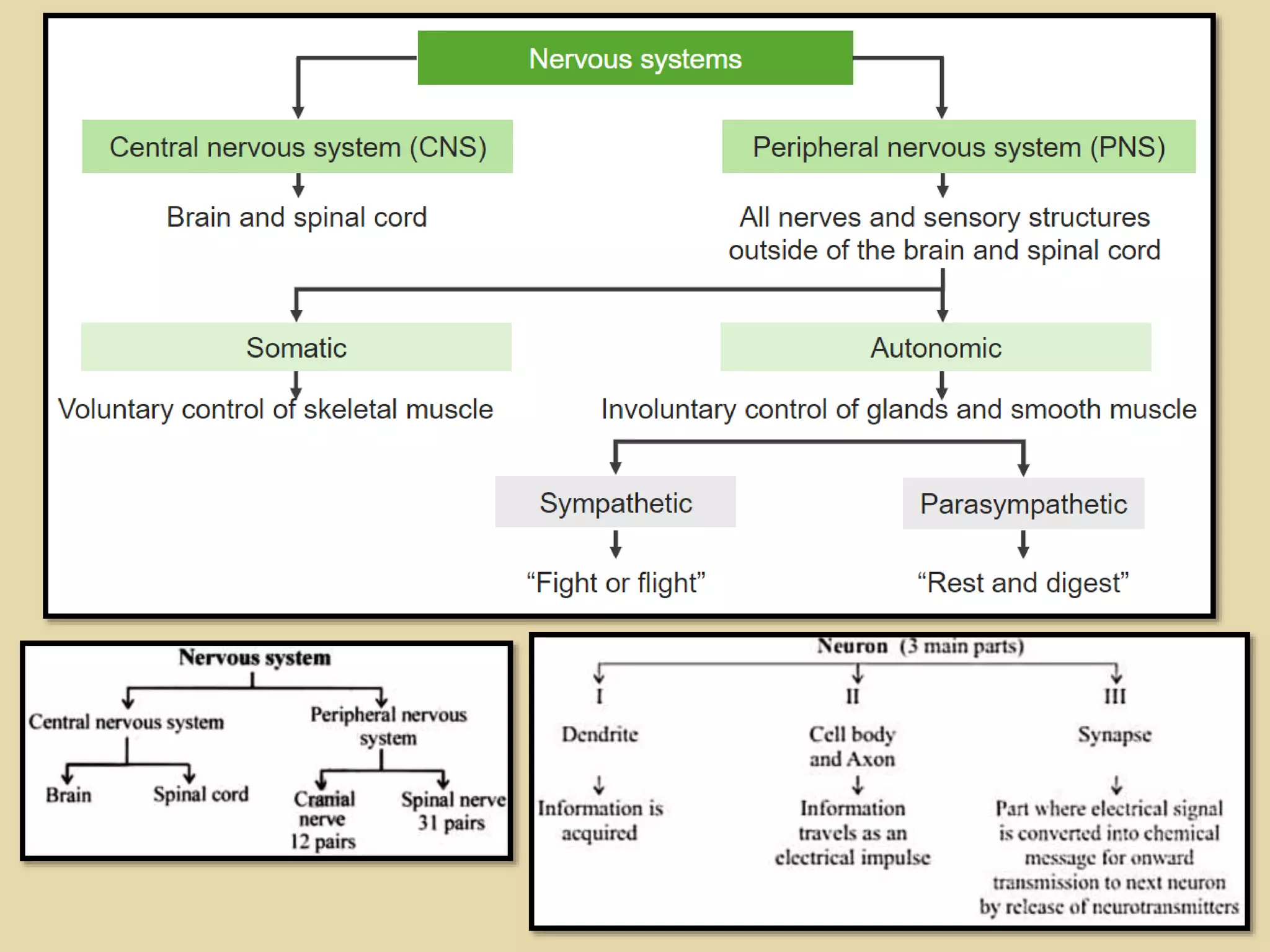
The human nervous system consists of the Central Nervous System
and Peripheral Nervous System.
i) The central nervous system :- consists of the brain, and spinal
cord.
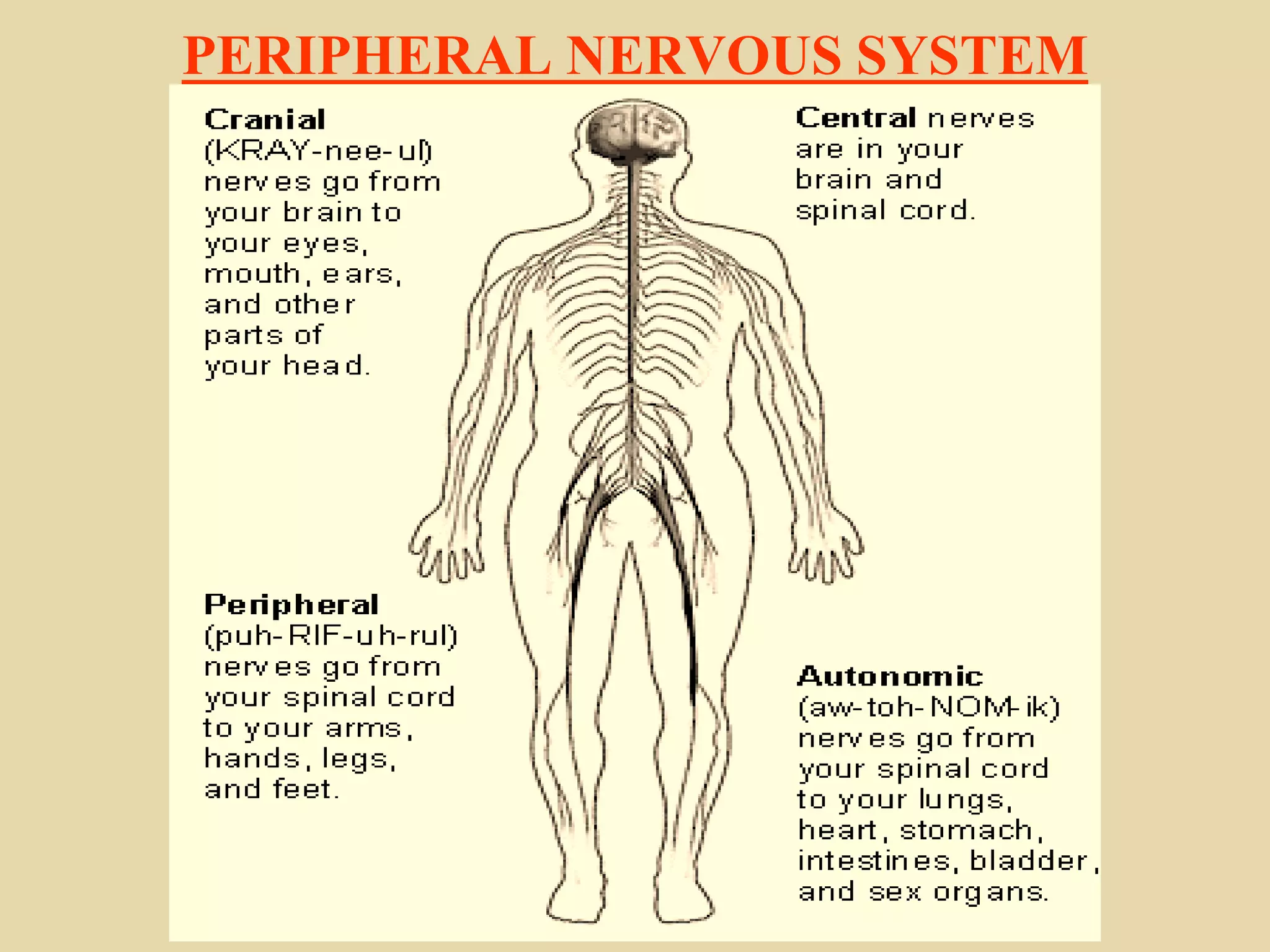
ii) The peripheral nervous system:- consists of cranial nerves
arising from the brain and spinal nerves arising from the spinal cord.
PERIPHERAL NERVOUS SYSTEM
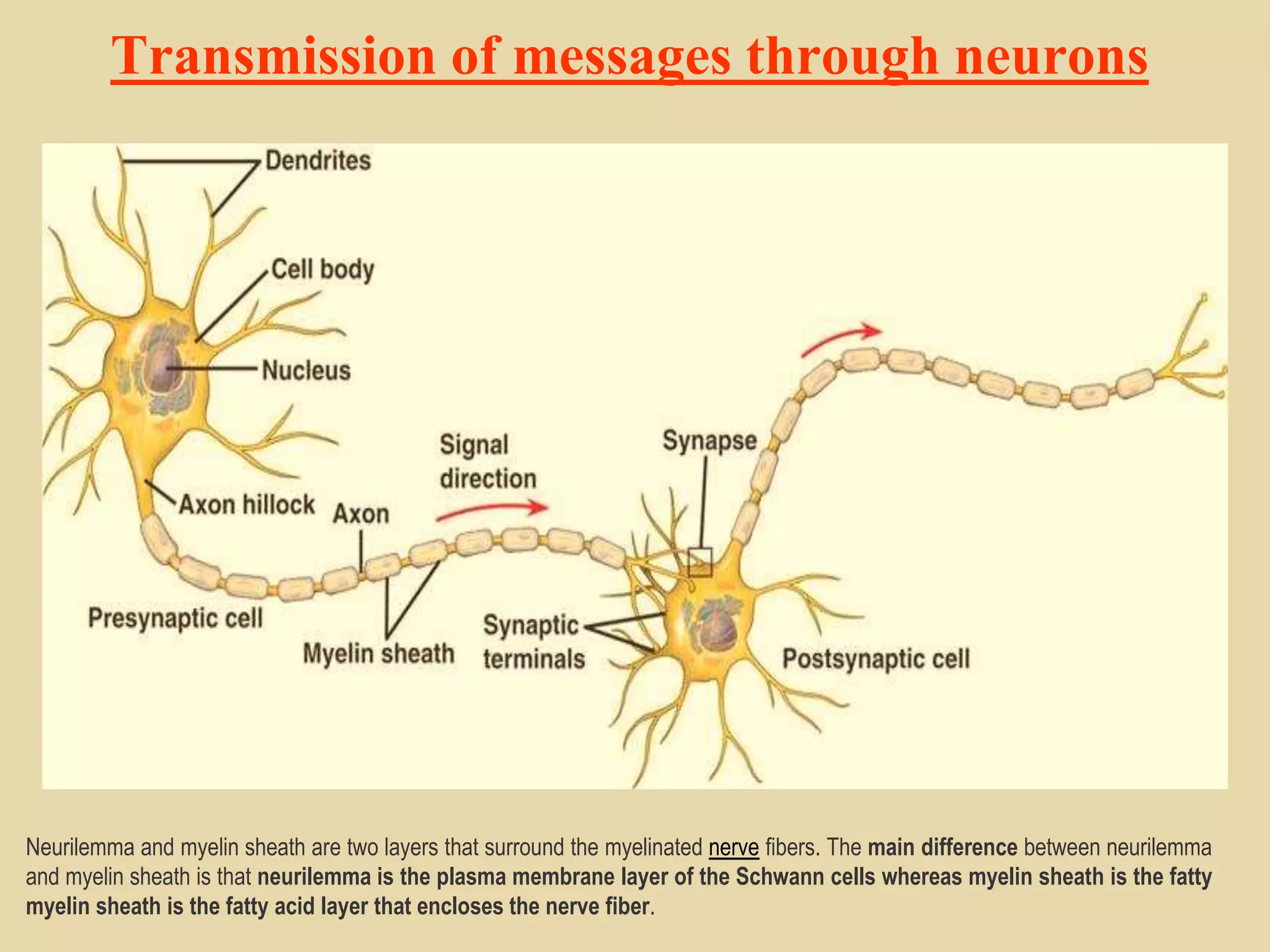
b) Nerve cell (Neuron) :-
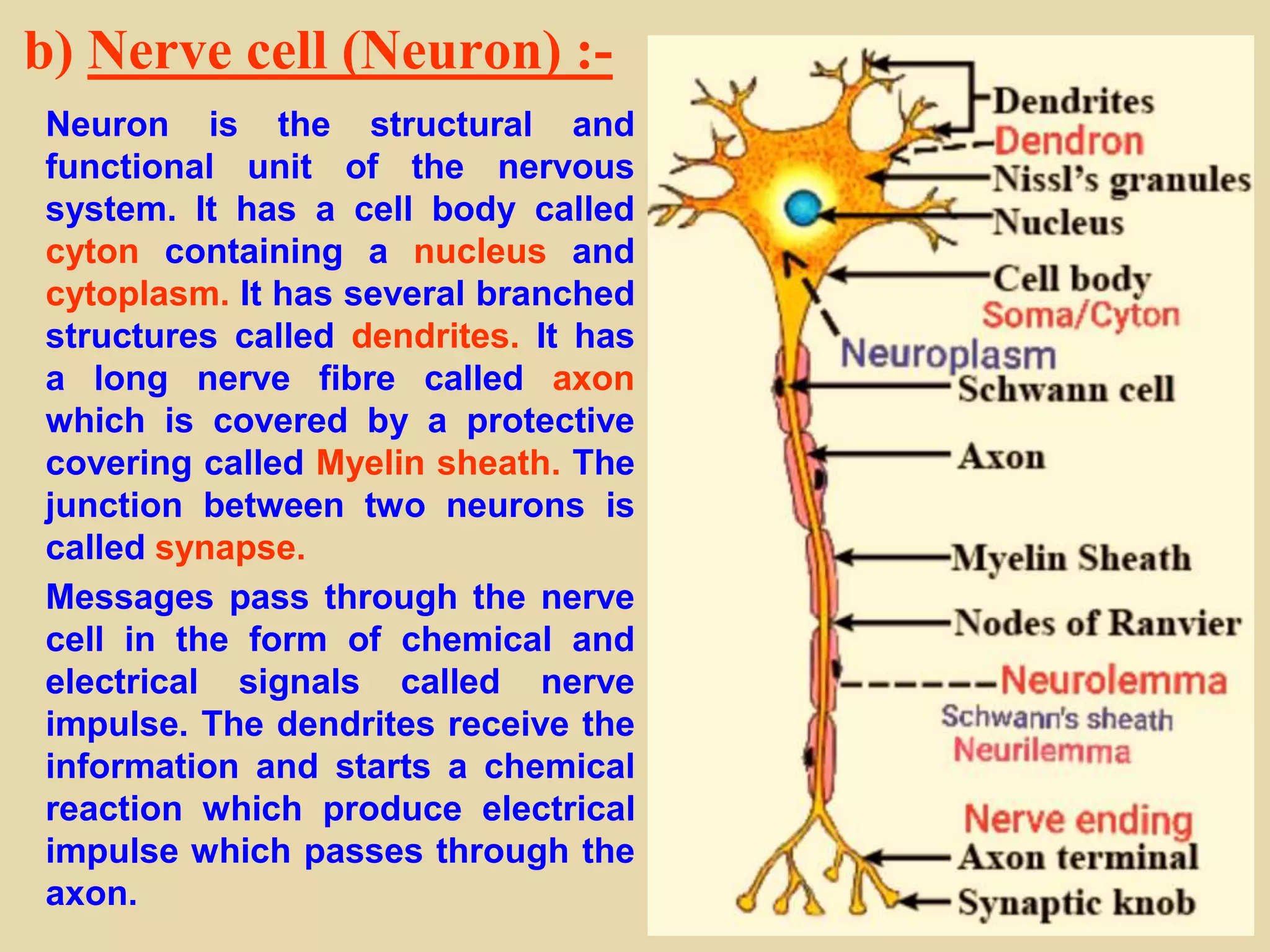
Neuron is the structural and
functional unit of the nervous
system. It has a cell body called
cyton containing a nucleus and
cytoplasm. It has several branched
structures called dendrites. It has
a long nerve fibre called axon
which is covered by a protective
covering called Myelin sheath. The
junction between two neurons is
called synapse.
Messages pass through the nerve
cell in the form of chemical and
electrical signals called nerve
impulse. The dendrites receive the
information and starts a chemical
reaction which produce electrical
impulse which passes through the
axon.
Transmission of messages through neurons
Neurilemma and myelin sheath are two layers that surround the myelinated nerve fibers. The main difference between neurilemma
and myelin sheath is that neurilemma is the plasma membrane layer of the Schwann cells whereas myelin sheath is the fatty
myelin sheath is the fatty acid layer that encloses the nerve fiber.
c) Brain :-
The brain is the main coordinating centre in the human body. It is
protected by the cranium. It is covered by three membranes called
meninges filled with a fluid called cerebrospinal fluid which protects the
brain from shocks.
The brain has three main parts. They are fore brain, mid brain and hind
brain.
i) Fore brain :- consists of the cerebrum and olfactory lobes. It is the
thinking part of the brain and controls voluntary actions. It controls
touch, smell, hearing, taste, sight, mental activities like thinking,
learning, memory, emotions etc.
ii) Mid brain :- controls involuntary actions and reflex movements of
head, neck, eyes etc.
iii) Hind brain :- consists of cerebellum, pons and medulla.
Cerebellum :- controls body movements, balance and posture.
Pons :- controls respiration.
Medulla :- controls heart beat, blood pressure, swallowing, coughing,
sneezing, vomitting etc.
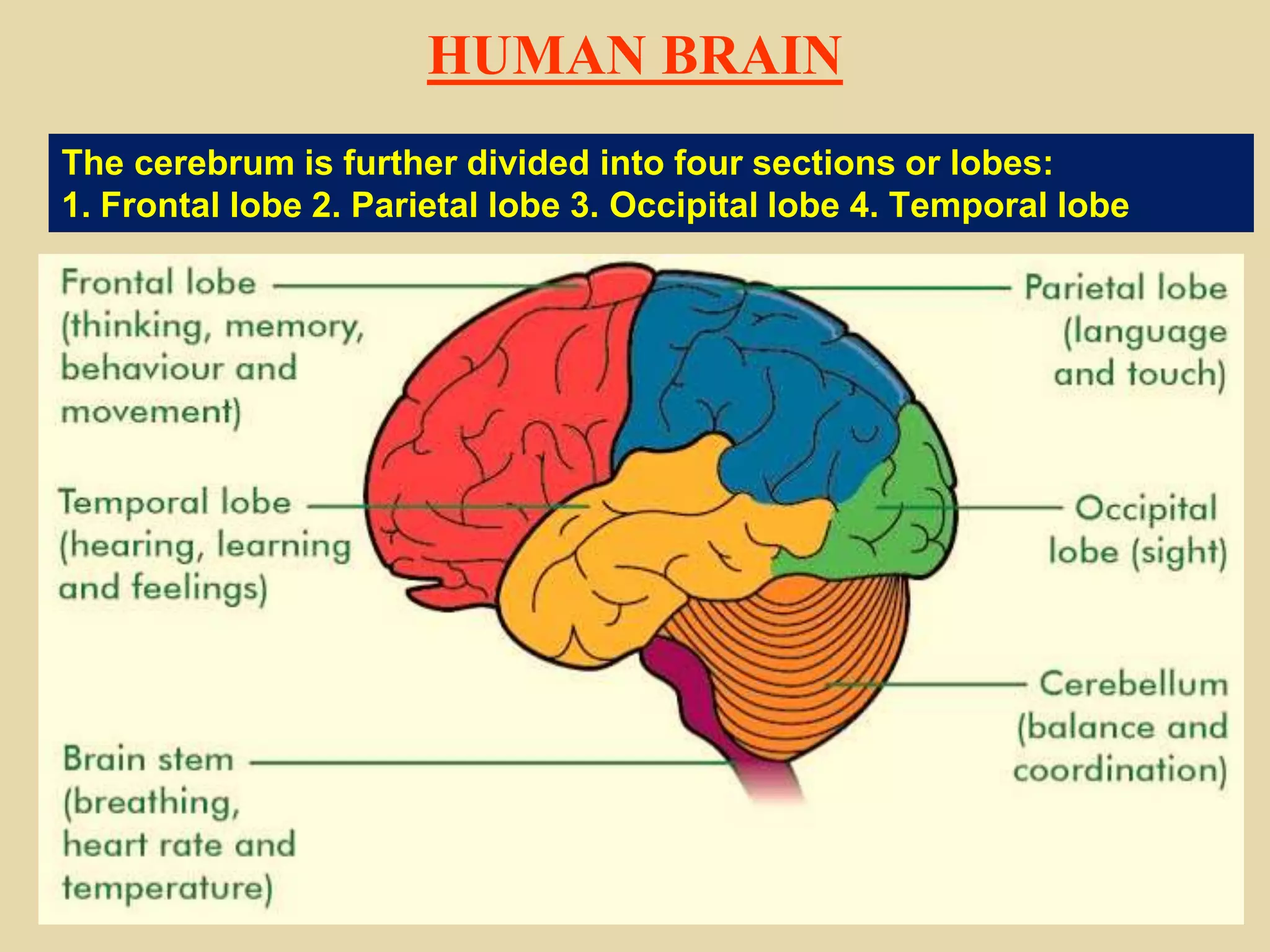
HUMAN BRAIN
Your cerebral cortex is the outer layer that lies on top of your cerebrum. Your cerebrum is the largest area of your brain. Your
cerebrum divides your brain into two halves called hemispheres. The hemispheres are attached by a bundle of nerve fibers called the
corpus callosum.
The mammillary bodies are brainstem nuclei on the posteroinferior aspect of the hypothalamus. There are 2 mammillary bodies
on either side of the midline. The primary function associated with the mammillary bodies is recollective memory.
HUMAN BRAIN
HUMAN BRAIN
The cerebrum is further divided into four sections or lobes:
1. Frontal lobe 2. Parietal lobe 3. Occipital lobe 4. Temporal lobe
HUMAN BRAIN
HUMAN BRAIN
d) Spinal cord :-
The spinal cord starts from the brain and extends through the
vertebral column. It has 31 pairs of spinal nerves.
It carries messages to and from the brain. It also controls reflex
actions.
Cranial nerves arising from the brain are 12 pairs.
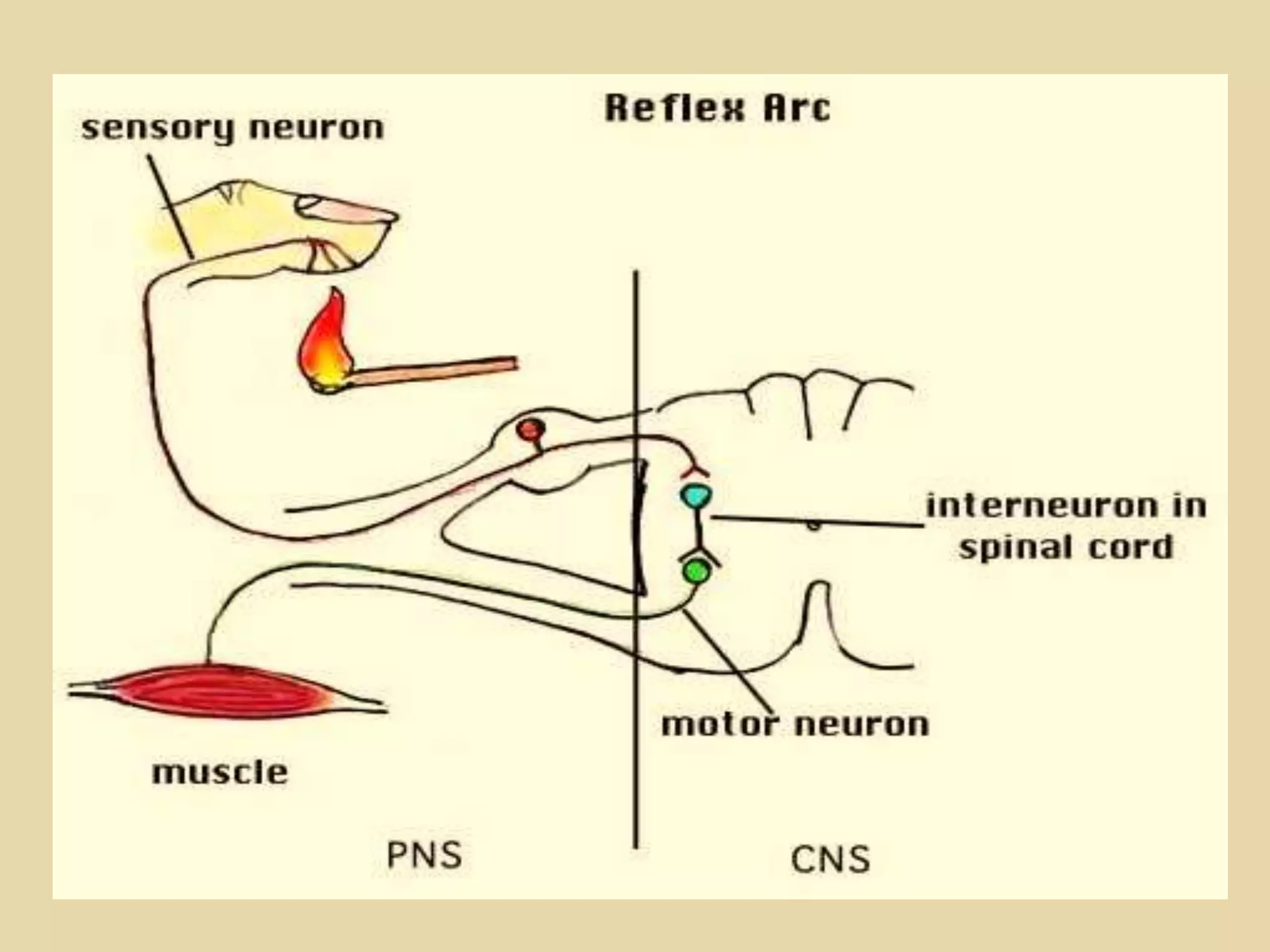
4a) Reflex action :-
Reflex action is a sudden, unconcious and involuntary response of the
effectors to a stimulus.
Eg :- We suddenly withdraw our hand if we suddenly touch a hot
object.
In this reflex action, the nerves in the skin (receptor) detects the heat
and passes the message through the sensory nerves to the spinal
cord. Then the information passes through the motor nerves to the
muscles (effector) of the hand and we withdraw our hand.
REFLEX ACTION
b) Reflex arc :-
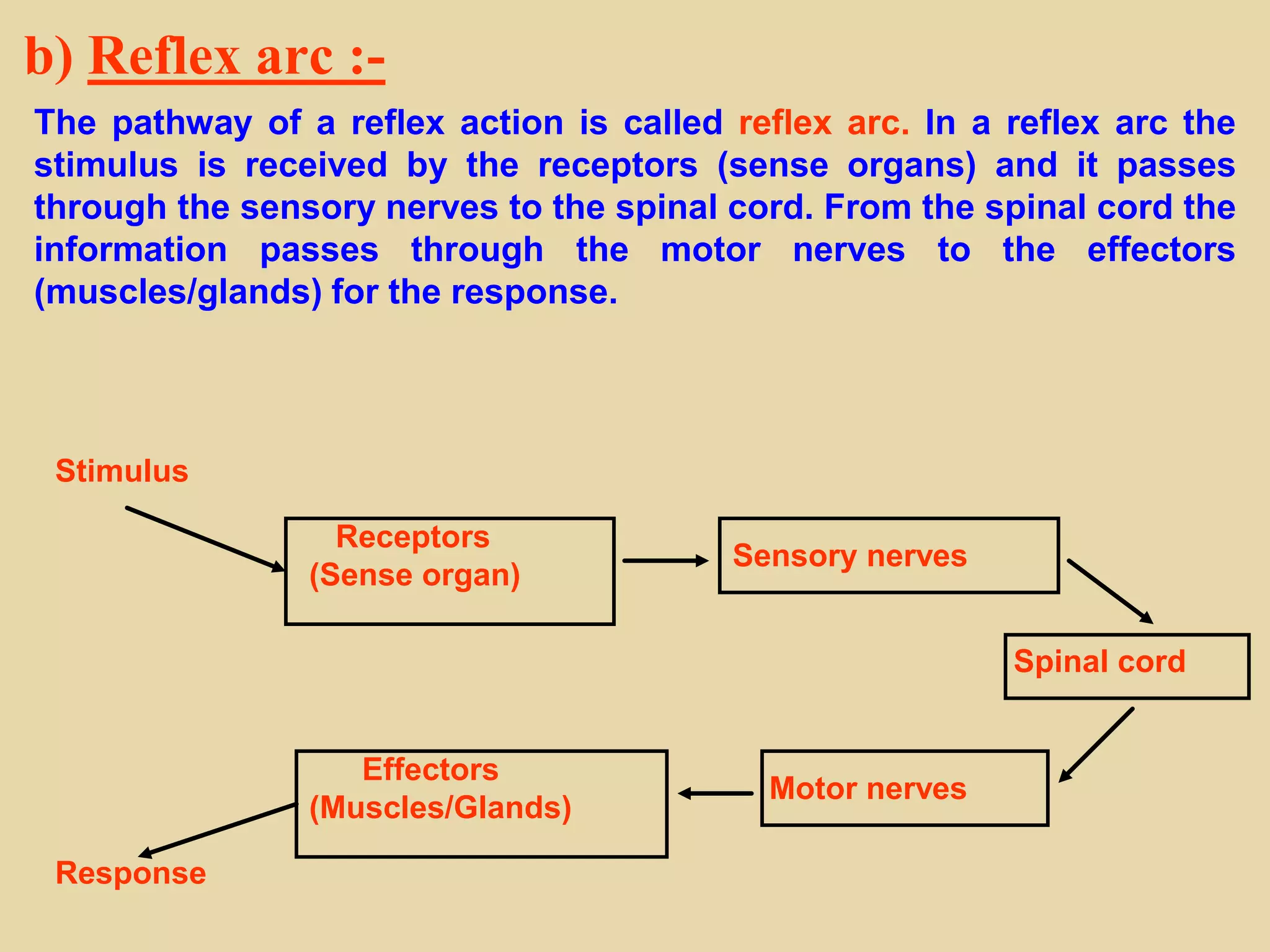
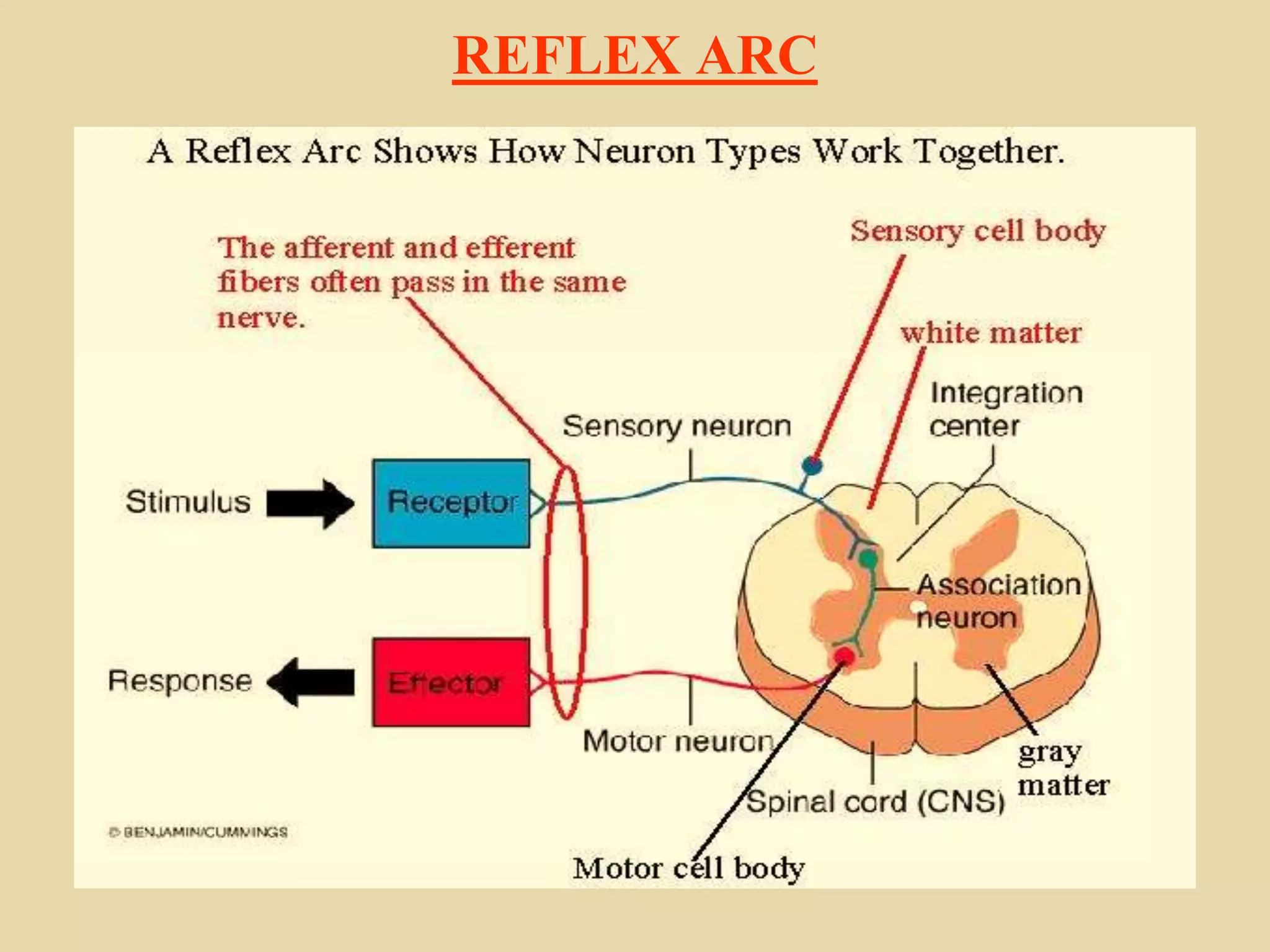
The pathway of a reflex action is called reflex arc. In a reflex arc the
stimulus is received by the receptors (sense organs) and it passes
through the sensory nerves to the spinal cord. From the spinal cord the
information passes through the motor nerves to the effectors
(muscles/glands) for the response.
Stimulus
Response
Receptors
(Sense organ)
Effectors
(Muscles/Glands)
Sensory nerves
Motor nerves
Spinal cord
REFLEX ARC
5) Coordination in plants :-
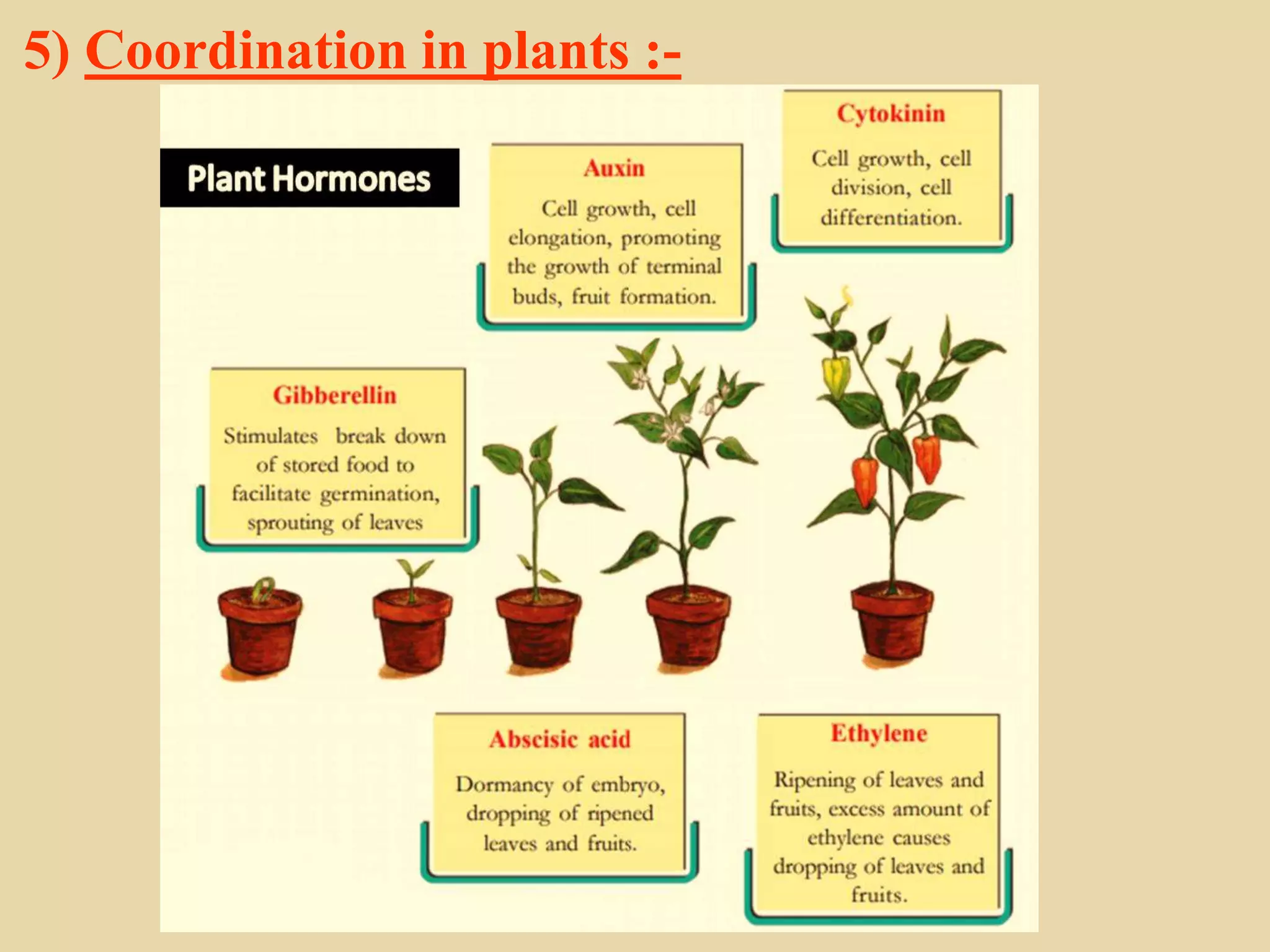
In plants control and coordination is done by chemical substances
called plant hormones or phytohormones.
There are five main types of plant hormones. They are :-
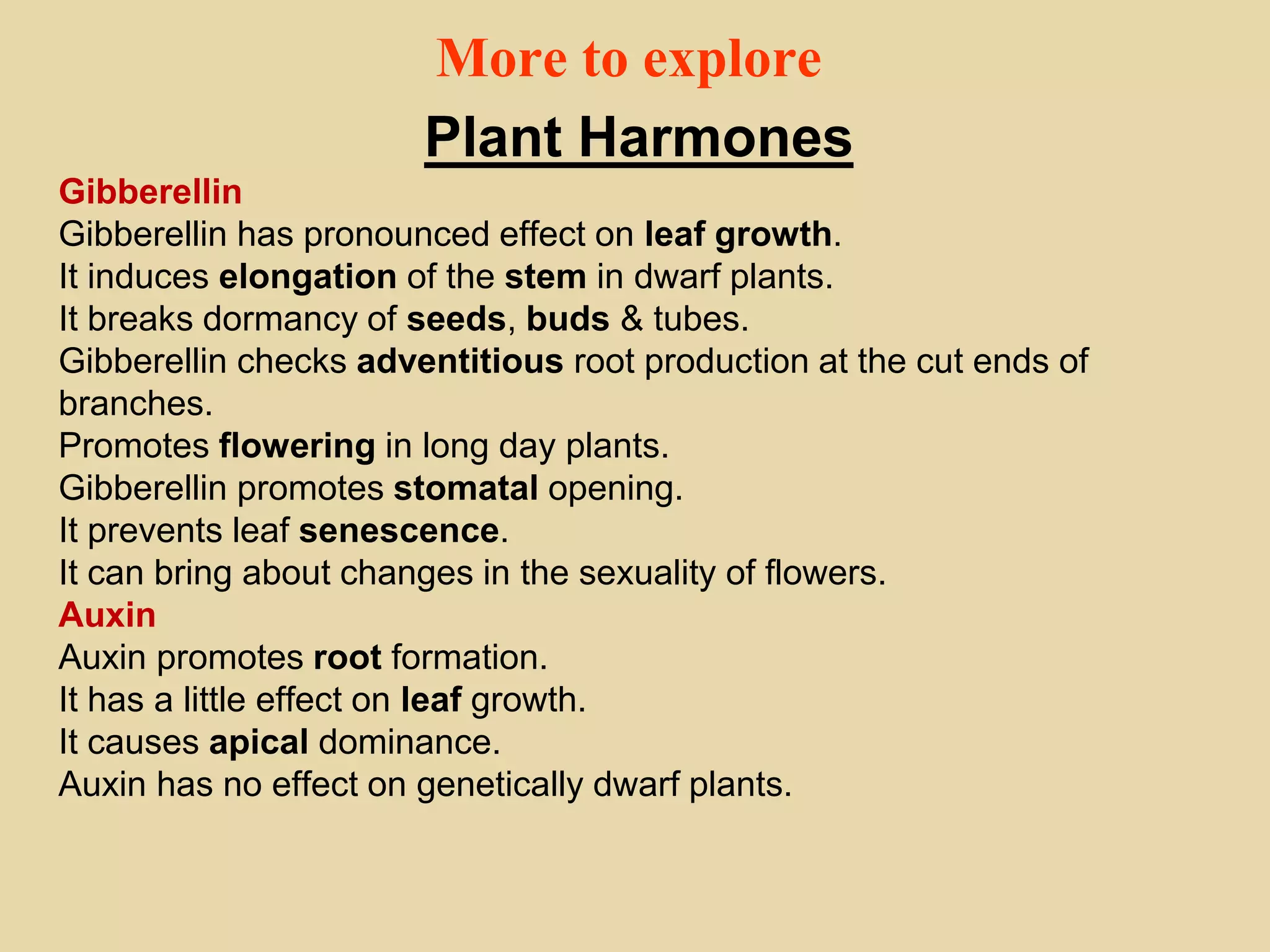
Auxins, Gibberillins, Cytokinins, Abscisic acid and Ethylene.
i) Auxins :- help in cell division, cell elongation and growth.
ii) Gibberillins :- help in growth of stem and branches.
iii) Cytokinins:- help in cell division, formation of fruits and seeds.
iv) Abscisic acid :- inhibits growth and affects wilting of leaves.
vi) Ethylene :- helps in flowering and ripening of fruits.
6) Movements in plants :-
Movements in plants are of two main types. They are:-Tropic movements and
Nastic movements.
a) Tropic movements:- are directional movements towards or away from the
stimulus and it depends on growth. They are of different types like
Phototropism, Geotropism, Chemotropism,
Hydrotropism etc.
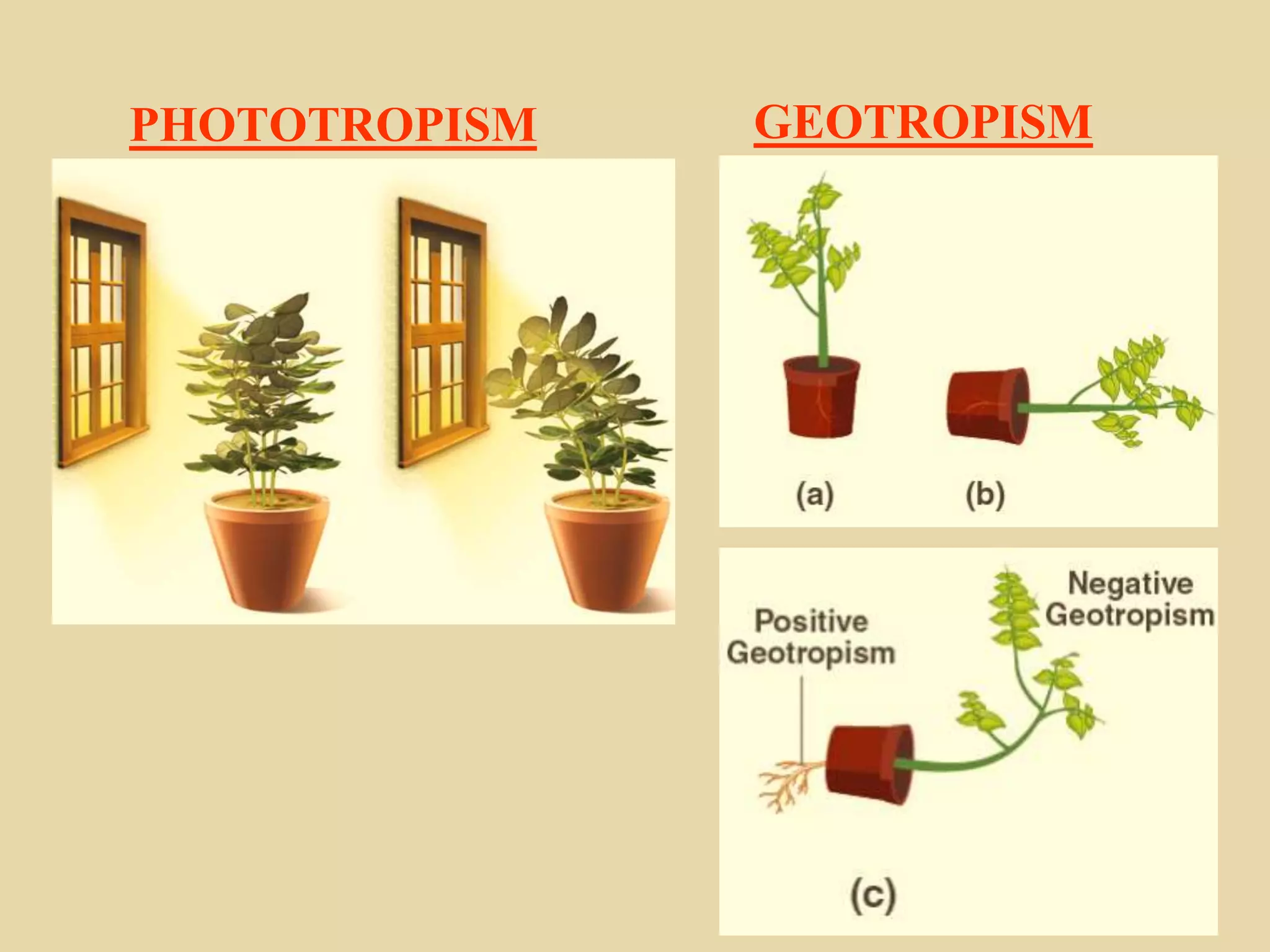
i) Phototropism:- is movement of plants in response to light. If it is towards
light, it is called positive phototropism. Eg:- Bending of shoot towards light. If it
is away from light, it is called negative phototropism. Eg:- Bending of root away
from light.
ii) Geotropism:- is the movement of plants in response to gravity. If it is
towards gravity it is called positive geotropism. Eg:- Downward growth of
roots. If it is away from gravity it is called negative geotropism. Eg:- Upward
growth of shoot.
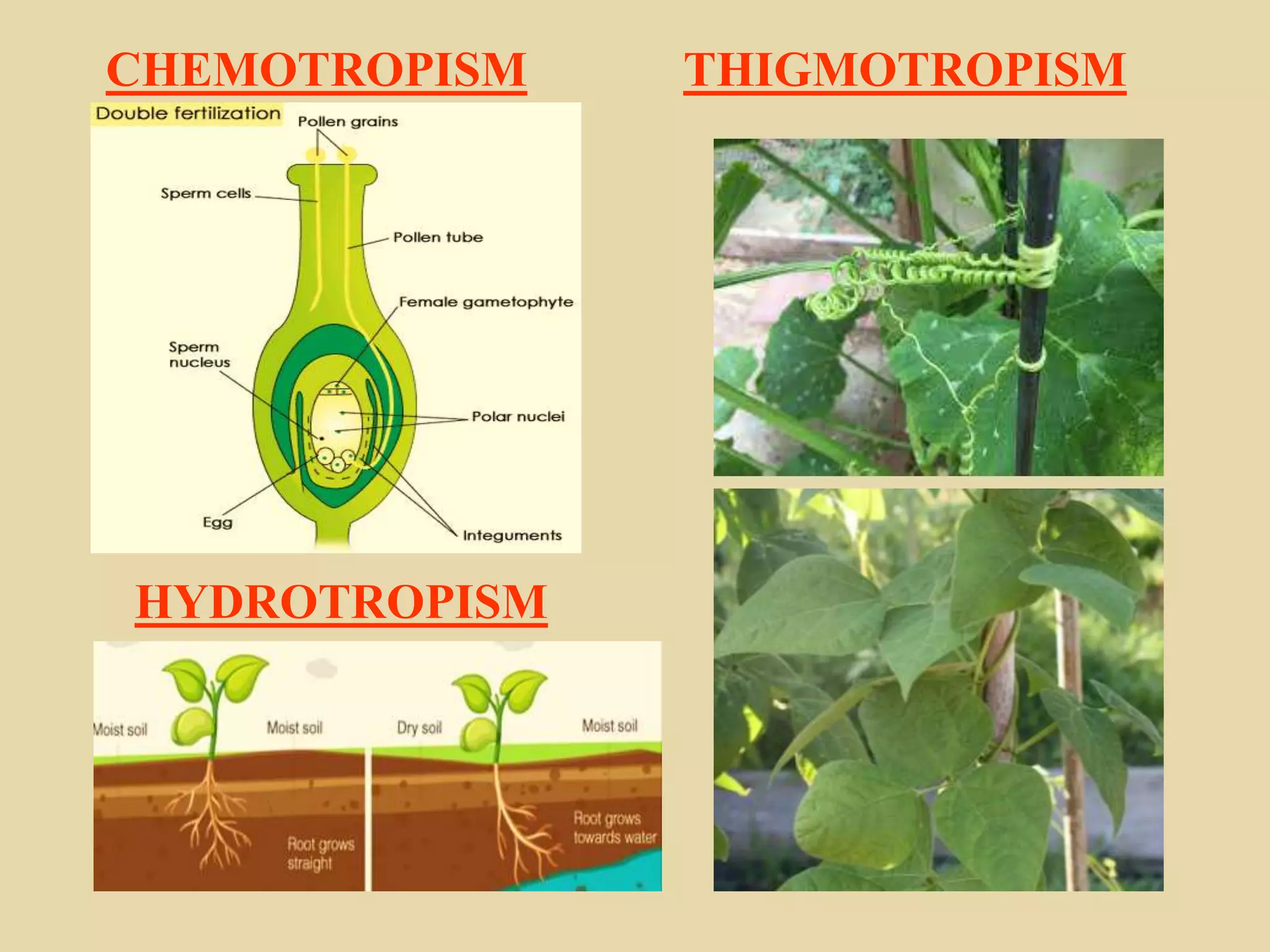
iii) Chemotropism:- is movement of plant in response to chemical stimuli. Eg:-
Growth of pollen tube towards the ovule.
iv) Hydrotropism:- is the movement of plants in response to water.
Eg :- Growth of roots towards water.
v) Thigmotropism:- is a directional growth movement which occurs as a
mechanosensory response to a touch stimulus. Thigmotropism can be in the
form of opening or closing of parts of the plant such as the petals or leaves, the
coiling of the plant around the surface. Thigmotropism is typically found in
twining plants and tendrils.
PHOTOTROPISM GEOTROPISM
CHEMOTROPISM THIGMOTROPISM
HYDROTROPISM
b) Nastic movements:-
 Nastic movements are non-directional responses to
stimuli (e.g. temperature, humidity, light irradiance). The
are non directional movements which are neither towards
or away from the stimulus and it does not depend on
growth and are usually associated with plants.
 The movement can be due to changes in turgor or
changes in growth. Decrease in turgor pressure causes
shrinkage while increase in turgor pressure brings about
swelling.
 Nastic movements differ from tropic movements in that
the direction of tropic responses depends on the direction
of the stimulus, whereas the direction of nastic
movements is independent of the stimulus's position.
 The tropic movement is growth movement but nastic
movement may or may not be growth movement.
 Eg :- If we touch the leaves of touch me not plant, its
leaves fold up and droops down immediately due to the
change in the amount of water in the leaves. Depending
upon the amount of water in the leaves, it swells or
shrinks.
Mirabilis jalapa or 4 o’clock is an
example of thermonastic
movement. It blooms late
afternoon or evening and closes
by mid-morning.
Tulip is an example of
thermonastic movement. It
blooms at mid-morning.
b) Nastic movements :-
They are named with the suffix "-nasty" and have prefixes that depend
on the stimuli:
Nyctinasty: Movements at night or in the dark. The diurnal movements
of leaves and flowers of some species which take up sleep position at
night are called nyctinastic movements.
Photonasty: The nastic movement caused in response to light. The
opening of leaves and flowers during daytime and their close at night
is an example.
Thermonasty: The nastic movement taking place in response to
temperature. In Crocus the flowers open at high temperature and
close at low temperature.
b) Nastic movements:-
Thigmonasty/Seismonasty: A response to contact/ touch. The movements
found in the leaves of Drosera and Dionaea (Venus fly trap) result in response
to the touch stimulus of insects.
Chemonasty: A response to chemicals or nutrients. Chemonastic movements:
The tentacles of Drosera are also stimulated by ammonium salts, phosphates
or a drop of water containing proteins. Therefore. Tentacle of Drosera also
shows chemonastic movements.
Seismonasty: A response to shock or shaking. The best example is Mimosa
pudica (Touch-me-not plant) which is a sensitive plant. Such plants respond to
stimuli such as touch, blow or metallic shock by folding their leaflets and
lowering their leaves.
Hydronasty: A response to water. Folding or rolling of leaves in response to
water stress. The rolling of leaves reduces the exposed leaf area to dry air.
This response is usually coupled with closure of stomata.
Geonasty/gravinasty: A response to gravity.
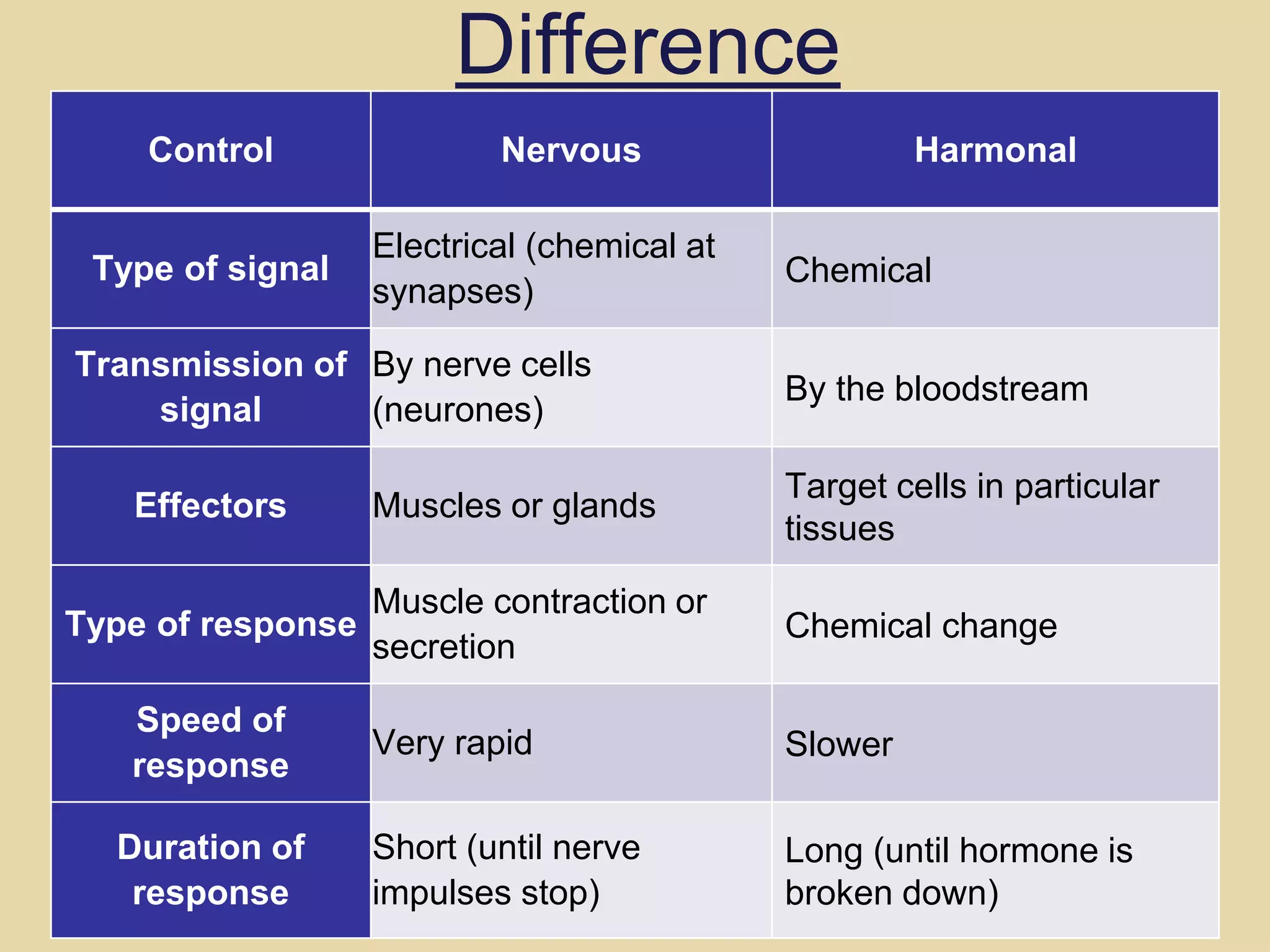
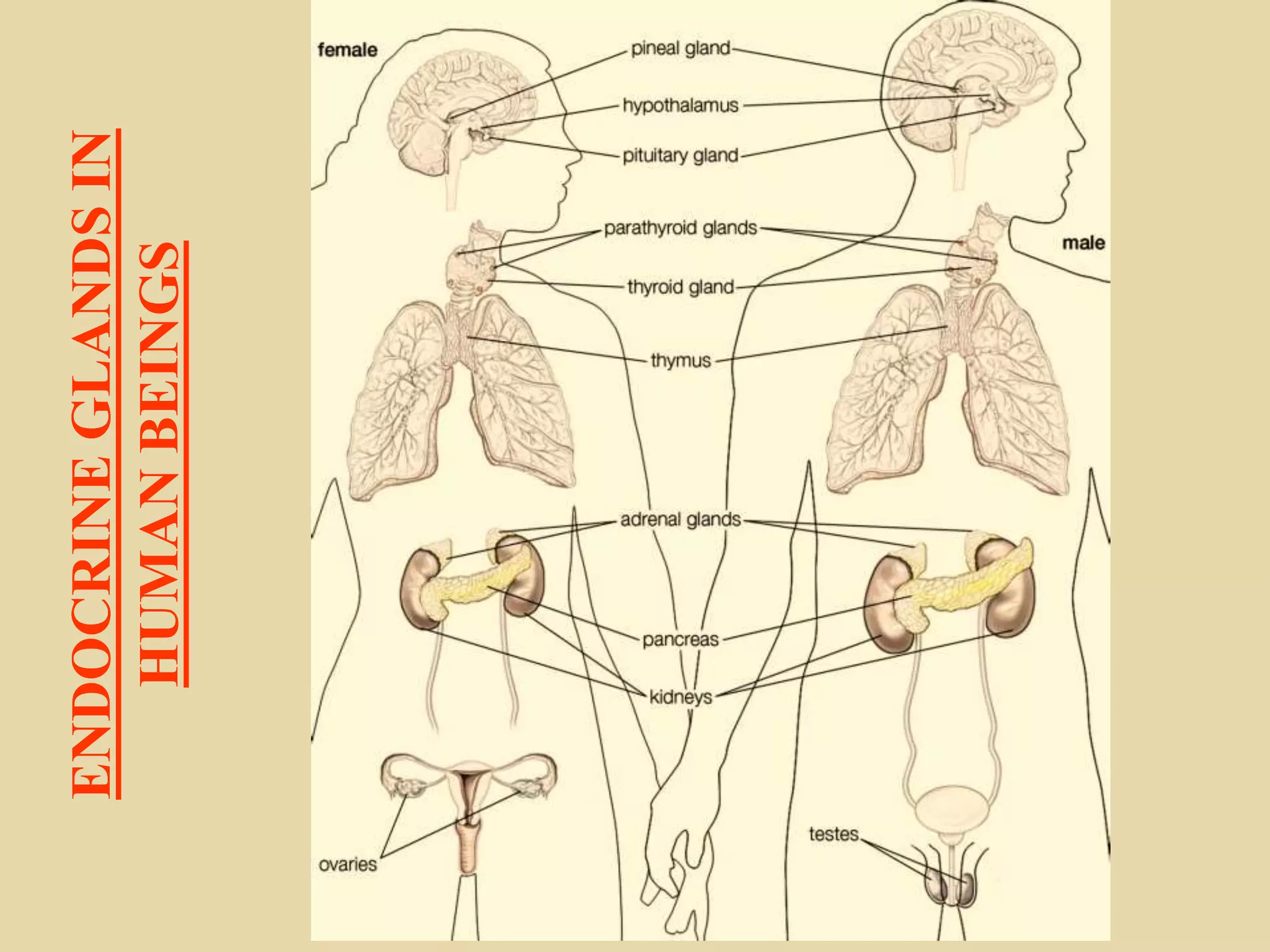
7) Endocrine glands in human beings :-
The endocrine glands also help in control and coordination. The endocrine
glands produce chemical substances which help to control and coordinate
various activities in the body.
The endocrine glands in our body are :- pineal, hypothalamus, pituitary, thyroid,
parathyroid, thymus, adrenal, pancreas, testes and ovary.
Examples of coordination by endocrine glands :-
a) When we are frightened or angry, the adrenal glands produce more
adrenalin hormone which is sent through the blood to the heart, rib muscles
and diaphragm. This increases breathing rate to supply more oxygen to the
muscles to prepare the body to either run away or fight with the enemy.
b) Iodine is needed by the thyroid gland to produce the hormone thyroxin.
Thyroxin controls the metabolism of carbohydrates, fats and proteins and
helps in proper growth. If the diet is deficient in iodine it causes goitre.
c) The pituitary gland produce growth hormones. Deficiency of this hormone in
childhood causes dwarfism. Excess of this hormone causes tall growth.
d) iv) The pancreas produces the hormone insulin which controls the blood
sugar level. Increase in blood sugar level causes diabetes. A diabetic patient
has to take insulin injections to control his blood sugar level.
e) The testes in males produces the hormone testosterone which controls the
production of sperms and changes during puberty.
f) The ovary in females produces the hormone oestrogen which controls the
production of eggs and changes during puberty.
ENDOCRINE
GLANDS
IN
HUMAN
BEINGS
ENDOCRINE GLANDS IN HUMAN BEINGS
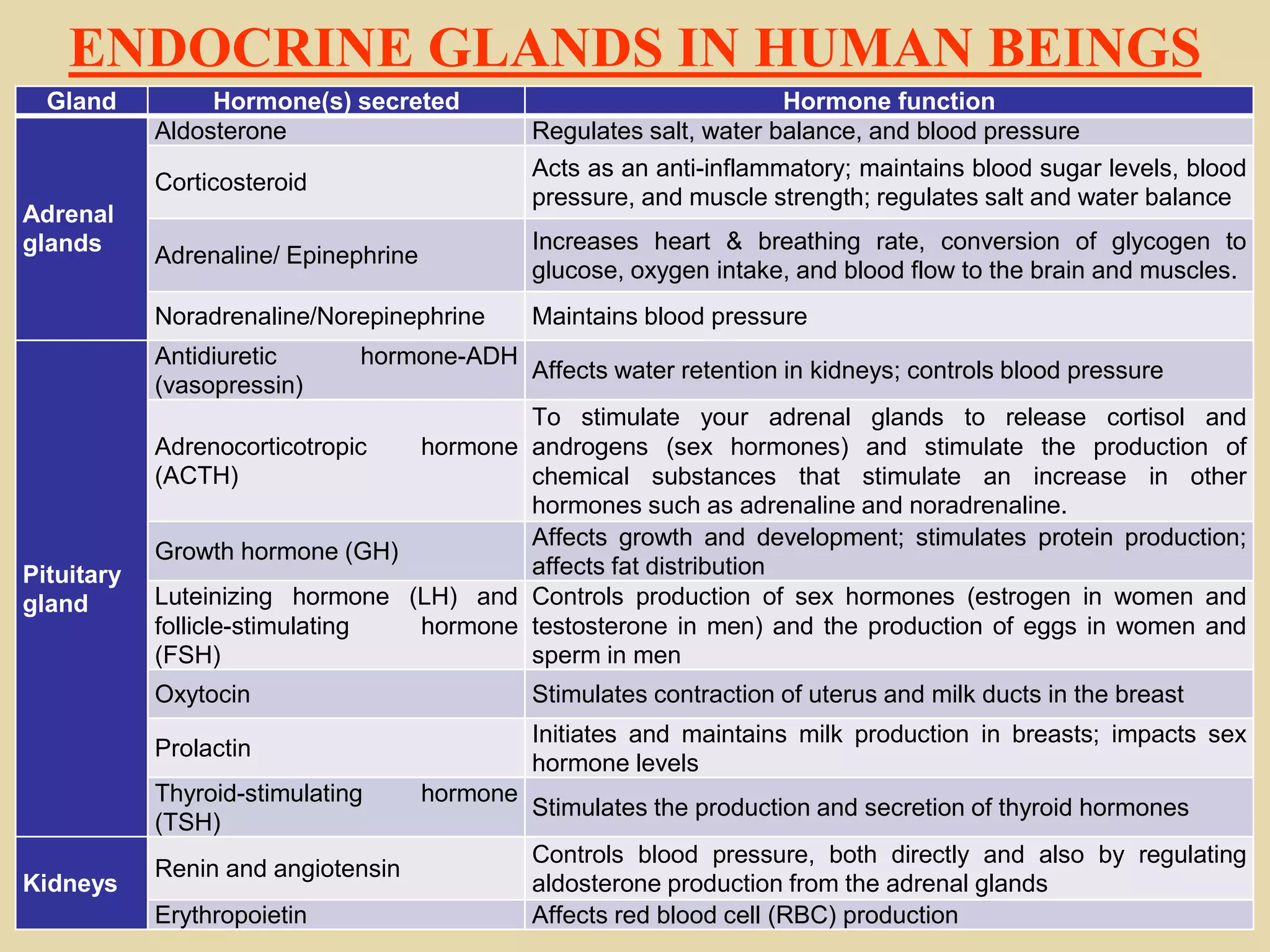
Gland Hormone(s) secreted Hormone function
Adrenal
glands
Aldosterone Regulates salt, water balance, and blood pressure
Corticosteroid
Acts as an anti-inflammatory; maintains blood sugar levels, blood
pressure, and muscle strength; regulates salt and water balance
Adrenaline/ Epinephrine
Increases heart & breathing rate, conversion of glycogen to
glucose, oxygen intake, and blood flow to the brain and muscles.
Noradrenaline/Norepinephrine Maintains blood pressure
Pituitary
gland
Antidiuretic hormone-ADH
(vasopressin)
Affects water retention in kidneys; controls blood pressure
Adrenocorticotropic hormone
(ACTH)
To stimulate your adrenal glands to release cortisol and
androgens (sex hormones) and stimulate the production of
chemical substances that stimulate an increase in other
hormones such as adrenaline and noradrenaline.
Growth hormone (GH)
Affects growth and development; stimulates protein production;
affects fat distribution
Luteinizing hormone (LH) and
follicle-stimulating hormone
(FSH)
Controls production of sex hormones (estrogen in women and
testosterone in men) and the production of eggs in women and
sperm in men
Oxytocin Stimulates contraction of uterus and milk ducts in the breast
Prolactin
Initiates and maintains milk production in breasts; impacts sex
hormone levels
Thyroid-stimulating hormone
(TSH)
Stimulates the production and secretion of thyroid hormones
Kidneys
Renin and angiotensin
Controls blood pressure, both directly and also by regulating
aldosterone production from the adrenal glands
Erythropoietin Affects red blood cell (RBC) production
ENDOCRINE GLANDS IN HUMAN BEINGS
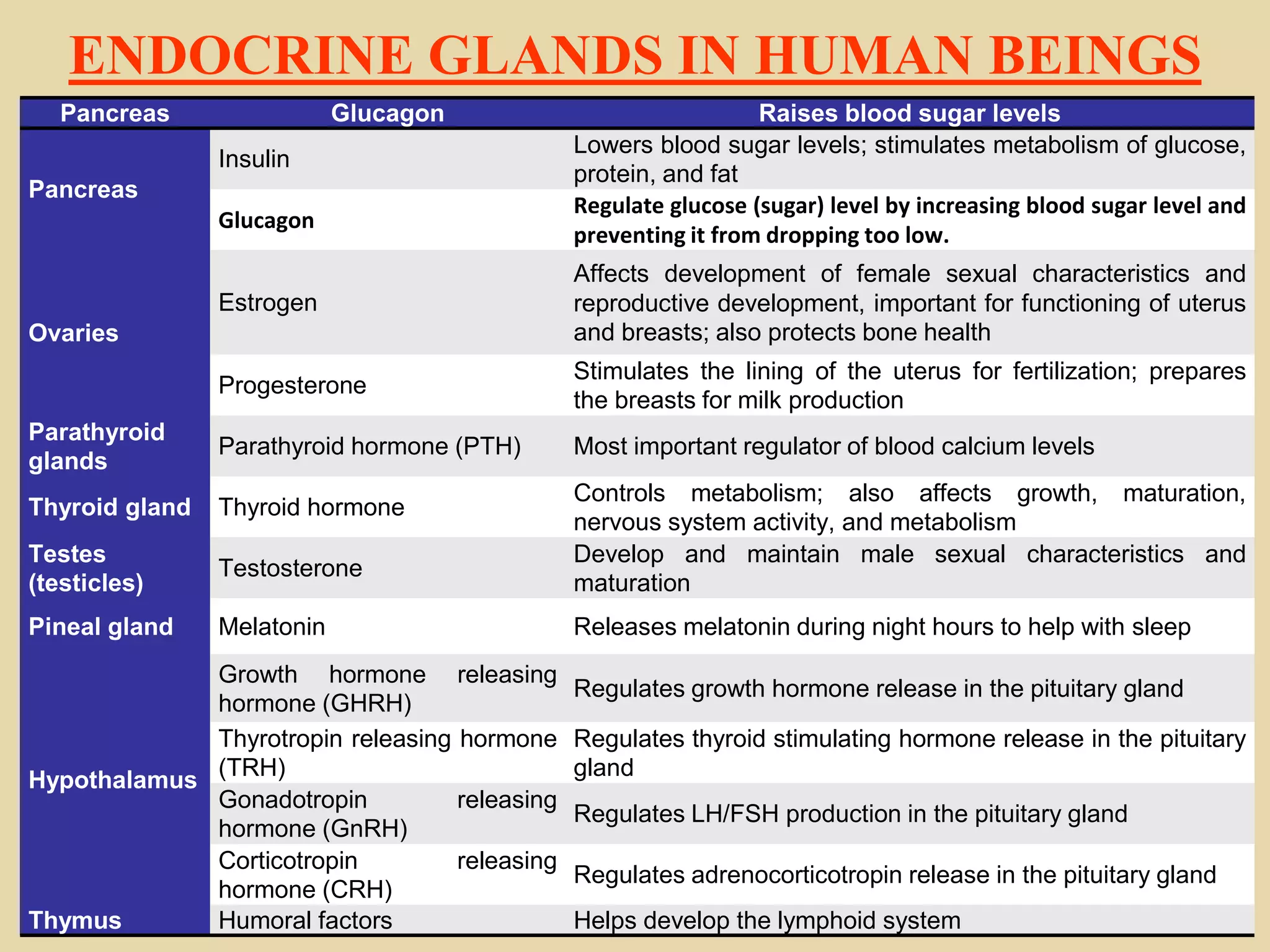
Pancreas Glucagon Raises blood sugar levels
Pancreas
Insulin
Lowers blood sugar levels; stimulates metabolism of glucose,
protein, and fat
Glucagon
Regulate glucose (sugar) level by increasing blood sugar level and
preventing it from dropping too low.
Ovaries
Estrogen
Affects development of female sexual characteristics and
reproductive development, important for functioning of uterus
and breasts; also protects bone health
Progesterone
Stimulates the lining of the uterus for fertilization; prepares
the breasts for milk production
Parathyroid
glands
Parathyroid hormone (PTH) Most important regulator of blood calcium levels
Thyroid gland Thyroid hormone
Controls metabolism; also affects growth, maturation,
nervous system activity, and metabolism
Testes
(testicles)
Testosterone
Develop and maintain male sexual characteristics and
maturation
Pineal gland Melatonin Releases melatonin during night hours to help with sleep
Hypothalamus
Growth hormone releasing
hormone (GHRH)
Regulates growth hormone release in the pituitary gland
Thyrotropin releasing hormone
(TRH)
Regulates thyroid stimulating hormone release in the pituitary
gland
Gonadotropin releasing
hormone (GnRH)
Regulates LH/FSH production in the pituitary gland
Corticotropin releasing
hormone (CRH)
Regulates adrenocorticotropin release in the pituitary gland
Thymus Humoral factors Helps develop the lymphoid system
More to learn
Sympathetic Nervous System (SNS)
Your sympathetic nervous system is a
network of nerves that helps your body
activate its “fight-or-flight” response. This
system’s activity increases when you’re
stressed, in danger or physically active.
Its effects include increasing your heart
rate and breathing ability, improving your
eyesight and slowing down processes like
digestion.
Parasympathetic nervous system
(PSNS)
Your parasympathetic nervous system is
a network of nerves that relaxes your
body after periods of stress or danger. It
also helps run life-sustaining processes,
like digestion, during times when you feel
safe and relaxed. The informal
descriptions for this system include the
rhymes “rest and digest” or “feed and
breed.”
More to know
PARATHYROID GLANDS
These glands, located behind the thyroid at the bottom of your neck, are about the size
of a grain of rice. The parathyroid hormone produced by the thyroid glands helps maintain
the right balance of calcium in the bloodstream and in tissues that depend on calcium for
proper functioning.
THYROID GLANDS
The main job of the thyroid is to control your metabolism. Metabolism is the process that
your body uses to transform food to energy your body uses to function. The thyroid creates
the hormones T4 and T3 to control your metabolism. These hormones work throughout the
body to tell the body's cells how much energy to use.
The thyroid gland produces hormones that regulate the body's metabolic rate controlling
heart, muscle and digestive function, brain development and bone maintenance. Its
correct functioning depends on a good supply of iodine from the diet.
THYMUS GLANDS
The primary function of the thymus gland is to train special white blood cells called T-
lymphocytes or T-cells. White blood cells (lymphocytes) travel from your bone marrow to
your thymus. The lymphocytes mature and become specialized T-cells in your thymus. After
the T-cells have matured, they enter your bloodstream.
PITUITARY GLAND
The pituitary gland is no larger than a pea, and is located at the base of the brain. The
gland is attached to the hypothalamus (a part of the brain that affects the pituitary gland) by
nerve fibers and blood vessels.
More to explore
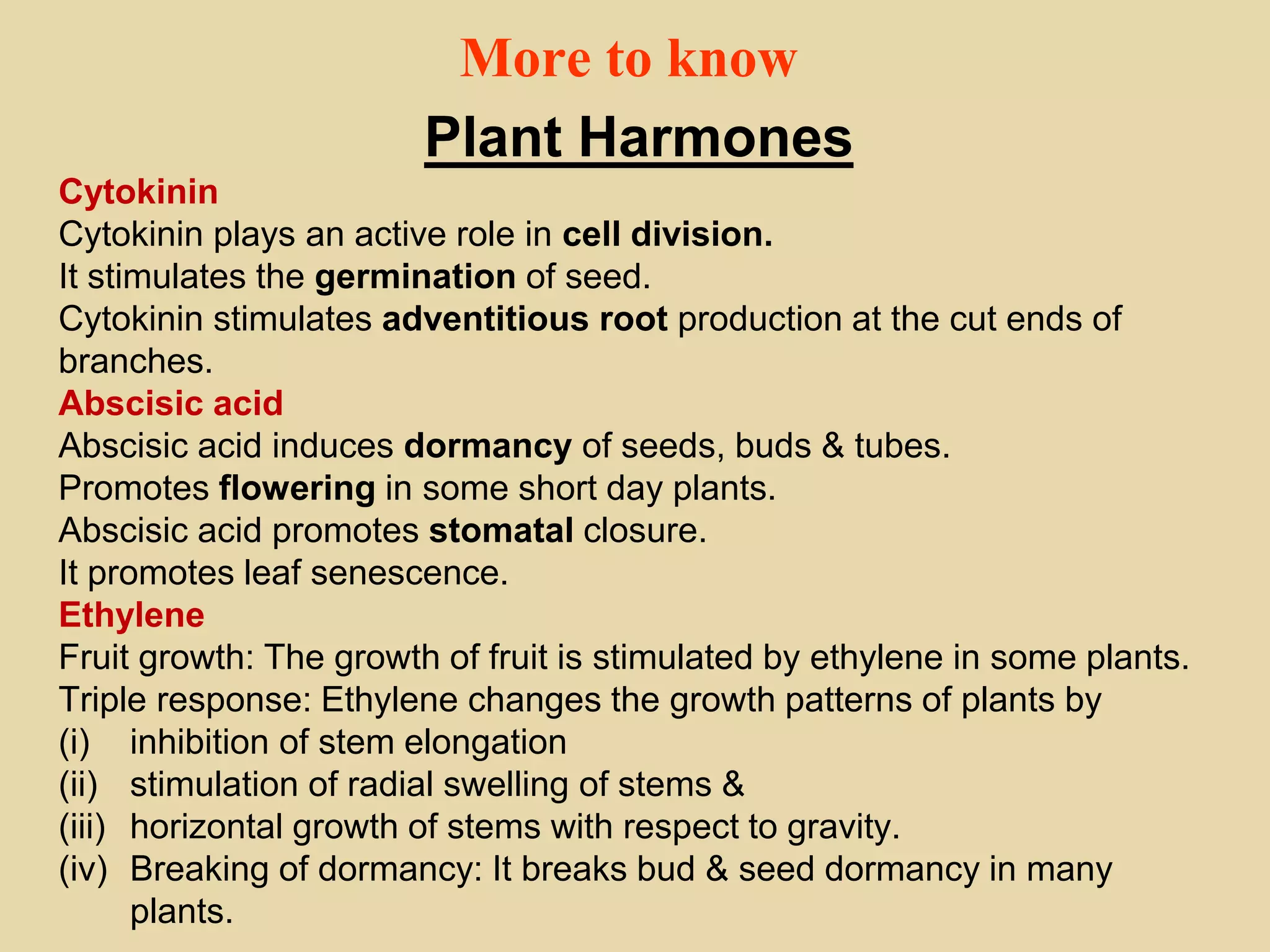
Plant Harmones
Gibberellin
Gibberellin has pronounced effect on leaf growth.
It induces elongation of the stem in dwarf plants.
It breaks dormancy of seeds, buds & tubes.
Gibberellin checks adventitious root production at the cut ends of
branches.
Promotes flowering in long day plants.
Gibberellin promotes stomatal opening.
It prevents leaf senescence.
It can bring about changes in the sexuality of flowers.
Auxin
Auxin promotes root formation.
It has a little effect on leaf growth.
It causes apical dominance.
Auxin has no effect on genetically dwarf plants.
More to know
Plant Harmones
Cytokinin
Cytokinin plays an active role in cell division.
It stimulates the germination of seed.
Cytokinin stimulates adventitious root production at the cut ends of
branches.
Abscisic acid
Abscisic acid induces dormancy of seeds, buds & tubes.
Promotes flowering in some short day plants.
Abscisic acid promotes stomatal closure.
It promotes leaf senescence.
Ethylene
Fruit growth: The growth of fruit is stimulated by ethylene in some plants.
Triple response: Ethylene changes the growth patterns of plants by
(i) inhibition of stem elongation
(ii) stimulation of radial swelling of stems &
(iii) horizontal growth of stems with respect to gravity.
(iv) Breaking of dormancy: It breaks bud & seed dormancy in many
plants.

CONTROL AND COORDINATION.pptx

  • 1.
    CHAPTER - 7 CONTROLAND COORDINATION Subject : SCIENC – X Teacher : Mr. H.G.S VERMA School : KV UMARIA
  • 2.
    Stimuli :- The changesin the environment to which living organisms respond are called stimuli. (singlar – stimulus) Eg :- heat, cold, sound, smell, taste, touch, pressure, gravity, water etc. Living organisms respond to stimuli in the form of body movements. Coordination :- For a proper response to a stimulus many organs in the body should work together. The working together of various organs in an organism to produce a proper response to a stimulus is called coordination. i) In animals control and co ordination is done by the nervous system and endocrine system. There are two types of control and coordination: Chemical/ Harmonal and Nervous control and coordination. ii) In plants control and co ordination is done by chemical substances called plant hormones or phytohormones.
  • 3.
    Control Nervous Harmonal Typeof signal Electrical (chemical at synapses) Chemical Transmission of signal By nerve cells (neurones) By the bloodstream Effectors Muscles or glands Target cells in particular tissues Type of response Muscle contraction or secretion Chemical change Speed of response Very rapid Slower Duration of response Short (until nerve impulses stop) Long (until hormone is broken down) Difference
  • 4.
    Coordination in animals:- In animals control and co ordination is done by the nervous system and endocrine system. The nervous system consists of the brain, spinal cord and nerves. a) Receptors :- are the sense organs which receive the stimuli and pass the message to the brain or spinal cord through the sensory nerves. Eg :- Photoreceptors in the eyes to detect light. Phonoreceptors in the ears to detect sound. Olfactory receptors in the nose to detect smell. Gustatory receptors in the tongue to detect taste. Tangoreceptors in the skin to detect touch. b) Effectors :- are the muscles and glands which respond to the information from the brain and spinal cord through the motor nerves. c) Sensory nerves :- are nerves which carry information from the receptors (sense organs) to the brain and spinal cord. d) Motor nerves :- are nerves which carry information from the brain and spinal cord to the effectors (muscles and glands).
  • 7.
    HUMAN NERVOUS SYSTEM Thecorpus callosum is the primary commissural region of the brain consisting of white matter tracts that connect the left and right cerebral hemispheres. The right and left lateral ventricles are structures within the brain that contain cerebrospinal fluid, a clear, watery fluid that provides cushioning for the brain while also helping to circulate nutrients and remove waste.
  • 8.
  • 9.
    3) Human nervoussystem :- a) Parts of the nervous system :- The human nervous system consists of the Central Nervous System and Peripheral Nervous System. i) The central nervous system :- consists of the brain, and spinal cord. ii) The peripheral nervous system:- consists of cranial nerves arising from the brain and spinal nerves arising from the spinal cord.
  • 10.
  • 11.
    b) Nerve cell(Neuron) :- Neuron is the structural and functional unit of the nervous system. It has a cell body called cyton containing a nucleus and cytoplasm. It has several branched structures called dendrites. It has a long nerve fibre called axon which is covered by a protective covering called Myelin sheath. The junction between two neurons is called synapse. Messages pass through the nerve cell in the form of chemical and electrical signals called nerve impulse. The dendrites receive the information and starts a chemical reaction which produce electrical impulse which passes through the axon.
  • 12.
    Transmission of messagesthrough neurons Neurilemma and myelin sheath are two layers that surround the myelinated nerve fibers. The main difference between neurilemma and myelin sheath is that neurilemma is the plasma membrane layer of the Schwann cells whereas myelin sheath is the fatty myelin sheath is the fatty acid layer that encloses the nerve fiber.
  • 13.
    c) Brain :- Thebrain is the main coordinating centre in the human body. It is protected by the cranium. It is covered by three membranes called meninges filled with a fluid called cerebrospinal fluid which protects the brain from shocks. The brain has three main parts. They are fore brain, mid brain and hind brain. i) Fore brain :- consists of the cerebrum and olfactory lobes. It is the thinking part of the brain and controls voluntary actions. It controls touch, smell, hearing, taste, sight, mental activities like thinking, learning, memory, emotions etc. ii) Mid brain :- controls involuntary actions and reflex movements of head, neck, eyes etc. iii) Hind brain :- consists of cerebellum, pons and medulla. Cerebellum :- controls body movements, balance and posture. Pons :- controls respiration. Medulla :- controls heart beat, blood pressure, swallowing, coughing, sneezing, vomitting etc.
  • 14.
    HUMAN BRAIN Your cerebralcortex is the outer layer that lies on top of your cerebrum. Your cerebrum is the largest area of your brain. Your cerebrum divides your brain into two halves called hemispheres. The hemispheres are attached by a bundle of nerve fibers called the corpus callosum. The mammillary bodies are brainstem nuclei on the posteroinferior aspect of the hypothalamus. There are 2 mammillary bodies on either side of the midline. The primary function associated with the mammillary bodies is recollective memory.
  • 15.
  • 16.
    HUMAN BRAIN The cerebrumis further divided into four sections or lobes: 1. Frontal lobe 2. Parietal lobe 3. Occipital lobe 4. Temporal lobe
  • 17.
  • 18.
  • 19.
    d) Spinal cord:- The spinal cord starts from the brain and extends through the vertebral column. It has 31 pairs of spinal nerves. It carries messages to and from the brain. It also controls reflex actions. Cranial nerves arising from the brain are 12 pairs.
  • 20.
    4a) Reflex action:- Reflex action is a sudden, unconcious and involuntary response of the effectors to a stimulus. Eg :- We suddenly withdraw our hand if we suddenly touch a hot object. In this reflex action, the nerves in the skin (receptor) detects the heat and passes the message through the sensory nerves to the spinal cord. Then the information passes through the motor nerves to the muscles (effector) of the hand and we withdraw our hand.
  • 23.
  • 24.
    b) Reflex arc:- The pathway of a reflex action is called reflex arc. In a reflex arc the stimulus is received by the receptors (sense organs) and it passes through the sensory nerves to the spinal cord. From the spinal cord the information passes through the motor nerves to the effectors (muscles/glands) for the response. Stimulus Response Receptors (Sense organ) Effectors (Muscles/Glands) Sensory nerves Motor nerves Spinal cord
  • 25.
  • 26.
  • 27.
  • 28.
  • 29.
    5) Coordination inplants :- In plants control and coordination is done by chemical substances called plant hormones or phytohormones. There are five main types of plant hormones. They are :- Auxins, Gibberillins, Cytokinins, Abscisic acid and Ethylene. i) Auxins :- help in cell division, cell elongation and growth. ii) Gibberillins :- help in growth of stem and branches. iii) Cytokinins:- help in cell division, formation of fruits and seeds. iv) Abscisic acid :- inhibits growth and affects wilting of leaves. vi) Ethylene :- helps in flowering and ripening of fruits.
  • 30.
    6) Movements inplants :- Movements in plants are of two main types. They are:-Tropic movements and Nastic movements. a) Tropic movements:- are directional movements towards or away from the stimulus and it depends on growth. They are of different types like Phototropism, Geotropism, Chemotropism, Hydrotropism etc. i) Phototropism:- is movement of plants in response to light. If it is towards light, it is called positive phototropism. Eg:- Bending of shoot towards light. If it is away from light, it is called negative phototropism. Eg:- Bending of root away from light. ii) Geotropism:- is the movement of plants in response to gravity. If it is towards gravity it is called positive geotropism. Eg:- Downward growth of roots. If it is away from gravity it is called negative geotropism. Eg:- Upward growth of shoot. iii) Chemotropism:- is movement of plant in response to chemical stimuli. Eg:- Growth of pollen tube towards the ovule. iv) Hydrotropism:- is the movement of plants in response to water. Eg :- Growth of roots towards water. v) Thigmotropism:- is a directional growth movement which occurs as a mechanosensory response to a touch stimulus. Thigmotropism can be in the form of opening or closing of parts of the plant such as the petals or leaves, the coiling of the plant around the surface. Thigmotropism is typically found in twining plants and tendrils.
  • 31.
  • 32.
  • 33.
    b) Nastic movements:- Nastic movements are non-directional responses to stimuli (e.g. temperature, humidity, light irradiance). The are non directional movements which are neither towards or away from the stimulus and it does not depend on growth and are usually associated with plants.  The movement can be due to changes in turgor or changes in growth. Decrease in turgor pressure causes shrinkage while increase in turgor pressure brings about swelling.  Nastic movements differ from tropic movements in that the direction of tropic responses depends on the direction of the stimulus, whereas the direction of nastic movements is independent of the stimulus's position.  The tropic movement is growth movement but nastic movement may or may not be growth movement.  Eg :- If we touch the leaves of touch me not plant, its leaves fold up and droops down immediately due to the change in the amount of water in the leaves. Depending upon the amount of water in the leaves, it swells or shrinks. Mirabilis jalapa or 4 o’clock is an example of thermonastic movement. It blooms late afternoon or evening and closes by mid-morning. Tulip is an example of thermonastic movement. It blooms at mid-morning.
  • 34.
    b) Nastic movements:- They are named with the suffix "-nasty" and have prefixes that depend on the stimuli: Nyctinasty: Movements at night or in the dark. The diurnal movements of leaves and flowers of some species which take up sleep position at night are called nyctinastic movements. Photonasty: The nastic movement caused in response to light. The opening of leaves and flowers during daytime and their close at night is an example. Thermonasty: The nastic movement taking place in response to temperature. In Crocus the flowers open at high temperature and close at low temperature.
  • 35.
    b) Nastic movements:- Thigmonasty/Seismonasty:A response to contact/ touch. The movements found in the leaves of Drosera and Dionaea (Venus fly trap) result in response to the touch stimulus of insects. Chemonasty: A response to chemicals or nutrients. Chemonastic movements: The tentacles of Drosera are also stimulated by ammonium salts, phosphates or a drop of water containing proteins. Therefore. Tentacle of Drosera also shows chemonastic movements. Seismonasty: A response to shock or shaking. The best example is Mimosa pudica (Touch-me-not plant) which is a sensitive plant. Such plants respond to stimuli such as touch, blow or metallic shock by folding their leaflets and lowering their leaves. Hydronasty: A response to water. Folding or rolling of leaves in response to water stress. The rolling of leaves reduces the exposed leaf area to dry air. This response is usually coupled with closure of stomata. Geonasty/gravinasty: A response to gravity.
  • 36.
    7) Endocrine glandsin human beings :- The endocrine glands also help in control and coordination. The endocrine glands produce chemical substances which help to control and coordinate various activities in the body. The endocrine glands in our body are :- pineal, hypothalamus, pituitary, thyroid, parathyroid, thymus, adrenal, pancreas, testes and ovary. Examples of coordination by endocrine glands :- a) When we are frightened or angry, the adrenal glands produce more adrenalin hormone which is sent through the blood to the heart, rib muscles and diaphragm. This increases breathing rate to supply more oxygen to the muscles to prepare the body to either run away or fight with the enemy. b) Iodine is needed by the thyroid gland to produce the hormone thyroxin. Thyroxin controls the metabolism of carbohydrates, fats and proteins and helps in proper growth. If the diet is deficient in iodine it causes goitre. c) The pituitary gland produce growth hormones. Deficiency of this hormone in childhood causes dwarfism. Excess of this hormone causes tall growth. d) iv) The pancreas produces the hormone insulin which controls the blood sugar level. Increase in blood sugar level causes diabetes. A diabetic patient has to take insulin injections to control his blood sugar level. e) The testes in males produces the hormone testosterone which controls the production of sperms and changes during puberty. f) The ovary in females produces the hormone oestrogen which controls the production of eggs and changes during puberty.
  • 37.
  • 38.
    ENDOCRINE GLANDS INHUMAN BEINGS Gland Hormone(s) secreted Hormone function Adrenal glands Aldosterone Regulates salt, water balance, and blood pressure Corticosteroid Acts as an anti-inflammatory; maintains blood sugar levels, blood pressure, and muscle strength; regulates salt and water balance Adrenaline/ Epinephrine Increases heart & breathing rate, conversion of glycogen to glucose, oxygen intake, and blood flow to the brain and muscles. Noradrenaline/Norepinephrine Maintains blood pressure Pituitary gland Antidiuretic hormone-ADH (vasopressin) Affects water retention in kidneys; controls blood pressure Adrenocorticotropic hormone (ACTH) To stimulate your adrenal glands to release cortisol and androgens (sex hormones) and stimulate the production of chemical substances that stimulate an increase in other hormones such as adrenaline and noradrenaline. Growth hormone (GH) Affects growth and development; stimulates protein production; affects fat distribution Luteinizing hormone (LH) and follicle-stimulating hormone (FSH) Controls production of sex hormones (estrogen in women and testosterone in men) and the production of eggs in women and sperm in men Oxytocin Stimulates contraction of uterus and milk ducts in the breast Prolactin Initiates and maintains milk production in breasts; impacts sex hormone levels Thyroid-stimulating hormone (TSH) Stimulates the production and secretion of thyroid hormones Kidneys Renin and angiotensin Controls blood pressure, both directly and also by regulating aldosterone production from the adrenal glands Erythropoietin Affects red blood cell (RBC) production
  • 39.
    ENDOCRINE GLANDS INHUMAN BEINGS Pancreas Glucagon Raises blood sugar levels Pancreas Insulin Lowers blood sugar levels; stimulates metabolism of glucose, protein, and fat Glucagon Regulate glucose (sugar) level by increasing blood sugar level and preventing it from dropping too low. Ovaries Estrogen Affects development of female sexual characteristics and reproductive development, important for functioning of uterus and breasts; also protects bone health Progesterone Stimulates the lining of the uterus for fertilization; prepares the breasts for milk production Parathyroid glands Parathyroid hormone (PTH) Most important regulator of blood calcium levels Thyroid gland Thyroid hormone Controls metabolism; also affects growth, maturation, nervous system activity, and metabolism Testes (testicles) Testosterone Develop and maintain male sexual characteristics and maturation Pineal gland Melatonin Releases melatonin during night hours to help with sleep Hypothalamus Growth hormone releasing hormone (GHRH) Regulates growth hormone release in the pituitary gland Thyrotropin releasing hormone (TRH) Regulates thyroid stimulating hormone release in the pituitary gland Gonadotropin releasing hormone (GnRH) Regulates LH/FSH production in the pituitary gland Corticotropin releasing hormone (CRH) Regulates adrenocorticotropin release in the pituitary gland Thymus Humoral factors Helps develop the lymphoid system
  • 40.
    More to learn SympatheticNervous System (SNS) Your sympathetic nervous system is a network of nerves that helps your body activate its “fight-or-flight” response. This system’s activity increases when you’re stressed, in danger or physically active. Its effects include increasing your heart rate and breathing ability, improving your eyesight and slowing down processes like digestion. Parasympathetic nervous system (PSNS) Your parasympathetic nervous system is a network of nerves that relaxes your body after periods of stress or danger. It also helps run life-sustaining processes, like digestion, during times when you feel safe and relaxed. The informal descriptions for this system include the rhymes “rest and digest” or “feed and breed.”
  • 41.
    More to know PARATHYROIDGLANDS These glands, located behind the thyroid at the bottom of your neck, are about the size of a grain of rice. The parathyroid hormone produced by the thyroid glands helps maintain the right balance of calcium in the bloodstream and in tissues that depend on calcium for proper functioning. THYROID GLANDS The main job of the thyroid is to control your metabolism. Metabolism is the process that your body uses to transform food to energy your body uses to function. The thyroid creates the hormones T4 and T3 to control your metabolism. These hormones work throughout the body to tell the body's cells how much energy to use. The thyroid gland produces hormones that regulate the body's metabolic rate controlling heart, muscle and digestive function, brain development and bone maintenance. Its correct functioning depends on a good supply of iodine from the diet. THYMUS GLANDS The primary function of the thymus gland is to train special white blood cells called T- lymphocytes or T-cells. White blood cells (lymphocytes) travel from your bone marrow to your thymus. The lymphocytes mature and become specialized T-cells in your thymus. After the T-cells have matured, they enter your bloodstream. PITUITARY GLAND The pituitary gland is no larger than a pea, and is located at the base of the brain. The gland is attached to the hypothalamus (a part of the brain that affects the pituitary gland) by nerve fibers and blood vessels.
  • 42.
    More to explore PlantHarmones Gibberellin Gibberellin has pronounced effect on leaf growth. It induces elongation of the stem in dwarf plants. It breaks dormancy of seeds, buds & tubes. Gibberellin checks adventitious root production at the cut ends of branches. Promotes flowering in long day plants. Gibberellin promotes stomatal opening. It prevents leaf senescence. It can bring about changes in the sexuality of flowers. Auxin Auxin promotes root formation. It has a little effect on leaf growth. It causes apical dominance. Auxin has no effect on genetically dwarf plants.
  • 43.
    More to know PlantHarmones Cytokinin Cytokinin plays an active role in cell division. It stimulates the germination of seed. Cytokinin stimulates adventitious root production at the cut ends of branches. Abscisic acid Abscisic acid induces dormancy of seeds, buds & tubes. Promotes flowering in some short day plants. Abscisic acid promotes stomatal closure. It promotes leaf senescence. Ethylene Fruit growth: The growth of fruit is stimulated by ethylene in some plants. Triple response: Ethylene changes the growth patterns of plants by (i) inhibition of stem elongation (ii) stimulation of radial swelling of stems & (iii) horizontal growth of stems with respect to gravity. (iv) Breaking of dormancy: It breaks bud & seed dormancy in many plants.