BY
ROBERT IGBEDE
 A device, drug, surgical procedure or even sexual
practice that is used to prevent a pregnancy to occur
 Also known as birth control or safe sex
 There are various types for both males and females
 Although most contraception are for females it is not
only the women’s responsibility to practice “safe-sex,”
men should practice and be educated too
 Better safe than to be sorry
 Very Important to educate teens about using
contraception, the different variations and practicing
safe sex in order to decrease pregnancy and spread of
SDTs and HIV in the young adult community
 About 750,000 infants were born to young girls
from the ages of 15 to 19 every year
 4 : 10 teens are pregnant an least once before they
turn 20
 98% of these births happen outside of wedlock
 82% of teen pregnancy are unplanned
 60% are livebirths, 30% are aborted and 15% are
miscarriages
 Teen birth rate is highest in the united state
compared to other developed countries
 Over the years teen pregnancy has decreased due
to educating about about contraception's
 Stops ovulation and prevent the sperm to
fertilization the egg
 Is a prescription
 Decreases menstrual cramps and blood loss
 Has to be taken orally everyday at the same time
to be more
 effective
 Does not protect from HIV or STDs
 Small chance of pregnancy even when used
properly
 3 out of 1,000 women still become pregnant
 A patch that is placed on your arm, abdominal
or buttock
 Like the pill, sends hormones that stops
fertilization
 Change it every week for 3 weeks then none on
the fourth week
 Easier to use verses birth control pills
 Does not protect against STDs or HIV
 Can cause some side effects at first
 Is a bit expensive
 A quick shot that is given every three month by
your physician
 Sends hormones that stop an egg from being
released from the ovaries
 Is not noticeable and is private
 Can result in irregular periods and weight gain
 Does not protect against HIV or STDs
 A small “T- shaped” device that your
physician inserts in the uterus
 Inexpensive, private and safe
 Great for long term pregnancy prevention
 Can last 5-10 years
 Can be taken out whenever you chose
 Can increase menstrual blood flow
 Prevents each others body fluids from mixing
 Made out of latex and is placed on the penis before
intercourse
 Successful and best method in preventing HIV and
STD transmission
 Within a month 1:4 males and 4:10 females do not
use a condom
 Available at drugstores, supermarkets and health
departments
 Should always be used
 Should never be reused
 Withdrawal
 When ejaculation occurs outside the vagina
 Should only be used when no other contraception is available
 Fertility Awareness
 Tracking female’s ovulation and fertility cycle to avoid having intercourse
during very fertile periods and Can be tricky and Not recommended for
teenagers
 Sterilization
 Tubal ligation
 Fallopian tubes are pinched shut
 Permanent for females, usually done on older women with children
 Vasectomy
 Surgery where the man’s vas deferens are blocked or cut to prevents
sperm from being released Is reversible
 Also known as Plan B or The Morning After
 Decreases the chance of pregnancy after having
unprotected intercourse
 Stops fertilization and implantation
 More effective when used 12 hours after
 Can inhibit pregnancy to up to five days
 Not to be confused with birth-control pills
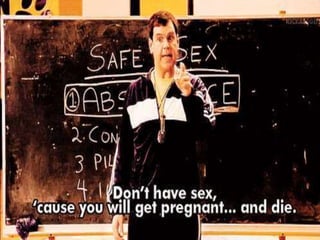
 Withdrawing from sex until you feel it is the
right time
 Most traditional contraception method
 100% guarantee in not becoming pregnant or
spread of a STD or
 HIV
 53% of teens practice abstinence
 Less expensive
 ON MORAL ISSUES: Those who say
contraception is morally wrong do so for a
variety of reasons.
 Contraception is inherently wrong
• Contraception is unnatural
• Contraception is anti-life
• Contraception is a form of abortion
• Contraception separates sex from
reproduction
 The natural consequence of having sexual
intercourse is conceiving a child. It is wrong to
interfere with this. Therefore, birth-control is
intrinsically wrong.
 This argument depends on two other ideas:
•it is wrong to interfere with the natural order
of the universe
• human beings interfere with the natural
order of the universe all the time
 This argument is based on the premise that life
is a good thing.
 of this view argue that contraception is morally
wrong because:
• life is a fundamental good - it is a good thing
• those who use contraception are engaged in
an intentionally “life ending" act because they
intend to prevent a new life coming into being
 Some birth control techniques can operate by
preventing the implantation and development of a
fertilised egg. Those opposed to such methods say
that this amounts to an abortion, and that if
abortion is wrong then those forms of
contraception must also be wrong.
 The forms of contraception included in this
objection are:
 • some birth control pills
 • most modern birth control pills
 • the "morning-after" pill
 • the IUD
 Contraception makes it easier for people to have
sex outside marriage.
 This is certainly true, since sexual intercourse
without contraception carries a significant risk of
conceiving a child, which most of those having sex
outside marriage would regard as a deterrent.
 People think separating sex from marriage is
wrong because:
• it makes immoral behavior less risky
• it undermines public morality by making it
more likely that people will have sex outside
marriage
• it weakens the family
 All major denominations in America support the morality of
contraception as a personal and family decision—one that helps to
ensure responsible parenthood and healthy families.
 • Episcopal Church approved contraception for purposes of
family planning.
 • United Methodist Church says that “each couple has the right
and the duty prayerfully and responsibly to control conception
according to their circumstances.”
 • Evangelical Lutheran Church of America supports the use of
safe, effective birth control methods and believes that they
encourage “responsible procreation.”
 • Church of Jesus Christ of Latter-day Saints supports all methods
of contraception except surgical sterilization
 **Other Christian denominations that support contraception
include the United Church of Christ, Unitarian Universalists,
Mennonite Church USA, and Church of the Brethren.
1. Females can not get pregnant if it is their first
time
2. An alternative for condoms is plastic wrap or
balloons
3. Condoms can get stuck or lost in a women
4. Using two condoms at once is more effective
5. Urination after having intercourse prevents
pregnancy
6. Females can not get pregnant while in her
menstrual period
THANK YOU

Contraception

  • 1.
  • 2.
     A device,drug, surgical procedure or even sexual practice that is used to prevent a pregnancy to occur  Also known as birth control or safe sex  There are various types for both males and females  Although most contraception are for females it is not only the women’s responsibility to practice “safe-sex,” men should practice and be educated too  Better safe than to be sorry  Very Important to educate teens about using contraception, the different variations and practicing safe sex in order to decrease pregnancy and spread of SDTs and HIV in the young adult community
  • 3.
     About 750,000infants were born to young girls from the ages of 15 to 19 every year  4 : 10 teens are pregnant an least once before they turn 20  98% of these births happen outside of wedlock  82% of teen pregnancy are unplanned  60% are livebirths, 30% are aborted and 15% are miscarriages  Teen birth rate is highest in the united state compared to other developed countries  Over the years teen pregnancy has decreased due to educating about about contraception's
  • 4.
     Stops ovulationand prevent the sperm to fertilization the egg  Is a prescription  Decreases menstrual cramps and blood loss  Has to be taken orally everyday at the same time to be more  effective  Does not protect from HIV or STDs  Small chance of pregnancy even when used properly  3 out of 1,000 women still become pregnant
  • 5.
     A patchthat is placed on your arm, abdominal or buttock  Like the pill, sends hormones that stops fertilization  Change it every week for 3 weeks then none on the fourth week  Easier to use verses birth control pills  Does not protect against STDs or HIV  Can cause some side effects at first  Is a bit expensive
  • 6.
     A quickshot that is given every three month by your physician  Sends hormones that stop an egg from being released from the ovaries  Is not noticeable and is private  Can result in irregular periods and weight gain  Does not protect against HIV or STDs
  • 7.
     A small“T- shaped” device that your physician inserts in the uterus  Inexpensive, private and safe  Great for long term pregnancy prevention  Can last 5-10 years  Can be taken out whenever you chose  Can increase menstrual blood flow
  • 8.
     Prevents eachothers body fluids from mixing  Made out of latex and is placed on the penis before intercourse  Successful and best method in preventing HIV and STD transmission  Within a month 1:4 males and 4:10 females do not use a condom  Available at drugstores, supermarkets and health departments  Should always be used  Should never be reused
  • 10.
     Withdrawal  Whenejaculation occurs outside the vagina  Should only be used when no other contraception is available  Fertility Awareness  Tracking female’s ovulation and fertility cycle to avoid having intercourse during very fertile periods and Can be tricky and Not recommended for teenagers  Sterilization  Tubal ligation  Fallopian tubes are pinched shut  Permanent for females, usually done on older women with children  Vasectomy  Surgery where the man’s vas deferens are blocked or cut to prevents sperm from being released Is reversible
  • 11.
     Also knownas Plan B or The Morning After  Decreases the chance of pregnancy after having unprotected intercourse  Stops fertilization and implantation  More effective when used 12 hours after  Can inhibit pregnancy to up to five days  Not to be confused with birth-control pills
  • 12.
     Withdrawing fromsex until you feel it is the right time  Most traditional contraception method  100% guarantee in not becoming pregnant or spread of a STD or  HIV  53% of teens practice abstinence  Less expensive
  • 14.
     ON MORALISSUES: Those who say contraception is morally wrong do so for a variety of reasons.  Contraception is inherently wrong • Contraception is unnatural • Contraception is anti-life • Contraception is a form of abortion • Contraception separates sex from reproduction
  • 15.
     The naturalconsequence of having sexual intercourse is conceiving a child. It is wrong to interfere with this. Therefore, birth-control is intrinsically wrong.  This argument depends on two other ideas: •it is wrong to interfere with the natural order of the universe • human beings interfere with the natural order of the universe all the time
  • 16.
     This argumentis based on the premise that life is a good thing.  of this view argue that contraception is morally wrong because: • life is a fundamental good - it is a good thing • those who use contraception are engaged in an intentionally “life ending" act because they intend to prevent a new life coming into being
  • 17.
     Some birthcontrol techniques can operate by preventing the implantation and development of a fertilised egg. Those opposed to such methods say that this amounts to an abortion, and that if abortion is wrong then those forms of contraception must also be wrong.  The forms of contraception included in this objection are:  • some birth control pills  • most modern birth control pills  • the "morning-after" pill  • the IUD
  • 18.
     Contraception makesit easier for people to have sex outside marriage.  This is certainly true, since sexual intercourse without contraception carries a significant risk of conceiving a child, which most of those having sex outside marriage would regard as a deterrent.  People think separating sex from marriage is wrong because: • it makes immoral behavior less risky • it undermines public morality by making it more likely that people will have sex outside marriage • it weakens the family
  • 19.
     All majordenominations in America support the morality of contraception as a personal and family decision—one that helps to ensure responsible parenthood and healthy families.  • Episcopal Church approved contraception for purposes of family planning.  • United Methodist Church says that “each couple has the right and the duty prayerfully and responsibly to control conception according to their circumstances.”  • Evangelical Lutheran Church of America supports the use of safe, effective birth control methods and believes that they encourage “responsible procreation.”  • Church of Jesus Christ of Latter-day Saints supports all methods of contraception except surgical sterilization  **Other Christian denominations that support contraception include the United Church of Christ, Unitarian Universalists, Mennonite Church USA, and Church of the Brethren.
  • 20.
    1. Females cannot get pregnant if it is their first time 2. An alternative for condoms is plastic wrap or balloons 3. Condoms can get stuck or lost in a women 4. Using two condoms at once is more effective 5. Urination after having intercourse prevents pregnancy 6. Females can not get pregnant while in her menstrual period
  • 22.