Content Marketing Model
2013
Pre-read
In marketing today, there exists over 30+ touchpoints with
consumers, that must be activated in the right way, at the
right time, to effectively engage a consumer. There is no
magic combination that is guaranteed to work every time
because everything is changing so fast.
To combat this fast change and volatility, brands must
employ a learning culture, creating prototypes and flexible
models that build on measurable results and cases around
each prototype deployed.
Any combination of tactics may or may not yield a positive
outcome. The number of variables across tactics and
outcomes are fragmented and at times difficult to track and
correlate, especially if events are not wired or related. We
need to gather intelligence and apply it to future prototypes.
Today's combination of fragmented marketing efforts often
result in low or moderate effectiveness, with results that can
be challenging to understand or rationalize. Traditional
models of creating marketing alone will no longer work
effectively in silos.
We need to adapt the way we approach marketing to meet
the change in how consumers learn about, evaluate,
engage, experience, purchase and advocate content.
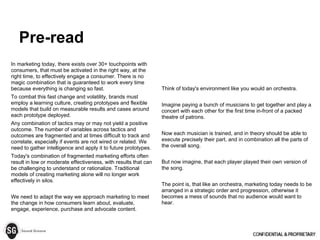
Think of today's environment like you would an orchestra.
Imagine paying a bunch of musicians to get together and play a
concert with each other for the first time in-front of a packed
theatre of patrons.
Now each musician is trained, and in theory should be able to
execute precisely their part, and in combination all the parts of
the overall song.
But now imagine, that each player played their own version of
the song.
The point is, that like an orchestra, marketing today needs to be
arranged in a strategic order and progression, otherwise it
becomes a mess of sounds that no audience would want to
hear.
understanding the model
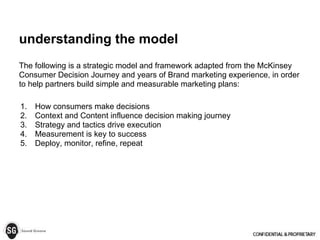
The following is a strategic model and framework adapted from the McKinsey
Consumer Decision Journey and years of Brand marketing experience, in order
to help partners build simple and measurable marketing plans:
1. How consumers make decisions
2. Context and Content influence decision making journey
3. Strategy and tactics drive execution
4. Measurement is key to success
5. Deploy, monitor, refine, repeat
1. How consumers make decisions
1. AWARENESS 2. EVALUATE
4. EXPERIENCE
3. PURCHASE
consideration
confidence
5. LOYALTY
LOOP
relevancy
cost / action
required
+/- emotional
reaction
+/- evaluate vs.
expectations
6. ADVOCATE
Stimuate /
influence others
+/- reciprocate
actions
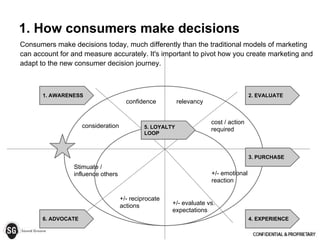
Consumers make decisions today, much differently than the traditional models of marketing
can account for and measure accurately. It's important to pivot how you create marketing and
adapt to the new consumer decision journey.
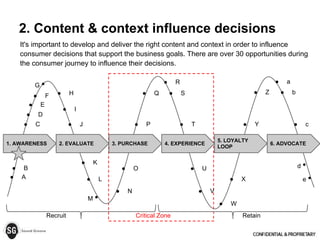
2. Content & context influence decisions
It's important to develop and deliver the right content and context in order to influence
consumer decisions that support the business goals. There are over 30 opportunities during
the consumer journey to influence their decisions.
1. AWARENESS 2. EVALUATE 4. EXPERIENCE3. PURCHASE
5. LOYALTY
LOOP
6. ADVOCATE
● A
● B
● C
● D
● E
● F
G •
● H
● I
● J
● K
● L
M •
● N
● O
● P
● Q
● R
● S
● T
● U
● V
● W
● X
● Y
● Z
● a
● b
● c
d •
e •
Recruit RetainCritical Zone
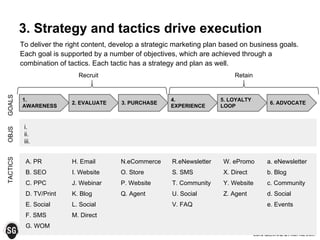
3. Strategy and tactics drive execution
6. ADVOCATE
5. LOYALTY
LOOP
4.
EXPERIENCE
3. PURCHASE2. EVALUATE
1.
AWARENESS
A. PR
B. SEO
C. PPC
D. TV/Print
E. Social
F. SMS
G. WOM
H. Email
I. Website
J. Webinar
K. Blog
L. Social
M. Direct
N.eCommerce
O. Store
P. Website
Q. Agent
R.eNewsletter
S. SMS
T. Community
U. Social
V. FAQ
W. ePromo
X. Direct
Y. Website
Z. Agent
a. eNewsletter
b. Blog
c. Community
d. Social
e. Events
To deliver the right content, develop a strategic marketing plan based on business goals.
Each goal is supported by a number of objectives, which are achieved through a
combination of tactics. Each tactic has a strategy and plan as well.
GOALSTACTICSOBJS
i.
ii.
iii.
Recruit Retain
3. PURCHASE2. EVALUATE
1.
AWARENESS
GOALS
OBJECTIVES
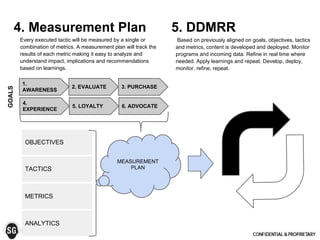
4. Measurement Plan
Every executed tactic will be measured by a single or
combination of metrics. A measurement plan will track the
results of each metric making it easy to analyze and
understand impact, implications and recommendations
based on learnings.
TACTICS
METRICS
ANALYTICS
4.
EXPERIENCE
5. LOYALTY 6. ADVOCATE
5. DDMRR
Based on previously aligned on goals, objectives, tactics
and metrics, content is developed and deployed. Monitor
programs and incoming data. Refine in real time where
needed. Apply learnings and repeat. Develop, deploy,
monitor, refine, repeat.
MEASUREMENT
PLAN
next steps:
1. Review Model
2. Align on Business Goals / Finalize Brief
3. Agreement
4. Begin Strategic Development
5. Deliver POV and Round 1 Plan
APPENDIX
1. How consumers make decisions (con't)
1. AWARENESS | A consumer's consideration, attention and confidence that there is value in the
subject
2. EVALUATION | A consumer determines relevancy of the subject, judge the cost or action
required weighing the value proposition before making a decision
3. ACTION | A consumer makes a decision to accept the value proposition
4. EXPERIENCE | A consumer reacts positive or negative to a subject, and then compares this
reaction to their expectations in order to reinforce or rationalize their decision
5. LOYALTY LOOP | Positive consumer reactions to experience, take them on an inside track, and
the subject is in their consideration and evaluation sets, shorten PTP
6. AVOCATION | Consumers and loyalists reciprocate actions in the form of shares, recommends,
and reviews. These actions are valuable because they stimulate, introduce and reinforce others
POV toward the subject

Content Marketing Model 2013

  • 1.
  • 2.
    Pre-read In marketing today,there exists over 30+ touchpoints with consumers, that must be activated in the right way, at the right time, to effectively engage a consumer. There is no magic combination that is guaranteed to work every time because everything is changing so fast. To combat this fast change and volatility, brands must employ a learning culture, creating prototypes and flexible models that build on measurable results and cases around each prototype deployed. Any combination of tactics may or may not yield a positive outcome. The number of variables across tactics and outcomes are fragmented and at times difficult to track and correlate, especially if events are not wired or related. We need to gather intelligence and apply it to future prototypes. Today's combination of fragmented marketing efforts often result in low or moderate effectiveness, with results that can be challenging to understand or rationalize. Traditional models of creating marketing alone will no longer work effectively in silos. We need to adapt the way we approach marketing to meet the change in how consumers learn about, evaluate, engage, experience, purchase and advocate content. Think of today's environment like you would an orchestra. Imagine paying a bunch of musicians to get together and play a concert with each other for the first time in-front of a packed theatre of patrons. Now each musician is trained, and in theory should be able to execute precisely their part, and in combination all the parts of the overall song. But now imagine, that each player played their own version of the song. The point is, that like an orchestra, marketing today needs to be arranged in a strategic order and progression, otherwise it becomes a mess of sounds that no audience would want to hear.
  • 3.
    understanding the model Thefollowing is a strategic model and framework adapted from the McKinsey Consumer Decision Journey and years of Brand marketing experience, in order to help partners build simple and measurable marketing plans: 1. How consumers make decisions 2. Context and Content influence decision making journey 3. Strategy and tactics drive execution 4. Measurement is key to success 5. Deploy, monitor, refine, repeat
  • 4.
    1. How consumersmake decisions 1. AWARENESS 2. EVALUATE 4. EXPERIENCE 3. PURCHASE consideration confidence 5. LOYALTY LOOP relevancy cost / action required +/- emotional reaction +/- evaluate vs. expectations 6. ADVOCATE Stimuate / influence others +/- reciprocate actions Consumers make decisions today, much differently than the traditional models of marketing can account for and measure accurately. It's important to pivot how you create marketing and adapt to the new consumer decision journey.
  • 5.
    2. Content &context influence decisions It's important to develop and deliver the right content and context in order to influence consumer decisions that support the business goals. There are over 30 opportunities during the consumer journey to influence their decisions. 1. AWARENESS 2. EVALUATE 4. EXPERIENCE3. PURCHASE 5. LOYALTY LOOP 6. ADVOCATE ● A ● B ● C ● D ● E ● F G • ● H ● I ● J ● K ● L M • ● N ● O ● P ● Q ● R ● S ● T ● U ● V ● W ● X ● Y ● Z ● a ● b ● c d • e • Recruit RetainCritical Zone
  • 6.
    3. Strategy andtactics drive execution 6. ADVOCATE 5. LOYALTY LOOP 4. EXPERIENCE 3. PURCHASE2. EVALUATE 1. AWARENESS A. PR B. SEO C. PPC D. TV/Print E. Social F. SMS G. WOM H. Email I. Website J. Webinar K. Blog L. Social M. Direct N.eCommerce O. Store P. Website Q. Agent R.eNewsletter S. SMS T. Community U. Social V. FAQ W. ePromo X. Direct Y. Website Z. Agent a. eNewsletter b. Blog c. Community d. Social e. Events To deliver the right content, develop a strategic marketing plan based on business goals. Each goal is supported by a number of objectives, which are achieved through a combination of tactics. Each tactic has a strategy and plan as well. GOALSTACTICSOBJS i. ii. iii. Recruit Retain
  • 7.
    3. PURCHASE2. EVALUATE 1. AWARENESS GOALS OBJECTIVES 4.Measurement Plan Every executed tactic will be measured by a single or combination of metrics. A measurement plan will track the results of each metric making it easy to analyze and understand impact, implications and recommendations based on learnings. TACTICS METRICS ANALYTICS 4. EXPERIENCE 5. LOYALTY 6. ADVOCATE 5. DDMRR Based on previously aligned on goals, objectives, tactics and metrics, content is developed and deployed. Monitor programs and incoming data. Refine in real time where needed. Apply learnings and repeat. Develop, deploy, monitor, refine, repeat. MEASUREMENT PLAN
  • 8.
    next steps: 1. ReviewModel 2. Align on Business Goals / Finalize Brief 3. Agreement 4. Begin Strategic Development 5. Deliver POV and Round 1 Plan
  • 9.
  • 10.
    1. How consumersmake decisions (con't) 1. AWARENESS | A consumer's consideration, attention and confidence that there is value in the subject 2. EVALUATION | A consumer determines relevancy of the subject, judge the cost or action required weighing the value proposition before making a decision 3. ACTION | A consumer makes a decision to accept the value proposition 4. EXPERIENCE | A consumer reacts positive or negative to a subject, and then compares this reaction to their expectations in order to reinforce or rationalize their decision 5. LOYALTY LOOP | Positive consumer reactions to experience, take them on an inside track, and the subject is in their consideration and evaluation sets, shorten PTP 6. AVOCATION | Consumers and loyalists reciprocate actions in the form of shares, recommends, and reviews. These actions are valuable because they stimulate, introduce and reinforce others POV toward the subject